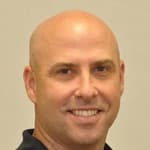
Dr. Morehead is Past-President of San Antonio Academy of General Dentistry. He was also the Student Body President at State University of New York at Buffalo School of Dental Medicine.
He is also a Master and Fellow at the Academy of General Dentistry and a Fellow at the Academy of Dentistry International. He is also a member of the American Dental Association, Academy of Osseointegration, American Orthodontic Society and American Academy of Implant Dentistry. Dr. Morehead is also IV Sedation certified.
Dentistry is constantly evolving, so in order to stay ahead of the curve, its necessary to improve upon your own skills and expertise. Im a firm believer in this, and in order to provide the best care I can, I will continually seek out new opportunities to expand my dentistry knowledge.
Dr. Morehead currently resides in San Antonio, TX with his wife Megan and children. Hes a Board of Director member for the Burn Recovery and Research Foundation and a Colonel in the US Army Reserves. In his free time, Dr. Morehead enjoys cycling, running, fitness and auto racing.
Today we'll be discussing the pros and cons of both conscious and IV sedation. Our guest is Dr. Michael Morehead, Clinical Director of Sedation for Heartland Dental Care. He is a US Army Reserve Colonel and Dental Director for the Atlantic Region.
Transcript
Read Full Transcript
This transcript was automatically generated and may contain errors or inaccuracies. It is provided for reference and accessibility purposes and may not represent the exact words spoken.
You're listening to the Phil Klein Dental Podcast
Thanks for joining us. I'm Dr. Phil Klein. Today, we'll be discussing the pros and cons of both
conscious and IV sedation. Our guest is Dr. Michael Morehead, Clinical Director of Sedation for
Heartland Dental Care. He is a U.S. Army Reserve Colonel and Dental Director for the Atlantic
Region. I would like to mention that Dr. Moerhead and Dr. Malamed did a fantastic webinar titled,
conscious sedation versus IV sedation in a dental office, that program is now available as an on
-demand webinar on VivaLearning.com. Simply type in the search field Morehead, M-O-R-E-H-E-A
-D, and you'll see it. If you're looking to learn more about the risks, benefits of conscious
sedation versus IV sedation, and what kind of training you should have for all of this,
I highly recommend this webinar. Before we get started, I would like to thank Health First,
HealthFirst supports thousands of dental offices with emergency medical kits, medications, and
devices that help dental practices manage dental emergencies. For more information on how
HealthFirst can help your practice, visit HealthFirst.com. Dr. Morehead, it's a pleasure to have
you on the show. Hey, Phil. Thanks for having me. I really appreciate it. We could talk for hours
about this topic. So what I would like to do is touch on the important points of sedation and how
it can really help our practice. And that, of course, includes GPs and specialists. So my first
question is, in your opinion, is it really critical for dentists to utilize sedation in their
practice? Or put another way, can a dentist effectively operate a dental practice without
incorporating any kind of sedation? Yeah, that's a great question. And, you know, I work for
Harlan. I'm the sedation director for them. We have approximately 2,000 dentists.
Excuse me, 2,000 offices, almost 3,000 dentists. Excuse me. we do know that the best practices
kind of cast the widest net so we can offer services for the for every patient now there are a
large number of patients that will not come to our office because they fear you know dentistry in
large and if they hear that you know we can offer them a more comfortable relaxed experience
they're going to seek us out so we know just by opening turning that light on say hey we we accept
you know people like you that will be fearful and avoid going to dentists will capture a larger
portion of the population. So we know we can be successful that way. And we've done a pretty good
job. I mean, we still have a large number of our dentists do not offer, you know, a formal form of
sedation, but most everyone does offer at least nitrous. And we're getting oral and IV,
you know, we're increasing those numbers every year. So we're just trying very hard to increase
that. and make our patients aware of what additional techniques we can use to really make them just
comfortable because that's what we want. If the patient's comfortable, the provider's comfortable.
So I always focus on do it also for yourself because when the patient can be calm and relaxed,
it puts you in a more relaxed, calm position and you can provide a better care and service for your
patient. So most of your offices, if not all, have nitrous oxide oxygen capabilities. That's
correct. Okay. I was an endodontist. I practiced for 14, 15 years. And of course,
I use nitrous on almost every patient. And if I didn't have it, there was a risk of that patient
saying, oh, I can't, I'm not going to lay back and let you do a root canal on me without me being
under the influence of nitrous oxide oxygen. And the training involved is really nothing more than
what takes place in dental school, right? For nitrous. That's correct. Everyone does have to check
with their state board, but most states do allow the training that was done in dental school will
certify you in your state. So you can keep going without even having to take additional classes.
Now, if you increase that and want to start doing oral or IV,
then you would require additional classes and then be certified in your state additionally on top
of the nitrous. Right. So let's move forward and talk about the different methods of using sedation
in the dental practice. What are the different methods used? in dental practice? It really comes
down to the root of administration, right? Like how did the medication get into the body? It can be
as simple as inhalation, right, with nitrous, but you can also administer medication through an
oral tablet or through intravenous medication. So there's all these different roots,
but we do break it down into typically nitrous. And then the next step up would be just reducing
anxiety, which is now considered minimal sedation. And then after that, it would be moderate
sedation, which is where a patient is arousable. They have some loss of consciousness,
but they are easily arousable and can return to a state where they can respond to you. And that's
where most of us will kind of stop at that moderate level. But moderate, you can perform moderate
with oral or IV. Both of them have some inherent pluses and minuses.
And then if you go deeper than that, then it goes into the deep state sedation. and general
anesthesia. And those would be providers that would be going through usually a residency program
for general anesthesia. So in most states, just doing oral sedation,
which means you're prescribing an anti-anxiety medication to the patient, right?
That's typically the oral sedation. It's anti-anxiety. Yes.
I mean, I would say most people can get level one, which is in most states, anxiolysis, which is
you're not giving them enough medication or you cannot even redose typically if you if you stay in
that level one anxiolysis which is called minimal sedation and then if you are wanting to redose
then you sometimes have to raise the level of education you have and go to the next step which
would be a moderate enteral or oral sedation certification and those typically will require more
armamentarium so you would have to you know definitely monitor your patient and be ready to reverse
if needed, and also be ready to address any airway concerns because you're losing a little bit of
consciousness and we have to be diligent and able to respond to medical emergencies of one step
deeper. So you would want to, if they slipped into a deep sedation, you would want to be able to
help them bring them back to a moderate. When you say re-dose, can you clarify what you mean by
that? Yes. So typically oral providers can give a dosing that they feel is comfortable and
competent for the patient so like if five milligrams of halcyon is what you traditionally start off
with with the patient there is going to be a bell curve a certain segment of your population maybe
70 percent will land right where you expect them to but 15 will be under sedated and 15 will be
over sedated so how do you manage those and if you have under sedated patients that lie in that 15
under sedation then you may want to give them more. And then it becomes,
well, how much more do you give them? And that's why oral becomes a little bit lacking in this
ability to really safely manage the patient because, one, you're not allowed to redose if you're
only a minimal provider. And if you are a moderate enteral oral provider, then you can redose,
but you may not know how to make sure that you land them safely in a real comfortable, safe
position. You can easily overdose them. Right. So the idea is that you can't titrate it. to where
it's kind of guesstimate in some ways. Now, you're saying that if somebody gives somebody a dose,
you mentioned which drug in your example? Halcyon would be a very common medication that we use.
So if I gave my patient Halcyon and they didn't seem to be getting much out of it,
I can't give them any more unless I'm permitted or I have some sort of certification.
at the next level, then I could redose? Yes. But if you're going to be a moderate provider,
I would think you would be better suited just going ahead and getting the extra IV certification
because that would really open up your ability to, like you said, titrate. And you wouldn't have to
worry about the absorption and distribution of the medication because that's what slows us down.
When you put something in an oral tablet and you have someone swallow it. It's got to go through
the GI tract and then go in the bloodstream and then go to the liver and it's got to go through the
first pass. And then it goes to the brain where if we do IV, we immediately bypass all that.
And we go right into the bloodstream and it goes directly to the brain. And we can affect our
patient more quickly. Having that ability to quickly titrate is really a big advantage.
And the medication is because it doesn't slow down absorption. It's much more rapid onset. So it's
kind of... There's a misconception, if you might say, or a myth among many dentists that I'm going
to be safer. I'm going to stick to just oral sedation. I give the patient a pill. I prescribe a
pill. They take it, and we hope they respond to it. It puts them in a state where they don't really
care what I'm doing, and I'm good to go, and it's going to work on 70% of the patients. 15%, it
ain't going to work because they're below the therapeutic level. 15%, it's working too much,
which is dangerous because now they're being pushed into a state that we're uncomfortable with as
far as their safety. And that's a whole nother podcast is identifying these, the under potency one
is easy because they're going to be telling you that they don't feel anything, but the over potency
one, that's another issue. So it's really, in a sense, it's safer to do IV because you can actually
nail it, right? You could be precisely on target to what that patient needs because as you see them
drift into that state where you want them, that's where you stop dripping it in. basically, the
titration process. Is that right? That's absolutely right. I think even Malamed, he always says
something like the depth of sedation is based on your thumb, how much you're pushing your thumb
against the syringe because you can precisely dose a patient almost in real time because it doesn't
take typically 30 seconds or so for you to see a direct result of what you just did.
So you can easily, in a very short amount of time, dose them very precisely and then...
predictable outcomes so that's why it's so beneficial and i guess that could be also the reason why
it can be dangerous is if you are not someone who's observing your patient and you're giving just a
big push of a big bolus of medication you could put them into a deeper state but you really should
not be able to do that because you can meter it so easily and so slowly that patients can actually
be pushed into that perfect level of sedation and it's very safe Let me ask you this. So as
clinical director of sedation for Heartland, you mentioned there's thousands of offices, right? So
you're overseeing many, many GPs and I'm sure specialists as well. Let's talk about GPs for a
second. How many GPs are actually trained and competent and feel confident to hook up an IV and
start letting this stuff flow into their patients? Yeah, it's a pretty small, I'd say,
section of the market. Probably a little under 10% of our dentists are IV sedation certified.
Under 10%. Yes. And I would say that even the ones that we have as IV certification,
I'm not even confident that they are actually performing the service because some of them bring in
a CRNA or another type of provider that's doing. the moderate sedation they're coding for it we can
see that they're coding for it when we we have courses that we give every year it's called we call
it our sedation symposium so we bring them into the sedation symposium and we do live like
emergency management classes and also rotation so we we move them through these different um
breakouts where we will manage airway we'll We'll place IVs. We'll do a bunch of sedation-related
tasks, and we have the whole team do it. So that way, when they go back to their offices, they can
do similar experiences. We can bring them back to the office and do them. Okay, so less than 10%
are doing IV sedation. How many are doing oral sedation? That is a larger number.
Close to 20% of our doctors are doing oral sedation. Like when you say they're doing oral
sedation, are they doing it on? almost every patient or, you know, a small percentage of their
patients? A small percentage. I think most of them are a small percentage. But they do have the
capability to offer it. So, you know, some of them aren't doing the numbers of surgery. So we're
trying to bring, obviously, the cases that would be most beneficial, like you said, endodontic work
would be great. But also surgery, because the two types of patients that come to your office,
you know, the patient non-pain, but the patient's in pain, if you can take care of the patient's
in pain. Typically, those are the ones that are anxious because they've been resistant to go to a
dentist until it became so painful they're able to come in. So basically, you're seeing that
sedation is utilized. We'll get into nitrous in a second, but we're talking about oral sedation and
then even IV sedation. Let's go back to oral again. We just started talking about oral. That's
being utilized for patients that are just showing a huge amount of anxiety. If they're in pain and
they haven't been to the dentist because they're so scared and they just finally have to come. And
then you have that group that may not be in pain. They're just scared to go to the dentist and just
to get them in, they find out they call up the front desk and they get information saying, yeah,
that office over at Heartland, they can give me some sedatives that's going to be able to make me
feel more relaxed. Maybe I'll take a pill the night before will allow me to sleep and then I'll
take a pill that'll let me in the door. Something like that? Absolutely. Okay. That's how it works.
Do you recommend that a dentist brings it up to their patient and say, hey. We could give you a
pill, we could prescribe oral sedation through a prescription, and this is what we do to make our
patients comfortable? Or is that something that's not really offered to the patient until the
patient shows signs of anxiety and how much they fear the dentist? Yeah, I mean, if you ask me on a
personal level, I would say it needs to be well known within the office that we are here to help.
patients have a great experience. And so if the hygienist recognizes it as a problem, they should
be able to comfortably be able to talk to the patient about it. And at the front desk, if they take
phone calls and they know that the patient's anxious, they can inform them of some techniques that
we use when we bring you in just for an exam. You can meet the doctor. No service will be rendered.
And then he can talk to you or she about providing anxiolysis or some reduction of anxiety
medication through oral or IV. I think those are easy to do as long as the whole office gets the
same message and they also are confident in what we can deliver to a patient. Do you think that
dental offices are more reliant on the nitrous oxide oxygen combo overall at Heartland?
And that's a good representation of many dentists because you have so many offices there and you
oversee. Is that something where, okay, you know, we got nitrous. We're going to push that on our
patients. It'll make them feel more comfortable. I've been doing it since dental school. Do you see
that happening? Nitrous is underutilized. I think dentistry is so effective and patients do not
have to come with an additional member, you know, like family member to drive them home. So it's
something that could be given in the moment and then you can turn it down and get them back to full
recovery and they can leave on their own. Such a great tool. I think for whatever reason, we kind
of move away from it when we leave dental school. Unless, of course, you're a pediatric dentist.
Right. There's not many ways to treat a child without calming them in some way. I don't know if
it's just there's a change of a normal workflow that we get out of this kind of like situation
where we have to get the armamentarium, we've got to bring it to the operatory, and it's just slow
and cumbersome. But if we have some good systems in place around our offices. Do you have central
nitrous systems over where you are? Every office is different. And none of the offices I go to have
central, but I know that there are some that do. Right. We typically affiliate with existing
practices. So whatever they had in their practice, we keep. So let me ask you this. We talked about
oral sedation. Let's go back to IV sedation. And again, not a ton of dentists are using that. I
know specialists do use it. Of course, oral surgeons use it. periodontists use it. If you're
dropping a lot of implants in, I guess it wouldn't be such a bad idea when you're doing surgery and
grafts and things like that. Let me ask you about using nitrous with IV sedation.
What's your comment on that? It's great. It's a good way to titrate and reduce some of the pain as
well because it does have some effect on pain management. Another great benefit of nitrous is it
can really make the veins a little bit easier. That's one of the, I would say, the largest fear
factor of most dentists with IV sedation is they have to give an IV, which is kind of funny because
we inject so often. But to do something on external skin, it becomes really fearful for many
providers. But when you use nitrous, it actually causes the veins to dilate and the veins become a
little bit easier to target. So I also like it because... When the patient is under nitrous,
usually the nose cone or cap is hindering their view. So they're not able to watch you.
So for someone who's just beginning IV sedation, I usually recommend that they start patients on
nitrous because the patient will be more comfortable. And again, if the patient is comfortable,
you'll be more comfortable. So if they're sitting there anxious and you're trying to give an IV the
first time, you're going to be very anxious. So if we get the patient on nitrous feeling really
comfortable, you don't have to worry about them as much. The nose cone is in their way. They can't
see what you're doing. And you can kind of take your time and go slow and get the catheterization.
Yeah, I mean, you mentioned that we give injections a lot, which we do as dentists. But I think the
overwhelming reason, in my opinion, and correct me if I'm wrong, Dr. Morehead, is that dentists
aren't jumping into IV sedation because if something goes wrong, they don't feel that they have the
competence and training level to address a problem once things go wrong. As you say,
you control it. It's safe because you can titrate it. But there's always going to be that case
where something happens, whether the patient has a cardiac event or whatever reason.
Now they're sitting in a situation where do I have the staff or the training and the confidence to
fix this, to remedy the problem that may have resulted from the IV. Does that make sense?
It does. But I mean, again, you can have the same problem set with oral.
and you actually have less control over reversing it. With IV, we can administer reversal agents
through the IV, and we can immediately get a response. So we can turn that completely around.
And because we have them monitored, we can actually observe a problem before it occurs. So I think
in some respects, having the monitor on actually gives us a little bit more heads up on what's
happening with the patient. I had a patient today that was not sedated, and I removed the tooth.
And she was in her 80s. And when we sat her up, she said, I'm dizzy and I'm not feeling very well.
So I immediately had to go get my monitor that I would have normally had on every patient because I
normally sedate every patient. But because I didn't, it caused another burden for us because we had
to go get the monitor. We had to plug it in. She turned out to be fine. But I was thinking the
whole time, wow, if I had just provided an IV sedation for her, I would have already known. all of
our stats and i would have known what was going on a little bit more easily what does the monitor
give you as far as information about the vital signs well it gives us a lot about the ventilation
and circulation of oxygen around the body one that's the most important thing i mean so if their
blood pressure and heart rate and oxygen level are a certain state we'd like to to know where that
is and then we would like to make sure that it does not dip below like a five percent threshold so
say they're coming in at 99 oxygen we don't want them to go like below 95.
If they do, then we've got to see what the problem is right then and address it. A lot of times
it's just anatomical. It's like your tongue fell back and they're kind of in la-la land, so
they're not able to breathe as profoundly as they were before. So now we address the head, do a
little head tilt, chin lift, and they immediately correct. In tidal CO2, we can see the ventilation
really rapidly. We can see the exchange of oxygen and the CO2. It's live, so we don't have to wait
for... the bloodstream to circulate back through and we see it with the finger pulse oximeter.
We can see it in real time right now. How are they breathing? How are they ventilating? Do you
recommend that every dentist that comes out of dental school take a class or not a class?
Because I know it's about 100 hours of training on IV sedation because IV sedation basically covers
everything except general anesthesia, which we're not going to, we don't intend to do that in a
dental practice. But if you could take it up to IV sedation, then you've got the training on oral
sedation. You've got the training on everything below that, right? I recommend it, but I do
recommend people wait until they're ready to use it as a daily service because it's almost like
flying a plane. If you only fly once a month, you're probably not going to be that competent of a
pilot and be able to adjust to live needs in the air. And it's the same thing happens in dentistry.
If you're not able to do it as a consistent... on a consistent basis you're really probably not
well fit to go through the expense and the training because you'll end up having to be retrained
and recertified just like every course you go to if you don't go immediately out of that class and
start applying that knowledge you'll lose it and so with iv because the cost is pretty high it's
going to probably cost an office in the neighborhood of thirty thousand dollars after training and
flying back and forth to the training and then buying all the equipment that you may need to
provide that service. What it does is it differentiates your office so that when that case comes
down the pike and no one else in your neighborhood wants to treat it or treat that person, I should
say, you're there and you become well-known. And before you know it,
people are going to be sending you these cases. It could be a huge practice builder, right? Oh,
it's definitely a huge practice builder. I have patients that seek me out because of... I can offer
for them. It's not offered by many dentists. What about malpractice? Is malpractice insurance much
higher for those dentists that do IV sedation? It is higher, but it's not like double the price. It
is a higher fee. I think Botox and IV are the two things that will change your malpractice
insurance fees. If a patient comes in that has insurance, they have dental insurance, and you do IV
sedation. You don't have to tell the insurance company first that you're going to be doing IV
sedation. You could just do it and bill for it. What they don't say to you, well, you didn't really
need to have IV sedation for that particular clinical application. Is that something that comes up?
A lot of insurances don't cover the sedation portion, so they may have a fee that if you're PPO,
you're going to adhere to a fee structure. So the patient has to pay that out of their pocket. It's
one of those services that typically are not covered by insurance. All right. And I said I was
going to ask one more question. Of course, I threw in three more questions, but that's typical of
my podcasting behavior. Okay. So the last question is, what type of medication or equipment does a
dentist need to have on hand in case of a medical emergency during sedation,
which is very important? And every state board typically will... have a list of things that they
require. So you may want to look at your state board, but a monitor is one of those things that is
the only way, I mean, you can be a live monitor. You can actually look at the patient's skin, lips,
blood, and gums, and see if things are changing color and pallor. You can actually see if the
patient's talking to you. You know that they're able to ventilate if they're talking. So you can
look at a lot of factors and the alertness of a patient. But a monitor is a really useful tool to
be able to sit there and manage the patient and watch over them. And,
you know, you can even hear changes going on in a live moment with a patient with their pulse rate
and saturation levels. Immediately you can hear it. So I think that's really useful. Pulse Ox for
sure. Capnography is something that if you don't have a monitor that has capnography, I would get
one that does because most state boards are now moving on to requiring capnography. Not every state
does, but I think that's the trend. A precordial stethoscope is always a nice tool to be able to
manage a patient's airway. You can actually listen to sounds that are going on with the respiratory
system so you can actually see if they're having any choking or they might have.
aspirate a little bit of water or whatever's going on with the breathing, you can actually see, you
can actually hear. That's a different stethoscope than a typical one for the heart? Yes. There's
actually one that you can place on the throat itself, right, at the precordial level and listen and
monitor, manage the patient. So you can hear them exchanging air the whole time during the
procedure. And if something starts to sound wrong, sound weird, you can actually adjust and find
out and stop the procedure and kind of manage that. Like I said, one of those things that some
states require and some states don't. I think having the ability to place an IV is useful too
because you may have to manage them with medication or fluids. If you're not able to administer an
IV, even if you're not doing IV sedation, it might be a useful tool to learn. Having airway
management is probably key. So all the things that would be helping with airway management.
So there's obviously the bag valve mask, which is the Ambu bag. If you don't know how to use that.
then that's something you and your team need to learn how to use because you may have to administer
a positive pressure airway and you may not want to do mouth-to-mouth. So you might want to make
sure you're able to use that well. There's also things such as an OPA,
which is an oral pharyngeal airway or a nasal pharyngeal airway that you can actually put
underneath your mask to prop the tongue up so that way you can push air through the throat a little
bit more easily and effectively. And then having oxygen in your office is... is key i mean you've
got to make sure that the e-cylinder is ready to go and you can wheel it into the room right away
and get the patient on oxygen it doesn't take very long for the for the oxygen levels to really
dive and patients can go into cardiac issues if they're if they're not being ventilated properly so
cpr no understand the basis of cpr and and actually be able to perform at a very high level is very
useful but you need oxygen to be able to do that And then having reversal medications in your
office, both for opioids and benzodiazepines. So we usually typically use,
you know, the flumazenil and the naloxone and having those ready to go and know how to use them.
Again, having stuff is one thing, but knowing how to use them is another. So make sure that you and
your team all know how to use it. And the last thing I would say is a must would be an AED,
having that on the ready as well. Those are all part of the basic kits that we say when we say
we're having an emergency in the front waiting room. Everyone go get the stuff, and the stuff is
all that stuff. It's the airway management, it's the oxygen, it's the AED, and the reversal
medications. Now, they have training classes for medical emergencies in a dental practice,
right? They have to have some training classes. They can't be as long as, of course, the IV class
or the IV course, which could be typically 100 hours. That's a huge investment of time.
But I'm sure in those IV training courses, they teach all of the stuff regarding medical
emergencies. Right. So you kind of get that together with it. Right. Yes. Yes. It's all taught at
that course. But then just like everything, you end up losing it. So you've got to most states will
require 12 hours of sedation, CE, oral and emergency medicine training.
Those classes, 12 hours of CE is probably the bare minimum. Also, you're supposed to,
every office is supposed to do an annual refresher with your team. So everyone on the team needs to
know, and it's got to be documented with who attended and what type of training you provided your
team. That's every year, and you should be able to do that in your office as a minimum once a year.
Now, when you talked about the reversal medication, I know Health First has a kit. Do you recommend
that? I know Health First is a sponsor of this program, but I know they are the leader in providing
fresh... medication to your practice so you don't kind of have to worry about it. That's the real
benefit. I mean, all hard-owned offices are supplied by Health First for that very reason.
Medications will typically expire at different rates in the packaging. And so, you know, for you to
keep up with that is a real hassle. So they will send us a kind of like a timely renewal about a
month before each individual medication is expiring. They'll send it to us. And that includes
epinephrine, of course. Absolutely. And the EpiPens are really hard to get right now. Why is that?
They work very hard. I think it's because of the way it's packaged and in the pen format. And I
could be wrong. It seems like every year there's a shortage of something this or that. But I think
the EpiPens became very expensive for a while. They probably still are. Yeah,
my son's been waiting for eight months for a Subaru. So, I mean, if Subarus are backed up,
I'm sure EpiPens are backed up too. They're on some boat somewhere. Yeah, they're on a ship
somewhere. Right. All right. Well, listen, Dr. Morehead, that's been a lot of information that we
packed in here. We went a little bit over, but I really appreciate your time and congratulations to
you for being clinical director of sedation for Heartland Dental. I know you're a U.S. Army
Reserve colonel. Congratulations on that. And thanks for your service. And we really look forward
to having you on future programs because I really think it's tremendous advantage to any practice.
to have the ability to have that knowledge and expertise when needed to use it on those patients
that literally fear the dentist beyond anything else in the world. I mean, we all know that public
speaking is probably the first thing on the list, and fearing the dentist is two, is a very close
second place as far as the biggest fear. I don't know. I'm not afraid to go to the dentist, and I
talk in front of groups a lot, so I don't know what happened to me, what went wrong with my brain.
Those aren't my fears. I have other fears, but not that. But for most people, it's public speaking.
And it's going to the dentist. So it's a real good reason to get the training to provide sedation
in the office. Well, I really thank you for having me on. It's been a real honor and a privilege.
Our pleasure. Thank you so much for being here. Take care, Dr. Morehead. If you like our podcast
and want us to keep it going, please leave a review on your favorite podcast platform. Leaving a
review is a fantastic way to support us and help others discover our show. We really appreciate
your support. See you on the next episode.