International Academy of Dental Implantology · International Congress of Oral Implantology · Advanced Dental Implant Academy · NYU Dental School · Advanced Implant Education
Read full bio
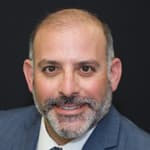
Dr. Tawil is a MINEC Ambassador (Megagen International Network of Educators and Clinicians), a member of MINEC USA and sits on the Digital Dental USA Society board of directors, a Diplomat of the International Academy of Dental Implantology and the International Academy for Dental Facial Esthetics. He is a Fellow of the International Congress of Oral Implantoloy. He is one of Dentistry Today's top 225 leaders in CE, a faculty member of the Osseodensification Academy, Brighter Way Educational Director (Phoenix, Arizona), and Digital Director of Guided Smile. Additionally Dr Tawil is an Ambassador for the Slow Dentistry initiative and a Fellow of the Advanced Dental Implant Academy. A recipient of the Pierre Fauchard award for outstanding achievements in dentistry and the Presidential Service Award for outstanding achievements in dentistry. He is the Founder and Co-Director of Advanced Implant Education, a Partner in TBS instruments, and Universal Shapers LLC. He is a new product consultant for several dental companies. Dr Tawil has held main podium sessions and hands on workshops world wide and enjoys a private practice in Brooklyn, New York.
How do you determine whether to place an implant immediately after extraction or wait for tissue healing? With nearly 5 million implants placed annually in the US, many by general dentists, understanding the timing and approach for implant placement has become crucial for optimal patient outcomes.
Dr. Isaac Tawil brings exceptional expertise to this discussion as a Diplomat of the International Academy of Dental Implantology, Fellow of both the International Congress of Oral Implantology and Advanced Dental Implant Academy, founder of Advanced Implant Education, and partner in TBS Instruments and Universal Shapers LLC. Based in Brooklyn, New York, Dr. Tawil is recognized as one of Dentistry Today's top 225 leaders in continuing education and serves as a MINEC Ambassador and faculty member of the Osseodensification Academy.
This episode explores the fundamental decision-making process between immediate and delayed implant placement, with Dr. Tawil explaining the four-category classification system and sharing that 75% of his implants are placed immediately. The conversation covers critical factors affecting timing decisions, the role of guided surgery in improving outcomes, and essential training requirements for general practitioners entering implant dentistry.
Episode Highlights:
The Hammerly classification system defines four implant placement protocols: immediate extraction and placement, delayed placement after 6-8 weeks for soft tissue healing, delayed placement after 10-12 weeks for bone fill visualization, and delayed placement after 6 months for complete bone healing. Understanding these timeframes helps clinicians optimize treatment planning and patient expectations.
Immediate implant placement can prevent the significant bone loss that occurs after extraction, with studies showing 25-35% buccal bone loss within 3-6 months post-extraction. This preservation of bone architecture is crucial for maintaining aesthetics and reducing the need for complex augmentation procedures.
Guided surgery utilizes 3D planning software combined with cone beam CT imaging and digital impressions to fabricate surgical guides that control implant positioning. This approach not only improves implant placement accuracy but enables screw-retained prosthetics by ensuring proper screw access hole positioning.
Basic implant placement training should include comprehensive anatomy review, sufficient continuing education credits in surgical techniques, hands-on experience with models or cadavers, and ongoing mentorship. The goal is developing competency in placing implants into healed, grafted sites before advancing to more complex procedures.
Advanced procedures requiring specialist referral include lateral sinus augmentation, full-arch implant placement for inexperienced clinicians, nerve repositioning, and cases involving significant acute infections. General practitioners should focus on mastering basic techniques before attempting complex surgical procedures.
Perfect for: General dentists beginning their implant journey, experienced GPs looking to refine their placement protocols, oral surgeons seeking continuing education updates, and dental residents preparing for implant dentistry.
Discover how proper timing and guided approaches can transform your implant outcomes and patient satisfaction.
Transcript
Read Full Transcript
This transcript was automatically generated and may contain errors or inaccuracies. It is provided for reference and accessibility purposes and may not represent the exact words spoken.
You're listening to the Phil Klein Dental Podcast.
According to the ADA, nearly 5 million implants are placed each year in the United States,
and many of these procedures are performed by general dentists. So in this episode, we'll be
focusing on basic implant placement for the GP. We'll be talking to an expert in the field,
Dr. Isaac Tawil. Dr. Tawil received his diplomat from the International Academy of Dental
Implantology, as well as his fellowships with the International Congress of Oral Implantology and
the Advanced Dental Implant Academy. He is the founder of Advanced Implant Education and is a
partner in TBS Instruments and Universal Shapers, LLC. He is a graduate of NYU Dental School and
practices in Brooklyn, New York. Dr. Tawil will be joining us in a moment, but first, when it comes
to digital workflow equipment, it's important to partner with companies that provide premium
products with unparalleled service, all at an affordable price. That's why you should check out
Shining 3D Dental. a company that offers a complete and integrated suite of high-quality and easy
-to-use digital dental equipment. Their local offices are based in California and Florida, so you
get in-time comprehensive support. In fact, Shining 3D Dental can furnish your office with an
entire suite of digital equipment for under $27,000. This includes their AoralScan 3 wireless
intraoral scanner, Metasmile 3D facial scanner, and the AccuFab 3D printer with its post-price.
So whether you're taking your first step into digital dentistry or you're looking to add additional
equipment, check out Shining 3D Dental's complete digital dental portfolio. To learn more,
visit shining3ddental.com. Dr. Tawil, thanks for coming back on our show. Thanks.
Great to be back. So what is the difference between immediate versus delayed implant placement?
We hear about this all the time. It's a topic of many continuing education courses and so forth.
How does it apply clinically to the case? Absolutely. So there's basically four different criteria
that was described by Hammerly. And then again, in the ITI conferences, the consensuses they've had
in both 2003 and 2008, and Hammerly described this in 2004, four different types of situations that
can occur for placing implants. The first one being an extraction and immediately placing an
implant. The second one being an extraction and delaying. Now we can delay on two different ways.
This is type two and type three. Type two would be if we delay and wait for soft tissue remodeling,
which could be something like, let's say six to eight weeks, maybe a little bit faster, basically
monitoring the mouth to see if the tissue is closed and healed. The third one being waiting for
some bone fill on the radiograph. So your patient comes in, you take an x-ray, and that's roughly
around 12 weeks or so, anywhere between 10 to 12 weeks. Literature might be a little bit different.
I don't want to quote specifically, but just as a general rule, and obviously every patient is
different. The last one is waiting for complete bone fill, which is going to take at least six
months if you're going to look at any. Any significant paper is going to tell you six months,
you're going to have full bone fill. Now, when we look at that, we have to consider if we're going
to do a delayed type of approach, if we're going to wait for the soft tissue to close,
do we wait for the bone fill or do we come back and put some type of a bone preservation material?
Because what can happen when we try to delay too much is that that buckle wall,
that's ever oh so crucial buckle wall, that helps us to maintain out the gingival tissue and
protect the implant will start to shrink back down. If you look at studies from Araju and Lind,
and if you look at the studies of Horowitz and Holtzclaw and Rosen, and there are many,
many other studies, they all show a significant amount of bone loss,
especially remodeling around the buccal plate. And in their Raja study, it was done on beagle dogs.
So you're looking at very quickly within just a month and change, you're looking at a significant
change of a bone loss. And in the other study, it was about three to six months.
You're losing almost 25 to 35% of that buccal bone.
Now, when you come back to place an implant, it's going to be very hard to maintain the aesthetics
that you really want to desire for every single patient. So our goal, whenever possible,
is to graft. We always like to graft. We want to do the minimally traumatic extraction,
and we want to place some sort of a soccer preservation. For me, the best possible scenario is not
to have to wait to anchor into grafted bone, because there's all different types of grafts. We have
autogenous material, but then you have to go with that and harvest that from another site.
allograft materials, we have xenograft materials, we have synthetic materials. And each one has a
different resorption weight. So how long do you wait? And when you're going back in, are you
anchoring in really into the patient's host bone or is it still in that grafted bone? So for my
preference, I prefer when the bone is available, when the conditions are ideal, when there's not a
massive infection, to try to anchor into the patient's host bone. Now I know that my implant is
biting into the actual patient's structure, not into a material that's trying to turn into the
patient. And so I have great stability with my implant. At the same time, if I get really nice
stability and we use a meter to see just how strong that implant is called an ISQ device,
an implant stability quotient. It's basically a... rfa radio frequency device that we send a signal
through a peg that goes down along the implant and will give us a bounce back reading kind of like
a sonar type of effect as a submarine would use and that will tell us how not just how strong the
implant went in which is the torque value that we measured but how stable it is when radio
frequency is being pushed on it if i anchor into the patient's host bone and i'm able to get a
healing abutment or even a temporary crown on them I could be finishing my cases up a lot faster
because I'm not waiting for the remodeling of that material that I put in to substitute the
patient's bone. I'm just waiting for that implant to osteointegrate into the patient's natural
bone. So whenever possible, I try to place immediate implants if the conditions are ideal to speed
up. the process and also to help try to encourage all the rest of the biological principles,
the bone and the soft tissue to remain in place. Because if I put an implant and I put a little bit
of a graft around that implant and maybe I put a healing cap or something to sculpt the tissue,
I'm changing the patient's life much faster. Instead of waiting nine, 10 months, which I could have
a baby in that time with my wife, I can actually have an implant done in let's say three, four.
or five months and be able to have that in a very simple manner just by removing the healing
abutment and starting to scan the patient or impress the patient for their final crown. It's a
great practice builder. It's a wonderful technique to be able to deliver to your patients when
applicable. That's the key is when applicable, because there are some nuances, which I'm sure we'll
get into, but it really does speed up that process and it helps the patient make a decision as to
not choosing a three-unit bridge. One of the things that I find is terrible invented. is that we
choose things based off of time. If we can't get something now, then we'll settle for the other
thing. So we end up saying, it's just going to take a year. I don't want that. I'd rather shave
down my perfectly healthy, normal, virgin teeth, shave them down, possibly leading to root canal
and who knows what else down the road. Instead of saying, let me deal on things on a one-to-one
ratio by just taking out that tooth and putting in an implant to preserve it. So out of all the
implants that you do, Dr. Tawel, Break down for us how many proportionally you do as immediate
versus delayed. So I would say roughly about 75% of my implants are placed immediately.
We do do a lot of full arch placement extractions here. I wouldn't say too much. We're not like one
of these big fancy practices that just. you know only sells these full arch replacements we do
comprehensive dentistry here but when we see terminal dentition we extract the teeth we try to
deliver to them a set of implants with a set of teeth so we can start to control and nurture that
tissue and give the patient back their function but as a on a single tooth basis i would say
roughly about 75 of those cases are placed immediately and of the single tooth or multi-tooth And
then there's those cases where they just have chronic infections or acute, big infections with
exudate that it's just smarter to wait. You can only perform so many miracles at one time.
And taking out a tooth and putting it in a bone graft is one miracle. In fact, you might even say
taking out a tooth is a miracle. Taking out a tooth, putting a bone graft, an implant is three
miracles in one. Taking out a tooth, putting a bone graft, an implant, and maybe a temporary crown
on top of that is four miracles in one. For some, as they get more experience with time,
those four miracles seem just as one miracle, just like it is for, let's say, Michael Jordan to go
and just shoot a simple layup. That might be the easiest thing in the world for him to do. For me,
taking a layup against some of these bigger, taller basketball players is nearly impossible. That
would be a true miracle. So being able to do four things at once might be a miracle for one, but
for another, it might just be a standard. day at the office. So once you get your experience and
your comfort level of placing implants, it does become a more natural thing to try to get a lot of
this done at the same time. And the patient can appreciate it. But again, you have to have
compliance with the patient and the ideal scenarios to be able to do that. Right. So the ideal
scenario is critical. But so you really can't say that the prognosis, the long term prognosis for
the success of an implant is better with immediate placement versus delayed because it really
depends on. The health of a socket. The clinician. Right. And the clinician.
I would say it's site-specific. It's patient-specific. It's a risk-specific as well.
How much risk do you want to take? And it's clinician-specific. How good are your abilities of
accomplishing all these things at the same time? In a moment, we'll be getting back to Dr.
Tawel to talk about guided surgery. But first... As dental professionals, we know that the right
autoclave can enhance your patient flow and help build a more profitable dental practice. It's all
about keeping things moving. Chamber autoclaves are great for reprocessing large loads, but
sometimes you need a few hand pieces fast, and you don't want to wait to fill a chamber. That's why
a lot of dentists choose the Sycan Statum 5000G4. While the look has changed over the years,
inside, Statham still uses a reliable, innovative steam technology developed 30 years ago that
continues to deliver instruments in some of the fastest times in the industry. It's one of the best
-selling autoclaves in the world, and its reliability has made it the workhorse sterilizer in
dental offices across the United States. To learn more about how Statham may be right for your
practice, visit SciCan.com. Yeah, so let's talk about guided surgery.
What is guided surgery to begin with? Let's start with that. And why should a clinician choose that
option over freehand, let's call it brain-guided implant placement?
So that's the crux of the whole problem, especially when it comes to things like immediate
implants. Very often when we try to place an implant into sites, it's very hard to keep your
perspective. There's a great saying that, you know, keep your perspective. Don't miss the forest
for the tree. You may go over to the redwoods and see this magnificent tree that a car can drive
through and you just focus on that. But if you look around you, you'll see this amazing scenery
that you may have never envisioned before in your life in the redwoods. It's absolutely spectacular
everywhere around you. A lot of times when we come in and we look at implant dentistry, we focus
too much on one area. And sometimes it's the fault of ourselves or even of our loops. We have such
magnification that we see very, very close at one area and we miss the bigger picture. So by having
guided surgery, it can help us control our position. So what is guided surgery?
It's a method for us to be able to fabricate a device or have some tool to be able to help guide us
to use our drills and guide our placement of our implant into this desired plan site.
So it starts by planning on a 3D interactive software where the implant should be placed.
Then we can fabricate a surgical guide. To do that, we do need an impression. It could be digital
or analog. We need a cone beam, a three-dimensional acquisition of the patient's jaw. And now we
can start to plan the case. And in planning, we can do so much because now we can start to say,
this is what the tooth should look like. This is where the screw access hole should be. So I want
my drills to run along that screw access hole. So in the end, not only does guided surgery give us
better position of our implants. and into the anchoring the bone where you want it to be.
But it will also give you a better prosthetic outcome so that you don't have to do a cemented type
of prosthetic. And we can use a scrutine prosthetic. And Lord knows, I am not a fan of cement,
especially when it's going deep into the gingival sulcus around implants. Implants are not teeth.
We don't have a PDL. And when cement gets in there, we get a lot of inflammation, bacterial
migration. And that can lead to peri-implantitis, which is no fun for anybody to have to deal
with. So are we at the point right now where it's almost considered standard practice,
standard of care to use guided surgery? I would say it's standard practice to have at least a cone
beam. Some people can be human surgical guides. For example, in the earlier podcast we spoke
about...
extracting the multi-rooted tooth. And you can actually do a technique that's called a drill
through technique. We section the tooth into three, and then we just drill with our drills right in
between those three roots, and it'll put us right in the center of the tooth. That's a form of a
guided surgery. So guided surgery could be a template. It could be in your brain. You actually may
be able to see it. You can use navigation systems such as Navident or XNAV. Well,
there's other systems out there as well that are virtual guided systems where you're looking at a
computer screen and that's guiding you to place the implant. So there's lots of different ways to
guide, but some people can handle it without. They can do brain guided surgery at a very good
level. But if you can have a guide, what that gives you the ability to do is actually not just
place the implant where you want it, but you can maybe even make a prefabricated structure that
goes on top of that, which you could not necessarily do. in advance you could do a post-operative
uh structure like a temporary crown that you make out of acrylic or a mold that you have taken but
to make a pre-operative crown from a laboratory and start sculpting tissue guided surgery can give
you that when it comes to these full arch cases and replacing implants we basically can make a
structure that has a minimal tolerance level that'll be a little bit off we can loot the structure
in the mouth and let's patient leave with a very nice lab type of a prosthetic instead of trying to
take a denture and converting the denture over. So there's a lot of benefits to guided surgery
beyond just controlling our position, staying away from the nerve, avoiding the sinus,
learning how to angle implants in the safety zones. All those features are wonderful about guided
surgery, but there's also the prosthetic part, being able to fabricate something in advance for the
patient. Even if you're not going to use it, we can come back later and use it. We have that
ability to put it in and start shaping that tissue so that, again, the procedure will go a lot
smoother in terms of how their final product that they're going to get will be delivered.
Are we getting away from cemented abutments on implants now because of the help through guided
surgery? I would say so. I would say definitely with guided surgery, we were avoiding a lot of the
cement retained situations. The companies have always gone to try to circumvent around the problems
that we've had. And so one of the things that have come up more recently are these angled screw
channel type of abutments that have been created. But the problem is those angled screw channel
abutments use different type of screws. They don't engage the implant the same way that a standard
connection would. So if we use those in the posterior, a lot of times those relate to prosthetic
failure. We end up getting some screw fracturing or prosthetic fracturing, and that's not really
the ideal way. If we can guide the implant where it should be in the first place, then we can go
with a standard straight screw, which is much stronger, much better, engages the conical connection
that most of the implants now have, and it's just better longevity for the patient. That being
said, not every patient can get a perfectly placed implant because the bone may not allow it, and
maybe their age or health issues may prevent us from being able to augment those sites.
So we have to take what we can get in some situations. If a patient's a diabetic and we're just
trying to get them a tooth, we don't want to have to do a major augmentation. We'd rather deal with
the bone that's there. 85 years old and trying to get some some time out of the teeth we're not as
concerned as let's say a 20 year old that's perfectly healthy and we need this tooth to last them a
lifetime And I don't know if anything lasts a lifetime, but hopefully we can get as long as
possible. If we follow the rules and use things like eye surgery, we can most likely get much more
longevity out of those cases with a really nice cosmetic solution because we planned it in advance.
We know where the heights of the teeth are going to be. We know where the base of the implant is
going to be, how much bone is going to be surrounding it, if I need to graft or not graft, all that
stuff can be controlled. And very, very often, especially in our training programs, we see this
dreaded problem where dentists have, especially GPs, have the issue of needing a fulcrum.
When we drill with a standard high speed, and let's say we're doing a DO on tooth number 15,
when we go into whether it's an international, let's say second molar, I don't want to say 15
because 1.5 means different things depending on what country we're talking to. So a second molar,
we're looking at a DO, and we start drilling. If we end up angling the drill because we're using a
fulcrum a little bit, we might get a little bit closer to the nerve, but the drill is so short,
it's not going to make so much damage. When we're looking at dental surgery for implants, these
drills are 25 and 20 millimeters long. If we're over-angulating because we're using a fulcrum,
we could be hitting the adjacent tooth. We could be hitting the mental foramen. We could be
entering the sinus, which is not a terrible thing. I don't want to make it like that's the end of
the world, but those other things are. We can be popping through different plates that we don't
want to pop through. So it gives us that control to be able to keep us on a straight path and not
have to over-angulate to try to climb over a tooth. This will control your path of drilling and
keep you in a safety zone as long as the plan is correct and as long as the guide fits.
So we have to learn. Both methods. We need to learn the freehand method just in case things don't
fit and things go awry during the middle of the surgery. But it's really nice to have the guided
option when it's set, which for me is 99.999% of the time my guides are fitting perfectly.
It depends on the printer you're using, the scanner you do. So nowadays what we do to ensure guided
surgery was going to work successfully. is we print the guide, but we also print the 3D model of
the patient's mouth and make sure it fits on the guide. We try the drills in on the guide
beforehand to make sure they pass through. And that's not going to break. We even do a little model
dummy surgery prior to the patients coming in. And that helps us to alleviate any problems that we
may have occurred during surgery. So more and more GPs are doing implants.
What procedures and techniques should GPs avoid? Well, that also goes back to that decision-making
treat, the patient's risk assessment, the clinician's assessment of what their skill level may be
at, and also some other contributing factors of, do you have all the equipment necessary for this?
For example, lateral sinus augmentation. If you've done just a handful of implants in your career,
are you ready to now go and enter into the maxillary sinus, creating a window? moving around the
Schneiderian membrane that's in the sinus cavity, filling that with bone, packing it correctly,
doing it the right way. So those techniques can be quite difficult. The full arch implant
placement, if you're not an experienced clinician, those should be referred out. You should be
sending those to somebody who can put the implants in the right position, even if they don't do
guided surgery, which I still recommend that they should. So just because you have a guide doesn't
mean that you can now become Superman. Having a guide will turn a competent clinician into an
accurate clinician almost all the time, accurately planned clinician. But it doesn't help you get
around all these complications of big infection, learning how to remove all of that infection.
It doesn't help you doing the lateral sinus lift if you've never done one before.
It doesn't help you do nerve repositioning. Staying away from the nerve, the inferior alveolar
nerve. I've seen too many people try to get around it or put too short of an implant in,
and then those start to fail. So you need to know your limits. And that's on a clinician-specific
type of a scenario. So I think that leads us to a question as to how much training that you have.
And that would lead you towards what your abilities are. Yeah, as we wrap up this podcast,
Dr. Tawel, and it's been very, very enlightening, lots of tips and tricks you've been throwing in
there. So when we're talking to the GP now, how much training is required for basic implant
placement? And very quickly define what is basic implant placement? So a basic implant placement
would be being able to take a tooth that's already extracted and maybe grafted or not grafted,
you have a healed ridge, and being able to place an implant into that location. That is something
that almost, I think, 95% of clinicians should be able to do. But we need training.
We need to understand anatomy. Very often we graduate dental school and one of the first classes we
took was gross anatomy, but we've already forgotten all about the anatomy, even in the mouth. I ask
people where the glenoid fossa is. They have no idea what I'm talking about. I ask them what's the
most popular issue that you could have when you inject for an inferior alveolar block.
What's the ligament that was most likely affected? And they will never know that it's the
sphenomandibular ligament. They don't even know what the sphenomandibular ligament is.
Unfortunately, we lose a lot of that. We remembered it in school. We passed the test. Then we move
on to the next thing. So we need to have some competency level. We need to understand anatomy. We
need to be able to have courses if it's not. in a dental school setting in a continuing education
site setting such as viva learning has as many of these on there to further and get enough ce
credits within the surgical realm if we understand all the anatomy and then we understand the
basics of the biology of how implants work then we have the competency to start working on things
like models or mannequins or cadavers or pig jaws so if you get enough CE credits,
which in my mind should be done in a good manner. You can join a group like the American Academy of
Implant Dentistry or the International Congress of Oral Implantology or the Academy of
Osseointegration and learn from incredibly brilliant clinicians that come from all over the world
to speak. And we can learn some of the basics and even the events. So if we have enough of that and
then enough hand model skills. then we should have a mentor teach us how to be able to place an
implant. In my method, what we do in our course is once people have had enough training in
didactic, they can come down to a facility. We had a facility in Arizona that we were working in.
Now we're exclusively just built a four-story building in Mexico and Tijuana, right across the
border of San Diego. And the clinicians can come down, spend the weekend and do basic implant
placement. And then as they progress, they can get... and more experience in their offices,
they can come down and try to do more advanced techniques and then bring that back into their
practices. So basically it's a matter of getting enough experience, having a mentor over your
shoulder or someone in your area. If even it's not coming to us, I'm not trying to advertise this
as a sales pitch. It's just have a mentor that you can go back to and keep asking questions to that
can help you because just like any other procedure, there's going to be some. some problems we're
not dealing with a wall putting in a wood screw we're putting in a titanium implant into a body
that's constantly turning over and that's going to talk back to you unlike a house that's not going
to necessarily respond so there's lots of different complications that could occur we need to know
all those complications but we need to have somebody that we can go back to and rely upon when
things don't go right or even if we just have general questions like how could i have done this
better Because we should never stop learning. Education should be constant. People think that I
don't take CE classes. I take a ton of CE classes. Every time I go on one of these trips, I just
came from China, Turkey. I went then to Puerto Vallarta for a conference. I went to Las Vegas,
Tufts University, and then we had our course all in the last three weeks. I did not pop in and then
jump out on a plane. I stayed and listened to each one of those speakers speak. Because there's
always something you can learn. And I can't tell you how much knowledge I accumulated just in the
last three to four weeks in these last travels. And I'm lucky enough to go and travel a lot as part
of what I do as a kind of a second career here in dentistry as a lecturer.
And I get to enjoy all these people and watch them speak and learn. Because in dentistry,
we never stop learning. Learning about new composite materials, bonding techniques, veneers.
learning how to make digital dentures now, digital dentistry as a whole, or surgery.
It doesn't matter. We should never, ever, ever stop learning. And we should constantly try to
improve ourselves, not just for you and for your profit. That's not the reason. It's for the
betterment of our patients. That should be our goal. Yeah, very well said. Thank you very much, Dr.
Tawil. And again, if our audience is interested in getting more information about Dr. Tawil’s
training program, it's called Advanced Implant Education. You can Google that.
He's also a partner in a company called TBS Instruments and Universal Shapers,
LLC. These are two companies that he's helped design instruments, obviously, for. the surgical
procedures necessary for oral surgery and also implant work. Thank you very much,
Dr. Tawil. We'll see you on the next podcast. Thank you, Phil. If you're enjoying this podcast,
please leave a review or follow us on your favorite podcast platform. It's a great way to support
our program and spread the word to others. Thanks so much for listening. See you in the next
episode.
Clinical Keywords
Dr. Isaac TawilDr. Phil Kleindental podcastdental educationimmediate implant placementdelayed implant placementguided surgeryimplant stability quotientISQ devicecone beam CTHammerly classificationbuccal bone losssocket preservationosseointegrationscrew-retained prostheticscement-retained prostheticslateral sinus augmentationfull arch implantsimplant trainingbasic implant placementAdvanced Implant EducationTBS InstrumentsUniversal Shapersdental implantsimplant dentistryoral surgerydigital workflow3D planningsurgical guides