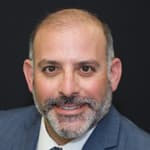
Dr. Tawil is a MINEC Ambassador (Megagen International Network of Educators and Clinicians), a member of MINEC USA and sits on the Digital Dental USA Society board of directors, a Diplomat of the International Academy of Dental Implantology and the International Academy for Dental Facial Esthetics. He is a Fellow of the International Congress of Oral Implantoloy. He is one of Dentistry Today's top 225 leaders in CE, a faculty member of the Osseodensification Academy, Brighter Way Educational Director (Phoenix, Arizona), and Digital Director of Guided Smile. Additionally Dr Tawil is an Ambassador for the Slow Dentistry initiative and a Fellow of the Advanced Dental Implant Academy. A recipient of the Pierre Fauchard award for outstanding achievements in dentistry and the Presidential Service Award for outstanding achievements in dentistry. He is the Founder and Co-Director of Advanced Implant Education, a Partner in TBS instruments, and Universal Shapers LLC. He is a new product consultant for several dental companies. Dr Tawil has held main podium sessions and hands on workshops world wide and enjoys a private practice in Brooklyn, New York.
Immediate placement and loading of dental implants with full-arch fixed implant-supported prostheses has proven to be a successful treatment modality. In fact, it's becoming a standard treatment approach that provides an incredible service to patients by streamlining the transition from a terminal dentition to a fixed prosthesis. One of the big benefits with this approach is eliminating the need for an interim removable denture and reducing overall treatment time. However, full arch dental implant therapy does present some challenges. To tell us more about this is Dr. Isaac Tawil. Dr. Tawil received his Diplomate from the International Academy of Dental Implantology and is the founder of Advanced Implant Education. He is a graduate of NYU Dental School and practices in Brooklyn NY.
Transcript
Read Full Transcript
This transcript was automatically generated and may contain errors or inaccuracies. It is provided for reference and accessibility purposes and may not represent the exact words spoken.
You're listening to the Phil Klein Dental Podcast
Immediate placement and loading of dental implants with full-arch, fixed implant-supported
prostheses has proven to be a successful treatment modality. In fact, it's becoming a standard
treatment approach that provides an incredible service to patients by streamlining the transition
from a terminal dentition to a fixed prosthesis. One of the big benefits of this approach is
eliminating the need for an interim removable denture and reducing overall treatment time.
However, full-arch dental implant therapy does present some challenges. To tell us more about this
is Dr. Isaac Tawil. Dr. Tawil received his diplomat from the International Academy of Dental
Implantology. He's a graduate of NYU Dental School. He is the founder of Advanced Implant Education
and is a partner in TBS Instruments and Universal Shapers, LLC. He's a new product consultant for
several dental companies and continues to practice in Brooklyn, New York. We'll be introducing Dr.
Towel in a moment, but first, if you're doing endo, then you need to know about Jay Merida's new
Root ZX3, the latest generation of their world-renowned Apex Locator product line.
In addition to its sleek design, smaller footprint, and larger high-contrast display,
the Root ZX3 accommodates the revolutionary HF module, which utilizes high-frequency conduction.
Once you snap on the module, which is quick and easy to do, the Route CX-3 becomes an invaluable
tool in helping you prepare the canal system. Using its high-frequency conduction, the HF module
effectively ablates pulp tissue, residual dental filling materials such as gutta percha, and tissue
in and around root canals. It can also tackle procedures such as gingivoplasty, gingivectomy,
hemostasis, and excision of intraoral lesions. For more information about this revolutionary
advancement in endodontic treatment, visit merida.com slash USA. Dr.
Tawil, thanks for joining our show. Thanks for having me again. So what is the armamentarium
required for full arch dental implant therapy? Implant dentistry as a whole requires that we have a
large supply in stock for implants when patient presents. So if a patient presents to my office and
I want to have a specific scenario that requires a specific size implant, I need to make sure that
I have that in stock. Otherwise, I should not be placing implants. I shouldn't say I'm going to put
a shorter implant in because I don't have that one available right now. So we need to have enough
stock of all different materials, whether that be bone graft materials, whether that be membrane,
whether that be the implants or the prosthetic components that go on implants. We need to have
literally a stock room that's full and that's consistently managed to make sure that we can go
ahead and and be able to deliver what the patient deserves,
not what we have available, but what the patient is supposed to have in a planned type of a manner.
We spoke earlier in some of the podcasts about having a cone beam, a cone beam computerized
tomography device. Having those are essential to be able to place any implant,
but it becomes even more important when we start talking about the full arch dentistry.
So a patient may present to us with dentate, with teeth, or they may be edentulous.
We need to be able to capture their position, meaning we need to take impressions, and then we need
to merge that with our 3D cone beam acquisition model.
And now we can start to begin to make a plan. The first thing that we need to be able to do is have
software, and if you can't do this, laboratories can do this for you, to design a set of teeth of
where we should be at. I'm not a fan of saying, let me just stick in a whole bunch of implants and
we'll figure it out later. That's certainly not the way I would go. I wouldn't certainly enter my
car and say, you know, I don't know if I have gas, but there's going to be a gas station somewhere
along the next hundred miles I'm going to go. I'm not even going to look at the, I'm sure I'll find
a gas station. That's not the way we go. And now we can talk about electric charging stations.
You'd actually literally have to plan and map out your exact drive before you got into your
electric car and said, I'm just going to go for a 500 mile. ride across a few states.
So we want to be able to plan things out. So having the right setup. I'm not a huge fan of taking
dental impressions. I find the gook to be worse than actually numbing and anesthetizing patients.
So I prefer to use intraoral scanners. I love intraoral scanners. There's so many out there. Find
the right one that works for you. I have like 13 or 14 of them in the office here. We do a lot of
beta testing for companies. And then I have my favorites, which you can ask me at another time what
my favorites are, but it's basically a device that's going to capture the patient as they present
of their soft tissue. Now I combine that with the hard tissue structure that I've taken with my
cone beam. Now I can make a plan. I can set the teeth. I can understand where the occlusion is.
And now I can decide where my implants are going to go so that my implants aren't between teeth.
but they're where the teeth should be so I can have really nice emergence profiles. Sometimes there
are certain cases that require a little bit of bone reduction, and sometimes there are cases that
don't. So we need to have the materials to be able to reduce the bone, or we also need to have the
materials in case we need to grow the bone. So all of that needs to be available once you're going
to delve into the more complicated full arch therapy, which I think is probably the...
difficult procedure because it could be using remote anchorage devices. We may not just be placing
standard implant placement. We may be doing pterygoid implants back in the pterygoid region,
back by the tuberosity. We may be doing transnasal implants, which are very complicated, or we may
be doing zygomatic implants, which go into the ligoma. Those are very big deals to start to say,
I'm just going to wing it and just open it up and let's see where we go. So we need all those
tools, all those technologies to be able to perform full arch implant therapy. And we talked
offline, Dr. Towel, about GPs doing quite a bit of full arch dental implant therapy.
Tell us about what GPs are doing generally through your experience of teaching. So I find that once
a clinician gets hooked on surgery, then they really like it. They start to really get involved.
And I find that some of the best surgeons in the world are actually general dentists.
I have some amazing oral surgeon and periodonts that I've met over my career. But one thing that
they don't have the advantage of is knowing the shape of teeth. And general dentists actually
understand the shape of teeth. So they should, even if they're not placing the implants, they
should be a part of that design process, where the teeth should be going, how they want the final
prosthetic to look. And a lot of times they can help that along by helping them in making,
let's say, things like a guided surgical solution. so that they can have the surgeon place it where
they want the implants to be for the final prosthetic. That being said, if a general dentist has
enough experience, they placed hundreds of implants, had great success, they placed multiple
implants all along the patient's mouth and had great success, they could, with the proper training,
and the right credentialing should be able to place full arch implants in the more simple cases. I
don't think general dentists should be placing zygomatic implants. There's very few of us that
should be doing that. But as a whole, because there are complications that if they need to be
handled and they don't know how to do that, that's a big problem. There are those super dentists
out there that can't handle it. I know that. I don't want to single them out, but that's a very
small percentage of clinicians. But as a whole... To place some six straight implants using a
surgical guide in the mouth shouldn't be that difficult as long as you've had the right training.
And that does require a tremendous amount of training. I would say hundreds of hours of CE. I would
say definitely tens and tens of hours of mannequin work and also lots and lots of hours of working
on live patients under the supervision of experienced clinicians that can teach them.
that methodology. So are there any particular tips and tricks for performing full arch replacement
that you would like to share with us on this podcast? Yes, absolutely. So the late,
great Carl Misch, who passed away about five, six years ago, he was a brilliant man,
wrote a great book called Contemporary Dental Implants. And in there, he described three different
methods, actually five different methods. He described the FP1, the fixed prosthetic one. fp2 fp3
then the rp4 which removable prosthetic 4 and rp5 being able to deduce what that patient requires
whether they need an fp1 or an rp5 prosthetic is very important so having the right tools like a
cone beam and a wax up of teeth will help you figure that out So advanced surgical software tools
such as Blue Sky Bio, R2Gate, Implant Concierge, Code Diagnostic.
I'm leaving a whole bunch out. There's Implant in the old days. So many of these Diagnostic Solvay,
ExoCAD, 3Shape, all of these types of software can help you now import your structures,
your impression scan and your cone beam scans, and start to plan what type of teeth the patient
has. Very important if a patient is you're going to be changing their vertical dimension to try
that vertical dimension, the new vertical dimension before you give it to them in a surgery.
They're just going to go through a traumatic surgery and now you're going to open their bite and
you don't know what that's going to be like for them. That's not the right way to handle things. So
being able to read these cone beams, being able to look at the condylar position where the where
the mandible sits into the maxillary fossa, understanding those type of techniques before you open
those types of. bites is crucial because a lot of patients will present to you with collapsed
bites. So having that will really help you. My feeling is that a lot of these cases,
not the edentulous cases, but people that present to me with teeth should try to be restored with
an FP1. They're coming in with teeth that look like natural teeth. They should leave with teeth
that look like natural teeth, not just open up the gums, mow down the bone and give them a lot of
pink. to replace that there are those cases that require that but for the most part when there is
bone available we can shape and scallop the the bone using specialized drills to give themselves
the anatomy back so that we can make beautiful natural looking teeth instead of just you know
wiping them down and making what looks like a hockey puck made out of pink and white and putting it
in their mouth that not to say that those patients don't require it there are also financial issues
Going from FP1 to FP3, it's a lot cheaper to make an FP3 with pink and white because there's not as
much development in the laboratory having to shape the teeth as much. And also,
there's more complications during the surgery. You have to be able to get the implants really
perfect to be able to do that so it doesn't look off-centered and the midline is correct. So I get
that there are reasons not to, but we too often take good, healthy bone and just shave them down
when these patients could be young. They can be 45, 50 years old. That's too young to just say,
let me wipe out a good third of your bone. And yeah, the next guy will worry about it.
I'll be retired before you're going to remake this. So then you'll go for zygomatic implants when
these fail one day. Because that's basically, unfortunately, the method that's been happening now.
We're seeing a lot of these atrophic ridges and now we have to... incorporate all different types
of what they call remote anchorage devices to compensate for the fact that a lot of these implants
now are 20, 30 years old and starting to fail. We'll be getting back to Dr. Towel in a moment, but
first... As a dental professional, you spend a large part of your day in the operatory. That's why
partnering with the right dental company for the best dental equipment is so important to you and
your practice. The folks at DentalEase understand that every practice is different, so they've
created a customizable suite of treatment room packages to fit every need. Whether you have lots of
room or need to be super efficient with your space, DentalEase has a configuration that will work
for you. known for its revolutionary J-chair and designer-friendly forest equipment,
such as lighting and sturdy ergonomic chairs, Dentalese combines comfort, beauty, and efficiency
into its state-of-the-art operatory equipment. And when it comes to utility room equipment,
nothing beats RAMVAC. It's quiet, reliable, and backed by industry-leading warranties. To learn
more about how Dentalese can customize and transform your operatory into one that you'll be proud
of, visit dentalese.com. So tell us about facial scanning. What is the dental avatar and how can
new technology help us improve full arch treatment? So the technology has advanced tremendously.
We spoke already about inter-roll scanners. We spoke about cone beam technology. The latest
advancement has been the improvement and accuracy of these facial scanning softwares.
So we have different devices. I believe we have another podcast on this. or I did a webinar on
Viva, which you can look at a little bit about the facial scanning device. But basically now we are
able to capture the patient's face along with their teeth. And this can be auto-matched within the
software. So every dentist has always said, I wish I could just take my patient's head and send it
to the lab. Let them have the head for a little bit, work on the teeth and give it back to me.
I'll put it right back on. and we'll be done with the case before we can blink because the lab
technician is doing all the work. Now, if you're doing your own lab work, that's wonderful. If you
have an in-house lab, those people are the happiest people because they bring the lab tech in, fix
this, fix that, and they're off to the races, and they don't have to have seven, eight visits with
their patient to correct a midline discrepancy or a tooth color issue or, you know, adding some
more, a little bit of addition to the prosthetic underneath the intaglio surfaces.
But having that facial scanner gives the lab the actual ability to see what the patient's face
truly looks like. Currently, what we've been using is a two-dimensional picture. That's not
enough. What we need is to create a dental avatar of our patient. We need to be able to create a
structure of the patient's face, their teeth. We can utilize two-dimensional technology as well,
such as a photo, because sometimes photo gives us a little bit better color, so we can get that
added to it as well. but now we can see the entire patient on the screen.
And now you can even have a, like we're doing, you and I right now can see each other, obviously on
the podcast, they can't see us, but we can see each other. So I can show you what the teeth are
going to look like. So if the lab can show the doctor, the doctor can show the patient, patient
doesn't even have to be present and they can go over the shapes of the teeth. They say, Oh, I'd
like it to be a little bit longer. Or can you make that a little wider? Those are all those things
that can be handled without even the patient being in the office. And that's what the dental avatar
is. The dental avatar is a reconstruction of that patient that enables you to make multiple
modifications without the patient ever having to be present. And that's the beauty of it because we
can take what should take six or seven or eight visits and shrink it down to just two or three
visits. Because every time the patient comes and we have to do try-ins. there's always some sort
of discomfort i wish i could say that there's never any discomfort in being able to insert
prosthesis but there's always a little bit of pain a little bit of pressure. And that's just not
fun. By the time you get to the sixth or seventh visit, the patient has had enough. They're just
exhausted of the procedure. So it's nice to be able to say, let me shrink these procedures. They
used to take six or seven visits and shrink them down to just a few visits so that we can better
take use of both the clinician's time and the patient's time. How does the dentist acquire facial
scanning? What kind of equipment do they need? So there's multiple companies now that sell facial
scanners. All you need is a computer and one of the devices. The ones that work on the phones don't
work very well, but there's several different ones that are out there. There's one from Shining3D
that we use in the office all the time. That's a wonderful, inexpensive scanner. If I can name a
few other ones, there's from Ray, they have the Ray face that works very nicely. There's a program
called Instareza that uses what's called a face hunter. That one you have to close your eyes for.
It's really meant for automotive parts and things like that, but they're able to use it. As long as
you close your eyes, you won't get blinded. But I like the dental ones better. I like the facial
scanners from Shine3D or Ray because those you can open your eyes and we can measure interpupillary
distances. We can look at where the interpupillary distance is and then go to the allotragus
regions and measure those. So we can actually see. that full three dimension of the patient's face.
So to acquire it, you can just call up any of those companies and have a little demo, or whenever
you go to a meeting these days, they're going to be there. These companies are growing rapidly, and
I'm sure more facial scanners will come. This won't be the only ones, but now we're starting to see
the affordability. When CERAC was the only game in town years ago, and we had the red cam and the
blue cam, and then later on they changed, they were the only game in town for a very, very long
time. Now, look how many intro scanners there are in the market. There's too many for us to sit
here and name. This podcast will be three hours long. So the fact that we're just now starting with
facial scanning, there's going to be a lot more coming. But the nice part is that there's now some
affordable ones. That's the key so that any dentist can go out and purchase this. And it's not a
big hurt to the wallet because this should be something that should be available for any dentist.
whether it's a Medicaid dentist that's just trying to make dentures and doesn't want to have seven,
eight visits to make the dentures because they got to keep moving the teeth over. So being able to
go digital should not have to be expensive for every dentist. Any dentist in the world should be
able to afford digital dentistry. And I think that's the mission of a lot of these companies. A
company like Shine3D is trying to do more affordable, high quality products.
Seeing that all across the board where these companies are trying to be more affordable. and give
them the ability to be purchased by any dentist, not just the Beverly Hills,
New York City, Chicago high-end dentists. Yeah, without a doubt. The prices are coming down, and
that's normally how it works in the free market. So as we wrap up this podcast, Dr. Tawil, again,
as usual, you packed it with tons and tons of information. I think some of our listeners will
listen to this podcast several times to absorb it all. Why should a clinician consider a metal
-free... full arch prosthetic solution good and i'm glad you phrased it that way as a metal free
for full arch for because for single tooth we still do need to have some sort of a substructure
that connects to the implant but when we're performing full arch prosthesis usually there's going
to be an intermediate abutment that's going to already be installed whether that be a multi-unit
abutment whether that be an octa abutment. I know we have people all over the world here having
different types of connections, but there's always something that comes out of the implant. You can
even use a one-piece implant that has an external connection. But basically by using these multi
-units or octas or all these different types of intermediate abutments, it gives us passivity. The
most important thing about making a full arch appliance, if we want it to be one piece, which is
pretty much what we like to do because we can control the cosmetics much better if it's a one
-piece solution, We can now deliver that with just using, let's say, if you're doing it all on four
or all on six or all on eight, just by inserting in and then screwing down the prosthetic into the
mouth. The problem that's been occurring over the years is that we've switched materials. And as we
switch materials, we end up with some headaches. When we switch to zirconia, we see that it doesn't
chip like porcelain used to chip, but it does fracture, can fracture. One of the most vulnerable
places of where it fractures is in the tie base itself. The tie base either debons from the
structure and starts to get loose or the actual channel that's used where the metal is rising up.
That little chimney is made too big to accommodate for the metal and now we have a fracture at that
point. I always laughed when they said you need 12 to 15 millimeters of clearance of prosthetic
space to fabricate a zirconia structure. Phil, I know you don't practice dentistry anymore,
but I'm sure even you know that if I'm making a single crown, I only need one millimeter of
reduction for a zirconia crown. So why do I need 15 millimeters for this other structure?
And that's because we're poking holes in those structures and we're installing metal chimneys in
those structures. So more recently, we've started to utilize these newer screw systems.
They're made by DES, they're made by another company is a Powerball, the Vortex screw,
there's a Rosen screw, all different types of screws that enable us to have a longer type of a
screw so that we can skip the tie base completely and go straight from the zirconia straight to
that passive multi-unit abutment. so now instead of having if you look at the actual older multi
-unit screws there's only 0.25 millimeters between the screw head and then that actual zirconia
the amount of zirconia to the metal 0.25 is not enough i just told you we needed a millimeter for
reduction on the crown with these newer screw systems we could have as much as two or three
millimeters of zirconia built in so it gives us that luxury of being able to go metal free we don't
have to worry about the tie bases debonding we don't have to worry about these fractures as much as
we used to but we still have to respect the basic fundamentals of full arch therapy which is not
making too much of a cantilever understanding what the anterior posterior spread relationship needs
to be if we incorporate all of that we can go metal free and reduce all the headaches that go along
with having a metal structured solution that being said There is one structure that I do feel is
probably the best structure, which is making a titanium bar and then having the zirconia or
whatever type of material on top of that. That is a great solution. However,
the reduction that's needed to do that is extreme. That's where we need to get into that 12 to 15
millimeters of reduction. And if I have, again, we spoke about this before, a 35, 40-year-old
patient, and I have to mow down bone to fit my prosthetic, That breaks my heart.
And a person that spends so much time trying to do minimally traumatic extraction, trying to
preserve the bone for bone grafting with immediate implants and bone grafting and preserving the
soft tissue, it breaks my heart to say, I'm going to wipe away all this bone on a young patient
just so I can fit a bone. So if we plan some more implants, instead of doing all on four,
we do all on six or eight. We can go metal free and have it screwed in without. any type of
difficulty and have a beautiful prosthetic solution that the patient can then enjoy for many
decades to come. Yeah. And preserving that bone, like you mentioned earlier, is so important as the
patient ages because that bone is going to pull back over time just because of age.
And then we're left with, like you said, the zygomatic implants. Yeah. What are your options? Not
the fun options. Yeah. Those are the more risky ones and very few dentists right now even do them.
If you want to get more information from Dr. Tawil, who gave us a lot of information on this
podcast. He is the founder of Advanced Implant Education, and he's also a partner in TBS
Instruments and Universal Shapers. And these are instrument companies that work with Dr.
Towel. He's helped design some of these oral surgery instruments and implant instruments that
really are designed practically to create an environment where you have the best results.
Minimally traumatic is what the key words are here, because that's a big factor when you are
extracting teeth. If you want to get more information on Dr. Tawil as far as his webinars on Viva
Learning, visit vivalearning.com, type in T-A-W-I-L in the search field, and you'll see many
of his webinars. And then, of course, you can Google him and find out what he's doing as far as his
hands-on courses. Thanks again, Dr. Tawil. You be well. Thank you, Phil. Thank you so much.
Thanks so much for listening. See you in the next episode.
Keywords
dentaldentistViva Learning OriginalsImplantsOral Surgery