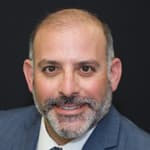
Dr. Tawil is a MINEC Ambassador (Megagen International Network of Educators and Clinicians), a member of MINEC USA and sits on the Digital Dental USA Society board of directors, a Diplomat of the International Academy of Dental Implantology and the International Academy for Dental Facial Esthetics. He is a Fellow of the International Congress of Oral Implantoloy. He is one of Dentistry Today's top 225 leaders in CE, a faculty member of the Osseodensification Academy, Brighter Way Educational Director (Phoenix, Arizona), and Digital Director of Guided Smile. Additionally Dr Tawil is an Ambassador for the Slow Dentistry initiative and a Fellow of the Advanced Dental Implant Academy. A recipient of the Pierre Fauchard award for outstanding achievements in dentistry and the Presidential Service Award for outstanding achievements in dentistry. He is the Founder and Co-Director of Advanced Implant Education, a Partner in TBS instruments, and Universal Shapers LLC. He is a new product consultant for several dental companies. Dr Tawil has held main podium sessions and hands on workshops world wide and enjoys a private practice in Brooklyn, New York.
One of the common procedures we do as dentists is remove teeth. And for most us, it's a fairly routine procedure. But with more research on the topic of tooth extraction and the extraction site itself, and how it all relates to implants, we're learning that minimizing the trauma to the surgical site is of utmost importance. To tell us more about this is Dr. Isaac Tawil. Dr Tawil received his Diplomate from the International Academy of Dental Implantology. He is a graduate of NYU Dental School and practices in Brooklyn NY.
Transcript
Read Full Transcript
This transcript was automatically generated and may contain errors or inaccuracies. It is provided for reference and accessibility purposes and may not represent the exact words spoken.
You're listening to the Phil Klein Dental Podcast
One of the most common procedures we do as dentists is remove teeth. And for most of us,
it's a fairly routine procedure that we've done over and over, pretty much the same way since we
graduated dental school. But with more research on the topic of tooth extraction and the extraction
site itself and how it all relates to implants, minimizing the trauma to the surgical site is of
utmost importance. To tell us more about this is Dr. Isaac Tawil. Dr. Tawil received his diplomat
from the International Academy of Dental Implantology, as well as his fellowships with the
International Congress of Oral Implantology and the Advanced Dental Implant Academy.
He is the founder of Advanced Implant Education and is a partner in TBS Instruments and Universal
Shapers, LLC. He is a graduate of NYU Dental School and practices in Brooklyn,
New York. Dr. Tawil, it's a pleasure to have you on the show. Thank you for having me. So what's
the difference between the terminology atraumatic extraction versus minimally traumatic extraction?
It's funny because you go to all these symposiums and lectures and you hear the words atraumatic
extraction. And I can't imagine trying to portray to my patient that I'm about to rip a part of
appendage out of their mouth and tell them that there's no trauma that's going to be occurring.
Obviously, atraumatic means without trauma. There's always going to be trauma whenever we do
anything surgically. And certainly when we're moving a tooth, we're going to be causing a cascade
of effects that's going to occur. So the term atraumatic attraction to me should be wiped from the
dictionary completely, at least from the dental terminology. There's things that could be
atraumatic in dentistry. The filling maybe might not be traumatic if it's a bonded filling and
you're not anesthetizing the patient. But as soon as we do anything to the patient to cause any
type of inflammation, obviously that's a cascade effect. happening from trauma.
So we prefer the term minimally traumatic extractions. We want to extract a tooth with a minimal
amount of force with as little trauma to the surrounding tissues so that the patient can have a
better overall experience. We're going to get back to Dr. Tawil in a second, but first, thanks to GC
America, we're now able to incorporate all the advantages of glass ionomer into a beautifully
aesthetic, strong, long-lasting restoration. That's a great reason to try GC Fuji Automix LC.
You'll love the convenient automix delivery system and ergonomic dispenser. which allows precise
placement into the preparation. And GC Fuji Automix LC is bioactive, allowing for a high
rechargeable fluoride release, which is ideal for high caries risk patients. And because it forms a
chemical bond to tooth structure, even in the presence of saliva, there's no need for etchant and
adhesive bonding. This saves steps and is ideal for challenging patients where access and isolation
are difficult. And the small filler particles in the material allow for superb polishability and
excellent aesthetics. So when you're thinking glass ionomer for your clinical cases, think GC
America, a world leader in dental materials. To learn more, visit gc.dental.
All right, so let's talk about the importance of minimally traumatic extraction. Why is it crucial
that we... these procedures in a way where we induce minimal trauma to the area,
the surgical area where we're delivering that tooth. Why is that more important and crucial today
than in the past? So let's take it back, you know, 30, 40, 50 years where when we first learned to
take out teeth, the most likely thing that we were going to do was either going to be a removal of
prosthetic or maybe a fixed prosthetic. And one of the things we actually were taught to do in
dental school, at least my father always taught me this when we were younger, was as soon as you
take out the tooth, crush the buckle plate. Flatten it out so that there's no sharp edges.
Smooth it down because that denture that's going to go over it or that bridge that's going to go
over it, you want to be able to make a pontic over it, kind of have a nice smooth surface. Today,
that's the exact opposite of approach. Our ultimate goal, if the patient can have implants, if
there's no medical considerations that we have to worry about, if there's adequate bone, the goal
should be to take it out with as little amount of force as possible, as little amount of stress to
the surrounding tissues, especially the buccal plate. There's a very famous phrase that was coined
by Dr. David Garber from South Africa, who's in the Team Atlanta group with Dr.
Salama. the world famous Dr. Ronald Goldstein, father of modern restorative dentistry.
All of that in his years, he came up with this wonderful term saying the bone sets the tone,
but the tissue is the issue. Sometimes you hear it in the reverse. The tissue is the issue and the
bone sets the tone. And it's never been more true. than ever before because we know that in order
for implants to survive, we need a very nice amount of bone. And we don't want that to start to
degrade as soon as we extract the tooth. So we want to perform procedures such as socket
preservations, such as soft tissue preservations. Sometimes we do even grafting on the soft tissue
as well because we want to enhance that area. But if we start out by kind of taking out these teeth
with a violent amount of force and we we created a hissence or a fenestration now the procedure
goes from a simple procedure of a socket preservation or even trying to get an immediate implant
and it goes into a procedure where now we have to rebuild we have to do bone augmentation not
preservation so our goal should be to try to preserve and sometimes even enhance the tissue that is
present in front of us. And in order for us to do that, it has to start from square one, which is
take out the tooth with the minimal amount of trauma so that the patient can receive an implant
either same day, next month, next three months, six months, whatever the plan or treatment plan may
be. That's our overall goal. And I think as a whole in dentistry, there's so many different...
ways to take out teeth. You see all these different tools that come out with over the years. Some
of the tools don't actually help you preserve the plate. They help you remove the tooth, but not
actually preserve that area. And they can actually lead to more problems than good.
So what you're trying to say here to keep it minimally traumatic is that we obviously need to
understand the technique that will lead us to a minimally traumatic procedure and also have the
right tools, the right instruments to do this. So talk about the tools, the techniques that enable
a GP to perform a minimally traumatic extraction. Sometimes it can be something as simple as a
specific type of an elevator. The first thing that we always like to do is separate the soft tissue
from the actual tooth itself. Because if you just pick up a forcep, even if the tooth is loose,
you might actually, let's say you have a class two, class three mobile tooth and you think you
could just pull it right out. When you put the force on the tooth, a lot of times if you don't
separate the tissue, that tissue will come with it. And now you've just ruined all that tissue that
was there and you're trying to re-stitch it up. And that's never minimally traumatic at that
point. That becomes more of a traumatic situation. And usually you end up losing bone. So if we can
use different tools, like a periosteal elevator or the newer developments of things called
peritomes, which are very fine instruments, some of them have serrations, some of them are very
sharp, more like a blade, and we just go right around in the sulcus of the tooth to separate the
actual crown and cementum of the tooth from the surrounding soft tissue. The next step after that
could be the use of an elevator, but elevators are kind of big and bulky and they don't give you
the dexterity. that some of the newer instruments can give you. One such instrument is a
approximator. or Luxator or with the company that I am a partner in,
TBS, we make these devices called Elvatomes. We actually just came out with a new Elvatome that has
a kind of a twisted steel. And the reason that we did this twisted steel is to give you the ability
to hold it in a pen-like fashion. So when you go over to the tooth, we go over to it with a very
sharp spade blade. We find a purchase point, a spot that we can locate in between the tooth and the
bone itself. We don't like to put pressure on the neighboring teeth. A lot of times you'll see in
older lectures where they use this wheel and axle lever action type of a motion where you go with
an elevator, grip it with your palm of your hand and turn and press, and you inevitably end up
putting pressure on the adjacent teeth. If there's a crown on the adjacent tooth, it might crack.
If there's a filling, it might pop out. But even still, why would we want to put neighboring
pressure on neighboring teeth? It doesn't make sense. So I'm the fan of trying to displace the
tooth out of the socket, just like a rock. If you drop in a cup of water, we'll displace the water
and the water will come out of the glass. If it's a full glass, the same thing should be done when
we think about extractions. We can hold these albatomes or approximators or whatever you'd like to
use. And we hold them in a pen like grip. We go find a purchase point in a pen like grip. And then
once we have a good anchorage spot, a good purchase point, we can then, take our hands and turn it
over into a palm grip style fashion. And then we can put apical pressure to follow the contour down
the root. And with a slight twisting action, what you'll find is the tooth will start to eject
itself out of the socket. We do this from the mesial, distal, palatal, lingual,
but never from the buckle because putting pressure on that thin buckle plate could cause that to
break. And then we're looking again at an augmentation procedure. In a second, Dr. Towel is going
to be addressing piezoelectric surgery. But first, are you looking for an air-driven handpiece
that rivals the power and torque of electric? Well, I have good news. It's finally here. It's
called the TMAC-Z, and it's from NSK, a company we all know and trust as a world leader in dental
handpieces. In addition to being lightweight and ergonomic, this revolutionary air-driven
handpiece delivers unprecedented 44 watts of power, allowing it to cut through tough zirconia
smoothly and quickly. In fact, the TMAC-Z reduces overall cutting time by 30%.
That means less chair time, reducing the burden on you and your patient. Take a test drive of the
TMAC-Z air-driven handpiece from NSK. For a free 10-day trial, go to nskdental.com and find
your local rep to inquire. Experience the power and excitement of the TMAX Z series.
Another really nice tool that has been developed over many years ago is piezoelectric surgery.
One company that developed it, Tommaso Varsolati, with his Mectron piezosurgical unit,
created a really nice device that we can go around into the periodontal ligament with these
extraction tips and separate the tooth from the surrounding bone very lightly without any heat.
And then from there, we can go in with either an elevator, elvatome, or forceps. One other really
nice tool that's been developed more recently is gone away from the traditional forceps. At our
company, at TBS, what we developed was a spring-loaded forcep. Imagine a Ranjur,
but in a forcep-style fashion. And what that gives us the ability to do is to have light finger
pressure on our wrists so that when we then go ahead and grab onto the crown of the tooth,
we can use just our back three fingers. We can use our... pinky finger, our ring finger, and our
thumb to hold the back part of the handle of the actual forcep because it starts in an open fashion
because it's a spring. The second important part is taking your index finger and putting it on the
front where the beak is, closer to the beak where that hinge is. That hinge is where the spring is
located. Now that gives us the ability to be able to put our finger on it and actually be able to
push apically as well. So when we squeeze lightly with our back fingers and take our index finger
and push down on that hinge, we're able to provide apical pressure so that the tooth won't slip and
we won't have to do too much rotational movement to be able to deliver the tooth. So we're starting
with the peritone, then an elvatome or a piezo-surgical instrument, and then using a forcep.
that's going to be able to deliver the tooth. Now we're talking about having minimal trauma to the
area in 99% of the cases. Obviously, there's going to be those cases where the tooth just keeps
cracking and breaking. It's all decayed and it's ankylose. Those are going to exist. But if we use
the proper surgical tools, 99% of extractions can be minimally traumatic and not have to end up in
these bigger, larger augmentation type of cases. Yeah. So once the teeth are delivered, So they're
out of the mouth. You're looking at the socket. Tell us about the granulation tissue. There's new
instrumentation that allows you to remove granulation tissue. Yeah, because in the old days, yeah,
we used to use these smooth instruments that would go inside the socket. And I'm not sure it would
actually remove the granulation tissue in the most effective way. So tell us what are some of the
latest developments in that area. So the newer developments are of the curettes are much sharper
than they used to be. And more recently, they've added serrations. Now, you have to be careful with
serrations. You don't want big serrations because that won't scoop out the entire area. So we
either like really sharp instruments, but sharp instruments dull very quickly. You have to keep
resharpening. Ask any hygienist that's trying to clean calculus off of teeth and during a scaling
and root planting. They have to constantly sharpen their instruments. So unless you're planning on
buying new sharpened curettes every few months, if you're doing a lot of surgery, then the serrated
curettes are the way to go. What we've thought about and what most of the companies are doing now
is creating micro serrations so they don't have big gaps between them. So we're able to actually
get the same type of a scoop to be able to clean out that granulation tissue in the same
methodology as a super sharp curette would do. The other nice trick that no one ever talks about is
that it's much easier to take somebody and to push them with your hands and push them away from
you. If you're trying to pull someone and you take them with two hands and you pull them, they're
able to fight back and they don't move very easily. So a great little trick, one of the best tricks
that I teach all my attendees, is to actually take the curette that you're using. And if it's being
stubborn, this granulation tissue is not coming out easily and you see you're struggling for a
couple of minutes to get it out, just simply start at the coronal aspect of the extraction site and
push with the curettes down into the apical portion. I know that sounds weird.
Actually take the material and push it deeper into the socket. But when you do that, you're pushing
it away. You have more force and the tissue doesn't fight you. Once you've released all of it,
then you can go in that opposite motion and scoop it out going from the apical to the coronal
aspect to just scoop it out right of that socket. And we can do that as long as there's no opening
into a sinus or opening into a nerve. That's the main thing. So as long as we have a... or bottom
to our traction circuit. We can push that tissue down. It takes only about 30 seconds or so. Then
take the instrument in the opposite direction and pull the tissue out. One last very nice device
that has been come out over the last bunch of years have been these degranulation burrs.
You can actually take a burr at very low speed, 50, 100 RPM. You don't even need to use water.
And we can go as long as there's no vital. uh structures in the area and we can have a a light
debridement with the burr and that will clean up most of the granulation tissue usually when you
take out the burr you'll see them the granulations issue at the tip of your drill and just go one
more time with the curettes to clean it out rinse it out with some saline and now you're ready for
either putting in a some type of a plug a prf material or a bone graft with a membrane or no
membrane whatever your preference may be so as gps and specialists how can we use technology to
help us kind of foresee what we're getting into and evaluate our approach to make sure we can
ensure minimally traumatic extractions? That's a very important question.
Over the last couple of decades and change, we've developed wonderful technology called cone beam
computerized tomography, which is an amazing technology. When this first came out,
we could say that medical grade CTs were finer. than our cone beam units,
but the cone beam had less radiation. I just went to a conference this weekend and someone repeated
that quote. And I literally burst out laughing in the audience. And I said, that's it. I'm sorry,
I have to interrupt, but that's completely not true. And I can tell you this because my wife
recently had a brain tumor and it was removed. When we went to go and get the procedure done,
the CT scan was not as clear as the cone beam that I took in my office.
cone beam CT to help them use their navigational equipment to avoid the carotid artery.
That's how accurate and clear these machines are. So we can utilize cone beam technology.
And if we utilize in the right manner, there's a very nice article that Dr. Gans wrote many years
ago about the lip lift technique. What we do is we take a cotton roll, we stick it underneath the
lip in the vestibule in between the teeth, the gingiva and the lip. It helps to create a little
dark space around that area. So when we take this scan, the CBCT, once we get the reconstruction of
that scan, we can actually see the tissue and the buccal plate. So now we know exactly where that
root is at and how much bone there is before trying to remove this tooth. We can also see amazing
technology of the root canal system and see if it's... the ligament is totally gone or if there's
something remaining, where the granulation tissue is at, what location we should be focusing on.
And more importantly than that, we now have the ability to see on a multi-rooted tooth how the
tooth looks and presents itself. So if it's a... barely mobile tooth that has root canal and has an
infection, we can simply then say, well, I'm going to section this tooth. And that's pretty much
what I like to do with all my molars that are divergent, not convergent roots. I like to section
them. I'll take a handpiece, let's say a nice long surgical burr, like a 701 surgical burr,
and we'll split, let's say an upper molar, which should have three roots into three different
individual roots. It's a lot easier to remove one tooth than that has one root than a tooth that
has three roots that's anchoring into the bone, especially when they're divergent roots or if they
dilacerate a little bit where they curve a little bit at the end. So instead of fighting the tooth,
you want to figure out what's the best way to approach to remove the tooth. Just like if we got in
our car and we wanted to get the best straightest way to get to a location without traffic,
without issues, we would put on Google Maps. Even if you know the direction, you put on Google Maps
so you can avoid the traffic. You can get around those nasty lights that are are having issues.
If there's construction, it's going to warn you. And if you're using something like Waze, it'll
tell you where the police cameras are so you don't get a ticket. That's the idea behind Combine.
It's giving you all that technology to make your life simpler. So you can jump into that
extraction, remove that tooth easily, quickly. And most of my patients, when I take out the tooth,
they don't know that I've taken it out already. I don't mention anything. And then I clean up and
I'm already putting in the graft. And they look at me and I'm pretty much done with the procedure.
I'm about to stitch. And they say, the tooth is out already. I say, no, not only is the tooth out,
you already have bone graft and we're about to suture. That's how the technique should be. The
patient should not be experiencing pain from all the pressure because now you don't have three
roots fighting each other. And they should be a nice, minimally traumatic extraction. And the
procedure should go smoothly so that your post-op will go smoothly. And then the patient will give
you. a lot of referrals because they think that you're a superhero being able to extract teeth.
Yeah. And I'd like to say to the audience that Dr. Tawil does have some YouTube videos that you
can look up that shows some of the instruments he's developed with the company that he works with,
TBS. Again, you can look up Tawil, T-A-W-I-L. You could even do a search for minimally
traumatic extraction, and those YouTube videos will show up right away. So those are good to look
at as a reference. And in closing, I'll say, Dr. Tawil, the technology also helps the GP.
make the decision that this tooth is possibly too complex for them to get involved with, and it's
time to refer out. Now, you're, of course... Correct. That's the other part. Yeah, you're an oral
surgeon, you're kind of an implantologist, but for many general dentists,
cutting the tooth into three pieces on these divergent roots is really something a dentist...
Could do as a GP if they're trained and they're used to doing it, but it might be something they
want to refer out, especially if it's up near the sinus. Absolutely. Never be afraid to pump the
case. Never be afraid to pump the case. You want to keep that patient. It's not about moving that
tooth. It's about keeping that patient. And also, we also do have the webinars on your learning
center. on extraction site management too. Yes. So the audience can go there as well then.
Thanks for reminding me about that. VivaLearning.com. That's VivaLearning.com. Look up in the
search field, Tawil, T-A-W-I-L, and you'll see all of Dr. Tawil's webinars,
podcasts, et cetera. And he does show videos and so forth about minimally traumatic extractions,
which are so important today. Thank you very much, Dr. Tawil. We'll talk to you on a future
podcast. My pleasure. Thanks for having me. If you're enjoying this podcast please leave a review
or follow us on your favorite podcast platform. It's a great way to support our program and spread
the word to others. Thanks so much for listening. See you in the next episode.
Keywords
dentaldentistViva Learning OriginalsImplantsOral Surgery