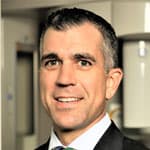
Dr. Duplantis received his D.D.S. degree from The University of Texas Health Science Center at San Antonio, Dental School in 1999.
He continued with postdoctoral training at Baylor College of Dentistry, earning a certificate in Advanced Education in General Dentistry in 2000. He has also applied for, and been confirmed for his Fellowship degree from the Academy of General Dentistry this coming July. He has been in private practice since 2000 in the North Fort Worth, Texas area. In private practice, he treats all ages with an emphasis on restorative and aesthetic dentistry.
Dr. Duplantis is a member of Catapult Educations Speakers Bureau and has been a member of several Aesthetic and Restorative Continuums, most recently the Spear Education Study Club. Dr. Duplantis has always had an interest in "high-tech" dentistry and has been incorporating CAD/CAM technology in his practice since 2004. Formerly a CEREC user, he is now a user of the 3M TrueDefinition Oral Scanner, the iTero Intraoral Scanner, and the Glidewell Laboratories fastdesign.io mill. Dr. Duplantis has also written several articles regarding digital dentistry for various dental publications. He has helped 3M and Glidewell on various projects regarding the scanner an mills, and is a member of the panel of experts on the website TrueDefDoctors.com. He is also a clinical consultant for Glidewell Laboratories. Dr. Duplantis resides in Keller, Texas with his wife, Ellen, and his children, Austin and Ava. He is an avid cyclist, enjoys shooting sporting clays, and loves to be outdoors.
Today we'll be discussing the soft-tissue diode laser and how it can help you perform a variety of soft-tissue procedures with greater patient comfort and less healing time. Our guest is Dr. Chad Duplantis, who maintains a small group private practice in Fort Worth, TX, focusing on aesthetic and restorative dentistry. In 2020, Dr. Duplantis co-founded the Facebook Group Dentists IN the Know, which is designed to keep the dental industry well-informed.
Transcript
Read Full Transcript
This transcript was automatically generated and may contain errors or inaccuracies. It is provided for reference and accessibility purposes and may not represent the exact words spoken.
You're listening to the Phil Klein Dental Podcast
Thanks for joining us. I'm Dr. Phil Klein. Today, we'll be discussing the soft tissue diode laser
and how it can help you perform a variety of soft tissue procedures with greater patient comfort
and less healing time. Our guest is Dr. Chad Duplantis, who maintains a small group private
practice in Fort Worth, Texas, focusing on aesthetic and restorative dentistry. Dr.
Duplantis is an author, lecturer, and a key opinion leader with a focus on digital, implant,
and restorative dentistry. In 2020, Dr. Duplantis co-founded the Facebook group Dentists in the
Know, which is designed to keep the dental industry well-informed. Dr. Duplantis, it's a pleasure
to have you on the show. It is always a pleasure to be here with you, Phil. Thank you so much.
Yeah, so tissue management is a big thing. I mean, there's no question. It always has been,
even more so with... scanning, it's still critical as always with the traditional impression taking
to manage the tissue in the best way. But now with the new scanning trend that we're all seeing
across the profession. You know, if you don't see the margin, you can't scan it. So obviously
there's tremendous amount of significance and importance in the fact that it has to be isolated.
It has to be retracted. You want to minimize bleeding and so forth. So there's no question soft
tissue dialed lasers are becoming more and more popular because they work in that realm. So why did
you decide to use a soft tissue dialed laser in your office? And having done so, how has your soft
tissue dialed laser added value to your practice? I've used a laser in my practice for a number of
years. You know, I think when we first got out of dental school, I had an electric surgeon.
And it was just such a wonderful tool. And I think, Phil, you probably remember the electrosurgeon.
I know there's some people that still swear by it. You know, it always scared me because here you
are making sure that there's this grounding plate under the patient's back. You're utilizing this
tool that carries electricity. And there was a great depth of penetration.
And so what you cut, you would have to allow for the tissue to retract and necrose following the
cutting. And with a diode, I found that that depth of cut, what you see is virtually what you get.
Yes, it's a very, very shallow depth of penetration. So you're not going to have that necrosis and
that retraction. you know, comes afterwards. And also with a diode, you're not having to ground the
patient. You know, you're actually using a laser versus, you know, electricity for lack of a better
term. And it's just a wonderful tool to have in the armamentarium. Yeah. That name electrosurge
really brings back old memories. I mean, you could smell the tissue burning in the next room. Yeah.
Yeah. You know, not quite the burn smell. You will smell some burning, you know, some.
Some nice flesh, but to your original question, I think I answered part of it, but I think I've
probably been using one for 15, 20 years in our practice. So what are the greatest values to the
practice that a soft tissue laser brings? And is there any ROI that you can relate to a financial
benefit? It brings ease and efficiency of certain procedures.
I always say that a laser, there's a lot of tools in dentistry that we need, but they're not going
to be real ROI generators. I think that you can generate an ROI from a laser,
but to me, I see it more of a need in every practice versus that of being just something to
generate income. It adds value in patient comfort and in efficiency for the clinician.
So do you use the soft tissue laser on almost every case that requires tissue management to some
extent? I wouldn't say on every single case, but on the vast majority of them,
the answer is yes. I mean, it's so nice to have something that's just right there, that's portable,
that's easy to use, and that does the trick. So it is a great tool for tissue management,
you know, especially when, you know, you had mentioned about the digital age of dentistry, about
impression taking, you know, having something that can immediately.
manage, retract, coagulate the tissue, it's second to none,
you know, just to have it right there. So I use it as a standalone procedure for tissue management,
and I use it as a secondary feature for tissue management or procedure for tissue management in a
lot of cases. So it's something that we do use quite frequently in the practice. Give me an
example, if you would, Dr. Duplantis, where you would absolutely reach for your soft tissue diode
laser. for that clinical application. Like there's no way you're going to keep moving through this
case without doing something with a laser here. Give us an example of that. Better than that,
I'll give you a case that there's no way that I'm going to start the case without having the laser
in my hand. And there's two that come to mind immediately. You know, if a patient loses a crown,
let's say it was over the weekend, you know, those supercrestal fibers, they will pull that
gingival tissue just right around those crown margins and the patient comes in. and you know that
all you're going to have to do is re-cement the restoration, you look in there and the tissue's
grown up over the margins. And so you've got to retract that tissue immediately. I'm not going to
start that case until I've told the patient that I'm going to anesthetize you. And this is a case
where we're going to use the laser. Another case where, you know, we're doing a crown preparation
and, you know, we've got, we've got circular bleeding. We've got excessive tissue in the margin
area. I'm not going to proceed until I have that laser in my hand. Implant uncovering.
If I go to uncover an implant or I go to seed an implant, I'm not going to do that until I have a
laser in my hand. You know, on seeding an implant, on the majority of cases, I won't do it until I
have the laser in my hand and the patient's anesthetized. It's a wonderful procedure. There's
another case that I'd never start, a frenectomy. Those are the things that I do. I'm going to do
that with a laser for a number of reasons. Let's talk about a dentist who's looking to buy one of
these. What are some important considerations that a dentist should keep in mind when looking for
and eventually purchasing a soft tissue dialed laser for his or her practice? I think the first
thing that we need to understand is there's so much buzz about lasers, and you just answered the
question when you labeled it, but there's so much buzz about lasers. And there's some lasers out
there that can do almost everything for you, but they come with a price tag. What you need to
understand about a diode laser, it is truly just a soft tissue laser. And that's really important
to understand. I mean, it's not going to cut bone. It's not going to cut tooth. You're not going to
be able to do anesthetic-free restorations. This is truly a laser that's used for soft tissue.
we're all going to look towards in dentistry is price, but we're going to look at, you know, value
and quality for the particular price that we're paying for the product. And so,
you know, you don't need to spend an arm and a leg on a diode laser. I say that it's something that
you're not going to use on every single case, but it's something that I believe that every single
dental office needs to have. And so, you know, look for the quality for the craftsmanship.
You know, you want to make sure that it's robust and it's sound. I know you recently evaluated,
Dr. Duplantis, a soft tissue laser. Tell us about that. Yeah, absolutely. You know,
Shofu, who's a really good friend of mine, and they're a great industry leader for various
products, they came to me and asked me to evaluate their new Dentalase. And,
you know, I was really, as was my team, blown away when we opened up the box to see, you know, how
small it was. And it has actually become our go-to laser in the practice for these soft tissue
lesions. You know, sometimes I just want to grab and go, and Shofu's quickly become that
alternative for us. It's as robust as a stainless steel curing light. I mean, it's going to
handle... a lot of going back and forth. You know, some of the ones that I've seen are built rather
inexpensively. And unfortunately, that to me seems like it might break down. So you want to hold
it. You want to feel it. You want to make sure that it's comfortable to you, that it's going to be
comfortable to the patient. And all of that's available at a good price from a quality
manufacturer. So generally speaking, what are the newer soft tissue dial lasers looking like as far
as size footprint in the office? You know, it varies. You know,
they're relatively small. And I think nowadays, everybody's trying to come out with one that's
smaller and smaller and smaller. I'll tell you a story. I had one that I was testing not too long
ago, and I was almost afraid to tell my team that they were going to have to move our current soft
tissue laser so that we could test this soft tissue laser. As a key opinion leader,
we get lots of products in the office, and sometimes I'm scared of telling the team that we've got
something new to try out. It was all boxed up. and we pulled it out and set it on the counter,
and it took up no more space than a curing light. So they can be as small as a curing light. I know
I keep using that analogy, but they can be as small as a curing light. And I would say I've seen
them as large as a large shoebox, but most of them range in between those two ranges.
Some of them are wireless. Some of them have a cable that's attached to them. So they can take up a
relatively small footprint, but the majority of them are going to be Maybe the size of a lab box
that comes, the majority of the new ones are going to be the size of a lab box that comes from your
dental lab. So some of them are cordless? Some of them are cordless, yes. There's a charging
station or a base station, and then it's a handheld cordless laser with a tip that either is
activated or not. That one is probably more expensive, obviously, than the ones that are wired.
You'd be surprised. They're really not. You know, these things have come down in price quite a bit.
I mean, you can get a very robust, well-made laser for around $3,500.
Yeah, so it's not atypical for dentists sometimes to get excited about new gadgets and things to
incorporate in their practice. So they buy something like a soft tissue laser, and then it sits on
the shelf. You know, they feel like, well, it's a soft tissue dialed laser. I'm not spending $100
,000 for it. But meanwhile, they're not using it the way they should. What do you say to those
dentists? You know, I say that you're just not really visualizing your cases in the way that they
should. You're talking a dentist that's purchased one that's just not using it. I think there's so
many capabilities, and this is an item that you don't want to collect dust.
I mean, there are a lot of things that this is going to make your life easier. You know, the
instances that I just talked about before.
But, you know, there's other instances, you know, that you can use a soft tissue laser for.
I mean, the applications are endless. Just really need to do the research as to what you can and
can't do with a soft tissue laser. But, you know, we can excise lesions. We can remove
pigmentation. We can do frenectomies, vestibuloplasties, gingival recontouring.
So for smile designs and whatnot, you can do ponic site preparation. Remove excessive tissue after
orthodontics, do a distal wedge. It works in pulp capping. And, you know, the one thing that I
really haven't mentioned that most people think of when they think of a laser is gingival
troughing. I mean, that's one of the many things that we can do. So look at all the things that
you're doing that you may be making life harder and start using that laser. And the other thing
that I would mention to those dentists is, you know, are you going to go towards a scalpel or a
laser? And in my office, it's always going to be a laser. If they require a scalpel, I'm not going
to be doing it. They're going somewhere else. It creates a relatively bloodless environment.
There's minimal swelling. There's minimal scarring. It coagulates the tissue. You don't need to
suture. It reduces the healing time. And the real added benefit is there's really no pain with...
with a laser. You know, if you look at some of these images of the phrenectomies that we do, that's
what I always go to when I think about pain. You go to some of these images and you're like, oh my
gosh, that looks like it hurts. It doesn't. It's a relatively painless procedure. What about
biopsies? Did you mention that, that you do soft tissue biopsies? Yes. Soft tissue biopsies.
Absolutely. You know, we know the anatomy. We know how to do it safely. The only thing with a
biopsy is when you send it in for analysis, you need to let them know that the specimen was removed
utilizing a laser. so that they understand why the tissue is charred on the edge that you cut from.
Yeah, so if our audience is interested in getting more information on soft tissue lasers, you can
obviously Google that and find many of them. The one that Dr. Duplantis just evaluated was from
Shofu, which he's still using, called Dentalaze, D-E-N-T-A-L-A-Z-E.
So you can always check that out and do your research. What about the training on how to use these?
Is there any particular training? that comes with purchasing these devices from the manufacturer,
or is it up to the clinician to get the training on their own? The manufacturers usually provide
some sort of training. I know that there's online training for lasers as well. They're very easy to
use, but we all need to understand that there are regulations. They need to be registered with your
state. You should have your team. trained to a certain level and that's every team member that's
going to touch the laser in some uh parts of the country hygienists are allowed to utilize lasers
so it's really important that they're trained the training is not uh you know elaborate or
expansive. It's a very simplistic training just on safety and how to properly prepare your patients
when you're lasering it. You need to make sure that they're wearing safety glasses and that
everybody's wearing safety glasses that's using the laser. And just to understand the mechanics of
it as well. So I think it's very important that you all get trained to a certain degree. Speak with
the manufacturer or the sales representative that's selling that laser to learn a little bit more
about that in your area. Yeah. Dr. Duplantis has been very, very good. You covered a lot of
interesting points about the importance of considering a soft tissue laser for a dental
practitioner. As always, Dr. Duplantis, thank you so much for your time. We look forward to having
you on future podcasts and webinars. Have a great evening. Hey, thank you. You bet.
If you're enjoying our podcast, please leave a review or follow us on your favorite podcast
platform. It's a great way to support our program and spread the word to others. Thanks so much for
listening. See you in the next episode.