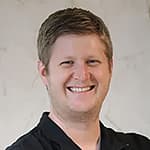
General Dentist with Advanced Laser Training · President-Elect, Montana Chapter Academy of General Dentistry
Montana Chapter Academy of General Dentistry · Academy of Laser Dentistry · Midwestern University Arizona
Read full bio
Dr. Tyler Bond is a general dentist with significant specialized training in surgery and dental lasers. He currently serves as the President Elect for the Montana Chapter of the Academy of General Dentistry and is actively teaching other dentists through hands-on and lecture formats. He is recognized as the only LANAP/LAPIP trained and certified provider in Missoula, MT and is qualified to operate all currently available dental lasers. Dr. Bond is one of the few general dentists in the state that is permitted to provide IV sedation to his patients without bringing in a CNRA or Anesthesiologist.
How do you transform 12-millimeter periodontal pockets into healthy, stable tissue without traditional flap surgery, grafts, or membranes? The answer lies in an evidence-based laser protocol that's revolutionizing periodontal therapy.
Dr. Tyler Bond is a general dentist with specialized training in surgery and dental lasers, President-Elect of the Montana Chapter of the Academy of General Dentistry, and the only LANAP/LAPIP certified provider in Missoula, Montana. With qualifications to operate all currently available dental lasers and IV sedation privileges, Dr. Bond has transformed his practice through advanced laser periodontal therapy, achieving remarkable 300% growth in his first year followed by another 100% growth within six months.
This episode explores the LANAP (Laser Assisted New Attachment Procedure) protocol using the Periolase MVP-7 ND-YAG laser, the only laser periodontal therapy with human histologic studies demonstrating true periodontal regeneration. Dr. Bond discusses how this FDA-approved 26-step protocol achieves regeneration of cementum, periodontal ligament, and alveolar bone without biologics, and why the military replaced traditional osseous surgery with LANAP. The conversation covers clinical outcomes, patient selection criteria, and the significant practice growth potential of this minimally invasive approach.
Episode Highlights:
The LANAP protocol operates through three primary phases: ablation using 1064-nanometer wavelength to target pigmented bacteria and diseased tissue, debridement with piezo and chlorhexidine to stimulate cortical bone bleeding, and hemostasis with red light therapy to stimulate mitochondrial healing responses. This systematic approach achieves periodontal regeneration without requiring grafts, membranes, or biologics.
Clinical outcomes demonstrate dramatic pocket reduction, with cases showing 12-millimeter pockets reducing to 6 millimeters and visible bone fill. The laser penetrates beyond direct contact points, killing bacteria in surrounding tissues even when physical access is limited, making it effective for treating severe periodontal disease that would traditionally require extraction.
Full-mouth LANAP treatment costs approximately $7,000-$8,000 and requires either one 4-hour appointment or two 2-hour sessions, comparable to full-mouth scaling and root planing scheduling. The procedure generates approximately $1,500 per hour with minimal overhead beyond fiber replacement costs of around $300 every 18 months.
Patient acceptance significantly exceeds traditional osseous surgery because LANAP eliminates the need for flaps, sutures, and extensive post-operative discomfort. Many patients who abandon treatment after osseous surgery on one side readily complete full-mouth LANAP therapy, making it a true practice builder rather than a procedure patients avoid.
Training includes three comprehensive sessions over 12 months in Cerritos, California, featuring hands-on experience with live patients and instruction from researchers who developed the FDA protocols. The same laser and similar protocols apply to LAPIP for peri-implantitis treatment, expanding the clinical applications beyond periodontal therapy.
Perfect for: General dentists considering laser integration, periodontists evaluating LANAP adoption, and practice owners seeking evidence-based procedures that combine clinical excellence with practice growth potential.
Discover how this game-changing protocol is helping dentists save teeth that would otherwise be lost to traditional surgical approaches.
Transcript
Read Full Transcript
This transcript was automatically generated and may contain errors or inaccuracies. It is provided for reference and accessibility purposes and may not represent the exact words spoken.
It's a meticulous protocol. You have to follow the steps, right? But if you follow the steps, it works. There's a couple of patients that I can think of right at the top of my head that we had, you know, 12 millimeter pockets, right? And we've got those to bounce back. Now, they didn't necessarily go straight back to, you know, three millimeter pockets, but like going from a 12 to a six is huge. And being able to see the bone fill like that is a really big deal. Welcome to Austin, Texas. Thanks for joining us on the Phil Klein Dental Podcast.
Today on the show, we're talking about a treatment that's changing the way dentists manage periodontal disease, the LENAP protocol with the Periolase MVP7 ND-YAG laser. Joining me is Dr. Tyler Bond, a general dentist with advanced training in surgery and lasers, president-elect of the Montana chapter of the Academy of General Dentistry, and a passionate teacher of other dentists. We'll dive into what drew him to laser dentistry.
why LENAP changed the way he saves teeth, and how it's become a true practice builder, minimally invasive, patient-friendly, and requiring no grafts, membranes, or biologics. Plus, the results speak for themselves. After adopting LENAP and LEPIP, which is the protocol for peri-implantitis, his practice grew 300% in the first year, and another 100% just six months later.
We'll talk about what drove that growth and how the periolase NVP7 has impacted both profitability and clinical outcomes. And finally, Dr. Bond shares how Millennium's training helped him integrate the laser smoothly, building confidence and consistency in every case.
Before we bring in our guest, I do want to say that if you're enjoying these episodes and want to support the show, please follow us on Apple Podcasts or Spotify. You'll be the first to know about our new releases and our entire production team will really appreciate it. Dr. Bond, thanks for joining us. Thank you so much, Phil. Excited to chat with you today. Yeah, we're happy to have you on the show. Before I hand things over to you, I want to give our listeners a quick bit of context about what we're diving into today. We're talking about...
the ND-YAG laser and a technique known as LANAP. That's L-A-N-A-P, which stands for Laser Assisted New Attachment Procedure. That's the acronym for that. And jump in, Dr. Bond, if I'm going off somewhere in the wrong direction. Yeah, sure. No worries. But you'll walk us through LANAP in just a moment. But first, I want to set the stage. The ND-YAG laser operates at a wavelength of 1064 nanometers, which makes it especially effective at targeting
pigmented bacteria and inflamed tissue, essentially without damaging the healthy structures that we want to preserve. And when you pair that laser with the LENAP protocol that Millennium has FDA approval for, we're not just removing infected tissue and killing bacteria deep in the periopocket, but we're actually helping the body regenerate lost attachment. And we're talking about cementum, new cementum, new periodontal ligament, and new alveolar bone.
all specifically demonstrated with the LENAP protocol. And as I understand it, correct me if I'm wrong, LENAP is the only laser periodontal therapy with human histologic studies showing true periodontal regeneration on a previously diseased root surface, which is very impressive. So that's why I'm glad we have you here because you are really an expert on this. So having said all that, Dr. Bond, share with us what initially drew you to laser dentistry and tell us about LENAP.
and how it has changed your approach to saving teeth. Yeah, absolutely. I'd like to say that, you know, lasers dentistry for me started in dental school. I went to Midwestern in Arizona. And one of the things that they have all the students go through is they go through the Academy of Laser Dentistry certification process. That certification process actually gets you certified in all.
just about all the laser types except for ND YAG. And so I had to learn how to use diode, erbium YAG, you know, CO2 laser, and we had to take a test and all that good stuff. So that's kind of where laser dentistry started for me. And then it just kind of continued when I went into the military. When I was in the military, I was exposed to LENAP. So the military adopted the LENAP procedure and the periolase. I think it was around 20...
2016, that the military actually adopted using this and basically replaced osseous surgery with LENAP. Why do you think they adopted it? Was it because it's so non-invasive? If anyone's done osseous surgery...
Um, it's not a practice builder. Okay. So periodontists can tell you this, that all the time someone will come in and, uh, get osseous done on one side of their mouth and you won't see them for the other half. Right. Because it's just such an invasive procedure. And so, um, I was doing some osseous while I was in the military. Um, and then I was taught, you know, they were teaching about LENAP and, uh, to me, it's just a, it's a no brainer. Um, something in the military, it's very difficult to adopt, um, new techniques.
and the periolase, they wouldn't use it unless the literature was there. And so Millennium has done a wonderful job at actually providing really good research behind their product, so much so that they were able to get it FDA approved, right? And so that just goes to show to me that...
The efficacy of utilizing the laser for LENAP and the military using it should speak volumes about the procedure itself. Tell us what LENAP actually is because it's really a protocol using the NDAG laser. So what's unique about it and why is it FDA approved? It's FDA approved protocol. So they're not FDA approving the actual laser.
It's the protocol. So what is the protocol? Yes. Yeah. So the protocol, it's actually a 26-step process to where essentially, if you boil it down to, there's the first step, which is an ablation step, where, like you were saying earlier, the NDAG laser actually targets the pigmented bacteria and also targets the diseased tissue and vaporizes it, right? We're getting it away from the teeth that are periodontally involved and actually...
destroying that bacteria and penetrating the affected tissues as well. And so that's kind of the first step. The second step is a debridement step. So we're essentially reutilizing a piezo chlorhexidine and three different tips.
to essentially debride the teeth and then also to create some bleeding from the cortical bone so that we can actually get the healing that we're looking for. The next step would be a second setting on the laser. We're creating hemostasis and we're also creating absorption of the red light, very similar to like red light therapy where we're actually stimulating the mitochondria, the powerhouse of the cell to actually create that regeneration that LENAP was cleared for, that osseous regeneration.
And so there's those steps. And then we're obviously, we're doing some occlusal adjusting and some other things that are involved with that process. But those three are like the three major steps. So you said in the beginning, you said 26 steps.
Did you mean three steps? Micro steps. I'm really simplifying it down right now. Tell me about the training involved because you do this. We've talked about this. You've had tremendous clinical success with this. You're not a believer because you read literature on it and talked to other colleagues. You're living the thing. You're doing it. Absolutely. You're seeing results where you're getting regeneration.
of attachment on patients that otherwise would typically need surgery. And I'm not even sure they can get the attachment if they had the traditional surgery done, right? Yeah, it's very rare to get that kind of attachment doing traditional osseous surgery. And one of the things with LENAP is you're not adding biologics to this protocol at all. You're literally just utilizing...
the laser and a piezo here and so you're not having to add you know prf bone graft all that other stuff to get the kind of results that we're talking about and it's actually actively discouraged to use any sort of other biologics
to get the healing that we're looking for. So you're stimulating those cells that are necessary to regenerate the PDL, the cementum and the bone. And you get the red light is actually being absorbed by the mitochondria. And that's how we're able to basically supercharge the cells to create a healing that we couldn't just couldn't otherwise without using some very, very expensive products. And even then, it's debatable as to whether or not it even compares to what we're doing.
uh in this laser association what was the name of the group the what was the name it was a america academy of laser dentistry yeah okay very well known academy of laser dentistry and that's wonderful that you had that opportunity because i don't know how many dental students get to do that and you're a general dentist yes
Are you referred patients? Are patients coming to you because of periodontal disease knowing that you offer this treatment? Yes. Yeah. So I do have some doctors that are referring to me. So I'm in Missoula, Montana. And the next closest periolase is probably a three hours drive away. And so there's very few people that are actually trained on this, at least in Montana is concerned. And so I'm getting people coming from, you know, three, four or five hours away, potentially getting this procedure done. And I'm doing it.
you know a number a few times a week probably so what part of your practice what percentage of your general practice is linap therapy most of my practice is not general dentistry um it's very rare that i actually do fillings or crowns or anything like that anymore most of my
practice is either sedation or surgery based. And so of my surgeries, it's probably 20, 30% that I'm utilizing the laser in some form or another. And the other type of surgery is extractions? Extractions, all on four implants, like you name it. So wisdom teeth, I do.
a lot of different types of specialty surgeries. And that's interesting because you're a general dentist, but you're doing a tremendous amount for your area. I guess there's not a whole lot of oral surgeons and periodontists in your area.
Yeah, there's not a bunch of specialists, but they're also not necessarily adopting, you know, these new technologies. So I came out of dental school doing a lot of more advanced things to begin with. And so I've just kind of been building upon that ever since I graduated. And so, I mean, I actually go teach at other places on how to do implant surgeries and all other sorts of stuff. That's phenomenal. When did you graduate dental school? 2018. Yeah, because you look really young.
I know the audience can't see you. This is an audio podcast, so they can't see you, but you look like you could have graduated dental school a few years ago. Thanks. I'll take it. Yeah, you'll take it. As hard as you work, you'll take it. So we talked offline about this. You had remarkable growth somewhere in the range of 300%, 300% in your first year after getting this periolase.
MVP seven, I think it is, right? 300% growth in your first year, and then another 100% growth within six months after that. Sure. So what key factors do you attribute to that growth? Yeah, I mean, so I bought a really small practice. So kind of to put numbers to these percentages that we're talking about, I bought a practice that was doing probably 380,000 a year. And after my first full year, we did about 1.5 million in adjusted production.
And so Lanap certainly had a big, big role to play in that. I did a lot of things like other types of surgeries as well, which also helped. But certainly that first year, I was just trying to do my best to just try and save teeth.
um i as as good as i am or i like to think as i am good at doing implants i'd much rather save teeth teeth are a lot easier to manage especially if things are potentially going wrong and so i talk to people and they're like oh you must be doing lots of all-in-four i'm like well actually i'm trying to save teeth a lot more we can always go to the all-in-four option but giving given that i have the the periolase like
I'd much rather just try and keep teeth around. And so that's kind of where the, you know, the first year, year and a half of my practice was, was just trying to establish, Hey, like I'm not coming in just yanking everybody's teeth out. I'm really trying to, you know, promote what's best for the patient. Yeah. So let's, let's talk about, let's talk about a case selection. How far can you push Linap? In other words, what kind of severity of period disease are we looking at where you can say, I can do a lot to fix this? Like what's the,
What's the conversation with the patient who comes in with moderate to severe generalized perio disease? They've got mobility. They've got pockets. What's the conversation look like? And how far can you push Linap to get this patient back to health?
So that's, that's a great question. So it really depends. Okay. So I talked to patients that, I mean, in most office offices, you could say, okay, this person needs to go to like an all on four or just needs to slick everything and be done with it. Right. But I really, what I do is I spend a significant amount of time with my patients, um, trying to figure out what they're actually, what their actual goals are, because like to say to, Hey, like, let's go to just start everything clean. Okay. Now I need $60,000.
Right. Versus going to the nap where we're looking at like seven or eight say, Hey, okay. If I can tell you that I can save your teeth for like five years, is that worth it to you? Some people are like, no, I just want to get restarted. Like we'll start over or no, let's try and hold onto these teeth for as long as possible because the nap can do a lot. Okay. It's not a miracle like laser, but it can do some.
pretty tremendous things. You just have to give it the chance and you have to follow the protocol, right? So when I talk to the patient, I say, hey, we can definitely delay how long it'll take to get you to go into like the all on four. And that's going to happen one day. I can't tell you when, but what I can tell you is if we do LENAP, we're going to be able to extend that timeline significantly. So let's say you're not ready to go to the $60,000 all on four. We can delay this and we can also stop the disease.
get the tissues healthier because kind of the, for people that do all on four, one of the worst things is dealing with really crummy tissue. Right. And so even if they go to the LENAP, I say, Hey, sometimes I'll even credit some of the LENAP to going to all on four. If that's the option that we decide, okay, this isn't going the way that we planned. Let's go to that, you know, the, the nuclear option. Right. But you just have that, that conversation with those patients. And what I can tell you is.
Um, I've done it on multiple, like tons of severe periodontal patients that are still periodontal patients. They haven't gone to the all on four option or dentures. I was going to ask you that. I was going to ask you how often, so I mean, how often are you surprised on the upside with very, I mean, so like there's, there's, there's a couple of patients that I can think of right at the top of my head that we had, you know, 12 millimeter pockets. Right. And we've got those to bounce back. Now they didn't necessarily go straight back to, you know, three millimeter pockets, but like going.
from a 12 to a six is huge. And being able to see the bone fill like that is a really big deal. You can get the depth of treatment with this LENAP protocol using this NDAG laser. You can go down 12 millimeters with that laser and kill bacteria, ablate this bad tissue and decontaminate those pockets and get some regeneration in that area. Yeah, even at 12. And so one of the things with this laser is it doesn't just stop where it's touching. It actually
penetrates and so they've had studies to where even if you're not specifically touching the bacteria it's still going to penetrate and kill the bacteria and the surrounding tissues as well so there is penetration so let's say i only get to like
10 millimeters or whatever it's still going to penetrate a few more millimeters and kill that bacteria so let me ask you this the machine is not cheap
I mean, anything as sophisticated as an NDEI Glazer, especially by a company who has an impeccable reputation, Millennium, the Periolase MVP 7 is what, $100,000 in that range? Yeah, around there. And something to consider there is they also require the training, which is part of that, right? And so anything good in life isn't cheap. The Lanap.
is a better version of osseous surgery, right? If there's so many more benefits to doing LENAP versus doing traditional osseous that, I mean, what is it? Like half of the periodontists have pretty much adopted LENAP at this point. And so it does things better. You don't have to flap. You don't have to suture. You're actually killing the bacteria instead of just kind of potentially just moving it around. What would you tell a dentist who's really interested in this and saying, you know what?
That's my whole philosophy. I want to be minimally invasive. I don't want to do surgery when I don't have to. I want to save teeth. I want to tell these patients that we have an alternative to surgery, which is extremely effective, scientifically evidence-based. It's more comfortable for you. You mentioned $7,000 to $8,000. That's a full mouth treatment. Yeah, full mouth. Okay. And what is that? Moderate perio disease? Something like that?
If I'm treating the patient for LENAP, LENAP is a full mouth procedure, okay, instead of just, you know, a specific tooth or whatever, what have you. It's around that cost, right? And so if someone's looking for like an ROI, like think of it, they'll tell you basically you do one full mouth, pays for your laser for like three months or something like that, right? But the thing is, is it's not just LENAP that...
that the periolase can do this. There's lots of other potential modalities that you can utilize, which I use on a, use those on a daily basis. Give us an example. Yeah. So the, the version for, for teeth, there's the lip, which is for implants, right? So dealing with.
peri-implantitis, dealing with bone loss around implants. That's one thing. Hemangiomas, it does an amazing job getting rid of those. They've got all sorts of other types of procedures that you can do with it. I mean, your main driver and the main focus should be LENAP because the whole point is trying to save these teeth and being able to perform the surgery because, man, a lot of people really don't like osseous surgery. I mean, I've had people that had osseous, they come to me and I say, hey, we'll do LENAP.
And they're like, once they learn about it, they're like, yeah, I'm in. Like, no question. So the return on investment is rather quick at $8,000. I think so. I mean, yeah, I think so. How many visits is that full mouth Lenop treatment?
So if you're doing a full mouthful nap, you can either do it one four hour visit or two two hour visits. Very similar to like doing full mouth SRPs, right? Except the doctors, you know, doing the procedure. But you treat it like that. So if the patient wants to do four hours, I personally don't like doing four hours because that's a long time of me being bent over. But yeah, it's essentially a four hour treatment time. And then some follow up visits with teeth adjustments and stuff like that. So that's $1,500 an hour in that range. Yeah.
Okay, so the return on investment is certainly there. There's hardly any overhead to it as well. Outside of the payment, the fibers are really cheap. I mean, I think, let's see, I've had the periolase for, what, a year and a half, and I've probably gone through three fibers, and they're like 300 bucks a piece or something like that. So, like, really, there's hardly any added cost to utilizing the laser. Yeah, and the periolase has such a tremendous reputation and millennium as far as quality goes. So you shouldn't be really anticipating too much.
any problems with the actual laser itself i've had zero maintenance issues yeah that's like absolutely none so let me ask you about the training you mentioned that the training is included with the purchase of the of the machine what is the training like and how long is it yeah so they break it up into three sessions the first days three days and then six months later you'll do it
I think it's six months. You'll do, you'll go out again for a day in Cerritos, California. And then like six months later, you'll go out for another day.
And so it's very comprehensive. It's certainly the most training I've ever had on a laser. And that's coming from a guy that did the ALD certification. And so very much hands-on, being taught by people that put the research together, that actually develop FDA protocols. And then you're actually, you've got live patient experiences on all three of those visits as well.
How about ongoing technical support as far as the company itself? If you have to reach out to Millennium, whether it's a problem with the machine, which you haven't seen, or just a clinical issue.
Yeah, I mean, my sales rep, I guess, has been very responsive. I mean, whenever I have a question, so especially when I start going through the LePitt protocols, he was very helpful, connected me. That's the implant protocol, yeah. Before, I was technically trained on it, so they did like the first three days, and that's just.
teeth right and so i was like hey i need to use this for the implants and they got me in connection connection with one of the what's the difference between the actual protocol
I guess it's the tips themselves. No. So the tips aren't any different. The protocol is not really any different. You just have to be very careful of how much energy you're delivering to the implants because then the ag laser is not a CO2 laser. It can deliver heat. And so you actually have to do some math to make sure that you're not overheating the implant or the tissues around it. But outside of that and just kind of being careful of that, the protocol is no different.
So if a dentist, as I mentioned earlier, was really interested in doing this, what do you recommend to that dentist as far as integrating it into their practice? For the practicing period on us, it should be a no-brainer. They just need to talk to their perio friends about it. For general dentistry, I mean, the nice thing about general is we have a hygienist in the hygiene program, right? So you just need to get your hygienists on board and have them understand the science behind this because I guarantee you that they're cleaning out six, seven, eight.
nine millimeter pockets and they're hating it and they're not getting the calculus. Right. And so educating them, my hygienists love it because they don't have to go after calculus at seven millimeters, eight millimeters, nine millimeters. They know that when it's, you know, seven, eight, nine, 10 millimeter pocketing, they just say, Hey, you're going to see Dr. Bond for LENAP. Right. So they actually.
really enjoy it because now they're not they're just having to work with four or five six millimeter pockets right and i have to do the actual hard stuff so basically their role is to
educate the patient and then turn the patient over to you they don't do any laser work themselves in montana um they can they can do some laser work so they they have a training program so that they can do laser pocket disinfection so like let's say they have a little bit of bleeding or something like that they could potentially go around with the the periolase um and use uh use that setting
uh, to, to deliver energy on a low yield scenario, kill some bacteria and provide. So that's good for recare. That might be good for recare appointments. Yeah. Yeah. So they can do their kind of the recare laser therapy stuff, but, uh, not one nap and not like sometimes I'll go through and touch up some areas if it didn't get as good of a result. And you have one, you have one periolase in your practice.
Correct. Yeah. Yeah. To have two of those, that's a luxury to have two of them. Yeah. Yeah. My practice only has four operatories. And so it's pretty easy and easy to roll around. What about those patients that are coming in for regular periodontal therapy? They may have some gingivitis, but minor pockets. Would you still use Linap for them as well? You absolutely can. I mean, I've had patients that are like, hey, I've got some very tenacious bleeding that just won't go away.
coming in every three months. Okay, we can look at utilizing the LENAP therapy for those patients. Even on those patients, the tissues just look incredible even after just two weeks. So it's really the excitement of the practice that has to convey this to the patients. And once the patients are educated on what this can do versus the alternative of traditional surgery, it's kind of like a slam dunk. The patients that need the therapy to save their teeth are going to go for it.
and the ROI comes back very quickly. Yeah, absolutely. I mean, if you believe in the product, you're going to obviously talk more about the product, right? Like I'm one of those people that I don't have a piece of technology that just sits on the shelf, and I've invested in quite a bit. But I can tell you I've got only two lasers, a diode and a periolase, and I'm using both of them.
like pretty routinely so um if you're going to get this i mean understand the literature understand the protocol it works it absolutely works follow what millennium teaches and uh and you know talk to your patients about it because like i said man osseous surgery is not a practice builder when i've seen both sides of the coin lenap just it's you get so much better results so if a dentist says to you
you know, Dr. Bond, I'm a GP. I got a lot of restorative to do. I got veneers. I do cosmetic dentistry. I do some, maybe some Invisalign, but I don't want to get into perio. I'm going to send that out. In your mind, there's no reason not to have one of these lasers, even if you're just doing general perio therapy on patients that are not severely diseased, right? Because it's so effective. It's not really a reason because it will pay for itself, even if you're focusing on your aesthetic dentistry.
You could have an associate in the office that does this, right? Yeah, absolutely. I mean, it's getting to the point where I want my associate to go out and get the training so that he can go start doing one app. It's a meticulous protocol. You have to follow the steps, right? But if you follow the steps, it works. And it's a really good, if we're talking about revenue, it does, I mean, per hour, it's a pretty good return with very low cost. It's not like a crown where you're automatically, okay, now I'm going to have to spend.
like you know two three hundred dollars on materials and lab bills and stuff like that it's you're literally just cleaving off part of a part of a fiber and it's for me it's a really relaxing surgery
Because I do the full spectrum, right? I do wisdom teeth all at four. Sometimes it's a rodeo. The LENAP is a surgery. You know, it's like, okay, now I'm kind of, you know, just on cruise control. Like the next two hours, I'm like, okay, I know how this is going to go. It's going to be smooth. We're still making pretty decent money, stuff like that, right? When I practice endodontics, not anymore, but when I did, and I would do a very difficult molar root canal, my next patient would be a bicuspid or an anterior. My assistant would come in and say, you got a vacation.
tooth coming in and i just sit there and i'm like i'm just that's perfect i have a smile on my face i sit down talk to the patient sure don't even realize that i'm doing root canal because it's number right it's number nine you know i mean right yeah 98 of my cases were curved molars that were just you know calcified all the stuff nobody else wanted nobody else wanted it right broke broken instruments so those vacations and it seems to me that doing this kind of work that you're talking about is is kind of i wouldn't say it's a vacation
experience, but it's certainly a lot less stressful than a lot of other things. It is not a stressful surgical procedure at all. You have to learn the protocol, but once you've got it down, it's very relaxing. Yeah. Well, listen, Dr. Bond, it's been a pleasure talking to you. We'll have you on again. I hope our listeners look into LENAP and just do the research, read about it. That's what these podcasts are good for. Talk to people like Dr. Bond, other colleagues, and find out how lasers can really change.
your practice. It sounds like an incredibly satisfying subspecialty of general dentistry. Yes. Absolutely. And I mean, it gets really nice results. And that's what it's all about, giving the best to our patients. Absolutely. Dr. Bond, thanks so much for your time. Yeah, of course. Thank you so much, Phil.
Clinical Keywords
LANAPLAPIPPeriolase MVP-7ND-YAG laserTyler Bondperiodontal regenerationlaser periodontal therapyMillennium Dental Technologiesperi-implantitisosseous surgery alternativeAcademy of Laser Dentistrydental laser certificationperiodontal pocketsPDL regenerationcementum regenerationalveolar bone regenerationminimally invasive periodonticsDr. Phil Kleindental podcastdental educationlaser dentistry trainingpractice growthFDA approved protocolperiodontal disease treatmentdental laser procedures