General Dentist & Laser Dentistry Pioneer · Director of Laser Dentistry, New York Hospital Medical Center of Queens
New York Hospital Medical Center of Queens · American Dental Association · American Academy of Periodontology
Read full bio
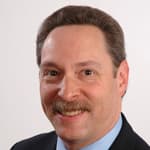
Dr. Convissar is a pioneer in the field of lasers and one of the world's foremost experts on dental laser technology. One of the first dentists to incorporate lasers into general practice, Dr. Convissar has over two decades of experience with CO2, Diode, Nd.YAG and Erbium wavelengths.
An international lecturer from London to Florence to Sydney to Bangkok to Hong Kong and everywhere in between, Dr. Convissar has written four textbooks translated into Spanish, Portuguese, and Greek, and over a dozen peer reviewed papers translated into eight languages. His ground breaking laser treatments have been featured on NBC-TV News, CBS-TV News, the WABC Radio Network, and other programs. Dr. Convissar practices laser, cosmetic and restorative dentistry in New York City with his wife and partner, Dr. Ellen Goldstein. Dr. Convissar also serves as Director of Laser Dentistry at New York Hospital Medical Center of Queens.
Dr. Convissar is also an expert in the field of oral cancer detection and biopsy techniques. He has written numerous publications and taught hundreds of dentists how to examine patients for oral cancer, and how to perform biopsies of suspected lesions. Drs. Convissar and Goldstein are among the first dentists in the world to have incorporated the unique “Velscope” oral cancer detection device into general practice.
Your practice already owns a laser — so why is it sitting in a closet collecting dust?
Dr. Robert Convissar is a pioneer in dental laser technology and one of the foremost authorities on clinical laser application worldwide. One of the first general dentists to incorporate lasers into everyday practice — beginning in 1989 — he brings over four decades of hands-on experience with CO2, diode, Nd:YAG, and erbium wavelengths. He serves as Director of Laser Dentistry at New York Hospital Medical Center of Queens, has authored four textbooks including the landmark Principles and Practice of Laser Dentistry (now in its third edition, with a foreword by Gordon Christensen), and has published more than a dozen peer-reviewed papers translated into eight languages. His clinical work has been featured on NBC-TV News, CBS-TV News, and the WABC Radio Network.
In this conversation with Dr. Phil Klein, Dr. Convissar makes the case that the single greatest barrier to laser adoption is not cost — it is the near-universal absence of adequate training. Drawing on decades of lecturing worldwide and fielding daily follow-up questions from course alumni, he explains precisely why CO2 is the wavelength of choice for non-surgical laser periodontal therapy, what the ADA and AAP clinical practice guidelines actually say about wavelength selection, and why most dentists who shelve their lasers were set up to fail from the moment of purchase. The episode is a thorough, evidence-grounded walkthrough of how to integrate non-surgical laser periotherapy into a general practice workflow — clinically, financially, and operationally. Beyond periodontics, Dr. Convissar also covers the laser's role in gingival troughing, soft tissue biopsy, peri-implantitis, clear aligner adjunct procedures, and residual ridge management.
Episode Highlights:
Why the ADA and AAP clinical practice guidelines explicitly exclude diode, Nd:YAG, and erbium wavelengths from non-surgical periodontal pocket therapy — and why CO2's preferential absorption by sulcular epithelium makes it the evidence-supported standard of care for pocket decontamination after SRP.
The critical sequencing protocol: laser non-surgical periotherapy is always performed after a full course of quadrant scaling and root planing, followed by a two-week reevaluation period — never concurrent — and why deviating from this protocol predictably leads to treatment failure.
Patient selection criteria for laser periotherapy: why poorly controlled diabetics, heavy smokers, and immunocompromised patients require modified expectations rather than exclusion, and why six millimeters is the evidence-based pocket depth threshold beyond which surgical referral is indicated (per Rella Christensen's landmark study).
The revenue model for non-surgical laser periodontal therapy: because no ADA procedure code exists for this service, it is billed as a non-covered, out-of-pocket fee — with full-mouth treatment packages ranging from $5,000 to $10,000 in metro markets, substantially outpacing the reimbursement ceiling on D4341 quadrant SRP alone.
What a defensible laser training program must include: a minimum two-day format, exposure to at least two wavelengths from at least two manufacturers, hands-on completion of no fewer than a dozen procedures on pig mandibles (including frenetomy, gingivectomy, soft tissue crown lengthening, periocpocket decontamination, and biopsy), and a 75-question multiple choice examination — and why company-sponsored seminars do not meet this standard.
Perfect for: general dentists considering laser adoption or looking to move an underused device off the shelf, dental hygienists in laser-permitted states exploring non-surgical periotherapy, and any clinician interested in expanding their perio protocol with a revenue-generating, evidence-backed adjunct.
If you have been waiting for a clear, no-hype framework for integrating laser dentistry into your practice — from clinical rationale to patient conversation to ROI — this is the episode to bookmark.
Transcript
Read Full Transcript
This transcript was automatically generated and may contain errors or inaccuracies. It is provided for reference and accessibility purposes and may not represent the exact words spoken.
Without question, there's a revenue upside. Depending on how you market it, depending on how well you want to get involved with this, depending on exactly how much of the procedure you want to do, in the metro New York area, for example, dentists are charging as much as $10,000 for a full mouth, non-surgical, laser periodontal treatment.
Welcome to Austin, Texas, and welcome to the Phil Klein Dental Podcast. Today we'll be talking to a general dentist who has been using lasers in his dental practice since 1989. Although the dental laser, specifically the CO2 laser, can be used for a broad array of procedures, we'll be focusing on its use as an adjunct to SRP, its clinical benefits of pocket decontamination, improved soft tissue healing, as well as the additional revenue it brings to the practice.
According to our guest, once you get the right training and start using the CO2 laser, you will find it to be an indispensable tool. Our guest is Dr. Bob Convissar. He is a GP with over 40 years of clinical experience. In addition to maintaining a private practice in New York City, he also lectures worldwide on laser surgery, biopsy techniques, and infant tongue-tie release.
He's the author of over half a dozen textbooks, including Principles and Practices of Laser Dentistry, now in its third edition. Before we bring in our guest, I do want to say that if you're enjoying these episodes and want to support the show, please follow us on Apple Podcasts or Spotify. You'll be the first to know about our new releases, and our entire production team will really appreciate it. Dr. Convissar, thanks for joining our show. My pleasure. Great to be here.
So I think I could say pretty confidently that among the dentists that are listening to this podcast, almost all of them have thought about getting a laser for their practice or have one already. So to begin this podcast, Dr. Convissar, tell us in your experience, what are the major advantages of using a dental laser? And I know there are a multitude of kinds of lasers out there. We're going to get into that. But tell us the major advantage of introducing a dental laser into the workflow of dentistry. There are so many advantages. It would just take the entire...
podcast to talk about them, but I'll briefly highlight a couple of them. First is hemostasis, the ability to do a surgical procedure in an environment that otherwise would be filled with blood. And when you use a laser, lasers are wonderful hemostatic agents. So you're doing surgery in a clear, clean
bloodless field. It's absolutely wonderful. Number two, superior healing. Laser wounds heal much more quickly with a higher tensile strength. Number three, the procedures go much more quickly. And when you talk about time, you have to realize there's only one thing that dentists sell. We don't sell crowns. We don't sell implants. We don't sell veneers. We sell chair time.
And anything that's going to allow me to do something more quickly and more efficiently and more effectively is going to put more money in my pocket because I'll be able to turn over that chair more quickly and get more people in, do the treatment, get more people out. Let me ask you this question first. So when I talk to a lot of general dentists and I ask them if they use a laser, they go, yeah, I mean, I have a laser. I use it sparingly for certain indications. I do reach for the laser.
but most of the time it's sitting on the shelf. They're not using it. Now, when I talk to you, not only in this episode, but we've known each other for a long time, I hear you say it's an indispensable tool and you'd have to close your practice down if you're laser broke. Why is it that for many dentists, they're not seeing that as much as you are? And as I said, you wrote a book on it. What is it that they're missing? Is it the cost of it?
Is it the fact they don't have the right training? Is it that they're just so used to picking up a handpiece from dental school? It's just been the way they've been doing it forever. What's the roadblock here? The three largest roadblocks without question, and I see this all the time. The three biggest roadblocks are training, and the second roadblock is training, and the third roadblock is, let me think, yeah, training. Now, I give seminars twice a month all over the world, and I start by saying, okay, who has a laser?
And dozens of people raise their hand and I'll say, well, tell me about your laser use. And they'll say, yeah, I used it once or twice and it's sitting in the closets and it's in a box in a closet somewhere. And that's about it. And I really didn't use it. The reason for that is.
for the most part, the fault of the laser companies. And I really want to yell and scream at the laser companies, and I'll tell you why. Take a look at any high-tech device in your office. You have a cone beam. Did they just install the cone beam and walk away, or did they give you training on image acquisition, on sterilizing, on patient positioning and all that? Of course they did. Take a look at your digital scanning, your impression device. Did they just...
bring it into the office and say, here you go? Or did they give you hours and hours and hours of training using the digital impression device?
Did you just one day wake up and call Nobel Biocar and say, hey, send me a starter pack and I'm going to start putting implants in? No, you've got hours and hours and hours of training. Virtually any high-tech device that a dentist has, they get two to three days or more of training. I'm not sure I heard that on CBCT, but I mean, some people would argue with you on the CBCT installation. And those that argue, of course, are offering 16-hour courses. What you're saying is,
The lack of training is lack of confidence. And they just, it's not in their routine. It's not in their workflow. When they take your training or somebody similar to you, what's the key thing to getting them to use it more often? And when they do use it, do they see a stark contrast in the results that they're getting clinically by picking up a laser? We'll be right back with our guest. But first, I want to tell you about VOCO's newest composite, Grandioso for You.
Top clinicians are calling it the most tooth-like universal composite ever made. Unlike traditional composites that force you to choose between either an anterior aesthetic composite, a stronger layering posterior composite, or a fast but aesthetic compromising bulk fill, Grandioso 4U does it all, simplifying your workflow while delivering superior results in a single material.
It cures 4mm in just 10 seconds, looks stunning with 5 cluster shades covering all 16 Vita shades, and handles like a dream with 50% less resin. It's a 91% filled nano hybrid, giving you tooth-like strength, ultra-low shrinkage, exceptional wear resistance, and an amalgam-like high radio opacity. So as they say, seeing is believing.
So grab your free sample of Grandioso for you today at voco.dental. Without question, there's a tremendous, tremendous increase in the reliability, the consistency of all of their results. What they get from my courses is very, very simple. All of my courses are two-day courses.
At every single one of my courses, we bring in pig mandibles, and the attendee is not permitted to leave the course until they've done at least a dozen different procedures on the pig mandible. Phrenectomy, gingivectomy, soft tissue crown lengthening, periopocket sterilization, biopsy, aptus ulcer treatment, and on and on and on. We go over more than a dozen.
on the pig mandible. Besides that, virtually every possible use of a laser is discussed. Endo, perio, pedo, ortho, fixed, removable, oral medicine, snoring. What kind of lasers do you have that you're allowing them to use? CO2? Yeah, well, we bring in CO2 lasers.
bring in diodes. We always bring in PBMs, and that's a whole other lecture for another day. PBMs are just wonderful devices. But we discuss every single wavelength, and I have slides and video of every single procedure with every single wavelength. Remember, I've been doing this since 1989. I have over...
15 lasers in my office. Most of them have been given to me over the years by companies that want me to promote them, which I don't do. So I have Erbiums, Diodes, NDAGs, CO2s, PBMs. I have them all in my office. So I have slides of all of them in action. I have videos of all of them in action so people can see what you can do, what you can't do.
how to do it, and when you should do it, when you shouldn't do it. So let me ask you this. Tell us what you think the most prevalent, common, relevant procedure is for the use of a, let's say, CO2 laser for the typical family dental practice. Without question, non-surgical periodontal therapy. Treating the periodontal apparatus without cutting, slicing, dicing, chopping, peeling, without opening up any flaps. It's working in the periodontal pocket.
and just outside the periodontal pocket and on the free gingival margin to decontaminate. Don't use the word sterilize. No question that a dental laser is awesome at decontaminating the soft tissue. The question is, can my hygienist use the laser and do the procedure during her hygiene visits? In most states, hygienists do use lasers for the non-surgical periotherapy. There are a handful of states that do not.
But most of the states, the majority of the states allow hygienists to perform the non-surgical periodontal therapy. Okay, I was hoping you were going to answer it that way. So if I'm a dentist and I have two hygienists, I could send them to a training course. And if my state allows it, they could come back to the office and I would feel comfortable allowing them to use a laser in the practice. And what kind of laser and what kind of revenue change would that...
would happen in the practice with the laser. Maybe it's just a better clinical outcome and that's worth it in itself. But is there a revenue upside to this?
Without question, there's a revenue upside. Depending on how you market it, depending on how well you want to get involved with this, depending on exactly how much of the procedure you want to do, in the metro New York area, for example, dentists are charging as much as $10,000 for a full mouth, non-surgical, laser periodontal treatment. And who's performing the procedure, the dentist or the hygienist? Either one. Okay, so how much...
If they were doing just scaling, root planing, and prophy as a non-surgical periodontal therapy, that's really what it is, right? SRP. What are they getting there without the laser treatment? Without the laser treatment? What, as far as fees? Yeah, as far as fees. If we do D4341, which is quadrant scaling and root planing, that's usually a couple of hundred dollars per quadrant. Yeah, which is not much money. So you're saying they could take it to $10,000 for a full mouth of using a laser to...
help decontaminate the sulcus. Correct. But $10,000 obviously is at the high end. If you're practicing it in more rural suburban areas, you may only be charging $5,000 or $6,000 or $7,000, but still significantly higher than just scaling and root planning. And that's after the scaling and root planning, though? You use that afterwards? After. After. After the scaling and root planning. Never in conjunction with. Always after the scaling and root planning. And there's a rationale for that. There's a reason for doing that. But it's always...
And how is that billed for the insurance company? What is that billed as? Good news, bad news. The bad news is there is no ADA code for laser non-surgical periodontal therapy. So the good news is the dentist can charge.
whatever they like because it's a non-covered expense. It's a non-codable expense. So in my office, I have an internal code that I use in my computer program for the non-surgical period. So they have to pay out of pocket for that.
Correct. Okay. And how do you present that to the patient that, you know, you're fairly certain they have the resources to pay for this treatment and you want to give them the best care? What's the conversation with that patient after they've had their SRP that this is going to cost you an additional $5,000 and you're going to come back next week? And how long does it take this procedure doing the whole mouth? Minimum of three visits, usually three to four visits. And so it's like...
you know, they're paying $1,500 and upwards per visit after they've had SRP. What does that discussion look like? Well, it's not that they're paying $1,500 per visit because you don't break it down like that. You say, for this treatment, the entire treatment, the entire package is $5,000. And that includes the laser treatment. It also includes other things that are part of the entire protocol. It's not just...
Have the hygienist do the scaling, root planning, and then come to me and I play around with the laser and I put it in your pocket and that's it. There's a definitive protocol that must be followed step by step by step. And if you don't follow the protocol, it will fail.
Patient selection is also critical. You're not going to do this on a poorly controlled diabetic. You're not going to do this on somebody that's a heavy smoker. You're not going to do this on somebody that's immunocompromised. Anybody that is a poor candidate for an implant will also be a poor candidate for this because of their compromised healing. But the conversation is really, really simple.
Mr. Smith, we know that you have periodontal disease. We know that when I was calling out the pocket depths, I was getting fives and sixes and sevens and eights, and they should be ones and twos and threes. We know you get bleeding upon flossing and brushing. We know there's an odor coming from your mouth and on and on and on. You explain all of that to them, of course. And here are the two choices. We can send you to the periodontist.
And the periodontist is going to take a knife and cut your gums open. And once the gums are cut open, they're going to scrape a little bit, remove some of the accretions that are there, maybe put in some freeze-dried and mineralized bone. They will then stitch you back up together. They'll give you antibiotics. They'll give you pain medication. And they'll do it four times because you have it in the four quadrants of your mouth. And doesn't that sound like a lot of fun? Well, I have a laser.
And this laser has been shown in multiple studies to work effectively and efficiently and successfully in treating periodontal disease. So my question to you, Dr. Convissar, is how deep can you go with this? There's got to be a point where you're going to find, based on the pocket depth, that non-surgical periotherapy using a dental laser is no longer effective and it's time to send a patient to a periodontist. When do you reach that point and how do you know?
That's a perfect question. Before we continue, I've got to give a shout out to our sponsor, NSK. These folks are the real deal. Their air and electric handpieces are not only top tier, they're the highest rated in the industry, peer-reviewed by Dental Product Shopper. Their Timex Z99L electric handpiece actually scored the first ever perfect rating. And the Timex Z990L is the most powerful handpiece on the market.
So do yourself a favor. Check out everything they offer at nskdental.com and take advantage of their free trial by reaching out to your local NSK rep. I've heard this many times from many dentists. Once you start using NSK handpieces, you'll never look back. Rella Christensen has a landmark study published a bunch of years ago, and most of the other studies agree with this. Six millimeters is the limit.
Anything more than six millimeters, the odds are you're going to need surgical intervention. So if you have patients with fours and fives and sixes, you can treat them with a laser. Anything over six is going to be quite difficult.
treat with a laser. What's the literature say when it compares SRP alone to SRP plus this non-surgical periodontal therapy using a laser? What's the difference in the outcome? I assume there's plenty of literature out there on this. Without question, there's literature. And that brings a point that we discussed a minute or two ago. When do we do this? Do we do this along with the scaling and root planing? The answer is absolutely not. The patient will have the four quadrants of scaling and root planing.
They'll then go away. They'll come back two weeks later for a reevaluation. Because with many patients, if you motivate them enough, if you give them the tools to take care of their home care, if they understand that the problem is theirs, that it's in their mouth and they have to own the problem.
Very often, these patients will go from five millimeter pockets to three millimeter pockets with the help of home care and possibly arrestin and possibly chlorhexidine and possibly periostatin and all these other things. Or iodine, molecular iodine. Yes, absolutely. So the laser treatment is not a be-all and end-all for everybody. Patient selection is critical. Just like you wouldn't throw an implant into everybody's mouth.
Many of them, it just won't work for them because of whatever problems they have, poor bone density, immunocompromised, diabetes, smokers, whatever. So given that the literature shows that the dental laser is helpful with healing, why not use it on patients with diabetes, smokers, and so forth?
Yes, without question. You can do it on those patients, but you don't want to do what so many dentists and so many laser companies have done over the years, which is over hype and under deliver. You can tell a diabetic, you can tell an immunocompromised, you can tell a smoker. There is no question that you will benefit from this treatment. We will get very, very nice results from this treatment. Will the treatment be perfect? No. And the treatment won't be perfect because of your...
comorbidities, the diabetes, the smoking, the whatever. It will work, but it will not work as well as if you did not have these comorbidities. So let's get to the $6 million question. What's the best, or what do you recommend as the best laser to use for non-surgical laser periotherapy? You have to look at the American Dental Association and American Academy of Periodontology clinical practice guidelines. And those guidelines say in black and white, you should not use a diode for this.
You should not use an NDA for this. You should not use an Erbium for this. That only leaves CO2. And there's a million and one reasons why CO2 is the preferred wavelength for this, but not because I said so, but that's the ADA and the AAP clinical practice guidelines. And as everybody knows, you must practice according to standard of care. Clinical practice guidelines help define standard of care. Right. CO2 has less...
depth of infiltration on the laser. Penetration. On penetration, yeah. Correct. And I assume with less penetration, it's a safer laser, so to speak? Without question. Number one, it's safer. Number two, it's going to be absorbed by the tissue where the bacteria are. When you think about pocket therapy, you have to think, where are the bacteria? Are the bacteria in the sulcus? Well...
Not really. They're in the epithelial lining of the tissue. And the CO2 laser of all the lasers out there is best absorbed.
by the mucosa, by the epithelial lining of the pocket. So it's the most efficient, effective wavelength. And once again, you can take a look at Relic Christiansen study or the ADA and AAP clinical practice guidelines or plenty of other studies that show that the CO2 is the preferred wavelength for this procedure. What else can you use it for? And you don't have to give us a laundry list of a thousand things. Limit to 200. How's that? 200. 200. Okay. Ginger troughing. I haven't used retraction.
cordon and 30 plus years, gingival troughing, simple soft tissue biopsies, peri-implantitis and peri-mucositis, which is another subject for another day. When I do my veneers, adjusting the zenith so I get the perfect golden proportion. When I'm doing clear aligner therapy and I have a big bulk of tissue around the neck of a tooth and that tooth isn't moving as quickly, do a little gingivectomy to remove.
the tissue by the neck of the tooth. For removable prosthetics, somebody has an uneven ridge, an irregular ridge, a flabby ridge that's not going to be able to support a full or partial denture. You can use the laser for adjusting the residual ridge. So if you were to purchase one type of laser, based on what our discussion, just what we just had just now, it sounds like a CO2 laser would be the way you would go. Without question. Without question. And once again, I have...
more than 15 lasers in my office. I've got NDAGs, Erbiums, diodes, CO2s, and my go-to laser is the CO2. Once again, not because I said so, but because that's what the peer-reviewed literature states. Well, what you say means something. What you say has a lot of credibility. You wrote a textbook that's now in its third edition.
So I assume you know quite a lot about lasers. So tell us about the laser training. Tell us what a dentist should be looking for in a training program, how long it should be, and what they should feel confident in doing after that training program is finished. The first and most important thing is go to a bona fide two-day workshop. And the type of workshop is critically important. If it's a workshop sponsored by a laser company,
That's not an educational experience. That's a sales seminar. At any two-day bona fide workshop that's an educational event, you must have a minimum of two or more wavelengths, two or more manufacturers. At all of my...
courses. I'm not sponsored by one laser company. There are multiple laser companies there so that the dentist can try this laser and that laser and the other laser and the other laser. They also must perform at least a dozen procedures on a pig mandible before they complete the course. They also have to take a 75, or they should take a 75 question multiple choice exam to show the extent of their knowledge. And we go over everything from A.
disease so they know how the laser can be used for endo periopido fix removable and on and on and on now do you hear from your students after this training program is over is there some feedback that you get over the course of six months a year and so forth without question i i spend a good hour to an hour and a half a day
virtually every day answering emails from dentists that have taken my course three months ago or three years ago or five years ago. They have a question about a specific procedure, a specific technique. They want to upgrade their laser. They want to introduce a new technology or a new procedure that they haven't done before. So I'm answering questions daily. Yeah, that's actually very noble of you because
I write an email to my accountant, ask him one question, it's 300 bucks. So what about ROI? When you talk to these dentists that have taken a course like yours, a program like yours, how soon after they purchase one of these, for instance, CO2 lasers, do they get their money back or they start seeing their monthly revenue outperforming their debt service on the lease? It will take a couple of weeks until...
Everybody in the practice understands what the laser can do. So a good laser company is going to make certain that they bring a laser specialist into your office for a full day of in-service. They will talk to the billing people about how to bill for certain procedures. They'll talk to the hygienist.
about how to use it. They'll talk to the dental assistant about what to do and how to do it and how to set it up and how to break it down and how to sterilize.
so that from day one, everybody is on the same page. And then it's just a matter of taking all of the knowledge that they've learned in the two-day course. The other thing that I would strongly urge, a little bit of a self-promotion, but I believe fully in this, is the textbook Principles and Practice of Laser Dentistry, third edition. It's something I'm extremely proud of. The forward to the book was written by Gordon Christensen. It's available in half a dozen languages, 20 chapters.
Each chapter written by a specialist in his or her field. It's lasers from A to Z. It goes over everything any dentist, whether it's a GP or a specialist, can do with a laser. And it also includes laser physics and laser tissue interaction, which is critical to understand how these things work.
There's a chapter on laser practice management, how to actually get your ROI, how to actually make money doing this, how to market it, how to spread the word, internal marketing, external marketing, and on and on and on. So everyone, check out that book. It's on Amazon, Principles and Practices of Laser Dentistry. And if you want to reach out to Dr. Convissar, he has a very easy email, laserbobdds at gmail.com. That's laserbob.
dds at gmail.com. Dr. Convissar, it's been a pleasure talking to you. Have a good evening and we appreciate your time. Thank you. Great to be here. I'll see you soon.
Clinical Keywords
dental laserCO2 laserlaser dentistrynon-surgical periodontal therapylaser periotherapySRPscaling and root planingpocket decontaminationdiode lasererbium laserNd:YAG laserperi-implantitisgingivectomysoft tissue biopsyoral cancer detectionVelscopelaser trainingdental laser certificationRobert ConvissarDr. Phil Kleindental podcastdental educationlaser wavelengthADA clinical practice guidelinesAAP periodontal guidelines