Baylor College of Dentistry · University of Texas Health Science Center San Antonio
Read full bio
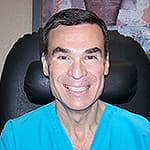
Dr. Milman received his dental degree from Baylor College of Dentistry in Dallas, Texas. He completed his Periodontal residency at the University of Texas Health Science Center in San Antonio. He was a researcher in periodontal microbiology and was a full time periodontist in his private practice in Round Rock and Austin, Texas for 36 years.
Are you determining recall intervals based on clinical need, or following a nearly century-old advertising slogan? The conventional twice-yearly cleaning schedule has no scientific basis—it originated from a 1929 Pepsodent toothpaste advertisement.
Dr. Steven Milman brings 36 years of periodontal expertise from his private practice in Round Rock and Austin, Texas. He received his dental degree from Baylor College of Dentistry and completed his periodontal residency at the University of Texas Health Science Center in San Antonio, where he also conducted research in periodontal microbiology. His extensive clinical experience provides valuable insights into individualized patient care and effective treatment protocols.
This episode challenges the one-size-fits-all approach to periodontal maintenance and explores evidence-based strategies for patient compliance. Dr. Milman discusses how to assess individual risk factors, establish appropriate recall intervals, and build therapeutic relationships that drive behavioral change. The conversation addresses the reality that periodontal disease requires lifelong management rather than definitive cure.
Episode Highlights:
Recall intervals should be individualized based on clinical presentation, with some patients requiring monthly visits while others may need cleaning only annually. The standard six-month interval has no scientific foundation and originated from a 1929 toothpaste advertisement.
Severe periodontal cases may require one to three-month maintenance intervals with ongoing pocket irrigation using antiseptic solutions. Even after successful treatment, residual pockets require professional maintenance since patients cannot effectively clean five to six millimeters subgingivally.
Aggressive periodontal breakdown can occur in young, healthy patients with excellent oral hygiene due to specific bacterial strains and immune system factors. Some cases progress rapidly despite optimal treatment and may require full-mouth extraction and implant rehabilitation by age 30.
Patient compliance dramatically improves when clinicians establish personal relationships and act as coaches rather than authority figures. Creating accountability through genuine care and regular supervision produces better behavioral changes than fear-based motivation.
Periodontal treatment differs fundamentally from restorative procedures as it requires ongoing maintenance rather than definitive completion. General dentists should understand that residual pockets after treatment are normal and require continued professional management.
Perfect for: General dentists managing periodontal patients, dental hygienists developing patient relationships, and residents learning evidence-based recall protocols.
Discover how to move beyond arbitrary scheduling to create individualized maintenance plans that actually work.
Transcript
Read Full Transcript
This transcript was automatically generated and may contain errors or inaccuracies. It is provided for reference and accessibility purposes and may not represent the exact words spoken.
You're listening to the Phil Klein Dental Podcast.
Today we'll be talking about a variety of perio-related topics that GPs should be aware of.
How do we best determine the frequency of our re-care appointments? What can we do to get the
highest compliance from our patients? Maybe there's a secret sauce that we don't know about and a
periodontist could share it with us. To tell us more about it is our guest, Dr. Steven Milman.
Dr. Milmanreceived his dental degree from Baylor College of Dentistry in Dallas, Texas. He
completed his periodontal residency at the University of Texas Health Science Center in San
Antonio. He was a researcher in periodontal microbiology and was a full-time periodontist in his
private practice in Round Rock and Austin, Texas for 36 years. Dr.
Milmanwill be joining us in a moment, but first... As dental professionals, we know that the
right autoclave can enhance your patient flow and help build a more profitable dental practice.
It's all about keeping things moving. Chamber autoclaves are great for reprocessing large loads,
but sometimes you need a few hand pieces fast, and you don't want to wait to fill a chamber. That's
why a lot of dentists choose the Sycan Statum 5000G4. While the look has changed over the years,
inside, Statham still uses a reliable, innovative steam technology developed 30 years ago that
continues to deliver instruments in some of the fastest times in the industry. It's one of the best
-selling autoclaves in the world, and its reliability has made it the workhorse sterilizer in
dental offices across the United States. To learn more about how Statham may be right for your
practice, visit scican.com. Dr. Milman, welcome back to the show. Thanks, Phil. Glad to be here.
So to begin this podcast, we talked offline about an anecdote that I thought was quite interesting.
I'd like you to share it with our audience. And it, of course, relates to the topic of how many
times a year a patient should come back to see their dentist. Almost universally, you see your
dentist twice a year. For cleaning. Why is that? Because in 1929, an ad company for Pepsodent
toothpaste said, brush with Pepsodent and see your dentist twice a year. And it got repeated and it
became common knowledge to be true. There's absolutely no basis other than that advertisement.
And it's not true. It's not true. It's not true. What's not true about it?
Well, there's no reason that six months. I mean, it could be true. It doesn't mean it is true
because Pepsodent said it. Saying that all people should come in every six months means all people
are the same. Well, right. But again, without going to the dentist in the first place, you don't
know how to differentiate one person from the other. Yeah, but where I was going with it is maybe
people need to come every three months, maybe every one month. Right. Maybe every year,
maybe every two years. The guy who walks in after 20 years and he's got no bone loss and you clean
his teeth, I'm not too worried about him. He's not going to get gum disease. Yeah. So have him come
back in another year. Somebody who is young and has already lost bone,
you may put him on a two-month recall. Maintenance interval should be based on your...
not on yeah let's have everyone come twice a year so that guy from pepsin and his picture should be
in every dental school well we should have a bust of him like right in the courtyard no no every
advertising school yeah okay every other school well i mean the twice a year keeps the dental
schools in business too yeah but i'm saying maybe it's more than that i mean we would you know if
we had people that really had perio. They all went on at least a four time a year schedule.
Right. So when they get to your office as a periodontist, they're already in the system. They're in
the periodontal system. Yeah. Category. They've revealed themselves as a periodontal susceptible.
So your most severe cases, let's say you have a younger patient like 30 and they're showing 40%
bone loss and their home care isn't great and you're doing the best you can and they're kind of
struggling with pockets and bleeding. What is the regimen for that person to come in to see you for
re-care appointments? Re-care appointments are probably more frequent. Every two months or every
three months? I've had people on one month recall. Wow. Two months with a little more frequency,
three months almost universally. Any more than a month, you need to open up a practice in their
bathroom. That person has selected that. I see. In other words, if you brush and floss your teeth,
you don't have to come every... I see, okay. I'd rather come every one month. So they're coming
every month. They're getting probably betadine or molecular iodine in the pockets, right? Depends.
Depends on exactly what the pathology is. Right. You know, what level of pocketing they have.
I had a patient that was a huge puzzle. and continues to be.
I don't know what happened. This guy was a referring dentist's son, 23 years old.
And as healthy as could be, he was a Texas state trooper. He had no plaque.
He was a dentist's son. His teeth were immaculate. But at 23, he had bone loss.
And he had bone loss we couldn't stop, no matter what we did.
called major immunologists, microbiologists. And at the end of the day,
it became, we just can't help. We do what we can do. This guy, by 30,
had lost his teeth in the hands of periodontal treatment, in the hands of advice from national
experts. So that's the other end of the spectrum from the guy who didn't show up in 20 years.
Is this the only case of this kind that you saw in your career? I've seen similar. And you can't
understand what... Only from a distance, which would be something about its immune system and
something about the bacteria. So if you've got no bacteria that you can see on the teeth,
there still have to be bacteria. And there are some bacteria that advance quickly, don't form
plaque, and are invisible. And we had him on antibiotics of different kinds.
How old was he when he was edentulous? By 30. Implants? Yes.
And did he develop any kind of problem with implants? No. That's interesting. Which is another
interesting. Right. Yeah, that's interesting. So there was something about the natural attachment
apparatus that the bacteria just went for. Yeah. My father was a lot like this. My father,
when I grew up, my father was brushing his teeth for a very long time every day,
standing over the sink and was actively. in treatment for periodontal disease.
But as a matter of fact, he was in treatment by this guy who was the dean of Case Western Reserve
University. And he was his patient right up until he got arrested for grand theft.
And it was a very well-respected guy who lectured a lot.
He was in a car theft ring. But anyway, my dad did everything he needed to do to keep his teeth,
and he lost all but about two or three teeth. Over time, I put 13 implants in him,
and he lived till 92, and not one of those implants lost a smidge of bone over decades.
So different environment, different immunity. It's a tough one for GPs because they have to deal
with some of these cases. They think they're doing something wrong. They might be, but...
a lot of ways they're not they're doing everything perfectly correctly their hygienist is doing a
great job they're giving all the right home care instructions the patient is trying to be as
compliant as possible you get those outlier cases where they're not going to get the results. And
that's where they should send it off to you guys. Something General Dennis ought to know is that in
a periodontal practice, there are patients that have pockets of all different depths that we have
made them clean to the best of our ability, but they still linger as pockets.
And then that is why you would have them come in for maintenance more often because you constantly
have to clean that. for them. They don't have a way to clean five, six millimeters under the gum
line. So in the perio practice, plenty of people with pockets, if you do your treatment and they
still have some pocketing, that's normal. I'm an endodontist. In my world, we did the root canal.
We hopefully did it well. We had a very high success rate, 97, 98% and higher on molar root
canals. Retreatment's not as much, but still pretty high. And that's it. Patient's gone.
You can pretty much assure the patient. statistically you're going to have this tooth as long as
it's restored well and your occlusion is maintained and uh you do you do your thing as far as home
care perio is an ongoing thing i mean there's no like okay we're going to do this apically
positioned flap and do all this stuff and then boom you'll never have to worry about again it's
it's it's an ongoing thing that's one of the reasons why i chose endodontics but uh well that's one
of the reasons i chose period right but that's good for you i'm glad there are guys like you out
there well you have a lifelong relationship with the patient right right it's not a finish it and
they go out the door You know, periodontists behind closed doors all feel that once you start on
them, you own them. They're yours. Yeah, no, that's true. But I'm just trying to say from the
standpoint of the GP, they're working very hard too to handle their perio cases.
And they shouldn't feel like you're going to cure this patient for their lifetime with six months
of treatment or a year of treatment. This is an ongoing process for the rest of their life. it is
what it is yeah i think i'd look at it as you can stabilize if you're lucky if you have a good
outcome but you don't care right the underlying causes are there We'll be right back with Dr.
Milman in a moment, but first, thanks to GC America, we're now able to incorporate all the
advantages of glass ionomer into a beautifully aesthetic, strong, long-lasting restoration.
That's a great reason to try GC Fuji Automix LC. You'll love the convenient automix delivery system
and ergonomic dispenser. which allows precise placement into the preparation. And GC Fuji Automix
LC is bioactive, allowing for a high rechargeable fluoride release, which is ideal for high caries
risk patients. And because it forms a chemical bond to tooth structure, even in the presence of
saliva, there's no need for etchant and adhesive bonding. This saves steps and is ideal for
challenging patients where access and isolation are difficult. And the small filler particles in
the material allow for superb polishability and excellent aesthetics. So when you're thinking glass
ionomer for your clinical cases, think GC America, a world leader in dental materials.
To learn more, visit gc.dental. So Dr. Milman, you practiced periodontics for 36 years.
You just retired. And again, congratulations. What would you say to the general dentist the secret
sauce is to getting a patient to comply at the highest possible rate at home so you can work
together to both achieve the best clinical results? I look at it a lot like either a personal
trainer or maybe a dance teacher. I'm taking a lot of dance lessons right now. And I tried.
doing them once before, but the form of it was there wasn't supervision. So they said,
do these things, practice these things, come to the classes. There was no one that I was
accountable to, no real relationship. I screwed it up a couple times. I stopped doing it.
I didn't like it. Now I'm back. I've got a teacher. I really like him. He tells me those same
things to do, but I know at the end of the week I'm going to see him, and I know he's going to ask
me to do them, and he's going to help me correct them as necessary,
and then he's going to want to see that. The relationship, like a personal trainer, where you could
force yourself to go to the gym, but if it's a pain in the neck or...
know, you're aching, you may not do it if you have a relationship.
He has your best interests at heart and holds you accountable. The chance is going to be much
higher that you do it. So dental patients can be easily described this way. If they feel
accountable to you, your hygienist, and you're asking them to do certain things like floss,
like brush thoroughly, like come back to the dentist when we advise you to, with that relationship,
you're much more likely to perform well than if you're on your own and nobody's looking and
nobody's supervising. And most importantly, there's nobody that you feel affection for.
so you think it's important in the gp practice for probably the hygienist to create that bond with
the patient a personal bond where that patient doesn't want to disappoint that hygienist when they
come back for their re-care appointment and you you found in your almost 40 years of practice you
get more success when that kind of personal relationship is established yeah either myself or the
hygienist we felt like we were coaches and if people bonded to you that way,
you'd see 180 degree behavior change. You know, we saw people that avoided the dentist and had
nasty mouths. And I think a very high likelihood of why they turned that around is they're
responding to us as friends, coaches, caring for them, and they wanted to perform.
And they did. Many people just changed remarkably. Now,
is there some form of encouragement that's part of this relationship where you tell the patient, we
could turn this around and we're going to do this together. And this is something we really can
work together to do, but you need to do your part and I'll do my part. But if you don't do your
part, I can't do my part and we're not going to get there. Is that some type of conversation that
you have to build that trust? For sure. The patients often come in thinking they're failures,
at least dental failures. And when you can tell them, well, shoot, it's not that bad.
We can fix this and we can put together a plan to do it and we'll do it together. And a lot of
people were surprised to hear it. They thought they had no chance of keeping their teeth. It's very
gratifying as a provider to have that happen. Is that something that you would say to a GP that
that's almost essential in the field of perio, which is your specialty, where that relationship
needs to be established in order for you to have a successful? predictable clinical outcome with a
patient that has periodontal disease. I think a lot of us know that telling people that you do this
or you're going to lose their teeth doesn't work. It works with some, but that fear motivation
doesn't work all that well. It's more of a do this for me, but not exactly.
It's that we're just seeing eye to eye here, where we both want the same thing. Let's do it
together. And then they feel accountable. They wouldn't think of showing up to your office with
gunk all over their teeth. Very good. Very good point. And I'm glad you brought that up in this
podcast episode. Thank you very much, Dr. Milman. Thanks, Phil. If you're enjoying this podcast and
have an Instagram account, please follow us, Dr. Phil Klein Podcast. Every week we'll be adding high
quality relevant content. And to support this program, please leave a review on your favorite
podcast platform. It really does make a difference. Thank you so much for listening. See you next
time.
Clinical Keywords
Dr. Steven Milmanperiodonticsperiodontal maintenancerecall intervalspatient complianceperiodontal diseasebone losspocket irrigationbetadinemolecular iodinedental hygieneplaque controlperiodontal microbiologyimplant dentistryDr. Phil Kleindental podcastdental educationBaylor College of DentistryUniversity of Texas Health Science Centerperiodontal treatmentaggressive periodontitispatient relationshipscoaching approachfear motivationaccountabilitytherapeutic relationshipsubgingival cleaning