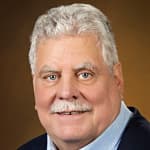
Dr. Scott Benjamin is a native of the Tri-County area and is a graduate of SUNY Buffalo, School of Dental Medicine and has been in full-time private practice in the Tri-Town Area for over 25 years. He has been a leader in computerized dental practice management since its' infancy. Dr. Benjamin has presented internationally at major dental meetings, universities, workshops, study clubs, and user meetings and has published more than 100 articles on dental technology in over a dozen publications on topics ranging from computerization, and the Internet to micro air abrasion, diagnostic modalities, and lasers. Dr. Benjamin is presently the Technology Editor of "The Journal of Practical Hygiene" (JPH), the Section Editor of Advanced Technologies for "The Journal of Practical Procedures & Aesthetic Dentistry" (PPAD), and is on the editorial board of "The Journal of the Academy of Laser Dentistry" (JALD). Dr. Benjamin has been appointed as a member of the Presidential Task Force on the National Healthcare Information Network (NHIN). He is also a member of ADA Standards Committee on Dental Informatics (ADA-SCDI), and is the Working Group Chair for three sub committees: Data Redundancy, Archiving, and Storage; Digital Photography and Imaging; and The Electronic Patient Dental Record. He is also a member of the ADA Standards Committee on Dental Products (ADA-SCDP) and is on the Board of Directors for the Academy of Laser Dentistry (ALD), a member of the National Dental Electronic Data Interchange Council (NDEDIC) Board of Trustees, President of the Tri-County Dental Society and Vice-President of the Sixth District Dental Society of the New York State Dental Association (NYSDA). Dr. Benjamin also is a Visiting Professor at the SUNY at Buffalo School of Dental Medicine, participated in the World Health Organization's (WHO) Collaborating Centre for Oral Cancer and Precancer 2005 Closed Session Working Group on "Potentially Malignant Oral Mucosal Lesions and Conditions Terminology; Classification; Diagnosis and Prognosis". Dr. Benjamin's interest in technology and advancing computerization in dentistry began with his first practice management system, in the early 1980's, and was instrumental in the development and implementation of electronic insurance submittals, in the mid 1980's while serving as an advisor to several dental technologies companies, and is continuing to assist in the progression of digital electronic patient records into mainstream dentistry. His interest continues today on a much broader scale with his involvement in the development of clinical screening, diagnostic, and treatment modalities and incorporating the appropriate utilization of advanced technologies into the everyday clinical dental practice. Dr. Benjamin is a consultant and advisor for many dental practices and several dental technology companies utilizing his expertise in clinical dentistry, digital radiography, imaging, practice management, dental computerization, and workflow.
In this episode we will discuss photobiomodulation (PBM) and how it plays a role in reducing inflammation and healing in dentistry. Joining us today is an expert in the field of dental lasers, Dr. Scott Benjamin. He is currently in private practice in upstate NY and has faculty appointments at several universities. He is the Chairman of the ADA Standards Committee Working Group on Dental Lasers and a Past-President of the Academy of Laser Dentistry.
Transcript
Read Full Transcript
This transcript was automatically generated and may contain errors or inaccuracies. It is provided for reference and accessibility purposes and may not represent the exact words spoken.
You're listening to the Phil Klein Dental Podcast
On today's podcast, we'll be discussing photobiomodulation, often referred to as PBM.
With us is Dr. Scott Benjamin, an expert on the topic of dental lasers. Dr. Benjamin is in private
practice in upstate New York, is the chairman of the ADA Standards Committee Working Group on
Dental Lasers, a past president of the Academy of Laser Dentistry, and is the technology editor of
the compendium. And we're really excited to talk about PBM today. And Scott mentioned to me it's
easier to refer to photobiomodulation as PBM than repeating that arduous multi-syllable word all
the time. Scott, thanks for joining us on Dental Talk. Well, I'm pleased to be here and look
forward to sharing some knowledge. So what is PBM and what is low-level laser therapy?
Photobiomodulation is the terminology that PubMed decided to, after some articles were written back
in 2015, as a way to encompass. the use of light energy to stimulate tissue repair and to enhance
the healing process. In the past, it had been referred to by about 70 different terminologies,
low-level light therapy, low-level laser therapy, soft laser therapy, cold laser therapy,
phototherapy, photomedicine, laser biostimulation, laser inhibition.
And they settled on the term. photobiomodulation, as we refer to it simply as BBM,
because it is definitely a mouthful. Because it's either the stimulation or the inhibition of
cellular activity. And so the idea of photo as light, bio as being biologic,
and modulation stimulate or in turn inhibit the response out of the body.
And the goal of it is to literally
provide tissue repair, and it's being used more and more throughout entire medicine.
It's been used a lot in veterinary medicine. It's being used more and more in standard traditional
medicine, and it's now working its way very nicely into dentistry because,
again, one of the big roles, it decreases inflammation, which is one of the biggest problems we
have in dentistry, which in turn reduces pain. Now, when I first incorporated this into my
practice, I learned very quickly that I never refer to it as reducing pain. Because when I tell a
patient it reduces pain, they hear different words. They don't hear it reduces, they hear
eliminates. So we refer to it as the role of this is to enhance the healing process. With the idea
that that becomes a very, that seems to be what the patients identify to the best.
Because again, If we take the pain level from an eight, nine, down to a two, there's still some
discomfort in the process. And because of that, when you say reduces,
they hear the word eliminate. So we just got that word reduces pain or that phrase out of our
vocabulary. I actually don't use the word pain. When I practice, I use the word discomfort. Yeah.
Because, you know, reduces pain means they're still going to have pain. That's something I just
avoided that word. But anyway, go ahead. Oh, by the way, here's what I want to ask you. I want to
ask you how PBM works. I have a feeling you're going to get into a molecular biology course, which
we probably, our listeners are at the gym and they're riding the elliptical. So I don't know if
they could digest too much molecular biology, but we do want to learn how it works. Can you talk
about how it works on a scientific level without blowing us all away? Believe it or not, the
process is relatively simple. We're using light energy to stimulate a response within the cell
itself. The mitochondria contains a protein called cytochrome C oxidase.
And the idea is, as the light energy goes in, the role of it is to increase the cytochrome C
oxidase, which increases the production of adenosine triphosphate, ATP.
which in turn reduces oxidative stress. So to boil it down into a nutshell,
we're using light energy. to allow the oxygen within the cell to be used in the manner it was
designed to be used and to take the cell from a stress stage or to keep it from going into a stress
stage and using the oxygen to allow normal biological activity to occur within the cell itself.
And the idea this leads to improved tissue repair and reduces the inflammation.
And as we've already discussed, we know that inflammation is the primary cause of pain in the
dental environment. It sounds like this would be an incredible thing if we just went into some
compartment and turned this machine on and our whole body was exposed to it. Well, it's funny you
say that because the Thor Laser Company actually has developed a device called the Novo Thor bed,
which in turn looks like a tanning bed that is filled with a variety of 660 LEDs and 810 diode
lasers. to actually stimulate the entire body to basically rejuvenate things at a systemic response
throughout the entire body. Where is this device? It's called the Novothor.
It's being sold today, and we're finding more and more of the professional athletic teams are
acquiring this device. A lot of the gyms in the health spas are acquiring this so that a patient
literally sits in there for a period of time of 10, 15 minutes, and with the idea of stimulating
the response systemically through the entire body. That's absolutely fascinating. Unbelievable.
Yeah. As I mentioned in a previous podcast, Jerry Boko, a colleague of ours who was head of
diagnostics at the University of, the dental branch at the University of Texas in Houston, has done
some research where he was actually showing, and he was showing using blue light in his, which
would be in the 400 nanometer wavelength, was actually showing how he could, in turn, with the
study they were doing, take type 4 bone that was too porous for an implant. By stimulating it for
15 minutes a day for about a three-month period, convert that bone into type 1 bone that would now
be ideal for an implant. And the intriguing thing is they saw what is referred to as a bystander
effect. Not only did it affect the area and predominantly affect the area they were irradiating,
but it also had a systemic effect all the way through the body. I'm anticipating that in years to
come with more research, we may find that this type of therapy may be a replacement for
bisphosphonate therapy and some of the other things and the horrific side effects that we know that
are being caused by some of the pharmacology that we're using today. Now, again, the best way to
think about photobiomodulation or light therapy, when I'm... prescribing a pharmacological device,
I'm prescribing any sort of pharmacology, what are we doing? We're taking chemical energy,
putting it into the body to elicit a very specific chemical response within certain cells.
With light therapy, what we're doing with PBM is we're putting light energy in the body to in turn
stimulate a response, a photochemical response within the cells to stimulate a desired response.
And the idea is we're just taking light energy in one form and converting it into photochemical
energy within the cell itself. And how much is enough? The question is... How much is enough?
and how much is too much? Yeah, that's what I want to ask. How much is enough and how much is too
much? Thank you. Yeah, and again, that's a very common question because we know if we get the
appropriate dose, we can stimulate a response. But just like with pharmacology,
if I don't prescribe an adequate amount of the medication, I don't get a response.
And if I prescribe too much, it can become toxic. Well, with photobiomodulation,
we have the same issue.
administer the correct amount which is usually for inflammation and things along that line of a
hundred milliwatts per centimeter squared or less we can in turn reduce the inflammatory response
is going to be very beneficial in that area if we increase the power through somewhere in the
neighborhood of about 300 milliwatts per centimeter squared, we in turn can cause an analgesic
effect where we actually have overstimulated in such a way that we can now remove some of the
discomfort that's associated with it. And so again, hence the term modulation of increasing
stimulation or decreasing and inhibiting a response.
And so depending, again, what our treatment objective is, is the amount of light energy that we
want to administer. And like we've talked about in the past, same basic concept.
What is my goal? Where is my target? What is the appropriate amount of energy to deliver to that to
give me the response I'm looking for? How far down the curve are we as far as understanding?
what the level of treatment is as far as beneficial versus slowing down the healing process?
Actually, we're quite far down that pathway when it comes to the inflammatory response and knowing,
again, knowing back to the power density that we're looking for, knowing for inflammation,
where do we really have that happen? It's usually on the surface tissue. A few years ago,
I had the misfortune, I would call it a skiing accident. But it was actually, when I hit the
ground, when I was on the skis, it wasn't a problem. It was only when I hit the ground that I
shattered my left arm into 15 tiny pieces. Sorry I'm chuckling, but the way you say it, yeah. Well,
again, if the skiing wasn't a problem, it was hitting the ground that caused the damage. And again,
I asked the surgeon who put me back together. He thought I would never be able to use my left arm
appropriately within the rest of my life. And within literally six weeks, I was back treating
patients in my office. With the ideas, I went through that. I mean, I now have a foot-long plate
and 12 screws holding my left arm together. But at my one-month follow-up with him after using
the physical therapy he prescribed, and he actually found out who I was and said, please feel free
to use whatever you want to use as far as light healing. He told me at my one-month level,
four weeks out, I was already healed to a four- to six-month level, and I had complete range of
motion in my arm. That's incredible healing. Yeah, I remember when you went through that. That's
just an incredible healing process that you went through so quickly. And so today we're using this
routinely in the dental practice of pre-treating and post-treating all of our patients where
we're doing surgical procedures. And again, ideally, if we want to take the time,
we want to treat not only the target area. But we also want to treat the lymphatic system.
We want to treat the nerves. Juanita Anders, who's at the Uniform University Services in
Washington, D.C., has done some phenomenal studies on being able to do nerve regeneration.
And she's shown that she's been able to reduce battle wound inhaling as much as 50% by applying
light therapy as quickly as possible after the injury has occurred. And so we're going to see more
and more and more of this coming down the pike in dentistry. And again, routinely what we're doing
today is we're pre-treating and post-treating routinely the target areas where we're going to
cause trauma, the apices of the tooth for endodontic procedures, the entire body of the tooth for
extractions and implant procedures. And again, when I'm treating patients with TMJ,
we're treating... the internal and external areas of the joint with a variety of different things,
as well as the lymphatic system, then we're getting some immediate relief from people that are
walking in the door with TMJ pain. With this PBM? With just this PBM therapy. With the idea that
we're getting rid of... Yeah, because my next question was the analgesic mechanism. And if
someone's having, or TMD pain, then you use the PBM therapy and this helps alleviate the
discomfort? Well, actually, in this case, we're alleviating the discomfort by reducing the
inflammation rather than inhibiting the effect. So what we're doing, we're trying to reduce the
inflammatory response as much as we can when the muscles are overstressed or whatever. So if I'm
doing a long procedure, a multiple unit crown and bridge case or a long procedure,
we want to pre and post treat our patients. before we do the procedure so that the stress of the
procedure on the jaw being open for that amount of time isn't being stressed. And the patients are
reporting phenomenal responses from these things. And so the whole idea is they'll deliver the
right amount of energy at the right amount of time. The leading laser on this, literally in the
medical world, is the Thor Laser Company out of the UK. How long do you think it's going to take
for dentistry to adopt? PBM in practice? This is being taken up at an exorbitant rate presently in
PBM. It's being adopted more and more rapidly on a regular basis.
Again, the Thor laser, which I call the granddaddy of all of the Rolls Royce in this area, has a
variety of different probes and wands that they use to, again, do... stimulate not only the
lymphatic system, but the area of injury, the nerves, and also the trigger points and being able to
detect where a muscle or the tissue is overfiring so we know exactly where we want to be
administering the energy. Now at Midwestern University in Illinois, we are routinely having the
students before and after they do any sort of surgical procedures, applying this type of PBM
therapy directly at the site as part of routine standard of care. Just to keep the inflammation
down, promote healing and less discomfort. You hit the nail on the head. It's amazing stuff.
All right, we got to wrap it up, Scott. This has been incredible. So if you didn't know anything
about photobiomodulation after this podcast, you certainly know something, hopefully. And we could
thank Scott Benjamin for that. Dr. Benjamin, thanks so much for being with us on this podcast. And
we certainly will have you on more of these in the future. Phil, it's been a pleasure working with
you. And I'm honored to be associated with a company that's doing the fine things your group is
doing.
if you like our podcast and want us to keep it going please leave a review on your favorite podcast
platform leaving a review is a fantastic way to support us and help others discover our show we
really appreciate your support see you on the next episode