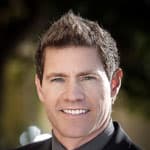
Dr. Todd C. Snyder received his doctorate in dental surgery at the University of California at Los Angeles School of Dentistry. Dr. Snyder has learned from and worked under some of the most sought after leaders in dentistry, refining his skills in comprehensive, extremely high quality aesthetic dentistry and full mouth rehabilitation. Furthermore he has trained at the prestigious F.A.C.E. institute for complex gnathological (functional) and temporomandibular joint disorders (TMD).
Dr. Snyder lectures both nationally and internationally on numerous aspects of dental materials, techniques, and equipment. Dr. Snyder has been on the faculty at U.C.L.A. in the Center for Esthetic Dentistry where he co-developed and co-directed the first and only comprehensive 2-year postgraduate program in aesthetic and contemporary restorative dentistry. He currently is on the faculty at Esthetic Professionals. Additionally, Dr. Snyder is a consultant for numerous dental manufacturing companies and has had the opportunity to research and recommend changes for many of the materials now being used in dentistry. Dr. Snyder has authored numerous articles in dental publications and published a book on contemporary restorative and cosmetic dentistry.
Dr. Snyder also founded and is CEO of Miles To Smiles a non-profit mobile children's charity that helps indigent and underprivileged children.
Dental podcast: Welcome to DentalTalk. I'm Dr. Phil Klein. Today we'll be discussing light cured resin cements and why they are an important component of our routine dental procedures. Our guest is Dr. Todd Snyder, a popular speaker on Viva Learning.com, a cosmetic dentist, author, international lecturer, researcher and instructor at various teaching facilities. Dr. Snyder is a consultant for numerous dental manufacturing companies and has had the opportunity to research and recommend changes for many of the materials now being used in dentistry. You can reach Dr. Snyder at: www.legion.dentist.
Transcript
Read Full Transcript
This transcript was automatically generated and may contain errors or inaccuracies. It is provided for reference and accessibility purposes and may not represent the exact words spoken.
You're listening to The Dr. Phil Klein Dental Podcast from Viva Learning.com.
Welcome to the show. I'm Dr. Phil Klein. Today we'll be discussing light cured resin cements and
why they are an important component of our routine dental procedures. Our guest is Dr.
Todd Snyder, a popular speaker on VivaLearning.com, a cosmetic dentist, author, international
lecturer, researcher, and instructor at various teaching facilities. Dr. Snyder is a consultant for
numerous dental manufacturing companies and has had the opportunity to research and recommend
changes for many of the materials now being used in dentistry. You can reach Dr. Snyder at www
.legion.dentist. Before we get started, I do want to mention that Dr.
Snyder has an excellent webinar on vivalearning.com titled Fundamentals to Delivering Indirect
Ceramic Restorations. Simply go to VivaLearning.com, type in the search box Snyder,
S-N-Y-D-E-R, and you'll find that webinar. Dr. Snyder, it's a pleasure to have you on Dental
Talk. Always a pleasure to be here, Phil. Thanks. You are a regular guest here. You are a regular
guest. I know it's like Ron Kaminer, Dr. Kaminer, he's done like gazillions of webinars and he
keeps bragging about how he's leading the pack in webinars. You've done quite a few, but you're way
ahead of everybody else on these podcasts and you're getting great engagement. We really do
appreciate you coming back. Like I said in the introduction, if anybody wants to get a hold of Dr.
Snyder, you can reach him at legion.dentist. He has an incredible training program there. He's
wearing his Legion hat right now. So he's all into it. And you'll never meet a guy with more
enthusiasm and knowledge that will help you really reach the highest level of success of your
practice with some of the things that he has in his training program. So I highly recommend it. He
also has a podcast. called Delusional. So you can check that out as well. It's on Spotify and some
of the other major platforms. So getting to this podcast, Light Cured Resin Cements, let me start
off with a pretty simple question. Why are Light Cured Resin Cements so critical to our procedures?
Well, they offer a lot of unique benefits. You know, if you're doing multiple restorations,
they give you time flexibility that... a dual-cure resin wouldn't obviously provide.
As soon as you put the dual-cure onto the tooth, it's already mixed, it's starting to harden. So
you don't have the ability to move things around once it gets partially set. And so you have a lack
of time. So light-cure, number one, gives you that time capability. The other wonderful benefit
that it has is the color stability. Typically with a light-cured uh resin you have more color
stability hence we use them for our veneers and or ceramic restorations where we don't want a color
shift or a minimal color shift that's perceivable over many years as opposed to typically amines
that are in a dual cure reaction are going to discolor more so over time and usually we're not
concerned about that discoloration on a dual cure because it's under a crown or something more
opacious or or deep down under side underneath a thick piece of ceramic where you're not going to
see a slight color change but the the reason the dual cure is beneficial in that component
obviously is light can't get to it possibly and you want to make sure it cures to completion on its
own so that's one of the the biggest aspects there is the color stability as well as your time
ability to move things around unless you have an operatory light on it then you have the time
flexibility to put a bunch of things in place move them around if you have to and then cure them on
your own time when you're ready so what are some of the things you like in a particular light cured
resin cement Well, you know, one of the biggest things, obviously, is that color precision, you
know, not having much of a color shift. And so the least amount of color shift is important for me
because some of the veneers are so paper thin that allows light to come through from that resin or
from the underlying tooth where I don't want that to change over time. And so, you know, having
tried many different products out there, my particular favorite is Bisco's Choice 2. I've been
using it for like 20-something years. The color is phenomenal on it. So that's one aspect.
And the other thing I like about it is obviously handling. And handling is to each his own. Some
may like it thick, some may like it runny. I like mine kind of somewhere in between. Some of these
veneers are so thin that if I have something that's thicker, I've actually cracked the veneer on
two occasions trying to seed it because I was trying to displace the resin and it was so thick it
wouldn't dissipate. And so I literally fractured the veneer. But for the same token, I don't want
something runny that kind of runs out or goes all over the place. So I want cleanup to be a little
easier. And I don't want to get any voids or bubbles underneath my ceramic. And sometimes the runny
ones seem like they're just more prone to getting bubbles. So the color stability and handling is
my two big things. I'd say the third one is delivery. Honestly, some of the syringe deliveries are
pretty phenomenal nowadays where they have like a ribbon tip as opposed to other ones that are a
tiny. almost like a flowable tip, which makes it very hard to get a bunch of resin inside something
without getting a bunch of worm lines or craze lines. So that's how I choose mine personally. When
it comes to polymerization, we want to make sure, obviously, that when we use a light on a light
-cured resin system, we want to get full polymerization because that's well known that if it's not
fully polymerized, that could be one of the major causes of tooth sensitivity. So when it comes to
the light itself, Is there anything you can recommend to our audience about the curing light itself
so that we have confidence when we're using that light that we're getting the polymerization we
think we're supposed to get? You bring up a great point because obviously as dentists, we're always
trying to do the best for our patients. We're taking CE courses to learn the next best thing. And
we're buying materials, trying to get the best materials in there. And we're trying to put
everything into the best of our abilities without getting saliva on it. And at the end of the day,
you may have done all those things, but if you didn't check your curing light on a regular basis.
You don't know when your light isn't putting out the optimal amount of energy such that you're not
curing everything you just tried to put into perfection. And something as simple as this can, as
you said, create discomfort as far as sensitivity, causes early micro leakage, causes failure.
And so everyone loses. You lose monetarily, possibly patients losing two structural restorations.
So if you're not measuring your curing light, whether you have traditional halogen light or newer
LED, you need to use a radiometer every day. I'd say use it once or twice a day at least.
And you say, well, that's kind of a lot. Well, the reason for this is when that radiant energy,
that's the energy emitted from the curing light, when that radiant energy decreases, there's not
like a sensor or something typically that says, hey, wake up. You just put out not an ideal amount
of energy. And so when that happens, you may have a series of restorations that didn't get the
ideal amount of energy. So you want at least like 300 milliwatts per centimeter squared or higher.
If you're not getting that, then you're not getting potentially the right amount of radiant energy
penetrating into your resin or your ceramic through your ceramic to get to the resin to actually
get it to harden to completion. And so, again, someone needs to be testing that because if you test
it once a month or once a week, think of how many restorations you did that week or that month that
may have been under cured and now are potentially sensitive or not performing as well as they could
have. And so you did a disservice to your patient. Potentially it's going to cost you money and
time. The one other thing I'd throw out is obviously you have this bandwidth of different resin
photo initiators nowadays that also if you're curing light has too narrow of a bandwidth,
it may not cure all materials properly. So certain companies have gone to having multiple LEDs so
they have a broader bandwidth to cover all the different manufacturers' photo initiators inside the
materials. ultradent they have the valo grand which has four leds inside of it to cover a broader
bandwidth but also it has a very a high amount of radiant energy that comes out and it has this
durability and longevity because of led so those are things i would look at or think about when you
think of all the steps in your resins this is one of the critical ones you need to be testing or
your your lab staff member needs to be testing yeah no that's a great point there's testing
equipment out there that you could purchase for the office that someone could be trained to use
fairly quickly. And that could be under their responsibility to do that a couple of times a day.
Yeah. Simple radiometer, take a couple seconds to hold the light on it and tell you what your
output is. It's very easy. Anyone can do it. Yeah. So, you know, dentistry is a pretty difficult
profession, but a lot of times when we do these podcasts, Dr. Snyder, you make it pretty clear that
if you could reduce the possible complications. Throughout the procedure,
which is, you talked about the viscosity of the light cured resin cement. If it's too thick or too
thin, you fractured a veneer because you were putting pressure on the veneer to seat it and the
material underneath was too thick. When you go down the list of all the things that you mentioned
with all your years of experience, I mean, you could write a book about for each procedure, here
are the things you just keep in mind. And statistically, because everything's... happens
statistically right there's mathematics to everything you're over the course of time it's such an
important thing to do for your practice these little things that you mentioned it's quite
fascinating when you think about it how procedural dentistry is and how you have to be on the ball
to eliminate a lot of these issues that could just cause so many headaches down the road systems we
have right and as a practicing dentist you're practicing every day and every day you have failures
or problems and you learn from them and so with time enough years you go i've got my systems down
where i don't have failures or problems because of what i've learned and so me personally yeah i've
had failures and learned and that's why i do what i do and it works right and you're not even
talking about accounting systems here or employee systems as far as hiring and firing we're talking
about procedural now The kind of ironic thing is by the time you figure it all out, you're like,
okay, I'm ready to retire. I've been doing this a long time. I've got it figured out. I've got to
start a new profession. So that's where you're going to teaching. You're transitioning right now
because you teach all your students all the things that you screwed up on, right? over your life?
Yeah. I mean, I had a mentor that got me through a lot of the learning process faster because he
showed me all the pitfalls and hurdles he had to deal with. And so I'm doing the same thing. I'm
saying, hey, look, you want to get to a place where I am faster? Here's everything I've learned
that's caused a failure. I don't want you to have to do that. I want you to be in a better place.
The whole reason I teach is the gift of saying, I want you to be better than me. I want you to be
further down the road and have a better career. And that's what's fun about teaching. Let's go into
a few more questions before we wrap up this podcast. As always, we'll start talking football and
the playoffs and everything else. And by the way, there could be two great quarterbacks that may
not play next year, one from Green Bay and one from Tampa Bay. So we're wondering whether they'll
come back. They haven't made the statement yet, but we will find out. Okay. So with light-cured
resin cements, tell us about cleanup, longevity. You did talk about color stability, though. You
know, obviously the longevity of something is dictated by your technique.
And we talked about light. We talked about placement in the previous podcast as well. And so all of
those factor into it. I think cleanup is one of the big problems for some dentists out there. And
when you think of cleanup, there's two things. There's, hey, I just put a veneer on or I put a
crown on and there's resin on my margin. And some people want to wipe all of that away. And if you
wipe all the excess away, you have a couple of potential problems. You have, number one, an air
inhibition layer at your margin that if you don't cover that air inhibition layer when you're
curing it, then you have resin that has incomplete curing. And because of that, you're going to see
more potential staining or leakage in those areas or maybe even sensitivity. Now,
for the same token, you say, well, if I leave a bunch of resin behind, now I have a difficult
cleanup. It's going to take me a long time. Time is money to clean up all that excess. i agree time
is money and it does take time but the great thing about it is you will not have an air inhibition
layer at your margin but number two sometimes when you wipe away the excess you may pull a little
bit of that excess out of the margin because it's viscosity and you don't see that you pulled it
out and now there's no way really to get any resin back into that margin so now you have an early
failure or problem and so if you leave resin you know an excess that you have to clean off you
don't have that same problem And so it takes me to the next part where some of the resins nowadays
have this easy breakaway during its kind of gel phase. I'm curious to see how that's going to work
out long term, trying to make a product that breaks easily. You have a little bit of an inferiority
to the product by making it have a faster, easier cleanup, right? So in my mind,
long term, we're going to see maybe more problems because of that. So me personally, I want
something that sets up as hard as possible. And I'll do my best to obviously clean that off as fast
as I can once it's hardened. So that's kind of how I look at things because I've seen people have
failures when they're placing something and trying to clean off the excess and it starts to bleed,
but they already tack cured it or they tried to floss it and something broke or now bled into
proximal. I've seen these problems and that's why I personally, I cure it all together, but then I
clean off the excess once it's hardened. Interesting. Very interesting approach. You're looking at
the long-term possibilities of issues with that tack cure technique. Yeah.
To wrap up this podcast, let's ask you about try and pace. Are try and paste that critical in the
delivery of your indirect restorations? Extremely. And so here's why. You can take a veneer and
place it on a tooth and it will look totally different if you use no try and paste or water or a
try and paste. And so what do I mean by that? If you put a veneer on that has nothing behind it,
you have an air gap. So your veneer is going to look whiter. If you put water in the veneer when
you try it, that water is going to quickly leach out from underneath the veneer, either by running
out because it's not thick enough, or it's going to go into the tooth itself. And so again, you're
creating a bit of an air gap. So again, the veneer will look lighter or whiter, higher in value.
Now, if you use a try-in paste, you are optically connecting the veneer in the tooth as one. And
so the veneer color will change because of that, unless you have a crazy thick piece of ceramic.
But for the most part, that's going to influence color change. Now, from there, try and paste, you
either have water-based, which wash away easily so that you can instantly go back and bond to your
tooth. You also have certain try and paste that are resin-based, which are harder to clean up. And
so I'm not a fan of them. I don't recommend them personally, but also some of the resins at one
point were meant to be that you left on the resin residue, and then you added your bonding on top
of things, and it all cured together. And I'm not a big fan of that because of potential
contamination. So I'm still a fan of the water-soluble ones that wash away quickly and easily and
allow you to see the color kind of finality before you go to the permanent materials.
And that's where, again, the try and paste should be very similar to your resin-like curable
material. And so you want to have a similar color base. And I think VSCO does a very good job on
that with their Choice 2 system with their water-soluble try and paste that mimic their resin
-based.
veneer cement yeah yeah i was going to ask you if choice two had that and you you jumped the gun
there which is great all right well i think you've covered it very well thanks again Dr.
Snyder so much for your insight and again if you're interested in learning more about Dr. Snyder's
training program visit him at www.legion.dentist thanks again and we'll see you on the next
podcast thanks Phil