Scripps Center for Dental Care · Scripps Memorial Hospital · University of California San Diego School of Medicine · American Academy of Cosmetic Dentistry · Loma Linda University School of Dentistry · UCLA School of Dentistry
Read full bio
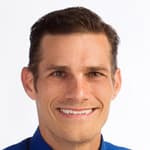
Dr. Nicholas Marongiu, “Dr Nick”, graduated from the University of California, San Diego, with a Bachelor of Science in Mammalian Physiology & Neuroscience and earned his Doctorate of Dental Surgery from Loma Linda University, School of Dentistry. Following graduation, he completed a General Practice Residency at the West Los Angeles Wadsworth Veterans Administration Hospital and postgraduate training at University of California, Los Angeles, School of Dentistry.
Dr. Nick still works in the hospital setting and currently holds hospital privileges at Scripps Memorial hospital and is adjunct faculty at the University of California San Diego School of Medicine. He maintains his licensure for oral conscious and intravenous conscious sedation to provide anxiety free dentistry to his patients.
Dr. Nick practices full time private practice at Scripps Center for Dental Care (SCDC), which is located on the Scripps Memorial Hospital campus in La Jolla, California. SCDC is established on the foundation of providing the most comprehensive range of dental services possible at a single convenient location. It is one of few offices encompassing all board-certified specialists working together as a team to provide complete comprehensive inter-disciplinary patient centered oral healthcare.
Dr. Nick has a passion for cosmetic dentistry and is an accredited member of the American Academy of Cosmetic Dentistry (AACD), becoming one of less than 500 worldwide dentists to achieve this certification. He served a presidential appointed position on the Nominating & Leadership Development Committee for the AACD and additionally served as a Delegate from the 13th District to the American Dental Association (ADA) and a Delegate from the San Diego County Dental Society to the California Dental Association (CDA). Other past leadership has included director on The Dentist Supply Company (TDSC) Board of Directors and Manager on the CDA Board of Managers. Dr Nick is a current member of the American Academy of Cosmetic Dentistry, American Dental Association, California Dental Association, San Diego County Dental Society, and Academy of General Dentistry.
Dr. Nick is additionally very involved with community service, loaning his expertise and training to Give Back a Smile, Loloma Foundation, Missions of Mercy, Remote Area Medical, USNS Mercy, Flying Docs, Project Hope and several other organizations that provide dental care to underserved communities throughout the world.
When Dr. Nick is not immersed in dentistry, he enjoys spending time with his wife, Jenn, two sons, NJ and AJ, and the family goldendoodle, Isabella. He loves construction projects, wood working, surfing, fishing, and adventures.
Are you truly maximizing your bonding protocols or just following the same routine regardless of the clinical scenario? Understanding what substrate you're bonding to—enamel, dentin, or sclerotic dentin—should fundamentally change your approach, yet many clinicians default to the same technique every time.
Dr. Nicholas Marongiu brings exceptional credentials to this discussion. He earned his DDS from Loma Linda University School of Dentistry, completed a General Practice Residency at West Los Angeles VA Hospital, and received postgraduate training at UCLA School of Dentistry. Dr. Marongiu is an accredited member of the American Academy of Cosmetic Dentistry, placing him among fewer than 500 dentists worldwide to achieve this certification. He maintains hospital privileges at Scripps Memorial Hospital, serves as adjunct faculty at UC San Diego School of Medicine, and holds licensure for both oral and IV conscious sedation. He practices full-time at Scripps Center for Dental Care, a comprehensive multi-specialty practice in La Jolla, California.
This episode examines the fundamental differences between mechanical retention and adhesive bonding, exploring how modern adhesive dentistry enables conservative, minimally invasive procedures that preserve natural tooth structure. Dr. Marongiu explains why understanding substrate chemistry is critical for long-term success and demonstrates how different tissues—from healthy enamel to sclerotic dentin—require distinct approaches for predictable outcomes.
Episode Highlights:
Selective etch technique with universal adhesives provides optimal results by treating enamel with phosphoric acid for complete demineralization while allowing the acidic component of the adhesive to partially demineralize dentin, preserving the hybrid layer and preventing hypersensitivity. This approach eliminates post-operative sensitivity while maintaining predictable bond strength.
Universal adhesives require meticulous technique despite being packaged in one bottle, including 30 seconds of active scrubbing to allow solvent evaporation, proper air thinning until surface ripples stop, and complete light curing before proceeding. The chemistry depends entirely on following manufacturer protocols precisely.
Substrate analysis determines bonding strategy, with healthy enamel providing the most predictable micromechanical retention through demineralization and resin infiltration, while sclerotic dentin presents reduced reliability requiring modified protocols or additional mechanical retention in the preparation design.
Bonding failure diagnosis involves examining where resin remains after debonding—resin on the restoration indicates substrate interface failure suggesting contamination or improper technique, while resin on the tooth indicates restoration surface preparation issues requiring re-treatment of the indirect restoration surface.
Material system compatibility eliminates variables by ensuring adhesives, composites, and cements are chemically engineered to work together, while daily curing light output verification and full polymerization protocols prevent the most common cause of restoration failure—undercured materials.
Perfect for: General dentists, cosmetic dentists, and dental residents seeking to master adhesive protocols and understand the science behind substrate-specific bonding techniques.
Master the chemistry and technique that transforms bonding from routine to predictable long-term success.
Transcript
Read Full Transcript
This transcript was automatically generated and may contain errors or inaccuracies. It is provided for reference and accessibility purposes and may not represent the exact words spoken.
The selective etch technique with a universal adhesive, hands down, is the way to go. And with
that, you just have to really respect the chemistry and respect the substrate. You've got to
understand what you're working on. The enamel's got to be treated. Don't rely on the acid
component. I mean, we talked about the low pH of the universal adhesives, but don't rely solely on
that acid. universal adhesive to be able to treat the enamel. It's not strong enough to fully
demineralize the enamel. So if you want to get a good bond to the enamel, you have to treat it with
phosphoric acid at first.
Welcome to Austin, Texas, and welcome to the Phil Klein Dental Podcast. How many of us are using
adhesive bonding systems every single day, but don't fully understand what's actually happening
behind the scenes? We follow the steps, we scrub, air thin, light cure,
but do we really know why? And more importantly, are we adjusting based on the clinical situation
in front of us? Because when we don't fully understand adhesion, we're probably not taking full
advantage of the materials and techniques designed for specific scenarios. And it really comes down
to one key question. What are we bonding to? Do we have enamel? Do we have dentin?
And what kind of dentin? Because enamel is largely micromechanical. Etch, create porosity,
infiltrate resin, predictable. But dentin, that's a different story. Moisture,
collagen, tubules. Now chemistry matters. So are we changing our approach based on substrate or
using the same protocol every time? When should we use total etch versus self etch?
Are we truly leveraging universal adhesives or just defaulting to them? And when something fails,
sensitivity, debonding, staining, how do we know what actually went wrong? Was it the material,
the technique, or the substrate? Today, we're going to be talking about all of this so you can
build a bonding protocol that's simple, predictable, and built for long-term success. Our guest
today is Dr. Nick Marongiu. He practices full-time at Scripps Center for Dental Care in La Jolla,
California, a comprehensive multi-specialty practice built on interdisciplinary patient-centered
care. He has a passion for cosmetic dentistry and is an accredited member of the American Academy
of Cosmetic Dentistry. Before we bring in our guest, I do want to say that if you're enjoying these
episodes and want to support the show, please follow us on Apple Podcasts or Spotify. You'll be the
first to know about our new releases and our entire production team will really appreciate it.
Dr. Moranju, it's a pleasure to have you on the show. Thank you for having me. Really appreciate
being here. Yeah, it's nice to talk to a dentist from La Jolla, California. That's where I spent 15
years. I love that area of the country. It must be an amazing place to practice dentistry. Yeah, we
have a beautiful view looking out over trees and over Torrey Pines area. We can't see the ocean
quite there, but... But nevertheless, a beautiful place to work. That's right. All right,
so let's start foundational here. I think a lot of clinicians blur the lines between retention and
adhesion. How do you explain the difference in a practical way and why is it so important to really
fully understand this concept as it relates to our clinical restorative procedures? That's a great
question. It comes up often. And I've got a lot of docs that I work with. I don't work in a silo
and I've got several new grads that take them on. And this conversation is one that we have a lot.
And it's talking really about the foundation of what we consider today as modern dentistry.
And bonding and adhesive dentistry really defines modern dentistry as we think about it.
And it's really been a big shift away from the mechanical retention that we were taught in the GV
Black philosophies and standards to a mindset really of conservation and minimal invasive dentistry
procedures. What this has allowed for us in our clinical practice, as well as for our patients,
is to preserve more of that natural tooth. You know, we all know that we don't get any of that
back. So any bit that we can save that's healthy, it provides the patients with a more predictable
long-term solution for their teeth that we're treating. And the adhesion, the big difference
there, you know, you're asking about mechanical retention versus an adhesive retention. And
adhesive dentistry is relying on the micromechanical. and the chemical retention,
which is what enables it to be so conservative. It also allows for the improved aesthetics of our
material options and the improved strength with our current materials. No, I think that explains it
well. And I think the conservative approach to minimally invasive dentistry is a big part of it.
I mean, today we're doing things with adhesion that we just couldn't imagine years ago,
10 years ago, 15 years ago. where we had teeth that were completely broken down and you needed
endo, you might need an extraction, you might need an implant. But of course, there's a lot of
patients that don't have the resources for that. And we have the opportunity now to take advantage
of these adhesive materials where I know some dentists, I've interviewed them on the show, where
they just do wonders for these patients, especially... younger patients that their parents don't
have the resources they they want the patient they want their child to have the tooth extracted
because they have no other choice and you know we could build up number 30 now from the ground up
with adhesion and some of these docs that i talked to are getting incredible clinical success with
it um you've said success is in the substrate so how do enamel dentin,
especially sclerotic dentin, change the way we approach bonding? Yeah, that's a great question.
And yeah, I love that tagline, that the success is in the substrate. And it really comes down to
understanding what we're working with. And it's a combination, not only of the restorative
materials in our hands, but the adhesive materials, then really understanding what we're putting
them on. What's the foundation like? You know, when we build a house, we start with geological
surveys. You figure out how to get the foundation before you ever start building a house.
More emphasis is put there. And if you apply that to what we're working with these teeth,
understanding what's in that foundation that we're bonding to is going to have a huge impact on
what we're doing with the restoration short-term and long-term. So when I consider these
substrates, we're talking essentially about enamel, about dentin, and about sclerotic dentin.
We'll leave out the affected, infected debate over dentin and the cementum surfaces as well.
So when we look at enamel, We're trying to conserve as much as possible, and rightfully so. It
provides the most predictable bond surface for us to be able to adhere to, and it keeps the tooth
inherently very strong. The dentin, a little bit more variable, much more organic, very sensitive
to moisture, and becomes a little bit unpredictable with bonding. And our sclerotic dentin, like
you asked there in particular, you know, sclerotic dentin is tough, right? The structure is a
little bit different. It's inconsistent. The result of that is reduced reliability in the bonding.
So when you start to prep a tooth, if you're looking at the substrate that you're working with, if
you've got a good, healthy enamel, it's going to shift our mindset about how we're going to bond
and how we're going to restore the tooth. And if we open up with a lot of sclerotic dentin, we are
going to be thinking a bit differently about what bonding system are we going to be using? How are
we going to restore? And do we need to get a little bit more retention on our prep form if it's
entirely sclerotic underneath? cause of that reduced bond strength. Right. Now, I think it's
important for dentists to kind of get deeper into the chemistry also, because when you have enamel,
if you're just bonding to enamel, you're really looking for lots of demineralization and
micromechanical retention, right? You want resin infiltrating the micro porosities in enamel by
dissolving hydroxyapatite. And that allows the resin to infiltrate and polymerize within these
spaces. forming a strong micro mechanical bond. Right.
But then when you get into Denton, you only want partial demineralization, right? you need some
hydroxyapatite sitting there around the collagen fibers so that that mdp i guess it's the 10 mdp in
the primer to react with to react with that hydroxyapatite because if you don't have any
mineralized tissue you can't get the bond on one of the ends of the mdp is it so these are the kind
of things that i think we need to understand also when it comes to these substrates like you're
explaining um and if i went wrong anywhere tell me because i'm You know, I've been out of this.
You're exactly right. Yeah, the chemistry is different by which layer you're working with and
following the protocols on the particular resins that you're using so that the chemistry can
interact appropriately. It's vitally important for these to be predictable and successful long
term. Right. So just because there's a new generation of bonding systems,
I don't know what generation we're up to now. Seventh, eighth. I don't think anyone knows. Right.
Exactly. Well, I think we're past the seventh generation. But my point is some of the older
generations and methodologies that we use still apply very much today,
especially when we're talking about just enamel, the total etch technique, for example. Now,
in your practice, are you using one system for everything or do you continue to use different
adhesive systems depending on the clinical case? Yeah, we haven't made the jump to just a single
bonding system. We still really analyze what the substrate is and what the clinical situation is
before we decide on which bonding system, because there are certainly trade-offs to be mindful of,
right? The chemistry is a big part of it, and it's not all upside. So as these generations come
out, we get fancier with our bonding. And yeah, the generations, I always kind of consider the
generations early on, one, two, three, four, and up into the fifth were pretty consistent. And
after... the fifth gen, it becomes a little bit more gray regarding steps and protocols.
So in my mind, I'm thinking about, all right, in lieu of the generations, are we doing selective
etch, are we doing total etch, or are we doing self-etching of the resin itself and the adhesives?
And in our office, yeah, we're looking at that. In particular, when we do our preparations, we
decide what restorations to be using. And if we're all in enamel, I really don't need a resin
system that has self-etch because the self-etching aspect of a universal resin or adhesive, it
doesn't prepare the enamel surface well enough. It's got to be more demineralized in order to get
that good, predictable, long-term enamel bond strength. So we're doing still total etch if it's
all enamel, like a conservative veneer case where it's all additive. It's going to be a total etch
technique. It's going to be a fourth-generation bonding, two-bottle system with these Rely-X
Scotch bond adhesive, primer, then adhesive, and then the Rely-X. And it's worked out very,
very well for us long term. But if we've got dentin exposed in those preparations or we're doing
partial coverage crowns, you know, historically, we used to do total etch and then we had to manage
the hypersensitive dentin and manage the patients if we wound up with sensitivity afterward.
And what we've moved to is that universal adhesive. But with selective etching enamel, using an
etching gel, getting that really nice.
demineralized enamel around the edges to get that great seal, using the gels that keep it only on
the enamel, away from that dentin, and then using the universal adhesives to prepare that dentinal
surface so that we don't risk that hypersensitivity of the dentin from the etch.
Yeah, so I mean, if I really wanted to simplify this for the practitioner, and maybe this is an
oversimplification, you tell me. If we had a tooth that had enamel,
and dentin, and we used a phosphoric etch around the enamel, which is selectively done.
And then we washed it and dried it. And then we went in with a universal adhesive everywhere,
enamel and dentin. We're not over-etching the enamel with the etching capability of the universal.
That's insignificant. Absolutely not. Right. You can't over-etch the enamel. But the dentin still
gets that self-etch partial demineralization, which we're looking for. because we need that,
as I talked about with the MDP. Yeah, it's incredible. So leaving the smear layer in the dentin,
we're not opening up all those tubules, we're not collapsing. The most important and critical thing
there is that we're not over drying that dentinal surface during our process and making sure that
we're blotting and we're not... grabbing our air syringe and desiccating that dentinal surface that
we're really blotting off the surface, leaving that dentin surface and that hybrid layer intact, a
little bit moist, not pooling, just enough though to be able to keep everything hydrated so that
the MDP primer can really interact with the dentinal surface there to get those resin tags
infiltrated and to create that hybrid layer in the bonding. Yeah, and I think there's HEMA in there
too, to some extent. It has to do with the surface tension of the... fibers and helps that MDP get
in there and the resin. And that's really what it's for. But the actual glue, so to speak,
is the MDP. So if I was really looking to reduce inventory and I just went with this selective etch
technique, I guess that would be pretty safe, right? Because I'm covering my enamel and I'm also
covering my dentin and I've got everything in one bottle. I mean, it's actually two bottles. I have
to use the phosphoric acid on the enamel. briefly before I use the universal.
But essentially, it's one bottle with everything in it that goes over the enamel and dentin after
you do that selective etch. Is that a pretty safe way to go? Absolutely. As long as you're
respecting the dentinal surface with your protocol and your process, that selective etch technique
with a universal adhesive is outstanding. Minimal sensitivity, it's been wonderful.
I just want to point out, as we're talking about universal adhesives like Scotch Bond Universal
Adhesive Plus, as an example, which is what your practice is using, it does have all the
ingredients in one bottle. It has HEMA, it has the MDP functional monomer, it's got resin,
it's got a solvent in there. But nevertheless, there are still individual steps that have to be
performed meticulously by the operator in order for that universal adhesive to do its job.
So we can't, as dentists, just assume because everything's packed into one bottle, we just put it
on, it's going to work. We have to really follow the IFU by the manufacturer.
So tell us about the technique or tell us about the individual steps that are required and
absolutely necessary in order to get these universal adhesive systems to work optimally.
Yeah, and it's a great point too, because the one bottle, it gets marketed so often being so much
easier, so much faster and all that. But if we... the process so we're not careful with the
technique, it comes at a sacrifice of the long-term outcome. So really respecting the chemistry
here is super, super important. So as far as a technique standpoint, doing your etchant gel, not
the flowy etch that's going to damage the dentinal surface, but making sure it's a gel to stick on
the enamel, and then getting the dentin to a blot dryness, not using air,
not desiccating, collapsing it, following your IFUs. Not all resins are created equally.
Different manufacturers have different specifications on how that surface is treated. So for us,
we're using the Scotch Bond Universal Plus Adhesive. So we're using the micro brushes,
wetting the dentinal surface and the enamel, but then scrubbing. It's not just put it in there as
quickly as you can, air, you know, fan it and move on. I scrub and I draw off about 30 seconds
where I'm actually agitating the dentinal surface. And that agitation of the dentinal surface, as
you're doing that, that's allowing that solvent to evaporate off. If I put too much in there, not
only do I draw, but I'll have the assistant with the high volume suction right next to the tooth
help to draw off that excess solvent, but really agitating that surface, air thinning just until
the ripples stop and then curing that surface before moving forward. You mentioned Scotchbond
Universal Adhesive Plus. That's similar to... scotch bond universal adhesive but the plus i think
is that the radio opacity that they've added you got it and it's a there's some other things with
the tube but that that radio opacity is fantastic it has the same rate opacity as the cement so
when you look at your uh the radiographs you know on the follow-up and periodics you don't see any
little gaps everything is sealed you get positive confirmation so you're not ever questioning back,
is that open? Is it not open? Is it right in between the tooth where I can't really get to it
clinically to evaluate it? So it's been really, really nice. And I know we talked about this before
the show. You don't discuss any product names unless you use it in your office and you know that
it's been working for you. You're not one to mention products just because we're mentioning
products, but you actually. are an advocate for products that you believe in because you've used
them in your practice. And I think that's really important to point out. So let me ask you this.
Dentists sometimes mix and match materials for whatever reason. Maybe there's a buy one,
get two free on one particular bonding agent, and then they use a different composite or they use a
different cement. What risks does that introduce? Yeah, there's a variety of potential risks.
And the way I kind of look at it and think about it is, If there's an easy way to reduce risk and
variability, just do it to simplify the outcomes and make everything more predictable. We've talked
about the chemistry a few times and about the IFUs, the instructions for use and following the
manufacturer's protocols. All the data, all of our literature is based upon... ideal benchtop
situations. We all know that it doesn't transfer directly into the mouth. So going from the
benchtop into the mouth, we're going to have a step down just because of the environment we have
less control over. So eliminating other variables whenever you can is the way to go. The chemistry
is important because if you use the bonding agent from one in a resin or cement from another
company, the chemistry may not be aligned to have the best. outcomes regarding the bond.
So I don't ever mix and match. So if I'm using one manufacturer's resin adhesive and I use
solventums adhesives, I will only ever use solventums composites or cements along with its
adhesives because I can ensure that the chemistry was designed, it was chemically engineered to
work together. So I eliminate the potential of having some issue where the bond doesn't fully
polymerize or there's some chemical interaction that prohibits the full cure or the predictability
of the restorations. Yeah. And I think that's a good point for troubleshooting.
I mean, if you do have issues down the road and you're staying within the same system, it's a lot
easier to troubleshoot. Let me ask you about universal adhesives that are, you know, they have a
low pH and that enables them to have that self-etching capability. But the low pH,
the acidity can also interfere and inhibit. the chemical curing reaction of dual cure and self
-cure resin cements. So how do you handle that? So we still, even with the dual cure, we're still
using the light cure on top of it. The curing is a very important aspect. Undercured resins,
I mean, one of the fastest ways to a failure is to have under cured anything, whether it's
adhesives or resins, composites, I mean, any of it. I don't ever rely purely on the dual cure.
I still light cure on top of the dual cure. You asked in particular about what precautions do we
take regarding the acids and making sure that the interference isn't there. We're not leaving any
excess resins. We don't leave any pooled resins. We're making sure that we're draw off. We're
evaporating off carriers and solvents. We're idealizing those surfaces as much as possible. We do a
full cure. All of our curing lights are charged overnight, every night. And our opening protocol,
the assistants check the output of our curing lights every single day to make sure that the curing
lights are at optimal energy. It's very easy to do. Most curing lights have that on their cure
base. We also use solventum curing light along with the solventum resin. Again, not mixing and
matching manufacturers to make sure that everything is as ideal as can be. So check the energy on
your lights, make sure the output's appropriate, make sure that it's aligned with the resins that
you're trying to cure. Even with the dual cure, hitting both sides or each side of the surface of
the restoration for 10 seconds after the dual cure component for us is provided that peace of mind,
that extra little bit knowing that the resins are fully cured. because of the chemical cure in the
deep areas where the light's not going to penetrate fully, but then hitting the other areas,
especially the marginal areas, ensures that we get that full polymerization and we're going to get
a great seal. So you don't have any issues apparently with using a dual cure cement with your
restoration where you know you can't get a light through there to polymerize that cement. So it's
essentially self-curing. You don't have any problem with that self-curing being...
being inhibited by using a universal adhesive on the dentin below.
No issues there. And there's one set that we will take on, you know, if there's a deeper
restoration where you have any concern about the depth of the cure. On the Scotchbun Universal Plus
Adhesive, that resin, so if you scrub it on the tooth, go through the process there,
light curing that before delivering the restoration, if it's an indirect restoration, light cure
that first. Because it primes that surface and then that will interact with the Reliax Universal to
be able to kick off that dual cure to ensure that full cure depth. And that's one of the other
little steps that you can do. You got to be careful and you got to move quickly because once you
cure that Scotch Pond Universal Plus adhesive on the tooth on your preparation, as soon as you load
the restoration, you start to see that resin, even though it's got like a three or four minute
working time on the dual cure component. You've already cured the adhesive resin on one side.
You've got the uncured but mixed resin on the other. As soon as that resin touches that surface,
it starts to polymerize. So you've got to seed your restorations quickly and start cleaning up. But
that's another technique where you can ensure that you're getting full cure because you've already
polymerized that adhesive layer underneath everything. What about immediate dentin sealing for
indirect restorations? Yeah. So the immediate dentin sealing. i will i don't use it and i don't
rely on it by practice and by way of my process or protocol i do it on occasion and i do it when i
have an issue right we're not perfect things will happen sometimes and if i have the etch and gel
if i'm looking in the scope and i see that i've gotten gel or the patient has shifted something has
happened where i've got etched now on the dentin surfaces, I treat that differently. And IDS is one
of the things that I will stop and do in my bonding process. All right. So that'll keep, so if you
don't, if you have the etch there and you demineralize too much dentin and therefore you get water
treeing. Exactly. So I want to make sure that that dentin surface that I didn't plan to have
affected, and now it is affected. It has to be treated a little bit differently so that I'm
comfortable with the long-term. Right. So then you seal it with that. combined curing of the
flowable on top of the adhesive, which is basically the immediate dentin sealing process. So you
don't want any more moisture to percolate up from the dentinal tubules. Exactly right. So when
bonding failures happen, whether it's sensitivity, debonding, marginal staining,
or even outright fracture, how do you approach diagnosing where things went wrong and kind of
turning that into a learning opportunity? Yeah, that's great. We always learn more from our
failures than our successes, hands down. It's hard to learn when everything goes correctly and we
don't have any of these issues to manage afterward. Like you said, we're all human, things happen,
and the important thing is to understand what took place so that we can make adjustments so that we
don't see it continue to happen. So for us, we're looking at if a restoration comes off, and we'll
talk about just like a debond or a displacement of a restoration.
uh for us we're grabbing the scope and looking inside all right well what's going on where's the
resin do we see resin still bonded within the intaglio surface of that indirect restoration or is
the resin bonded onto the core of the tooth? If the crown or the indirect restoration is coated in
resin on the intaglio surface, our bond failure took place at the natural substrate interface.
And then it tells us, all right, well, let's go back to the basics on our steps. Where did we go
wrong? Do we have an issue with isolation? Do we have contamination of blood or saliva? Did we wind
up... etching and damaging the dentin surface for that dinner face? Did we over dry? There's a
plethora of things that could have gone wrong there, but at least it points us into the direction
of where the failure took place. If the resin sits on top of the core of the tooth or on our
substrate in the mouth, well, let me go back to the restoration. Did we treat the surface
correctly? Is it a disilicate? Is there a cone oxide? And did we follow the right process on that
surface? Did it get contaminated during the try-in process? So it allows us to kind of go backward
and figure out where we can be better. And obviously, if the resin's sitting inside the tooth,
we're going to be very careful when we go to re-bond and re-deliver that restoration, making sure
that you've got ideal isolation. And likewise, if it's the resin sitting on the tooth, we're going
to go back. And if it's zirconium, we're going to re-aerabrade the entire surface of that
zirconium. We're going to clean that surface. And then we're going to rinse that surface before
rebonding with certain hypochlorite. The studies all show that that increases the bond strength and
one of the highest ways to get a bond to zirconium. Whereas if it's disilicate, we're going to re
-aerabrate, re-silinate and reset that whole surface for bonding. Yeah. And I think this is
another indication why it's important to stay within the same system, doctor, because when you're
troubleshooting, if you're not staying within the same system, you're now thinking, is it an
incompatibility issue between the materials that's causing these things to debond? cause
sensitivity where we're getting gaps and so forth. But when you're using the same system, you're
relying on the company who's doing the research and development to say, if this was done ideally,
these materials working together should give us the best optimal result and it should be
predictable. My last question has to do with predictability. If you had to distill it down,
what is the predictable, repeatable bonding protocol look like in your mind?
One that balances simplicity. inventory, and long-term clinical success without cutting corners.
If you want to boil it down to try to get to a single system to make it as predictable and as
repeatable as possible, the selective edge technique with a universal adhesive, hands down, is the
way to go. And with that, you just have to really respect the chemistry and respect the substrate.
You've got to understand what you're working on. The enamel's got to be treated. Don't rely on the
acid component. I mean, we talked about the low pH of the universal adhesives, but don't rely
solely on that acid and the universal adhesive to be able to treat the enamel.
It's not strong enough to fully demineralize the enamel. So if you want to get a good bond to the
enamel, you have to treat it with phosphoric acid etch first. And then on the dentin, keep that
acid off of the dentin. Let the acidic component of the self-etching adhesives interact with that
dent and do its job. It works very, very well. As far as post-op or post-treatment sensitivity is
completely gone. You get a great seal. It's very predictable. And it really eliminates having to
have multiple protocols and multiple systems in place. Dr. Marongiu, thank you very much for your
time and continue to enjoy practicing in La Jolla because it's amazing to live there.
And I wish you the best of luck. Thank you so much for being on the show. Thank you so much for
having me. Really had a great time. Thank you, Dr. Klein.
Clinical Keywords
Dr. Nicholas MarongiuDr. Phil Kleindental podcastdental educationadhesive bondinguniversal adhesivesselective etch techniquesubstrate bondingenamel bondingdentin bondingsclerotic dentinScotchbond Universal Adhesive Plusphosphoric acid etchingmicromechanical retentionMDP functional monomerHEMAimmediate dentin sealingdual cure cementsminimally invasive dentistrycosmetic dentistrybonding failure diagnosiscuring light protocolsmaterial compatibilityAmerican Academy of Cosmetic Dentistry