Periodontist · University of Texas Health Science Center
Baylor College of Dentistry · University of Texas Health Science Center
Read full bio
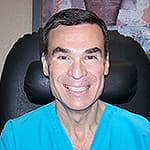
Dr. Milman received his dental degree from Baylor College of Dentistry in Dallas, Texas. He completed his Periodontal residency at the University of Texas Health Science Center in San Antonio. He was a researcher in periodontal microbiology and was a full time periodontist in his private practice in Round Rock and Austin, Texas for 36 years.
Are you over-torquing your implants and unknowingly setting them up for failure? What role does retained cement play in peri-implantitis, and how can understanding the oral-systemic connection transform your periodontal therapy outcomes?
Dr. Stephen Milman brings 36 years of periodontal expertise to this comprehensive discussion. He earned his dental degree from Baylor College of Dentistry in Dallas, Texas, and completed his periodontal residency at the University of Texas Health Science Center in San Antonio. A former researcher in periodontal microbiology, Dr. Milman maintained a full-time periodontal practice in Round Rock and Austin, Texas, providing him with extensive clinical experience across diverse patient populations.
This episode delivers essential periodontal insights that every general practitioner should understand when placing implants and managing periodontal disease. Dr. Milman shares practical guidance on proper implant torque protocols, the hidden dangers of retained cement, and evidence-based laser therapy techniques. The conversation also explores the compelling connections between periodontal bacteria and systemic health, including recent findings linking periodontal pathogens to Alzheimer's disease and COVID-19 outcomes.
Episode Highlights:
Proper implant insertion torque should follow manufacturer guidelines, typically avoiding over-torquing beyond 50-60 newton centimeters, as excessive torque causes bone necrosis and reduces osseointegration. When encountering dense cortical bone that requires over-torquing for complete seating, consider counter-torquing to loosen the implant and re-inserting at proper torque levels.
Retained cement from cemented implant crowns accounts for approximately 86% of peri-implantitis cases according to internal industry data. During surgical treatment, removing retained cement around implant threads, followed by citric acid application and appropriate bone grafting procedures, significantly improves healing outcomes.
Laser therapy in periodontal treatment provides hemostasis and access to root surfaces by cauterizing ulcerated pocket tissue, creating a blood-free surgical field. After laser application, traditional root debridement with curettes or ultrasonics remains the gold standard, followed by tissue readaptation without suturing requirements.
Hemoglobin A1c levels serve as critical indicators for periodontal treatment planning in diabetic patients, with levels under 6.0 indicating controlled diabetes and allowing standard treatment protocols. Uncontrolled diabetic patients present compromised immune systems that significantly complicate periodontal infection management and healing responses.
Periodontal bacteria have been identified in brain autopsy tissue of Alzheimer's patients, with bacterial presence correlating to periodontal disease severity. Additionally, severe periodontal disease showed correlation with increased COVID-19 mortality rates, likely through shared inflammatory pathways and immune system dysfunction.
Perfect for: General dentists placing implants, dental professionals managing periodontal cases, and clinicians seeking to understand the oral-systemic health connection. Particularly valuable for practitioners incorporating laser therapy and those treating medically compromised patients.
Don't miss these evidence-based insights that could transform your approach to implant placement and periodontal therapy.
Transcript
Read Full Transcript
This transcript was automatically generated and may contain errors or inaccuracies. It is provided for reference and accessibility purposes and may not represent the exact words spoken.
You're listening to the Phil Klein Dental Podcast.
Today we'll be talking to a periodontist about a variety of timely topics that GPs should be aware
of. We'll address the issue of over-torquing our implants, peri-implantitis,
the use of lasers in periotherapy, and the importance of understanding the oral systemic link and
how it affects the way we treat our patients. Our guest is Dr. Stephen Milman. Dr. Milman
received his dental degree from Baylor College of Dentistry in Dallas, Texas. He completed his
periodontal residency at the University of Texas Health Science Center in San Antonio. He was a
researcher in periodontal microbiology and was a full-time periodontist in his private practice in
Round Rock and Austin, Texas for 36 years. Dr. Milman will be joining us in a moment,
but first, as a dental professional, you spend a large part of your day in the operatory. That's
why partnering with the right dental company for the best dental equipment is so important to you
and your practice. The folks at DentalEase understand that every practice is different, so they've
created a customizable suite of treatment room packages to fit every need. Whether you have lots of
room or need to be super efficient with your space, DentalEase has a configuration that will work
for you. Known for its revolutionary J-chair and designer-friendly forest equipment,
such as lighting and sturdy ergonomic chairs, Dentalese combines comfort, beauty, and efficiency
into its state-of-the-art operatory equipment. And when it comes to utility room equipment,
nothing beats RAMVAC. It's quiet, reliable, and backed by industry-leading warranties. To learn
more about how Dentalese can customize and transform your operatory into one that you'll be proud
of, visit Dentalese.com. Dr. Milman, welcome back to the show. Thanks, Phil. Glad to be here.
So to begin this episode, let's talk about the general practitioner placing implants.
What are some of the tips and tricks you could recommend for the doctor that is doing his or her
own implants in the practice? Well, first of all, I think there is a range of experience.
Some general practitioners are very good and should be doing all implants that come through their
practice. Some are harder than others, though. If your skill set is limited,
I'd look for the slam dunk ones, which are usually mandibular posterior, wide ridges,
lots of distance to the inferior alveolar nerve in the maxilla.
Similarly, maybe premolar area in front of the sinus that you don't have any vital structures to
deal with. As far as placement itself, one concept. that i think is important is not to over torque
implants from our mechanical orientation as dentists it just feels good to screw it in as tightly
as you can but we're not carpenters we're surgeons and first of all the companies based on the
shapes of their implants will tell you that this is the insertion torque So if you can do it the
way they tell you to do it, do it that way. If you can't, because of circumstances, you want to try
not too tight, not too loose, which... People usually think of as too loose is less than 25 newton
centimeters. Too tight is more than 50, maybe 60 newton centimeters.
There is not advantage. There probably is disadvantage if the company says put it in at 35 to 40
and you screw it in at 50 to 60. It necroses the bone and it creates more failures,
less bone apposition against the implant. Do you see these cases as a periodontist when they come
back? after they're over-torqued? I do. What does that look like? In a way,
I don't know that they're over-torqued. I see that they're failed. In my own hands, though,
I've always been wary of over-torquing. So sometimes you get in dense cortical bone and you know
to seat the implant all the way it's been over-torqued. What I would typically do is either take
it out entirely. drill a little deeper and freshen everything and then put it in at normal torque
or sometimes counter torque it and make it loose, then screw it down to proper torque.
So that's very important for a GP to know. And I assume that after a general dentist does this
enough, they'll get to know what the comfortable torque is, what the safe range is. Well, that plus
every manufacturer says torque this implant. XYZ, normally 35 newton centimeters,
40 newton centimeters. So their engineers say,
do this. So it's probably a good idea to do that. It might be interesting to your audience to know
the origin of dental implants, unless everybody already does, but I'll tell it anyway. There was a
Swedish orthopedic surgeon named Per Ingvar Brandemark.
He was looking at blood flow in dogs. So he created tubes made out of titanium with a threading on
the outside and made them four millimeters in diameter because that's the kind of titanium he could
get his hands on and cut them, screwed them into a dog's leg and looked down and looked at blood
flow. When he tried to get his tubes back out, he couldn't get them out. And he's a scientist.
He says, why are the tubes not coming out? And he found that they were fused to the bone.
And then he's a bright guy. He says, well, where can we put a four millimeter tube that fuses the
bone and the birth of implants? That's amazing. Amazing story. A lot of NASA products in space are
used all the time for things that they were never originally designed for. That is quite a nice
story. So let's talk about periimplantitis. Periimplantitis. For many years.
Must be 20 years ago, I was talking to a Nobel Biocare rep at a meeting, and we were talking peri
-implantitis. He said to me, internally, we feel that 86% of peri-implantitis is because of
retained cement. So in other words, the crown is a cemented crown.
When it's cemented, the cement is inadequately cleaned up, and it becomes a housing for bacteria to
grow. And the bacteria have a party. at the edge of your crown as a surgeon i can't tell you how
many times there's a nasty inflamed area around the implant you lift the flap and shoot there's a
whole bunch of cement there you knock it all off If there's bone loss around the implant,
you deal with that. In my hands, I would usually put citric acid around the implant, then bone
graft if needed, membrane if needed, seal it up. But just removing the cement really had a profound
effect, and these healed well. But the reason why the abutment is cemented versus screwed is
normally a kind of a form and function restriction. Well, let's go back to Brandenmark and the
Swedes. created this system. And when it matured, all implants were retained by a screw.
There was no cementation. But on the other hand, they weren't really designed for single crowns.
They were full arch supports for dentures.
Americans then said, we want them for single crowns. And based on putting an implant at the correct
angle that you can set a screw into it, a lot of the time that angulation did not allow for a screw
retention. Again, Americans said we prep teeth and we create a taper so we can create that taper in
abutments. And so we created abutments and then we cemented crowns on top,
largely because we couldn't get the screw in. Secondly, Americans wanted maximum aesthetics.
I don't think it's a whole lot of difference putting a composite over the screw channel.
But a lot of dentists in their head as well said, you know, we want beautiful. aesthetics.
So they cement it instead of screw retaining. Is that changing now that we've seen that excess
cement can be so deleterious to the implant attachment process? Yeah,
I think it's probably matured to, if you can screw retain, most people will try to screw retain.
If there's circumstances that force you to cement, then people cement. Okay, so let's talk about
lasers, tips and tricks on lasers in periotherapy. What's the greatest thing you can tell a GP?
Some GPs have lasers and some are treating perio with lasers. Lasers are useful.
First of all, they stop inflammation. So you get a blood-free site.
Most use of a laser is going down the periodontal pocket and cauterizing the disorganized ulcerated
tissue within the pocket. And at that point, you have access to the root. with a blood-free field.
And the gold standard of treating perio is cleaning the roots. So now you have access to the roots,
no blading. You do go back to either curettes or an ultrasonic to clean the root like you would in
root planting or other forms of surgery. And then no sutures. You press the tissue and it adheres
back to the root. It's encouraged to do occlusal adjustment. And that package works very well.
Yeah, I have friends that are practicing general dentistry for many years, and they cannot live
without their laser. They just can't practice dentistry without it. I think there are quite a few
GPs that don't have lasers in their office and don't use them. Do you agree? I agree because of the
cost, probably. What kind of laser are we talking about that for periotherapy that you just
described? The Millennium laser is thought of highest in them. periodontal community,
mainly because their research is strong. Millennium? Millennium. That's the name of the
manufacturer? Yes. So as far as getting a laser, it's really something a GP should take some
continuing education courses, talk to a mentor, and find out what the best laser is for their
practice. Yeah, that's true. The companies are good about requiring continuing education to a level
where they'll let you have the key and let you go ahead and use the laser. Yeah. And I applaud
that. Yeah, they have hands-on laser classes. You just have to look for them, look for them
online. And typically they're built into the laser package. So you buy the laser a certain required
amount of CE. It comes in the package. Right. Usually your staff is involved.
We'll be right back with Dr. Millman to talk about the oral systemic link. But first, if you're
doing endo, then you need to know about Jay Morita's new RootCX3. the latest generation of their
world-renowned Apex Locator product line. In addition to its sleek design, smaller footprint,
and larger high-contrast display, the Root ZX3 accommodates the revolutionary HF module,
which utilizes high-frequency conduction. Once you snap on the module, which is quick and easy to
do, the RootCX3 becomes an invaluable tool in helping you prepare the canal system.
Using its high-frequency conduction, the HF module effectively ablates pulp tissue, residual
dental filling materials, such as gutta percha, and tissue in and around root canals. It can also
tackle procedures such as gingivoplasty, gingivectomy, hemostasis, and excision of intraoral
lesions. For more information about this revolutionary advancement in endodontic treatment, visit
merida.com slash USA. Let's talk about the oral systemic link,
and this is especially important in patients that have uncontrolled diabetes. How would you
summarize the situation right now with the oral systemic link, and how would that affect a GP's
practice? I think a simple and important thing for a GP to do is if they know their patient is
diabetic, I would ask them or acquire the information, what was their last hemoglobin A1c?
Because it is a test of how controlled they were over three months.
I'd like it to be under six, five better, but six. Now you have a controlled diabetic,
and you can think of them the same as any other patient. Higher, you've got an uncontrolled
diabetic, and clearly that makes periodontal disease worse and harder to treat it.
Diabetes is partially an immune system problem, so you've got an infection, which is periodontal
disease, and you've got a compromised immune system, much harder to get under control.
Years ago, we've been talking about the oral systemic link, and it was more conceptual. than I
think it is now. I think there's a lot of data to prove right now that the bacteria that sits below
the gum line does travel through your body and affects various organs, especially the heart.
Tell us about that and how would that affect the way a GP handles some of his cases, his or her
cases? Well, to answer the first part of that, there's a lot of talk about Alzheimer's disease and
periodontitis. And what I find the most compelling is in brain autopsies,
of alzheimer's patients you find periodontal bacteria so somehow those bacteria traversed the
bloodstream and made their way to the brain versus uh control patients autopsies that that is not
true you know i can't explain it further than that it's true that they are found there I don't know
how we make sense of that and say it causes or modifies Alzheimer's disease, but it's interesting.
So the bacteria that is found in the brain of an Alzheimer patient after an autopsy,
there's no way that bacteria could have come from anywhere else except subgingival, that particular
bacteria. It's most likely because these are the keystone bacteria that...
in periodontal patients. And I think they even did the study based on severity of periodontitis.
So severe periodontitis, they found the bacteria less severe, they didn't. We don't have a way to
tag them and find out. It's similar to other ways of looking at systemic host relationship.
You can find In an Alzheimer's population, there's a much higher level of advanced periodontal
disease. Can you say the periodontal disease is causative? Can you say the Alzheimer's made the
period worse? We're not there yet. What about the heart? I remember when I was in dental school,
if we had a patient that had a mitral valve prolapse, boom, they had to be on prophylaxis
antibiotics. Are they doing that now? What is the protocol right now for that? Very limited use of
antibiotic. The American Heart Association changed all of that. So very narrow,
specific heart problems. Not mitral valve prolapse? No.
So there's absolutely no treatment prophylactically with antibiotic therapy anymore? No, because
what they found was the benefit of the prevention was outweighed by the risk of side effects or
allergies to the antibiotic. And the creation of superbugs. That we've done. They say that in 75%
of periodontal patients, you have antibiotic-resistant bacteria. Another one that's interesting is
psychological stress. They find that psychological stress is a similar relationship.
it's found much more in advanced periodontal patients. Speculated that cortisol somehow modifies
the immune system or potentially even is food for the bacteria. But somehow that linkage exists.
Cortisol does a ton of things to negatively affect your body. A ton of things. So when you're under
stress and you have anxiety and you're creating tons of cortisol, you become insulin resistant.
You could become a temporary diabetic. You can have digestive problems, immune problems.
Another interesting recent one is that the severity of periodontal disease equated to severity of
COVID-19. Many more people who died had bad gum disease. All of these things are thought to be
linked through inflammatory factors, such as C-reactive protein and inflammatory.
marker in the blood. I think you could phrase it as the worst gum disease you had,
the more likely when infected you would die of COVID. It's most likely an immune system
inflammatory issue. They're both inflammatory diseases. Maybe a way of thinking about it is that
you've got a household, there are many households that one person in the household got COVID,
the other one didn't. And COVID, the symptoms and the morbidity,
mortality of COVID is related to overreaction of the immune system. The COVID-19 didn't per se
kill anybody, but a flare-up inappropriately of the immune system did.
Well, in gum disease, many people get attacked by these same bacteria. Many of them manage it.
and have an immune system that can ward it off. Some people, their immune system make mistakes and
blow up. And it's that blowing up of the immune system that actually destroys the bone. It's not
exactly the bacteria. I remember when I was at Penn Dental School, our pathology teacher,
Dr. Teichman, he said, first he said, okay, you have some dirt under your nails. Your fingers
aren't swelling up. You're not getting fever. You're not getting infection, but there's all sorts
of... dirt and bacteria under your nails now why is that because your body's not reacting to it and
then he explained that there was cancer patients in this study that had bacteria under their gums
but no problem they did not develop periodontal disease they were actually immune suppressed and
the patients that had this very reactive immune response In response to that bacteria,
that's where all the histamine was released and all the inflammatory cells and tissue broke down.
And like you said, the bone loss started. Cancer patient didn't have any of that. So the patient
itself is responsible for, in a sense, how much periodontal destruction occurs.
Exactly. Exactly. And what's interesting is that we've all had patients walk into the office and
say, I haven't seen a dentist in 25 years. dirty teeth, and they got calculus and stain,
but they have no bone loss at all. How does that happen? We all know that you let all that stuff
get on the teeth. It destroys bone, and you lose your teeth. Well, it's got to be on the patient
side. They do have all that bacteria, but the immune system's dealing with it. It doesn't create an
environment that the bone goes away. People who come in your office are not a set of teeth.
They're people. And each person needs to be differentiated as to their health history, as to their
habits, as to their age, as to their weight. There's a tie between perio and obesity.
And then you think through how you're going to treat that patient, how you expect them to respond.
Really, the bacteria and the plaque is the primary component of periodontal disease,
but not nearly the whole story. All right, Dr. Milman, another good podcast episode. We appreciate
your insight and we look forward to having you on future episodes. Thank you, Phil. If you're
enjoying this podcast and have an Instagram account, please follow us, PhilKleinPodcast.
Every week we'll be adding high quality relevant content. And to support this program, please leave
a review on your favorite podcast platform. It really does make a difference. Thank you so much for
listening. See you next time.
Clinical Keywords
Dr. Stephen MilmanDr. Phil Kleindental podcastdental educationperiodonticsimplant dentistryperi-implantitisimplant torquenewton centimetersretained cementlaser therapyMillennium laseroral systemic linkhemoglobin A1cdiabetesperiodontal diseaseosseointegrationcitric acidbone graftingAlzheimer's diseaseCOVID-19inflammatory markersC-reactive proteincortisolimmune systemantibiotic prophylaxisAmerican Heart Association