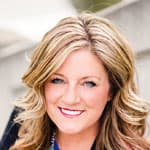
Lancette VanGuilder, RDH, BS graduated with her dental hygiene degree from the University of South Dakota in 1995 and has been actively involved in dental hygiene education, leadership and advocacy on the local, state and national level over the two decades. Lancette works as a clinician in private practice, in the corporate world as a professional educator, as a public health dental hygienist and is an internationally recognized continuing education speaker.
Lancette has served on numerous boards, committees and taskforces to promote oral health, access to care and advance the dental hygiene profession. She has received many awards, including Nevada Dental Hygienist of the Year and the Innovative Career Vision Award for her work in all 7 professional roles of the dental hygienist. Most recently, she was honored with the Irene Newman Professional Achievement Award from the American Dental Hygienists Association- recognizing her for her contributions to the advancement of the art and science of the dental hygiene profession over the last 15 years.
Lancette is passionate about ensuring that all communities have access to dental care, the power of prevention and the utilization of the dental hygienist.
Today we'll be discussing ways to empower dental hygienists and dental assistants to deliver exceptional care, going beyond what is typically expected of them, and reaching new heights in clinical outcomes and career satisfaction. Our guest is Lancette VanGuilder, a trailblazer and leader in dentistry for more than two decades. She practices as a complete health dental hygienist with 28 years of experience. She is the founder of a nonprofit mobile dental hygiene business and is recognized as an international CE speaker and serves as the current Vice-President of the American Dental Hygienists' Association.
Transcript
Read Full Transcript
This transcript was automatically generated and may contain errors or inaccuracies. It is provided for reference and accessibility purposes and may not represent the exact words spoken.
You're listening to the Phil Klein Dental Podcast
So what does a dental hygienist or dental assistant have to do to deliver exceptional care,
going beyond what's expected of them and reaching new heights in clinical outcomes and career
satisfaction? To give us her perspective on this is our guest, Lancette VanGilder,
a trailblazer and leader in dentistry for more than two decades. She practices as a complete health
dental hygienist with 28 years of experience. She is the founder of a nonprofit mobile dental
hygiene business and is recognized as an international CE speaker and serves as the current vice
president of the American Dental Hygienists Association. Lancette, it's a pleasure to have you back
on the show. Hi, Phil. Thank you so much for having me again. It's great to be here. Yeah, we're
very happy to have you. And we love when you share your expertise with us. So I think we can all
agree that we all come into this profession hoping to provide exceptional care. I mean,
that's the goal. But in order to do that, we have to maintain a high level of enthusiasm every day
because you can't come into a workplace and dread it. or it's difficult anyway, to come into a
workplace and dread it and then offer exceptional care at the same time. So to begin this podcast,
what gets you excited the most about practicing dental hygiene? Oh gosh, that's such a big
question. I love being a hygienist so much. It's been 28 years for me. There are so many things
from being involved in my professional association to giving back to my community, you know,
to learning new techniques and implementing new products. I mean, there's so many things, I think,
exciting in dentistry right now. But I think what excites me the most in dentistry right now is the
rapidly transforming healthcare system. You know, we have dentists and hygienists and assistants
exploring all kinds of avenues to how can we best use our expertise to promote oral and overall
health. You know, we're seeing collaboration in the dental space with things like the dentist and
dental hygienist licensing compact, which is going to make it easier for us to be able to move
across state lines and practice. You know, we have mid-level providers working to fill the gaps to
improve access to care. We have nonprofit mobile and portable dental businesses like mine.
I have a nonprofit that I've been serving communities in rural Nevada for almost the last decade
where I can just pack up equipment and take my dental practice to people where they are,
you know, homeless camps and schools and hospitals. And then I think if I had to pick number two,
it would be this new emphasis on oral systemic health. You know, things like dental hygienists
giving vaccines. I was able to give thousands of vaccines during the pandemic. It's very rewarding
and fulfilling for me to get to use my dental hygiene knowledge and skill set and science and
background and actually, you know, go into the community. We have this new emphasis with brain and
heart health and sleep medicine. I think right now the sky's the limit for dental practitioners.
And I think we're just on the cusp of some pretty major change at looking at ourselves as primary
care providers. And who knows what the future is going to hold in that arena. So when you went into
dental hygiene, did you think? that dental hygiene was just about scaling and root planing and
prophy? Or did you have the aspirations before you even, you know, built your career that you were
going to go beyond what a dental hygienist typically does? No one's ever asked me a question.
That's so good. I have never just thought my job is just... teeth.
But I wanted to be a hygienist since I was six. So it's all I wanted to do my whole life growing up
was to teach people how to be healthy. And again, I've always wanted to be able to give back to my
community. So that public health and community service aspect kind of drove my decision to become a
hygienist. And then where I went to school, University of South Dakota graduated 28 years ago.
I was already working in hospitals and at tribal reservations. at working with at the Mayo Clinic.
I had an opportunity where I just thought that was the norm. When I got out of school, I was in for
a big shock, a big surprise that more dental providers didn't see it that way. And I've really
spent my whole 30 years in dentistry trying to be a collaborative part of health care.
You know, that dentistry isn't a silo and we don't have to be alone trying to save the world.
We can work together and accomplish so much more. You know, from a dentist's point of view, to hear
you say that, it's just very inspiring. And it's so exciting to hear a dental hygienist so excited
about their career and the opportunities that you've explored. What are some of the key tips that
you can share with us for dental assistants and dental hygienists that will help them provide
exceptional care and also maintain a high level of career satisfaction? Yeah,
I think that communication is really key in any industry. It's how we communicate with our peers,
you know, with our teammates, with our patients. I think communication with our patients is
probably the number one way for us to provide exceptional care. Establishing rapport with them,
you know, greeting them warmly when they walk in the door, smiling at them, not turning our back on
them and asking them questions, but, you know, just looking at them, maintaining eye contact,
actively listening to them and fostering trust and comfort, I think is something we all are looking
for now. I have found one kind of key tip that has helped me be really great at this patient
experience part is just to learn how to talk less and listen more. I've learned to develop a habit
of asking my patients questions and then just stop talking and giving them time,
you know, to contribute, to talk to me about what are their needs and wants and what are their
expectations, you know, including them. as a partner in healthcare, instead of just lecturing them
and telling them what we want to do, I have found, you know, patients love to come back and see
people that, that see them as more than just a set of teeth. So I think building relationships with
our teams, with our coworkers, you know, dentists, hygienists, assistants, the front office team,
you know, this is a partnership. I also am a pretty good motivator by showing photos to my
patients, you know, showing them YouTube videos, making recommendations as far as podcasts and
books. And sometimes I'll even send them research articles. You know, we have patients who want to
make evidence-based decisions. So we have to be good at giving them the evidence. So I even, you
know, send a lot of research articles to my patients. So we've talked offline, Lancette,
about teledentistry. influenced you and kind of transformed your practice to some extent.
Oh, all of my practice settings. I work in private practice as a hygienist. I serve as a clinical
director for an airway and sleep center. I have my mobile nonprofit dental business. I use
teledentistry in all of them. You know, it is a great tool for us to connect with people beyond the
dental chair. You know, sometimes patients just need additional oral health coaching above what I
can provide in my 60 minute hygiene appointment. Or sometimes I need to collaborate maybe with an
ENT and a patient and a dentist all together. You know, teledentistry is going to play a big role
in bridging this medical-dental divide, bringing teams together, good communication,
you know, with photos and sharing of x-rays and sharing sleep tests.
That's one thing I use at the Airway Center a lot. We use telehealth a lot to review sleep test
results with patients. So I think teledentistry is a great way to improve communication and
collaborative partnerships and bridge that medical-dental divide. How long have you been using
teledentistry in your practice? Gosh, quite a long time before COVID. I started using teledentistry
a little bit before COVID in the mobile world. You know, I rely on it a lot when I see things.
And in Nevada, I'm able to practice independently without a dentist, no written agreement or
anything. So I see a lot of things that I need help with. And I used teledentistry a lot before
COVID. COVID. It's just become mainstream. We use it every day now. But you still have to bring
these patients in to do the treatment. Oh, yeah. We have to do a lot of care coordination. A lot
of, you know, these patients don't have a dentist of record. They don't have a dental home. So when
I'm out serving the communities, that is the goal. How do I connect them with a dentist? How do I
get them into a dental home? I just want to serve, you know, the gap, you know, raising awareness,
providing education, providing dental hygiene services, and get them to a team that can provide all
the stuff that I can't, right? So we all know in dentistry that patient comfort is priority,
right? I mean, if a patient is uncomfortable, it's going to be a bad experience. So in your
experience, how can dental assistants and hygienists enhance patient comfort during procedures?
Yeah, so creating a comfortable environment is important for us and for our patients. You know, I
think a big thing here is time management. Also making sure our patients are comfortable sitting in
the chair, offering them blankets and warm neck pillows, you know, distractions like...
music or TV shows, aromatherapy. I even know some offices have,
you know, support animals at their appointments. How great would that be, you know, if we all had
some of these nice comforts? You know, I think patients, just keeping in mind that our patients
want to leave our office feeling better than when they came in. That requires like looking at what
extra small little touches that we can incorporate. So you have a lot of methods that you use in
your office to make the patient feel like you guys are partners. You're on the same team.
You're not there with this gap between you where you're the doctor, you're the hygienist, I should
say, and they're the patient. And you're giving them instructions on what they should do or
passively reprimanding them in a way if they're not fulfilling their end of the bargain as far as
home care. That's not your style. You bring them in as a partner. Has that really helped build
patients on record and actually make the practice successful as far as the dentist is concerned as
well? Well, 100%, yes. I think when you have this humanistic approach to health care,
first of all, you feel really rewarded. And that's, you know, one of the reasons why I feel so
rewarded is my patients never cancel. They do not come late. They do not miss an appointment with
me. You know, I think right now it could be, I hate to say this, almost seven or eight months wait
to get in to see me. I think when patients feel valued and heard and appreciated and you go that
extra mile, they're going to do anything that you recommend. as well. So if I make a recommendation
for a product or a procedure or a service that they need in our office,
you know, compliance is through the roof. Case acceptance is through the roof. Job satisfaction is
through the roof. These small extra touches is a win-win for me personally, for the patient and
for the practice. Yeah. And I think it's really important if you would tell us your opinion on
this. Someone who's coming to the practice, a dental hygienist who's not happy, whether they're not
happy with their career or not happy with with their personal life, it comes out in their way,
right? In their demeanor. So when they're working on their patients, their patients can feel this
and sense it. And it's a negative karma, whereas you're just the opposite. You have this
enthusiasm. You have this way of communicating to your patients. And even if they're in a bad mood,
when they come in, they walk out happier than they were. Before they came in, because it was like a
visit with their friend, the way you operate. So tell us about how the demeanor of the provider is
so important in how it reflects upon the patient's mood when they leave the practice.
Yeah, I would say you hit it. You hit the nail on the head. Patients can feel it. They can see it.
They can feel the energy from the minute that we walk in the door. I know many hygienists,
dentists and assistants are burnout right now, right? We are in a hard industry. We went through a
pandemic. Business owners are trying to make ends meet. You know, I think the first thing I would
recommend for all people listening is do a self-assessment quiz. See if you are burnout.
See where you are. you're missing, you know, is it clinical knowledge?
Is it support from your peers? Is it financial? You know, really do some self-assessments and
don't for once be fooled that your patients don't see that. And this team approach to healthcare is
so important to me too. I've always worked with dentists who I have the utmost amount of respect
for, and they have the utmost amount of respect for me. We are partners, right? We both have to
bring our A game and work together. That open communication, that trust, that transparency between
providers is really key. And your patients see that. My patients know that the doctor and the
assistant and I work really, really well together. They see it. We compliment each other. We give
each other kudos. We support each other. You know, we co-diagnose and provide co-therapy.
This is a team approach. And your patients will absolutely feel it. But many people are struggling
and maybe know it. And many people are struggling and don't know it. And I think healthcare
providers, especially hygienists, I can speak from a hygienist perspective, is that we are giving
people, right? We give a lot at work. We give 100%. It takes an emotional toll on us.
And we kind of go into this martyr syndrome where nurses kind of do the same thing. We just think
we have to keep going on and be miserable to help other people. And that's not true. You can help
other people and be comfortable. fulfilled at the same time. You can help other people without
being miserable. That's a very important point. So if someone is miserable in this environment,
and I don't mean to be, you know, negative Nancy here, but it's important to talk about it. They
need to make a move to change the landscape. They can't just keep... like that because the years go
by and then they're stuck in a rut. And that's the, you know, this is your life you're talking
about. And, you know, the truth is not everybody has a working environment that you just described.
Some offices aren't as pleasant as others. So what do you suggest in these situations? Should the
hygienist just take off, move on to another office, or try to change the conditions in the office
in which they work? Yeah, well, I always think, you know, it always starts with yourself. I could
never just pick up and leave a practice without bringing forward solutions first, right?
Like I'm a solution person. So anytime you're not happy about something, don't talk about what
you're not happy about. Talk about the solutions, some other ways that you could possibly do it.
You know, focusing on solutions rather than problems, I think has always really worked well for me.
to your team, you know, acknowledge the issue, bring forward solutions. If things are not going to
change, then absolutely leave. You know, it could be the best thing that it could ever happen to
you. Change is scary and it's so hard, but always start from like a solution mindset.
I believe most people get into dentistry for the right reasons. We are good people. We want to
help, but we get lost along the way. You know, we get into old habits and routines and,
you know, you could be the person that. could really change the dynamic. It could be that you have
great thoughts and great ideas and nobody cares. But, you know, I always think you have to try
first. Solutions first. And then just, you're right. Life is short. There are so many avenues to
still be a clinician, still be a dentist or a hygienist and assistant. Maybe it isn't even clinical
anymore. You know, maybe it's teaching. Maybe it's writing. Maybe it's podcasting. There's so many
avenues now to really help people. Maybe even just outside of clinical, you know,
practice. Yeah. So there's no. there's a lot out there infinite possibilities and you just have to
find your comfort zone so shifting gears a bit what techniques or products can dental hygienists
implement into their practice to improve efficiency get more joy out of practicing and get better
predictable results yeah well after you know almost 30 years of being a hygienist I still work in
private practice I know that our work is really hard. You know, we have to manage these patient
expectations, team expectations in these crazy schedules where, you know,
adding more services, you know, A1C levels, blood pressures, BMI, talking about growth and
development, sleep and breathing and all these different things. But what we know is that our
patients of all ages are at a very high risk now of tooth decay and periodontal disease.
And in today's fast paced work environment, I think my number one tip is time management. Time
management is crucial. So prioritizing our tasks, maybe implementing AI platforms,
organizing our workspace, ensuring good ergonomics, and implementing new products that can make our
jobs easier while providing the highest standard of care. I think we're seeing tremendous
advancement in equipment and dental products that are designed to improve the best standard of
care. And actually be good for our bodies, too, like intraoral cameras,
lasers, cordless handpieces, bioactive dental sealants, ACP technology. The list goes on and on and
on. Before we hop off, I do want to talk about kind of my favorite combination right now, which is
a cordless handpiece and a new profi angle that just came out. I've been using cordless handpieces
for, gosh, at least over five years. I'm an ergonomic speaker, so head-to-toe ergonomics is
really important to me. So I've been using the Premier AeroPro cordless handpiece for years because
there's no foot pedal. So I don't have to bend and twist and try to decide where I'm going to put
my feet and work around cords. I can actually keep my neutral posture. and provide really good care
with this cordless handpiece. But the new Prophy angle that just came out is amazing. It is called
the ProFlare, the ProFlare Prophy angle. And it's been a game changer for me in private practice and
in my nonprofit. This new Prophy angle has a nice small compact design so I can reach those back
teeth really well. It has these ridges inside of the cup that allow me to get paste into the cup
and it doesn't splatter everywhere. I can get paste right where I need it. But most importantly, it
helps make it stain off really fast interproximally. And as a hygienist or maybe even assistants
out there that are polishing interproximal stain is a nightmare for us to try to get off. So,
you know, finding new products, trying new, new innovative products that are designed to be safer
for your body and provide better care to the patient, a better patient experience. This is what I
mean by time management. This helps us feel good about the work that we do and our bodies feel
good. at the end of the day, search out new products, try new things like new hand pieces and profi
angles, listen to podcasts, go to conferences, you know, find a circle that will support you and
listen to you and empower you to make changes. If you are burnout, you know, I think continuous
learning is pretty essential. So staying connected with professional networks, online forums,
attending workshops. And then lastly, I just say, Try to be... at the top of the education level in
your game, right? Pursue additional C certificates, certifications,
advanced training. For me, you know, it was sleep medicine and lasers and things like that.
You know, the more we look at health in a broader scope, the more services that we can provide,
the more new products that we can implement. This is what's going to keep us delivering exceptional
care, feeling really good at the end of the day. Yeah, well said. Well said, Lindsay. And I think
it's important to let the audience know that when they do try new products, it's good to work with
a company that you can trust that's been around a long time. Not that you shouldn't give new
companies a chance, but it's good to work with companies that stand behind their products, that
give good technical support. I know you mentioned a couple of products and they're made by Premier
Dental Company, which has been around a long time, probably 100 years. They've come out with- Over
100 years, yeah. And it's a great team of people there. They have a great technical team.
manufacture this stuff under the highest quality assurance. So those are the kind of things you got
to keep your eye on. But you really helped us out a lot, Lancette . Really appreciate your time. And
I'm very happy for you and your career. You're just, as I said, an inspiration to everyone
listening, because we all want to provide exceptional care. We all want to love what we do. And you
are exemplar of that. Have a very good evening. Thank you so much. Thanks for having me. Bye-bye.
If you're enjoying this podcast please leave a review or follow us on your favorite podcast
platform. It's a great way to support our program and spread the word to others. Thanks so much for
listening. See you in the next episode.