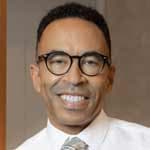
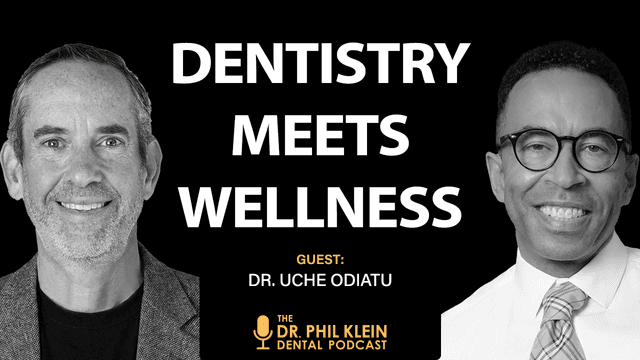
Dr. Uche Odiatu DMD is the author of The Miracle of Health, a professional member of the American College of Sports Medicine and a practicing dentist in Toronto. This busy health care professional is an NSCA Certified Personal Trainer, Certified Yoga Instructor, Certified Boot Camp Instructor and has given 500 plus lectures in England, Canada, the USA, the Bahamas, Denmark, Bermuda and Norway. He has lectured at the American Dental Association Annual session 14 times since 2006. www.DrUche.com Twitter @FitSpeakers Instagram @FitSpeakers
Dental podcast: Welcome to DentalTalk. I'm Dr. Phil Klein. Today we'll be discussing sleep deprivation and how it’s impossible to be a poor sleeper and enjoy optimal health and vitality. Sixty percent of people report problems with sleep quality and quantity. The results of that are chronic inflammation, insulin resistance, stubborn fat, poor judgment, weaker immune systems, cognitive decline and memory loss. So we can all agree, our dental patients don't escape the fallout of sleep deficiency. And its important to us as health care providers to understand the dental implications of all of this. Our guest is Dr. Uche Odiatu, author of The Miracle of Health, a professional member of the American College of Sports Medicine and a practicing dentist in Toronto. He has given 500 plus lectures in various countries and has lectured at the ADA Annual session 14 times since 2006.
Transcript
Read Full Transcript
This transcript was automatically generated and may contain errors or inaccuracies. It is provided for reference and accessibility purposes and may not represent the exact words spoken.
Welcome to The Dr. Phil Klein Dental Podcast. I'm Dr. Phil Klein. Today we'll be discussing sleep deprivation and how it's impossible to be a poor sleeper and enjoy optimal health and vitality. 60% of people report problems with sleep quality and quantity. The results of this are chronic inflammation, insulin
resistance, stubborn fat, poor judgment, weaker immune systems, cognitive decline and memory loss
and there's probably a lot of other things that i didn't mention that are associated with sleep
deprivation so we can all agree our dental patients don't escape the fallout of sleep deficiency
and it's important to us as healthcare providers to understand the dental implications of all this
so to sort it out for us here today our guest Dr. Uche Odiatu he's the author of miracle of health a
professional member of the American College of Sports Medicine and a practicing dentist in Toronto.
He has given 500 plus lectures in various countries and has lectured at the ADA annual session 14
times since 2006. That's impressive. He has recently presented an amazing webinar on Viva Learning
titled The Value-Added New Patient Exam, Four Patient Lifestyle Habits That Influence Healing.
So I encourage everyone to watch that recorded version. of that webinar. You can find it on
vivalearning.com by going to the search field and typing in Dr. Odiatu’s name.
It's spelled O-D-I-A-T-U, Odiatu. And if you type that in the search field,
you'll find his webinar that I just mentioned, which is really worth watching. Dr. Odiatu, it's a
pleasure to have you on Dental Talk. Hey, thank you. I love sharing. If there's an opportunity to
share my passion for total health, I am there. So I appreciate the invite. Yeah, and we're getting
more and more discussions on the mouth-body connection, and we're really glad to have you on,
especially with all the stuff you've done and teaching, you've published. So we're very, very happy
to have you on the show. So to begin, what does sleep deprivation do to the body? Well, it's
amazing how destructive it is. I think, you know, on January 1st, people make all kinds of health
resolutions about losing weight, stopping smoking. exercising but in 25 years of uh being on the
road and sharing i've never heard anyone say this year i'm going to sleep more for some reason
people think sleep is automatic but sleep is so foundational anytime the body's not sleeping well
the body starts breaking down and is unable to repair from the day's awake state the awake state is
catabolic the sleep state is reparative and anabolic I can't agree with you more. In fact,
the other day I took a walk in my neighborhood and there's an elderly woman who's well into her
80s. And I said, boy, you have a lot of energy. And she goes, you know what? I made sure that
throughout my whole life I took naps and I slept well. That's what she told me. So I thought that
was very ironic that I just had this discussion with my neighbor or almost my neighbor.
And she's certainly one that takes sleep seriously. And I agree with you. Sleep deprivation is
something that could really starve the body. of a system that allows us to heal and many, many
chemical reactions that occur in our sleep that we're not aware of. So how does this affect the
dentist? Like, why is this so important to the dental practitioner? Well, everything we do is a
stress to the body, like whether you're scaling and root planing, you're debriding, you're taking
away calculus, whether you're putting in an implant, whether you're extracting, whether you're
placing retraction cord, whether you're placing a Tafelmeyer band. whether you're polishing a
margin below the gum line. Everything we do requires is almost like an insult to the body. Sure,
you're doing something good, but it's an insult to the body. And the body has to heal and bounce
back. Basically, during the day, the human body is on standby. But the immune system, all sleep
scientists agree, it goes into high gear at nighttime. So anytime the body's not sleeping well, the
body's not healing well. In order for a patient to be a good healer and respond well to our
treatments, it has to heal well. This is why, you know, 70% of patients who aren't sleeping well,
they are unable. They're sabotaging the good of their intentions, the good of their clinical
provider. So you're a dentist in Toronto, and you see a lot of patients,
and you're also obviously really tuned into the miracle of health,
your book and so forth, and all the teachings that you do. What do you do in your practice to not
only identify sleep deprivation, but how do you... handle that with your patient and how do you
address that and how does it affect your treatment? Yeah, great question. I think on the new
patient exam, I bring up sleep and people often think it's all about not snoring. And I say it's
much more than that. I tell them it's, it's quantity and quality. And I said, I've times on again,
I said my patients who are poor sleepers are poor healers. So if you are sleeping less than seven
hours a night, or if you're a shift worker, which is about 30% of patients, or one in three,
they're not going to respond well to the things we do. So I said, a lot of what we do here, you'll
spend maybe two to three hours a year in our office, but you spend, you know, 88,600 hours at
home. So I said, a third of that is spent sleeping. So I said, when you're sleeping, you're
healing. So that is something new for most patients. On the post-op instructions,
I share with them about the only time the patient's going to heal after an extraction is at
nighttime. And most patients hear, oh, don't smoke, don't suck through a straw, that kind of thing.
But many people don't realize it's the sleep where the body heals and repairs. So it's so
foundational. But I think the best coaches in the NFL, the NBA, the NHL focus on the fundamentals.
But everyone looks for the esoteric, the fringe things that get people healthy. But sleep is so
foundational. But 70%, the research shows that 70% of patients, 70% of North Americans.
don't get the 79 hours of quality sleep that they need each night for basic optimal health.
Yeah, and I'm sure that that's the case. Now, what about rough patches where you kind of sleep for
two hours, you kind of wake up, try to fall back to sleep? Is that dangerous as well? I mean,
is that considered deprived sleep as well? That's also an issue. You see people actually, when they
have interrupted sleep, the stages have to start over again. So they go one, stage one, two, three,
REM, rapid eye movement sleep. one, two, three REM. And it takes about 90 minutes for an adult to
go through each stage, one, two, three REM. What happens is if you interrupt it with a nighttime
awakening for the bathroom or one of the second most common insomnia is sleep maintenance.
People don't have a problem getting to sleep. They have problems staying asleep, just either having
a glass of wine before bed or eating a heavy meal before bed or just a higher cortisol. So what
happens is these people aren't resting deeply. So anytime that sleep is interrupted, that person
will wake up feeling unwell. So even though they might've been in bed eight hours or nine hours, if
the sleep efficiency, which is they say after age 60, it's about 70%, they are gonna age poorly.
They'll have background levels of chronic inflammation. They'll find themselves not being able to
heal or grow after a hard workout. And they'll have troubles with healing after an implant.
And all these companies are worried about peri-implantitis. And we talk about strengthening the
clinical protocols. But we don't realize that 90% of it is in the patient's court. And a person
who's not sleeping well is sabotaging everything we do. And this is where it comes into play. What
can we do to support them? What can we do to help boost their realization? Many times for the first
time in their lives, how important sleep is to the overall healing procedures.
So what can we do as dental practitioners to help them through this process where they may be
compromised?
poor sleep. Let's take a look at periodontal disease and you're doing scaling root planing and you
want to get the soft tissue to heal and you're having some problems getting them to getting the
tissue to heal properly what are some of the things we can do well the whole idea about if
someone's sleep deprived which is 70 so seven out of ten patients are sleep deprived it's really
hard habit to turn that runaway freight train dr phil talks about many people's problems are a
runaway freight train so it's really hard to stop a runaway freight train but what they can do
though is that night they can get themselves better oral hygiene products. And it sounds so glib,
but simply, you know, people love an easy step. Many times, the first step to health is gargantuan,
you know, hiring a trainer, going for polysomnography and booking that appointment. But it's about
lowering the inflammatory burden. So I talk about, you know, the hygiene appointment, we're
lowering the inflammatory burden. I talk about replacing some bulky crowns with better contoured
crowns of lowering the inflammatory burden. Because sleep, Poor sleeper is inflammatory.
Things like a power brush. You know, think of the Sonicare. Think of the power flosser. You know,
these things, the water flosser. This is actually, these are lowering the inflammatory burden.
So they can go home on the way home, go into a drugstore, go into a department store, and buy some
products that lower the inflammatory burden. And maybe over time they can become better sleepers.
But people often want to find, want to have an easy first step to health. And I think when the
first step is easy, now... They have early success. Now they feel successful and now they're ready
for the next thing. So I really like sharing with people easy first steps because most people's
prediction is the first step is huge. And that's why most people don't even get started. Yeah, no,
that's a very good point. And that sounds like a coach, which I think you are actually in your
sports medicine. part of your life and it does sound like the best way to go because if you try to
reach a goal and the first step is like you said is so large it's like oh my god i don't know if i
can do that and they never do anything so by taking a smaller step and actually addressing the
local inflammation like you said reduces the burden and then you kind of worry about the big issue
which is the sleep deprivation next and you can address that but at least you're controlling the
local inflammatory burden in the mouth is that the point Yes. And I think many people,
and again, you look at you and I, we're discussing something, the science, some of it's new age,
some of it's prevention, some of it's complementary. I think many people have a hard time getting
their head around it. So many, chair side, you don't have an hour, you don't have six months of
coaching. You basically have two or three minutes to share with them how important it is.
But a big part of that is looking the part. I think when the clinical provider looks healthy, when
you yourself... walking the talk, the communication comes across as a lot more authentic. And I
think when it's authentic, it's patients, I call it, they suspend their disbelief for our
certainty. And it's our certainty in our products. It's our certainty in our treatments. And it's
our belief in lowering the inflammatory burden that gets people like, you know what, this person,
this, you know, this hygienist, this dentist is saying things a little differently. I'm going to
suspend my disbelief and I'm going to move towards healing. And basically, it's that shift in
perception from something that we do to them that they can do themselves. Now they are participants
in their own healing. So, you know, they get some products. They have some early success. And
that's what I see. I like to see that shift in how they look at me. It's not something I'm doing to
them. It's something we're sharing. And ultimately, it's something that they do at home because
that's where they spend most of their time. You know, 8,600 hours a year is spent at home. Two to
three hours is spent in our office. Yeah, and that's a great way to interact with your patients.
And it's a total health approach, which I think is becoming more and more prevalent in a lot of
offices, especially in the initial engagement with the patient. So once you get them into the
routine of doing things at home, and you mentioned some Philips products, and I'm sure there are
others that help them reduce the local inflammatory burden in the gingival sulcus and in their
mouth in general, do you recommend something to them about? trying to find a way to sleep better?
Well, as much as the fact that, a great question, as much as the fact that they've actually come to
me, and I've had my own polysthmography, I've had the sleep study, you'd be surprised how many
people are actually a little resistant. It sounds like something a little scary. Anytime
something's a little scary for patients, they have some hesitancy, which means they'll probably
postpone doing it. So as little as something like a sleep mask, you know, a huge part of the brain
is for visual input. So the minute you have some blackout curtains, the minute you have a really
dark room, And if patients have a spouse or a partner that watches CV or reads, I say,
you know, a $5, $10, $15 sleep mask, which they get at a travel store or a drugstore, immediately
blocks that light. So now we've given them a $5 to $10 to $15 solution. And I'll mention, you know,
about having cool the room. Many people want an ambient temperature of, you know, 72, 74 degrees
Fahrenheit. But, you know, sleep scientists have shown that 65 degrees. is the sweet spot it's the
temperature that the body loves in the ambient room which allows you to get under the covers and
that's where you have the deepest sleep where you'll actually sustain deep sleep for the seven to
nine hours which means not leaving the bed you know you could have some nighttime awakenings but
you're not going to get out of bed because the body is enjoying the stage one two three and the REM
sleep so um having easy solutions like a sleep mask um keeping the room cool and it seems so basic
but many of the best coaches in you know professional sport It's the basics that they really push
into the players and that's where they master. Yeah, that's interesting. What about supplements
regarding melatonin or L-tryptophan? What's your thoughts on those? From what I've read and some
of the sleep scientists now out of Berkeley and Stanford, they're saying that melatonin works best
for the 70 plus year old patient or client or customer, 70 plus. Under 70,
many times melatonin is a placebo. And in Canada, what I've heard with a lot of supplements,
it's not very regulated. So you might think your tablet or your capsule says this contains
melatonin. How much melatonin does it really contain? You know, how much is really inside? So
supplements is one way, but I think foundation is sleep mask, you know, keep the room cool.
Don't have a big meal before bedtime. You'd be surprised how much energy digestion takes. So one of
the biggest users of energy is digestion. So if someone eats within two hours of bedtime, eats a
fairly large meal, their body will spend almost majority of the night. digesting food.
And after eight hours, they'll wake up feeling unrested. So also not drinking a glass of wine
before bed. Many people have a nightcap of a glass of wine or a scotch or some drambui. These help
you get to sleep, but they don't help you stay asleep. They encourage hypoglycemia. It also
shortens the REM sleep and people dream less, which is a big part of feeling rested because it's
during REM sleep that the body processes emotion and processes memory. So a lot goes into it.
I think a lot of people want the one one fix-all, but you've got to approach it many different
ways. For the patient's expression or the patient's age or the patient's financial means,
I will alter it. And you've really got to be flexible and see where the patient looks engaged. And
you've got to look right at the patient and saying, okay, this patient's kind of not really
engaged. Let's change subjects. So let's approach it differently. So it's really important for the
clinical provider to be aware of when you're getting the patient's attention to really see where
the most impact is to get them healthy. Yeah, there's a lot of psychology there and you need a lot
of experience, which you have to make that judgment to make sure you're going the right direction
with your conversation. This has been very helpful, this podcast. I want to wrap it up because I
know we have another one on nutrition essentials for the busy dental professional. I'm excited to
do that with you. But just to end this one, last question, maybe it sounds silly. What about
napping? Does taking a nap during the day make you? less likely to have good sleep at night or does
it add the value of some extra sleep that will help you heal and make up for possible sleep
deprivation during the night? Yeah, you know, elite performers, elite athletes are big nappers.
And, you know, Matthew Walker is a neuroscientist out of Berkeley reports. I've heard Michael
Howard, PhD neurophysiologist say that a 20 to 30 minute nap before three o'clock.
So after three, you start disturbing your regular nighttime sleep cycle, which is you don't want to
do. But before three o'clock, 20 to 30 minutes is equal to an hour of solid slumber.
But if an athlete wanted more growth hormone, if someone to integrate, you know, newer, new
athletic patterns, you know, napping is one way to do it. So the average patient is thinking, hey,
I'm not an athlete. Why would napping help me? Well, you want to integrate new learning. you want
to have growth you want to be better at managing blood sugar and all those happen when you're a
better sleeper so if 20 to 30 minutes helps the athlete it'll help the busy new mom it'll help the
busy student uh it'll help that we're all many people now are working from home so 20 to 30 minutes
at home you know you nap before three o'clock it's equal to an hour so that's it's an easy way to
get and the science shows you know napping helps support the body rest and and getting that
repaired in sleep mode and this woman who takes these walks in my neighborhood in her 80s says that
she's lives by taking naps for the last 50 60 years she says she tries to take a nap every day and
it's working for her no this makes tremendous sense and i i don't mean to use a single example as a
basis for something but with your knowledge and and the literature i i've heard that before and um
it's something certainly to consider if If we have the ability to take that time out during the
day, and like you said, before this podcast, we talked offline with everybody rushing to achieve
things and do things and take care of the family. It's not that easy to block off 30 minutes and
get that nap. That's for sure. Dr. Odiato, I appreciate the input that you've had in this podcast,
and we look forward to having you on others. And again, please tap into... Dr.
Odiatu's webinar, as I mentioned earlier in the introduction, the value-added new patient exam for
patient lifestyle habits that influence healing. Something you really should see. It's available on
vivalearning.com. Just search Dr. Odiatu's name and you'll find it. Thank you very much.
We appreciate it.