General Dentist & Orofacial Myofunctional Therapist · Airway-Centered Practice
UC San Francisco School of Dentistry · UNC Chapel Hill · International Association of Oral Myologists
Read full bio
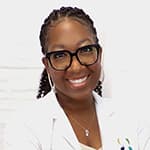
Dr. Jacqueline Patterson is a General Dentist and Orofacial Myofunctional Therapist and has been practicing for over fifteen years. Dr. Patterson believes that by educating her patients and providing the proper therapy and techniques, she can non-invasively improve their conditions - from general restorative treatment to Airway-Centered Disorder therapies. Dr. Patterson received her training as an Orofacial Myofunctional Therapist from the International Association of Oral Myologists, and prior to that, earned her Doctor of Dental Surgery from UC, San Francisco and undergraduate degree in Dental Hygiene from UNC, Chapel Hill.
Are you feeling trapped in the daily grind of routine dental procedures, losing the excitement that once drove you to pursue dentistry? Many dental professionals experience this challenge, but it doesn't have to define your career trajectory.
Join Dr. Phil Klein as he sits down with Dr. Jacqueline Patterson, a general dentist and certified orofacial myofunctional therapist with over 15 years of experience. Dr. Patterson holds a Doctor of Dental Surgery from UC San Francisco and an undergraduate degree in dental hygiene from UNC Chapel Hill, with specialized training from the International Association of Oral Myologists. Her diverse career exemplifies how dental professionals can reinvent their practice and rediscover their passion for the profession.
This conversation explores practical strategies for avoiding burnout and maintaining professional fulfillment throughout your dental career. Dr. Patterson shares her journey from experiencing early career burnout to developing a multifaceted practice that keeps her energized and engaged. The discussion covers how expanding into specialized areas like airway dentistry, participating in volunteer missions, and finding alternative applications for dental skills can reignite professional passion while serving underserved populations.
Episode Highlights:
Burnout often manifests when dentistry begins feeling like an obligation rather than a calling, particularly during major life transitions like starting a family. The key to recovery involves looking within the profession first to identify areas that can re-spark your original passion, whether through continuing education in new specialties or exploring different practice models that better align with your current life stage.
Military deployment dental screenings require assessing whether personnel can remain dentally stable for 12 months without emergency intervention. These evaluations involve comprehensive examinations, preventive treatments, and sometimes unexpected educational opportunities, such as oral cancer awareness programs for young service members using tobacco products.
Mission trip dentistry in underserved areas like Jamaica involves providing emergency care under challenging conditions with limited resources. Treatment priorities focus on pain relief, extractions for non-restorable teeth, and basic restorative care, often requiring creative solutions for sterilization and equipment transport.
Professional evolution involves transitioning from perfectionism-driven practice to competence-based confidence over 15-20 years of experience. Successful practitioners learn to focus on procedures that bring professional satisfaction while referring treatments they find less enjoyable to specialists who excel in those areas, creating better outcomes for both doctor and patient.
Alternative income streams using dental credentials include consulting, speaking engagements, virtual continuing education platforms, disability examinations for veterans, and specialized certification training. These opportunities can provide financial supplementation while offering professional variety and reduced clinical time commitments.
Perfect for: General dentists experiencing career fatigue, recent graduates seeking diverse career paths, practice owners looking to expand services, and any dental professional interested in volunteer opportunities or alternative applications of their clinical skills.
Discover how to transform your dental career from routine obligation into a source of renewed passion and purpose.
Transcript
Read Full Transcript
This transcript was automatically generated and may contain errors or inaccuracies. It is provided for reference and accessibility purposes and may not represent the exact words spoken.
Look within the profession first to see if there's anything that can re-spark your passion because it was there at one point. That's why you spent all that time and money getting the education. For some, it's looking outside of the profession. It's looking at things that you can do on your days off after work. Maybe instead of working five days, you work four days or you get off earlier a day to do whatever it is. You just have to find an outlet.
doing the same thing over and over that is not making you happy. It's just, it's going to get worse. Welcome to the Phil Klein Dental Podcast. As with any profession, doing the same thing every day can put us in a rut. As things become more routine, we soon begin to lose interest. So as dental professionals, how do we stay inspired, fulfilled, and energized in our dental career? Today, we're diving into a very important topic, how to reignite your passion for dentistry.
and avoid the burnout that's become all too common in our field. In this episode, we'll talk about expanding your practice with innovative services that not only excite you, but also elevate patient care. We'll also talk about the incredible impact of joining groups that offer free care to underserved communities.
both here in the U.S. and abroad. These opportunities not only help others in need, but also fuel a deeper sense of purpose and remind us why we chose dentistry as a career in the first place.
Our guest today is Dr. Jacqueline Patterson, a general dentist. She's also an oral facial myofunctional therapist. She considers herself an airway-centric dentist. She has over 15 years of experience. Dr. Patterson will share with us today some invaluable advice and recommendations about how to avoid burnout and stay excited about the profession.
Dr. Patterson will be joining us in a second, but first, for the optimal bond between zirconia and your resin cement, check out Bisco's Z' Plus.
Rated best in class by thousands of top clinicians, Z-Prime Plus, featuring MDP, creates a strong, reliable bond to zirconia, metal, and alumina substrates. And nothing could be simpler. It comes in a single bottle, and it's 100% compatible with both light-cured and dual-cured resin-luting cements. It's time you get the most out of your zirconia restorations. To learn more about Z-Prime Plus and the entire Bisco adhesive product line, visit bisco.com.
Dr. Patterson, it's a pleasure to have you back on the show. Thank you for having me, Phil. And to our audience, just so everybody knows, Dr. Patterson has done a few podcasts with us on sleep dentistry, airway sleep dentistry. In our first one, she talked about becoming an airway-centric dentist. So really good stuff. I recommend everybody to go to vivalearning.com. In the search field, search Patterson, and you'll see her podcast with me, or if you like your podcast on Apple Podcasts or Spotify.
You can just go to the Phil Kline Dental Podcast Show and find it there. So we're talking about going beyond typical dentistry. And in your career, you're a real example of that. Starting out as a dental hygienist, moving into becoming a dentist, getting certified in myofunctional therapy. These are all very admirable steps and they require work and diligence to get there.
But they've really paid off for you, not only financially, I'm sure they've paid off, but also expanding your horizons and being excited and passionate about the profession. So what are the ways that you use your dental skills, everything you've learned through your clinical experience and your education in different ways, in different areas, other than running your practice and your typical routine clinical work?
Well, I make the joke all the time. I have an executive coach and I always joke that I'm Jamaican. That's why I have a thousand jobs and it's just in my blood. And she's always scared to ask me what new project I've picked up on. They're not all completely related to each other, but they're all representative of some sort of passion that I have. So I work with veterans.
There's a couple of groups out there. One's like OptumServe and one's Docs Health. I dedicate a certain amount of my time to having veterans who are either retiring or about to go on disability come to the practice and then I do their disability exams. I live in Vegas, so Nellis Air Force Base is close by, so I'll go to the base and do deployment.
um exams and and not just exams sometimes we do treatment too and i've gotten to go to like places like guam which i actually was supposed to go next weekend but my brother's gonna be in town and he's like he already bought his ticket so i had to decline that one but you know i i get to go to these um places to help our veterans because like in a place like guam there's like eight dentists on the whole island and so before they can deploy they have to be cleared and so
myself and a group of other dentists and you know there's physicians and everybody else goes out there it's usually a weekend event and we screen and provide treatment so that's a way for me to not only like give back my dad was in the air force that's how we um got here to vegas we're stationed here it's a way for me to give back but it's it's a different way for me to use my skill set so let me ask you this question so what do you say to the dentist that says wow that all sounds great but i have
debt to pay back for my dental school. I opened up an office and I have employees to pay. So they're wrapped up working four and a half days a week in their practice because they have bills to pay and they need to get out from under the debt. So they don't have the freedom and availability of time to do some of the things that you've been doing. Because it sounds great what you're doing now. What's your answer to them? Well, you know, other things that don't take.
A ton of my time away from the practice is like I do some consulting. I do speaking on the side. So there are other ways that I can use my degree. I mean, you know, they're choosing me because I'm a licensed dentist, because I have experience in some areas. And you can get paid pretty well doing those types of things. But it also is a quick thing you can do. And there's a lot of even virtual platforms that you can use as well.
where you don't have to travel at all. So those are other ways that I myself have used my license to do sort of side projects or do passion projects. I also have a CE company that I started with a couple other dentists that were starting to do some virtual CE courses. It's called Breakaway Global Masterclass. And so we're really passionate about sort of giving the female dentists a different experience when they do CE.
And I love my male counterparts, but sometimes when we're all together, the female voices can get diminished a little bit. And so this is a way for us to come together.
have a great educational experience. And I mean, and also for those who can't do something all the time, like you can't go and, you know, every weekend do a deployment event or carve out time in your practice to have veterans or other people come. Like you can plan once a year, like once a year, myself and some other dentists, we go to Jamaica and we do a mission trip. You can get it sponsored.
Last year, I was sponsored by Glidewell. So there's something to that because then, you know, it's them giving them actually doing outreach through you. And so it's a win-win and you get to use your skills to help a very underserved community wherever that may be. Next year, we're trying to go to...
Tanzania. So there's different ways. It just depends. Like with anything, it depends on how much time you want to commit to it and how important it is to you. When you talk about deployment, that's military personnel going off to another area and they need to be checked. They don't want to send these folks out there with decay or toothache about to erupt.
you look at them and assess them and treat them to get them in enough shape. It's like taking a road trip with your car and bringing it to the service station before you take this long road trip. Exactly. Make sure the tires are real good and that all the hoses have no holes in it. Exactly. Yeah. So those events we do, you know, deep cleanings, extractions, and dough, just trying to get everybody to a point where the criteria is, in your opinion, can they go the next 12 months?
without anything kind of blowing up on them and if you can't say yes to that then you need to fix what that problem is but when i when i went to guam it was something unexpected um kind of happened because that the population of soldiers that i had so many of them chew tobacco and i was seeing oral cancer in 25 year olds i mean i had never
it was wild and so i just took that opportunity to and i and i asked permission from their sergeant you know i said look do i have permission to kind of scare these kids straight like can i can i give them worst case scenarios can i show them you know and they're like please do because they don't listen to us and so it was an opportunity that i didn't know i was going to have
which was to really educate these people on the dangers of oral tobacco use. And they're kids, right? I mean, I'm 43, so anyone under 35 to me is a child. I get that. I'm in there with you on this one. Yeah. So they're in their 20s, and they think they're invincible. And they think, oh, yeah, I saw this lesion, but the dentist can just scrape it off. They had no idea. I'm like, let me show you a picture of a jaw resection.
of a tongue resection so how did you know how did you know it was oral cancer for sure not leukoplakia going on so so what i had to do it's a weekend course so i had to play devil's advocate and say this might be this and then they have an oral surgeon who works with their military and all those cases went to the oral surgeon that's why i had to talk to the sergeant like i need them to follow up because i don't have time to do anything else really
but to educate them and give them that referral. But it was some gnarly looking lesions going on. Yeah, it's amazing to me that in Major League Baseball, if you watch a couple of baseball games on TV, how much tobacco is being spit out of these players' mouths. I mean, it's just all over the dugout. That's what they do because baseball, they've been chewing tobacco since the first day the game was.
started. But I thought that's why they had big leak chew. I'd rather deal with some cavities than oral cancer. Maybe, yeah, maybe some of them do chew that. But so it sounds to me that, you know, you've expanded your interests and you are actually practicing dentistry out of the operatory to some extent in different countries, in your community. It seems to me that
And I asked you that question, what do you say to those dentists who said, I just would love to do that, but I can't take the liberty to make those trips because I have bills to pay. But that dentist that continues on that path is more prone to burnout, right? Because they're trying to keep that practice going and they're looking at it from the accounting standpoint and they're looking at it from the standpoint of production and they are beholden to their practice and that's their main priority in life.
So they could pay their bills and support their family. But burnout is an issue. So what advice do you have for dentists who are in the early stages of burnout, who may not even know they're there, and those that are further gone in that stage? So, I mean, I definitely experienced burnout. For me, it was around the time when I started having my kids. Because before I had kids, my...
I mean, I was a new younger dentist. I was excited about everything, learning everything. I was lucky enough to work with really great dentists who taught me a lot. And so I was working five or six days a week and I loved it. I had all the energy in the world. And then I, you know, fast forward a few years and I had my first child. And then I was, then I saw dentistry differently. I saw it as taking away.
like taking away from my time with my family. And so then all of the little things that had never bothered me before, all the little things started bothering me. And so it just became like something I felt like I had to do. And so, and I know I mentioned this in an earlier podcast that I was trying to say yes to everything, say yes to different opportunities because I just didn't know where it was going to lead me. And I didn't want to,
keep myself sort of in that rut. And so through that yes phase, that yes period, I found airway dentistry, sleep dentistry. I found a different aspect of dentistry that really resonated with me and really re-sparked a passion in me. And for others, I mean, I have friends who like, they found implant dentistry and they like love it. And they, now they're, you know.
practicing that more and it's given them something extra so my advice just for my experience is look within first like look within the profession first to see if there's anything that can spark re-spark your passion because it was there at one point that's why you spent all that time and money getting the education and so try to see if it can be re-sparked and for some it's it you know it's looking outside of the profession it's looking at things that you can do
on your days off after work. Maybe instead of working five days, you work four days or you get off earlier a day to do whatever it is. You just have to find an outlet because doing the same thing over and over that is not making you happy, it's going to get worse. We'll be getting right back to our guest in a second. But first, we all know that to achieve healthy, beautiful smiles, we sometimes need to align the teeth.
and to do so, aligner therapy is a great option. So why not set your practice apart with 3M Clarity Aligners Flex from Solventum, formerly 3M Healthcare. Designed for comfort, Clarity Aligners Flex feature a thin, flexible design, yet they deliver excellent force persistence over a two-week period. Plus, they resist scratching and stains, and they're backed by a dedicated clinician team providing support every step of the way.
With a variety of affordable case type options, single or dual arch, Clarity Aligners Flex offer a great value to your patience and practice. To learn more, visit 3m.com slash clarity dash aligners dash flex. Yeah, it seems that many of us fall into the trap where we want to reach a certain point in our career financially. And we measure that by how much money we're making and how well the practice is doing.
And we keep working harder and harder to get there. And that we rationalize and say that's the sacrifice. And to some extent, it is the sacrifice. But we have to know when to draw the line because it can bring you to a state of burnout fairly quickly in your career. If you're not careful and you don't have a balanced life, it's easy to say, not as easy to do as we know, because so many people are suffering from.
some level of burnout. You talked about expanding your dental care to other countries where you go on a mission with other people, other dentists. Have you utilized the more conservative treatment of silver diamine fluoride with glass ionomer, especially since many of the children you see may not have great access to dentists and may not go back to a dentist for a long period of time. And you can treat a lot of patients using this medical management of Carrie's approach.
So our mission group does not. When we go to Jamaica, we do work with their dental society and they have a dental school there. And so they're the ones who do that sort of treatment. We're kind of coming in and we're going to churches and we're going to, we went to schools.
and daycare centers, that sort of thing. And we're doing sort of like, okay, we have a line of hundreds of people and there's three dentists. So we always wish we can do more, but typically it's, okay, are you in pain? Is there a tooth that we can remove? Is there a cavity that we can fill? Or is there a cleaning that needs to happen? So it's very rudimentary.
I mean, we worked in, we worked at a church that had created a space in their back room. They had gotten these, I didn't even know that these dental chairs could be that old. I mean, the oldest dental chairs I've ever seen and ants everywhere, just ants crawling everywhere. I mean, and I'm not a bug person, but I had to get over myself because I said, Jackie, there's hundreds of people who have been waiting in this heat to have something done.
you're going to treat them. So, so no, we don't, we, I don't personally, we didn't do that on the trip, but I know that the dental students, because the very last place that we went, we worked with the dental students and they were doing more treatments than we were. Especially in a volume situation where you have very little time with so many patients. It was just a thought because I've done some interviews with some doctors that are working in public.
health arenas and it's medicaid but um they have had incredible success with treating younger patients with uh silver diamond fluoride because it does magical stuff to the tooth literally it kills the decay stops it dead in its tracks remineralizes the affected dentin and then it has this zombie effect where it actually prevents decay down the road and when you use glass ionomer on top
It all bonds. Eventually it matures into this monolithic direct restorative complex where this one doctor gave me an example of this where he put it in on a six-year-old kid or seven, no, eight-year-old child. And he ran into that person 20 years later and he did like eight of them in one visit and all eight teeth were just like he left it. That's awesome. Yeah. No drilling. And by the way, no drilling, no anesthesia. That's another thing for those kinds of...
mass treatment experiences where you have these people waiting online in the heat you know and we and and that's great i'm glad you mentioned it because we are always looking to see what else we can do during these trips and um and even sponsorship wise you know like look we'll promote this product or whatever if we can get things donated because we're taking all of this over in bags ourselves right and all the instruments and all and then with sterilization um
And so we have contacts in Jamaica where there's dentists who let us like use their sterilization units like overnight. We would just drop it off and then the next day pick it up and then go to another place. And so because we didn't have a lot of those items this time, most of the patients we did see were teenagers, adults who were in pain. Yeah. And unfortunately, a lot of those patients had to have their teeth extracted because there's no time or.
facility to do the root canal i'm an endodontist so for me to take a tooth out that i know i could save endodontically is like yes it's a nightmare to me but it's and there's this reality yeah and there's just not enough dentists you know and and they have a dental school but a lot of them don't stay and a lot of the people the people attending the dental school in jamaica aren't from jamaica so they'll just go back to their home countries and and so it's just
There's such a need. There's a huge need. So as we get towards the last quarter of this podcast, what are the major differences in how you see yourself, Dr. Patterson, after practicing for 16 years compared to when you were a fresh new graduate out of dental school? What's the evolution process for you? How has that all played out? Well, I know when I first started out, I was striving for perfection.
I'm a doctor, right? I'm a doctor. I should know it all. I should have all the answers and that will drive you crazy. You're never going to be perfect and that's okay. And when I got to that point where I knew I can handle whatever was coming through the door, didn't mean I had to know all the answers. I could handle it and I knew where to refer to or other resources for the patient.
if I couldn't or wasn't comfortable doing, you know, X, Y, or Z myself. So that's something that I'm so glad that I learned because, you know, I would lose sleep. I would lose sleep over thinking about what had gone on during the day and what I could have done or what I should have done and, you know, that sort of thing. So not striving for perfection is something that I've had to learn over these last 16 years. Doing only what brings me joy in dentistry.
thank goodness for endodontists like you, because I do not enjoy molar endo. And, you know, as an associate as well, there are practices are like, oh, well, you're gonna have to do molar endo. I'm like, okay, well, then that's not a good fit. I know I'd rather send that to the specialist. So just knowing where you what you like to do, what you don't like to do, you know, and kind of sticking to that.
and realizing there's people who love to do there's you'll always find somebody who loves to do what you don't love to do and that's okay so um hard to believe though isn't it isn't hard to believe that someone actually wants to do molar endo isn't that it's just crazy to me i figured i have two uh endodontists that come to my practice and i'm like you guys are crazy you know here's the thing though so when i was practicing in my heyday back in the day so i was doing around um
I would say a thousand root canals a year, something like that. Yeah, because I didn't work every day, but I was doing about a thousand root canals a year. 90% of them were molars and some of them had broken instruments in there. But the nice thing is, is when you really master something and you do it well and you're set up for it, it's not that hard. It's just always that way when you have the right instruments and you have the right setup and you have the right.
loops and the microscope and you understand the morphology and these new materials are coming out and you're also a good diagnostician. When you master all that, it becomes enjoyable.
It really does. But to get there, the barrier to get there is rough. And that's one of the things that attracted me to endodontics because I knew there were a whole lot of people like you, Dr. Patterson, that literally like, oh my God, I can't do malaria. But you'd be surprised. There are plenty of general dentists that are doing decent malaria these days. Oh, for sure. And I just don't have that urge. I don't have that want to, you know, oh, I really want to be excellent at.
molar endo I I'd rather spend my energy on other things you know I want to be excellent at airway dentistry or you know excellent at clear liner therapy but so I just feel like you know find something inside dentistry that you want to be excellent at that you want to you know have passion and and focus on those areas and don't um you don't have to be great at everything
Right. No, that's very good advice. What do you love most about dentistry? This is my last question. We have a couple of minutes left, two or three minutes. What do you love most and least about being a dentist? And tell us why. So what I love most about being a dentist are the options and the opportunities within the profession, just from, you know, having your degree and having your license. There's so many avenues that you can take. I mean, you don't.
have to do clinical you can um you could do research you can do consulting i mean there's there's so many ways to use this degree which is is awesome so i i'm i feel very fortunate that i have these opportunities and i can pivot into different you know areas of it as i want and depending on the stage of of my life and the stage of my career so i i feel really blessed to um
have those opportunities and to be a dentist. And I think the thing I like least about being a dentist, and this is whether you're an owner or an associate, is that it's just, it's a hard career. It could be a hard career dealing with patients, dealing with expectations, dealing with insurance, dealing with overhead, dealing, you know, it's the little things. It's not even the dentistry per se.
the other stuff that can come with being a practicing dentist. So I think that is sort of unique to our profession because we're healthcare providers and we're typically small business owners as well. And so not all of us enjoy the business aspect of it and that sort of thing. So I think we're unique in that respect. And so that for me is a little harder. I think that's also why I keep my associateship.
See, that's a hard word for me. Associateship is because I like to walk in, do my dentistry and then walk out. Yeah. And so, you know, so and then I like to keep my airway practice small. So I don't have all the problems of a bigger practice. So so in that, you know, the things that I don't like, I've found workarounds. And I think.
The moral of the story is here is as you work in the profession and you start to learn what you like and what you don't like, don't wait until you've been practicing 30 years to get rid of the things you don't like. Start sifting through this stuff. It's like going through a closet. If you haven't worn clothes for four years, put it in a box and give it away and start cleaning things out. And it's the same thing. I mean, I'm a lot older than you are, but at this point in my life, just do the things you want to do.
You know, I mean, we're not going to be here forever. So what are you waiting for? But what you've really accomplished, Dr. Patterson, which is really, really great to see, is that early on in your career, you started to realize certain things didn't make you crazily happy. Right. You weren't like doing double flips when you got to the office on some days saying, God, I'm so happy I'm here. And you kind of you molded and shaped your career by getting the education you needed to pursue.
things that you were excited about and that's kept you happy it's given you a diverse life as far as your capabilities in dentistry um and you're right dentistry does open the doors to a lot of things you could be in corporate you can be in the you know working with companies uh i have a i know somebody that became an oral pathologist who who started her own lab and she loves it she's really she's done some
podcast with us her name is ashley clark and she's fantastic about oral cancer and detection and biopsies and she loves oral pathology and she went to dental school so uh there's opportunities out there for everybody and uh you really filled us in on a lot of what goes through your mind every day as far as what you need to do to stay happy in this profession and how much you've been helping people
from all walks of life, your own patients, patients that live in other countries, veterans. It's just a fantastic thing to hear. We really appreciate it, Dr. Patterson, and hope to have you on future podcasts. We want to keep in touch with you to learn more about what you're doing. Perfect. Thank you so much. Thanks for having me. This has been a great time. Thank you so much.
Clinical Keywords
Dr. Jacqueline Pattersonorofacial myofunctional therapyairway-centric dentistrydental burnout preventioncareer diversificationmission trip dentistrymilitary dental screeningdeployment dental examssleep dentistryInternational Association of Oral Myologistsdental hygieneUC San FranciscoUNC Chapel HillOptumServeDocs HealthNellis Air Force Baseoral cancer screeningtobacco cessationsilver diamine fluorideglass ionomerdental volunteerismJamaica dental missionsTanzania dental missionsGlidewell sponsorshipBreakaway Global Masterclassdental consultingvirtual continuing educationDr. Phil Kleindental podcastdental educationprofessional fulfillmentpractice management