Board-Certified Prosthodontist · New York University College of Dentistry
New York University College of Dentistry · American College of Prosthodontists · American College of Dentists · Greater New York Academy of Dentistry · Northeastern Gnathological Society · New York Academy of Dentistry · Greater New York Academy of Prosthodontics
Read full bio
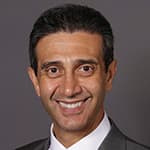
Dr. Graziano D. Giglio is a board-certified prosthodontist focusing on aesthetics and implant dentistry. He received his D.D.S. and postgraduate training in prosthodontics from New York University College of Dentistry.
He is a Fellow of the American College of Prosthodontists, the American College of Dentists, the Greater New York Academy of Dentistry, the Northeastern Gnathological Society, and the New York Academy of Dentistry. Dr. Giglio serves on several boards and committees of many dental groups, including a term as President of the
Greater New York Academy of Prosthodontics in 2013.
Dr. Giglio keeps current with the very latest in research and technology through his faculty position at New York University College of Dentistry where he is an Adjunct Clinical Associate Professor. He has found numerous opportunities to share his experience with the dental community as he publishes and lectures frequently on dental
implants, aesthetics, and digital technology. As a result, he has received multiple awards in dentistry throughout his career, including the Prosthodontist Private Practice Award from the American College of Prosthodontists in 2013. He shares an interdisciplinary practice in New York City with his wife, Dr. Ana Giglio, a periodontist.
In a market flooded with nearly 250 prosthodontists, how do you not just survive but thrive while building a practice that patients fly across the world to visit?
Dr. Graziano D. Giglio is a board-certified prosthodontist with a distinguished career spanning over three decades in New York City. He earned his D.D.S. and completed postgraduate prosthodontic training at New York University College of Dentistry, where he currently serves as Adjunct Clinical Associate Professor. Dr. Giglio is a Fellow of the American College of Prosthodontists, the American College of Dentists, the Greater New York Academy of Dentistry, the Northeastern Gnathological Society, and the New York Academy of Dentistry. He served as President of the Greater New York Academy of Prosthodontics in 2013 and received the Prosthodontist Private Practice Award from the American College of Prosthodontists that same year. He operates an interdisciplinary practice in Manhattan with his wife, Dr. Ana Giglio, a periodontist.
This episode reveals the systematic approach Dr. Giglio has used to build a thriving 13-operatory practice with three dentists and a team of 20 in one of the most competitive dental markets in the world. The conversation explores how exceptional patient experience drives practice growth, the critical role of staff training, and practical strategies for insurance participation that maintain profitability while building the right patient base.
Episode Highlights:
The 60% insurance participation rule that determines practice profitability—accepting insurance payments below 60% of standard fees results in working for free since most dental practice overhead runs approximately 60%. Dr. Giglio recommends requiring copays upfront to ensure patient commitment and suggests limiting insurance acceptance to select plans that offer reasonable reimbursement rates.
Advanced provisional fabrication using pre-scanned digital workflows and milled shells from 130-megapascal materials like iVotion significantly reduces chair time while providing superior aesthetics and retention. These provisionals serve as practice advertisements, generate referrals from other dentists who see the quality, and eliminate emergency visits from loose temporaries when cemented with permanent cement like Duralon.
Strategic staff training protocols that prevent untrained employees from patient interaction for 90 days while using friends and family members as practice patients for new hires. This approach allows real-world training scenarios without risking negative experiences for paying patients, combined with extended function assistant training to maximize efficiency and reduce procedure times.
Front desk optimization requiring 3-4 staff members to ensure proper phone coverage and patient greeting, with specific hiring from customer service backgrounds like bank tellers, hotel concierges, and retail environments. Phone skills training emphasizes warm greetings, proper forms assistance, and immediate eye contact upon patient arrival, recognizing that first impressions often determine patient retention.
Patient trust development as the foundation for practice growth, where 70% of new patients come from word-of-mouth referrals generated through consistent exceptional experiences, compassionate care, and addressing patients' chief complaints rather than comprehensive treatment presentations that may overwhelm or intimidate new patients.
Perfect for: General dentists and specialists looking to differentiate their practices in competitive markets, practice owners struggling with insurance participation decisions, and dental professionals seeking proven systems for staff training and patient experience optimization.
Discover how exceptional patient care and systematic practice management can transform your dental practice into a destination that patients seek out and enthusiastically recommend.
Transcript
Read Full Transcript
This transcript was automatically generated and may contain errors or inaccuracies. It is provided for reference and accessibility purposes and may not represent the exact words spoken.
Say that your fee is $2,000. That's about the going rate for a crown these days. Just let's take
it on the higher end. And they're going to pay 80%. I can see accepting that. But once they go
below 60% of what you're charging for something, you either have to have the patient pay for it or
not accept that insurance. Once it goes below that 60%, no matter how many patients you're seeing,
you're not making any profit at all. So you're working for free. Welcome to Austin,
Texas, and welcome to the Phil Klein Dental Podcast. Today we'll be talking about what it takes to
build a really successful practice. We're talking with Dr. Graziano Giglio, a highly respected
prosthodontist in New York City, one of roughly 250 prosthodontists competing in the same market.
Dr. Giglio leads a thriving practice with 13 operatories, three dentists,
and a team of 20, giving him a unique perspective on what it really takes to stand out. We'll
explore how he's been able to differentiate himself in such a crowded landscape, define and
communicate a compelling value proposition, build trust with the patient, and attract the kind of
patients who align with the dentistry he wants to provide. Before we bring in our guest, I do want
to say that if you're enjoying these episodes and want to support the show, please follow us on
Apple Podcasts or Spotify. You'll be the first to know about our new releases, and our entire
production team will really appreciate it. Dr. Giglio, thanks for taking the time to join us. Thank
you very much. It's a pleasure to be here. We're going to be talking this episode about practice
management, and I want to begin by talking about how to differentiate yourself in a crowded market.
And as a prosthodontist in New York City, you're one of roughly 250 prosthodontic specialists
serving the same market. So how do you rise above the crowd and truly differentiate yourself from
everyone else? Well, you need some kind of hook. That's the important part. You need something that
is different and special than other people in the area. And so you can begin with,
you know, personality is one thing, but you have to be good at your craft. You have to be able to
deliver and you have to be able to be a good listener and address the patient's chief complaint.
That is what most of the younger folks forget sometimes. is that the patient comes in for something
very simple i'm in pain or i have a chipped tooth but they're addressing a bunch of other issues
the patient only wants to focus on that particular issue which is called the chief complaint and
try to adjust address that particular problem and that will solve half of your problems for you
right now when you started as a prosthodontist you were aware that there were like i mentioned 250
or more prosthodontic specialists in the area. Now I know New York has a ton of people and you're
in Manhattan, but did that in any way come into your mind saying, you know, because you were young,
you started your own practice. Did you think about how are you going to compete with the other
guys? Yes. So initially you're not that busy. So you have time.
And so use that time and take advantage of it. by being kind to the patient,
being compassionate, spending more time with every patient, as opposed to rushing them out. What I
find with a lot of people is that, and I mentor a lot of young folks, and what happens is they have
a lot of time, but they're on the computer. They're doing other things that is not related to the
practice. So basically, maybe they're on social media. I see a lot of my younger... mentees,
where they're on the phone, they're on Instagram. That's okay, yes, but not during practice time,
where you should devote that to the patient. So if you do get a patient, spend the extra time,
be compassionate, and give them what they deserve. And if you do that, then the patients will be
cloned. Those refer patients like refers like. And that experience has to happen early on,
right? I mean, you got to do that. right off the bat when the patient first comes into practice. So
how can a dentist identify and communicate their unique value proposition in a way that resonates
with the kind of patients that they want to attract? So you need to spend some time training your
staff, training the team. That's important because if you spend some time with the patients and
then also training your staff, then it's a reflection of your practice, of you and how you treat
patients. So if... staff is on the same page with you.
Then it becomes a concerted effort. It becomes a concert as opposed to just individually playing a
role. And then you're helping out the patient. You're also enlightening the staff on how to treat
patients. And that compassion will transpire to the patient. And then the patient says,
hey. This is a unique place. So you have to make yourself special. So the way you do it is by
treating the patient correctly, being compassionate to the patient, and also training your staff so
everybody's on the same page. Now that includes the front desk people, right? Oh, key,
key. The front desk is key. Tell me about how you make sure that that front desk is communicating
the way you would do it if you were doing it personally between you and the patient. First off is
phone skills. Because the first contact with the patient is, through the phone and so for example
instead of saying you know may i ask who's calling they say who's this you know that's kind of rude
and so the the patient gets a feeling of this is not a warm place so you want someone who's
friendly and warm right on the phone and accommodating if they haven't filled out their forms maybe
help them fill out their forms online get on the phone with them Get on TeamViewer with them. Help
them out in some way. Some of the older folks don't know how to use a computer. So say, don't worry
about it. When you come in here, we'll help you fill out the form by hand or on an iPad. So that's
the first contact is phone. Second contact is when the patient makes an entrance,
comes in. So if the front desk people are on the cell phone or they're on the phone,
someone needs to make eye contact. They have to be warm and inviting, engaging to the patient.
So there's got to be several people at the front desk so someone can give that patient that walks
in that individual attention that they deserve. Yeah, and the sad thing is, you know, you do all
these great things, but it only takes one incident to actually turn a patient off. Even though you
work so hard to build that culture, somebody in the front desk... may not be having a great day.
They may have personal problems. They may not have slept that night and they're a little grumpy and
that can happen when they come to, I mean, is that part of your training to literally instill this
and say, listen, folks, we all have good and bad days, but every day here has to be a positive day
because the patient will pick it up. Yes. So we have four front desk people. Now, when you first
start out, you can't afford to have four front desk people. So what we do is if someone is having a
bad day, and that happens to all of us, then someone else needs to be the receptionist,
be the person greeting. So they can all alternate depending on who's having lunch and who's taking
a phone call. So we find that three to four people at the front desk in any practice is necessary
because the phones are ringing off the hook on a Monday morning. Then someone has to be available
to greet the patient. And that's so important. And addressing the patient by their name, not by
their first name, by their surname. By saying, Mr. Jones, Mrs. Jones,
some individual attention to that patient and a warm, inviting person.
For example, when I talk about finding a front desk person, bank tellers are very good.
People who work in hotels, concierge. These are the types of employees you want to attract.
Is someone in the service? business, in the customer service business. That's who you want.
I spoke to some key opinion leaders on some of these shows that I do, and they actually went to
Nordstrom and hired a couple of people over a 10-year period. They went there. They went to
whatever they were buying on a regular basis in Nordstrom, and they found this person who had the
most impeccable customer service, which is a hallmark of Nordstrom. That's their main value
proposition is service. And he said, hey, I know you know nothing about the dental industry. Would
you consider working in a dental practice? And here's what I would, you know, this is the kind of
salary that we would be offering. And he hired two people from Nordstrom. Absolutely.
Great idea. Hotels.
There's different types of service environments that are conducive to that.
And then what happens is that they'll learn some of the dental aspects of it later.
We had someone who came here. who was in the service business and didn't know anything about
dentistry. But over time, he learned how to do that. And it doesn't have to be, a lot of people
think that it has to be a woman. It doesn't have to be a woman. It can be a man. So let's talk
about insurance participation. I mean, insurance companies, they just, the compensation that's
connected to their payment plans are absurd to some extent. Some dentists are saying that it
doesn't even cover their lab bills. So you believe dental practices in large part. should avoid
participating with third-party insurance plans. Tell us why that is in your mind and what impact
that makes on both profitability and patient relationships. We'll be getting right back to our
guest in a second, but first, for the optimal bond between zirconia and your resin cement, check
out Bisco's Z Prime Plus. Rated best in class by thousands of top clinicians,
Z Prime Plus, featuring MDP, creates a strong, reliable bond to zirconia,
metal, and alumina substrates. And nothing could be simpler. It comes in a single bottle,
and it's 100% compatible with both light-cured and dual-cured resin looting cements.
It's time you get the most out of your zirconia restorations. To learn more about Z Prime Plus and
the entire Bisco Adhesive product line, visit bisco.com. So if you accept insurance,
that means that you're going to be accepting a lower fee for that particular service.
So what I would say to a young person is, yes, you can accept some of this to fill up your seats or
to fill up the chairs. Now, if the insurance company will only cover benefits up to $2,000,
then only provide a certain amount of treatment per year. And you can do that. You can give them
cleanings, you can take care of a couple fillings, and that's fine. Now, the next level, that's the
first level, is only accepting insurance for what the insurance company pays for 80% of the
service, and then you don't get the copay. But now, say you want to increase that a little bit,
you can now go to saying to the patient, well, you have to put your copay down first.
That now allows the patient to make a commitment. Now they have a little bit of skin in the game.
They're putting down a down payment before the insurance comes in. And that way the patient
probably won't cancel on you because they've made a commitment of some sort. They will show up for
the next visit. Now the patient is spending, instead of $2,000, maybe they're spending $3,000 and
they have to put some money in. That's the next level. Now there's some insurance plans that go up
to $5,000, $6,000, $7,000. There's an insurance company that I accept the payment for.
That's the only one. They have a $7,000 limit. Now you can do a good amount of work for that.
Even though we don't accept insurance, this one we do, and it's been for 30 years. They send me a
lot of patients, and then I have them pay the copay right up front. That there's a commitment there
on their part. If you don't have them make the copay, then it becomes a problem. But how do you
know what the copay is? You have to file something with the insurance company to know what they
pay? Yes, the key here is the predetermination. And how long does that take? Because if a patient
comes in, you can't do anything until you get that predetermination back. Right. So we give the
patient a treatment plan and say, you can take care of it with your insurance company. They get on
the phone or they submit something and they tell them usually right away. If we really want that
patient, then we take care of it and we say, how much are you going to pay for this? Get something
in writing that says, I'm going to pay $2,000 for this crown. And the rest is the patient's
responsibility. That way, the patient knows up front. So the way that we look at anything in this
office is when you explain something to the patient right up front,
you tell them up front, it's an explanation. When you tell them later, when something happens, it's
an excuse. And that's the difference. Then you're only working against yourself when you're trying
to explain what happened later, as opposed to telling him up front and having it in writing. Now,
when you started your practice in Manhattan, right off the bat, as a young prosthodontist, you
didn't accept insurance or you weren't on really any plans. No, I did not. There were actually two
plans. One was unlimited, paid 80% of anything. And that was from the UN, which is very close
here. They had unlimited funds. meaning they would pay 80%. So I had the patient pay 20% upfront.
And then I had another insurance that paid about 5,000. So those are the only two insurances that
I accepted and everyone else had to pay fee for service. So those patients from the UN not only
were able to park for free and never got a parking ticket. Right. But also got incredible dental
insurance. So we know where the taxpayer money is going for that one. And they usually have chefs
and they have, you know, drivers and everything else. So they're the ones that really don't need
that benefit. But they had this unbelievable plan and I could do a full mouth rehab for $80,000.
This is when I first started out. You do the full mouth and they would pay. a portion of that.
So the UN employees basically kept their practice going for the first couple of years. Yeah,
they were from other countries, though. So the government's from the other countries. And they
loved it here because the benefits were unbelievable. Oh, for sure. The dentistry that you were
doing was unbelievable compared, in many cases, to what they would probably get in their country.
Not all countries, but many countries do not have the same kind of dentistry that we have here. So
what do you say to a young dentist who says, well, listen, I'm starting my own practice and I have
bills to pay. For me not to accept insurance in the beginning would be very difficult in my area.
It's a double-edged sword because they need to get it going, but then it's hard to get off of it
once you're dependent on a lot of those insurance plans. And then you also have the kind of
patients that may not value or be able to afford. you know, the kind of services that you want to
deliver. So how do you, what's your response to that young dentist who's in that conundrum? So you
have to see what the company will pay for, what the insurance company will pay for. So for example,
say that your fee is $2,000. That's about the going rate for a crown these days. Just let's take
it on the higher end. Let's not just do a filling or cleaning $200. That's what they pay.
And they're going to pay 80%. I can see accepting that. But once they go below 60% of what you're
charging for something, you either have to have the patient pay for it or not accept that
insurance. Because your overhead is about 60%. Most overhead in dentistry is about 60%.
That's the cutoff point. Now, if you just want to keep the chairs filled and pay your bills,
60% should be the minimum you accept. But once it goes below that 60%,
no matter how many patients you're seeing, you're losing money because your supplies and rent and
utilities. cost you a certain amount of money, and then you're not making any profit at all.
So you're working for free. That's where you cut it off at 60%. And that's not,
yeah, working for free is not sustainable to a business. Let's talk about provisionals for a
second. You know, some dentists look at provisionals as temporaries, and they don't spend a lot of
time on provisionals. They don't think it's worth the resources. In a lot of ways, they
underestimate the importance of provisionals. Why do you believe, and of course, I'm asking a
prosthodontist, so we kind of know what you're going to say, but why do you believe making really
beautiful provisionals is such a critical part of building a successful aesthetic practice?
To me, a provisional is advertisement to the dentist and to patients. So if a patient comes in and
has a beautiful provisional on the anterior teeth, they're going to go to work and say, look at
this is only a temporary. So who made it? Now they get referrals. Now you send this off to the
endodontist, right? Or you send it off to an oral surgeon or periodontist. They see the
provisional. Wow, this is, he's a good dentist. I couldn't even get it off. It was so tight. That's
the second. And then the third aspect of it is that you will not have emergencies if you make good
provisionals. I see some dentists having constant emergencies with provisionals.
So if they keep coming off, for example, we put them in here with Duralon on everyone.
If we're seeing them next week or next month or next year. So that provisional is not coming off
with Duralon cement. Whereas if they keep coming off, the patient is upset, they're missing work.
And now it's taking up your chair time. So it's a loss loss. There's no win there for anybody.
How do you fabricate your provisionals? So what we do is we have a scan on every patient we treat.
And if we need to make a provisional, we already have a shell made out of a hard acrylic that's
milled. So we have that shell ready to go, and it's very cost effective. Say it costs us $30 to
make that provisional. Think about how much time you save at the chair. You're saving hours rather
than having to make a provisional from scratch. What material do you mill it from? Well,
we use something called iVotion, which is a hard material, which is about 130 megapascals.
It's made out of the material that you use for dentures. It's as strong as a denture. And now
you're just relining it with some auto-polymerizing acrylic inside. But the shell is really hard.
It's as hard as a denture. So the shell stays. It's not like a matrix. It stays. It stays.
Right. But you still have to fill it with an acrylic to give it some body. But the outside is 130
megapascals, which is strong. And to mill that takes what, 10 minutes?
10 minutes to 30 minutes, depending on, for one, it's only 10 or 15 minutes. That's very quick.
And it just saves you so much time. And say it costs you less than $30 to fabricate that.
So say a patient comes in or calls up and says, I broke this tooth.
We say specifically, which tooth did you break? they said oh i broke my front right tooth can you
send us a picture they send us a picture or email or text to the to the front desk the front desk
now sends it to the lab the lab mills it before the patient comes in so that they broke a tooth now
we have a provisional a beautiful looking provisional not only that say you don't have a lab and
the dentist could has a milling machine or a chair side milling machine you mill it and then you
can stain and glaze it yourself by putting it in one of these curing ovens. It's not a hot oven.
It's just light cured. We'll be right back with our guest. But first, I want to tell you about
VOCO's newest composite, Grandioso 4U. Top clinicians are calling it the most tooth-like universal
composite ever made. Unlike traditional composites that force you to choose between either an
anterior aesthetic composite, a stronger layering posterior composite, or a fast but aesthetic
-compromising bulk fill, Grandioso 4U does it all, simplifying your workflow while delivering
superior results in a single material. It cures 4mm in just 10 seconds,
looks stunning with 5 cluster shades covering all 16 Vita shades, and handles like a dream with 50
% less resin. It's a 91% filled nano hybrid, giving you tooth-like strength,
ultra-low shrinkage, exceptional wear resistance, and an amalgam-like high radio opacity.
So as they say, seeing is believing. So grab your free sample of Grandioso for you today at voco
.dental. So the other day I had an emergency on Saturday. We have a major emergency.
Guy flew in from Boston to have, he smashed his front teeth. He fell at a football game. Landed in
the stands, broke his front teeth. He was at a high school football game. You know, you hear about
Friday night lights. Well, while videotaping his son, who was the quarterback, flew in on Friday
night, Saturday morning, we saw him. His dentist sent us a scan of his mouth.
Our technician on Saturday morning copied those, milled them in 20 minutes,
his front four teeth. We had a shell of his front four teeth ready to go. Yeah, that's amazing.
That's amazing. That's a service that the patient's willing to pay for. Yeah, yeah, that is
amazing. Now, what about the dentist who doesn't have the milling chair side? They print up the
scan, take an alginate of that, and now you have a matrix. Right. Just take an alginate the old
-fashioned way of the cast. Let's talk about the exceptional customer experience.
Every business, it doesn't matter what it is, it doesn't have to be dentistry, and we talked about
Nordstrom, that's been around a long time, has developed its reputation, its credibility. And it
has driven success to the business through exceptional customer experience. And that includes
customer support. That includes returns if you're in the retail business. When it comes to your
practice, what are some specific ways that delivering high-quality aesthetic outcomes translates
into stronger patient trust, more referrals? And this is all obviously based on the customer,
the patient, feeling that they're being treated in an exceptional way.
A lot of dentists do is they focus on themselves rather than the team effort.
It has to be a concert. It cannot be an individual just playing one instrument.
It starts when the patient walks in the door, as we talked about. And so you're only able to
provide a certain amount of service. You're spending a certain amount of time with that patient,
but the patient is spending probably 40% of the time with the rest of the staff.
You walk out of the room. or the hygienist, or someone at the front desk. So it's important that
you treat everyone well during that time. But the way you treat your employees is also how you
treat your patient. You see, you put them in the same category. And so if you're treating your
employees and your team well, then they will in turn treat the patients well.
So everyone has to be trained. In our office, employees do not get...
to spend time with the patient unless they're trained. It's just like a hotel. They have to go to a
training program. Tell us about the training program. What does that mean when they first get
hired? Or is this an ongoing daily huddle, weekly meeting? Or is this something they go outside of
the office to get trained? We do it in the office. So say we're hiring a new front desk person.
We have three or four people. Now, we're increasing the size of our office, so we're going to hire
one more front desk person. Okay? So the team leader, we have a team leader at the front desk.
She's the treatment manager. She's the one who takes care of the front desk.
You have to have a point person, a lead. That leader will orient the employee and then put them on
the computer system and show them how to enter. or a patient, so on and so forth. Is that the
office manager or the treatment? Is that two different things? Do you have a separate office
manager? We have an office manager, but the treatment manager is the one who's in charge of the
whole office, meaning the front desk. She's the lead. Even though we have an office manager, the
way we do it is it's a younger person who's much more computer savvy than the office manager who
does a lot of the back office work. So the back office work means human resources,
some payroll, things that are done. Collection. Not collection. Oh, that's so important. Yeah.
The collection is. But I don't want to take you off track because you were doing really well. I was
just curious to know if it was the office manager and the treatment manager was the same role. No,
it's two different people. Yeah. So that person makes sure that that person who's hired is up to
speed on. The things you mentioned, getting on the computer, talking to the patients as far as how
to get them into the practice, what they need to fill out and all that stuff. So how much training
is involved there? Hours, hours and hours. So for example, they're not allowed to really greet me
or answer the phone until they're trained. And so they're in the background. They try to absorb it.
They're taking notes the whole time. So it takes a few weeks. Do you do a kind of a mock?
kind of simulate someone calling the office and you'd kind of tell us about that. So what we do is
we treat all our friends and relatives. So they get to practice on friends and relatives rather
than doing it as a mock. So they don't know that the next patient walking in could be my cousin.
That's interesting. They don't know that it's someone in the office. They don't know. We actually,
friends and family, you know, really close friends. And there are a few. They get 50% Curtis. So
they're a little bit more understanding to someone, right? We use them as guinea pigs in a way.
It's just the way we operate. So for example, we get a new assistant. So if it's someone, another
relative of ours that's sitting in the chair, say, hey, listen, we're training somebody. Do you
mind if we put that person in the chair to, you know, the assistant's chair to train?
And so now I can talk to them and the person behind them, the assistant trying to train them.
is also talking to them. So we use our friends and family as the guinea pigs for the new trainees.
Yeah, I just went to a restaurant opening in Austin, Texas, and the guy that owns the restaurant
invited us over, and they fed us like kings and queens for free. But they wanted to know our
feedback on the service, how the drinks were. We didn't drink much, but we had one margarita each.
And how was the food? And it was quite a question. an answer period after the dinner.
But that was their way of figuring out whether the things were running smoothly. It was their first
dress rehearsal before they actually opened the restaurant to the public. So what about turnover
for you? You train your staff diligently. You make sure they're all up to speed.
You have to instill a culture, make sure they're in alignment with you on the culture of the
practice, right? Because that's really important. Yeah. What about turnover? Have you had a lot of
that or you keep employees for a long time? We have people here that have been working on us for
over 30 years. Some at 26, 27, 29. We have some in the teens,
meaning 13 to 19 years, right? There's different. But we've had troubles with getting good dental
assistants. Now you can get front desk, you can get good hygienists. In New York, we've had trouble
and my friends are all in the same boat. Partly because of COVID? After COVID, yes. People have
dropped out. They don't want to do it anymore. So they make an appointment to have an interview and
they don't show up most of the time. And this is rampant all over the place. My friends in Seattle
can't find hygienists. They pay hygienists more than that cleaning just to have them. They pay them
more than what they're getting for the cleaning just to have a hygienist. And we tried paying them
more. It doesn't help. How do we fix this problem? I like people have extended function.
They're called extended function assistants. So they can do more than a regular assistant.
That helps us because we cut down on the chair time and also cut down on the operator time being in
the room. Is there a shortage of EFTAs out there? Yes. So you have the same problem then?
Right. And so now what we've done is we'd rather take someone out of school and train them for 90
days, six months, than to hire someone with bad habits. Here's what happens.
In the dental office, a lot of dentists feel that all they need to do is have someone who makes the
patient feel comfortable, sets up a room, and can also clean up a room. Those are not the only
functions that an assistant should provide for the patient. They need to be able to hand
instruments so you can be efficient. deliberately handing instruments, not passively. And so what
happens is that we find that many of them are just cleaning up rooms, setting up rooms,
and gabbing with the patient, just talking to the patient. That is unfair to the patient because
it's going to take 15 to 20 minutes longer per hour to get that patient out of the chair. Slows
down the procedure. They're not handing instruments correctly underneath the patient's chin.
They're not making the right transfer. And so now we have to train them. Now, we will take anyone
with a good attitude. And as long as they're teachable, we will hire them.
And we will train them and say, look, you're going to be in the background for the next 90 days.
You can greet patients. You can sit them down. You can clean up rooms. You can set up rooms. But we
will not have you treat the patient. on your own, especially with anything that's complicated for
90 days. Yeah. Talk about the challenges of being a dentist and owning your own practice. I mean,
like you don't have enough things to worry about than a shortage of assistance. Now, are the
assistants in New York City doing intraoral scanning? Yeah. Oh, absolutely. They saved me so much
time. Okay. So they have to be trained for that. That's a whole nother. Yeah. Yes. But that's easy
to train. They love it. The younger folks love it because it's computer driven. It's all in the
computer. They love it. They have an affinity for it because they're so used to working on their
phones and on the computers. They're trained from when they're children. Any millennial is great
with that. Right. So every new patient, you scan them fully and have that record in your file so
that whatever happens, you've got a whole mouth scan, which is a great thing to have. You've said
that 70% of growth, and we've talked about this and it's well known, comes from word of mouth. So
how do you capitalize on that 70% and get... to be advocates for the practice. So we talked a lot
about this, you know, the compassion and the trust that needs to be developed. If the patient
trusts you, they will listen to anything you tell them and they will accept treatment.
And trust isn't built over one or two days or a week. It's over years.
So that's the important part. You have to take your time with the patient, spend the time.
have a staff that is going to assist you correctly, make the patient feel at home,
and then you will get the referrals. And not just from the patients,
but other doctors. Like we talked about, this is kind of like a wrap-up. The provisionals are key.
Keeping patients out of pain, that's important. Because if you go to the dentist, and say you do
root canals, right? You're an endodontist, and you do root canals. And that patient goes back and
says to the dentist, Wow, I had no pain. All of a sudden, that dentist is going to refer you more
patients because, hey, last patient had pain from another dentist, another endodontist. I'd rather
send them to the one that doesn't cause pain. The other thing is, should a dentist really spend
time on the other 25% to 30% of the marketing side where they do external marketing?
Is that something that's really worth doing? or should they just continue to work on the 70% of
the growth of the practice and not even worry about the external marketing? Some people do that,
but you should do some external marketing. What does that mean? Social media,
making sure you have a good website. That's important. Having things like branding your practice.
That's important. An association. And people don't understand what branding is sometimes. Branding,
we call our practice G-Dental. We have logos. That's important as well.
We have lip balm that we give to patients with our logo on it. Now, the logo doesn't have to be
large, small logo, because people don't like wearing anything or showing anything that has a big
logo on it. Keep it small, but it reminds them every day when they put the lip balm on, right? We
don't put it on our... toothbrushes or floss or anything like that. But a lip balm is really
important. People say, oh, I love this lip balm. It's pear. You're giving these things to patients
that already exist in the practice. So that's not really the other 30%. You're building the 70%
word of mouth to some extent because you're relying on them to advocate for you. What about the
actual community when you go out and you don't know what kind of patient's going to come in? You're
just looking for more patients. Should that be a priority? Yes, you should make that a priority.
You should look at points of congregation. What does that mean? Places like synagogues,
churches, community, the schools that your children may go to. One time we gave a bleaching for
free at an auction and we ended up getting patients from that. That's external marketing. So some
social media. Now, what I don't want people to do is spend a lot of time during practice hours.
doing social media because you're taking away from the patients. And that's what I find a lot of my
young folks doing. They get so wrapped up and it's fun to do, but they're not getting the return on
investment. So you don't hire an outside marketing person or team to do your external marketing.
You do that yourself. We have someone who does it internally when they have time.
A dentist does it? One of your... No, no, no. We have someone here. We have a lab tech and one of
the assistants who do it very well. And they do some external marketing. So they do things that are
fun for patients and for referring doctors. We have a site for that.
So I really think the take-home message is, in a lot of ways, everything you talked about related
to practice management is providing the exceptional patient experience, right? I mean, you have to
be a skillful dentist that's going to put out nice work or else that will catch up with you.
You're a phenomenal... dentist, you're an aesthetic specialist, you're a prosthodontist, but people
fly from all over the world and come to your office. You have all the high technology, you've got
the digital workflow. But if you didn't have the exceptional patient experience, I keep saying
exceptional customer experience, but it's really patient experience, the whole thing falls apart,
right? Because eventually you're just working much harder to keep your business going because
you're not getting that patient to be an advocate for you. And I think that kind of sums it up.
Any last thoughts before we... wrap it up just there's there's all types of books you know on the
speed of trust and and it's it's all about trust once a patient trusts you they will do whatever
you ask of them but they have to feel safe the patient has to feel safe in your environment so you
want a safe environment that's serene calms the patient down not hustle and bustle although we have
many operatories here it feels like a home the waiting room is isolated from the hustle and bustle
of the clinic and that's key it's also how you design an office so that the patient feels safe
they're in a trustworthy environment and they're going to get exceptional treatment those are the
three things all right Dr. Giglio great having you on look forward to having you on future programs
have a great day thank you very much it's been a pleasure
Clinical Keywords
Dr. Graziano D. Giglioprosthodontistpractice managementinsurance participationprovisional restorationsdigital dentistrypatient experiencestaff trainingdental practice growthword of mouth referralsiVotion materialDuralon cementextended function assistantsintraoral scanningdental practice profitabilitycustomer service trainingfront desk managementmilled provisionalsdental overheadcopay requirementspredeterminationDr. Phil Kleindental podcastdental educationaesthetic dentistryNew York University College of DentistryAmerican College of Prosthodontists