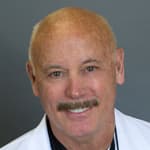
Frank J. Milnar DDS, AACD is a graduate of the University of Minnesota, School of Dentistry. He is an accredited member of the American Academy of Cosmetic Dentistry and a Board Examiner for accreditation. Dr. Milnar maintains a full-time practice in St. Paul, Minnesota emphasizing appearance related dentistry. He has published numerous articles about the direct placement of composites, shade selection and porcelain materials. Dr. Milnar is co-founder of the Minnesota Academy of Cosmetic Dentistry and lectures extensively within the U.S. Armed Forces as well as internationally on the subject of direct composite restorations, shade selection and porcelain materials. He has been voted "Top Dentist" for the last several years in the Minneapolis/St. Paul Magazine. Currently, he is the past Professional Education Committee Co-Chair for the AACD, member of the AACD Educational Alliance Committee , Global Education Committee and Chair for the Innovative Educational taskforce.
Dental podcast: Welcome to DentalTalk. I'm Dr. Phil Klein. Today we'll be discussing Thermo-Viscous Technology and the warming of composites. We've talked about this to some extent on previous podcasts, but today we'll be learning more about it and getting a different perspective from Dr. Frank Milnar. Dr Milnar is co-founder of the Minnesota Academy of Cosmetic Dentistry, a regular speaker on vivalearning.com and is a well-respected lecturer in the U.S. and internationally on direct composite restorations, shade selection and porcelain materials.
Transcript
Read Full Transcript
This transcript was automatically generated and may contain errors or inaccuracies. It is provided for reference and accessibility purposes and may not represent the exact words spoken.
You're listening to the Dr. Phil Klein Dental Podcast from Viva Learning.com.
Welcome to the show. I'm Dr. Phil Klein. Today we'll be discussing thermoviscous technology and
the warming of composites. Now, I know we've talked about this to some extent on previous podcasts,
but today we'll be learning more about it and getting a different perspective from Dr. Frank
Milnar. Dr. Milnar is co-founder of the Minnesota Academy of Cosmetic Dentistry,
a regular speaker on VivaLearning.com, and is a well-respected lecturer in the U.S. and
internationally on direct composite restorations. And he talks about shade selection, porcelain
materials, and so much more. Dr. Milnar, it's a pleasure to have you on the show today. Well,
Phil, it's a pleasure. And once again, for all the viewers out there that have followed me and my
educational footprint, I want to throw it right back at you, Phil, because today it's all about our
education. Education is changing. Curriculum is changing. Science is changing.
And one thing is not changing, the people, the patients we serve, and we have to serve them in a
very caring way. So I want to thank you, Phil. for really getting a very large footprint in for all
ages of our clinicians at large. It's a pleasure to be here with you. And it's KOLs like yourself,
Dr. Milnar, that are obviously the main thrust of information that's coming to our listeners.
I'm kind of the moderator and have some understanding of what's going on, but you guys are the ones
that are really involved with it. So let's begin with a simple question. Before we get into the
details of warming composites, tell us historically how it all began. And what actually happens
when a composite is warmed? Well, always look at the history, Phil. I'm a history buff. And I
didn't invent this, but I sure studied it, what happened. And I always look at it this way.
The science of warming composites started in the 80s. Now, you've had a lot of speakers say things.
I'm going to try to give it a different twist here today. I was privy to the GV Black Gold Foil
Club in Minnesota in 1976. They were cultish, okay?
They had loops. What are they wearing? But you know what? They delivered. They did some phenomenal
gold foilers, but they were cultish. Getting back to composites, none of them were manufactured to
be warmed. The early hybrid composites were warmed to 155 Fahrenheit.
How did they know the right temperature to cement veneers in? So the viscous advantage,
I'm going to throw a new term out there. for you today that you haven't heard the viscous advantage
is that something we have to pay attention because the heated composites lose half their heat
within two minutes that means you must take advantage of that thermo capabilities to cool to
achieve what you really want to do. Suppose the earlier people heating composites were using
syringes. Now you take a big mass of heated composite material that the viscosity is different.
Now how you can control that? It's not controllable. And then if you went to a Compuel fill,
now the Compuel ports were very large. because that's what they needed to express the stiff
material out of there. Now, if you try to heat that up, you're going to get a lot of volume coming
out of there, and you can't get it into little tiny crevices where thermoviscous advantage takes
place. So let's say this. Now the cat's out of the bag. The literature says that prior to this,
in the 80s, this was anecdotal. It was a technique without scientific evidence.
Now there's over 50 referenced articles that concludes about the thermo-viscous advantage of the
warming of the composites. And I've done it on Viva Learning. Many of your speakers have referenced
gap. reduction of gap formation, reduced curing time, reduced micro leakage,
reduced shrinkage stress. It goes on and on and on. What happens? When you heat that composite
material, the kinetic energy changes. You need to get greater movement compared to room temperature
composites. The material, the particles are moving faster. The kinetic energy is changing.
You get better monomer conversion. You get greater depth of cure.
But the bottom line, Phil, is that you say if you have better physical properties as referenced in
the literature today, it leads to better clinical outcomes. Right. So let me ask you this question
here. So historically, you've got to give credit to the dentists of the past.
who anecdotally decided, you know what, warming the composite and changing the viscosity is going
to allow us to get better adaptation. But the challenge for them was the composite itself wasn't
changed to accommodate the warming. The warming was an afterthought. So fast forward to where we
are now, and that's one of the things we'd love you to talk about, is this new product called
Viscalor, which was actually designed as a composite to be warmed.
Is that correct? And if you can... about that and the introduction of Viscolor and how it relates
to clinical dentistry. That would be wonderful. Okay. So once again, you had John Flukie,
Mark Geisberger on, myself. We were all composite warmers,
but not knowing what the evidence showed at that point. We had an inclination. We are early
adopters. Now it is really clear what is happening. Now let's...
Give a shout out to Vocal, not to be salesy about it, but what they did was have the first
manufactured thermo-viscous technology composite. It was manufactured to be heated.
This is the first of its kind, and it won't be the last of its kind. This is the first footprint. I
have to give them credit. As a KOL and as a tester, as Flukie and Geisberger and others have been
on your podcast, we tested this product, this VisColor product, in 2019.
VOCO did two revisions based on our recommendation and our evaluations,
and then they launched. Vizcalor in January of 2021.
Now, the launch after that was Vizcalor Universal. Another new technology,
another thermo viscous material that was launched in March of this year.
This is brand new technology, Phil, we're talking about. And you're going to have many more
speakers talking about this in the future from other manufacturers. Let's give credit where
credit's due to VOCO for doing this. Yeah, but one of the things, you mentioned Viscalure in
January. That's really Viscalure bulk, right? Correct. Okay, so it's Viscalure bulk.
and Viscolor Universal. And it seems to me Viscolor Bulk has the momentum right now as the
exciting, super exciting product. Is that correct? Well, think about this. You and I have,
you're an endodontist, but we were technically trained to put two millimeter increments into a GV
black prep. okay now if you look at that that doesn't make any sense because of the the
polymerization stress and all these other C factors in there now everything's gone to bulk filling
bulk filling is really in vogue it's very popular and dentists really get it and they're using it
but now if you could do it with with thermal viscous technology like this color bulk you're going
at four millimeters and you're the at a very high fill rate 83 percent a volumetric shrinkage of 1
.4 something like that and now you have a specialized cannula that you can introduce into very
small spaces especially for minimally invasive dentistry is that you have a win-win scenario the
whole thing has been revamped from the cannulas to the element of how you heat it with a caps
warmer or a visclor dispenser so once again Voco's on the forefront.
We have to mention Adent with their CalSat warmer because they were the first ones to put it on the
marketplace. That application tip that you're talking about is really critical, isn't it? I mean,
it's not a side thought. That was designed so that the doctor could actually eliminate the use of a
flowable to some extent because of the low viscosity of the warming effect of viscalore. So now
you're looking at a bulk fill. In essence, you don't really need a flowable at the bottom of a box
on a DO, for instance, right? Well, coming up in my webinar on Tuesday, Phil,
about the materials for the post-COVID is going to be the efficiency model and cost savings model
based on productivity efficiency and how to reduce overhead. So the answer is true.
Why would you want a flowable base like a liner like we were taught to be?
then put another two millimeters on top of that or do whatever you want now this does everything
the the fluidity of it and the capture that you can get with a small cannula in a very long cannula
you can go where other materials couldn't go before and this is the beauty of the two-in-one
application you don't need the base you can save materials it's more efficient it does everything
you want and All you have to do is heat it, flow it, and sculpt it. How's the aesthetics on this
material? Well, the aesthetics, first of all, if we go to viscal or bulk, the bulk fills, by and
large, as you know, have more of a tendency to be more translucent because you have a 4mm increment
in there. And I would say this, that I think the viscal or bulk, aesthetically, is as good as i've
seen however if you look at the physical properties that drives everything the chemistry and the
physical properties drive the whole thing for viscalor universal which is a two millimeter
increment i like the the model i've always liked the uh the vocal models of grandioso admire fusion
With the German technology, they seem to do a very good job for aesthetics. But the German
technology, just like Mercedes and others, they're known for physical properties. It's really good.
Yeah. So let me ask you this. And we're wrapping up this podcast. It's been very informative. And
we have another one coming up that kind of aligns with the webinar that you'll be doing for
shortly. And that'll be on best products for group practices and grow your revenue.
by incorporating these products and equipment into your practice. So that's coming up. But to wrap
up this one, why don't most dentists use the warm composite technique?
I mean, like you said, the cat's out of the bag. Well, we're dentists, Phil. We're skeptical and we
don't like change. And this could be a good thing or maybe not a good thing.
Occasionally, scientific unsubstantiated techniques become part of the daily routine. This is one
of them. With time and continued utilization, the new ones will assume general daily routine and
patient practice acceptance. So what I'm saying here, this is the case with thermoviscous
technology. It can't go backwards now. It's here. The last 30 years of research with composite
materials is more focused on light carrying, polymerization shrinkage,
placement of the light, placement of the material. what kind of particle size do they have,
finishing and polishing, those were the parameters of 30 years of research. Now, this is a another
something nobody's talking about and with thermoviscous technology now we're talking about the
moment the temperature at moment of polymerization that's tmp and if you look at the vickers
hardness and you look at everything the temperature at the moment of polymerization says it all
everything goes higher, the physical properties, the bar has been raised,
everything gets better. Yeah, it's very exciting. I mean, like the title says,
the evidence supports the science. Apparently, the clinical evidence after using this for several
years now is supporting what the science is showing. I can say this is just a conclusion,
is thermoviscous technology, and especially with viscalor, it unlocks the handcuffs.
And if you're a thermoviscous dentist and you have to do regular dentistry the way your dentist
does, it's like being an actor in the wrong movie. It doesn't...
It doesn't make sense. So I can say this with thermoviscous technology,
with being a thermoviscous believer, it's not like you're starting all over again from scratch.
You're starting all over. You're starting over with experience. That's wisdom,
Phil. Right. Yeah. And the history, we talked about the history of this. It's been fantastic
talking to you, Dr. Milnar. And we're going to start the next podcast pretty soon. So our audience
could listen to that as well. So until then. Thanks again so much for joining us, Dr. Milnar,
and we'll talk to you soon. My pleasure, Phil, and my pleasure to be with the audience tonight.