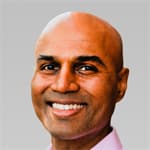
Dr. Gupta after completing a one-year GPR in Cleveland, started a practice from scratch in 2005. Armed with what he considered adequate knowledge, hand skills, and a personable demeanor, he watched as his practice floundered, finances became un-predictable, and his lower back and spirit toward life became worrisome. Rather than continue the trend, he made a guinea pig out of his office, family, and self; attempting any and all personal and professional "experiments" in self-improvement. More than a decade later, he enjoys excellent new patient numbers and case acceptance, a solution oriented dental team; and most importantly, a meaningful and positive identity. He happily shares the failures and successes with dental and community groups throughout the country, always ending his presentations with practical, implementable, step-by-step ways to be better.
Dental podcast: Welcome to DentalTalk. I'm Dr. Phil Klein. Today we'll be discussing the psychological concepts behind major financial decisions in your practice. Our guest is Dr. Ankur Gupta, who has a private practice in a suburb west of Cleveland. He lectures extensively for several dental society study clubs, annual sessions, post-doctorate residency programs, and several CE programs throughout the country.
Transcript
Read Full Transcript
This transcript was automatically generated and may contain errors or inaccuracies. It is provided for reference and accessibility purposes and may not represent the exact words spoken.
You're listening to The Dr. Phil Klein Dental Podcast from Viva Learning.com.
Welcome to the show. I'm Dr. Phil Klein. Today we'll be discussing the psychological concepts
behind major financial decisions in your practice. Our guest is Dr. Ankur Gupta,
who has a private practice in a suburb west of Cleveland. He lectures extensively for several
dental society study clubs, annual sessions, post-doctorate residency programs, and several CE
programs throughout the country. Before we get started, I would like to let our audience know that
Dr. Gupta's webinar titled, Did My Patient Just Refuse Periodontal Therapy But Buy a New TV for the
Super Bowl? Quite a creative title there. It's now available as an on-demand webinar on
VivaLearning.com. Simply type in the search field Gupta, G-U-P-T-A,
and you'll see it. It's an excellent webinar for every dental practice. Dr. Gupta,
it's a pleasure to have you on Dental Talk. oh dr klein it's a pleasure to be back thanks for
having me yeah you had incredible attendance to your past webinars with us so we certainly hope you
do more with us and you provided great information we got great feedback so we're excited about
this podcast so to begin what are the psychological concepts behind financial decision making yeah
so i'm glad you asked that so i i've been a dentist for for 18 years and I've attended a billion
case presentation workshops, as I'm sure you have too, how to get patients to say yes to dental
treatment. And they've been great. They've been wonderful. But I think that since I'm a little bit
more of a scientist at heart, I wanted to know if there was actual peer-reviewed psychological
research about how people make... uh major financial decisions and what are what are the things
that are actually swirling around in our heads when we do and actually it was awesome because a lot
of what i learned it did correspond well with a lot of the advice that we've been given in terms of
case presentation and getting more patients to say yes to complex treatment but it was really cool
to bridge the gap so so the five things the five concepts are number one,
following the herd, meaning that people will be more apt to make a major financial decision if a
lot of other people like them have made the same decision. Number two, emotions are stronger than
logic. And that's a hard one for me because I like to teach people. I like to show them diagrams of
like dental implants in the bone and the periodontal ligament and all that kind of stuff. And
that's all very logical. But people are driven by emotions, and that is getting people to think
about what will create an emotional reaction in their life by making this decision.
Number three is loss aversion. If we're dentists and a patient says yes to treatment,
they are going to lose something. They're going to lose money. They're going to lose time.
They're probably going to lose comfort by agreeing to do our treatment. So people are normally
averse to that loss. We need to make it clear that they're going to lose in other ways by not doing
treatment. Number four is distrust of a newcomer. And that's the concept of me.
No matter how nice a guy I am or how nice you are, Dr. Klein, we're still strangers.
And by being strangers, a natural human tendency is to not trust a stranger.
And then the last one is detail exhaustion. And that's another one as dentists, the same way as the
emotions are stronger than logic. As dentists, we like to go into a lot of detail because a lot of
us who like to educate, we go into a lot of detail and people get exhausted with detail. I know I'm
assuming you do too, but I do when I go and. I'm just trying to like buy some new pants or
something like that. If there's a whole lot of features of those pants, like it makes me like
exhausted. And then I just don't want to make the transit. I'd rather just leave. Especially if the
salesperson is trying to explain all the features of these pants you're trying to buy. Special
zippers that work underwater, you know, these kinds of things. Crazy stuff.
You mentioned those psychological concepts. And this is something we all have to be aware of as
dental care providers, because we're facing these challenges when we present a treatment plan. So
what do you do in your practice, in your workflows to overcome some of this stuff? So let's talk
about distrust of a newcomer, because this is actually one of the workflows that we really had to
change. In my office, the dental hygienist and the dentist would be sitting in an operatory and we
would be spending a bunch of time explaining. why you need a root canal or a dental implant or bone
graft or something like that. And we established a rapport. We established trust. And then for a
long time, we would just be like, okay, peace out. Somebody from the front desk is going to come
along and tell you you're going to owe thousands of dollars for this. It was such an abrupt change
from developing that trust to all of a sudden pushing them to the front desk.
where a total stranger is going to be like, all right, well, all this treatment is going to cost
thousands and thousands of dollars. So we needed to change our workflow so that that third party,
that financial administrator, that person can be in on the gang. We're not just pushing them into a
different room, into a different domain. And so one workflow that we really had to change was we
had to invite the person from the front desk into the operatory. where we could hand that person
off to our front desk administrator. Hey, patient, this is Alyssa.
Alyssa is kind of the expert around here when it comes to allowing these treatment plans to fit in
a patient's budget, allow them to fit in a person's schedule. Now, Alyssa,
here's what we're recommending on this patient. And I'm wondering if maybe the two of you can sit
down and make this work. Now, Alyssa is part of the gang. She's no longer a stranger. But that's a
weird workflow, right? I mean, I think the majority of dentists who are listening were like, wait a
second, a person from the front is coming to the back? That's weird. That's an unusual disruption
to the workflow. But it's necessary. So I brought my cat to the vet in Austin,
Texas. We have a tremendous vet office here. It's huge. It's like a city block square.
So what happened was we developed this trust with this veterinarian. And she was very sweet and
very compassionate about our cat who was very sick. And then she walked out and she said,
okay, I'm going to step out for a minute. And another woman walks in with a clipboard and says,
these are your fees that we're expecting you to pay. And she literally went line item by line item.
And it was $3,400 or something by the time she was done. I never saw this woman before and she
certainly wasn't particularly warm. So the transition that you're talking about, it was alarming.
to my wife and i with this sick cat now of course we were distressed about the cat having dental
problems may not be as emotional but still that transition was terrible so what you're saying is a
brilliant approach it's almost like you have to dance right you know you have an assistant on one
side of the patient you have the dentist on the other side and then this third person comes in and
we literally we had to practice the dance how we could move out of the way make it so that i would
be facing the patient My financial coordinator could be facing the patient so that we were all part
of the same gang within the confines of our little. How did that work out? Oh, it's the most
amazing thing now. I mean, our case acceptance is very high, but it took a while to practice it.
When you change that workflow, how long did it take to start to see cases being accepted? versus
before that? It's immediate. And not only did we start to see the change once we implemented it,
but we've had turnover like a lot of dentists in the last two years. And there's been times in
which our front desk team was overwhelmed because they were short-staffed. And we gave them the
liberty to not have to do the handoff. And immediately we saw drops in our case acceptance.
This is so important. I don't know what the percentage difference would be, but I can almost
guarantee any practice that does it, they'll be more successful with their case acceptance. So how
do you feel you have changed in terms of patient education from the time you graduated dental
school? What's changed in your workflow regarding educating the patient on what they need to have
done? So this is another really big change. I really like to educate. It's like, that's my jam.
I like, I love it. I love to talk about the details of like bacteria and stuff like that. I love
it. The problem is emotions are stronger than logic. Emotions are stronger than logic.
And I realized that all of that desire of mine to educate, it's actually pretty futile in the case
acceptance machine.
I instead I should have just a big picture of the patient's teeth. So so what we have is we have a
computer screen. It's a TV screen, a big old picture of the retracted smile.
And then we look at the screen. We look at the patient and we say, so what do you see? And the
patient's like, well, you know, I mean, I mean, I noticed that one tooth. What is that right there?
Is that a cavity or something? And then we basically say, well, what do you think? What do you
think is going to happen if we don't do anything about that? Or we say. How would you feel if this
was fixed, if this was better? All emotional. And a lot of times,
even when patients ask, hey, is that a cavity or something like that? I don't even tell them. I
basically just lead them down a more emotional path, just asking questions to them open-ended
about what they see and what they feel is going on and what they think is going to happen.
And that path, it's a highly emotional path, but it's not an educational path. An emotional path is
a much more effective way to get people to actually say yes. Yeah, no, absolutely. I mean, when you
bring your car in, and I'm not comparing automotive work to dentistry, but when you emotionally,
when you bring your car in to get fixed, someone comes up to the front desk and tells you in detail
so much of what's going on and you should get this done. And they go into the detail beyond detail.
And you have your own things to do in your life and you're busy and you really just want your car
running smoothly. Not all of us. Some of us love that detail. They love the intricacies of cars.
But for the most part, people want their car fixed and they don't really want to know all the
details. They want to know how much it's going to cost and how long it's going to take. Yeah. You
know, you said they want to know how much it costs. They want to know what it is. But the other
thing is people want to know what's going to happen to me if I don't do this.
What am I going to lose? People want to know that. And a lot of times without me telling them, I
just basically ask them and I let their imagination kind of run wild. I actually had a patient once
say, do you think I'm going to die? And I was like, no, man, you're probably not going to die.
You're going to lose your tooth, you know. But it's just kind of funny because I take them down
that path and I let them run with it, you know, and that's actually much more emotional than me
trying to tell them what might happen. Well, you give them their options and then you say,
if you don't do it, this is a path you might go down and you kind of let them decide to say, you
know what, I think I need to move forward. So a lot of patients simply aren't interested in paying
a lot of money for dental treatment. That's also a natural response, right? And even if it is
really important for their oral health, they're still a little reluctant to spend a lot of money.
How do you handle those patients? So that's actually, I think that that's probably the most
relevant. To all of us, I would say every dentist, it doesn't take long to present a treatment plan
that's incredibly important. And then I have a patient say no just because it's more than zero
dollars because it's not free. And that's frustrating. And a lot of times we judge a patient
negatively, which is really, really unfair. We have to remember all of these barriers are swirling
around in a patient's head. It's not just that they're cheap or undisciplined. or that they're
going to go and buy a TV or a ring or something like that. They just have a lot of other barriers.
And so when patients bring up money, when a patient brings up money, the go-to line that I always
use is I look them in the eye and I say, I don't want to do anything that's going to cause you
financial stress. So I look them in the eye. And I say, I don't want to do anything that will cause
you financial stress. And I really do mean that. I really do mean that. I think, Dr. Klein,
you too, when you're practicing, if you have a patient that's just freaking out about the money, it
makes it uncomfortable to practice. It makes it uncomfortable to actually do the work. And so I
tell the patient, I don't want to do anything that's going to cause you financial stress. And the
patient, all of a sudden, their barriers come down a little bit because now I'm a friend of theirs.
I don't want to do it. Listen. I know what it's like to have financial stress and I don't want to
put you through that. However, we have this thing going on and I would love to be the one to treat
it. I noticed that in the past 15 years that there's almost been a race in technology in making
patient financing more sophisticated and more tech savvy.
So this is what I mean. When I graduated, there was only the OGs. It was just care credit.
I was the only ones, right? And that was great. And care credit got a lot of patients to say yes.
But what's happened is when I graduated, also, if I needed to get somewhere, I had to take a cab,
right? And now, 17 years later, I don't take a cab anymore.
I look at my phone and I like press a thing and then an Uber comes and picks me up. Technology has
changed. And so what I've noticed about patient financing is it's just the application process has
gotten way easier. The ability to approve people has gotten way easier and more sophisticated.
And then the ability to have patients do treatment without getting socked with a huge fee as the
dentist, that's gotten better as well. And so and that that's a surprise to that's been a surprise
to me over the past couple of years. Same way is my surprise to a lot of dentists. We were using
CareCredit and it was good, but we didn't realize that there were a lot of other companies that
have very sophisticated technology and software. And what I've found is when patients are
uncomfortable with the financial ramifications of doing dental treatment, I tell them I don't want
to do anything to stress them out, but I do want to explore what options there are. so that they
can get this treatment done without feeling that financial stress. And that's a really good,
easy way to introduce these various sophisticated patient financing solutions.
Yeah, I know offline we've talked about some of these solutions. You particularly have a preference
to Sunbit. Can you tell us why? You know, it's the application process is just the best. They pull
out their driver's license and then you like take your... ipad and like you know do that thing you
know with the credit card you just put your ipad to like take a picture or whatever of the driver's
license and then immediately you get an approval or not an approval i don't know what their
algorithms and their their science behind their approval process is but they seem to approve like
everyone and i think that's very liberating for me it's kind of a crummy feeling to recommend
treatment, have a patient that's eager to begin treatment, and then have them not approved and be
discouraged as they walk out the door. It's just, it's a little more convenient to be able to say,
oh my gosh, yeah, you're approved. This is the monthly payment. What do you think about this? And
then we can kind of roll and get treatment done. Yeah, so this company, and I'm talking to the
audience now. is called Sunbit. They are the sponsor of this podcast, but Dr. Gupta has a
tremendous amount of information, a wealth of information about the psychology behind financial
decisions. And part of that process is making sure the patient can get access to financing in a
comfortable way, in a convenient way, in a fast way, right at the office. If you want more
information about Sunbit, you can look them up online, of course. It's spelled S-U-N-B-I-T. We
have another 30 seconds. Any closing remarks that you'd like to recommend? No, no. Dr. Klein, I
find these really fun. I think that the questions you ask, the thoughtful and they're pleasant.
I really like being a part of this podcast. It's an honor for me. So thanks for having me again.
And keep on educating dentists because you're doing a really great service. Thank you. You do the
same. We're very happy to have you, Dr. Gupta. Great stuff. I hope there's more to come. And this
podcast had a lot of good information in it. Thank you very much and have a great evening. You too.
Take care.