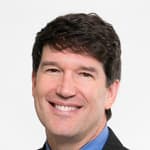
Dr. Mark E. Hyman is a renowned dentist from Greensboro, NC, and a public speaker whose work is characterized by his warmth, enthusiasm, sense of humor, and passion for dentistry. As an accomplished seminar speaker, he has lectured throughout North America and Europe at every major dental meeting. Dr. Hyman has earned national and international recognition for his seminars. Since 2001, Dentistry Today magazine has selected Dr. Hyman as one of the top speakers in dentistry. He loved his thirty-two years in private practice, and currently serves as an Adjunct Full Professor and Special Assistant to the Office of the Dean at the UNC Adams School of Dentistry in Chapel Hill, NC.
Dental podcast: Welcome to DentalTalk. I'm Dr. Phil Klein. Today we'll be discussing, as the title states, the small steps that we can take that will lead to big changes in our practice. Our guest is Dr. Mark Hyman, a well-known dentist who currently serves as an Adjunct Full Professor and Special Assistant to the Office of the Dean at the UNC Adams School of Dentistry in Chapel Hill, NC. Dr. Hyman has earned national and international recognition for his dental seminars.
Transcript
Read Full Transcript
This transcript was automatically generated and may contain errors or inaccuracies. It is provided for reference and accessibility purposes and may not represent the exact words spoken.
You're listening to The Dr. Phil Klein Dental Podcast from Viva Learning.com.
Welcome to the show. I'm Dr. Phil Klein. Today we'll be discussing, as the title states,
the small steps that we can take that will lead to big changes in our practice. Our guest is Dr.
Mark Hyman, a well-known dentist who currently serves as an adjunct full professor and special
assistant to the Office of the Dean at the UNC Adams School of Dentistry in Chapel Hill,
North Carolina. Dr. Hyman has earned national and international recognition for his dental
seminars. Dr. Hyman, it's a pleasure to have you on Dental Talk. Dr. Phil, a joy to be here. Thanks
for having me today. Yeah, my pleasure. We know how busy you are and we know you speak all around
the world. Dr. Hyman just finished a program with the famous Gordon Christensen. We're very lucky
to have him on Dental Talk and he has tremendous experience in the world of dentistry and in many
areas. So my first question is, Dr. Hyman, one of the things you talk about is raising the bar for
the new patient experience. Why is that important to our practice, and what are some of the key
questions we should be asking to make that happen? Right, Phil. Again, I appreciate having me on
this show. The new patient experience is kind of everything. You never get a second chance to make
a first impression. I had the privilege of 32 years in private practice. and kind of muddled
through early on in my career like everyone else. And then I started training at the Panky
Institute in Key Biscayne, Florida in 1990. And that set me free and changed my life.
And Dr. Irwin Becker made me slow down and be in a relationship with patients before I started
taking bite wing thingies, before I put my instruments in their mouth. So that made a huge impact.
So we made the commitment that we were going to sit down with every new patient, every emergency
patient, every comprehensive patient in our consultation room. And so it was a treatment.
coordinator, myself, and the patient. And I would go through what I kind of call the 10 questions
that we want to go through to kind of peel the onion. My charge to my audiences, to my students at
the UNC Adams School of Dentistry is I challenge them to outlisten the competition. So I think the
worst thing we teach in dental education is look at new patient and say, are you having any
problems? No. Well, then don't you want a crown? I just told you I'm not having any problems. So I
used to say, do you have any trouble finding your way to the office with Google Maps? That's kind
of antiquated. So now I would say, Dr. Phil, who can I thank for referring you? Because there's a
big distinction between Dr. Irwin Becker sent you to me, said you're the best, or you're part of my
PPO, you have to see me. So I just kind of want to know what parameters are we working with? Who
can I thank for referring you? It also plants a seed. Yeah, we'd love more new patients. Second
question is, how can I help you today? And often patients will say, I hate my smile. The temptation
for us from our education dentistry is to say, well, you hate your smile because you have a
diastomata between eight and nine and class two D2 laterals and your teeth are V to shade A17 and
your mom addressed you funny. I'm saying to folks, don't do that. Just ask more questions. So how
can I help you? I hate my smile. Tell me more. What about your smile do you hate? Is it color? Is
it size? Is it shape? Yeah, my teeth are really yellow. And how does that make you feel? Well, I
don't smile for pictures. Well, do you have pictures coming up? Is there a family event coming up?
Would you like a new smile before Easter, Passover, before July 4th, before New Year's,
before Christmas, Hanukkah? What is it? Where are you in your life at this time? Question I also
like to ask is, may I ask why you left your last dentist? And an answer I'd often hear is,
well, he was always pushing crowns. Now, many people in dentistry hate hearing that. And I love it
because then I'll just say, Phil, may I ask you a question? Do you think you need one? And often
you'd say, I don't know. And I'd say, sir, if I see changes going on in your mouth, do I have your
permission to tell you? And as soon as you say, yes, it's supper time. It's because if I can just
show you changes that are going on, then I can take good care of you. So why'd you leave your last
dentist? What did your last dentist tell you? He said I needed a crown. Okay, we can work with
that. Why now? Phil, why'd you come in today versus tomorrow versus next week,
next month, next year? What's the urgency to act? I had a patient come to see me on a Wednesday and
said, I'm losing my insurance Friday. Now, most of us would say, oh, God, we got to get the bite
wings. And I'd want to follow that up with, is the insurance reimbursement critical with you
keeping your teeth the rest of your life? And often the answer is no, I just figured I may as well
use it. Fine. And I'll say, does anyone else have input here? My wife is a nurse. All the family
health care goes through her. So I just want to know my treatment planning case presenting to the
decision maker in the family. I'd like to say, what are your goals for your health teeth and smile?
I'd say to someone, Phil, I'm not being smart with you, but do you want to keep your teeth the rest
of your life? And when you say yes, and then you don't want to do scaling root planting, I'd say,
Phil, help me understand. You said you want to keep your teeth. You're badly infected. I know it
doesn't hurt, but you've got pus and blood pouring out of your gums. Why don't you want to take
care of that? Those all just build into the going through the question, peeling the onion into the
end. Then I would just say, do you have a budget in mind? And I had people say to me, Dr. Mark,
money is a big deal. I only have $20,000, $30,000 to spend on this. We can do that.
And the last thing is, when do you want to be finished? I always ask my audience, where's the
insurance question? And the answer is, it isn't in there because it's not critical to me. It's
critical the patients get what they're entitled to, but it has nothing to do with people keeping
their teeth the rest of their life. If you believe that with passion and enthusiasm and spirit,
you're going to win. Yeah, so these are great questions. So your whole approach to this, is you're
leading the, well, I don't want to say leading, but the conversation is going in the direction
where the patient is wanting to do the work. They're wanting to engage with you because you're
obviously showing a genuine interest in their health, in their oral health, and you're learning
about their past. So you're sizing them up and where they're coming from. And then now, how much do
you deviate on your responses to these questions that you're asking? Is it always going towards one
way or are you kind of customizing these responses based on these patients? A good question.
There's a customization piece to it. But what I say to my audience is, is with the 10 questions,
you don't know which one is the winner. You don't know which is the one that was the resistance
piece from the last office. So I ask that folks not be mechanical, but be systematic as you go
through it. And almost always when I finish that process, Phil, my exit question before we go start
the new patient experience clinically is, Phil, can I ask you a question? Have you ever had a
dentist start a visit like this? I was going to ask you that. In all your years of teaching, are
most of the doctors that take your courses and listen to your lecture, are they the ones that the
patient sits down, they grab the bite wings, and the first thing they're doing is looking at the
teeth and then going to the patient and say, here's what we found? Most of the practice is the
hygienists start the new patient experience. And the doctor comes in and tries to guess which crown
per year he or she can do. And so this is a point of liberation. And you may get to the end of 10
questions and say, you know what, Phil, this doesn't feel like a good fit. What you need is not
what I do. I had someone come in and say, I'm going to sue my last dentist. And I was like, let's
just stop right here. I'm not getting in the middle of something. You're obviously angry. Let's
settle that however you choose and come back to me and let's sit down with a clean slate. The key
thing here, Phil, is the patients have said yes to me and I haven't even examined them. They bought
into me as a person. Yeah. When did you start this approach in your career? Because we just talked
about when we graduated dental school. So we're about the same age. You've been doing this a while.
When in your career did you start this approach and what made you change your whole new patient
experience culture? So I graduated dental school at Chapel Hill in December 1983. I went to Israel
and worked as a volunteer dentist for four months, did a two-year oral medicine hospital dental
residency, started in private practice in 86. 86 to January 90, I was running from room to room and
getting tons of people saying yes to one filling, one crown, one tooth. Didn't even know how to
talk about comprehensive optimal care. January 90, I started at the Panky Institute. was like a
light bulb went off and dr erwin becker got in my face and challenged me to slow down son and get
to know your patients and listen to them and love on them and recognizing that can't be all things
to all people but there will be a massive group of patients that want to be taken care of
exquisitely and in a relationship instead of a commodity so early 90s i started to refine this And
then I worked with Dr. Kathy Jameson with Jameson Management out of Oklahoma. And Kathy really put
the bow on the package. Her coaching and inspiring for my team and I was just life changing.
So I got very fortunate. Yeah, no, no, it's phenomenal. And it looks like, I mean, the whole,
your whole enthusiasm to practice dentistry, your career satisfaction changed to a whole nother
level after Panky. Let me ask you this question. You talk in your lecture about some of the things
you should be investing in in your practice to make sure that there's a positive impact on the new
patient experience. What are some of those things we're talking about as far as investing in? Yeah,
Phil, the single signature number one thing I would say to anybody is you have to work with
photography. I was a big intro camera guy. I started working with DigiDoc. It's a California
company, American-made. They own over half the market share. Anything I mentioned, I'd pay for.
I don't get for free. I had eight operatories in my office. Phil, how many cameras did I have?
Probably eight. I like the way you think, young man. We took a picture on every patient for every
procedure before, during, and after. That is the single signature thing I can teach anybody. We are
a visual society, and that was the liberation point. So instead of me looking at you and saying,
Phil, you need a crown because I said so, I put a picture of a tooth up. I'd say, sir, you got 28
teeth. 27 of them look fantastic. Tell me what you see here, and I point to the picture. Yeah.
So the ROI on the intraoral camera obviously is amazing. That pays for itself.
That pays for itself the first hour. Right. Now, what about local anesthesia? Anything in the realm
of getting patients numb? Love it. That was another signature thing that I tried to do was give the
gentlest injection patients ever had. We worked with the super-duper topical LPT,
lidocaine, prilocaine, tetracaine mix. custom compounded. And then we work with buffering of the
local anesthesia. Stanley Malamid from Southern Cal did a lot of the signature work on that.
Basically, if you're using lidocaine or arcticane, you're burning your patients because the pH, the
acidity of the local, is 3.5. You're injecting ice-cold lemon juice into somebody's head. Dr.
McFalkle, who's a dentist and chemist from California, invented this two-way mixing pen. You pull
out 0.9 of liquid. Lidocaine shoot in 0.9 of liquid and sodium bicarb. The pH becomes 7.4.
The patients are numb in about 90 seconds. The product is on set. The company is Onpharma.
It's a California company. Costs about two or three bucks per injection. I have people say to me,
Dr. Mark, how do you charge the patient the two or three dollars? I'm like, I'm sorry. You just got
an extra hour a day to work. Your patients will be numb from the mandibular block in 90 seconds to
two minutes. And if you're not even any good at it, at the eight-minute mark, research by Dr.
Malamed says you're 100% effective. Classic mandibular block technique, you're only 67% effective
at the 15-minute mark, which is such a part of ill will and just a shame. Isolation,
yeah. Talk to us about that. Isolite, Dr. Tommy Hirsch from California invented this.
It's a five-in-one bike block, tongue retractor, cheek retractor, suction, LED light. I had eight
operatories. Dr. Phil, how many isolites did I have? Probably eight. Eight. Who do I use them on?
Every patient. Everybody. Every procedure. The time to do a scaling, root planing. Generally,
people reserve one hour per quad. With the Isolite in there, you can do two quads per hour.
See how you're asking me questions during this podcast, like you ask your patient questions. You're
bringing me into the whole thing. I'm going to end up, I don't even practice dentistry. I'm going
to buy one of these things. I'm going to sell you eight. That's what's going to be the cool thing.
You're enthusiastic about what you said. You're not endorsing any of this stuff. The audience
doesn't have to buy anything. But you're suggesting things that you've used in your practice that
bring tremendous efficiency to the practice. And not only efficiency, but it makes the patients
more comfortable. And if the patients are more comfortable, everything is uphill from there. Small
things make a huge difference. If in hygiene, you asked every patient, do you use a Sonicare?
You don't like the color of your teeth. You want day white. You want night white. You want to do a
Zoom. We got choices here in the practice. Phillips actually has a new thing where you scan the
patient with your digital scanner. they'll make the tray and send the tray and the material to the
patient. So it sort of becomes a choice of yeses. How do you want to whiten your teeth? Do you want
to do it here in the office? You want me to make the trays? You want them sent to your home? What's
more convenient? These little things, these one degree, 1% changes make all the difference. You
also mentioned comfortable financials to all. What's that about? Yeah, we work with care credit.
One year we put over $400,000 of care credit in my practice. I had someone in a seminar say to me,
Dr. Mark, look at all that money you lost. I'm like, no, we put on $400,000 on care credit.
I got paid $360,000 of treatment I probably wasn't going to get to do. I couldn't find a way to
make it comfortable for people. In my practice, for a crown and a buildup, people say, well, that's
expensive, isn't it? My answer is, compared to what? basically a crown buildup in my office was
about $3 a day for a year. So it's basically, I see patients holding a cup of Starbucks. I said,
could you afford a cup of Starbucks a day to keep this tooth the rest of your life? $1,500, man,
that's a lot of money. Yeah, but $3 a day. Okay, that I can do. What are some of the things that
team members can do to help with marketing the practice? Now, I know this is really important in
your world where you treat your team members like gold, which they should be treated. Without them,
you can't practice. So how does it affect the marketing of the practice? Right, Phil, I had the
gift of unbelievable love and loyalty from the women that I worked for. That's the way I described
it. My receptionist was with me 25 years, my lead assistant 19 years, three of the hygienists 15
years, another one 14 years. They gave me such love and loyalty and I let them run the practice.
I gave them full permission. to do little things to make patient experiences extraordinary.
We had a $100 rule. You could spend $100 on any patient for anything just to give them a wow.
I call that an ankle biter type decision. Don't come to me and say, can I give a gift certificate
to Mrs. Smith because we made her wait five minutes? That's not a CEO decision. You know what we
stand for here. We pride ourselves on being brutally on time, incredibly gentle. Very enthusiastic,
using tons of photography to communicate, the gentlest injection, the bite block to make it
comfortable so you don't swallow the schmutzy. So don't come to me and ask me a question like that.
You know the answer is yes. Yeah, out of your team members, what are we talking about as far as
utilizing that opportunity? They did it every day. We absolutely did it. We just, we tried to find
an excuse to do something nice. We tried to find an excuse. I did a lot of care phone calls at
night. We wrote a lot of thank you notes. When a new patient came in, we had a lovely impressionist
stationary that the whole team would sign the welcome to the practice note. Anyone that referred me
a patient, we would send them a note with handwritten, thank you for your trust and faith in us.
You know, I left private practice, Phil. I had over 1,200 five-star reviews because I worked on
them for every patient. I would say if someone, particularly if they came to me as a new patient,
Phil, how'd you find out about me? Went online, saw you had 1,200 five-star reviews. It said you
were really expensive, but really good. I was like, great, Phil, would you do me a favor, bud? If
anything today isn't five-star, would you please tell me? But if today knocks your socks off, this
is the greatest dental visit you ever had. Would you do me a favor? Would you take two seconds, go
online and lie? Talk about Tina, not the old fat man. And they go, oh, you're not fat. Let me ask
you a question here. So when it comes to the success of a dental practice, how important,
on what scale, if you would look at the revenue of the whole practice, is customer service and
patient? experience and i don't want to compare a car dealership to a dental practice because i'm a
dentist and i don't even want to do that but you know we're at the point where a lot of automobiles
run really well you know if you buy a japanese car most likely that japanese car is not going to
give you that many problems but if you go into a dealer now i have a subaru and that dealer has a
coffee shop in there that makes lattes while you're getting your oil change They give you food.
Everything's free. The consultant comes in. You have Wi-Fi. They tell you where they are. It's
going to be another 20 minutes, Dr. Klein, because we're doing this now. We're rotating your tires.
It's an incredible experience. I like going there. I go there at 7 in the morning, drop my car off,
work on my laptop, and before I know it, they're telling me it's over, and I'm on my second latte,
and I'm sorry to leave. So they are very, very successful. Then I rate them. Just like you're
saying right now, Dr. Hyman, I rate them on a review and it goes through social media and so forth.
So for dentistry, in your experience, how big a role does what you're talking about play in the
revenue of an office? In today's world, as competitive with the DSOs buying practices,
and I'm not besmirching DSOs, there's different paths to God, there's different ways to practice.
But if you want to maintain a private practice free of... DSO, HMO,
PPO plans where you are trying to do optimal care in a wonderful, inviting environment, you have to
deliver something distinctive. One of the cool things we did, Phil, we had a staff meeting where I
had the team watch a video about 212 degrees. It's a wonderful little parable. At 211 degrees,
water's just hot. You add one degree, now it's boiling water. Boiling water creates steam. Steam
can power a locomotive engine. So I showed this to the team and said, will every one of you give me
one degree, one percent? Will every one of you just find something tomorrow extra from your normal
eight-hour effort. The next day to my already crushed busy schedule, the team added $4,000 of
dentistry. Five o'clock, I said, quick team meeting. And they're like, ah, we get to meet again.
This one was different because I handed out Benjamins. I handed out $100 bills to each teammate.
But I didn't say, what did you do? I said, what'd you see the teammates do, right? Meredith said,
Tina cleaned my room when I was behind. I gave Tina 100. Tina, what'd you see Carla do? Tina
took... Carla took my full series when I was behind, bang, gave her 100. So I went around and
handed out Benjamins for the extraordinary effort. So I love the concept of catching the team doing
things right instead of wrong and reinforcing the positive. So there's not a dentist today that
can't be a better role model for their team. We don't always get it right. But if you just throw in
a heaping dose of passion and enthusiasm and some humor. and you lead like that,
you can be successful beyond anything you ever dreamed of. And that's my hope that I've helped
people today with that idea. Of course, we're not talking about the clinical dentistry part. We
haven't talked about that in this podcast. We talk about that on plenty of other podcasts, but
we're assuming that in your world, the dental care that's being delivered is more than up to par.
It's exceptional dental care along with all this service because these restorations don't have to
stay in. They absolutely do. But the thing is, is that... about 3% of people can appreciate your
technical dentistry and 97% it's all the experience. It's a given you better do exceptional
quality dentistry. You shouldn't be practicing. I pushed myself to going through Panky curriculum,
teaching at Panky, going through the Spear curriculum, got my fellowship at the Academy of Dental
Dentistry, my mastership at the Academy of General Dentistry. I pushed and pushed and pushed
because I wasn't a gifted. artistic dentist. I was a grinder, but nobody outworked me.
And I ended up very proud of what we did in that practice. And again, we had tremendous love and
loyalty from the team and tremendous love and loyalty from the patients who paid their bills with
appreciation and sent their friends and gave us five-star reviews. And I loved what I did, Phil.
I had 32 years of private practice before my L4, L5 blew out. And so now I teach at the UNC Adams
School of Dentistry in Chapel Hill. Hats off to you, Dr. Hyman, for an incredible career and what
you're teaching is so important to our young dentists that are starting their career, to doctors
that have been practicing for a while. This is something that is not taught in dental school. And
if you don't hear it from a mentor like yourself, the average dentist that gets out may not quite
understand the importance of what's going to determine whether they're successful as an...
solo practitioner or in a group practice or are they going to go to a DSO? And again, not to
besmirch a DSO, you have the option and the choices to succeed outside of that as an individual or
in a group practice, totally even insurance independent the way you're talking. I mean, these are
things where patients will do anything to go to your practice because going to a dentist is not a
positive experience in itself. So what you're saying makes a lot of sense. I was very fortunate,
but I'll tell you at UNC, we do teach this. We've got a group of men and women that crushed it in
private practice that are now teaching at the school. We have a practice readiness curriculum where
our students get eight semesters of business training. So when they finish school, they can do a
performance review. They can read a P&L statement. They can read an associate's contract. They
know the basics of 401k investing. They know how to buy term insurance,
malpractice insurance, disability insurance. Is that unique to UNC or are there other dental
schools that have that? I only teach at Chapel Hill, so I don't know, but we specifically push that
at UNC so that our students come out prepared. They have a tremendous knowledge about how to
diagnose treatment plan. We have an intro camera at every chair at the dental school, which it took
me four deans to get it, but we have an intro camera in every chair. And they have a Isolite Zyrus
Corporation. donated $400,000 of equipment in my honor to UNC. So every patient gets the ISA back,
which is the more affordable model without the LED light. So our students get to try this high
-tech equipment that can help get them ready for private practice. I'm really proud. And plus we're
going to beat Duke. So I can't wait for that. Yeah, there you go. Good luck with that one too.
Well, Dr. Hyman, it's been a pleasure talking to you. We hope to have you on future podcasts and
future webinars. It's a great... to have you on Viva Learning, and I wish you all the best,
and hopefully you'll be with us again soon. Thank you so much. It's been a privilege, Phil.
Pleasure to meet you. Thanks for your time.