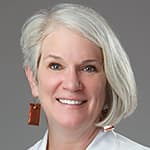
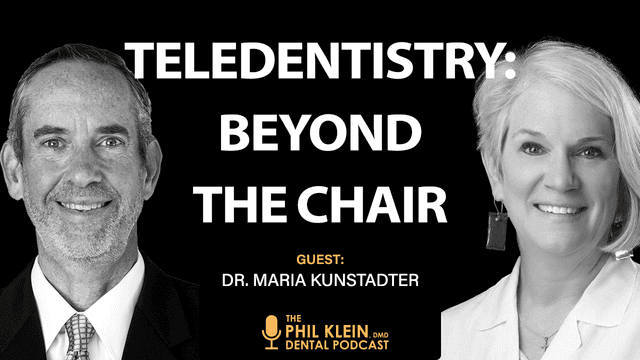
Teledentistry Pioneer · Co-Founder of The Teledentist
The Teledentist · American Telemedicine Association
Read full bio
Dr. Maria Kunstadter is a seasoned dentist with a wealth of experience in teledentistry. Over the past decade, Dr. Kunstadter has been at the forefront of this innovative approach to dental care, integrating it seamlessly into her practice while also dedicating herself to educating and assisting fellow dental professionals in maximizing the potential of teledentistry.
Are you leaving money on the table by turning away emergency callers or missing opportunities to triage patients more efficiently? What if you could transform your practice workflow while reaching underserved populations in your community?
Dr. Maria Kunstadter brings over a decade of pioneering experience in teledentistry implementation and is co-founder of the first teledentistry consultation platform, The Teledentist, launched in 2014. She has dedicated her career to advancing virtual dental care, educating dental professionals on teledentistry integration, and addressing the crisis of patients seeking dental care in emergency rooms—a $2.8 billion healthcare burden with minimal treatment outcomes.
This conversation explores how teledentistry extends far beyond direct-to-consumer orthodontics to become a practical workflow enhancement that can serve as your practice's "fifth chair." Dr. Kunstadter demonstrates how approximately 25% of dental office visits don't require hands-on care and can be managed virtually, from emergency triaging to clear aligner monitoring to new patient consultations. The discussion covers HIPAA-compliant platforms, billing considerations, and strategic implementation approaches that can improve both patient access and practice efficiency.
Episode Highlights:
Emergency triaging through video consultations allows dentists to assess symptoms, prescribe antibiotics when appropriate, and schedule definitive treatment during optimal time slots rather than disrupting the daily schedule. Patients can demonstrate oral conditions using their smartphones, enabling visual assessment of swelling, lesions, or traumatic injuries without requiring immediate office visits.
Clear aligner therapy follow-up appointments can be conducted virtually in approximately one-third of cases, eliminating routine "looks good, here's your next aligner" visits that consume chair time without generating significant revenue. Patients receive aligners by mail after virtual progress assessments, reducing staff time and improving patient convenience.
After-hours and weekend emergency consultations can be scheduled through teledentistry platforms, capturing new patients who would otherwise seek care elsewhere when traditional offices are closed. This approach transforms emergency situations into scheduled consultations with proper documentation and billing opportunities.
Treatment planning consultations can include multiple family members from different locations simultaneously, improving case acceptance through enhanced communication and reducing the need for multiple office visits. Remote consultations allow for thorough discussion of treatment options, costs, and scheduling without the pressure of in-office time constraints.
Integration with emergency departments addresses the 2.2 million annual dental-related ER visits, providing appropriate specialist consultation and medication management while facilitating referrals to dental offices for definitive treatment. This model reduces healthcare costs and improves patient outcomes through proper dental triage.
Perfect for: General dentists seeking workflow efficiency improvements, practice owners looking to expand patient access and capture after-hours emergencies, and dental teams interested in implementing virtual care protocols. Specialists managing follow-up care and practitioners serving underserved populations will find valuable implementation strategies.
Discover how teledentistry can become your practice's competitive advantage in reaching the 50% of the population without regular dental care.
Transcript
Read Full Transcript
This transcript was automatically generated and may contain errors or inaccuracies. It is provided for reference and accessibility purposes and may not represent the exact words spoken.
There's so many applications of teledentistry beyond direct consumer ortho and if I'd had virtual care in my hands then I could have probably had a third of my practice could have been done virtually while I'm at home sitting at home evaluating their status. Welcome to the Phil Klein Dental Podcast. So we've heard a lot about teledentistry. We've heard that it benefits not only the patient but also the dental practice. So the question is, is all this just hype?
Or should we start thinking seriously about implementing teledentistry into our workflow? And if so, what do we need to get started? And how should we be using teledentistry to bring new efficiencies into our practice? What does it actually do for our practice? And how does it affect our revenue and bottom line? To help us answer these questions is our guest, Dr. Maria Kunstadter, a seasoned dentist with a wealth of information in teledentistry.
Over the past decade, Dr. Kunstadter has been at the forefront of this innovative approach to dental care, integrating it seamlessly into her practice, while also dedicating herself to educating and assisting fellow dental professionals in maximizing the potential of teledentistry. So we're certainly happy to have her on our show. But first, for many years now, we've recognized that buffering local anesthetics can reduce injection pain, speed up onset, and decrease the overall volume of anesthesia needed.
However, the process of buffering has always been complex, time-consuming, and expensive, until now. Introducing BufferPro, a single-use, sterile, self-contained capsule that delivers 0.1 mils of sodium bicarbonate into a dental anesthetic cartridge, raising the solution's pH to near physiologic levels. No measuring, no mixing, and no hassle.
Join the growing number of dentists introducing BufferPro into their practices. To learn more, visit septodontusa.com. Dr. Kuhnstadter, thanks for joining us. Well, thank you for having me. Delightful. Yeah. So I've been reading more and more about teledentistry, and it's kind of a fascinating topic because when I first heard about it, it was something like, how could...
dentistry be performed through any kind of telecommunications. I mean, that's a hands-on thing, right? I mean, we're like, we need to be in the mouth. So this is really very interesting to me. And I know that there's a lot of applications for this, and it's also the trend for dentists to utilize this technology and this way of practicing has certainly increased in the last few years. So to begin this podcast, tell us what teledentistry is. Sure.
Basically, it's using telecommunications technologies to provide dental advice, recommendations, consultations, education. You and I right now, Phil, are having a teledental conversation. So we're doing teledentistry as we're doing this right now. And it's been around forever. I love to say.
since the first telephone was invented and it was not Alexander Graham Bell it was an Italian in 1849 and when there was a receiver on each end and two people and one person said I have a toothache and the other one said this is what you need to do that was tele-dentistry in our most rudimentary form and we've been doing tele-dentistry since then we've used telephones we use computers we use all sorts of things to communicate
dental information, dental care, dental assistance, dental help to people that are not in the same room we are. So again, it's just using telecommunication technology. And now we have the video technology and people are for some reason hesitant to reach into that realm and realize that they can talk to somebody one-on-one up close and personal and provide advice, education, help. We triage patients.
On our platform, we can actually do some e-prescriptions. We can get photos of what's going on in their mouth and basically provide a tele-dental consultation to patients wherever they are. Yeah, and that's what I'm going to be asking about. So again, you define teledentistry as something that happened in the 1800s, and that's fascinating in itself and very historical, and we're all glad to hear about that. But generally speaking, a dentist...
will look at teledentistry in the same vein as they would look at telemedicine, where your physician is on the phone. And many of the things that they do in medicine actually require a telemedical consultation, like you mentioned, before you actually go to the doctor. And again, this became very popular during COVID-19. This was something that they were doing all the time. But teledentistry, again, as I mentioned just when we started this podcast,
It's not something you could fix a problem necessarily, but there's huge values to it. So what I'd love you to tell us is how does it work into the workflow of a dentist? How does a dentist even know how to begin using teledentistry? And there's all sorts of HIPAA and privacy considerations that have to be looked at before they proceed into this. But generally speaking, how does it work into the workflow where...
actually helps the dentist and helps the patient and possibly grows the practice. Now, absolutely. We call it the fifth chair in your dental office. And by scheduling appropriately, you know, our conclusions show about 25% of visits to a dental office don't need to be hands-on or sit down in a chair.
So again, we really bloomed during COVID as well. So people managed to triage a patient, palliate the patient. We can, again, e-prescribe if there's a call for prescriptions. But what I tell dentists, and I have a course on implementing virtual care into your practice, is schedule.
tele-dental consultations and it's when the patients call in for pain in the morning while you're huddling there's you know the the staff will say i have mr jones and mrs smith on uh that need to talk to you now your staff may drive someone in immediately because they don't know what to do but if you get to do a five minute video consult with those two patients you might say hey let's get you on antibiotics and i'll see you next week when i have time to probably start that root canal again we're not diagnosing
on a virtual care but certainly you get the right specialist in there with this
symptoms that we've heard because we are I'm a dentist we've heard over and over again and the patients exhibiting and saying all the symptoms that you know that tooth is abscessed you don't really want to get them in that day or again a herpes infection you don't want to get them in the office you don't want everybody having the contamination the herpes virus and there's many many instances where new patient referrals want to come into the office but they want to meet you you can do that in the evenings as you're
as your staff is cleaning up the office. You can do new patient introductions. You can do new patient emergencies by being able to triage a new patient on the teledental consult and help them determine and you determine what's the best time slot that they'll fit into and when you can actually see them and provide appropriate care in the chair. And by doing those kinds of triaging the calls, it saves chair time, office time, doctor time.
opens up those chairs for productive patient visits. The key wonderful procedure is clear aligner therapy. And anybody that's done, and I started with Invisalign back in 2000. So anybody that's done clear aligner therapy knows how many times the patient comes in, sits in your chair, you say, looks good, here's your new aligner, see you in six weeks.
All of that can be done virtually, and you can mail them the aligners, save staff, save the patients, love it. They don't want to take off work, come in to see you, waste time sitting in your waiting room. They love the interaction being done right there. They're used to talking to their kids, their family, everybody else on FaceTime. You can do it through a hit.
have to do it through a HIPAA compliant platform in order to make sure that you're, you know, complying with the regulations. But once you get into a HIPAA compliant platform and use it, you've saved patients time, your staff time, and everybody loves it. Right. So you're talking about clear aligners, but these are patients that already are under your care and they're just being, these are additional aligners to move the process forward. That's what you're saying. Okay. So, right. They can't do this before they get started where they do a tele.
dentistry consultation and you they start getting aligners okay yeah so dentistry isn't just smile direct club and and unfortunately smile direct club use the word teledentistry for their procedures but there's so many applications of teledentistry beyond direct consumer ortho again it's when you know i i did a lot of aligner therapy and if i'd had
virtual care in my hands, then I could have probably had a third of my practice could have been done virtually while I'm at home, sitting at home, and the patient's sitting at home and we're evaluating their status. So let me ask you this. So you talk about emergencies, you were talking about the morning huddle. So what's the difference from where a dentist is currently having his staff screen that patient on the phone? So a patient...
calls up and says, I have a toothache or I have pain in my lower left side. And then the staff who's trained in that office would screen that patient and find out if the patient needs to come in as an emergency, if the patient could wait for a later appointment. What's the difference between teledentistry and that phone conversation where they don't need anything, just a person who's trained and a phone?
Well, again, it's just adding video to that phone conversation so that the right person and actually the staff person that's trained to do that could see the patient face-to-face contact, say, let me take a look. And I'd say 95% of our patients come through with their cell phone on their cell phones. So they're sticking their phone in their mouth to show you what's going on. And if the staff feels comfortable assessing that and the patient.
We'll listen to the staff member, but a lot of times the dentist can say, go to the dental aisle in your favorite store, get some temporary filling material, use it and put in that space where it's cutting your tongue, smooth that over. We have time in like three days for maybe a crown prep, which it looks like you're going to need. And it's just a matter of being the right person to talk to the patient, put the patient at rest. Patients are worried how much it's going to cost.
how much it's going to hurt. And talking to the dentist on a one-on-one helps alleviate the stress of what is this impending going to happen? And when can I come in and have it taken care of? So it's just a matter of confidence. Right. So it kind of rules out those cases that are absolute emergencies where you know you need to get them in. You can't say you're going to see them in three days or four days, and then they start to continue to swell and they end up with a cellulitis and all sorts of bad things happen. So is the dentist typically...
looking at that video during that teledentistry consultation, even though it wasn't scheduled? Or is it the staff? Or is it both? Well, the answer is yes. And it can be scheduled. If someone calls in, for instance, and the staff comes in and picks up all the calls, they can call Mary and say, I can get you in with a virtual consult with the doctor at five till nine. And he'll click through, you know, he'll send you a link, click through and talk to you then. So it can be scheduled.
And it can be scheduled with the dentist. It can be scheduled with many things that people don't need to come in for, for instance, treatment planning. The staff member can schedule to do a treatment plan with Mary and her husband from two different locations and go over the treatment so they both can have input.
So basically the utilization of it is just a matter of realizing you can do a lot of this without having somebody right in front of you in hands-on care and then appropriately scheduling the hands-on care can be taken care of. We'll be getting right back to our guest in a second. But first, are you looking for an air-driven handpiece that rivals the power and torque of electric? Well, I have good news. It's finally here. It's called the TMAC-Z and it's from NSK, a company we all know and trust as a world leader in dental handpieces.
In addition to being lightweight and ergonomic, this revolutionary air-driven handpiece delivers unprecedented 44 watts of power, allowing it to cut through tough zirconia smoothly and quickly. In fact, the TMac-Z reduces overall cutting time by 30%.
That means less chair time, reducing the burden on you and your patient. Take a test drive of the TMAX Z air-driven handpiece from NSK. For a free 10-day trial, go to nskdental.com and find your local rep to inquire. Experience the power and excitement of the TMAX Z series. What do you do in the field of teledentistry to help the profession? I am the co-founder of the first teledental console platform.
company. So I co-founded the Teledentist back in 2014, believe it or not. That's a long time ago. And I did it in response to the, and the ADA had just come out with research as well, the response to the number of people going to emergency rooms for dental complaints. And back in 2014, there were 2.2 million people showing up in emergency rooms to the tune of $2.8 billion in healthcare.
being spent when there's no there was no treatment render they didn't see the right specialist and the end was just go find a dentist and that was the result of spending you know two or three thousand dollars so to me i was at a conference um in washington dc hearing hearing these statistics from the podium and it then and still is two things were the top 10 reasons people go to the emergency room
And at my table were a bunch of physicians that were currently doing telemedicine. And it just hit me like a wave. What we needed in 2014 and currently was a virtual dentist to be in emergency rooms and be able to respond, you know, treat the patient appropriately.
get the right specialists, get the right medication, get the right palliative recommendations. And then our company takes it one step further. And if that person needs a hands-on care dentist, we actually help them find a dental office in the next few days to be able to put them in so they can get that hands-on care provided. ERs are just not the right place for toothaches and lots of money being spent. And we're trying to do ER diversion.
And if they end up in the ER, we want to be able to treat them with the right specialist. So when someone goes to the ER and they have a tooth problem and there's no one there that has the skill to even diagnose it or treat it, there's tele-dentistry technology available where a dentist can communicate with that patient while they're in the ER at that point? That's our goal is to be, yes. I mean, we started off as that being our primary goal. And then when COVID hit,
Payers came to us and we had all these people at home not heading to ERs because it was too scary because of COVID. So we got very busy with just doing people at home or from the office. And then hospitals were so crazy busy, they weren't ready to add a new element. But this actually speaking at the American Telemedicine Association meeting in May on the new addition to the.
like telestroke. I don't know how much you know about telehealth, but there are not enough neurologists to go around either. So if someone comes in presenting as a stroke, they can call a neurologist through teleneurology and have them see the stroke patient. And now when somebody comes in with a toothache, they can call the teledentist and have a dentist address this patient and get the right specialist to the patient.
Tell us how this whole field of teledentistry can help a practice grow and reach patients and help patients that they normally otherwise would not be able to do. I am so glad you asked that. Because we actually did a national survey this year just to find out. And people spend...
Dentists spend, I'm sorry, thousands of dollars on these fabulous websites to attract patients and search engine optimization and all of these things, money spent. And yet there was not one office that we contacted after hours or we looked at their website that had anywhere on their emergency, you know, click the button here and talk to a dentist now. And all of them said, if you're a patient of record, you can contact.
someone in the office, but not one of them offered patients that aren't of record an opportunity to get help. So opening that up to not a patient record, click here and talk to the teledentist or a teledentist, and then that patient will be dropped into that practice for care.
But they'll at least get hands-on access, or not hands-on, they'll get access to a dental professional when they're looking. And if they don't, and it's off hours, they'll just go down to the next website. And all that money that people have spent to market and bring people in goes by the wayside because people are really just seeking help. Today's episode is sponsored by Sunstar, makers of gum products.
Gum's premium line of interdental cleaners, soft picks, and toothbrushes offers innovative, easy-to-use solutions for better oral care. Introduce your patients to gum, the tools they need to maintain healthier smiles. Learn more today by visiting sunstargum.com. Now I know there are some dentists that tend to not want to build a practice of patients that are...
focused on emergency dentistry or tooth dentistry. They want to treat patients that have, you know, the interest in their mouth and their oral health to maintain it for their whole life and stay with a regimen to, you know, really keep their oral health at an optimum level. And then that doesn't mean that emergency patients can't turn into that. But I know some, yeah, and I think many of them will turn into that, especially.
Especially if you have the right culture in that practice to transform those patients into lifetime patients. Exactly. Yeah. So I think there's a huge amount of potential in what you're saying, without a doubt. What I like to say, and I'm sorry to interrupt you, but what I like to say is outside that bubble of the perfect dental patient lies 85% of the population. At this point, practices are functioning at about 83% fully scheduled.
nationwide in the nation in the industry um and again lots of people even the young and millennials don't even want to come in for that twice a year checkup just here everything looks good they're getting bored with that so we need to be able to advance with new technologies our ability to
to meet patients where they live. We can do screenings. The hygienists can do follow-ups on patients that have had root planing or cleaning, do home care monitoring for little children and adults to see if they're brushing well. We can touch people at the convenience of their own time in their homes and engage them in a new type of care, either hybrid practices or basically
remote patient monitoring to help them stay on target for being able to get healthier. And yes, it is up to us as a profession to take that. 50% of the population doesn't have a dentist. Statistically, 50% of the population that does have dental insurance doesn't use it. So there's a huge, vast number of people out there that don't have.
access to a dentist that need to have access. And it may come in as an emergency. And as I well said by you, it's up to the practice philosophy and management to convert these people into taking care of themselves to be healthier, not to just be an emergency patient. Yeah. I mean, according to statistics, I believe we're about 60 million people living in what they call HPSAs, which is dental health professional shortage areas.
Did I say that right? Yeah. Dental health professional shortage areas. Tough word for me to say. And that's 60 million people. If they had access to this teledentistry concept, they would be able to at least be evaluated by a professional. And then, you know, whatever would have to be done after that could be arranged either through a mobile.
system where doctors go around. And there are many hygienists now, I don't know about many, but there's a good swath of hygienists that are going around in mobile setups where they go into the home of the patient who doesn't have access, whether they're non-ambulatory for whatever reason, and they take photographs of the patient's mouth. They could do a full evaluation of their oral health, their hygiene, and then they transfer these images, x-rays and everything through DICOM.
the digital imaging and communications standard. And then the dentist in the area can look at that and then schedule these patients to be treated. Again, it's difficult. It's always difficult to reach these patients that have limited access because they can't move around too well. But this is a great option, without a doubt. It's a great option and something we should all look at. So we're going to have another podcast down the road.
But I want to have you provide some information for our listeners. What's the best way for people to get a hold of you if they have any questions? Well, I'm at Maria K. That's in Kunstadter at the teledentists, plural.com. And there's nothing I love to talk about more than the teledentistry.
except my grandchildren and i'll save you that today but you know um anybody can email me at any time i i am passionate about this we're working towards dental medical integration using teledentistry um the am american medical association just got approved to put silver diamond fluoride on patients um so we're training them on how to use silver diamond fluoride on the patients that
We'll never get to a dentist, but at least we can stop decay. So there's huge opportunities for the dental profession to grab and get involved in more than the traditional dental.
care provided. And I'm very excited to talk to anybody. Yeah. And there's also billing codes for this, right? Legitimate billing codes. Yeah. That's a whole nother discussion, but there's certainly revenue just related from the tele-dentistry consult visit and whatever else is discussed on those calls. All these people have taken a phone call standing at their kid's soccer practice or something or whatever, and just taking a phone call. You can't charge for that because it's not a documented patient-doctor interaction.
But if they had the mobile app for the teledentist on their phone and did a consultation from the soccer field, that is a billable event no matter where you are. So again, you can really enhance your billable times, open up your chair time for revenue generating procedures, and really move the practice into a new era.
No, it sounds fascinating. Thank you so much for your insight, Dr. Kunstadter. And we look forward to having you on more programs down the road. Thank you. Thank you for having me. It's been enjoyable.
Clinical Keywords
teledentistryvirtual dental careemergency triageclear aligner therapyHIPAA compliant platformsdental practice workflowremote patient monitoringdental emergency room visitsteleconsultationse-prescriptionsDr. Maria KunstadterThe Teledentist platformdental billing codesvirtual treatment planningafter-hours dental caredental accessunderserved populationsdental professional shortage areasmobile dentistrysilver diamine fluoridedental medical integrationDr. Phil Kleindental podcastdental educationpractice efficiencypatient screeningvirtual consultations