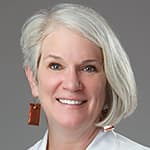
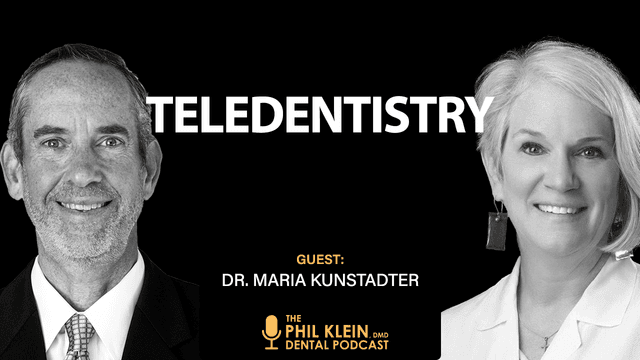
Teledentistry Expert & Practice Integration Consultant
Private Practice · Teledentistry Industry Pioneer
Read full bio
Dr. Maria Kunstadter is a seasoned dentist with a wealth of experience in teledentistry. Over the past decade, Dr. Kunstadter has been at the forefront of this innovative approach to dental care, integrating it seamlessly into her practice while also dedicating herself to educating and assisting fellow dental professionals in maximizing the potential of teledentistry.
How can dental practices capture the 76% of weekly hours when their offices are closed? With teledentistry evolving from a rural healthcare solution to a comprehensive practice enhancement tool, the opportunities for urban practices are greater than ever imagined.
Dr. Maria Kunstadter brings over a decade of pioneering experience in teledentistry implementation and education. As a practicing dentist who has been at the forefront of integrating telecommunications technology into dental care since 2014, she has dedicated her career to helping fellow dental professionals maximize teledentistry's potential for practice growth, patient convenience, and clinical efficiency.
This conversation explores the explosive growth trajectory of teledentistry—from a $1.5 billion market in 2022 to a projected $8.15 billion by 2032. Dr. Kunstadter reveals how practices can leverage virtual consultations to optimize chair time, enhance patient access, and create new revenue streams while maintaining the same standard of care as in-person visits. The discussion covers practical implementation strategies, from staff training to patient onboarding, and examines how artificial intelligence is revolutionizing diagnostic capabilities in virtual care.
Episode Highlights:
HIPAA-compliant teledentistry platforms are essential for secure patient communications, eliminating the use of consumer applications like FaceTime or Zoom that lack proper healthcare security protocols. Dedicated teledental applications provide secure patient records, billing capabilities, and the same documentation standards as traditional in-person consultations.
Virtual consultations can reduce in-person appointments by approximately 25%, freeing up valuable chair time for revenue-generating procedures that require hands-on care. This approach allows practices to use setup and cleanup periods for virtual patient interactions, maximizing practice efficiency and patient throughput.
Mobile hygienists can utilize portable equipment and intraoral cameras to provide community-based screenings, transmitting digital records back to the supervising dentist for treatment triage. This traditional teledentistry model expands access to underserved populations while creating new patient acquisition opportunities for the practice.
Artificial intelligence integration offers automated photo assessments for periodontal disease risk and caries evaluation, plus radiographic interpretation services for second opinions on complex treatment plans. These AI tools help validate treatment recommendations and increase patient confidence in proposed care, particularly valuable for patients returning after extended treatment delays.
Off-hours virtual emergency consultations address the reality that dental offices are only accessible 24% of weekly hours, leaving patients without support 76% of the time. Licensed teledentists can provide immediate triage, prescribe medications when appropriate, and ensure continuity of care for traveling patients across state lines.
Perfect for: General dentists seeking practice efficiency improvements, specialists interested in expanding patient access, practice managers evaluating new technology integration, and dental team members exploring hybrid work opportunities in teledentistry applications.
Discover how teledentistry can transform your practice from a traditional service model to a comprehensive, accessible healthcare solution that meets modern patient expectations.
Transcript
Read Full Transcript
This transcript was automatically generated and may contain errors or inaccuracies. It is provided for reference and accessibility purposes and may not represent the exact words spoken.
Well, again, don't use FaceTime. Don't use Zoom. Those are not HIPAA compliant. And the one thing you don't want to do is get yourself in a position where you're sharing information with a patient that's not secured. You want your patient-doctor encounter to be the same experience as you would if the patient's sitting in the chair beside you.
Welcome to the Phil Klein Dental Podcast. So we're living through a time where there continues to be relentless advancements in technology. We see it every day. And these advancements affect every phase of our life. As dentists, technology is integrated into almost everything we do in our office. But there is one area of technology that is somewhat ignored in the practice of dentistry, and that's teledentistry. Perhaps we look at teledentistry as something that would be good for practices in remote areas.
but not particularly useful for urban practices where patients can easily get to their dentist. But there's actually a lot more below the surface when it comes to teledentistry, especially today where we continue to see increasing demands for convenient healthcare solutions. In today's dental world, teledentistry emerges as a tool that holds immense potential for every dental practice.
To tell us more about it is our guest, Dr. Maria Kunstadter. Over the past decade, Dr. Kunstadter, a practicing dentist, has been at the forefront of this innovative approach to dental care, integrating it seamlessly into her practice, while also dedicating herself to educating and assisting fellow dental professionals in maximizing the potential of teledentistry. We'll be getting to our guest in a second, but first...
As a dental healthcare professional, you might already know that 3M Healthcare is now solventum, and one of its next-generation products is 3M ClinPro Clear Fluoride Treatment, available in a new rosin-free water-based formula, with soluble fluoride ions immediately available to deposit on the tooth.
ClinPro Clear Fluoride treatment needs only 15 minutes of contact time. Plus, with less waiting time to eat or drink after application, it's even easier for your patients to say yes. Its uniquely designed LPOP delivery system ensures a smooth and professional application process. In clinical studies, hygienists found it fast and easy to apply.
and patients rated their experience an impressive 98 out of 100. So if you're looking for effective fluoride uptake in a rosin-free, water-based formula, try 3M ClinPro Clear Fluoride Treatment from Solventum. To learn more, visit solventum.com. Dr. Kuhnslider, welcome to the show.
Well, thanks for having me again. Yes. Yeah, we really appreciate you joining in and giving us your feedback on this pretty important topic. And you are considered one of the experts in teledentistry. You kind of started the whole thing really rolling in 2014, as you mentioned on a previous podcast. And you were at some meeting where they were talking about telemedicine. And you were thinking, hey, you know, this would...
certainly, or this could certainly apply in the dental field. And you took it and ran with it. So hats off to you for taking advantage of something that is certainly necessary in the dental profession. So to begin this podcast, what is the teledental market look like right now? And what is it going to look like in the near future? Well, I'm glad you asked that because in 2022, the US market for teledentistry was $1.5 billion. That then did include
And that includes clear aligner companies and et cetera. So it does include every kind of company that's using teledentistry to work with their patients. And by 2032, it's projected to be $8.15 billion. So an eight times growth over the next 10 years. And that's huge. That's 18% a year growth. And again.
Don't be left behind. I love the person that did the blockbuster presentation. It's not my original. He said, how many blockbusters are left out there? And we don't want dental offices to be the blockbusters if they don't grab technology and move forward. Yeah. So when you talk about these numbers, like, for instance, the one billion and change, what does that number represent? Does that number represent the dollars that are in reimbursement?
to the dental practices for the business growth i i believe that's growth in business and again that would all stem from being able to generate revenue but again that includes clear aligner companies that were they're huge there's all all sorts of other companies now that are using teledentistry as well and the teledental consultation and again i last time we talked about hygienist and mobile dentistry and these these
applications are growing like wildfire with a very enthusiastic group of people. So all aspects of education, again, you and I are doing teledentistry because we're using telecommunications technology to educate your members or your people that are on the call. So it includes all aspects of using, again, telecommunications to work in the dental arena. Yeah. So outside of the clear aligners, tell us how teledentistry can really
boost efficiency in a practice and give us some examples. Yeah, absolutely. I love teledentistry because of what it can do. And what, you know, initially, if you plan your schedule, you can see probably 25% of those patients that, and again, if everybody will now, after hearing this presentation, go to their practice.
and kind of monitor oh i didn't really need that person in the chair oh i didn't really need that person this year you'll start adding up all the visits you could do virtually lead let the patient stay at home or stay at work and you do the consult from your office while the staff is cleaning up or setting up and open up all that chair time for additional revenue generating procedures that do need hands-on care
You can use teledentistry when you do your virtual consults with your own patients or new patients to triage the treatment that you have, you know, figured the patient needs into the right time slot that now is open because.
You're offering virtual care and people don't have to sit in your chair. We are encouraging people to move into a hybrid work-life combination where the hygienist can have the office one day in states that hygienist doesn't have to have direct supervision. And then the next day, the dental patients all get the entire office. And on the days that they're not in the office, you can do follow-ups, triage, teledental consultations, treatment planning, all sorts of things.
the comfort of your own home and enhance the work experience because
staffing is hard to find nowadays. And if you can offer them a new perspective on dentistry, you'd be able to keep, engage, recruit, and keep staff for longer as well. So many ways to make the dental practice moving into the new era and a new and exciting place for people to work as well. Yeah. So give us an example of how the dental hygienist utilizes teledentistry. It helps with efficiency. How does it help to grow revenue? And how does it help to just
increase the patience of record. We offer a marketing kit to let your social media that we spend thousands of dollars on let people know that you are offering virtual care. If you go into some of these huge online sites like WebMD and Healthgrades, one of the first questions asked is, does this practice offer virtual care? You need to be yes to that because that's what people are looking for now. People are looking for the...
people that are applying new technologies to their own care and convenience. The patient wants convenient care, trustworthy care, and wants to get to know you before they come into your office. So hygienists can, the traditional teledentistry model by Dr. Glassman was the dental home where a hygienist would take a nomad and a camera and, you know, a portable chair and go out in the community, send all those records back to the.
dentist sitting in the office and the dentist would say, put sealants on that child, doesn't need to see me. Ooh, that one needs to come in for fillings. So that's, you know, doing auxiliary wheel and spoke, spoken wheel kind of practices where a hygienist can go out in the community, but they all come back to the dental practices. Definitely one way that hygienists get out and about and able to contact and work with the community better. So is what you just described still today, very much the way things
are being utilized by hygienists where they go out in the field and they visit patients that are not coming into the actual office and kind of screening them and sending back the digital information. Then the dentist decides whether they need to actually come into the physical office or not. Is that the prevailing methodology for hygienists to use teledentistry? It is for hygienists. And then we have urgent emergent care.
uh consults for dentists we we actually do remote patient care as well we're uh homebound i think we discussed this last time homebound patients can be screened at their home ipad is taken in with a caregiver or the licensed nurse practitioner or whatever and the patient can have a consult in their home and recommendations can be made for that patient care so that they don't have to be trundled out because an unexperienced person sees something goes oh my god
It's cancer. But the right person says, oh, it's a denture sore. Let's leave it out for a few days and look at that again next time.
Nursing homes. No, it is the most traditional way, but it's being expanded into nursing homes. So again, the patients don't have to be taken out of the practice. They can be treated at the nursing home, screened and treated. Many applications. Again, mobile dentistry and medical dental integration. Our next effort is to try and get.
teledentists into medical offices and we have a telehealth company working with us so put telehealth company in your office with our system and start doing blood sugars analysis there's new technology that can be just a saliva assessment for glucose and and bacteria etc in the chair and start doing blood pressure testing on patients and unfortunately we're not very good about doing blood pressure
even on blood pressure screenings on our patients unless we're going to do extractions very often. So make it a routine to integrate your patient's total health into their care will also expand your patient load because people are looking for more care from all of their health care providers. Right. And this is especially important due to the fact that the most common health care provider that patients visit is the dentist and for them to have that collaboration with the medical side.
through teledentistry, telemedicine is a fantastic advantage for the patient. Absolutely. So what kind of teledentistry tools should a dentist have? And I'm talking about secure teleconferencing software, all that kind of stuff. What is important that the dentist has in order to move forward with a teledentistry protocol? Well, again, don't use FaceTime, don't use Zoom.
Those are not HIPAA compliant. And the one thing you don't want to do is get yourself in a position where you're sharing information with a patient that's not secured. So the teledental app.
apps all are a secured environment um that have a patient record you want you want your patient doctor encounter to be the same experience as you would if the patient is sitting in the chair beside you you want it secure you want to be able to gain and record your interactions and the patient information and have a chart if you have a chart you know teledental chart with the patient then that's when you can bill and i know you wanted to know about billing that's when you can bill for teledentistry consultations because it's just
like having that first interaction with your patient sitting in the chair. So there are billable codes for doing the interactions. There's billable codes for blood pressures, for blood sugars, for all the things that you can enhance your patient care with and your practice. And tell us about the visibility of the mouth. How does the dentist see the patient's mouth? Where's the camera coming from and how does that all work?
If you're in the office, it can be an intraoral camera. 95% of our patients use their cell phone. And believe me, they can stick those phones all the way back. And you can see everything. And even if you and I were talking, and I am just on my laptop right now, you can see all of my teeth. You may not be able to see the wisdom teeth as well, but you can see all my teeth.
The right specialist, if a patient says, I broke my tooth, you know, I don't know that I need to see it specifically, but they do show it to us, but it needs to be fixed, obviously. So it's a matter of getting the symptoms recorded, the patient's chief complaint, and then some visualization. Again, you're not drilling on that patient or crowning that patient on teledentistry. You're getting an assessment, a triage that can be done with, you know, the kind of visualization easily done from a cell phone.
Yeah. Well, I mean, as an endodontist, I would certainly want to see the tooth that was fractured just to see if there's pulpal involvement. And if the camera, yeah, if I could see that visually through teledentistry, that would be helpful. Yeah. But because sometimes a pulpal exposure may be asymptomatic, but it's now exposed to the oral cavity. We'd want to get that treated as soon as possible. So there seems to be a lot of applications for teledentistry. How does AI enhance teledentistry?
We'll be getting right back to our guest in a second, but first, if you're on the lookout for a versatile material that serves as both a protective liner for composites and is ideal for direct and indirect pulp capping, let me introduce you to Theraquel LC from Bisco.
Its unique hydrophilic resin-modified calcium silicate formulation provides a strong, stable liner that reduces post-op sensitivity. It's radiopaque and incredibly easy to apply. Once light-cured, Theracal LC is ready for use with any bonding technique. What's even better, Theracal LC is non-soluble, meaning it won't wash out over time.
Plus, it promotes calcium release, which supports secondary dentin bridge formation, and that's perfect for those tricky pulp exposures. When you're working deep in a tooth prep, you want reliable protection for the dental pulpal complex. You want Theracal LC, a top choice among independent evaluators and thousands of dental clinicians. For more information on Bisco's full line of pulp protection products, head on over to Bisco.com.
Well, yes, I'm glad you asked that too, because we've added a company that we're working with that does two forms of AI assessment for that new patient or patient just curious about their oral health that hasn't been to a dentist in a while. They can do a photo assessment, which is run through the AI and it sort of grades them on mild, moderate to severe.
periodontal disease or gum disease they don't call it periodontal disease um you know carries risk assessment just from the photos that there are taken and sent in by ai because again ai has seen thousands of those photos before and then at the end of that ai screening um it says now talk to a dentist about what to do about
you know, your outcome from this result. So that's a real great one for just anybody that's curious, that is not sure what they should do and how they should treat, and they get all the statistics on their risks and their status of gingivitis or gum disease, and then talk to a dentist with these results to find out action steps you need to take. The second thing we're doing with AI is the radiographic assessment.
with AI, a second opinion. And as you know, since COVID, people are going back finally into the dentist's office, but they've avoided it for a very long time. And they're coming up with far more extensive and expensive treatment plans than they've ever had, mostly because of the time lapse that they spent not getting care. And they're becoming a little bit insecure about whether this is appropriate treatment for them.
Almost everybody has a digital x-ray format now that they can upload the digital x-rays into our system. Those are assessed by AI. A practice can use the same kind of system with us for that complicated case to help the patient see and visualize and understand that the arbitrary AI is saying, this is all that you have to have done. And the dentist is saying, this is what we need to do. And this is how you're going to do it. So second opinions and treatment planning are the second.
portion that we use the ai for for radiographic interpretations are those ai companies popping up left and right or they're just one or two of them around um so i'm seeing more coming along it's an expensive and extensive
software development program and then validation, et cetera. So they're not coming across as much as some products, but I do see more coming out, yes. Yeah, and I would think that these AI companies are going to become more and more sophisticated as the software advances, but it seems to me that's going to be a huge revenue boon for those kinds of companies using AI to, you know, they have millions of x-rays that they've scanned.
this software scan and then they could compare it to something or clinical images where they can compare the the color of the gums um again that the color of the gums is also variant among different people so yeah it's uh it's it's a fascinating topic and there's no question that
There are many, many people, like we talked about in a previous podcast, there's 60 million people that fall into this HPSA designation, which is dental health professional shortage areas. And by being in this shortage area, they are challenged to get access to oral health care.
you know, teledentistry to get to those patients, that would be amazing. And then the decision from there would go, can this patient be treated without coming into the dental practice with regimens or having a mobile hygienist go over to their home or their facility and so forth. Tremendous opportunities to it. And you've kind of dedicated the last, what, 10 years of your life to this? Yes, I have. And what I love to say about rural and remote patients is,
Teledentist takes care of that first appointment of understanding what needs to be done rather than, you know, Montana is our favorite. Patient had a 90-minute drive one way to the dentist's office. And if they got the, here's what we're going to do, and you're set up to have the fillings done when you come in rather than driving 90 miles and say, oh, you need fillings. Let's get you back. You know, getting that triage appointment done through virtual care and then following up once they're back home.
You know, in a day, you know, do a virtual consult. How are you doing? How's that feeling? Does it feel better? You know, being able to do a virtual follow-up on any procedure. I don't know, you're an endodontist. Being able to contact the patient two days later and say, how's the tooth feel? Rather than them coming in and saying, you know, having to come to the office for that kind of follow-up visit.
saves time it is earth day today and it saves car traffic and gasoline and patient convenience and it's just a really great way to enhance practices by marketing you're providing virtual care when it's appropriate and when someone calls into us on an immediate urgent problem
We do, again, the video consultation. If their swelling is asymmetrical and looks life-threatening, by golly, we send them to the emergency room. But you know, in the past years, that's only happened about a handful of times that somebody really needed to be seen in an emergency room. So we can save time, save money, save gas, since it's earthy. I'll speak to that. And patients are more apt to take care that's convenient.
The bottom line is there's a lot of diagnostic work that could be done without the patient in the dental chair. That's the key thing. If you could set up the scenario for what the actual treatment day involves, like you mentioned, you know when that patient comes in, you're going to be doing six composites and maybe a crown and you're set up for it for someone who's traveling 90 minutes. Did you say 90 miles or 90 minutes?
90 minutes is what you said. Well, if you're going 60 miles an hour, it's still the same, right? 90 minutes for 90 miles. So in general, do you think every dental practice should at least be exploring teledentistry and then build on it? So what's the process of transforming an office where you are at that sweet spot where you're using teledentistry the best you can for that particular office?
I love that because that's basically, you know, we train staff. You know, we have the lunch and learn, although we don't provide lunch because it's virtual. But we do it with the staff because the staff has to be the key players in implementing everything. And, you know, the scheduling has to be done appropriately. And then, you know, again, we give a media kit out so that your SEOs, you know, your social media marketing, all that is telling your current patients and your community.
um that you're you're doing virtual kit you're providing virtual care and then what i like to do is you want to ramp up is when patients come in for their appointments let me see your phone i'm going to load this app on here if you want me to and then if you have a problem or you need to contact us sometime you can call us you know on through the app and we can we can see you without you having to come in and explain it to people
As they come in, helping them load it onto their phone makes it really a great transition for the patients as well. And then the other thing our practice does, our company does, is we'll take those off-hour calls. Did you know, Phil, that a dental office is only open 24% of the hours of a week? No, I didn't. Is that mind-blowing? Yeah, I did not know that. No.
how many hours are in a week and look at nine to five, Monday through Friday, Thursday, and maybe not Friday, or it can be even less than 24% of the time of a week. So they're only open 24% of the time that leaves 76% of the hours of a week that patients can't get through to offices. And I can tell you in our survey, getting through to a dental office, when you call in as a, as a new patient or a patient, it's not a patient of records, impossible off hours and getting through as a patient of record.
I can't tell you, and I'm sad to tell you, how many times somebody comes to the teledentist and they'll say, I happen to even have an appointment next week with my dentist, but I can't get them to answer my calls. Our company will pick up their off-hour calls for a price and take care of those for them. If they're traveling or they want to be away or they don't want to take calls, we can add that service as well so those hours are covered. We're legally responsible.
to be available to our patients of record. But those 50% of the population that don't have a dentist still need you and can really expand your patient load. Yeah. So you mentioned in another podcast with me that most websites that you visit, most dental websites do not have any link or button to say, talk to a dentist virtually now. Correct. That's a great advantage. But for a regular dental practice, they can't have some dentist.
sitting there waiting for somebody to click that button all hours
So you're saying that your company takes over there. So if I'm a patient of record or not, and I go to this doctor's website and I have some problems on Sunday morning at 10 in the morning, I think I just broke my crown or fractured my porcelain or I have pain in my lower left molar. I click that button and what happens then? That's a perfect question because Dr. Jones's practice will have his own.
we call it room his own url so when they click on that button from dr jones's office one of our dentists in the state and you have to have the dentist in the state that the patient's currently in
And this is perfect for your patients that travel as well, because if you're in California, but your patient's in New York and they have a problem in New York, we have dentists in New York that can see them. So when that patient, the doctor will say, I'm glad you called for Dr. Jones's office. My name's Dr. Smith. How can I help you today? And then.
Once they've triaged and decided what the patient needs and determined ways of helping them, then we'll put them back to the practice and say, we'll have them call you on regular business hours and get you set up to come in for getting that tooth fixed. And it's just a great circle of never leaving your patients hanging. It's terrible. And I hate it when patients call and say they have a dentist, but they can't get a hold of them.
But this is a perfect opportunity to not leave your patients hanging, to have them have access to help. And in the fear of they're not going to go anywhere because it will be your link, your office, your patients will always come back. Even the new patients will always come back to that practice that was contacted through that website. So if the patient of record is in New York, but they live in California, their dentist is in California and they live there, but they're traveling in New York and they use this link and it goes to you.
and you take a look at their situation and they do need to see a dentist while they're in New York, you send them to a dentist in New York? We can. Yep, absolutely. Or a lot of times traveling, it's like, well, you're going to be home in three days. We're going to get you on some medication if need be. Here's some ways to make it not.
you know, cut your tongue as much. And, you know, you can manage for three days and let's call Dr. Jones's office and get you an appointment the day after you get home to have it repaired. Or if it's really a critical situation, we can get them in the office in New York while they're there. Yes. Okay. So your company actually will prescribe antibiotics without talking to the dentist that is treating this patient? Yes. Okay. Very interesting. And because you're licensed.
In that example, you would be licensed in California as well. So obviously the dental practice that engages with you gives you the responsibility to care for that patient through teledentistry, covering that dental practice when they're not available. Exactly. Amazing. That's a fantastic solution to a very chronic problem, I would say. Oh, it is. And the number of times, the number of ones that say,
If this is a dental emergency, call 911. I mean, that is written on people's websites for God only knows what reason. I'm sorry. Why would you call 911 for a dental emergency? That's a legalese thing. They're trying to offset liability, potential liability. And they're saying, hey, well, 911, that's insane for a dental emergency. That doesn't make it. I've heard that on a...
When I call my physician's office, it'll say if you're having a medical emergency. Medical emergency, yes. But I've never heard a dental emergency calling 911. I can't tell you out of all the calls we had what percentage had that, but a large number of people had that. We can't even get police to show up if there's like a bank robbery here in Austin, Texas. Yeah. I don't think they're going to be coming for a loose crown. No. Yeah.
But anyway, the things that are Achilles heel, we have many Achilles heels in dentistry, and there's many ways of addressing them with the right specialist at the right time when the patient needs you and just having them have access to that solves so many problems for practices, for sure. And, you know, we didn't most of us didn't go into dentistry.
um to take 24 hour a day calls that's not why we wanted to be dentists but golly gee we have dentists that are we work with the disabled dental association so we have dentists that can't
practice anymore that love sitting at their computer taking calls we have retired dentists that didn't quite get enough in their retirement funds so they just really are enjoying still being able to use their skills and practice we have you know post drop postgraduate students are working on their specialties that love to be able to earn some money while studying at home and we have a lot of very enthusiastic people that love the one-on-one consultation with a patient and and it shows we have almost a five star it's like four point
nine and five star rating on Google. Patients love that one-on-one interaction and that can enhance your practice as well. Yeah, no, absolutely. Yeah. And the joke about the policemen here in Austin, they're great. I take that back. I don't want anybody who has a spouse who's a policeman saying this guy thinks it. But that was only a joke. We're very happy with our police department. But no, you're making great points. There's no question about it.
I think the service that you're offering is amazing. And I think it's fantastic for a retired dentist to have the ability to do what you just said, which is to stay relevant, to have a purpose. Because longevity is directly tied into purpose. When you lose your purpose in life, your lifespan can be shortened. That's absolutely true. So therefore, I'm going to live forever, right? I hope so. I hope you do.
Because I'm transforming this industry, and it's a huge job, and it's going to take me a long time to get it done. Yeah, you're certainly a trailblazer, and it's always great to have trailblazers on our program, and we're really happy to have you here. And what's the best way to reach you, Dr. Kunstadter, for our audience, if they have any questions? Sure. First name's Maria, and then K, like Kunstadter, and then at the teledentists, plural, dot com. Yeah, and Kunstadter is spelled K-U-N-S-T-A-D.
T-E-R, depending if you're listening to, if you're listening to this on Apple Podcasts or Spotify, you may not have her name written out completely, but it's Dr. Maria Kunstadter, K-U-N-S-T-A-D-T-E-R, look her up. And also we're always looking for more teledentists so they can contact us to look at doing this on a part-time basis or offering to their practice too. Excellent, excellent. Thank you again and have a great evening. Thank you for having me.
Clinical Keywords
teledentistryDr. Maria Kunstadtervirtual consultationsHIPAA compliant platformsmobile hygienistsAI diagnosticspractice efficiencyoff-hours emergency carepatient triagedigital radiographsperiodontal screeningcaries risk assessmentremote patient monitoringdental photographyintraoral cameraspatient accessrural dentistrynursing home careDr. Phil Kleindental podcastdental educationtelecommunications technologyvirtual carehybrid practice modelstreatment planning