Cosmetic and Restorative Dentist · Esthetic Professionals Faculty
UCLA School of Dentistry · UCLA Center for Esthetic Dentistry · F.A.C.E. Institute · Esthetic Professionals · Legion.Dentist
Read full bio
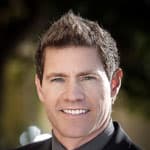
Dr. Todd C. Snyder received his doctorate in dental surgery at the University of California at Los Angeles School of Dentistry. Dr. Snyder has learned from and worked under some of the most sought after leaders in dentistry, refining his skills in comprehensive, extremely high quality aesthetic dentistry and full mouth rehabilitation. Furthermore he has trained at the prestigious F.A.C.E. institute for complex gnathological (functional) and temporomandibular joint disorders (TMD).
Dr. Snyder lectures both nationally and internationally on numerous aspects of dental materials, techniques, and equipment. Dr. Snyder has been on the faculty at U.C.L.A. in the Center for Esthetic Dentistry where he co-developed and co-directed the first and only comprehensive 2-year postgraduate program in aesthetic and contemporary restorative dentistry. He currently is on the faculty at Esthetic Professionals. Additionally, Dr. Snyder is a consultant for numerous dental manufacturing companies and has had the opportunity to research and recommend changes for many of the materials now being used in dentistry. Dr. Snyder has authored numerous articles in dental publications and published a book on contemporary restorative and cosmetic dentistry.
Dr. Snyder also founded and is CEO of Miles To Smiles a non-profit mobile children's charity that helps indigent and underprivileged children.
What if you could practice high-quality dentistry with just one operatory, no traditional employees, and work only two days a week while maintaining excellent income? The traditional practice model may not be the only path to success.
Dr. Todd C. Snyder brings over 30 years of experience in comprehensive aesthetic and restorative dentistry to this discussion. He received his DDS from UCLA School of Dentistry and trained at the prestigious F.A.C.E. Institute for complex gnathological and TMD disorders. Dr. Snyder served on the faculty at UCLA's Center for Esthetic Dentistry, where he co-developed the first comprehensive 2-year postgraduate program in aesthetic and contemporary restorative dentistry. He currently teaches at Esthetic Professionals, consults for numerous dental manufacturing companies, lectures internationally, and is the founder and CEO of Miles To Smiles, a non-profit mobile children's charity.
This episode explores the dramatic shifts in dental practice ownership and career paths for new graduates. Dr. Snyder shares his bold decision to leave his established California practice after 30 years and start completely over in Las Vegas with a radically different business model. The conversation examines how rising dental school debt, the growth of DSOs, and changing generational attitudes are reshaping the profession, while also revealing opportunities for those willing to think differently about practice management and patient care.
Episode Highlights:
The modern practice startup model leverages portable technology including mobile digital sensors, handheld x-ray units, and tablet computers that can move between operatories, dramatically reducing initial equipment costs compared to traditional setups that required dedicated equipment in each room. This approach allows new dentists to start with just one or two operatories and expand gradually.
Digital marketing strategies enable targeted patient acquisition rather than general advertising, allowing practitioners to focus on specific patient demographics and treatment types. This hunting approach contrasts with traditional hope-based marketing where practices wait for patients to find them through general advertising or referrals.
The streamlined practice model eliminates traditional overhead through strategic partnerships and technology solutions, including 1099 independent contractors for chairside assistance, referral relationships with specialists for emergency coverage, virtual assistants or AI systems for phone management, and credit card processing for immediate payment without insurance billing complexities.
Young dental graduates should prioritize learning marketing and communication skills over additional clinical procedures like implant placement or laser certification. The ability to attract patients and convert consultations proves more valuable for long-term success than expanding technical skill sets without the ability to fill the schedule.
The Pareto Principle applied to dentistry suggests that 80% of practice revenue typically comes from 20% of procedures performed. Identifying and focusing exclusively on high-value treatments while referring other work to specialists can create a more profitable and sustainable practice model with reduced stress and overhead.
Perfect for: General dentists considering practice ownership, recent graduates evaluating career paths, established practitioners seeking practice model innovation, and dental entrepreneurs interested in non-traditional business approaches.
Discover how to build a thriving dental practice that prioritizes lifestyle, profitability, and patient satisfaction over traditional volume-based models.
Transcript
Read Full Transcript
This transcript was automatically generated and may contain errors or inaccuracies. It is provided for reference and accessibility purposes and may not represent the exact words spoken.
You're listening to the Phil Klein Dental Podcast.
As a dentist, the prospect of starting a new practice or uprooting your established one to move to
a new city can really be daunting. There's no question about it. There's a lot of challenges from
establishing a patient base to navigating local regulations, dealing with competition and so forth.
And with all that, we have the financial risks, which can be significant, often requiring
substantial investment in equipment, marketing. and overhead costs. And then,
of course, we have to deal with the fear of failure and the uncertainty of the future. That can be
overwhelming, making it tempting for many of us to just stick to what we're doing, stick with the
familiar and the comfortable, even if it means sacrificing career satisfaction. But at some point
in your life, maybe even when you first get out of dental school, depends on the individual, in
order to achieve true career fulfillment and personal growth, We as dentists must be willing to
take calculated risks and venture into the unknown. And embracing change opens up new opportunities
for innovation that holds true for any industry, any profession. For those of us who do want to
take this leap and take some risk, we do have some things on our side, like the advancements in
technology and the smart use of digital marketing. In fact, dentists today have more tools at their
disposal than ever before to start small and grow their practice gradually, which makes sense.
So by embracing these new technologies and adopting a growth mindset, we as dentists can pave the
way for success in an ever-evolving industry landscape. We can be more flexible. And by being our
own boss, obviously, that could lead to more career satisfaction. Today, our guest,
Dr. Todd Snyder, has done all this. He's an amazing guy. He's a race car driver and business owner.
He moved from Southern California to Las Vegas to start a new practice after 30 years.
So he's going to tell us his story, a little bit about Dr. Snyder. If you don't know him, he's a
popular speaker on VivaLearning.com, cosmetic dentist, international author, lecturer, and
consultant to dental companies. He has his own e-learning program, which also does learning in
person, called Legion.Dentist, L-E-G-I-O-N.Dentist. Dr.
Snyder will be joining us in a second. But first, are you looking for an air-driven handpiece that
rivals the power and torque of electric? Well, I have good news. It's finally here. It's called the
T-Mac Z and it's from NSK, a company we all know and trust as a world leader in dental handpieces.
In addition to being lightweight and ergonomic, this revolutionary air-driven handpiece delivers
unprecedented 44 watts of power, allowing it to cut through tough zirconia smoothly and quickly.
In fact, the T-Mac Z reduces overall cutting time by 30%. That means less chair time,
reducing the burden on you and your patient. Take a test drive of the TMAX Z air-driven handpiece
from NSK. For a free 10-day trial, go to nskdental.com and find your local rep to inquire.
Experience the power and excitement of the TMAX Z series. So we're very happy to have him on the
show. Dr. Snyder, thanks for joining us. Thanks, Phil. Pleasure to be here. So in the old days,
most dentists fresh out of dental school either did a residency or went out in the real world and
started working as an associate in an existing practice. I mean, that was kind of the norm. And in
many cases... they would eventually buy out the owner and become the practice owner themselves.
And then there were some smaller percentage of dentists that would purchase or start their own
practice from the get-go. It wasn't that common, but it happened. And they would buy these
practices or they would start their own practice right out of dental school. So with the
environment that we're in now, how have things changed today in comparison to what I just
described? Well, you know, I think the... The cost of school nowadays is causing people to want to
go work for somebody. So you go, OK, well, where are they working then? You know, the startups are
very few nowadays, it would seem. So working for someone else as an associate, which from what I'm
saying is also hard to find a good associate position. And so the majority of people, if you're
talking to like the dental schools, will tell you that the majority of the graduates are going to
DSOs nowadays because of the debt and because of the opportunities that are there for them. What is
that doing to the dream of being an entrepreneur in dentistry where you own your own business and
can actually navigate your own future in your own control? What's happening here? You know,
that'd be a great question to pose to the younger generation that's coming out. Do they not want
the headache of running a business? that they just want to get a paycheck and just be an employee.
Because you look at the kids nowadays that don't even want to drive a car anymore and get the
driver's license. Like when we were young, it was like when you're 15, you're just chomping at the
bit to get that license, that freedom to go do what you want. And it sounds like to some extent,
many people are of the mindset, like, I don't want to run the business. I don't want the headache.
I just want someone to pay me and I want to be paid well is what I hear. And so. For the same
token, I heard doctor offices looking for associates that they're saying it's hard to compete
because the DSOs offer so much to these younger students coming out. You know,
back in the day when I was in dental school, I think it was about 60-40 men to women as far as our
dental school class, possibly even higher, 65-35. And now I'm noticing my alma mater,
Penn, is going to be graduating more women than men, 52-48 I think at this point.
which is nice to see for sure that there's more women getting into the profession, no doubt. What's
your thoughts on that? Why is that happening? So I think there's a shift just in the culture of who
we are as a community, what we're doing, where we want to go with things. I don't know if there's
anything wrong with that. But I think there's a big shift in the world right now. And so I think
that's part of the reason you're seeing a lot of women going into it. It's a great profession that
you can set your own hours. You can have the lifestyle that you'd like. And for the same token, if
you do have a family, you can cut back and or have an associate or work part time in a DSO.
So I think it's a fabulous job for anybody, including the women. Yeah, no, I think it's great.
Women are playing a big role in leadership, too, in the KOL area, which is really good. It's good
to see women up there on the podium. because they have so much to offer from their perspective. And
there's great mentor groups for women as well. So power to them. I hope they continue to excel in
dentistry and play such a big role as they have been. So if you had a son or daughter graduating
dental school today, what would be your advice to them regarding their career path?
You know, mine's going to be different because everyone's going to instantly start thinking, oh, go
get, and I see it online and social media. I watch a lot of the groups, the younger generation
talking on there. It's like, okay, first you got to go learn how to do implants. You got to be
great at placing implants and you got to do a liner certification so you can do that too. And that
is the norm that I hear out there all the time. And I'm going to tell you, that's not how you
become successful. Now, granted, you can do fine doing that, right? But what I would tell my son or
daughter, I said, go learn how to market and learn how to communicate. Because if you can market,
you can literally make it rain, whatever type of patient you want. Now you can set up business
anywhere you want and do anything, anytime, as opposed to someone who just knows how to do the
dentistry, but they don't know how to market. They don't know how to get patients in the door. And
so it doesn't matter how great you are at your craft and what you know, if you don't get the
patients to treat. So again, marketing is what pulls them in. If you're great at marketing and
understand marketing, that's no matter what industry you're in is phenomenal. From there, if you
can communicate effectively to get people to say yes and move forward, then that's another big
aspect. So I'd say those two things are more important than learning all the dentistry that we
oftentimes think is the key to success, but it's not. And that's great advice. And what would you
say to them regarding the debt that they're in? So they've accrued some debt in college that's
carried over to dental school. Maybe they even went to specialty school. that debt affect their
decisions as far as being on their own, working for someone else or working for a DSO?
You know, I think it's a personal thing that each person has to decide for themselves. But what I
find is that the younger generation from what I'm seeing on social media is complaining that, you
know, they're in debt, you know, half a million, six, seven hundred thousand. It's like, OK, well,
when I got out 30 years ago, I was in debt 400,000, which is really no different than today.
Didn't even come into my mind. Because I had a license, a degree to go make money. You know,
literally everyone needs a dentist and everyone's going to keep coming back as a consumer. So in
that sense, you go, I'm not worried about the debt. I'll pay that back. It's just a matter of how
do I want to pay it back? Do I want to work for a DSO and have them pay me lots of money and I do
whatever they say? Am I okay with that? Or me being bullheaded and stubborn. It's like,
okay, I'm going to go work as an associate role. And learn things and get paid well. But at some
point, I'm going to jump out quickly because I don't like being told what to do. So for me, it's
like I need to go open an office quickly. So each person has to decide what they're willing to give
up to be receiving the revenue or income and what level of comfort or discomfort as far as getting
to the goal that they have in mind for themselves. So for me, it was opening an office from scratch
after working for an associateship for like five years in different offices and learning things.
We'll be getting back to Dr. Snyder in a second, but first, if you're looking for a state-of-the
-art denture system, then you need to check out Ivotion from Ivoclar. The Ivotion denture system is
a fast and predictable process that delivers a finished denture out of a single disc for increased
efficiency with attractive aesthetics. Your impressions are quickly and easily digitized in the
lab, and the intuitive software allows the denture to be individually designed and customized with
high accuracy. And here's the amazing part. In only one uninterrupted milling cycle,
without bonding, the Ivotion disc is transformed into a denture with both base and teeth material.
And when the milling process is done, all you need to do is polish. The Ivotion denture system is
truly a game changer in denture fabrication. The dream of finishing a denture out of one single
disc with unparalleled efficiency and quality is now a reality. To learn more,
visit ivachlor.com. So talk to us about the opportunities for a dentist straight out of dental
school as an associate looking for a job with another dental office. What do the opportunities look
like? You know, part of it depends on, you know, location, you know, geographics. Where are you?
You know, if you're in the middle of nowhere, then yeah, it might be harder to find a job. But with
all the DSOs wanting to grow and expand and build their empire, they're always looking for more
people. Like in that sense, you could say, well, there's a lot of job openings out there. It's just
a matter of are you willing to take that job and drive somewhere or move somewhere? You know,
that's on you as far as if you're willing to do that to make ends meet and be paid.
But if you're stuck saying, well, I got to be in this one location and it's totally saturated and
every dentist student is already there trying to get a job, then yeah, it's going to be a lot
harder. But I think there's plenty of jobs out there if you're willing to. put in the time and
effort. What about the opportunity specifically in a private practice, not affiliated with a DSO or
a corporate owned entity? I think those are less and less nowadays. I think you're seeing so many
being sold off. And I think to some extent, a lot of these companies are struggling and don't have
the ability to literally have space for an associate like they used to. I think the margins are
getting tighter with insurance companies paying less and less each year. It's not as much profit to
be able to say, let's keep seeing lots of patients and bring in associates. So what's the future
for the private practice that's not corporate owned, whether solo or group? Well,
there will always be private ones there, but I think they're definitely getting squeezed. And since
most don't know how to market and play the game, the DSOs have a bigger marketing budget, bigger
footprint, they can do more. But I think you might even see a switch over time that some patients
are disenchanted with the DSO model. And they say, I want to find a good old fashioned dentist
where there's a shingle and I see the same person every time. And that's where I think there's
still a huge advantage right now with that. But I think there might even be a swing back towards
that in the future. If dentists have enough of a mindset to create that type of platform, which
that'll be interesting to see in itself. Yeah. So that's really a great point, Dr. Snyder, because
the market kind of decides for itself what is successful. And when you have this. huge emergence of
DSO offices. And then when you have many unsatisfied patients and they're starting to look for a
better solution, then you have a swing back into a different world where that private office,
like you said, where you see the same practitioner every time, there's a relationship between the
provider and the patient, which may not be the case in many DSOs when they're working on volume and
they have schedules of three different, every time you go into the office, you have a different
dentist. picking up on the treatment plan along the way. I'm not sure that's how it works, but I've
heard that's how it works in most cases. So based on that, there is an opportunity for,
like you said, young dentists to come out and market themselves as a much better solution to a DSO.
So is it feasible for a young dentist to open a new dental office based on this environment?
I definitely think it is. Again, you pick and choose where you're opening and what you're planning
on doing. But nowadays, It's way better than it used to be because with all the automation and
technology, you could have literally one laptop or one tablet computer that you could walk around
operatory to operatory. And with the digital sensors nowadays that plug right into that laptop, you
can, again, take that room to room. You can take portable x-ray in your hand into each room,
intraoral cameras. You literally could build out two or three rooms and just take... one
technology, computer and everything and move it room to room as you're seeing patients, as opposed
to it used to be you had an x-ray on every room, you had a computer in every room. And so you look
at that layout of money and you go, wow, it doesn't have to be that way anymore. You know, to some
extent you say, well, okay, I can, I can build a space that has enough room for expansion, but I
could start with literally one or two operatories and do everything with technology that's, that's
movable. So I would say now more than ever, it's easier to build something. Plus if you can market.
The ability to market on the internet is phenomenal nowadays. And so I'd say the barriers to entry
are extremely low compared to what it used to be. But that's if you have the right mindset and you
see the opportunity. So you're an example of success in this area because you've moved from
California to Nevada, to Las Vegas. You're out of California pretty much, sold your practice,
and you made a completely different move. So you're living the dream here with what you're doing.
Tell us how you established yourself in a totally new location, a new state, a new city.
You don't have any existing patients unless they're flying in from California to see you, which I
guess some are. I would assume some are. But how did you establish yourself, differentiate
yourself? And what was your main thrust as far as your marketing efforts? You know,
I took basically everything that I didn't like about dentistry in my first office in California and
built things totally different. And after 20-something years of going, okay,
I had a phenomenal office. Everything was pretty darn good. But I said, you know what? We're going
to make it even better. And so, literally, I built a new office that has one chair. One chair and
no employees. And some people are going, wait, what? Like, yeah, we don't have enough time to go
through all of it. But take everything that's a problem in your world and remove it. Right. And the
same as you and I were just talking about prior to starting this program, Phil, is like, OK, I've
narrowed it down to the Pareto principle that 80 percent of your income comes from 20 percent of
your work. Well, what's the 20 percent of work you want to do? You want to do aligners, implants,
whatever it is. Go, OK, how many patients do I have to see a day or per week or per month to hit
the number I'm trying to achieve as far as the monthly or yearly goal as far as financials? What is
your overhead? So you go, OK, if I reduce overhead from certain employees and whatnot, reduce my
footprint. You start looking at all the financials and the systems that go into this, you go, man,
this is genius. I don't need to treat everybody. I need to treat just specific people. And then
from there you go, okay, I said earlier, marketing communication. If you know how to market, not
that you have to do the work, but you have to understand it so you can hire someone to do what you
want as opposed to hiring someone and they do whatever they want, which doesn't maybe align with
you. And so you go, okay, well, if I can market effectively with all this digital technology and I
can literally focus on exactly the customers I want to have, now I've got targeted marketing to get
me what I want as opposed to just shotgunning to the world of I do everything for everyone. And you
hope for someone to eventually call you. Totally different, right? So I'm targeting and marketing
and going after someone. I'm hunting them as opposed to hoping someone's going to hunt and find me.
Totally different process. Yeah, so you're shaping your practice according to exactly the kind of
patients you're looking to treat, right? Your fee for service. You're not interested in dealing
with insurance companies and all the encumbrances that go with that. Now, you mentioned you have no
employees. How do you run a practice without a person to sterilize instruments and book patients?
What's the trick there? Great question. So how many days a week do you work and how many hours? And
so you go, OK, well, if I only work one to two days a week, then I need someone to come in one or
two days. OK, so what if someone who doesn't work on Fridays in another office will come work in my
office if I've got patients? If I don't have patients, they're not coming in. So they're a 1099
type of employee. Like, I'm just going to hire them when I need them. And so and then you go, OK,
well. Definitely need someone to sit chair side with me. And yes, I need someone to help me clean
up and do things. So I will hire someone in as an independent contractor for that type of service.
And you go, okay, well, what about hygienists? Okay, my periodontist, who is a gum and bone
specialist, he has hygienists. Okay, well, then I'm going to send all my patients to him to make
sure that they are covered 100%. And should there ever be a problem, they're already in the right
place to get fixed. And they go, well, what about the front office? I don't need a front office.
I'm only seeing one person at a time or not really doing a bunch of insurance stuff, right? You
spend a lot of time on that, sending out billing and everything. Streamline it. Credit card's on
file. Patient comes in, they have services done, they pay before they leave, the same as the
grocery store or gas station or anything else. You say, well, what about answering phones? Okay,
what about a virtual assistant somewhere on the planet that can answer everything to the desired
level that you have or you expect someone to have? You can do that, but you can also turn it into
AI. You can have 40-minute conversations with AI nowadays. Now you're not hiring anyone. And so
there's a lot of ways to make things streamlined, but yet so many people stick to the same old
model, which that can work fine. But in my mind, it has more problems. And I like to streamline and
make it more simplified so I can have more free time and fun investing in other businesses and
opportunities. Now, what about emergency cases? When you get that emergency, you have that patient
that you've scheduled and now all of a sudden you have that four o'clock crown that fell off. What
do you do? Great question. Yeah. So, you know, obviously, same as your natural schedule,
like my California office. You know, if someone calls and my schedule is full, I'm going to have to
squeeze them in somewhere or I'm going to have to put them off to the next day. I will say, though,
the majority of emergencies that I have, true emergencies, pain, bleeding, infection,
what have you, broken bone, they're all going to the specialist. You're either going to my oral
surgeon or my periodontist or you're going to my endodontist. OK, so the majority of specialty work
that is typically emergency and or stuff that happens while you're there with the patient. It's
pretty rare that we'll get someone that goes, oh, my crown came off. But if they did, that's not an
emergency. That's an urgency. We had to define the difference. It's like, OK, I've got time. I will
see you tomorrow or I can put you in next week. Now, if you go, hey, the tooth is sensitive. OK,
well, you know, certainly can pop that thing back on for a second and then put you in properly for
another appointment next week. So typically we don't have emergencies. We typically send them out
to our specialists for what they're for. It's very interesting to hear a dentist think out of the
box when it comes to how to go about. starting a new practice. And it's a good example to everybody
out there that's listening that if you want to make a change in your life, there's ways to do it.
We have new technologies, as Dr. Snyder explained, taking advantage of them can certainly help you
change the way you practice dentistry. Some people are very happy where they are and they don't
want to make a change and keep doing what you're doing if it's working. But if you feel... like
you're ready to make a move or do something different and start small and then build up later. This
is a great inspirational story from Dr. Snyder. We'll be hearing more from him on future podcasts
and webinars. If you want to get information about his training program, check him out at legion
.dentist. That's L-E-G-I-O-N.dentist. And you can get more information about his online and
in-person training. And those topics are not just practice management, right, Dr. Snyder? You
offer some clinical dentistry as well. Obviously, as a cosmetic dentist, I've been teaching
clinical for 30 years, traveling around the world. We will still do that. If someone wants to
become an expert at cosmetics and restorative inclusion, we do that. But where I find the biggest
success is where, again, I think most dentists are thinking the wrong way. They think about
delivering a product. And I say, no, no, let's talk about marketing. Let's talk about
communication. Let's talk about mindset, systems, goals, and growth. And so all of those create
success, not learning more dentistry. Very exciting stuff, Dr. Snyder. That's why I love having you
on the show. Look forward to having you on more programs in the future. Thank you so much. Thanks,
Bill. If you're enjoying this podcast, please leave a review or follow us on your favorite podcast
platform. It's a great way to support our program and spread the word to others. Thanks so much for
listening. See you in the next episode.