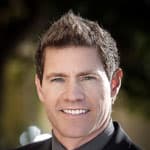
Dr. Todd C. Snyder received his doctorate in dental surgery at the University of California at Los Angeles School of Dentistry. Dr. Snyder has learned from and worked under some of the most sought after leaders in dentistry, refining his skills in comprehensive, extremely high quality aesthetic dentistry and full mouth rehabilitation. Furthermore he has trained at the prestigious F.A.C.E. institute for complex gnathological (functional) and temporomandibular joint disorders (TMD).
Dr. Snyder lectures both nationally and internationally on numerous aspects of dental materials, techniques, and equipment. Dr. Snyder has been on the faculty at U.C.L.A. in the Center for Esthetic Dentistry where he co-developed and co-directed the first and only comprehensive 2-year postgraduate program in aesthetic and contemporary restorative dentistry. He currently is on the faculty at Esthetic Professionals. Additionally, Dr. Snyder is a consultant for numerous dental manufacturing companies and has had the opportunity to research and recommend changes for many of the materials now being used in dentistry. Dr. Snyder has authored numerous articles in dental publications and published a book on contemporary restorative and cosmetic dentistry.
Dr. Snyder also founded and is CEO of Miles To Smiles a non-profit mobile children's charity that helps indigent and underprivileged children.
Dental podcast: Welcome to DentalTalk. I'm Dr. Phil Klein. Today we'll be discussing how we can build and maintain a dental team that will allow us to succeed. Our guest is Dr. Todd Snyder, a popular speaker on Viva Learning.com, a cosmetic dentist, author, international lecturer, researcher and instructor at various teaching facilities. Dr. Snyder is a consultant for numerous dental manufacturing companies and has had the opportunity to research and recommend changes for many of the materials now being used in dentistry. You can reach Dr. Snyder at: www.legion.dentist.
Transcript
Read Full Transcript
This transcript was automatically generated and may contain errors or inaccuracies. It is provided for reference and accessibility purposes and may not represent the exact words spoken.
You're listening to The Dr. Phil Klein Dental Podcast from Viva Learning.com.
Welcome to the show. I'm Dr. Phil Klein. Today we'll be discussing how we can build and maintain
a dental team that will allow us to succeed. Our guest is Dr. Todd Snyder,
a popular speaker on VivaLearning.com, a cosmetic dentist, author, international lecturer,
researcher, and instructor at various teaching facilities. Dr. Snyder is a consultant for numerous
dental manufacturing companies, and has had the opportunity to research and recommend changes for
many of the materials now being used in dentistry. You can reach Dr. Snyder at www.legion
.dentist. Before we get started, I'd like to thank our sponsor, Saikan. a world-renowned company
that provides a complete range of infection control solutions for dental practices. So if you're
looking for equipment or products in the area of infection control, look no further than Sycan,
known as the maker of the Statum cassette autoclave, the fastest cassette autoclave out there for
sure. Sycan offers cutting-edge solutions for efficiently washing, disinfecting,
and sterilizing dental instruments. A really phenomenal company. Great products. You'll see it at
the dental shows or showrooms and so forth. Super cutting edge stuff. They make any stereocenter
stand out. So we thank SICAN for their support for this podcast series with Dr.
Snyder. Dr. Snyder, it's a pleasure to have you back on Dental Talk. Thanks so much, Phil. So this
is our fourth episode of a series of four, all of which are sponsored by SICAN, as we mentioned in
our introduction. The first one is Making More by Doing Less. We did another one, Profitable Ways
to Cutting Overhead. The third one was dental office simplicity with workflow efficiency. And this,
of course, is staffing secrets for success. So a study by the ADA reported that the number one
biggest frustration for dentists is their staff. Now, do you agree with that? Oh,
totally. And we use this quite often in my trainings that, you know, part of the reason we have so
much frustration is because we as dentists, the business owner, the person that's kind of
overseeing everything. We don't spend the time to train our employees typically. And there's
another study that said only like 99% offices train their staff. And so you're assuming they
either knew what they were doing when they came in or someone else in the office is going to train
them. And so part of the reason they found out that the biggest frustration is staffing is really,
again, I hate to say it, it's me, it's the dentist. It's the dentist's fault that they haven't
trained the staff efficiently. And so people aren't doing things well or pointing fingers at each
other. And so hence the frustrations arise and the arguments and whatnot. So at the end of the day,
yeah, it's a big frustration, but it's because we haven't trained the team how to do things the way
we want. And so that's definitely going to make or break you based on how you're managing that.
Yeah. I mean, I can't imagine someone coming in new that doesn't know how the office works and you
can just expect them to, you know, carry on the person they replaced like nothing's ever happened.
That's kind of a delusional expectation. Would you agree? Very much so. Yeah,
yeah. So, and by the way, we have a new podcast program being launched, not available yet,
but Dr. Snyder will be the host. And I believe the name of it is Delusional. So we'll look for
that. And Dr. Snyder will be on this show more as he gets closer to launching his podcast so we can
find out more about that. But that is exciting. So what have you done, Dr. Snyder,
to attract and manage staff so that you have less frustrations? What are some of the key things?
You know what, over the years, I have taken a very different approach as usual for me, I take the
road less traveled. And so I'll go to places like Nordstrom and Ritz Carlton, and I'll take my
whole staff as kind of an outing, and give them a, you know, a task that they have to go talk to
certain employees, you know, go talk to concierge, go talk to someone that's walking the floor, you
know, find different people that are high enough inside the company that you can have a
conversation with. And so part of it is like, see if they're happy with where they're at and why
and learn from that, but also see if they're ever, you know, wanting to be someplace different, you
know, and tell them how phenomenal your experience is. And you'd be amazed how you can find people
that are thinking about having a job change. So you get someone that's been trained by a very high
end, you know, five star company like a Nordstrom or Ritz Carlton or Mercedes Benz or what have
you. You can get some phenomenal front office people out of this. Now, in addition. I look
differently in that I'm going into like Indeed and LinkedIn to look for new potential employees.
And so I'm looking for, again, a concierge type person or position. And so this last time I looked
for a new front office, I had like 350 applicants. And that was during COVID. It was the beginning
of this year. And where a lot of say, well, it's hard to find employees. I said, you're not posting
the right ad. You're still fishing in the same pond. I'm going to a different place and I'm using
different bait to lure people in. And so, again, thinking differently, acting differently allows
you to be more successful. But, you know, for the same token, once you find these people,
you got to make sure you train them. And so training becomes important. If you've got lots of
employees running around, that's a problem. And so I like having less employees that are highly
trained that work more efficiently by themselves versus having numerous people. Yeah, I love that
idea about going to companies, organizations that have already vetted people and having a chat with
them. you can't lose because your employees could learn something just from the interaction with
those very highly trained individuals who are vetted by these high-end companies that rely on
customer service and and making sure that the relationship that they have with their customers is
strong and they say the right things they act the right way and then of course who knows they could
be working for you one day right under the right circumstance Those are some of the things you do
to attract and manage staff. When you bring on someone you really like, is it more important to
have someone who has the right personality that you think would fit in well with the culture of
your practice and then worry about the dental aspect of it later as a secondary training thing?
What's more important? You know, I see it that way. And I think Southwest used to do the same thing
and they probably still do. You know, you hire for the personality, you hire for the drive and the
motivation to do things right. You can always train someone on the dentistry. You can train them on
the software. That part's easy. So I'm always looking for a motivated, outgoing individual.
And that has always served me well versus I hate to say it, but usually when I've hired someone in
the past that was already in dentistry, you know, they come with kind of their already preset
knowledge and training. And that's not necessarily what I want. But to break someone's habits
becomes more difficult than training someone the right way in the beginning. Right. For the same
same token, my dental assistants, I usually get my dental assistants right out of school and they
don't know anything, which is fine because I want to train them the way, you know, I want things
done. Right. But you're not going to you're not going to take someone from Nordstrom's and have
them make a nine unit provisional either. Right. Obviously. Right. OK. Yeah. Let's just let's just
clear that point out. Yeah. So they could. So, yeah, they're like a front office or front office.
But the other thing, as I mentioned, I, you know, I do most of the stuff myself, which is based on
one's business practice that. That may or may not work for you. But for me, I make my own tempers
and stuff. So I literally just need someone who's happy and talks to the patient and gets them
motivated, can hand me an instrument that I've trained in what each instrument is called or to go
grab some materials for me or load a tray with some impression material. So their job's pretty darn
easy. Right. But I know that's not the same for everyone. But again, you hire for that type of
person and then you can train them for the rest. Right. And, you know, when you say easy, it's
easy, quote unquote, easy, not complex as far as some of the tasks, but they're obviously.
They're an integral part of making sure your office runs properly. What type of problems have you
encountered in your office that have made you make the biggest changes? You know,
I think the biggest changes that have happened would, you know, when you have a staff turnover
that, you know, you start to recognize like, well, what could I have done differently on that?
You know, could I have recognized it early on? better training and so early in my career i started
to recognize well i'm no different than everyone else out there i recognize i wasn't training
people and so when you see the problem you see it as a gift and an opportunity the opportunity was
i can change this i finally see the gift in front of me i need to now take that gift and so for me
everyone i hire obviously is important, as you mentioned, the integral part of the team.
I couldn't do my job without them. I couldn't be successful without them. It doesn't matter who it
is, but they all have to be trained. So everyone is cross-trained in my office, not necessarily
like my dental assistant can do hygiene, but they're all cross-trained to handle a patient, to
have a conversation, to schedule the patient, to collect the money, to take phone calls and answer
questions. And so they've all been trained in that sense. Part of the way we do this,
because you say, well, I don't have time to train. I got to sit behind the chair and make the
money, is we implement an online training system that's available 24-7. And so every one of my
staff goes through this, and they don't go through it once. They go through it over and over over
the years. And so All Star Dental Academy is an online training program that has ridiculous amounts
of information, stuff that I could never even begin to cover, even if I had the time. And so the
employees go through this entire program, and it has, you know. all the content there for them to
to engage and listen to and to watch but also it tests them along the way to make sure they're
paying attention understanding the concepts and then we can just get together with our daily or
weekly huddles to then go over the content and make sure everyone understands that so for me
learning how to get people trained within my my time frame as far as my systems is implementing
something where i don't have to be present but they can do it on do they do this online training
after work hours or during the work day so it depends you know like We we don't see patients
typically on Thursday or if we do, it's just a big case. And so there's plenty of time on Thursdays
for them to train. There's also time on, you know, if you have a break in the schedule on a normal
day, if a patient no shows whatnot or needs to be moved off, they can train then. Or if they want,
I can pay them after hours. It's their choice. I can't enforce them to do anything after hours. But
if they say, hey, I'd love to get some some extra hours this weekend. Can I do some training? Sure.
Happily pay you. Not a problem. We talked about some of the technology in a previous podcast
related to the SteriCenter, which is really important as far as efficiency in instrument
sterilization and the whole process that's behind that. And that includes staff. So is it
important? And I think that's a simple question. I mean, the answer is probably yes. Of course,
it's important, but I'm going to ask it anyway. To make sure that the equipment and technology that
you have in the office not only is efficient and works and could save you on staffing.
but also doesn't frustrate your staff. If the things you buy for your office or the things you have
in your office are antiquated, they're not working well, they need to be repaired a lot, they don't
dry the instruments well, for instance, this causes frustration and stress, and then you have a
much more difficult time managing your staff. Can you just address that as we wrap it up? Yeah,
definitely. You know, again, I like to implement systems so that I can have less staff so that they
can be more efficient. So the right technology allows me to have less employees to do the job. And
so that that relates to also. the sterilization you know if i can have one less person there
because it's more efficient and simplified then that makes my job easier there's less frustration
that i have less people to manage but for the same token i think they love it that hey i've got new
technology i can just push a button it makes my job fast and efficient and now i can get back on
point to what i was doing and so anytime you can implement technology again whether it be
sterilization phone calls online training all of these things i think make for a better experience
for the employee that they can have less frustration, that they understand what needs to be done,
or they have a simplification of their process so they can do more things in less time versus
something that obviously isn't working or is broken or constantly an issue. You mentioned something
about a phone system earlier to me. The Weave phone system, it's a voice over IP phone system that
has software that ties into practice management system. And it also sits on your smartphone. And
I... We could spend a lot of time going to everything that it does, but I have never seen anything
that does as much as this does all in one software. And that's where I mentioned, I think in a
prior podcast, where I literally almost don't need a front office anymore because of all of the
technology that this one software can do for me. In conclusion, I just want to remind everybody
that Dr. Snyder does have a training program of his own called Legion.Dentist, which I mentioned
in the intro, L-E-G-I-O-N.Dentist. Check that out. He does one-on-ones.
He does group. meetings where he talks about where you are now, where you plan to be in the future
and really listens to you. And with his help, it helps you build confidence and make the right
decisions to make sure that you're going down the path to success. And these kinds of things are
invaluable while you're making that path. You even talk about selling practices, right? And
exiting. Do you not? You know, we've talked about it to a couple of people. I don't have an actual
program on it, but we talk about all of these different things. So yeah, pretty much anything you
ever have to deal with in dentistry, we have people that have done it or I've done it. And so we
share all this knowledge in a big round table or as well as one-on-one. Yeah. So again,
that's something that if you're interested, you can check that out online. Thank you very much, Dr.
Snyder. We really appreciate it. That concludes the four-part series sponsored by SciCan. There's
a lot of information that we've covered and we really appreciate your input as always on people
learning. Thanks again, Phil. Always fun.