University of California, San Francisco · San Jose State University · Western Governors University · Water Pik, Inc. · Biolase, Inc.
Read full bio
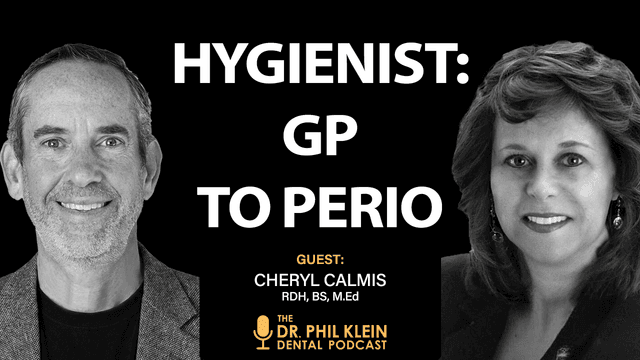
Cheryl Calmis, RDH, BS, MEd, is a highly qualified dental hygienist and professional educator with over 30 years of experience in the field of periodontics. Her expertise encompasses diode laser therapy and a diverse range of dental hygiene products. Cheryl holds a Bachelor of Science degree in dental hygiene from the University of California, San Francisco, as well as a Bachelor of Science in Biology from San Jose State University. Furthermore, she obtained a Master of Education in Instructional Design from Western Governors University, graduating with the highest honors.
Cheryl has conducted a pilot research study for Biolase, Inc. In addition to her clinical practice, she delivers CE lectures on contemporary topics, including Social Media and the implications of DIY Dental Trends. She has also authored numerous dental-related articles for publications such as Today's RDH, DoctorBase, Mouthpiece, and Cocofloss. Additionally, she serves as a professional educator for Water Pik, Inc., where she continues to contribute significantly to the advancement of the dental profession.
Are your patients filing their teeth with nail files or mixing homemade toothpaste after watching viral social media videos? The rise of do-it-yourself dentistry fueled by uncredentialed influencers is creating serious oral health risks that dental professionals are encountering daily in their operatories.
Cheryl Calmis is a registered dental hygienist with over 30 years of clinical experience specializing in periodontics and diode laser therapy. She holds a Bachelor of Science in dental hygiene from the University of California, San Francisco, a Bachelor of Science in Biology from San Jose State University, and a Master of Education in Instructional Design from Western Governors University, graduating with highest honors. As a professional educator for Water Pik, Inc., and researcher for Biolase, Inc., she has authored numerous dental articles and delivers continuing education lectures on contemporary topics including social media's impact on dental health.
This episode explores the dangerous intersection of social media misinformation and oral health care. The discussion covers how viral DIY dental trends are influencing patients to attempt dangerous procedures at home, the regulatory gaps in oral care products, and practical strategies for dental professionals to identify and address these issues. This conversation provides essential insights into a growing challenge that's affecting practices nationwide as patients increasingly turn to influencers instead of licensed professionals for dental advice.
Episode Highlights:
DIY tooth recontouring using nail files can remove excessive enamel and potentially expose the pulp chamber, leading to sensitivity issues and requiring endodontic therapy. These procedures are being performed by individuals with no understanding of dental anatomy or the irreversible nature of enamel loss.
At-home whitening methods promoted by influencers include repeated lemon juice application and direct placement of 3% hydrogen peroxide on cotton pads against teeth. These acidic treatments can cause severe enamel demineralization and tissue damage, with some viral videos accumulating over one million views despite providing no safety instructions or contact time guidelines.
Consumer-grade ultrasonic scalers powered by USB ports are being sold for approximately $30 and used by untrained individuals for calculus removal. These instruments can superheat teeth, burnish calculus deposits, and cause soft tissue trauma when used without proper training or understanding of dental anatomy.
Homemade toothpaste recipes containing bentonite clay, lemon juice, and essential oils are being shared widely online. These formulations can be highly abrasive to enamel and soft tissues while potentially containing heavy metal contaminants, and they may promote bacterial overgrowth due to improper storage and application methods.
Cosmetic oral care products sold through social media platforms operate without FDA oversight when they make only aesthetic claims rather than therapeutic ones. This regulatory gap allows manufacturers to include undisclosed ingredient concentrations and avoid sharing formulation rationale with dental professionals who may be asked about these products by patients.
Perfect for: General dentists, dental hygienists, practice managers, and dental team members who need to recognize signs of DIY dental procedures and effectively counsel patients about social media misinformation.
Don't let your patients fall victim to dangerous social media dental trends – learn how to identify the warning signs and protect your patients' oral health.
Transcript
Read Full Transcript
This transcript was automatically generated and may contain errors or inaccuracies. It is provided for reference and accessibility purposes and may not represent the exact words spoken.
I've seen very slick videos that go over activated charcoal for whitening teeth, which is very abrasive. That one actually was, you know, very nicely produced. She seemed very knowledgeable, but again, no credentials to be able to share this information. And then versus a couple second video on putting 3% hydrogen peroxide on your teeth. Welcome to Austin, Texas, and welcome to the Phil Klein Dental Podcast.
Whether it's TikTok, Instagram, Facebook, or any of the countless other platforms that are out there, social media has given anyone with a phone and an opinion a chance to become an authority, at least in the eyes of their followers. And in the world of influencers, no topic is off limits, including dentistry. In this episode, we'll take a deep dive into the growing trend of do-it-yourself dentistry, fueled by viral videos and self-proclaimed experts online.
From at-home whitening hacks and do-it-yourself orthodontics to homemade toothpaste and amateur tooth recontouring, we're seeing a troubling number of young adults putting their oral health in the hands of influencers instead of licensed professionals. Our guest today will explain why this is not just a social media fad, but a serious concern for dental health care providers.
We'll explore the risks of dental disinformation, how to spot its effects in the operatory, and what dentists and hygienists can do to educate, intervene, and help patients make safer choices. Our guest today is Cheryl I've seen very slick videos that go over activated charcoal for whitening teeth, which is very abrasive. That one actually was, you know, very nicely produced. She seemed very knowledgeable, but again, no credentials to be able to share this information. And then versus a couple second video on putting 3% hydrogen peroxide on your teeth. Welcome to Austin, Texas, and welcome to the Phil Klein Dental Podcast.
Whether it's TikTok, Instagram, Facebook, or any of the countless other platforms that are out there, social media has given anyone with a phone and an opinion a chance to become an authority, at least in the eyes of their followers. And in the world of influencers, no topic is off limits, including dentistry. In this episode, we'll take a deep dive into the growing trend of do-it-yourself dentistry, fueled by viral videos and self-proclaimed experts online.
From at-home whitening hacks and do-it-yourself orthodontics to homemade toothpaste and amateur tooth recontouring, we're seeing a troubling number of young adults putting their oral health in the hands of influencers instead of licensed professionals. Our guest today will explain why this is not just a social media fad, but a serious concern for dental health care providers.
We'll explore the risks of dental disinformation, how to spot its effects in the operatory, and what dentists and hygienists can do to educate, intervene, and help patients make safer choices. Our guest today is Cheryl Calmis.
She's a seasoned dental hygienist with over 30 years of clinical experience, specializing in periodontics, laser therapy, and guided biofilm therapy. She holds a bachelor's degree in both biology and dental hygiene and earned her master's in education with honors, focusing on instructional design, a perfect blend of science and teaching.
Before we bring in our guest, I do want to say that if you're enjoying these episodes and want to support the show, please follow us on Apple Podcasts or Spotify. You'll be the first to know about our new releases and our entire production team will really appreciate it. Cheryl, thanks for being on the show. Well, thanks for having me, Phil. Yeah, it's a pleasure to have you. So you do a lot of lecturing and you teach dental professionals about some of the ramifications of social media.
as they relate to things that patients might do at home to treat themselves, whether it's whitening or whatever. So before we get into the details of everything that that implies, what actually got you inspired to talk about that and include that in your lectures?
I am very active on social media myself. I do belong to various dental hygiene, dental-related Facebook pages where dental professionals post questions to their fellow dental professionals. And I've started over the last couple years to see a lot of questions, specifically from dental hygienists, about certain products that maybe they've seen advertised on social media.
or their patients have asked them about. And on occasion, I'll get questions from my patients also about something they've seen advertised maybe on television, on social media, that they were wondering if it's something that they should try or something they should look into. And as I started to see these posts, I'm starting to see, you know, hygienists weighing in.
you know, we all want to be very helpful and provide an answer to a question. But some of the answers that I was seeing were, you know, not based upon clinical evidence. They were based upon maybe what somebody thought about the product, what they heard about the product. So that was really what started me thinking about a course that I really wanted to create.
One, so I could learn myself about these products and what information was being shared on social media. Educate dental professionals on what kind of products are being promoted out there that patients are looking at, what kind of different kinds of pseudo-dental procedures that laypeople are trying on themselves that they've seen on social media. So give us an example of some of these products you're talking about and also the dangers of
self-treatment, do-it-yourself dentistry that some of these patients are being influenced to do at home by influencers that have no medical or dental training. And there's really no empirical evidence to show that this stuff works. Most of what I've seen on social media is being done without regards to consulting a dental professional. People are doing these procedures on their own because they've seen a
video on it so some of the most egregious things that i have seen is using for example a nail file to recontour teeth if someone has maybe eight nine or a little bit longer than the adjacent teeth and they don't like the look of that so they'll take a nail file and they'll repeatedly file down those teeth until it looks to them as something that would be more cosmetically appealing to the person and so i've seen
patients or videos of people using, you know, a traditional cardboard type nail file. And when that didn't work, they would transition to a metal file. And research that I've seen where they've actually done case studies where someone has
tried using a nail file on their teeth where they've just taken off so much of the enamel that they end up going into the pulp chamber and result could be sensitivity and possibly endodontic therapy also i've seen a do-it-yourself braces where people
usually adolescents, are either making braces using hobby materials or purchasing pre-made orthodontic appliances that they get from websites that specialize in products that people make on their own and then they sell to the general public. We'll be getting right back to our guest in a second, but first...
If you're on the lookout for a versatile material that serves as both a protective liner for composites and is ideal for direct and indirect pulp capping, let me introduce you to Theracal LC from Bisco. Its unique hydrophilic resin-modified calcium silicate formulation provides a strong, stable liner that reduces post-op sensitivity. It's radiopaque and incredibly easy to apply. Once light cured, Theracal LC is ready for use with any bonding technique.
What's even better, TheraCal LC is non-soluble, meaning it won't wash out over time.
Plus, it promotes calcium release, which supports secondary dentin bridge formation, and that's perfect for those tricky pulp exposures. When you're working deep in a tooth prep, you want reliable protection for the dental pulpal complex. You want Theracal LC, a top choice among independent evaluators and thousands of dental clinicians. For more information on Bisco's full line of pulp protection products, head on over to Bisco.com.
I certainly see the importance of the course that you give because I think it's very important for dental hygienists and dentists to be aware of what's going on in social media for the simple fact that these patients will ultimately end up in the dental chair with problems such as you mentioned, physically filing away their teeth where they could have a very deep, close to the pulp experience or a pulpal exposure and many other things they can do to their teeth that could cause...
pain and discomfort where they would need to go to the dentist. And I'm not sure they would admit to doing the things they're doing at home. So it's good that you're sharing this with our audience so that they're aware that this stuff is going on. It's amazing how fast this information travels. And this is typical of many things on social media. Once something goes out of video and it gets popular, you know, very short time, lots of people see it. So it can be a...
prevalent problem among people that have a low dental IQ. And when I say a low dental IQ, I don't mean that in a disparaging way. I just mean that they don't obviously understand the ramifications of doing these things to their own teeth. And it's really an uphill battle, Cheryl, to contest these non-factual videos that are being put up because these influencers are making a lot of money. They're making money selling products. They're making money through advertising and they're monetizing social media. So it's a tough.
Tough thing to fight.
Yeah, there is a monetary incentive. A lot of these influencers make a living off of making these videos and rely on social relationship assets to other companies. And the companies look to them to maybe promote their products. And so, yeah, there's a great incentive for these social media influencers to consistently create this content. People will watch them because they spend more time with.
these social media influencers than they will at their dental office. So without a doubt, whitening is a category that is very relevant to the demographic of those that are active on social media for obvious reasons. So what kind of products or procedures, do-it-yourself procedures I'm talking about, do influencers promulgate over the internet that would facilitate the audience that's listening to them to whiten their teeth at home?
I've seen videos on using lemon juice repeatedly to whiten the teeth. And I've also seen the over-the-counter hydrogen peroxide, 3%. And one video that I actually use in my presentation, it's a few seconds video. It has over a million views.
likes and shares and this video is so short and all she does is she takes three percent hydrogen peroxide douses a cosmetic cotton pad and just sticks them on her teeth and i explained during my presentation that you know here's somebody over a million people have watched this particular video there's very little information we don't know how long we should be keeping this hydrogen peroxide on our teeth if we should be doing it
But again, just the amount of people who have watched this video, liked it, bookmarked it, and shared it, just gives you an idea of people looking for a fast solution, a quick solution, and also something that's cheap. You know, the start of her video, she types on the screen, don't spend your money doing whitening procedures on the dentist at the dentist's office when you can do this at home. So that's...
Kind of the information that I have been seeing, I've seen very slick videos that go over activated charcoal for whitening teeth, which is very abrasive. That one actually was, you know, very nicely produced. She seemed very knowledgeable, but again, no credentials to be able to share this information. And then versus a couple second video on putting 3% hydrogen peroxide on your teeth. Yeah, so I mean, this is the way it's going.
with social media and many, many verticals. It's not just dentistry. It's politics. I mean, it's very persuasive. Yes. And a lot of our younger population is getting their news through social media primarily. And nothing, or I shouldn't say nothing, much of it is not vetted. And like you said, there's no credentials behind it. A lot of information is promulgated through the internet without sources. So you don't know who is really behind this information.
It's unfortunate in a lot of ways because it can spread misinformation very quickly and cause some damage in a lot of ways. Now, from the dental aspect, you talked about whitening. You talked about aggressive filing of the teeth to contour the teeth, which I find hard to believe that someone would do that to their teeth. What other examples have you seen on social media that could be detrimental to the teeth and the gums of young people?
Right. So, you know, of course, I've seen instruments. I mean, I've even seen those, you know, when you go to a swap meet, you've seen dental instruments. But lately, I've seen USB-powered scalers.
and there was even a post by dental hygienist on a facebook page she posted a picture of one of these types of usb charged power scalers and was asked and these are a consumer product they run about maybe 30 so they're not very expensive and again she was asking her fellow dental professionals
should this be something that she should recommend to her patients who tend to build up a lot of super gingival calculus in between dental visits and you know
When I looked into this product further, just from, you know, being a dental hygienist and, you know, going through dental hygiene school, I just remembered when we were lucky to learn the ultrasonics and I go way back. So it wasn't something that was part of the curriculum, but it was a special thing that we got to do. And I remember, you know, the instructors really looked over our shoulder just to make sure that we were using this properly. And so if you think about that and put.
something similar into the hands of a patient who doesn't understand dental anatomy. Of course, you know, a metal instrument that's moving is creating heat, so you could superheat a tooth. So there's also, you know, you could burnish calculus if you're, you know, if you're working on an area. There's so many just really scary and detrimental ramifications from using an over-the-counter product that you think, you know, well,
I can buy this over the counter and my dental professional uses this on my teeth. So why can't I? And so, of course, my answer to that dental hygienist is, you know, absolutely not. Why would I put a product like this into a patient's hands when we had to go through training to learn how to use a similar product? Yeah. And not to mention infection control. I mean, you know, that's a whole nother thing. There'll be different people sharing that. What is it? A USB.
powered scaler and he or she brings her 14 year old friend over and then she starts or he starts scaling with it and sure enough things happen so you get a bloodborne pathogen epidemic amongst all their friends so yeah I mean it's there's certainly something that our dental professionals should be aware of especially if they show up in the office with completely demineralized teeth because of all the lemon juice they're putting on or
And they don't really have a reason why someone that age would come in with that kind of demineralization if they didn't have braces, for instance. Like, why would that happen? Unless they're on a full 24-7 menu of Mountain Dew, which is very acidic. But yeah, so it's really good to have that information to know what's out there. So what role do you think dental professionals can or should play in creating reliable content that has validation behind it?
to counter this misinformation on social media? I think when you have a patient in the chair and if something doesn't look right, you know, ask them what they're doing. A lot of times we don't think to ask our patients what they're doing. You know, we might.
ask them you know how often are you brushing however you're flossing but we often don't go over actual products with patients you know i'll give you an example i had a patient a couple months ago and i was just seeing some orange chromogenic bacteria on his teeth that i hadn't noticed in the past you know i take extensive notes and make notes about my patients and i hadn't noticed that before so you know
asked him I said hey what have you been doing different I've seen some stain on your teeth that I hadn't noticed before and he said well you know I was looking at you know to buy some toothpaste and there are just so many different ingredients in the toothpaste so I ended up going on the internet
And I found a recipe for a toothpaste and he decided he was going to make his own toothpaste. So again, this is another example of somebody doing it himself. The ingredients in this toothpaste when he shared it with me were something that would be very abrasive, but also because I'm seeing bacterial changes in his oral cavity that I hadn't seen before, definitely wasn't going to be a beneficial.
product to him. So it starts with asking your patients, don't be afraid to ask them what they're doing. Again, if something doesn't look right, ask them. What was in that toothpaste?
What was he doing? Bentonite clay, which is very abrasive and can have low levels of heavy metals toxicity in the bentonite clay. There was also some lemon juice in there and some essential oils. And he was just mixing up himself, dipping his toothbrush in it.
Particular patient just still has some periodontal disease conditions that we're still trying to treat. So he's, you know, reinfecting himself by just dipping this toothbrush into. And also abrading the soft tissue, right? I mean, just. Right, exactly. It's a very abrasive. Yeah, taking out the attached gingiva, wiping it out. Exactly. So the key thing is to really, when you see something that.
is not typical for a certain age patient, especially someone who should have fairly healthy teeth. And you can look at some diet problems. You can look into their habits. Maybe they don't have good oral hygiene. But when you see something fairly drastic, like you would see with lemon juice or filing a tooth to recontour it, I mean, you're saying it's best to approach that head on and not try to avoid it just to avoid something that might be uncomfortable for the patient. You're saying hit it head on.
Exactly. So what are some of the other things you recommend dental offices to do to combat some of the social media disinformation? Before we continue with our guest, a big shout out to GC America.
A leader in dental materials, GC is all about minimally invasive dentistry, preserving natural tooth structure and helping to keep it healthy long after the restoration is placed. That's where glass onomer technology shines, and GC's new glass hybrid, Equia Forte HT, fits right in. It chemically fuses with the tooth for strong, long-lasting, aesthetic results. It's fast, packable, moisture-tolerant, and requires no bonding or conditioning.
Plus, it delivers continuous fluoride protection, ideal for patients of all ages, especially those that are moderate to high caries risk. So if you want the benefits of glass anomer, plus aesthetics, strength, and longevity, Equia Forte HT has got you covered. To learn more, visit gc.dental. Again, you can certainly start by, if your office has their own social media platform or blog, write an article for your subscribers.
on a diy that you've um you're concerned about that you've learned about for your subscribers to read also if you know you text patients
As a reminder of upcoming appointments, maybe add a little blurb about a DIY. So again, when you have the patient in the chair, start the conversation. Talk to them about, you know, hey, our office offers whitening. And please ask us about whitening as opposed to trying something on your own that might cause some enamel issues or some adverse events that you don't want to happen. If your office, a lot of...
Patients don't realize that an office does an office whitening. Let your patients know that you offer these procedures. So in your opinion, Cheryl, how prevalent do you think it is for patients to be using products that they buy based on an influencer on TikTok? And these products can be quite destructive to the dentition. Is this something that's pretty widespread, do you think?
Some products are getting really prevalent. For example, different toothpastes. Just saw another post just recently where a hygienist posted a patient, asked her about a patient they saw on TikTok shop. And, you know, all it takes is for a dental professional, if a patient comes to you with a product, look at the ingredients. What are the ingredients in this product? Do they have any clinical benefit to them? These toothpastes.
that are being sold on social media or promoted on social media are considered a cosmetic product. So they don't have any kind of federal or dental oversight. So anybody can pretty much put whatever they want in these products and sell them and there's no oversight. So what I'm seeing most often is different toothpastes that are being promoted for whitening, for probiotics, prebiotics. And because there's no oversight,
we really know how much ingredient or what ingredients are going into these products. So that's kind of the general trend that I'm seeing most of is reinventing the toothpaste and no oversight to actually therapeutic benefits for these products. So are you saying that essentially toothpaste, mouthwashes, oral care products in general is an unregulated business where there's...
No FDA intervention. You just go out there and mix some stuff together, package it nicely, and you can sell it on TikTok.
So for toothpastes, mouth rinses, if they have an active ingredient that is like, for example, anti-gingivitis, anti-tartar, and they have a fluoridated toothpaste, those do have FDA oversight because they are considered a drug. But toothpastes or mouth rinses, for example, that just promise a cosmetic benefit, like freshens breath, whitens teeth, but no other.
For example, no anti-caries properties, no anti-gingivitis. So if it's just strictly a cosmetic product, then no oversight. Right. So if they don't have any specific claims against gingivitis or caries as therapeutic, they could sell it all day long under any other category they want to sell it at, whether it's a whitening tooth. They could say whitening toothpaste without oversight? Yes. Whitening is still considered a cosmetic. Okay.
Yeah. So basically quite unregulated. And so is dental floss. And lately I've been reading a lot about dental floss where the dental floss that's, even Amazon sells something called comfort floss. It has a Teflon or some sort of very dangerous material in there that lubricates it. They used to use wax, but I guess beeswax was expensive.
when you have to apply it to the floss but it was much more natural of course and now they're using these chemicals for many years now and if you're using something like that you got to look at what's in there because
That ingredient is also really dangerous. The gist of it is, as dental professionals, we have to be aware of what our patients are exposed to as far as their dental information. And we need to counter it by looking at their mouth, approaching it head on, and making sure that our patients are aware of the dangers of the do-it-yourself methodology that these influencers are pushing on social media. And I think that's a great course that you're offering and a great...
service to the industry because I don't know anybody else who's talking about that. Are there any other speakers doing that?
Not that I'm aware of. I haven't really come across anybody. And in addition, I just also want to add that, you know, if you are, happen to be active on social media like myself, and you do see a post like a toothpaste post, don't be afraid to chime in and, you know, maybe do your own research. Look at the ingredients. Look at the company. I've actually reached out to companies, and there's one toothpaste that's really popular. It has a really fancy...
pink and green too it's really pretty and a hygienist posted about it and she's asking about it so i actually reached out to the company um i think it's called a cell a c c e l
So I actually reached out to the company because it had a niacinamide in it. And so I reached out to the company and said, you know, hey, I'm a dental hygienist. I've had some questions about your product. Could you give me a little bit more information about it? Specifically, I'd like to know.
the rationale for putting niacinamide in the toothpaste. And the answer that I got back from the company was, you know, thank you for reaching out to us, but this is private information. It's only shared within the company. It is called, I just looked it up. It is called XL, A-C-C-E-L, niacinamide whitening toothpaste stain removal. Yeah. Yes. So, yeah, that's a little bit suspect when they don't. Yes.
Yeah. Right. So then I wrote back to them and I said, well, you know, as a dental professional, you mean to tell me that if a patient asks me about your product, how do you expect me to recommend your product, for example, if you won't share any information? And they promptly wrote back saying, well, that's our.
That's our company policy. So again, I, you know, I mean, they might be they might be protecting the information because they don't want to be copied. So we don't want to say anything bad about the company because we don't know. But we're just bringing it to your attention as a listener that this is an example of a product that, you know, may be OK, but it may not.
Right, right. You know, and I have also reached out to other companies that are using different ingredients and I've received answers back from them and, you know, links to research if they have it. So, you know, that would be a company where or a product if a patient asked me about that and that I might be more inclined to maybe recommend it as an alternative since the company is doing their due diligence and sharing that information. Yeah, the AI review on it says some users report.
positive results like teeth whitening and fresh breath while others express disappointment with its effectiveness sensitivity issues or discrepancies between the product ordered and received so uh yeah it doesn't sound like a raving reviews to me but um yeah so no there's really good information
Cheryl, I think it's very, very important that dental hygienists, the first line of defense at the dental office against problems like do-it-yourself procedures that these individuals have no experience, no understanding of what they're actually doing to the dentition. And they're trying to find a...
fast cheap and easy way to solve some problems and I think the dental hygienist needs to as you said approach that head-on but a very interesting topic thank you so much for your time today Cheryl and we look forward to having you on future programs down the road all right well thank you so much for having me I really enjoyed our conversation
.
She's a seasoned dental hygienist with over 30 years of clinical experience, specializing in periodontics, laser therapy, and guided biofilm therapy. She holds a bachelor's degree in both biology and dental hygiene and earned her master's in education with honors, focusing on instructional design, a perfect blend of science and teaching.
Before we bring in our guest, I do want to say that if you're enjoying these episodes and want to support the show, please follow us on Apple Podcasts or Spotify. You'll be the first to know about our new releases and our entire production team will really appreciate it. Cheryl, thanks for being on the show. Well, thanks for having me, Phil. Yeah, it's a pleasure to have you. So you do a lot of lecturing and you teach dental professionals about some of the ramifications of social media.
as they relate to things that patients might do at home to treat themselves, whether it's whitening or whatever. So before we get into the details of everything that that implies, what actually got you inspired to talk about that and include that in your lectures?
I am very active on social media myself. I do belong to various dental hygiene, dental-related Facebook pages where dental professionals post questions to their fellow dental professionals. And I've started over the last couple years to see a lot of questions, specifically from dental hygienists, about certain products that maybe they've seen advertised on social media.
or their patients have asked them about. And on occasion, I'll get questions from my patients also about something they've seen advertised maybe on television, on social media, that they were wondering if it's something that they should try or something they should look into. And as I started to see these posts, I'm starting to see, you know, hygienists weighing in.
you know, we all want to be very helpful and provide an answer to a question. But some of the answers that I was seeing were, you know, not based upon clinical evidence. They were based upon maybe what somebody thought about the product, what they heard about the product. So that was really what started me thinking about a course that I really wanted to create.
One, so I could learn myself about these products and what information was being shared on social media. Educate dental professionals on what kind of products are being promoted out there that patients are looking at, what kind of different kinds of pseudo-dental procedures that laypeople are trying on themselves that they've seen on social media. So give us an example of some of these products you're talking about and also the dangers of
self-treatment, do-it-yourself dentistry that some of these patients are being influenced to do at home by influencers that have no medical or dental training. And there's really no empirical evidence to show that this stuff works. Most of what I've seen on social media is being done without regards to consulting a dental professional. People are doing these procedures on their own because they've seen a
video on it so some of the most egregious things that i have seen is using for example a nail file to recontour teeth if someone has maybe eight nine or a little bit longer than the adjacent teeth and they don't like the look of that so they'll take a nail file and they'll repeatedly file down those teeth until it looks to them as something that would be more cosmetically appealing to the person and so i've seen
patients or videos of people using, you know, a traditional cardboard type nail file. And when that didn't work, they would transition to a metal file. And research that I've seen where they've actually done case studies where someone has
tried using a nail file on their teeth where they've just taken off so much of the enamel that they end up going into the pulp chamber and result could be sensitivity and possibly endodontic therapy also i've seen a do-it-yourself braces where people
usually adolescents, are either making braces using hobby materials or purchasing pre-made orthodontic appliances that they get from websites that specialize in products that people make on their own and then they sell to the general public. We'll be getting right back to our guest in a second, but first...
If you're on the lookout for a versatile material that serves as both a protective liner for composites and is ideal for direct and indirect pulp capping, let me introduce you to Theracal LC from Bisco. Its unique hydrophilic resin-modified calcium silicate formulation provides a strong, stable liner that reduces post-op sensitivity. It's radiopaque and incredibly easy to apply. Once light cured, Theracal LC is ready for use with any bonding technique.
What's even better, TheraCal LC is non-soluble, meaning it won't wash out over time.
Plus, it promotes calcium release, which supports secondary dentin bridge formation, and that's perfect for those tricky pulp exposures. When you're working deep in a tooth prep, you want reliable protection for the dental pulpal complex. You want Theracal LC, a top choice among independent evaluators and thousands of dental clinicians. For more information on Bisco's full line of pulp protection products, head on over to Bisco.com.
I certainly see the importance of the course that you give because I think it's very important for dental hygienists and dentists to be aware of what's going on in social media for the simple fact that these patients will ultimately end up in the dental chair with problems such as you mentioned, physically filing away their teeth where they could have a very deep, close to the pulp experience or a pulpal exposure and many other things they can do to their teeth that could cause...
pain and discomfort where they would need to go to the dentist. And I'm not sure they would admit to doing the things they're doing at home. So it's good that you're sharing this with our audience so that they're aware that this stuff is going on. It's amazing how fast this information travels. And this is typical of many things on social media. Once something goes out of video and it gets popular, you know, very short time, lots of people see it. So it can be a...
prevalent problem among people that have a low dental IQ. And when I say a low dental IQ, I don't mean that in a disparaging way. I just mean that they don't obviously understand the ramifications of doing these things to their own teeth. And it's really an uphill battle, Cheryl, to contest these non-factual videos that are being put up because these influencers are making a lot of money. They're making money selling products. They're making money through advertising and they're monetizing social media. So it's a tough.
Tough thing to fight.
Yeah, there is a monetary incentive. A lot of these influencers make a living off of making these videos and rely on social relationship assets to other companies. And the companies look to them to maybe promote their products. And so, yeah, there's a great incentive for these social media influencers to consistently create this content. People will watch them because they spend more time with.
these social media influencers than they will at their dental office. So without a doubt, whitening is a category that is very relevant to the demographic of those that are active on social media for obvious reasons. So what kind of products or procedures, do-it-yourself procedures I'm talking about, do influencers promulgate over the internet that would facilitate the audience that's listening to them to whiten their teeth at home?
I've seen videos on using lemon juice repeatedly to whiten the teeth. And I've also seen the over-the-counter hydrogen peroxide, 3%. And one video that I actually use in my presentation, it's a few seconds video. It has over a million views.
likes and shares and this video is so short and all she does is she takes three percent hydrogen peroxide douses a cosmetic cotton pad and just sticks them on her teeth and i explained during my presentation that you know here's somebody over a million people have watched this particular video there's very little information we don't know how long we should be keeping this hydrogen peroxide on our teeth if we should be doing it
But again, just the amount of people who have watched this video, liked it, bookmarked it, and shared it, just gives you an idea of people looking for a fast solution, a quick solution, and also something that's cheap. You know, the start of her video, she types on the screen, don't spend your money doing whitening procedures on the dentist at the dentist's office when you can do this at home. So that's...
Kind of the information that I have been seeing, I've seen very slick videos that go over activated charcoal for whitening teeth, which is very abrasive. That one actually was, you know, very nicely produced. She seemed very knowledgeable, but again, no credentials to be able to share this information. And then versus a couple second video on putting 3% hydrogen peroxide on your teeth. Yeah, so I mean, this is the way it's going.
with social media and many, many verticals. It's not just dentistry. It's politics. I mean, it's very persuasive. Yes. And a lot of our younger population is getting their news through social media primarily. And nothing, or I shouldn't say nothing, much of it is not vetted. And like you said, there's no credentials behind it. A lot of information is promulgated through the internet without sources. So you don't know who is really behind this information.
It's unfortunate in a lot of ways because it can spread misinformation very quickly and cause some damage in a lot of ways. Now, from the dental aspect, you talked about whitening. You talked about aggressive filing of the teeth to contour the teeth, which I find hard to believe that someone would do that to their teeth. What other examples have you seen on social media that could be detrimental to the teeth and the gums of young people?
Right. So, you know, of course, I've seen instruments. I mean, I've even seen those, you know, when you go to a swap meet, you've seen dental instruments. But lately, I've seen USB-powered scalers.
and there was even a post by dental hygienist on a facebook page she posted a picture of one of these types of usb charged power scalers and was asked and these are a consumer product they run about maybe 30 so they're not very expensive and again she was asking her fellow dental professionals
should this be something that she should recommend to her patients who tend to build up a lot of super gingival calculus in between dental visits and you know
When I looked into this product further, just from, you know, being a dental hygienist and, you know, going through dental hygiene school, I just remembered when we were lucky to learn the ultrasonics and I go way back. So it wasn't something that was part of the curriculum, but it was a special thing that we got to do. And I remember, you know, the instructors really looked over our shoulder just to make sure that we were using this properly. And so if you think about that and put.
something similar into the hands of a patient who doesn't understand dental anatomy. Of course, you know, a metal instrument that's moving is creating heat, so you could superheat a tooth. So there's also, you know, you could burnish calculus if you're, you know, if you're working on an area. There's so many just really scary and detrimental ramifications from using an over-the-counter product that you think, you know, well,
I can buy this over the counter and my dental professional uses this on my teeth. So why can't I? And so, of course, my answer to that dental hygienist is, you know, absolutely not. Why would I put a product like this into a patient's hands when we had to go through training to learn how to use a similar product? Yeah. And not to mention infection control. I mean, you know, that's a whole nother thing. There'll be different people sharing that. What is it? A USB.
powered scaler and he or she brings her 14 year old friend over and then she starts or he starts scaling with it and sure enough things happen so you get a bloodborne pathogen epidemic amongst all their friends so yeah I mean it's there's certainly something that our dental professionals should be aware of especially if they show up in the office with completely demineralized teeth because of all the lemon juice they're putting on or
And they don't really have a reason why someone that age would come in with that kind of demineralization if they didn't have braces, for instance. Like, why would that happen? Unless they're on a full 24-7 menu of Mountain Dew, which is very acidic. But yeah, so it's really good to have that information to know what's out there. So what role do you think dental professionals can or should play in creating reliable content that has validation behind it?
to counter this misinformation on social media? I think when you have a patient in the chair and if something doesn't look right, you know, ask them what they're doing. A lot of times we don't think to ask our patients what they're doing. You know, we might.
ask them you know how often are you brushing however you're flossing but we often don't go over actual products with patients you know i'll give you an example i had a patient a couple months ago and i was just seeing some orange chromogenic bacteria on his teeth that i hadn't noticed in the past you know i take extensive notes and make notes about my patients and i hadn't noticed that before so you know
asked him I said hey what have you been doing different I've seen some stain on your teeth that I hadn't noticed before and he said well you know I was looking at you know to buy some toothpaste and there are just so many different ingredients in the toothpaste so I ended up going on the internet
And I found a recipe for a toothpaste and he decided he was going to make his own toothpaste. So again, this is another example of somebody doing it himself. The ingredients in this toothpaste when he shared it with me were something that would be very abrasive, but also because I'm seeing bacterial changes in his oral cavity that I hadn't seen before, definitely wasn't going to be a beneficial.
product to him. So it starts with asking your patients, don't be afraid to ask them what they're doing. Again, if something doesn't look right, ask them. What was in that toothpaste?
What was he doing? Bentonite clay, which is very abrasive and can have low levels of heavy metals toxicity in the bentonite clay. There was also some lemon juice in there and some essential oils. And he was just mixing up himself, dipping his toothbrush in it.
Particular patient just still has some periodontal disease conditions that we're still trying to treat. So he's, you know, reinfecting himself by just dipping this toothbrush into. And also abrading the soft tissue, right? I mean, just. Right, exactly. It's a very abrasive. Yeah, taking out the attached gingiva, wiping it out. Exactly. So the key thing is to really, when you see something that.
is not typical for a certain age patient, especially someone who should have fairly healthy teeth. And you can look at some diet problems. You can look into their habits. Maybe they don't have good oral hygiene. But when you see something fairly drastic, like you would see with lemon juice or filing a tooth to recontour it, I mean, you're saying it's best to approach that head on and not try to avoid it just to avoid something that might be uncomfortable for the patient. You're saying hit it head on.
Exactly. So what are some of the other things you recommend dental offices to do to combat some of the social media disinformation? Before we continue with our guest, a big shout out to GC America.
A leader in dental materials, GC is all about minimally invasive dentistry, preserving natural tooth structure and helping to keep it healthy long after the restoration is placed. That's where glass onomer technology shines, and GC's new glass hybrid, Equia Forte HT, fits right in. It chemically fuses with the tooth for strong, long-lasting, aesthetic results. It's fast, packable, moisture-tolerant, and requires no bonding or conditioning.
Plus, it delivers continuous fluoride protection, ideal for patients of all ages, especially those that are moderate to high caries risk. So if you want the benefits of glass anomer, plus aesthetics, strength, and longevity, Equia Forte HT has got you covered. To learn more, visit gc.dental. Again, you can certainly start by, if your office has their own social media platform or blog, write an article for your subscribers.
on a diy that you've um you're concerned about that you've learned about for your subscribers to read also if you know you text patients
As a reminder of upcoming appointments, maybe add a little blurb about a DIY. So again, when you have the patient in the chair, start the conversation. Talk to them about, you know, hey, our office offers whitening. And please ask us about whitening as opposed to trying something on your own that might cause some enamel issues or some adverse events that you don't want to happen. If your office, a lot of...
Patients don't realize that an office does an office whitening. Let your patients know that you offer these procedures. So in your opinion, Cheryl, how prevalent do you think it is for patients to be using products that they buy based on an influencer on TikTok? And these products can be quite destructive to the dentition. Is this something that's pretty widespread, do you think?
Some products are getting really prevalent. For example, different toothpastes. Just saw another post just recently where a hygienist posted a patient, asked her about a patient they saw on TikTok shop. And, you know, all it takes is for a dental professional, if a patient comes to you with a product, look at the ingredients. What are the ingredients in this product? Do they have any clinical benefit to them? These toothpastes.
that are being sold on social media or promoted on social media are considered a cosmetic product. So they don't have any kind of federal or dental oversight. So anybody can pretty much put whatever they want in these products and sell them and there's no oversight. So what I'm seeing most often is different toothpastes that are being promoted for whitening, for probiotics, prebiotics. And because there's no oversight,
we really know how much ingredient or what ingredients are going into these products. So that's kind of the general trend that I'm seeing most of is reinventing the toothpaste and no oversight to actually therapeutic benefits for these products. So are you saying that essentially toothpaste, mouthwashes, oral care products in general is an unregulated business where there's...
No FDA intervention. You just go out there and mix some stuff together, package it nicely, and you can sell it on TikTok.
So for toothpastes, mouth rinses, if they have an active ingredient that is like, for example, anti-gingivitis, anti-tartar, and they have a fluoridated toothpaste, those do have FDA oversight because they are considered a drug. But toothpastes or mouth rinses, for example, that just promise a cosmetic benefit, like freshens breath, whitens teeth, but no other.
For example, no anti-caries properties, no anti-gingivitis. So if it's just strictly a cosmetic product, then no oversight. Right. So if they don't have any specific claims against gingivitis or caries as therapeutic, they could sell it all day long under any other category they want to sell it at, whether it's a whitening tooth. They could say whitening toothpaste without oversight? Yes. Whitening is still considered a cosmetic. Okay.
Yeah. So basically quite unregulated. And so is dental floss. And lately I've been reading a lot about dental floss where the dental floss that's, even Amazon sells something called comfort floss. It has a Teflon or some sort of very dangerous material in there that lubricates it. They used to use wax, but I guess beeswax was expensive.
when you have to apply it to the floss but it was much more natural of course and now they're using these chemicals for many years now and if you're using something like that you got to look at what's in there because
That ingredient is also really dangerous. The gist of it is, as dental professionals, we have to be aware of what our patients are exposed to as far as their dental information. And we need to counter it by looking at their mouth, approaching it head on, and making sure that our patients are aware of the dangers of the do-it-yourself methodology that these influencers are pushing on social media. And I think that's a great course that you're offering and a great...
service to the industry because I don't know anybody else who's talking about that. Cheryl, I think it's very, very important that dental hygienists, the first line of defense at the dental office against problems like do-it-yourself procedures that these individuals have no experience, no understanding of what they're actually doing to the dentition. And they're trying to find a...
fast cheap and easy way to solve some problems and I think the dental hygienist needs to as you said approach that head-on but a very interesting topic thank you so much for your time today Cheryl and we look forward to having you on future programs down the road all right well thank you so much for having me I really enjoyed our conversation
Clinical Keywords
Cheryl CalmisRDHdental hygienistsocial media dentistryDIY dentistryTikTok dental trendsdental misinformationperiodonticsdiode laser therapyWater PikBiolasedental educationDr. Phil Kleindental podcastat-home whiteninghydrogen peroxide whiteningactivated charcoalnail file tooth filingUSB ultrasonic scalershomemade toothpastebentonite claylemon juice whiteningdental influencersFDA regulationcosmetic dental productsoral care productspatient educationdental hygienecontinuing education