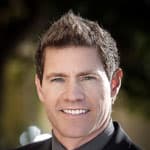
Dr. Todd C. Snyder received his doctorate in dental surgery at the University of California at Los Angeles School of Dentistry. Dr. Snyder has learned from and worked under some of the most sought after leaders in dentistry, refining his skills in comprehensive, extremely high quality aesthetic dentistry and full mouth rehabilitation. Furthermore he has trained at the prestigious F.A.C.E. institute for complex gnathological (functional) and temporomandibular joint disorders (TMD).
Dr. Snyder lectures both nationally and internationally on numerous aspects of dental materials, techniques, and equipment. Dr. Snyder has been on the faculty at U.C.L.A. in the Center for Esthetic Dentistry where he co-developed and co-directed the first and only comprehensive 2-year postgraduate program in aesthetic and contemporary restorative dentistry. He currently is on the faculty at Esthetic Professionals. Additionally, Dr. Snyder is a consultant for numerous dental manufacturing companies and has had the opportunity to research and recommend changes for many of the materials now being used in dentistry. Dr. Snyder has authored numerous articles in dental publications and published a book on contemporary restorative and cosmetic dentistry.
Dr. Snyder also founded and is CEO of Miles To Smiles a non-profit mobile children's charity that helps indigent and underprivileged children.
Dental podcast: Welcome to DentalTalk. I'm Dr. Phil Klein. Today we'll be discussing concepts for veneer treatment and how you can become more confident and comfortable in providing cosmetic veneer procedures to your patients. Our guest is Dr. Todd Snyder, a regular contributor to Viva Learning.com, a cosmetic dentist, international author, lecturer and consultant to a variety of dental companies. He hosts a weekly podcast, Delusional: Winning the Weekly War of Dentistry. You can reach Dr. Snyder at: www.Legion.Dentist.
Transcript
Read Full Transcript
This transcript was automatically generated and may contain errors or inaccuracies. It is provided for reference and accessibility purposes and may not represent the exact words spoken.
You're listening to The Dr. Phil Klein Dental Podcast
Welcome to the show. I'm Dr. Phil Klein. Today we'll be discussing concepts for veneer treatment
and how you can become more confident and comfortable in providing cosmetic veneer procedures to
your patients. Our guest is Dr. Todd Snyder, a regular contributor to VivaLearning.com,
cosmetic dentist, international author, lecturer, and consultant to a variety of dental companies.
Delusional, Winning the Weekly War of Dentistry. You can reach Dr. Snyder at legion.dentist.
Before we get started, I would like to mention that Dr. Snyder's webinar titled Simplifying
Concepts for Veneer Treatment and Cementation is now available as an on-demand webinar on
VivaLearning.com. Simply type in the search field Snyder, S-N-Y-D-E-R, and you'll see it.
It's an excellent webinar for the entire dental team. Dr. Snyder, it's a pleasure to have you back
on Dental Talk. Thanks, Phil. Great to be here. So how does one remove the fear in doing veneers,
considering there are quite a few moving parts that can result in a clinical failure? You know, I
get this kind of question often. Dentists that didn't get any training or very little training in
school, and so they have fear because... they haven't done any repetitions. But like any dental
procedure, we can all remember doing an amalgam or crown and how scary it was the first time we did
it and how the first, I don't know, 20, 30, 100 times, we still were nervous and we're learning.
And so veneers are no different. Fear goes away from repetition. So taking classes over and over
again won't make you more successful and won't eliminate fear. It's when you finally get in and do
them, the fear fades over time. And so removing the fear is doing more of them,
but having a system built in that you know will work if you follow the system to the letter of the
paper that it's written on. Yeah, well, that's it. I mean, doing it over and over again is great,
but if you're practicing tennis and you're swinging that backhand incorrectly for 10 years,
it's not going to help you. become a great tennis player. So you want to do things correctly over
and over again. So how do you approach that to make sure that that dentist who's really getting
into veneers more and more are doing it right from the get go? Well, and that's where I'd say,
you know, getting a mentor or finding a course or whatever that has a system that you can follow
that you can say, oh, that's why things haven't been working for me. If you've already been doing
veneers, you go, oh, now I recognize it because the system. I don't care who you take it from is
all pretty much the same, you know, minor tweaks. But for the most part, it's pretty much the same.
And so you might recognize that if you've been doing veneers and you're having failures or
problems, you go, oh, well, there's where the problem was. So when I'm doing my online veneer
course, when people take that, you'd be amazed how many people go, oh, well, that's why I kept
having problems. And oh, that's a great solution. So that doesn't happen. And so with every problem
is a gift. The problem. you know, we think of as a frustration and a nuance. No, that's the gift to
show you. So you never have to have that problem again. Right. So when you're planning on doing a
veneer case, when do you start actually thinking about each step or does it become so mechanical
where you say, okay, I've done this correctly so many times after a while, you don't really have to
think about too much, but I think we do as professional caregivers. We're not robots,
so every case is different. So when does it come down to where the dentist actually starts thinking
about each step in the veneer process? You know, and that's a great point to bring out because a
lot of times we think in dentistry that it's just this dogmatic approach that we just do the same
thing over and over again for like a filling or a crown or whatnot. And I would say for some
procedures, a dogmatic approach. might be okay the majority of time. When it comes to something as
precise and, you know, cosmetically, you know, specific for a patient,
in my mind, the way to be successful is to plan it before you do anything.
And so if you have a great plan and it's in an alignment with what the patient values and wants,
and you can both see the final outcome or goal, then it becomes easy to set up all the steps.
But if you don't plan until you get to that point, you realize, oh, no, this just got screwed up.
I wish I would have thought ahead of time or planned something ahead of time. I see that happen all
the time in preparation designs where dentists go in and just start prepping and they never
practiced or thought ahead of time. So for me, I would say. It's all about planning in the
beginning before touching that patient, every step of the process so that it becomes a systematic
approach. How different is one veneer case from another? Are there so many possibilities when doing
veneers where you need this planning? Or are there just some outliers where you need to be
prepared, but most of the cases are very similar? And that goes back into one's personal beliefs.
If you think that every case is done the same and has a dogmatic approach and you, in my mind,
over-prepare everybody and you do what, in my mind, looks like a three-quarter or seven-eighths
crown on everyone and you call it a veneer, well, then obviously you don't have to plan much
because you're pretty much gutting everything. As opposed to someone who's saying, I want to plan
it and take two-tenths of a millimeter off the mesial of number eight. And I want to take four
-tenths of a millimeter off the distal of number nine. And you're trying to stay in enamel and
minimize the amount of damage to someone's tooth to give them the best longevity, to have the best
possible long bond strength as far as bonding to enamel versus dentin. All of these tiny little
details are what have allowed me to become successful and to be conservative and to give patients
what they want. But again, if you're just looking to just obliterate teeth to have something that's
quick and easy and makes you a buck, that's something totally different. So you have to decide for
yourself what type of dentistry you want to be performing. That's kind of the answer I was hoping
you would give, which you did, which is great. Minimally invasive dentistry is critical towards the
thinking of the preparation for all restorative dentistry, especially veneers. Exactly.
Well, I mean, if you think that you're going to treat your child or someone was going to treat you.
where someone's going to treat your parent, you don't want them amputating a bunch of tooth
structure off. You want to do the least invasive thing possible that gives them the most tooth for
the rest of their life and gives you the best possible longevity with the best appearance. How do
you do that? Well, you obviously practice and you have a system that allows you to provide that
level of service and people want that level of service. And the examples that you gave where you
selectively identified parts of the tooth where you would remove tooth structure in order to
prepare that veneer. How do you get that information prior to doing it? That comes from,
again, the plan ahead of time. So whether it's mocking something up on a patient's tooth and
saying, hey, do you mind if I make your tooth three tenths of a millimeter thicker in this area?
And where the tooth is really flared out, I'm going to have to take a little bit off to make that
come back into your mouth so it doesn't look like your tooth sticking out funny. So I'm going to
take some off there. And so some of it you can practice on a patient. A lot of it you'll obviously
practice on a model and doing wax ups and preparation designs. And then transferring oftentimes
that wax up onto the patient's person so they can see it. And so you can have a conversation of,
hey. The teeth are a little bit thicker, just like an artificial nail. Is that enough that looks
peculiar? Does it feel peculiar to your tongue? Are you okay with how you could bite or where your
lip is positioning? And so you can ask all these questions before ever going through many of the
cases. So you're planning how to take the least amount off, but at the same time, seeing where you
have limitations in prep design or position that cause you to have to change your system slightly.
And the patient can see and understand why you're making decisions. Yeah, now part of that system
is also the materials that you use. And, you know, we've talked on previous podcasts, Dr.
Snyder, and you've talked about it on other webinars about minimizing inventory, keeping your
products together so that the chemistry works accordingly. And if you need some support from the
manufacturer, at least you're ruling out incompatibilities between certain products so that that
person on the support side can help you. Talk about some of the systems that you like as far as a
whole system of products that you use for veneers. You hit a lot of great concepts there because
obviously like when I teach in Legion, we teach a lot about business and systems and mindset. And
obviously overhead is a concern for a lot of people. So rather than having numerous different
products from different manufacturers and spending lots of money. to simplify your system to say
i've got one system that will do everything i want to do but also allows me to pivot should i
encounter something that has to be different i don't have to go find another product and so for me
i use the bisco all bond universal bonding agent It allows me to do every type of direct and
indirect restoration. So whether I'm doing a filling or I'm doing a crown or I'm doing a veneer,
I have a bonding agent that allows me to deal with both dentin or enamel. It allows me to have a
total etch or a self etch or a selective etch. So when I'm planning things, should it change such
that instead of being on enamel, I'm into dentin. I may say, oh, well, instead of bonding with an
etchant, I'm just going to do a self-etch on the dentin. And so it allows me to instantly audible
based on what's happening in front of me. For the same token, their Bisco's Choice 2 veneer
cementation kit comes with everything I need as far as doing my veneers, as far as an adhesive and
a resin looting cement, as well as an unfilled resin that allows the veneer to have...
you know, let's say lower viscosity to allow my resin to flow more easily to get less bubbles.
You know, so they've really thought things out, not only in what they give you, but also in the
product itself. And that you can use Albon for light cure or dual cure. Their resin cement has a
color stability that's, you know, like second to none. And so they thought everything out for when
you're doing your veneer process. And so that's why I've implemented for all these years. So one of
the things we don't talk about too often is temporaries when it comes to veneers. So how do you
manage temporaries on veneer cases considering the inherent low retention on those teeth?
You know, that's a great question. Especially with a lot of my preparation designs being so
minimal, there's not much to hold things in place. But provisionals or temporaries are extremely
important because the patient's now getting to see that, hey, where we had done maybe a mock-up or
an evaluation of a wax-up ahead of time. Now you're seeing the real thing on your person as we've
made slight modifications to your teeth. We've given you a provisional that should match
approximately 90% of the wax-up. So you get to see things and start to give feedback of,
hey, this looks amazing. I'm happy with it. Or can you shorten the canine of hair? Or can you maybe
round or soften the line angles on the anterior front four teeth? That gives you feedback to make
the case even better. But as far as retention, that becomes an interesting also.
So if you're obviously taking a lot of tooth structure away, you gain retention very easily. When
you have less retention, now you need to be very precise in your systems as far as how you get that
to adapt to the tooth. A lot of people will utilize bonding agents to hold things in place. But if
you use a bonding agent, now you have resin infiltrated into enamel or dentin that you have to
remove on cementation day. So I typically don't place adhesives where I hadn't many years ago.
There's a special technique that I developed that allows me to create a very mechanically retentive
type of temporary, even though I have minimal reduction. And should something come off,
there's another product from Ultradent. That is a temporary cement that is phenomenal.
Should a temporary come off, instantly you can put it back on in seconds, and it has very good
strength and durability. Great tips and tricks, Dr. Snyder, for doing veneers. I think you've made
it clear that there are several considerations that we should all be looking at as we do our veneer
cases. In closing, any advice you'd like to offer our audience? Well, you hit it on it earlier when
you said there's a lot of fear in doing veneers. Right out of school or an associate or even in
practice for many years, whether you've done very few procedures or a lot of procedures, obviously
there are some great systems out there that I've been implementing and changing and modifying for
28 years. There's a lot to be said to have a coach or a mentor or someone that can help you make
life faster and easier and help your patients at the same time. So I would say if you have
questions, check out Legion.Dentist because I've got systems that I know can help you no matter
where you're at in your career. Dr. Snyder, thanks so much. And we'll look forward to you on the
next podcast. Thanks so much, Phil.
The seventeenth century English poet George Herbert once said, “Skill and confidence are an unconquered army.” Which is true. But when it comes to offering vene...