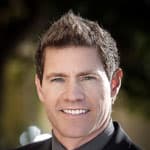
Dr. Todd C. Snyder received his doctorate in dental surgery at the University of California at Los Angeles School of Dentistry. Dr. Snyder has learned from and worked under some of the most sought after leaders in dentistry, refining his skills in comprehensive, extremely high quality aesthetic dentistry and full mouth rehabilitation. Furthermore he has trained at the prestigious F.A.C.E. institute for complex gnathological (functional) and temporomandibular joint disorders (TMD).
Dr. Snyder lectures both nationally and internationally on numerous aspects of dental materials, techniques, and equipment. Dr. Snyder has been on the faculty at U.C.L.A. in the Center for Esthetic Dentistry where he co-developed and co-directed the first and only comprehensive 2-year postgraduate program in aesthetic and contemporary restorative dentistry. He currently is on the faculty at Esthetic Professionals. Additionally, Dr. Snyder is a consultant for numerous dental manufacturing companies and has had the opportunity to research and recommend changes for many of the materials now being used in dentistry. Dr. Snyder has authored numerous articles in dental publications and published a book on contemporary restorative and cosmetic dentistry.
Dr. Snyder also founded and is CEO of Miles To Smiles a non-profit mobile children's charity that helps indigent and underprivileged children.
Dental podcast: Welcome to DentalTalk. I'm Dr. Phil Klein. Today we'll be discussing simple concepts for veneer cementation and how to manage the cementation process. Our guest is Dr. Todd Snyder, a popular speaker on Viva Learning.com, a cosmetic dentist, international author, lecturer and consultant to dental companies. He hosts a weekly podcast, Delusional: Winning the Weekly War of Dentistry. You can reach Dr. Snyder at: www.Legion.Dentist.
Transcript
Read Full Transcript
This transcript was automatically generated and may contain errors or inaccuracies. It is provided for reference and accessibility purposes and may not represent the exact words spoken.
You're listening to The Dr. Phil Klein Dental Podcast
Welcome to the show. I'm Dr. Phil Klein. Today we'll be discussing simple concepts for veneer
cementation and how to manage the cementation process. Our guest is Dr. Todd Snyder,
a regular speaker on VivaLearning.com, a cosmetic dentist, international author, lecturer,
and consultant to a variety of dental companies. He hosts a weekly podcast,
Delusional. Winning the Weekly War of Dentistry. You can reach Dr. Snyder at legion.dentist.
Before we get started, I'd like to mention that Dr. Snyder's webinar that's related to this podcast
is now available as an on-demand webinar on vivalearning.com. Simply type in the search field
Snyder, S-N-Y-D-E-R, and you'll see a list of his webinars that he's presented for us.
All of them are excellent presentations for the entire dental team. Dr. Snyder, it's a pleasure to
have you on Dental Talk. Thanks, Phil. Great to be here. So if you missed the last podcast or if
you haven't seen it yet, they're all recorded. The title of that one is Simplifying Concepts for
Veneer Treatment and that covers a lot about treatment planning and really thinking ahead so you're
not surprised and some of the variations and some of the cases that you should be looking at before
you even sit down with that patient. And Dr. Snyder covered it really well and he covered what kind
of systems he likes to use. Today we will be talking more about cementation specifically of the
veneer. And to begin, my first question, Dr. Snyder, is when it comes to veneers,
how do you manage the cementation process? You know, the cementation process, I think,
and most people would agree, is probably one of the scariest things. You put all this time and
effort into getting to the point of cementation, you know, the treatment planning, the smile
design, getting the patient to approve things, and the ceramist building something, and now it's
all on your shoulders to get it across the finish line.
There's a lot of ways in which you could do this as far as management. You know, some people like
to put one veneer on at a time. Some people like to put on a couple at a time. Some people like to
put everything on all at once. And so the management is to some extent trial and error,
but you don't want to have problems. You don't want to have to have redos. So what I would tell you
is to get a simplified system that works for you and for me. I have two systems in which I
implement. Depending on the size of it, if it's a lot of teeth, I may break it up into two or three
sections. If it's six or eight teeth and I can have good isolation, I'll put them all in at once.
Me personally, I find that if I try to put in one at a time, I have more potential risk in front of
me than if I'm putting multiples in at the same time. And so my management process is to try and
get everything in at the same time if I have good isolation and control of the area. Right.
Now, when you say put them in all at the same time, you obviously can't cement them all at the same
time because you have to manage that process individually, right? So explain a little bit in more
detail what you mean by put them in all at the same time if you're doing six or eight. Yeah.
So, you know, if you have six or eight teeth in front of you, that means if I'm doing a total etch,
I'm total etching all six or eight teeth all at once. I'm then applying the bonding agent on all
the teeth at once. And then after I've done that, following the manufacturer's instructions,
you know, to air thin it, and then I will cure that based on my bonding agent. My Albon Universal
has a thin film thickness when used properly such that it won't interfere or impact my veneer
seating to completion. Obviously, if you have a thicker film thickness from a different brand or
manufactured product, if you don't thin it properly, then things will not seep, and you probably
shouldn't be curing that. So part of your system, you need to understand what products you're using
and how those can create a problem for you. So again, Albon Universal doesn't create that problem
for me, and that's one of the luxuries of using it. But from there, obviously, having your veneer,
I'll fill my veneer with the resin cement. We can talk about that aspect, but I will then seat
everyone. one of them all at the same time. So none of them are cured such that I can move things
around and check everything. And once I have everything where I want it, then I could potentially
cure it. So I am placing pretty much everything all in one sitting. Is there any special way of
handling the veneers when you do it that way? Definitely. And that's where I said we should
probably mention that is, you know, your veneer, when you try it in, the choice to veneer system,
the resin looting. system that Bisco has created is phenomenal in that you have a try-in paste
that's water-soluble that allows me to try in all the veneers all at the same time so the patient
can see. the optical qualities of everything. If you don't use a try and paste or you try to save
some money by using water, water instantly leaches out from behind the veneer such that you have an
air gap. And so the veneer will always look whiter when you're looking at them. So if it's whiter
in appearance and then you cement it and it's warmer, the patient's going to be upset. So by using
a water-soluble try and paste that doesn't leach out, you maintain an optical coherence of the
tooth and the veneer so the patient can see the color qualities and approve that. before you cement
things.
When do you do the try-in?
So the try-in, after you've taken off the temporaries and you've cleaned the teeth, you're going
to go ahead and try in each veneer individually with no try-in paste to check the margins.
And then, you know, checking interproximal contacts. And once you've approved that everything fits,
it's at that point I will then put the try and paste in each of the veneers and put them all on,
sit the patient up 45 degrees and say, okay, I got everything to fit. I'm happy with it. Now I'm
letting you approve the color appearance, the shape, you know, all of those aspects. They should
mirror what we saw in the wax up and the temporaries to about a 90% other than color being
slightly different. And if they approve that, I get a signature and say, okay. We're going to now
clean things up and get them ready for cementation. And tell us about the case very quickly where
the patient said, I don't approve. What do you do then? It's never happened. There you go. I
figured that was the answer. 28 years too. 28 years and never happened. No, I've had it happen.
Everybody's had a problem. What are you doing? What's the answer in that case? Yeah,
you know, so I've had a couple. I've had at least three that I can think of. There's probably a
couple other ones I can't think off the top of my head, but I've had some that unfortunately the
incisal edge was angled running downhill from like, you know. K9 number six downhill to number 11
or something. I said, oh man, it's canted. Now, if you could polish and adjust it because it's
minimal, great, I can fix it. But if it's not, well, then it's got to go back to the lab. So I'm
going to take photos while it's in the mouth. I'm going to show the technician with some type of
alignment device saying, here's how we need to modify it. And they can probably just stack some
porcelain back on and fix it quickly and easily. I had another woman who unfortunately, she
decided, hey, I want things a lot wider. And I said, okay, well, we had to prove this. She goes, I
know. And I said, but you want it wider even though you approve this. They're like, yes, because I
get approval checkpoints throughout the whole process. So instead of me eating the cost, I say,
look, it's a great point. This is why we do this. Now that you've seen it and you want it wider,
that's no problem. But it's going to be an expenditure that we weren't expecting. So I can decide,
do I want to eat it? Do we want to eat it together that she pays half and I pay half? Or do I say,
look, you approve the original color. It's on you. You decide in your office how you want to
perform these, but you need to have checkpoints as running a business so you're not eating things
should they happen. So for me, it was like, okay, we want to go whiter. No problem. We sent the
lab. Let me get them to whiten it up. For some of us, depending on the patient and the case, of
course, delivering a veneer can be a bit stressful, right? Everything had to go right up to that
point for the delivery to be perfect. So what steps do you recommend to take to ensure that
delivery of your... veneer restorations are consistently as close as possible to perfect.
Well, that's where I think you need to stick to a system. So again, for me, it's a very systematic
approach of how I try them in and check each margin, how I check in a proximal contacts,
how I then go to the next step of using a try-and pace so the patient can perceive it. And when
they approve it, then the next step is, OK, I got to take these all into the lab and I have to
clean them very thoroughly, whether it's ultrasonic water bath with an alcohol in it, whether it's
a steam bath. If you're using a steam cleaner, you know,
something has to be done to make sure these are free of contaminants. And then from there, it's
like, OK, now I need to make sure that I have my silanes that are in place, whether it's a dual
bottle system like Bisco has their bis silane. two bottle system which is not pre-hydrolyzed or if
you go through a lot of silane you might buy their single bottle system which is already hydrolyzed
has water already in it uh has a shorter shelf life but it gives you that convenience you're not
spending time mixing and whatnot but um so if you're applying that and then putting a little warm
air over that you know to allow that to evaporate Then you're going to the next step of saying,
okay, I now have an unfilled resin that I have to put inside this veneer. That unfilled resin is
meant to be extremely thin. It doesn't impart any strength, but it's acting kind of like a
surfactant. Same as when you pour up like an alginate impression. Before you pour the stone in,
you pour a little bit of a surfactant to allow things to flow easily so you don't get bubbles. Same
kind of thing. If I'm going to put a thick resin looting cement on here, I want it to flow easily
so I don't get bubbles and whatnot. And so all of these steps have to happen. And then from there,
you know, you grab your choice to looting cement where I personally use translucent for 90
something percent, but I'll use milky white on a couple that I need a little extra pop. You know,
it's loading each one of those veneers up and placing them on the teeth. Some people like to put
the resin on the teeth themselves. I personally, my system is I like to put it in the veneer so I
know I have exactly the right amount. And when I seed it, I can see 360 degrees around the margin
to all the excesses coming out. So I know that margin is sealed. And so you can see it's a very
systematic approach in doing this. Now, you may find a way to deviate in your practice something
slightly different, but I can tell you this approach works extremely well for me in 28 years. And
so the system, if you're following it correctly. You don't end up with all the little problems that
usually you'll hear someone has encountered, whether it be bubbles or something not seeding or
trying to bond to something that was contaminated. There's a step to every one of these processes.
So when you talk about the actual products that you're using, color stability, right? That's a huge
factor. Low film thickness. What are some of the key attributes to these products that our audience
should look at when making a purchasing decision on a veneer cement? Yeah, you bring up a great
point. And I kind of hit on it probably too quickly in there. But if you're putting a bonding agent
on a tooth and you're going to cure that bonding agent before you seat a restoration, meaning a
veneer, if that bonding agent has a thick film thickness, like it's highly filled,
it doesn't matter how much you air thin it, it's going to be too thick and your veneer will not
seat properly. So your margins are open. So understanding the product you have and how thick the
film thickness is is key. Based on that, you may decide to either light cure it if it's a thin film
thickness like the All Bond Universal. If it's a thick film thickness, you do not want to cure
that, and that means you're sandwiching everything together and curing it all at once. Now, the
advantage of obviously curing a bonding agent ahead of time is that it's already... the tooth, as
opposed to if you're curing through a veneer and curing through your resin looting cement to get to
your bonding agent, everything is curing towards its mass or where the chemical reaction started.
That means you're pulling things to some extent away from the tooth. So you might not get as good
of adhesion to the tooth structure if you're trying to cure everything all at once, as opposed to
curing the bonding agent on the tooth. So that's the first critical step you have to consider. So
thanks for bringing that up, Phil. and then the second thing is obviously color stability and
that's why i said choice two is phenomenal in that the delta e value in other words the color
perception of a color shift is not visible it's not perceivable to the human eye it's so low which
is great that's what you want but also i add into that by trying to hedge my bet and saying i'm
going to use a translucent cement for 90 something percent and all the color i want to achieve is
all achieved in the porcelain which has you know long-term stability in its appearance as compared
to resins potentially having the ability to shift color over time. That's why I'm using the Choice
2 and the Albon Universal. So when you talk about the translucent shade, Dr. Snyder, you're
basically communicating with the laboratory pretty much to the final shade of what that patient is
expecting, given that you're using a translucent cement. Exactly. I want them to build in either
the opacity into the restoration or the whiteness or the translucence into the ceramic that allows
the underlying natural tooth color to come through, not the resin so much to create the color.
So there are shades, though, that are available in the Choice Tooth system, and those are used
after a try-in when the patient says, well, I'd like it a little biter, or it's too white and too
bright, and then you use those shades to kind of tweak it? You know, you're exactly right. And I
take this for granted because of the way that I've systematized everything. But yeah, so they have
a milky white. They've got an A1. They've got, I think it's a B1. They've got numerous different
shades, obviously, because, you know, if your veneer is thin and there's a lot of show through in
color, you may say, well, you know, the Denton's creating a little too much warmth. And so I want a
little whiter. Well, that's why I had said earlier that I'll use milky white for maybe 10%. I'll
give it a nice little bump in color by using that. And if they go, oh yeah, that's perfect now. The
ability for you to have a try and paste that mirrors the final resin looting cement in the Choice 2
system is critical for your success. Because if you try everything in with the translucent and the
patient goes, no, no, no, I want it whiter. You go, no problem. Let me clean that out. I'll put it
back in with the milky white translucent. And now you can evaluate it again. So before we were to,
let's say, just cement everything in and call it final and the person's unhappy and you're starting
over, you know, grinding things off, you have the luxury of the Bisco Choice 2 system to give you
the options to see things ahead of time, which is critical for success. You know, as we wrap up
this podcast and great insight, Dr. Snyder, as usual, please check out. As I mentioned in the
introduction, Dr. Snyder's webinars on VivaLearning.com, they cover all this in more depth with
slides. He has a Q&A section afterwards, and that's VivaLearning.com. Just type in Snyder in the
search field, S-N-Y-D-E-R, and you'll find his webinars. Great stuff,
Dr. Snyder. Really appreciate it. And we look forward to you on future podcasts and webinars.
Thanks for all your contribution. And don't forget to visit legion.dentist where you can get more
information on all the things that Dr. Snyder has talked about in these presentations. Thanks a
lot, Dr. Snyder. Thanks, Phil.
When it comes to veneers, many will agree that the cementation process is the scariest part. There’s a lot of room for error here, so how can you ease the press...