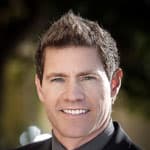
Dr. Todd C. Snyder received his doctorate in dental surgery at the University of California at Los Angeles School of Dentistry. Dr. Snyder has learned from and worked under some of the most sought after leaders in dentistry, refining his skills in comprehensive, extremely high quality aesthetic dentistry and full mouth rehabilitation. Furthermore he has trained at the prestigious F.A.C.E. institute for complex gnathological (functional) and temporomandibular joint disorders (TMD).
Dr. Snyder lectures both nationally and internationally on numerous aspects of dental materials, techniques, and equipment. Dr. Snyder has been on the faculty at U.C.L.A. in the Center for Esthetic Dentistry where he co-developed and co-directed the first and only comprehensive 2-year postgraduate program in aesthetic and contemporary restorative dentistry. He currently is on the faculty at Esthetic Professionals. Additionally, Dr. Snyder is a consultant for numerous dental manufacturing companies and has had the opportunity to research and recommend changes for many of the materials now being used in dentistry. Dr. Snyder has authored numerous articles in dental publications and published a book on contemporary restorative and cosmetic dentistry.
Dr. Snyder also founded and is CEO of Miles To Smiles a non-profit mobile children's charity that helps indigent and underprivileged children.
Dental podcast: Welcome to DentalTalk. I'm Dr. Phil Klein. Today we'll be discussing some of the smart ways to reduce overhead and increasae profitability. Our guest is Dr. Todd Snyder, a popular speaker on Viva Learning.com, a cosmetic dentist, author, international lecturer, researcher and instructor at various teaching facilities. Dr. Snyder is a consultant for numerous dental manufacturing companies and has had the opportunity to research and recommend changes for many of the materials now being used in dentistry. You can reach Dr. Snyder at: www.legion.dentist..
Transcript
Read Full Transcript
This transcript was automatically generated and may contain errors or inaccuracies. It is provided for reference and accessibility purposes and may not represent the exact words spoken.
You're listening to The Dr. Phil Klein Dental Podcast from Viva Learning.com.
Welcome to the show. I'm Dr. Phil Klein. Today we'll be discussing some of the smart ways to
reduce overhead and increase profitability. Our guest is Dr. Todd Snyder,
a popular speaker on VivaLearning.com, a cosmetic dentist, author, international lecturer,
researcher, and instructor at various teaching facilities. Dr. Snyder is a consultant for numerous
dental manufacturing companies. and has had the opportunity to research and recommend changes for
many of the materials now being used in dentistry. You can reach Dr. Snyder at www.legion
.dentist. Before we get started, I'd like to thank our sponsor, Saikan. a world-renowned company
that provides a complete range of infection control solutions for dental practices. So if you're
looking for equipment or products in the area of infection control, look no further than Sycan,
known as the maker of the statum cassette autoclave, the fastest cassette autoclave out there for
sure. Sycan offers cutting-edge solutions for efficiently washing, disinfecting,
and sterilizing dental instruments. A really phenomenal company, great products. You'll see it at
the dental shows or showrooms and so forth. Super cutting edge stuff. They make any stereocenter
stand out. So we thank SICAN for their support for this podcast series with Dr.
Snyder. Dr. Snyder, it's a pleasure to have you on Dental Talk. Thanks for having me, Phil. The
podcast that we finished just a while ago titled Making More by Doing Less had a lot of great ideas
in there. And I encourage everybody to tap into that. So this is part two of a four-part series by
Dr. Snyder. And this one, as the title says, profitable ways to cutting overhead. So let me ask you
this, Dr. Snyder. Everyone wants to be more profitable by lowering their overhead. And let's face
it, it's no secret that practicing in California, as you do, has to be pretty expensive. So what
have you done to reduce or minimize your overhead and still maintain high profitability?
Well, you know, one of the ways that I have achieved it is by implementing certain technology. And
so we just talked about SICAN in the last podcast. So I tell people to go back and listen to that
as far as how I became more efficient by spending some money. But what I bought as far as
technology has a big return on investment. that my employees are doing less as far as in
sterilization and they're being more profitable helping me chair side or treating patients so you
know evaluating all your systems in your practice the number one problem I see in most offices is
they don't have good systems or they don't have good training in the systems. So if you can modify
systems, you obviously can be more productive and oftentimes require less people. You can
definitely look at your overhead, but I think oftentimes I hear dentists saying how they want to
lower overhead. And yet, you know, they're trying to save a quarter percent on supplies when in my
mind. I don't look at lowering the overhead so much as I say, well, why don't you raise the top end
or raise the ceiling? Because if you raise the ceiling, then your overhead doesn't change a whole
lot because a lot of your just existing overhead doesn't change other than maybe, you know, a
little more on supplies or a little more on the lab bill. But other than that, your employee time
is usually about the same. Your electricity and overhead as far as your rent still stays the same.
So really, in my mind, you're looking in the wrong direction. If you're trying to save a penny, I'm
saying, no, look the opposite direction and figure out how you can flourish and lift that ceiling
up. And instantly make, you know, another hundred thousand. And then the little bit you're worried
about saving on your overhead is instantly out of your mind because you just became so much more
profitable. But like I said, systems are very important. Don't get me wrong, but I think you need
to look at both ends. So modifying systems becomes one of the main topics.
And there's a lot of systems one could talk about. We just touched on the one as far as
sterilization. Yeah. What are just a couple of more systems that are priority? Some large systems
in the practice that have to be looked at just from the top, top view. You open the mic up. Let's
go. All right. So the front office, you know, I think most offices have too many staff up front,
you know, and I'm generalizing, but I go in a lot of offices and I see like, wow, too many people.
And part of the reason is you have either a lot of people trying to answer calls or a lot of people
doing repetitive things that could have been automated. There's so much technology nowadays that
allows you to automate so much of the front office that we actually contemplated removing our front
office and having just a virtual. person answering the phone somewhere on the planet. And yet you
look at offices that have numerous, you know, front office employees handling it, you know,
insurance and mailing things out and just a lot of tedious work that's just pushing paper and
making calls that doesn't make you necessarily more money. It's trying to collect the money that
already left out the door. And then from there you go, depending on how big your practice is, you
know, I see office managers, you know, in my mind, I never want an office manager, but if you're
that huge, maybe you need one. But at the end of the day, what systems are they running or are they
just kind of overseeing everything? You know, that's another place that I tell people to look
because usually there's a lot of money saved there. So technology and employees at the front
office. No, that's a good start. So and what you were saying about the supplies, there's a saying
that says you can't save your way to prosperity. And that applies very much to saving a penny here
and there on supplies. And I think the major distribution companies have tried to get that message
across as well. So what are some of the key signs that tell a dentist? look, it's time to rethink
things and start reducing overhead. What's the telltale signs they should be looking for? You know,
again, I mentioned buying technology. And so we mentioned Psycan originating. So if you're buying
technology, in my mind, you have to pay for something. But that something that you have to buy has
to have a good return on investment. You know, because a lot of times as dentists, we go, oh,
that's a cool new gadget. I got to have it. And so you see people that buy a gadget, then it just
sits in the corner. or that gadget replaced something that already did the same job. but it did
that same job for a lower price point. So again, you had lower overhead, but you raised the
overhead by buying a cool technology that seems cool, but didn't change what you're able to
produce. So now you just have more liability on your hands versus like buying a sterilization
system where it makes things faster and more efficient that you're truly saving money because
you're getting things done faster, more efficiently, and you require less employee work input that
they, again, they're making money elsewhere for you. versus buying a paperweight that looked cool
and seemed like the new gadget that everyone was talking about, but it really didn't change
anything that you couldn't have done with a $4 material previously. So again, evaluate the return
on investment on your technology. Don't just go in for the emotional purchase that it looks cool
and everyone's got one. Now, do you recommend the dentist to talk to their accountant and actually
look at the P&L and say, let's look at our practice and say, you know, we're working really hard
here, but... not making as much money as I dreamt I would make when I started this business. And
dentistry is not an easy profession. So how do we get to a higher profit level?
What do we do? Now, you talked about just what you just said. Be careful of buying some of these
high liability, costly gadgets or technologies that may not really raise you to another level of
efficiency. But what else can they do to reduce overhead? Just briefly, because I know that's the
whole. part of your program, Legion. A lot of it is part of Legion.Dentist. And I do encourage our
audience to check that out. Legion is L-E-G-I-O-N.Dentist. And Dr. Snyder runs that training
program online. And you can learn a lot from that. But in this short podcast, can you give us some
other ideas related to this? Well, you know, we come out of school delusional, right?
I think all of us would agree. It's a harsh thing to swallow, but we are delusional. We think we
can just come out, set up a practice and make tons of money. That is totally delusional. You're set
up for failure. So when you say, should I get my accountant involved, you know, to look at the P&L
and where we're at, by all means, if you're not business savvy, get someone, get a mentor, somebody
that is, you know, get, get, you know, your CPA that can help you evaluate things before you make
some of these purchases. And, you know, so you're going to be more profitable in the longterm if
you have someone that's business mining helping you. Now, if you want to streamline more things,
yeah, you look at the front office and how that's managed. You look at how patients come into your
practice as far as your marketing, how you can streamline that. You look at how patients no show in
your practice or don't come in ready, prepared. There's technology to streamline all of that.
That's automated.
In the, in the operatory itself, you know, doing certain procedures, there's technology you can buy
to streamline that and make you more efficient. And all of those have a return on investment
potentially based on how you implement. And so there's a, there's a lot there to go into.
I mean, we could spend hours on all of those. Yeah. Let me ask you, let me ask you this question
here. So what about overhead regarding the actual rent? Let's say,
let's say a dentist is renting an office. Okay. Now there's, we, I'm in Westlake Hills, Texas,
which is. near austin texas and i've been to several dentists in this area one dentist that i went
to see has a beautiful layout i mean it is an expensive location very expensive beautiful layout
and it's gorgeous okay the other dentist which my wife happens to go to is a is a very very nice
office um but it's not you know it doesn't look like it was just built two years ago it's it's
somewhat dated very comfortable clean and this dentist seemed very happy there The staff was very
friendly. And the other office that was super, super modern and a very expensive rent seemed like
there was more stress. Tell me about how that affects overhead, but also has a huge impact on the
stress level in the office, the morale, the overall enjoyment among the entire dental team.
Well, you bring up an interesting point because I think there's two different factors there. I
think one, you know, people go into certain businesses, establishments. And they expect to pay a
certain amount based on what they see and the perception of what they're going to get, the caliber
of service, the caliber or quality of the product. You know, there's a perception there. So I think
you should modernize and keep things current. But for the same token, I would say that the stress
level, I think, starts with you, the dentist. You know, so you walk, you show up to work,
you set the tone. And so if you're stressed out, if you're worried about overhead or, you know,
you're not making enough money or you got too many employees that are upsetting you or the
insurance isn't paying enough, you have all these frustrations and stress and you carry that on
your shoulders and everyone can see it. You're the problem. It starts with you. If you show up with
a positive mindset and you're getting each employee to have a positive mindset and you're lifting
them up, you're making them feel appreciated and you're saying how phenomenal everyone is, you set
a different tone for the environment. I feel that most of the time distress and frustration to some
extent is the dentist not taking charge and assuming that they're going to do their job properly.
They're relying on you as the commander in chief. But from there, if you're not giving them
technology to make life easier, if they're using antiquated old technology, yeah, they may be
frustrated too. They may be tired of things. They're looking at you to change something. So again,
it circles back to you as the dentist. How are you going to make it so it's better? And also just
to close on this podcast, living below your means. Does that apply to a dental practice? I mean,
does the dentist that's owning the practice, will he or she have less stress and demand less from
their staff when they're living or working below their means? Whatever that means in a dental
practice. Does that make any sense? And I'm asking the expert here. Definitely. Yeah. You know,
yeah, you definitely don't want to live beyond, right? You want to live under in my mind. So like
when I slept on the floor here for the first two years of my dental practice, it was because I
didn't want any money going anywhere. It's a true story. We can talk about it more another time.
But, you know, a lot of people want that instant gratification, that instant money, that instant
success. And they go and buy things and realize, oh, my God, I put myself into a bad place. And so,
yeah, that's going to be stressful. And then you're taking out all the employees, maybe unbeknownst
to you that you're trying to make more money because you got all this debt. And it's just, you
know, it's coming out of your pores that you've got to make money. Somebody do something, create
something. Let's try and get rid of some more overhead. You're just searching for anything versus
actually having a goal and saying, well, if I do this, this, and this, I can become more
successful. And when I get to that point of being successful, then I can go buy the nice car. Then
I can buy the house. But don't put those in front. It takes years to become successful. It's not an
overnight thing. Don't look at all the social media and think that you should be there. Most people
are lying on social media. Yeah, I agree with that 100%. Dr. Snyder, it's always great to have you
on the show. Again, to our audience, if you want to learn more about how Dr. Snyder slept on the
floor for the first two years in his practice, visit him at legion.dentist. And I say that tongue
in cheek, but there's a lot to learn from this guy. Legion.dentist, L-E-G-I-O-N.dentist.
And he's got quite a training program there. And it's a very personalized training program. So if
you're looking to really reinvent yourself and do some great stuff with your practice, check it
out. And we thank SICAN for their sponsorship. And Dr. Snyder, we'll see you on the next podcast.
Thank you very much. Thanks so much, Phil. It was a lot of fun.