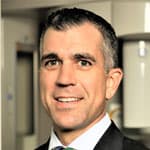
Dr. Duplantis received his D.D.S. degree from The University of Texas Health Science Center at San Antonio, Dental School in 1999.
He continued with postdoctoral training at Baylor College of Dentistry, earning a certificate in Advanced Education in General Dentistry in 2000. He has also applied for, and been confirmed for his Fellowship degree from the Academy of General Dentistry this coming July. He has been in private practice since 2000 in the North Fort Worth, Texas area. In private practice, he treats all ages with an emphasis on restorative and aesthetic dentistry.
Dr. Duplantis is a member of Catapult Educations Speakers Bureau and has been a member of several Aesthetic and Restorative Continuums, most recently the Spear Education Study Club. Dr. Duplantis has always had an interest in "high-tech" dentistry and has been incorporating CAD/CAM technology in his practice since 2004. Formerly a CEREC user, he is now a user of the 3M TrueDefinition Oral Scanner, the iTero Intraoral Scanner, and the Glidewell Laboratories fastdesign.io mill. Dr. Duplantis has also written several articles regarding digital dentistry for various dental publications. He has helped 3M and Glidewell on various projects regarding the scanner an mills, and is a member of the panel of experts on the website TrueDefDoctors.com. He is also a clinical consultant for Glidewell Laboratories. Dr. Duplantis resides in Keller, Texas with his wife, Ellen, and his children, Austin and Ava. He is an avid cyclist, enjoys shooting sporting clays, and loves to be outdoors.
Dental podcast hosted by Dr. Phil Klein: Today we'll be discussing taking perfect pictures every time with a digital dental camera. We'll be focusing on, no pun intended, a unique, innovative and extremely easy-to-use camera called EyeSpecial from Shofu. This camera is getting rave reviews all over the dental profession. It's known to take all the stress out of dental photography as you obtain high-quality images for case documentation, lab collaboration, and patient communication. Our guest is Dr. Chad Duplantis, an Academy of General Dentistry Fellow, a member of Catapult Education Speakers Bureau and has been a member of several Aesthetic and Restorative Continuums, most recently the Seattle Study Club.
Transcript
Read Full Transcript
This transcript was automatically generated and may contain errors or inaccuracies. It is provided for reference and accessibility purposes and may not represent the exact words spoken.
You're listening to The Dr. Phil Klein Dental Podcast from Viva Learning.com.
Thanks for joining us for this Viva podcast. Today, we'll be discussing taking perfect pictures
every time with a digital dental camera. We'll be focusing on, no pun intended, a unique,
innovative, and extremely easy-to-use camera called Eye Special from Shofu. This camera is
getting rave reviews all over the place. It's known to take all the stress out of dental
photography as you obtain high-quality images for case documentation, lab collaboration,
and patient communication. Our guest is Dr. Chad Duplantis, an Academy of General Dentistry fellow,
a member of Catapult Education Speakers Bureau, and he has been a member of several aesthetic and
restorative continuums, most recently the Seattle Study Club. Dr. Duplantis, it's a pleasure to
have you back on Dental Talk. It is always a pleasure to be here, Phil. Thank you so much. Yeah,
and I want to tell you that your podcasts are getting excellent reviews and very high engagement.
We are the fastest growing podcast show in the dental space right now, I'm happy to say. Our
activity is going up dramatically every month. So today we're going to be talking about dental
photography. Before we get into the details of this camera, which we've heard a lot about, tell us
about the need for dental photography in a typical dental practice. Well, you know...
believe that, well, I shouldn't say I believe that. It's been proven that through a study back in
the 70s that... we're talking about what people remember the most, if you present them with visual
information, 65% of that is retained. And if you present them with verbal or oral information,
only 10% of that is retained. So if you take that study and you really look at it and you just
break it down to basics, what it tells me is that if you're not explaining with images, you're
losing validity. So I believe it's really important. that we use this for a number of reasons,
but most importantly, to be able to share what we see with our patients and show it to them,
and that way they will understand what's going on and have a better grasp as we educate them on
what's going on in their oral environment. Yeah, so I've talked to several KOLs about dental
photography, and they differ in some aspects of when they take the patient into the room where they
take the pictures. And then we're going to get, as I said earlier, we're going to get into the
camera specifics. Where in the process of a new patient or an existing patient do you do the dental
photography? You know, it's a real delicate. area because I feel that if I walk a patient into the
room and I just start snapping a bunch of pictures, it may freak them out a little bit. They're
used to radiographs. They're used to intraoral images. And so what we do in our practice is we have
them in. We take our standard radiographs. We take intraoral images on every single patient,
whether they have something or not. And there's a bunch of reasoning behind that as well. It's just
as good to explain health as it is disease. So we take intraoral images. And,
you know, there are certain patients where if we see a lot of things going on or we know that we're
going to go into a more invasive treatment plan or a more extensive treatment plan, I should say,
then we'll crank out the big guns and start taking some extra oral photography. or with a standard
digital camera rather than just an intraoral camera. And I would say in our practice, probably 50%
of our patients, we gravitate to taking those digital images on that first or initial visit.
The rest we may take on a follow-up visit and we have them back to gather more diagnostic
information. In some patients, we don't have the need, but we're utilizing this camera on a daily
basis to take. you know, I guess you would say digital extra oral images or images without an inch
oral camera. So let's talk about the camera itself. So the eye special digital camera, which I've
heard about for several years now from Shofu is all the rage when it comes to dental photography.
Tell us if this is justified. I mean, is it that much better than any other camera out there? And
how does it help you in your practice? Because I know you use this camera. Well, it's funny, Phil.
I was the exact same way. I kept seeing advertisements for this. And, you know, I saw the first
version and the second version, and I never really had any colleagues that used it. And then, you
know, every time I would look to build another camera, I would see this and be like, I don't know,
I'll just build another camera. Well, finally, I bit the bullet and I bought it. And this camera is
all the rage. I mean, this is a fantastic piece of technology that I certainly can't live without
in our practice. And, you know, my team at the office makes fun of me because I pretty much walk
around with it attached to the hip. I mean, I'm carrying it at all times throughout the practice
and I'm using it just all the time. What I hear about it is it's set up specifically for dentistry.
Shofu has always been a dental-specific company in Japan, and Japan loves cameras. So they put the
love for dentistry and the love for cameras together to make eye special. And that it's so simple
to use that the staff actually enjoys using it. It takes the stress out of taking pictures. The
percentage of perfect pictures is almost 100%. And it has a lot to do with the presets, which are
very easy to use. So if you would talk about the nine, you don't have to tell us all nine, but I
hear there's nine preset dental shooting modes. Talk about that with us, please. And also,
what are the most beneficial modes for your practice? Sure. So, you know, you hit the nail right on
the head when you said that the staff can use this. And that was one of my biggest gripes with all
the cameras that I had is that, you know, I want to be doing dentistry. I don't want to be
photographing dentistry, but I have to photograph dentistry. for a number of reasons.
I want to share it with patients. I want to share it with the lab. I want to limit my liability and
exposure. I want to be able to document the cases that I'm taking. So there are certain times where
I just simply can't take a picture, you know, and so I'll just hand it to a staff member and all
they have to do is know how to select the correct mode point. It focuses automatically and then,
you know, press the button and the picture is automatically captured. So there's several modes.
There's a standard mode, which we use probably 70% of the time. The mirror mode is fantastic.
I don't have to take these images and adjust them and flip them, rotate them, crop them. After I
take it, I hit the mirror mode and it automatically inverts that image for me to where I don't have
to go back and do it. Full face mode. Let's talk about that for just a second. With a standard DSLR
that we use in our practice on a daily basis, you sometimes have to swap lenses. You have to
understand, you know, various aspects of the camera. With this, you just press the button. It's as
simple as an iPhone. And so they press the button for full face mode and it's ready to take full
face shots. Another mode that we're utilizing. very often,
is the isolate shade mode. And for any case that I'm going to send to the laboratory,
and I want them to be able to see the true value of that particular tooth in question,
the isolate shade mode, it blocks out the gingiva, blocks out the tongue, blocks out the cheeks,
and they can actually study that image and get a real feel of the value of that particular tooth in
question. Someone you should really ask about it is one of the labs that I use and how much they
like it. Every single one of them, when they first see one of those images, it's like, how did you
do this? And I'm like, well, it's just a standard feature on the camera. I remember in my graduate
endodontic program, I had a Nikon with a, you know, an exterior flash and the 105 millimeter lens
where it had a fixed focal length. I had to move the camera back and forth to focus and it was
gigantic. And apparently this thing looks like a toy. but all the brains of it is inside.
Is that true? I've actually never held it. It's very true, and I think that was my aversion.
because, you know, we're so used to seeing these fancy Nikons and Canons and whatnot with these
ring flashes and various, you know, macro lenses. And,
you know, and we see this and we're like, how can this work? But it does. You know, it really does.
The brains are inside the camera and this thing is very finely tuned. Yeah. And so your staff
could, the learning curve on this, your staff could pick this up and start using it almost
instantly. Absolutely. Absolutely. It's so easy to learn. Yeah. So the ROI on this sounds like it's
pretty strong just in the fact that you're saving time, you're getting no redos, right? I mean,
a retake of a dental impression. What does it cost you chair time, 500 bucks an hour, working time
as a dentist, something like that? Yeah, probably. That's what you're worth. Yeah. Well, actually,
that's what apparently, according to the ADA, a dentist's time is worth $500 an hour. Since I've
had this, I can count the number of redos on one hand and maybe even one finger.
I can only, off the top of my head, I can only think of one crown that I sent in for a redo since
we've been utilizing this camera. And the lab tech said, he said, yeah, I missed the shade.
It wasn't because of the images that we sent. It was just, I flat out missed the shade. Now,
another feature that they've added to the newest version that I have not used yet, but I'm really
excited about is the movie mode. So you can actually record movement of the patient's dentition or
move the camera around and take an actual video as well. So that's going to be very beneficial with
this newest version. Disinfection is an important factor all the time, especially now in this
pandemic. How easy is it to prevent cross-contamination between patients with the eye special
versus another kind of camera? You know, this camera is super user-friendly in a number of
aspects, but infection control is absolutely no different. I mean, you just, in terms of ease of
infection control, I should say, you just wipe it down. I mean, we use Optum wipes or Kappa wipes
in our practice, and we just wipe it down and let it dry. And you feel very confident that what
you're using has been disinfected after each use. Yeah, so as far as disinfection goes,
it's just a matter of the surfaces are... easy to clean compared to what you mentioned earlier,
having a ring flash and a large lens, et cetera. So what would you recommend? Would you make any
recommendation to a dentist who's first starting dental photography and they've never really taken
any photographs? They've only used intraoral imaging. I would say look into this camera and give it
a go or request a demonstration from the sales representative. I know that they all have a camera
or two at their disposal that they can bring by your office and let you take some images. I don't
think you're going to look back. You know, over the past several years, you look at things you
can't live without. This is one of the three things in my practice that I truly feel that I cannot
live without. Dr. Duplantis, thank you again very much for your insight. We hope that our audience
gleaned something as far as dental photography, and certainly any information that you want to get
is on showfood.com, and as Dr. Duplantis recommended, talk to your sales rep. Thanks again, and we
hope to have you on a podcast soon. Thanks, Phil. I appreciate it.