Cosmetic Dentist · UCLA Center for Esthetic Dentistry
University of California Los Angeles School of Dentistry · UCLA Center for Esthetic Dentistry · F.A.C.E. Institute · Esthetic Professionals · Legion.Dentist · Miles To Smiles
Read full bio
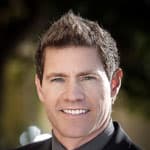
Dr. Todd C. Snyder received his doctorate in dental surgery at the University of California at Los Angeles School of Dentistry. Dr. Snyder has learned from and worked under some of the most sought after leaders in dentistry, refining his skills in comprehensive, extremely high quality aesthetic dentistry and full mouth rehabilitation. Furthermore he has trained at the prestigious F.A.C.E. institute for complex gnathological (functional) and temporomandibular joint disorders (TMD).
Dr. Snyder lectures both nationally and internationally on numerous aspects of dental materials, techniques, and equipment. Dr. Snyder has been on the faculty at U.C.L.A. in the Center for Esthetic Dentistry where he co-developed and co-directed the first and only comprehensive 2-year postgraduate program in aesthetic and contemporary restorative dentistry. He currently is on the faculty at Esthetic Professionals. Additionally, Dr. Snyder is a consultant for numerous dental manufacturing companies and has had the opportunity to research and recommend changes for many of the materials now being used in dentistry. Dr. Snyder has authored numerous articles in dental publications and published a book on contemporary restorative and cosmetic dentistry.
Dr. Snyder also founded and is CEO of Miles To Smiles a non-profit mobile children's charity that helps indigent and underprivileged children.
How can you build a thriving dental practice in a new location while keeping startup costs low and maximizing long-term profitability?
Dr. Todd Snyder, a UCLA-trained cosmetic dentist with extensive experience in comprehensive aesthetic dentistry and full mouth rehabilitation, shares his real-world insights from relocating from Southern California to Las Vegas. Dr. Snyder is an international lecturer, author, consultant to dental manufacturing companies, faculty member at UCLA's Center for Esthetic Dentistry where he co-developed the first comprehensive 2-year postgraduate program in aesthetic restorative dentistry, and founder of Legion.Dentist training program. He also founded Miles To Smiles, a non-profit mobile children's charity serving indigent and underprivileged children.
This conversation explores the critical decisions facing dentists who want to relocate and establish new practices, from choosing the right location to determining optimal practice size and managing initial investments. Dr. Snyder discusses his strategic approach to building sustainable practices that align with lifestyle goals while maintaining profitability and reducing operational complexity.
Episode Highlights:
Real estate ownership should be prioritized when establishing a new practice, as owning the building creates a growing asset that provides residual income when selling the practice while allowing the new owner to become a tenant paying monthly rent. This strategy separates practice value from real estate value, maximizing long-term financial returns.
Practice sizing requires careful consideration of long-term goals versus immediate needs. Building a five-operatory space while initially outfitting only three chairs allows for future expansion without major reconstruction, though smaller footprints can work effectively for certain practice models and may require only two to three operatories for optimal efficiency.
Technology investments should be strategically phased rather than front-loaded at startup. Essential diagnostic equipment includes intraoral sensors, intraoral cameras, and quality photography systems, while cone beam CT units and intraoral scanners can be delayed until revenue streams are established, with mobile imaging services providing interim solutions.
Eliminating insurance participation and reducing staff overhead represents the most significant cost-saving opportunity in practice management. Removing insurance processing eliminates multiple employee positions dedicated to claims management, eligibility verification, and payment collection while allowing focus on higher-value treatment planning and patient relationships.
Location selection should prioritize lifestyle compatibility and market density considerations. Areas with 1,000 to 1,500 patients per dentist provide adequate market opportunity, while avoiding oversaturated metropolitan markets reduces competition and allows for more effective differentiation strategies in building patient bases.
Perfect for: General dentists considering relocation or practice ownership, recent graduates evaluating startup strategies, and established practitioners seeking to streamline operations and reduce overhead while maintaining profitability.
Discover proven strategies for building a profitable practice from the ground up while avoiding common startup pitfalls and unnecessary expenses.
Transcript
Read Full Transcript
This transcript was automatically generated and may contain errors or inaccuracies. It is provided for reference and accessibility purposes and may not represent the exact words spoken.
If I were going to talk to a person that's thinking about building things out, first thing I would tell you is, again, have the end in mind. If you can own the real estate, if you can own the building, that's number one. Now you say, well, that's going to cost a lot of money. Yes, it will. But it's an asset that will grow over time, over your career, that when you go to sell the business, as far as the dental office, you don't have to sell the building with it.
So you have residual income as they are now a tenant of yours and they're paying a monthly rent. So keep that in mind. If you can find a building, buy the building. If you can find a condo, own the condo. Welcome to the Phil Klein Dental Podcast. So if you're thinking of moving to a new area and perhaps starting a brand new dental practice, there is certainly a lot to think about. First and foremost, where am I going to move to? That depends on so many things. The kind of community you want to live in, overall lifestyle, rural or urban.
Is there a need for a dentist in this new area? How long do I plan to stay for? Do I buy or rent? How big should my office be? Should I plan to add more operatories or do I want to stay small? And another important question is how do I do all this within a very tight budget, both on the initial investment as well as my month-to-month overhead? To answer these questions and more, we'll be talking to a super interesting guy who is a well-respected dentist who has actually gone through all of this himself.
having moved from Southern California to Las Vegas, Nevada. Our guest is Dr. Todd Snyder. Dr. Snyder is a popular speaker on VivaLearning.com, a cosmetic dentist, international author, lecturer, and consultant to dental companies. He has a fantastic training program called Legion.Dentist, so check that out. Dr. Snyder will be joining us in a second, but first, for the optimal bond between zirconia and your resin cement, check out Bisco's Z-Prime Plus.
Rated best in class by thousands of top clinicians, Z-Prime Plus, featuring MDP, creates a strong, reliable bond to zirconia, metal, and alumina substrates. And nothing could be simpler. It comes in a single bottle, and it's 100% compatible with both light-cured and dual-cured resin-luting cements. It's time you get the most out of your zirconia restorations. To learn more about Z-Prime Plus and the entire Bisco adhesive product line, visit bisco.com.
Dr. Snyder, thanks for joining us. Thanks for having me, Phil. So we all know that, generally speaking, people tend not to stay in the same place their entire lives. So in the case of a dentist who wants to relocate, what should he or she be looking for when it comes to location and opportunities? And let's assume that if the dentist has a significant other or children, et cetera, they're all in on this. So they're all into making the move. What are some of the key things for a dentist to keep in mind?
looking for a new location and opportunity? Well, the beauty of being a dentist is that no matter where you go, wherever there's people, they need your services. And so I would say the first thing I would consider is in talking to the family or if you're an individual is what type of life do I want to have? Because if I'm going to build something, I'm probably going to stay there for a good 10 plus years. Not that you have to stay long term, but you go, okay, I'm going to invest some time.
And so where do I want to live? Do I like a lifestyle close to the beach? Do I like a lifestyle in the mountains? You know, go somewhere where you're happy and that your work allows you to enjoy the life you want. Because a lot of times people work and they're not living the life they would like. So that's the first thing I would take a look at. From there, there's always a need, right? Now, I would say if you're going to the downtown of like Los Angeles or New York, you're going to have a tougher time, right? That's a lot of competition.
And so you're now having to fight for patients and to make revenue. So I can tell you, that's probably not where I would want to go. But I would find a place that maybe it's not as congested. But for the same token, you say, well, as long as there's like 1,000 to 1,500 patients per dentist, then you can go into that area. You just have to learn how to market and get what you want and to stand out as being unique and or different.
So I would say definitely in that sense. But then from there, if you have a family, you're thinking about, okay, well, is my significant other going to be happy with where we're going? We need to discuss that. Are we all on the same page? How's this schooling? Is my offspring, are they going to be okay with where we're going? Do they have good schooling so they can grow up and be successful as well? So I would look at all of those aspects. So one of the key things when you start a new business is to minimize your expenses upfront. Whenever you start a new business, you want to get there and you don't want to be,
frugal about it and underspend where you're not taking advantage of the things that you need to purchase or the people you need to hire, whatever you need to do to make the business successful. But you have to be cognizant of cost. So what do you suggest? And I know you have this experience in real life. You've done it. What do you suggest a dentist should be thinking about when moving to a new location and ideally starting their own practice? How do you keep your costs down? And tell us in your experience what you've done.
So I always start with the end in mind. And so you think of, OK, I'm going to relocate or I'm going to move somewhere. I'm going to set up a practice. OK, well, if I'm intending on being there for a long time, my end goal is to sell this off to someone. And so my initial office was, OK, I'm going to build it so it has five operatories. So I got plenty of room for expansion and or specialists or associates. And so I'm thinking long term, I'm going to sell it off. And that becomes a sellable aspect of being large enough.
And what I found over time is I only used two rooms, or I should say one with occasional second, and my hygienist used one. So we used primarily two to three rooms on occasion. The other two rooms remained empty. But when it came time to sell, people that are buying are looking for larger space to put more associates, more doctors and things in to use more of that space. Now, if you're going to work more rurally, you're probably not thinking that, hey, I should build out some huge five, six chair office.
Because you're probably going to have a smaller footprint and less people coming in potentially. And so you're thinking like, OK, well, maybe smaller. It also depends on what your beliefs are on your business. Are you going to be someone doing a lot of volume, seeing a lot of insurance patients, you know, having to hustle and run room to room? So you have to have multiple chairs going. You really need to consider what your business model is. For me, I found over time that my model obviously is very small, small footprint. So hence my next office. I said, OK.
I'm going to build just one operatory. I don't need all the other stuff. Keep it small. And you go, okay, you can't sell it to someone that's kind of coming in by some huge office. Yeah, you're very hard pressed to sell a single chair. So more than likely, when you walk away, you have nothing left. But if you own the real estate, if you own the business, well, now you can turn that into anything you want. It could be a real estate office or any other business that comes in and wants to use that footprint, but you still own that tangible asset of the building.
So, again, thinking about all of these things when you're looking to invest in something or build something out, what is the end in mind? Yeah, no, that makes a lot of sense. Now, I've talked to a lot of dentists that have experienced 15 years of their career where they were involved with a volume practice. And when they came into their profession and they started it, they believed that they wanted to see as many patients as you can because more patients, more revenue. But the problem is they didn't take in consideration their happiness.
and the stress that goes along with the volume practice. And what I'm hearing now from you and others that I talk to that have practiced 15 years, that are even 20 years, that are making a change, they're going to the 80-20 rule, which we've talked about before, and they are happier seeing less patients charging the fees that they feel are commensurate to the work that they're performing, and they're also attracting the patients that they want to treat. And all of a sudden, you know, their revenue is not that much.
when I say revenue, their take home, the bottom line is not much different than they were getting in the volume practice. But now they're controlling their level of happiness. How do you feel about that? Yeah, I agree 100%. You know, I was always bullheaded enough.
to kind of, you know, do my own thing and not take insurance and just, you know, do the dentistry I always wanted to do. But for the same token, I said, you know, I'm going to move to Nevada. I'm going to open something up and I'm going to streamline it even more than I already had. And, you know, there's neither a right way or wrong way to do things. It's whatever you want and wherever you are and who you're going to service. So if you want to be the volume person, like you're a Costco or Walmart, you want to see tons of people and have small margins, there's nothing wrong with that, right? There's definitely a need for that.
But if you're somebody who wants to sell BMWs and it's a smaller market and there's less people doing it or something like, okay, well, that's a market as well. And you can be right in the middle and say, well, I'm like a Macy's. I've got a little of everything for everyone, but it's a little higher price than Walmart, but it's not as expensive as Neiman Marcus. You have to decide what that business model is for you and what you're willing to tolerate.
And to some extent, you could say, well, early in your career, you're hustling, you're excited and whatnot. But as you get older and the body starts to hurt and you want more time with family and spending time outside doing hobbies, they go, I might change that model after X amount of years and reconsider what I'm doing. Literally every day, ask yourself, what do I do and why? As far as my systems, my life, my business and everything and decide if it's time to make a change. Yeah. And one of the things that are.
driving dentists to make that change are those dentists that are working in DSOs because those are real volume operations, are they not? Yeah, definitely. You know, and again, some people have no problem being an employee and working for someone else their whole career, which is great, you know, and other people like myself can't live under that. I've got to be free. I've got to do my own thing. I've got to call the shots. And so for me, you know, I was an associate, you know, in different offices for a number of years and then finally said, okay, I'm pulling the trigger and I'm going to open from scratch and do it my way.
I think you need to learn things and see things, but also figure out what resonates with you as far as, you know, the type of person you are. And do you want the headaches of running a business or do you thrive and say, I love running businesses, you know? And so each person is different and you have to weigh that option. And to some extent, one DSO may be different than another. So you could be an employee in one and say, I hate it. And you could be an employee in another and say, I love it. So I think having the ability to try different things, determine what you like is very important.
So knowing you for a long time, Dr. Snyder, there's no doubt in my mind that your new practice in Vegas will be very successful. Now, currently you're setting it up as a one-chair operation with one independent contractor, not even a full-time employee in your practice. So as your patients on record grow and you start seeing more patients that fit into your category that you want to treat, eventually you're going to get a backlog and then you're going to have patients booked.
fairly far out how do you handle that when you have a patient that's booked seven months out who's pretty eager to see you that's a great question and obviously i haven't had to cross that path yet but you make me think is yeah if i've got a you know five to eight month wait list um some people are willing to wait for it and others that aren't it's like okay well i have enough patients it doesn't matter if some of them go away or go elsewhere but i think what you may find also is if they're already coming for something specific from me
They might not be able to find that somewhere else. And they might go, you know, it was worth waiting. I'm going to go back and get mine. So it'll be interesting to see what that is. But I don't have the answer yet because I haven't gotten there. But even if we're three months out, OK, well, people will wait. But yeah, once you get that far, like you're saying, that's going to be an interesting problem to have. Maybe that's the time I go, well, I need to expand or bring in an associate or find some other way to to be able to see those patients maybe adding different more days or something. Yeah. So in Austin, Texas, which.
That's where I live and we operate our business out of here. The growth here has been exponential. And I wasn't used to the medical scenario here when I got here, but you could go to a medical office's website that was highly recommended and it says not taking any more patients, not accepting patients at this time. And I was like looking at my wife going, this is unbelievable. We went to the top eight GPs that were recommended to us and it literally says on the website,
you know, how great this doctor is, his ratings, and then it says not accepting patients at this time. And we had to wait like three or four months and ask people who knew the doctor personally once we got established here to get into that practice. Maybe that's the same situation for a dentist that doesn't want to volume practice, doesn't want to see a ton of patients, like what you're talking about with your practice in Vegas, and they put a notice on their website not taking on any new patients at this time. Patients will wait and maybe even want them even more. Exactly.
It's a wonderful marketing angle, but also it's, you know, you could say it's concierge at that point. It's like, well, if you want to become one of my clients, there's an annual fee to be a member here. We'll be getting right back to Dr. Snyder in a second. But first, as a dental healthcare professional, you might already know that 3M Healthcare is now Solventum. And one of its next generation products is 3M ClinPro Clear Fluoride Treatment, available in a new rosin-free water-based formula with soluble fluoride ions immediately available to deposit on the tooth.
ClinPro Clear Fluoride treatment needs only 15 minutes of contact time. Plus, with less waiting time to eat or drink after application, it's even easier for your patients to say yes.
Its uniquely designed LPOP delivery system ensures a smooth and professional application process. In clinical studies, hygienists found it fast and easy to apply, and patients rated their experience an impressive 98 out of 100. So if you're looking for effective fluoride uptake in a rosin-free, water-based formula, try 3M ClinPro Clear Fluoride Treatment from Solventum. To learn more, visit solventum.com.
And so, again, you're weeding out certain people. The mindset of certain individuals is like, OK, well, I guess you're not my client. The ones that are great. We're here for you. I got enough patients. If one leaves, you know, I can bring someone else in. That's a phenomenal model if, you know, if someone's willing to do that. But, you know, somebody dentist like, oh, my gosh, it's not going to work. I won't be successful. It's like, well, how do you know? You've never tried. But I do know some people have done that. And we're actually planning on doing something similar to that.
But for the same token, you could still say, well, I've got an active base of, let's say, 500 people that are all paying and the office is closed for a new business. But like you said, I may have a wait of seven months. And then it's like, well, wait a minute, we're paying to see you and we can't see you. That becomes an interesting problem. And so I look forward to having that problem to tackle. So, Dr. Snyder, we've talked offline about this. You are like a master in doing things efficiently. Systems are very important to you. Technology is very important to you. And this all revolves around saving money.
in your day-to-day routine costs when running a practice. So talk to us about what you've done personally in your move to Vegas in the use of technology and other things and other methods, including HR, where you've reduced your costs and you're able to run efficiently a one-chair operation, at least to get yourself started.
Yeah, well, if you look at the number one problem you have as far as being overstaffed and or what you have to deal with headaches, that would be insurance company problems and or chasing money or claims or what have you or finding out if someone's eligible. If you look at the amount of time that's wasted on that and number of employees you have to have to chase that, you go, okay, instantly my overhead's dropped. If I get rid of the insurance, I get rid of these extra employees that would go with the insurance company. Go, okay, streamlined. And then you go, do I really need a bunch of office real estate space?
that just sits there empty no i don't okay so make it smaller and then you go okay well how much technology do i need do i need an x-ray on every wall no i've got a you know a nomad handheld x-ray unit and a a simple you know intraoral sensor that can be plugged into any hdmi output on a tablet or device so i can move it around if i had to but if it's just one operatory i'm literally only buying enough stuff for one operatory and that's it so again streamlined and then you start looking at okay well for their laboratory expense
Well, you could certainly use a lesser expensive laboratory, but that's not necessarily going to give you the best results. So you're still going to pay for a higher price there. But you removed numerous employees, which is your number one overhead, and you removed.
the insurance companies that are paying you peanuts. So instead of focusing on the bottom line of trying to save half a percent on your overhead, instead, look at the big picture and spend the money and try to make more profit on the upper end, which is far easier to do. So just doing some marketing, driving in more patients, you instantly have less problem. But then bringing in companies that software that replace many of the medial tasks that we have to do on a regular basis as far as payments and scheduling.
you know, answering the phone call. You know, so I mentioned using AI for many of those things and or softwares that replace a person. You go, wow, there's so many things we can implement nowadays where I don't need to have the same level of staff where I can outsource staff out of the office altogether for front office job functions. Do you have some sort of playbook in your training program? I know you have a very successful training program, Legion.Dentist. And we can talk about that later on in the podcast. Does that training program?
help dentists identify technologies that you've kind of vetted, where when you put these technologies together, they are cost-saving, effective, and actually lead the path to a successful practice? Definitely. And what I don't want a dentist to think is like, well, hey, I don't expect anyone to open a one-chair office like I've done. So I'm not teaching you how to do a one-chair. Now, if someone wanted to, great. I'll show you what I've done. But what I'm showing is...
No matter what type of business you have, whether you take insurance or not, no matter how many employees you have, there's opportunity there. And oftentimes we're too close to see the problem. And so for me to step in and say, well, look, here's some things you might want to consider. What if you could free up one of your front office individuals because of implementing this software that does so many tasks for them that now that front office person can now go do other things? Like we can spend more time talking on the phone to create more opportunities.
or they could work on marketing things, or maybe you're overstaffed and you don't need that person. And so it's really, again, that's where our programs are not taught to be this remedial, do the same thing as everyone else kind of thing. It's no, let's talk about your uniqueness and let's make it even better by looking at your existing systems and learn how you can make it more fine-tuned to be more profitable, but yet not having to change everything you've ever done and then potentially put you in a place of struggle, right?
So yes, we dive into everything and no matter how many people are in our lectures, it's all unique for each person. It's not that cookie cutter approach to doing things. I'd like to hear your thoughts on the dentist that is opening their own practice and they aren't particularly sure how much technology to buy. Do I stop at an intraoral scanner? Do I get the intraoral scanner and get the printer? Do I get the...
CBCT, because I'm committing to be in this new practice and I want to be a top-notch diagnostician from the get-go, so I need a CBCT. What are some of the things that you recommend that are important? If I were going to talk to a person that's thinking about building things out, first thing I would tell you is, again, have the end in mind. If you can own the real estate, if you can own the building, that's number one. Now you say, well, that's going to cost a lot of money. Yes, it will.
But it's an asset that will grow over time, over your career, that when you go to sell the business, as far as the dental office, you don't have to sell the building with it. So you have residual income as they are now a tenant of yours and they're paying a monthly rent. So keep that in mind. If you can find a building, buy the building. If you can find a condo, own the condo. From there, as far as building things out, you need all this technology. I think there's a big marketing push for scanners and printers and milling and all this fun stuff.
They are great. I'm not taking anything away from them. But there's already products out there that are far cheaper that will do that for you. So I don't think you need any of that to start. But oftentimes we think we do. Where I would spend more money and time is, again, thinking about, am I going to end up with a five operatory practice or am I going to stay small with two or three? Don't build it all out, but make sure you have that room for expansion if that is your end goal in mind.
So when I built my five operatory, I only built out three chairs in the beginning. And about four years later, I added the other two. So you don't have to lay out a bunch of money in that sense. From the same token, you go, okay, I don't need computers everywhere. I don't need TV monitors everywhere. Don't go crazy and all this stuff. What you do need is the ability to diagnose. So yes, you need some type of intraoral sensor. You need an intraoral camera, which is a couple hundred dollars. I think you need a nice 35 millimeter camera to take photos of people. And I think you need potentially.
a cone beam ct now you could hold off on that and buy that like six months a year later once you have some revenue you don't need it initially you know oftentimes your um specialists will help you out or maybe another doctor in the building usually you can do that or i had always used a mobile company that literally had sprinter vans with them inside and for a couple hundred bucks they come to the office and you know
Patient pays them the couple hundred dollars, nothing on me, but I get the imagery for free at that point. So again, there's ways to make it work so that you can create revenue to then eventually go purchase the asset, being the new cone beam. What about purchasing an intraoral scanner? That seems to be a pretty efficient tool to have in the office. It alleviates all the lab work as far as pouring up models and so forth. I would say an intraoral scanner is not something I would go out and buy.
Only because you can do it right now with alginates and polyvinyl materials, etc. Now you say, yeah, but it's goop. Yeah, it is. But it's only a couple of dollars. So instead of spending 15, 20, whatever thousand, you can invest that into other aspects of your business and marketing. And eventually, once you're more profitable, you could then buy one of those at that time. That's interesting. Yeah, that's because one of the first things a lot of KOL say is get the internal scanner. Then you get rid of all the.
goop and the lab stuff and pouring up the models. And that effectively reduces your overhead just by streamlining that laboratory work. To each his own, I look at it and go, okay, that's a fairly large investment versus each impression is a couple of dollars and some stone is pennies. So you go, really? How many models impressions did I have to take before it finally equated to the cost of this scanner system, right? And so I go, that's a lot of time and effort. If anything,
I could take that money and go invest it and make money on my money as opposed to just buying something that's replacing what I already can do with existing materials. Right. But once you get established, there obviously are lots of advantages to the intraoral scanner. Definitely. Yeah, I would definitely get one later on. But initially, I don't think it's necessary. Lots of good information as usual, Dr. Snyder. Before we wrap up this podcast, tell us about Legion.Dentist, your online training program. It's kind of like...
uh in some ways a one-on-one discussion between you and the dentist to learn from him and or her and uh collaborate to find the best way to get to the end game you know it it definitely sounds like it's one-on-one
But it's a group of people. And the great thing about the group is because people hear things from other individuals. They go, whoa, I never thought of that. That's a great idea. And so everyone's learning from each other and hearing different things to make them think. I want everyone to think because most of the time we go to CE programs and everyone just listens and dogmatically goes, okay, well, I got to do that too. It's like, no, you don't. Find out what you want and let's build something unique for you so you can be profitable and have the business and lifestyle that you've always wanted. So hence.
We may have concepts we go over that the basic concepts or something you should embrace no matter what type of practice you're in, even if you're an employee somewhere else at a DSO, but all of it applies. But at the same token, everyone walks away with something uniquely different. And the goal is to make you see something and implement something different so that you can affect change immediately. So it's kind of like an online study club in some ways. So let's say I was involved as a student in your program. Would I be with the same group?
get on with you there's different dentists online you know it's interesting because some people show up and some people don't so yes it could potentially always be different now depending on when you start uh if it's if you're in the online programs yeah you have a group of individuals that are there with you
online taking the course. But then you basically, once you get done with the course, you still can stay in that group and other people come into that that have also gone through that course. And so you have interaction there on a regular basis from people that have just taken it to people that have been there for years. But for the same token, if you come to the virtual, sorry, not virtual, the live programs, well, now you could have people that have already been through it or people that are just starting to go through it. And so you have interaction again with people that maybe have already learned a lot and other people that are fresh.
And then you all can go online and continue to have interactions and follow up with things that you've learned and or are implementing. So I find it's a way for everyone to grow and continue to push themselves and grow and become something better, as opposed to just taking a finite amount of information and potentially not implementing anything and not having accountability or someone pushing you to grow to higher levels. Yeah. The whole idea with you, Dr. Snyder, which I totally agree with, is thinking out of the box.
There's no specific regimen that we all need to follow that works for everyone. And sometimes we get caught up in some of the things we learn in dental school and some of the things that are being done by our colleagues, and we just follow suit. But we have to really think, does this work for me? Does it fit my goals? And I think you open that up with your program, which is...
Very beneficial to the registrant who signs up for it. Thank you very much, Dr. Snyder, as usual, and look forward to having you on future Viva Learning webinars and podcasts. Thank you. Thank you, Phil. If you're enjoying this podcast, please leave a review or follow us on your favorite podcast platform. It's a great way to support our program and spread the word to others. Thanks so much for listening. See you in the next episode.