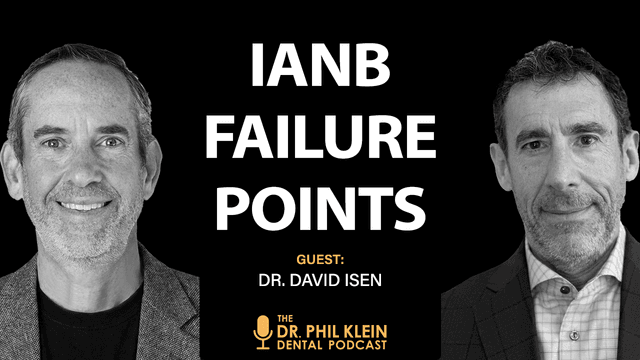
David's dental clinic is anesthesia-based, treating patients who require intravenous sedation or advanced techniques in local anaesthesia. Many of these people have special medical needs or are dental phobic.
David has given over 400 presentations around the world on topics related to the management of medical emergencies in healthcare settings, local anesthesia for dentistry and the use of sedation in dentistry. He has lectured for many university, continuing education programs, dental societies and conventions.
He is the author of numerous articles, has peer-reviewed papers for a variety of dental journals and as well has acted as a consultant for dental and pharmaceutical companies.
How prepared are you to handle a life-threatening allergic reaction or seizure after administering a routine local anesthetic injection?
Dr. David Isen, who operates Sleep for Dentistry in Toronto, Canada, brings decades of expertise in anesthesia-based dentistry and medical emergency management to this essential discussion. He has delivered over 400 presentations worldwide on local anesthesia and sedation, lectures for university continuing education programs and dental societies, and serves as a consultant for dental and pharmaceutical companies.
This episode provides comprehensive guidance on managing the risks associated with local anesthetics and vasoconstrictors in dental practice. Dr. Isen explains how to identify potential allergens, prevent toxic reactions, and respond effectively when emergencies occur. The discussion covers both immediate management protocols and long-term risk reduction strategies that every dental practice should implement.
Episode Highlights:
Sodium metabisulfite, the preservative used to stabilize epinephrine in vasoconstrictor-containing cartridges, represents the most likely allergen in local anesthetic solutions. Plain solutions without vasoconstrictors eliminate this preservative and provide a safer alternative for patients with documented sulfite allergies, though working time may be reduced to 20-30 minutes for infiltrations versus up to one hour for nerve blocks.
Local anesthetic toxicity typically manifests within 20-30 minutes as agitation, nausea, sweating, elevated blood pressure, and tremors, with articaine requiring special consideration due to its 4% concentration versus lidocaine's 2% despite sharing the same maximum dose of 7 milligrams per kilogram. The higher concentration means practitioners inject twice as much active ingredient with articaine, necessitating slower administration in children and when multiple cartridges are needed.
Allergic reactions require prompt intramuscular diphenhydramine at 50 milligrams for adults or 1 milligram per kilogram for children, while anaphylaxis with airway compromise or hypotension demands epinephrine administration via EpiPen or deltoid injection. Histamine release can occur up to 72 hours post-exposure, requiring three-day antihistamine coverage for comprehensive management.
Endogenous epinephrine released by anxious or pain-experiencing patients creates greater cardiovascular stimulation than the small amounts of vasoconstrictor in local anesthetic cartridges. Blood pressure monitoring every 10 minutes during procedures helps identify concerning rises of more than 15-20% above baseline, with patient symptoms taking precedence over absolute numbers in determining when to halt treatment.
Seizure management focuses on airway maintenance and oxygen administration while awaiting emergency medical services, with head-tilt chin-lift positioning and passive oxygen delivery for breathing patients or bag-valve-mask ventilation if respiration ceases. Intravenous benzodiazepines represent the definitive treatment but require IV access and specialized training beyond most general dental practices.
Perfect for: General dentists, dental specialists, dental hygienists, and dental team members seeking to enhance their emergency preparedness and local anesthetic safety protocols.
Don't let a medical emergency catch your practice unprepared—this episode provides the knowledge you need to protect your patients and respond confidently when complications arise.
Transcript
Read Full Transcript
This transcript was automatically generated and may contain errors or inaccuracies. It is provided for reference and accessibility purposes and may not represent the exact words spoken.
You're listening to the Phil Klein Dental Podcast.
Dental clinicians inject thousands of dental cartridges every year, and we do this so routinely
that we rarely think about the potential risks. And when I say risks, I'm talking about anything
from a mild to moderate allergic reaction to something as severe as a life-threatening seizure or
cardiac infarction. In the event that something like this occurs, many of us may find ourselves
unprepared and unaware of what to do. Today, we'll be discussing how to avoid the side effects and
potential emergency situations that can be associated with both local anesthetics and
vasoconstrictors. We'll be addressing how best to minimize the risk and manage the emergency
situation. Our guest is Dr. David Isen, who runs a dental clinic in Toronto,
Canada called Sleep for Dentistry. He specializes in IV sedation. He has given over 400
presentations around the world on topics related to the management of medical emergencies in
healthcare settings and the use of sedation in dentistry. He has lectured for many university
continuing education programs, dental societies, and conventions, and he's a regular contributor on
VivaLearning.com. Dr. Isen, it's a pleasure to have you on the show. It's my pleasure to be here.
Thank you for inviting me to do this podcast. I'm honored to be a part of it. So let's talk about
allergies first. what are the most common allergens that exist in a local anesthetic cartridge
these days? And what are some of the reactions that could occur that we should be prepared for as
dental health care providers? So the local anesthetic cartridge has a few potential allergens
inside. The most likely allergen is the preservative,
which is called sodium metabisulfite. That preservative is in that cartridge to give the
epinephrine its potential shelf life. It's not for the local anesthetic. It's for the epinephrine.
That is the most likely allergen in the cartridge of a local anesthetic. Now,
if we want to talk about topical anesthetics, which are usually ester based, those themselves can
actually be allergens. So, you know, a topical. ester like benzocaine or tetrocaine can itself be
an allergen or cause an allergy. But lidocaine, artacaine, those amide injectable local
anesthetics, it's very, very rare to be allergic to those. So what should we be looking at in the
medical history to give us an idea that there's a possibility that that patient might be allergic
to something in a local anesthetic injection? Or... Is it just so rare that when it happens,
it hits us in the face and we just have to be prepared to manage it? Sometimes it hits you by
surprise, but sometimes people who have one allergy are more likely to have multiple allergies.
So if people report an allergy on their medical history, it's an important segue to ask the
patient, you know, have you ever had a side effect or adverse event?
after being injected by a local anesthetic. And the adverse events that one would expect that would
be an allergy would be hives, swelling, rash, runny nose,
those kinds of typical allergy signs and symptoms that we all know of. Not,
you know, like a rapid heartbeat or something that an inadvertent injection of a local anesthetic
that's gone intravascular causes sometimes as well. So let's talk about the allergy part still.
So if a patient has a history of an allergy and they actually tell you about it and the dentist is
ready to do a procedure, what's the alternative treatment for getting the patient numb, number one?
And the second part of that question is if they don't know about the allergy and it occurs, talk to
us about us managing. How would we manage something like urticaria or something like that that
would occur within a short time after the injection? If the patient tells us that they do have a
reported history of a local anesthetic allergy, given that it almost is the sulfite that is the
culprit, then choosing a plain solution that is one that doesn't have a vasoconstrictor also won't
have the sulfite inside of it. So things like prilocaine plain or mepivacaine plain are usually
safe. on people who show a sulfite allergy because there's no sulfite in those cartridges.
But we don't really know for sure unless we have the person tested. So we can give the patient a
couple cartridges of local anesthetic. We can give them an arcticane cartridge, a lidocaine
cartridge, and a plain cartridge as well. And right on our prescription form,
get tested for arcticane, lidocaine, and sodium metabisulfite. And then the next cartridge,
which is a plain one, which is almost always going to work on these people, we give them that one
as well. And the allergist can test all of these different things as possible allergens. So they
would get tested by an allergist. And then they would come back to you with a report saying that we
found nothing or we noticed that they are allergic to... For instance, the metabisulfite,
which is the preservative for the epinephrine. Exactly. Okay. And then going forward,
you would avoid using local anesthetic with vasoconstrictor in it because that obviously has the
preservative to protect that vasoconstrictor. So then it would be a relatively short acting effect,
right? Without the vasoconstrictor, that local anesthetic is metabolized or removed from the area
more quickly. Is that correct? Yeah. that could possibly decrease our working time.
Now, you know, if we're doing an inferior alveolar nerve block with a plain solution, we should get
a good hour or so working time. So for blocks in the mandible,
our working time isn't that much shorter. But of course, for infiltrations,
yes, we might only have 20 or 30 minutes of working time. If we infiltrate over a bicuspid in the
maxilla, we won't have as much. working time for sure right okay so now going back to the second
part of the question you give the injection you have no no history has been documented um in their
in their initial assessment about allergic to anything and they right away have urticaria burning
or stinging sensation on their face how do you typically manage something like that so most
allergic reactions happen within the first hour of exposure However, in very rare cases,
the body can release histamine up to 72 hours after the challenge. So it's remotely possible that
the allergic attack or even anaphylaxis only happens, you know, two days later,
they've gone home. Most of the time, again, it happens within the first hour. So we can see the
emergency. With a urticaria, hive, swelling,
rash. that person needs an antihistamine. And the standard is diaphanhydramine or Benadryl with a
50 milligram dose for an adult, one milligram per kilogram for a child, which is injected in the
deltoid muscle. And that injection is going to make them sleepy. It's not the best drug to use for
antihistamine purposes, but that's the standard right now. Now, if it goes beyond an allergy and it
becomes anaphylaxis, then we have to do something different. The antihistamine is... at this point.
And the signs of anaphylaxis, the hallmark things that we look for are either a drop in blood
pressure and or the airway closes so that they have trouble breathing.
Now, those patients need epinephrine. They need an EpiPen or even a deltoid injection of
epinephrine. And that's what's going to help those patients as opposed to an antihistamine.
which is more for the allergenic milder reaction. So you mentioned that anaphylaxis could occur up
to 72 hours later. That far past the point in which the patient was administered the local
anesthetic? Because that's really scary. They're at home alone and they start to have trouble
breathing. Yes, or there are stories of people who are on an airplane and they were stung by a bee
two days ago and had the anaphylactic reaction. somewhere far away from where the actual challenge
happened. So it's rare, but it is. And that's why when we buy Benadryl diphenhydramine at the
pharmacy, it comes in a three-day supply because we know that that histamine release can happen
for 72 hours. So it's an idea to put somebody on an antihistamine for that 72 hours to mitigate
that potential. histamine release. So generally speaking, we should all be aware that it's
extremely rare to have a patient have an allergic reaction to a local anesthetic injection.
In fact, I practiced endodontics for 14 years in private practice, and I don't think I saw one case
of that. What are you experiencing in your practice in Toronto? So I've never seen a reaction
happen, but we do have patients referred to our clinic who have a documented allergen.
They've gone to an allergist and it's been documented that they have a rare allergy to lidocaine or
arcticine or whatever it is. And those people did have an allergic reaction in the dental office.
And so I know I have the allergy report and I know that they can't have lidocaine.
but they can have arcticane or they can't have the sulfite, so they can have a plain solution.
So I've never seen an allergic reaction occur after an injection of a local anesthetic.
I have seen a reaction occur from topical benzocaine,
which isn't uncommon, where somebody had hives on her face after I put benzocaine on the mucobuccal
fold. So is arcticane? a safer bet to go in that direction if you suspect that a patient is
potentially allergic to the typical lidocaine that they've been given over the years?
Would artacaine be less likely to induce an allergic reaction on a patient that's prone to it?
I don't know if one amide local anesthetic has a higher or lower risk when they're compared against
each other. All I know is, as a group, the four amides that are available,
in the US and Canada, it's extremely rare for them to cause an allergic reaction.
Well, that's good news for all of us that use it all the time. So let's talk about toxicity.
What steps should be taken to minimize the risk of local anesthetic toxicity, especially when using
ortocaine? So there's some important things to think about with toxicity. First of all,
we have to know what a toxic reaction looks like so that we can identify it. And secondly,
there are some people walking around who are actually sensitive to the toxic effects of a local
anesthetic, similar to somebody who might be sensitive to alcohol. So they feel drunk after one or
two glasses of wine. A local anesthetic, the toxic reactions can affect some of our patients more
severely, more significantly than others. So knowing the signs and symptoms. And usually they
happen within 20 to 30 minutes after the injection. People usually feel agitated.
They feel like they want to get up and walk around. They may be nauseous. They might start to
sweat. Their blood pressure might go up. They might feel tingly or like tremors happening.
And if those reactions happen, in most cases, if we stop and we don't inject more,
they'll metabolize the local anesthetic and they won't have a toxic reaction. In rare cases,
in those sensitive people or in small children, the reaction can be life-threatening where a
severe seizure occurs and then the blood pressure goes way down and somebody could have cardiac
arrest in the worst case scenarios. So tell us about the current guidelines regarding toxicity.
You know, you can use lidocaine 1 to 100,000 as an example. What is the threshold that we have to
be concerned about before we get into the area of toxicity for a given patient?
Yeah, so that's a key point in that each of our local anesthetics have a different milligram per
kilogram dose. that we're allowed to give before we reach a toxic threshold.
Lidocaine happens to be seven milligrams per kilogram. Articaine is the same.
It's also seven milligrams per kilogram. But articaine is a 4% solution.
Lidocaine is a 2% solution. So when we inject articaine versus lidocaine,
because they both have the same maximum dose. we're giving twice as much articane as we are
lidocaine. So it's very important that although articane is an excellent local anesthetic and I use
it all the time, I always have it in the back of my mind that it's a 4% solution. And maybe it's
not the best drug choice for a four-year-old or somebody where...
need to give 10 cartridges, you know, maybe arcticane has to be injected more slowly over time
because toxicity happens faster with that solution versus lidocaine.
So we talked offline, Dr. Isen, about arcticane. It does offer some advantages over lidocaine.
One is in the shelf life. What other advantages do you see with arcticane? Yeah, so articaine,
you can use it more safely on somebody with liver disease because the major metabolic breakdown
process for articaine is in the blood by plasma cholinesterase.
So people who have liver issues, articaine is good for them.
Articaine gets through the nerve fat layers better. You know, many studies have been done over the
past three or four years, meta-analysis studies showing that articaine actually is a more profound
local anesthetic for infiltration, for inferior nerve blocks. It just seems to get through the
nerve membrane better than lidocaine, prilocaine, mepivacaine. So that's a great advantage.
And as an FYI to our audience, one of the very popular and well-known brands of arcticane is
Oroblock. Many of you have heard of it, I'm sure, and it's widely used in this country.
So we talked about some allergic reactions. Let's talk about a more serious reaction, which would
be a seizure. When you see this happening in the chair, the patient is having a seizure after
getting an injection of local anesthetic. What do you do at that point? What's your response? So
the best response is to stop all dentistry, to call for an ambulance.
And then the only thing that we can really do is maintain the airway and administer oxygen.
So we should do a head tilt, chin lift to make sure that if the person is still breathing,
they're able to breathe with their airway open. And the oxygen administration,
if they're breathing, it's passive. We put our oxygen on and let them passively breathe while we're
waiting for the paramedics. If they stop breathing, then we have to monitor their pulse because
that's going to go at some point. But if they stop breathing, then we have to do a form of
artificial respiration where we're pushing air into their lungs. probably with a bag valve mask.
Most dental offices, I think, would have something like that. And that's something that you should
train, dental offices should train using that every year when they recertify their basic life
support skills. It's really important to have an up-to-date emergency kit available for even the
allergen, even the Benadryl intramuscular injection, right? As far as somebody having that kind of
allergy. But what about benzodiazepine as far as the seizure? Yes.
Talk to us about that. Now, I know you do a lot of IV sedation. And one of the advantages of IV
sedation is that, you know, in a lot of ways, the patient is safer because you have a direct
connection to their bloodstream to get something going very quickly. So the standard of care,
if somebody has a seizure, especially if it doesn't stop, is to administer intravenous dose of
benzodiazepine and diazepam valium. or midazolam,
Versed, are the standard drugs that are used. However,
I don't think a general dental office should worry about that because, first of all,
the paramedics should be on their way and most general dental offices won't have an IV in place.
It doesn't really work very well if you put it in a muscle, which is one protocol. Putting it in a
muscle, you know, it might take 20 minutes to work. By that time, hopefully the paramedics have
arrived. And I think it's much more important to concentrate on the airway,
concentrate on making sure the person has oxygen, and protecting their head if they are having a
bad seizure. Those things are more important than a general dental office giving a benzodiazepine.
So considering the fact that most of us are administering local anesthetic, that has a
vasoconstrictor in it, mostly epinephrine. How do you manage those patients that come in very
anxious? Maybe there's a combination of anxiety with hypertension. So what do you typically do to
manage these kinds of patients and to ensure their safety? So first of all,
before we manage any of this, managing our patients is key. Endogenous epinephrine,
the epinephrine that's released by the adrenal glands. especially for our anxious patients or the
people who are having pain while we're treating them, that will do more stimulation to the
cardiovascular system than the small amount of vasoconstrictor in the local anesthetic.
So making sure the patient is numb and comfortable is key. And so if we have to use a little bit of
vasoconstrictor to give us the duration of anesthesia for our anxious patients,
for patients with cardiovascular disease, it's safe to do so, providing they're safe and well
enough to have dental care. Now, we need to have a baseline vital sign.
So taking baseline blood pressure for our hypertensive or cardiovascular disease patients is very
important. And checking it every 10 minutes or so while the procedure is going on,
just to make sure that it's not rising. slowly and we can just bail out and stop.
The automatic blood pressure cuffs today are really easy to use. We don't have to use a stethoscope
and pump. There's a reading that we can look at and ongoing monitoring of blood pressure is really,
really important. With respect to Articane or Oroblock, they have two different solutions,
Purell does. or any Articane that's available in the US, it's either 1 in 100,000 or 1 in 200
,000. Obviously, the 1 in 200,000 has half the amount as the 1 in 100,000.
All of the duration and profoundness of anesthesia as the 1 in 100,000 will.
So except for vasoconstriction, if you're doing surgery, there's no need to use the 1 in 100,000.
for routine operative dentistry. That's super important information, Dr. Isen. I'm glad you brought
that up because I know as an endodontist, it was important to me to keep that solution for as long
as possible in the apical area of the root because anything I did inside the canal... or root
system. I certainly didn't want to transmit that into live nerve tissue right outside the apical
foramen, so the patient would be uncomfortable. But you're saying it's really kind of overkill to
go with 1 in 100,000 on the articaine unless you're doing surgery. So unless you're looking for
real vasoconstrictive effects, it's not necessary to go with 1 in 100,000 on the epi for
articaine, given that it's 4% versus the 2% on the lidocaine side.
Right. Our studies show that 1 in 200,000 will give us the same duration and profoundness of
anesthesia for infiltration for root canals as 1 in 100,000.
So you mentioned something very important. That's the endogenous epinephrine that's created in a
patient that's hypertensive. And if they're in a procedure where they have a lot of dental phobic
things going on in their brain and they're scared of everything, as soon as the dentist picks up
the handpiece, their blood pressure goes up. For those kinds of patients, you certainly want to
think about nitrous oxide because wouldn't that be a great way of just relaxing them to keep that
epinephrine that's created endogenously to a minimum? Nitrous oxide is a fantastic aid for that.
But what's almost as effective is verbal anesthesia where,
you know, we train our team and dental offices and dental teams are very good at this.
You know, tender loving care. stress reduction protocols we we were we're pretty good at these
kinds of things and that as long as the patient really isn't you know the 10 of the population who
they just walk into the office and they want to pass out most people will do well with with that
kind of management but absolutely nitrous oxide is a fantastic adjunct to help people Yeah.
What's the threshold, out of curiosity, Dr. Isen, on the blood pressure? So you're monitoring that
patient. Every 10 minutes, that automated blood pressure machine gets recorded. And you're looking
at a screen, I assume. I'm not sure what the actual system looks like in today's modern office,
but I'm sure there's a screen there. Do you set the parameters for when the bell goes off,
it's too high? And what is that number? Right. So that's completely patient dependent.
There is no one number. And it also depends on a lot of other things that are going on in that
patient's body. So besides the number, symptoms are more important.
So if somebody starts to feel... weak or chest pain or they start to sweat or they're nauseous or
they turn pale. Now, that's just a clear indication no matter what the number is to stop.
I would say that as a guideline, comparing it to baseline is the way to go.
So if you start and it's 140 over 100, I would say a 15 to 20 percent rise in that is acceptable
during a dental procedure. But anything more than that. I would say, would be important to stop.
But there's really no one number that I would recommend. Don't stop at 180 over 110.
Because some people with that number have been living with that number for two years.
and their body has accommodated. So they can have emergent dental care or a filling or two as long
as it doesn't keep going up or as long as they don't have those symptoms. Let me ask you this.
There must be some blood pressure where you would say to the patient, hey, you know, we just can't
treat you because you're too high risk. And there's also litigious factors to consider,
right? Because... you document that a patient's blood pressure is 180 over 110,
which some feel is kind of borderline to say we can't treat you, and then you go ahead and treat
them and then they die in that office, you are putting yourself at risk. Yeah, I mean 180 over 110
is a good guideline to go by. That's a very high blood pressure, and anyone who has that blood
pressure needs to see a medical doctor ASAP.
Again, if they're having severe dental pain and their face is swollen and they've been up for the
past three nights because of that dental pain and that infection, we might have to do an IND or we
might have to do an emergency extraction despite that really high blood pressure and have the
patient sign a form saying, this is a risky procedure, but it has to get done because of the risk
of you know, having a heart attack because of the pain that you're in, um, from the dental problem.
Right. And then get them to an ER soon after that, you know, as soon as that dental immediate
emergency is, is managed and you do the drainage. Yeah. You have to get them to a, to an ER.
So generally speaking, what are some of the suggestions that you can provide our audience when it
comes to reducing the risk of a medical emergency occurring in a dental office? Cause none of us
want that to happen. Most of us don't feel fully prepared to deal with a medical emergency.
Of course, there are some dentists that have lots of training and they're more prepared.
They have kits and they have people on staff maybe that were first responders, so they feel good
about it. So in general, what do you suggest to minimize the risk, both in a typical medical
emergency where they just come in and something happens because of their anxiety or they weren't
taking their medication, because of the anxiety related to being involved with a dental procedure,
like in the chair? So I think two main things. The first is to take a very detailed medical history
on every patient. And that way, you know exactly what's walking in the door when you're treating
that patient. So if somebody has asthma, know everything about their asthma. When does it occur?
What happens when you have an asthma attack? What medications do you take? When was the last time
you were hospitalized? All these questions so that we know everything we possibly can about that
disorder that that patient has so that when they come to have their dental care, we're very aware
and we can mitigate the risk. Okay, you're feeling kind of tight today. You're wheezy.
Let's reappoint your visit another time. So a very detailed medical history and leaving no stone
unturned. will mitigate or minimize or even eliminate most medical emergencies.
The second is to make sure everyone in our office undergoes basic life support training at least
once a year. You know, most states and provinces say every two years, but that's not enough.
We all forget after a month or so. Every year, have your whole team and do the training in as
simulated a way as possible. So take your medical emergency drugs, which you're going to throw out
every year, and inject them into an orange. Put on that bag valve mask.
Practice taking out your oxygen tank and knowing what it looks like and how to turn it on and make
sure it's full, make sure the drugs aren't expired. practice all of these things in as simulated a
way as possible. And that'll make us more effective should an emergency occur.
What about the AED? Those things are pretty self-explanatory and they kind of operate on their
own. They detect whether to actually send the shock or not. So there's not a lot the operator has
to do, but that should be included in the training as well, I assume, using an AED. Yes,
most good basic life support training companies will bring an AED with them and teach us how to use
them, or they'll take the AED that you have in your office and teach you how to use it.
Dr. Isen, thank you so much. Great discussion. You've given us a lot of information on this
podcast, and we appreciate all your contributions to Viva Learning over the years, both in podcasts
and webinars. And we thank Perel for their mentorship in sponsoring this podcast. And I know they
have an excellent product called Oroblock, which is an arcticane. If you're looking to get more
information on Oroblock, just Google it, O-R-A-B-L-O-C, and you can learn more about it.
articane material, which is actually very popular in the United States. Thank you so much, Dr.
Isen. I appreciate your time. Thank you, Dr. Klein. It was fun. I'm honored to be part of the
podcast and I appreciate doing it. And I also appreciate Purell and their oral block.
And so, yeah, thank you to them as well.
How many times a week, month or year do you inject local anesthetics? How often do you think about the potential risks that these anesthetics pose? If a patient...
Clinical Keywords
David Isenlocal anesthetic toxicityarticaineOroblocksodium metabisulfitevasoconstrictor allergyanaphylaxis managementdiphenhydramineepinephrineseizure managementblood pressure monitoringIV sedationbenzocaine allergylidocainedental emergency managementmedical history assessmentbasic life supportAED trainingendogenous epinephrinenitrous oxideDr. Phil Kleindental podcastdental educationemergency protocolsarticaine 4% concentration