Board-Certified Prosthodontist · New York University College of Dentistry
New York University College of Dentistry · American College of Prosthodontists · American College of Dentists · Greater New York Academy of Dentistry · Northeastern Gnathological Society · New York Academy of Dentistry · Greater New York Academy of Prosthodontics
Read full bio
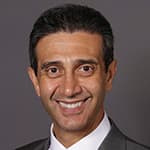
Dr. Graziano D. Giglio is a board-certified prosthodontist focusing on aesthetics and implant dentistry. He received his D.D.S. and postgraduate training in prosthodontics from New York University College of Dentistry.
He is a Fellow of the American College of Prosthodontists, the American College of Dentists, the Greater New York Academy of Dentistry, the Northeastern Gnathological Society, and the New York Academy of Dentistry. Dr. Giglio serves on several boards and committees of many dental groups, including a term as President of the
Greater New York Academy of Prosthodontics in 2013.
Dr. Giglio keeps current with the very latest in research and technology through his faculty position at New York University College of Dentistry where he is an Adjunct Clinical Associate Professor. He has found numerous opportunities to share his experience with the dental community as he publishes and lectures frequently on dental
implants, aesthetics, and digital technology. As a result, he has received multiple awards in dentistry throughout his career, including the Prosthodontist Private Practice Award from the American College of Prosthodontists in 2013. He shares an interdisciplinary practice in New York City with his wife, Dr. Ana Giglio, a periodontist.
What makes some laminate veneers last 25 years while others fail after just five? The answer lies in understanding material science, proper protocols, and avoiding critical mistakes that even experienced dentists make.
Dr. Graziano D. Giglio brings over 30 years of prosthodontic expertise to this essential discussion on veneer longevity and success. A board-certified prosthodontist and Diplomat of the American Board of Prosthodontics, Dr. Giglio is a Fellow of the American College of Prosthodontists, American College of Dentists, Greater New York Academy of Dentistry, Northeastern Gnathological Society, and New York Academy of Dentistry. He serves as Adjunct Clinical Associate Professor at New York University College of Dentistry and received the Prosthodontist Private Practice Award from the American College of Prosthodontists in 2013. His Manhattan practice features an in-house laboratory, allowing for same-day and next-day veneer delivery.
This conversation reveals why lithium disilicate has become the material of choice for aesthetic veneers, offering four times the strength of feldspathic porcelain while maintaining superior translucency compared to zirconia. Dr. Giglio explains the critical decision factors between pressing and milling techniques, the role of digital workflows in modern veneer cases, and why proper case selection often includes orthodontic pre-treatment.
Episode Highlights:
Lithium disilicate provides 400 megapascals of strength with superior translucency for anterior aesthetics, making it ideal for veneers requiring only 0.75mm facial reduction and 1.5mm incisal reduction. This conservative approach preserves enamel while delivering 15-25 year longevity compared to 12-15 years with traditional feldspathic porcelain.
The most common technical error causing early veneer failure is sandblasting lithium disilicate, which reduces strength from 400 to 250 megapascals. The correct protocol requires glass bead treatment followed by etching, while zirconia requires sandblasting without etching—protocols that are frequently confused.
Digital workflows reduce chairside time by 40% through immediate digital impressions and 20-minute digital wax-ups that can be 3D printed for patient mock-ups within one hour. This same-day visualization dramatically improves case acceptance and serves as both a selling tool and surgical guide for precise reduction depths.
Proper case selection involves orthodontic pre-treatment for 50% of veneer cases when tooth movement exceeds 1.5mm, combined with bleaching therapy during clear aligner treatment. This conservative approach eliminates the need for aggressive reduction of healthy tooth structure and often satisfies patient aesthetic goals without veneers.
Isolation protocols using rubber dam or barrier systems are critical for adhesive success, as moisture from patient respiration can compromise bond strength. Dual-cure cements like VarioLink provide optimal polymerization in areas where light penetration is limited, while light-cure systems work effectively for translucent anterior veneers.
Perfect for: General dentists expanding aesthetic services, prosthodontists refining veneer protocols, dental residents learning material selection, and laboratory technicians working with lithium disilicate systems.
Discover the protocols and material science insights that separate successful veneer practices from those dealing with frequent failures and remakes.
Transcript
Read Full Transcript
This transcript was automatically generated and may contain errors or inaccuracies. It is provided for reference and accessibility purposes and may not represent the exact words spoken.
People often ask me, how long are they going to last? Before Emax, I would say 12 to 15 years. Now I'm saying 15 to 20, 25 years. I have some that are 35 years old and they have a few chips on them here and there, but the patient likes them. And sometimes I'll just repair one or two of them with Emax and match it because I can put porcelain on it and match the tooth. Welcome to the Phil Klein Dental Podcast. Today we're talking all about laminate veneers with Dr. Graziano Giglio.
He's a diplomat, American Board of Prosthodontics. He's been practicing in New York City for over 30 years, and he also teaches as an adjunct clinical professor at NYU College of Dentistry. In our conversation today, Dr. Giglio shares why Emacs has become the go-to material for veneers. We get into the differences between pressing and milling Emacs, and how to decide which one makes sense, and the important role the dental lab plays in getting a great outcome.
He also talks about the steps in veneer cases that dentists sometimes overlook and some of the common mistakes dentists tend to make. Dr. Giglio says that if done correctly with the right material, veneers can last over 25 years. He's done it many times. So if you're just starting to add Emax veneers to your practice, Dr. Giglio has some practical tips and training recommendations to help you feel more confident from the start.
So if you're looking to elevate your veneer cases and achieve more predictable results, I think you'll enjoy this episode. Before we bring in our guest, I do want to say that if you're enjoying these episodes and want to support the show, please follow us on Apple Podcasts or Spotify. You'll be the first to know about our new releases and our entire production team will really appreciate it.
Dr. Giglio, welcome to the show. Thank you very much, Phil. It's a pleasure to be here. Yeah, we're very happy to have you as a prosthodontist in a busy private practice in New York City where you work, and you're also a clinical associate professor at NYU Dental School. You have a great deal of experience, I'm sure, with aesthetic dentistry, which includes veneers, which is the central topic of this episode.
To begin this episode, let's talk about material selection. What factors should dentists prioritize when selecting an ideal restorative material for laminate veneers? So when selecting something ideal in terms of materials, we're looking at aesthetics first and strength second. And the reason being is if we're going to talk about laminate veneers, we want them to be natural appearing. And then we want them to be strong so the patient's not coming back with breakages.
Those are the two factors. So for years, we've been using feldspathic porcelain, and we've been using it very successfully from the aesthetic standpoint, for sure. From the strength standpoint, not as much so. You know, with those cases where a lot of force was imposed upon the porcelain.
And depending on the occlusion, we as practitioners experienced fractures and broken porcelain, etc. But now we're in a time where materials have advanced and we have new materials that do offer the aesthetics close to feldspathic porcelain, if not on par with it, with the additional strength that we were looking for. So tell us about that evolution and the material that you rely on for veneers that has this combination of aesthetics and strength.
So if we go back to we want something aesthetic and strong and Emax provides that for us. It's twofold. So it is aesthetic. It is translucent, which is different than some of the other restorative materials like zirconia. It's not as translucent. So Emax is the ideal material where porcelain.
was a very good material, but it wasn't strong. So in areas where the occlusion was heavy or the patient would brux, they would often break these things. So now we have both the aesthetics and the strength. So we've graduated probably about 20 years ago from using mostly felsopathic porcelain. And some dentists still feel that.
feldspathic is the way to go but then you're giving up the strength and how often do you see these fractures in feldspathic if dentists are still using it is it something that just comes up very rarely or or is it fairly routine and and is it the incisal edge that that chips yes wherever it's thin and if you have more than four millimeters up to four millimeters of feldspathic um it will break so where
If you're increasing the vertical dimension or restoring vertical and you need more strength, Emax is the way to go. So we can also use Emax for partial veneers. You don't have to do a full veneer. Sometimes you just need to put it on the incisal edge. With a material that's four times as strong and still aesthetic and translucent, it gives you the best of both worlds.
So clarify something for me, Dr. Giglio. Some dentists that use Emacs will use it for posterior and anterior teeth. They're all in on Emacs. They feel as though it has adequate strength for the posteriors, certainly for the anteriors, in the range of around 400 megapascals. And that's what they use. And then you have other dentists that say, no, in the posterior, we have zirconia. It's a newer material that is really strong.
We can get 1200 megapascals, three times the strength. I'm going to go with that in the posterior and use Emax for the anterior. What do you say to that? So I use Emax probably 90% of the time. So on second molars, I may use zirconia once in a while, but...
Like I said, 90% of the time I'm using Emacs for just about everything because it provides me the strength and the aesthetics. Now, posteriorly, the nice thing about Emacs is when we put it in and you check the radiograph, you can actually see right through the radiograph and be able to check the health of the tooth.
where you can see it looks just like a regular tooth, as opposed to if you put zirconia on, it looks like metal. So you can't really see if there's caries, recurrent caries, the health of the pulp. And that makes a big difference to me because I want to be able to diagnose treatment and the health of this tooth down the line. What about the dentists that are using zirconia for veneers, given that zirconia?
has improved in its aesthetic attributes recently, fairly recently, over the last couple of years. And by using zirconia, you can fabricate such a thin veneer and not worrying about it fracturing because it's so strong. Or are we splitting hairs here, given the fact that Emax provides better aesthetics and the difference between the reduction of tooth structure necessary for either one of these materials is really insignificant.
Yeah, so some people advocate using zirconia for laminate veneers. I do not. I use it for bridge work, just regular bridge work, and then we veneer it with some porcelain, felspathic. We veneer lithium disilicate as well. So I just don't see the advantages of using zirconia for laminate veneers. There's no place in my own material. Some people like it because they want to block out the color, but realize that
If you increase the translucency of zirconia, you are decreasing the strength. So as you say 1200, but that is one type of zirconia. As you're getting a 5Y zirconia, which is more translucent, you're also losing out on strength. So when you're doing that and you're using a 5Y zirconia, it's almost as strong as lithium disilicate.
And lithium disilic, it's a prettier material. So not to get too deep into material science engineering, you mentioned that you add porcelain to zirconia.
you can, but you also can add it to Emax if you need to, to improve the aesthetic results of your case. Are any of these materials better to add porcelain to based on the coefficient of thermal expansion and any of the other material science factors? Porcelain works better with lithium disilicate because of similar materials as with zirconia to dissimilar materials. So there's something called chip fractures, which you get with zirconia.
So I would prefer using lithium disilicate because the bond is going to be stronger between the two materials. But we do not put porcelain or filthopathic porcelain in any stress-bearing areas. So what we'll do when we do a laminate veneer, whether it is with zirconia or lithium disilicate, we're only going to put it on the facial surface. We're not going to put it on the incisal edge.
And so that's the advantage of getting the best of both worlds where you're getting something aesthetic with the porcelain and the strength from the underlying material. So talk to us, Dr. Giglio, about digital workflow, how it's affected the way you fabricate laminate veneers in your practice. I know you have a lab in your practice, which is really something a lot of dentists don't have is an in-house lab. And when fabricating an Emax veneer, how do you decide between pressing and chairside milling?
So digital technology has completely changed the way we practice. I spend probably 40% less time at the chair when doing any procedure because instead of making impressions, we're using digital technology, which basically puts the patient into the computer and then we can modify that.
those teeth. So what's nice about it now is we can do a digital wax up in 20 minutes on an arch, as opposed to a technician spending a morning waxing it up with wax. Once we have that wax up, we can then show the patient what they're going to look like in a mock-up. So a mock-up is being able to make an impression, like you do an alginate, of the wax up and try it in the patient's mouth. That is a game changer.
So and we can do it very quickly. So if the patient wanted to, for example, there was a patient that is interviewing us for laminate veneers. If we wanted to, we can digitally show them what they're going to look like in a computer within 20 minutes because we have smile design software. And if they wanted to see it and we wanted to print it on a 3D printer, take about a half hour to print it. And then we can show them within an hour.
We can show them what they're going to look like by putting some composite inside the alginate impression, transferring it to the patient, taking off any flash, and then showing them this is what you're going to look like. It's like looking at a photograph that you just take it on your iPhone. And that makes a big difference. That is a very effective selling technique to certainly boost case acceptance, I would assume. I think that every time that I've showed that to the patient, the patient accepts therapy. It's amazing.
way of selling additive veneers if the patient can't afford doesn't have the resources for the actual you know ceramic veneer do you do direct restorative veneers at all
Yes, we do once in a while when the patient can't afford it. But somehow the patient always finds a way to pay for them when they see the results. I had a patient here with spaces between their teeth and they want to close the spaces. So I did it in composite. And here's what I usually do. And this is practice management. Pearl, I said to him, any bonding that I did for you today.
You will get credit on it if you decide to get laminate veneers. And then the assistants take over. They show them some cases in the computer and they show them the digital aspect of it. So we scanned him instead of taking impressions. And then the technician can either show them on a smile design software or we can show them on a cast before and afters. And then if they'd like, they can come back for another visit. And I charge for that visit to be able to let them see what they're going to look like.
prior to treatment and then i also use it as a diagnostic wax up directly in the patient's mouth and it is a guide for me to how much i'm going to reduce from the teeth so then i start doing preparations on the teeth knowing that i have to take off about three quarters of a millimeter on the facial surfaces and about a millimeter and a half from the incisal edges now how do you how do you measure when you're actually doing it by hand three quarters of a millimeter
reduction is that something you just with all your experience you just do it with the diamond burr or you have some sort of guide i have a guide so i have a bird that's one millimeter i go in three quarters of it or about half initially and i make guide grooves i make three guide grooves on the facial of a tooth on the incisal edges
And then all I do is connect all the dots or all the lines that I've prepared, all the guides. And that affords me to know that I've taken off a certain amount. But today versus the past, we're much more conservative now, are we not? Much more conservative, yeah. And that correlates to our adhesive systems being better, more advanced, and our materials stronger, I assume. That's the difference is that we have better bonding materials, one.
right? So we don't need to take off that much. It doesn't have to be a full crown. It could be three quarters of a crown or it can be, sometimes I just put a little shell, which is called a 360 laminate. It goes all the way around, but you're taking off a half a millimeter on the tooth. So while I have you on this podcast, Dr. Giglio, I do want to ask you about a procedure and material that was very popular about 10 years ago, lumineers, marketed as a super conservative veneer treatment.
no prep at all. There was no tooth structure removed. It didn't seem to sustain itself. Obviously there was some aesthetic issues, I assume. Is there any clinical application for that kind of procedure these days? Only if the patient has a lot of wear and then interproximately they're going to be over-contoured. So that's what happens is that even if the patient wants bulkier veneers or teeth that are sticking out a little bit more or for lip support, that's fine.
But the problem is interproximately, you don't have enough reduction and the teeth look bulky and they look like chiclets. And they can't floss between them very well either. And it's hard to floss and they look bulky. I do want to go back to that question I asked earlier about pressing versus milling Emacs. And I know you have capabilities to do both of those things in your practice because you have an in-house lab. You also have a chairside milling machine set up in your practice.
How do you make the decision to do one or the other? I assume the milling is, of course, directly related to someone who needs it yesterday. So we started doing press initially. When Emacs came out, it was pretty much all pressed. And that's the lost wax technique. So you have to either do it in acrylic or wax.
You have a pattern and then you invest it like we did when we used to do it in dental school. We used to invest inlays with gold and for gold. So it's the lost wax technique. Technicians with digital can either mill the wax. They can print it on a printer, which is really nice. And so that's much easier.
than having to do with hand waxing. So it's much quicker with the digital technique. So once you do that, then you melt out the wax or the acrylic inside, and then you press it with a molten Emax material. It's just basically like a paste, and it gets pressed in very hot, and it makes the laminate veneer just like the lost wax technique that we did for gold. That's one way of doing it. After that, they still have to crystallize it and glaze it.
That's the way they still have to do it in order to be able to put some staining on it. And the other technique, which is if the patient comes here same day dentistry. So I usually have patients flying in from out of town. They come in the morning around 10 o'clock because they have to get here. They start at 10.
o'clock by say you know 12 o'clock it's prepped and then they can have their laminate veneers at about 2 33 o'clock it takes about us about an hour and a half to two and a half hours to be able to produce laminate veneers it is a lot of stress on the technicians and so the technicians don't favor that and and this is now called the mill technique the milling means that we have a block of emacs and then we
have a machine a milling machine that will whittle away from a block and up to three teeth can be done so you can do a three unit bridge if you'd like on the emacs material up to three units if you're doing individual veneers and you're doing the aesthetic zone
what are we talking about? Eight teeth? Eight to 10 teeth, easily. That's a lot of work for a technician. You may have to get two technicians to be able to do this. They need about at least an hour, an hour and a half to design it. And then they have to mill these things. And depending on the milling machine, how many can you do simultaneously? So we can do three at the same time in our office. So that means that each one would take about 17 to, you know, say.
17 to 30 minutes per three to mil, that means if you're doing 10 veneers, you may have three or four shots at this in terms of doing, you know, rounds of doing it, right? So now you're looking at probably the patients waiting four or five hours if they want to do it the same day. So essentially, if they flew in in the morning and you prepared the teeth, took your digital impression, and started fabricating the veneers, you could temporize them, right?
And they could stay at a hotel. And then you can deliver the following day, I assume. And you would temporize the prep teeth. Yes, with a composite luxor temp. Right. And then we send them off. They come back the next day. They could come back the next day. And so then you could use either technique, the mill or the press. And what about delivery of all those veneers? That's kind of a stressful visit to put in eight of those. Usually our patients want 10. They want it all the way to the...
And sometimes they include 12. What do you do, block off half a day for that? Yes, somewhere around three and a half hours. That's what our standard is, about three and a half hours. And then it's usually lunchtime in case we run late. So here's what happens is you have a try-in visit. You know, that's the try-in visit. And since we have a lab on premise, we are able to change things right there. We have technicians on hand. Now, if you don't, that means sending the lab work back and having to schedule another visit.
That's uncomfortable for the patient too, because now they have to give them anesthesia all over again. So we would prefer having lab on premise in our office, but most people don't have a lab on premise. So what I would advise people to do is give yourself enough time to maybe try them in. And if everything works out, fine. If not, you have to allow for one more visit. So I'd be a third visit. And that's unusual for a dentist in Manhattan to have its own lab in the office. This space is such a premium, is it not?
Yes, but it's worth it because for our patients, they would rather pay a higher amount or fee than to have the convenience of not having to come back for a third visit. Because if you take a business person, what they get paid for a half a day, and they're blocking out a half a day, which they don't have, they're losing out a lot of money in business. So that's why for us, it's worth doing it. Now, how did you transition into such a practice that you have where it's, you know, you have these patients flying in from different countries?
You have your own lab. How did that all evolve? Because when we all get out of dental school, we don't know where we're going, essentially. And we certainly don't think of ourselves as having a large practice in Manhattan with a lab in it. So what was that journey like for you? How long did it take? Okay, so I decided to get a part-time technician immediately. One of my teachers told me, and they said that that's the way to practice in Manhattan. So then I now could treat patients.
who were limited with their time. So I was trying to accumulate the type of patient that was willing to pay me for my time. So I didn't take insurance right off the bat. There was no way that someone's going to pay you through their insurance company for a laminate. Plus, most of the time, the insurance companies won't cover laminates. They cover crowns. So I decided that I'd rather see fewer patients and do quality work.
then do volume. Was that a dentist that told you that? Because it sounds like a New Yorker had to tell you that. A New York dentist who had a high-profile practice. Right, because they know the mentality of the people that are looking to get the stuff done. These people are in the financial world, they're in the business world. They can't come back multiple, multiple times sitting in a waiting room. And when you treat these patients...
they're the only ones scheduled for that morning so they don't there's no waiting room they just come right in there exactly mr smith come on in take a seat in the operatory doctor will be right with you
Yeah. Right. And so most of the time, these individuals don't even make their own appointments. They have an assistant who makes their appointment and they're told, you know, what the agenda is for the day and they have to go to see the dentist to get the laminate veneers done for that morning. So we block out a little bit more time than we need. And I also work with multiple assistants. So we have two assistants in the room and a floater outside the room so that I never have to leave the room and they, the assistants know how to scan.
and do a lot of the procedures that I do other than the anesthetic and the drilling, they can do most of, and putting in court say, but most of the work is done by the assistants to the scanning because in New York state, we can scan, an assistant can scan. So that eliminates a lot of my work. So it seems to me, Dr. Giglio, you've certainly established yourself in your practice as one who services patients who have very busy schedules. They're not...
reliant on insurance companies to pay their bills. They'll pretty much pay anything as long as it gets done beautifully and as quickly as possible. What about patients in this category that come in with misaligned teeth? Are you recommending clear aligner therapy prior to veneers? Absolutely. I had someone, lady came in, she's 70 years old. She's got more crowding than she usually has. And most people do get crowding in the lower anterior teeth. And so what we...
recommended to her, I said, look, I would file down your teeth to pegs. I would whittle them down. Why not go to the North to Donna, straighten them out, and then bleach first? So in any type of lecture, blog, when I'm asked, I always try to give patients alternative treatment. I don't jump to the laminate veneer.
i just say to them that is a last resort because there's two negatives one is we have to file down part of your tooth we have to prepare prepare the tooth and that's taking away good tooth structure and the second is financially we do charge a lot of money for it so i tell them that right off the bat just say look these are the two negatives the positives are it's going to look beautiful but in certain cases if there's more than a millimeter and a half of movement of a tooth that has to occur
then I'm going to send them over to the orthodontist. And most cases, I would say 50% of the cases that I do laminate veneers are pre-treated with Invisalign therapy before. When they do the Invisalign therapy, they're also doing IPR. So they're taking enamel off there, sometimes more than you would think. Right. And then, of course, you get the whitening, and that usually is concurrent with the trays. When they come back after the Invisalign or the Clearline or whatever system they use,
And they have the whitening with that. Do some patients say, hey, Dr. Julio, I don't even know if I need these veneers. My teeth are looking pretty white. Now that they're straight, I think I can go with this. Did you see that happen after you?
It happens about 10% of the time. And I'm very happy for them. It's usually a young person when I say, listen, if you're my son, daughter, you know, my nephew, I would not do anything. And I've talked people out of veneers because I have enough business. I don't need to force that patient or solicit business from them by saying or over-treating. I think that a lot of times dentists over-treat because, oh, this patient has the money. They have the time. Let's just do it.
You're cutting down good teeth sometimes. Yeah, but again, you're talking three quarters of a millimeter, right? On your preps. So in your opinion, as a professor, you know, put your professor hat on that. You're talking to a dental student at NYU. How detrimental is that to the tooth if you're taking three quarters of a millimeter of enamel off? How would you describe that? You're a dentist. You know that lower anteriors are small. They could be in width three and a half millimeters. So you take three quarters away.
And now you've left with a two millimeter core. And so it's approximately, and you take some on the facial. So you've really got to be judicious when you think about this and you have to put yourself in the patient's shoes. Would I want this done to me? And so I often say to the patient, if I were you and you look at also radiographically, you see that they have very large pulps. I'm worried about the patient requiring root canal therapy down the line. If you're.
preparing these because there's not that much enamel on the lower anterior teeth right and you're weakening no question you're weakening teeth we don't we don't grow back enamel exactly yeah and also you know from the standpoint of what's coming down the road for a patient if they're 70 it's different than if they're 25 because if they're 25 those veneers are not going to last the rest of their life right
So I look at veneers because people often ask me, how long are they going to last? Before Emax, I would say 12 to 15 years. Now I'm saying 15 to 20, 25 years. I have some that are 35 years old and they have a few chips on them here and there, but the patient likes them. And sometimes I'll just repair one or two of them with Emax and match it because I can put porcelain on it and match the tooth. How do you repair a veneer that's damaged?
Either discolored or chipped. Let's say 10 years down the road. How do you repair that? So you can repair it with composite. We can now etch it in the mouth. There is something called prime and etch, which is made by Ivoclar. You can use it in the mouth, rinse it off.
And it prepares it and also creates a layer of silane coupling, which is great. You need to put silane coupling on and then be able to do a bonding procedure on that. And you can get the patient through another three to five years with that if you're doing a repair or even on a crown, because now the ability of being able to use the prime and etch, and then you can put composite over it, which adheres to porcelain or the Emacs. So let me ask you this.
Based on the data that I'm reading, they still say that a crown typically will last seven years. It used to be five. Now maybe it's seven. You're saying you can go 20 years with your veneers. What is the key difference to make that longevity occur? Is it your technique? Is it the meticulous way in which you do everything from step to step? Is it the materials? Is it your staff that's well-trained?
underlying reason why some dentists veneers last five years and they pop off or break what do you see happening there so first is if they're using a good material and following proper protocol most people don't know the protocol and because i teach courses hands-on courses and you'd be surprised good dentists it's because they never read the fine print and the companies have never explained it to them so they buy the kit
And they don't know how to etch, prepare, clean. And they're not sure if they're supposed to etch it or sandblast it. For example, Emacs, you're not supposed to sandblast. No one, very few people know that. Even technicians, they sandblast it. So instead of having 400 megapascals, now it's 250. They've taken 150 thrown out the window. So right there, it's going to crack on you or may crack in a high stress area. That's one. So it's the knowledge.
right? It's the technique of not taking off a lot of enamel because there's enamel stronger than dentin, right? And the bond strength is going to be stronger, right? And then knowing the protocol, knowing the protocol is important, the cementation protocol, whatever system you're using, know what you can and cannot do. And then I would even add a fourth thing, isolation.
It's got to be isolated with a rubber dam or some type of isolite or some type of barrier to keep moisture because the patient's breathing and sometimes even just the breath has got moisture in it and humidity and it's going to interfere with the bond strength. So do you think the biggest reason for an early failure based on your record of 15 to 20 years is the adhesive dentistry step? The adhesive dentistry and sandblasting Emax. Those two things.
Yeah, so Emax shouldn't be sandblasted. You have to use glass beads, and most technicians and dentists don't know this, and knowing the proper protocol to clean it. But for zirconia, it's a different protocol. So they get those two mixed up. So I'm going to just summarize it. You're not supposed to sandblast Emax, and then you're supposed to etch it. Zirconia, on the other hand, you sandblast it, and you don't etch it.
So that's the difference. And you can use the same cement. But then there's also a silane coupling agent that has to be put in to both of them, the monobond, which has to be put on both. And then you'll get bonding with zirconia and with EMAT. You can get the bond strength, but it has to be properly prepared. And what cement do you like to use? VarioLink is a dual cure. That's a dual cure cement. What does that mean?
that you can cure it with a light on the on the periphery and it will allow for it to cure internally whereas a light cured material you need to be able to get internally which is harder laminate veneers you can i would use a light cured material whereas posteriorly where it doesn't count as much in terms of you know getting the light back there i would use a dual cure cement
in the back. But it's the same cement. It's just one is dual cure. The other one is light cured. So to wrap up this podcast, and it's been a very enlightening conversation, Dr. Giulio, we appreciate everything, all the input you've given us. If you were to give a recommendation to a new dentist getting out of dental school or one that's been practicing for a little while that wants to expand their aesthetic dentistry services in their practice, specifically veneers, what would you tell them? So what...
I would first do is talk to a lab technician to learn some of the nuances. A lab technician has a lot of information for a young person. And then the second thing I would ask them to do is to consider taking courses, find out what a good hands-on course is, where they're actually working on mannequins, or sometimes it's rare to get patients now to accept that type of therapy because they're there for the whole day.
just to prepare the teeth. So working on mannequins, hands-on courses in labs and rely on the companies like Ivoclar or one of the companies that makes the cements or fabricates laminate veneers like a laboratory and talk to them about taking a hands-on course. So it's getting the knowledge from a lab technician, being able to work closely with a lab technician. It's the relationship.
And then also taking a course, a hands-on course. Dr. Giglio, again, great discussion. Thank you for taking the time out of your day to share with our listeners. Have a great evening, and I hope to see you again on another episode. Thank you, Phil. It's been a pleasure.