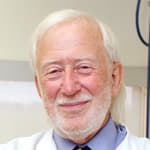
Dr. Malamed is a Diplomate of the American Dental Board of Anesthesiology as well a continuing education lecturer on anesthesia, sedation, and emergency medicine. He has authored more than 170 scientific papers and three textbooks that are used around the world.
Dental podcast: Welcome to DentalTalk. I'm Dr. Phil Klein. So here's the tip of the day, Never treat a stranger." Why do we say this? Because the Knowledge of a patients medical history is of paramount importance in the prevention of medical emergencies in your practice. If we don't know the patient, we don't know their medical history. So Today we'll be discussing physical evaluations of prospective dental patients and why it is so important. Our guest is Dr. Stanley Malamed, a dentist anesthesiologist and emeritus professor of dentistry at the Ostrow School of Dentistry of USC.
Transcript
Read Full Transcript
This transcript was automatically generated and may contain errors or inaccuracies. It is provided for reference and accessibility purposes and may not represent the exact words spoken.
You're listening to The Dr. Phil Klein Dental Podcast from Viva Learning.com.
Welcome to the show. I'm Dr. Phil Klein. So here's the tip of the day. Never treat a stranger.
Why do we say this? Because the knowledge of a patient's medical history is of paramount importance
in the prevention of medical emergencies in your practice. If we don't know the patient, we don't
know their medical history. So today we'll be discussing physical evaluations of prospective dental
patients and why it's so important. Our guest is Dr. Stanley Malamed, a dentist,
anesthesiologist, and emeritus professor of dentistry at the Astro School of Dentistry of USC.
Before we get started, I would like to thank our sponsor, Health First. Health First is a cutting
-edge and highly respected company that helps dental offices across the country cost-effectively
manage the complexities around medical emergency preparedness, infection control, medical waste,
and regulatory compliance. So feel free to learn more about Health First by visiting healthfirst
.com. Dr. Malamed, it's a pleasure to have you on the show. Thank you, Phil. Pleasure to be here.
Yeah. And in the many years that I've been practicing dentistry and doing what I do at Viva
Learning, you've been, like I mentioned offline to you, the king of dental emergencies. That's been
your area. And thank you from all of us who have learned so much about dental emergencies from you.
Because you took over that category that didn't really exist when I was in dental school. No one
taught us how to deal with medical emergencies. And you just literally captivated our profession
for 30, 40 years already. I don't know how many, but quite a few. And you're still doing it, which
is amazing. Still out there doing it. Yeah. So there's absolutely no one else. I'm letting our
audience know. There's no one else in dentistry that knows more about medical emergencies than Dr.
Stanley Malamed. That's a fact. First question, why is physical evaluation of all prospective
dental patients so important? One of the things I like to talk about, it's very easy for a dentist
to do a treatment plan dentally, but we have to understand,
I think we do, that the mouth is connected to the body and dentistry can affect the patient's body
and what underlying conditions a patient may have can have a big influence on the dental treatment
we do. One other thing, and this is I give lots of, as you mentioned, medical emergencies, lots of
lectures in medical emergencies. And my opening statement always is medical emergencies can and do
occur in the dental setting. In surveys that have been done not only by myself,
but in other countries, UK and such, if you practice dentistry full time,
you can expect to see one medical emergency occurring in your office every two to four years. And
one thing is we don't want that. We want to put a patient in a chair, do our treatment. We want
life to be good. But again, things can go wrong and we need to be prepared in advance.
Yeah. And when I talk about medical emergencies to other dentists, you know, there's several
different trains of thought on that. Some will say, yeah, I'm going to get on the phone and call
911 or run down the hall and get the oral surgeon. They have their ideas of what the best way to go
when a catastrophe like that can happen in their office. But what they don't want to do. is do
something that they're not trained to do, or they feel like if they do it and the patient is harmed
in any way, that they're responsible. Do you get that question quite a bit? Well, yeah. In fact,
I was just in Denver yesterday discussing medical emergencies. And here's the thing. We are
healthcare providers. We are licensed doctors. We are licensed to administer drugs,
to pick up scalpels, to treat a human being. And even without the use of medications,
things go wrong. And there's every expectation legally that a doctor,
dental doctor in our situation, will be able to, number one, recognize what's going on and to
properly treat the problem. So just saying, well, I'm going to call 911 or get it in the oral
surgeon is not adequate. Medical legally, it is absolutely not adequate. Right. So the bottom line
is the dentist has to get additional training beyond dental school for this, because I don't think
that the curriculum. provides that as packed as the curriculum is in a lot of these dental schools.
I know you're an emeritus professor at USC. Am I wrong? Do they have a, well, maybe at your school
they have it. Well, one of the things that's happened, I started teaching in 1973 and new things
have come in. Implants weren't being done and all these new techniques and such.
The problem is people don't want to take out the old. So you're saying that, you know, they've
gotten more and more packed with stuff. And that's the problem because everybody, as me as a
professor, if somebody said, well, we have something better than you, we want to take your course
out. I'm going to fight that tooth and nail. So the curriculum simply gets packed. And at USC,
I left in 2013. I was there for 40 years. I retired.
Now they had lectures in the evening because they didn't have enough time during the day to do this
in addition to clinics. So, yeah, we need to be prepared. Look, every state, every state in the
country. requires a dentist to maintain his or her dental license to every two years show that
they're trained in CPR. That's a minimum standard that we have right there, minimum. The title of
this program was Know Your Patient. Now, you know, I mentioned tongue-in-cheek, never treat a
stranger, but let's say someone comes in your office and they were walking down the block right in
front of your dental office and they tripped and they have a fractured number eight and they're in
pain and they walk in your dental office. We're not going to send them away. What do we need to do
to make sure we have enough information on that patient so we're protecting ourselves and the
patient as well? Well, very simply, whether it's that patient who has a fracture number eight or a
new patient coming in because they heard you're the best doctor on that street, the components of
physical evaluation, what you need to do in any situation is, number one, a medical history,
a written medical history. More and more medical history is now being done on computers, but it's a
list of potential medical problems that you have. Do you have heart disease, heart, lung, liver,
kidney, and things along that line? If a patient were to circle, yes, I have something, then it's
the job of the doctor or hygienist or assistant, whoever reviews the history, to know what
questions to ask. Because just because somebody says they have high blood pressure, well,
let's not forget that one. You can monitor blood pressure. They have a history of angina. There are
different degrees of severity there. So then dialogue history is taking every positive response the
patient makes and then delving more depth to find out how significant, if at all,
that problem is to me, the dentist treating you. And then we go to physical evaluation. But what it
means is vital signs. We're going to take the blood pressure. We're going to take the heart rate
and rhythm, respiratory rate. Heightened weight are not as significant,
but more and more significant today. is what is called body mass index, BMI. And sadly,
because many, many, many Americans are grossly overweight. And being overweight leads to things
like high blood pressure, respiratory problems, diabetes, which all can affect dental treatment.
So we do vital signs. And then after we have this data, we have the medical history,
we have the dialogue history, we have vital signs, we then assess risk. What risk,
if any, Does that patient represent to me the doctor who's going to be doing this treatment?
And we have what is called the ASA physical status classification system. ASA is the American
Society of Anesthesiologists. And if everything on that patient's medical history and vital signs
is okay, they're an ASA1. They're a green light. Go for it. If they have a mild system...
For example, asthma that is easily controlled, a type 2 diabetic,
non-insulin dependent diabetic, and a bunch of others. But if they have a medical problem that is
well controlled, not severe, they're in ASA2. And that patient can be treated with minimum increase
in risk. ASA3 could be the same patient with a disease that is now more significant.
A patient who has more frequent asthma. and is not handled as easily.
So the chances of them having an asthmatic attack and you may be having to call 911 is increased,
and they're in ASA 3. And then we have the red flag, which is ASA 4. And what I say normally is
that it's very easy to do your treatment plan and say to a patient, get in a chair. But what we
really have to do is determine what patient shouldn't be in that chair in the first place.
And that's where that ASA physical status classification comes in. And there's one more step. That
is, after we assess the risk of a patient, what treatment modifications, if any,
are indicated? In other words, do I have to change what I'm going to do? For example,
a patient who has high blood pressure or a patient who had a myocardial infarction or has asthma,
stress reduction, the use of sedation, whether it's oral sedation or inhalation sedation,
music, put a headset on like we're wearing right now. Anything to relax a patient who's nervous,
good pain control. In some situations, you're in Austin, Texas, where I assume it gets kind of hot
and humid in the summertime. It does. Yeah, a person with severe cardiorespiratory disease does not
do well in that environment. So bringing that patient in earlier in the day when it will be a
little bit cooler and maybe less humid, the length of your dental appointment. I was at the meeting
in Denver yesterday and a doctor said to me, I do 10 and 12 hour appointments on patients.
He was asking me about local anesthesia, but a 10 or 12 hour appointment for the patient has got to
be hell. That's insane. And for the doctor, you know, I teach intravenous sedation.
Yeah. Oh, I teach intravenous sedation. We're treating the healthy patients, ASA1 and ASA2.
And we teach our doctors two hours. And the reason for two hours is a patient's physiology after
two hours begins to deteriorate. And the ability of the doctor to do good dental care will
deteriorate after about two hours. So, I mean, I've been involved in, unfortunately,
a lot of these cases as a legal witness, if you will, where doctors just, if the patient says to a
doctor, and this is, I'm sure every dentist understands this, they've been in a chair for 45
minutes and they say to the doctor, how much longer? And I guarantee you, the only answer a dentist
ever gives his or her patient is five minutes. I'll be done in five minutes. It has never,
ever been close to five minutes. And if you have a medically compromised patient who's beginning to
deteriorate, but you're busy working in the mouth, that five minutes, which is in reality is 30
minutes, has led to acute medical problems occurring. So knowing when to stop is also a very,
very important thing. And all these factors that you're mentioning is putting the... dentist at
risk legally if they're not if they're not cognizant of of what they're doing with that particular
patient based on their medical history now let me ask you this is a phone call to the md that's
treating that patient um acceptable uh when a patient comes in you don't really know them that well
i don't know what the capability of that particular dental office is as far as taking the vital
signs and getting an excellent medical history or even knowing how to interpret a medical history
but They talk to an MD on the phone and the doctor says, hey, Dr. Malamud,
your patients, I've been seeing that guy for 15 years. He should do fine. What is that worth? I
like that. First of all, too many dentists will make the comment,
I'm going to call their physician for medical clearance. No, you're not.
No, you're not. You are consulting with another health care provider to get more information about
the patient you want to treat. The ultimate decision on whether to treat or not is not the
physician's. It is yours. You have to be satisfied in your mind that that patient can tolerate what
I want to do for them. And that's where that treatment modification comes in. Now, the physician
can give you information, but he or she does not certify that you can treat that patient.
That medical legally would be insane for a physician to do that. Right. So the dentist is on the
hook. No matter what. It's almost like you belong to a study club and you're a general dentist and
you go to a prosthodontic study club and you bring a model and you get a consult with a
prosthodontist. You don't have to do what the prosthodontist is telling you to do, but you're going
to an expert and you may use that information. Same thing is true with medical consultation.
Okay. So there's no clearance by an MD that gets you off the hook. Absolutely not. Okay. That's
important. The person who treats the patient is the one who's responsible for what happens to that
patient. All right. So you've been doing this a long time. In your opinion, how many general
dentists, whether they've just gotten out of school or they've been practicing for five years or
they've been out a long time, how many general dentists percentage wise ballpark do you feel are
really capable of making those decisions to protect that patient? from having a medical emergency
in their practice and also protecting themselves from legal responsibility all right may alienate
some people here but i think maybe 10 well depends on specialty if you general surgeon gp gp maybe
10 10 yeah i mean i get involved in these cases uh local anesthetic overdose cases you know what
all these overdose cases i've been involved with more than 40 in my career where i Again,
I'm a defense witness. They usually occur in a younger, lighter weight child who is well-behaved,
being treated by a general dentist. The treatment plan the general dentist makes is, well, I'm
going to do all four quadrants in one visit. I have never met a pediatric dentist anywhere who,
under local anesthesia alone, will do four quadrants in one visit in their dental office.
Now, if that kid is a screamer, a combater, they put him in the operating room, of course we do it
in one visit. But that's why these things happen in those offices. They just don't understand. I
mean, there are a lot of other reasons this happens. The overdose of local, for example. General
dentists, as a group, tend to inject full cartridges. They don't give a half a cartridge.
They give a full cartridge. And, you know, for an adult patient, even though it's too much, you
don't need it. For an adult patient like you or I, it's not too much. But when you take that same
patient, they weigh 40 pounds, and you forget. what you're dealing with,
and you start putting in full cartridges in four quadrants, the overdose occurs. And then, of
course, they're not equipped to handle it. Is that the most common dental issue that you've seen,
is the local anesthetic overdose? Well, when it comes to drugs,
yes. Second, not as many doctors are doing intramuscular or intravenous sedation.
There's a limited number of them around, but over sedation there, over sedation and not being able
to manage the problem. Like I said, I teach intravenous sedation and a very large part of this
course, we have 110 hours of didactic in addition to they all treat minimally 20 patients.
But a lot of the didactic is all about the complications that can occur. And how do you recognize
it? You monitor your patient's vital signs. And how do you treat the problems? What you're saying
is phenomenal information, but it's a little scary that you feel that only 10 percent of the GPs
out there in this country where we're supposed to provide the best dental care in the world are
generally unprepared or not prepared to the level where they should be for these kinds of issues.
So last question. Yeah, go ahead. Let me say one thing. Yeah, one thing. We do the best dental care
in the world. We do. And we should be proud of that. But what I'm getting at,
what we're looking at right now is. Stuff happens. I don't want to say anything other than that,
but stuff happens and it's going to happen. I mean, if you've been in practice for 40 years,
30 or 40 years, you've seen bizarre things happen, things that shouldn't happen.
You know, we get paresthesia with local anesthesia, cutting on a tooth in the cracks.
I mean, I haven't done dentistry in 40 years. Aspiration of a root canal instrument. I mean,
that's pretty bad. Yeah, speaking as an endodontist, thank God that never happened to me. Okay,
let me tell you, let me tell you this. Two stories about endodontists. I'm involved in two legal
cases right now, and you may roll your eyes here. This dentist, this endodontist, takes expired
lidocaine cartridges and fills it with bleach to irrigate canals. And guess what happened?
Yeah, sure. They gave it a free alveolar nerve block. Okay, and the other one recently,
he fills it with a different one, chloroform. I guess you dissolve the gut of percha.
Yes. It's the same exact treatment. Yeah. And they gave and then free alveolar nerve. Like in both
cases, number one, massive tissue necrosis. Unbelievable. Yeah. And you know, that's the thing over
these years. I think if you've been around, you've been around that long, there's almost nothing
that's impossible. Yeah. That, that, that, I just can't imagine. And I was doing that. And I, I
know you're on the defense side, but good luck with that. Dr. Malamed. No. Oh, you know what I tell
him? Settle. Yeah. Yeah. Yeah. There are times when you say you can't win. You cannot win those.
Yeah, that's a loser. One quick question before my last question. What could a GP do the fastest
path to getting to be proficient in your mind where they should be with medical emergencies?
Well, of course, we started with the fact that basic life support is required in, I think,
every state, every two years. For the doctor, hygienist, in some states for the dental assistant.
really want every doctor to think about this. What if you were the person in your office who needed
medical assistance? You would want your staff to be able to do it. So we're talking now about front
office people. Okay, everybody in the office should be trained. You take your CPR course in your
office because you don't go to a Yankee meeting or the Chicago meeting, a big auditorium with 100
people. You want to put the mannequin in your dental chair, on the floor in your reception room,
and teach your staff how to train, how to treat emergencies on site. You need to have an emergency
drug kit. Now, there are only two states in the country that mandate it, Massachusetts and West
Virginia. They have a list of drugs you have to have. I have a list of drugs,
and both, by the way, both of those states. took the list out of my book, which makes me feel very,
very good. But there are eight drugs, eight drugs that you need to have in the Bare Bones Basic
Emergency Kit, and you need to know how to use them. So how do you get that training? Well, you
either take online or live seminars. There are courses that have been given by the American Dental
Society of Anesthesiology that are hands-on medical emergencies courses.
And people can go to ADSA.org and find those courses.
Because lecturing is great, but doing it is even better. Yeah, absolutely. And as far as the
dentist feeling comfortable that their recommended medications that were in your book, how do we
know that they're up to date and they don't expire? Is there anything you can recommend or talk
about there? Well, yeah, there is one way. Health First Corporation. They've been making dental
emergency kits since the 1970s. I've been consulting with them for that long.
And if you want to buy emergency drugs, you can go to their website and you can order individual
drugs, or you can buy emergency kits of various types. You have bare bones, basic, pediatric,
and more advanced. But they also have a system that is called OnTrack, where they will
automatically... before one of your drugs expires, send you a fresh supply of that medication.
So they're keeping this all on a computer for you. And that's one way of ensuring that whatever
drugs you have in the emergency kit are being kept up to date. on track by health first.
Right. And I think that's very important, Dr. Malamed, because if and when that incident happens in
your office, which you mentioned earlier in the call, could happen once every two to four years,
you don't know when the last time you ordered medication that could save a patient who's going
through anaphylactic shock, right? I mean, epinephrine is probably one of the most important drugs
you need to have. You got it. Now, when I talk about this, I say the most important drug in
emergency medicine is the epinephrine syringe. Oxygen is number two. First of all,
anaphylaxis is highly unlikely to ever happen in our dental office. However,
should it happen, persons with anaphylaxis who get epinephrine the fastest have the best chance of
surviving. Right. So what good is the oxygen if you can't get the oxygen through the airway?
Exactly. Oxygen, for every medical emergency, you can give oxygen. As I say,
it won't always make you better. oxygen won't make you worse. But if a patient does have
anaphylaxis, a bee comes into your office and stings the patient. Oxygen is not going to work when
their airway is closing down. They're in bronchospasm. That's why epinephrine is absolutely the
most important drug. And the problem with that is it has a one-year shelf life. The epinephrine
syringe has a one-year shelf life. Now, here's the thing. So epinephrine looks like water.
It's clear. But as it begins to degrade, it oxidizes. It's just like an apple would oxidize.
So there's a little window on the epinephrine syringe. And if you see any discoloration, anything
from a pale yellow, dark yellow, and I've seen brown, you've got to get new stuff. Great insight,
Dr. Malamed. It's been a pleasure to have you on our podcast program. I know you have a webinar
coming up on Viva Learning. By the time this podcast is published, it'll probably be up on the
website at vivalearning.com. Just search for Malamed. M-A-L-A-M-E-D,
and you'll find the webinar on medical emergencies. So thank you very much again, Dr.
Malamed. I hope we have you back on the show soon. Thank you, Phil.