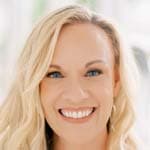
Kelly Tanner, PhD, RDH earned her Bachelor of Science in Dental Hygiene and her Master of Science in Dental Hygiene from Old Dominion University. She found a love specializing in management and administration within her Master's degree, and continued her doctoral education at Regent University in Virginia Beach University in Business & Organizational Leadership. Kelly's Ph.D. focused on organizational metacognition, in-depth study of group dynamics, and how to elicit permanent organizational change.
She is also certified John Maxwell Leadership Coach and is also certified in the science of emotional intelligence (EI). Kelly teaches organizations how to leverage their productivity and teams utilizing EI and other customized assessments to make changes that LAST and teams that THRIVE. Through measured assessments and interaction, Kelly can help teams of any size create sustainable systems for personal and professional accountability by increasing ownership and synergy within the organization. Kelly's proven methods will enhance team interaction, case acceptance, digital adoption, and workflow efficiencies.
Tanner has a published chapter in forensic odontology for dental professionals, and also multiple publications in topics regarding telehealth for dental hygienists. Kelly recently published her dissertation titled: Identifying Leadership Development Needs of Dental Hygienists Using an Online Delphi Technique
Kelly has served as a mentor, clinician, consultant, researcher, and also as a dental hygiene educator and clinical director. Kelly has served as past president of the Virginia Dental Hygienists' Association and also as Chair of the ADHA Council for Public Relations. She has been recognized for her outstanding leadership within health care and university settings, and is a recipient of the ADHA and Johnson & Johnson Award for Excellence.
Kelly has dedicated her career to leadership, education, and mentoring. She has dedicated her time in the dental hygiene profession to understand to how to empower dental hygienists and transform their possibilities. Kelly's passion is helping individuals connect with their passion, and working to make it a reality. She has the ability to envision and assist individuals with a path and help them intentionally build a path based upon their passion.
Dental podcast: Welcome to DentalTalk. I'm Dr. Phil Klein. Today we'll be discussing prophylactic treatments in the dental workflow. Our guest is Dr. Kelly Tanner, a visionary leader who helps dental teams achieve personal and career growth. Dr Tanner has earned both a RDH and Ph.D, she lectures extensively and has impacted more than 100,000 people with her speaking engagements.
Transcript
Read Full Transcript
This transcript was automatically generated and may contain errors or inaccuracies. It is provided for reference and accessibility purposes and may not represent the exact words spoken.
You're listening to The Dr. Phil Klein Dental Podcast
Welcome to the show. I'm Dr. Phil Klein. Today, we'll be discussing prophylactic treatments in
the dental workflow. Our guest is Dr. Kelly Tanner, a visionary leader who helps dental teams
achieve personal and career growth. Dr. Tanner has earned both an RDH and PhD.
She lectures extensively and has impacted more than 100,000 people with her speaking engagements.
Before we get started, I would like to thank our sponsor, Action Group. Action is a leader in the
dental industry based on its technical innovations in x-ray and digital imaging,
high-frequency ultrasonic technology, pharmaceuticals, and precision instruments.
So thank you, Action, for your continued support with Viva Learning CE webinars and podcasts.
Dr. Tanner, it's a pleasure to have you on Dental Talk. Thank you for having me back. So to begin,
let's talk about prophylactic treatments. How have they basically changed in the last 10 years? Oh,
my gosh. Well, one thing we know is job security will always be ours, right?
And things have just changed over, I think, the last five years, much less the 10 years. And I've
been in dentistry for, gosh, 30 years now. It's wild to think that. I think that what's been at the
center of it is, of course, what's best for the patient. But what we have learned so much about is
the oral microbiome, the role of biofilm. I don't know about you, but back when I was in school,
we just called it plaque. For sure. And then we learned that all these communities of all these
microbes like congregated and went off into other areas of the body, which I think that we all
probably suspected even before they changed a lot of the protocols and knew that our diabetic
patients were. that were more predisposed to delayed wound healing and that there was something
that was going on between the mouth and their diabetes and vice versa. So just learning those
connections and how to set that patient up for success and how we treat it. The patient's role in
biofilm control. our role in biofilm control, how we're treating it, not just treating it,
meaning removing it, but how we get ahead of it in our prevention strategy. So I think that all of
those things have been at the forefront of what we're learning and what we continue to learn about
how the body reacts to it. So you do a lot of speaking and you often use the term,
know your flow. What do you actually mean by that? That's a great question. Think about your flow
when you get up in the morning. We all have habits. You know, we get up. I know mine is I get up,
I stumble into the kitchen and turn on my coffee pot. I make my advocate spark.
I go in, I meditate. You know, we all have our own habits. So what are your habits that you have,
good or bad, that you have in your day-to-day practice? And is that truly serving you and your
patients? So when you think about your flow and your habits, because your habits form. your actions
and your actions form your results based on the goals that you're setting. Are you truly doing what
you think you're doing at the end of every day? So when you set those goals up and you say, okay,
I'm going to give the best standard of care for my patient. I'm going to exceed all their
expectations. What does that look like for you? So when you have a patient who is, I'm going to go
behavioral for a second, a patient maybe who doesn't understand the context or something or a very
complex treatment plan. How are you getting ahead of that? How are you giving them something they
don't even know that they want yet? So knowing your flow and that you're exceeding patient
expectations from a behavioral standpoint, communication, your team. as well and what are you
choosing in your operatory that's going to wow them that's going to wow the patient keep them
coming back that's going to eliminate patient turnover team turnover so it's the whole thing about
knowing your flow but then you know going down in a more granular granular level of devices and
knowing what it is that you're choosing that complements the next step in your habits not having to
get up pull a drawer open that you know automatically that's a system that for this type of patient
i always use this this is our protocol do you have your piezo do you have your gbt do you have your
air and go do you have your isovac do you you know do you have everything you need And does
everybody who supports you in that practice, do they know what you use?
Because knowing the flow is also about the handoff that occurs in the practice. Is everyone
speaking the same language? Because you all know that people need to hear things probably seven
times, I think is what the research tells us. And when you start saying it differently to the
patient, they have this amnesia that happens from. the operatory to the front desk,
and then it translates into that they don't schedule the appointment, which is probably one of our
biggest missed opportunities for that patient because you spent all this time educating. Now they
don't understand you because we've told them different things that mean the same thing. And then
they go up and they're so, there may not be sure of it all of a sudden because they've heard
different things. And is that something that we did? You know, I always ask myself if it's
something, if it's a thing that the patient didn't schedule, is it something I did? And what did I
do to miss the point of communication? So it's not, knowing your float isn't.
only from a technology standpoint. It does include technology, but how the whole team is truly
interacting to give that patient the wow experience before they ever come in. And the term workflow
is also used quite often in your speaking engagements. How does that work directly with Know Your
Flow? Oh, sure. So workflow. so let's back up for a second and we talk about our handoffs in the
practice i'll talk about it from a communication standpoint then i'll translate it into what i mean
probably in a lot of the presentations i talk about from a technology standpoint that type of
workflow so from a dental handoff standpoint As a hygienist,
when doctor comes in, before doctor comes in, I have images up. I have a 3D scanner set up with my
eye tarot. I have that set up. I have it zoomed in on something. I'll have probably something
written down on the bracket tray, and I'll have a pamphlet that's set out for that patient. When
doctor comes in, doctor knows that because of those three things that are sitting out right there,
that he or she should probably talk about them. That's part of it. unsaid, unspoken handoff,
like passing of the baton. We do this millions of times a day in our team.
So that is like a nonverbal handoff workflow. How you translate that into an actual operatory
workflow is, does one thing automatically lead into another? Is it right at your fingertips?
Do you have it ready for you? So if you know that you disclose the patient, before you're doing a
procedure, before you're using your Air & Go, before you're using your ultrasonic, do you have it
right there? Is it the best product for you that's going to give you something? Because, for
example. For example, if your office has a perio protocol that wants to truly call out and educate
on the color of, and I'm making this scenario up, but I'm telling you it's in many offices,
who want to illuminate and contrast the color of the tissue for gingivitis patients and
periodontitis patients versus a healthy patient. There is, like for Action has a...
an intraoral camera called the SoProCare that has two settings. It has a daylight setting and it
has a perio setting. So on the perio setting, it's just like a little touch. And any inflammation
in the mouth, it shows up, it jumps off the screen magenta because it's showing that extra blood
flow that's going to that area. So whatever it is that you're honing in on in your practice, is
your device helping you tell that story? Is your device helping you get to that end point of care
to make the point, to make the value proposition to that patient? Because ultimately what you're
wanting them to do is you're giving them autonomy to make the decisions that they need to make for
themselves. So are you doing that in your workflow? Are you choosing the things that are seamless,
that hand off one thing to the next by what you're using in those decisions? Yeah. And that silent
communication between the hygienist and the dentist is so important because you don't really want
to talk a lot in front of the patient. You certainly don't want to have any kind of like, are you
sure? Or, you know, questionable statements where there's a loss of confidence in the patient's
mind about what's going on and they're listening because there's nothing else for them to do. So
this silent handoff is very professional, and it just makes the environment stress-free as the
doctor comes in and sees the patient. I know you have a podcast program, right, called Dental
Handoff? Is that the name of it? Yes, it's called the Dental Handoff, and you can find it on
Google, Alexa, all the things. Probably my device is going to cut on now as I'm speaking, but you
just say play the Dental Handoff, and it will. It's about communication, leadership, and people's
stories about the gems and knowledge that they have learned how to empower their teams and their
environment. What are the new trends that dental hygienists should be on the lookout for in their
workflow? This is a great question.
I think when we're looking at the patient holistically, because we know about that oral systemic
connection, we've been talking about it for a long time now. How are we setting that patient up for
the best healing, the best response, whether it be what we're doing before,
like with probiotic treatment? What are we doing from a saliva? Are we testing saliva based on what
it is that you want to do in your office? Can't do everything. So we have to pick and choose.
Sometimes can't be the master of everything in your office for that one appointment. You could
bring them back for other appointments, but. What are you eventually trying to get that patient to
and through? How are you educating them about this? What do you want to measure for goals to
understand that behavioral change that you're making? You're helping that patient. You're leading
them through that journey to manage their response to that disease process.
or to schedule because they have a filling that needs to be done or crown whatever it is to give
them that autonomy so managing that patient response protecting the the clinician in every aspect
from an infection control i think standpoint and then also ergonomics what's gonna what's gonna
give you like when i talk about workflow it's like what do you have to not reach for as much
because you're using it for every patient so all of these trends on patient management,
that communication in their workflow. Are you saying what you think that you're saying?
And is it relaying across to that patient? So they're getting it. So they're scheduling.
So you've stressed that urgency of care. So they know that it's not just a little bit of bleeding.
It's not just a little bit of recession. There's bleeding. There's gum disease. And what they know
is the problem that you have found, the consequence for if they don't take action and what the
solution is. I call it the PCS model. So what it is that you can help them understand through this
and help them through to give them the best outcomes truly. It was interesting when you talked
about know your flow about getting up in the morning. In the morning when I get up, I don't have
much of a choice. I have to let my two cats out and I have to feed them. They must be fed first.
And then the coffee starts. Because if I start with the coffee, they're looking at me like,
are you kidding me? You have to feed me first. Yeah. So they control the household here. You've
heard that before. Yes, I have. Why we have cats. I mean, they're great animals. I love them. But
sometimes you got to question why we have cats. But anyway, thank you so much. I think you did a
great job on this podcast and the other two that you did. And for those of you who don't know, Dr.
Tanner did a great one on implant maintenance. You can watch that on VivaLearning.com or also
Spotify, Google, Apple Podcasts, wherever you listen to your podcasts. She also did another one
with us called Know Your Flow Infection Control. This was the third episode of a three-part
series. The one you're listening to now is Know Your Flow Prophylaxis. And again, if you could tell
our audience, Dr. Tanner, where they could find more information about you and some of the things
you're doing. Absolutely. Thank you. If you have more questions that's beyond this podcast,
absolutely contact me, drkellytanner.com. And then also too on nextleveldentalhygiene.com.
I have courses, online courses. We also offer live courses for dental hygienists and team members.
We have a... Leadership, the five essential leadership courses on communication, overcoming
conflict, knowing how to know where your true north is, how you know you're serving your why in the
practice. So a lot of cool compilation of a lot of different products and topics.
And if you have any questions that you've thought about, please reach out. Love to talk to you.
Thank you again, Dr. Tanner. See you next time. Thank you. Take care. Thank you.