University of Medicine and Dentistry of New Jersey · American Academy of Cosmetic Dentistry · New York University College of Dentistry · Baylor College of Dentistry · University of Kentucky
Read full bio
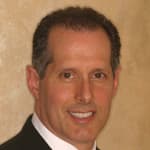
Dr. Christopher Pescatore is a national and international lecturer who has written articles for numerous publications, including Practical Pe-riodontics and Aesthetic Dentistry, Profiles, Dentistry Today, Compen-dium, and Dental Economics. He lectures on state-of-the-art aesthetic procedures, techniques and materials. Dr. Pescatore holds a U.S. pat-ent for a non-metallic post system to restore endodontically-treated teeth. Dr. Pescatore is past member of the Board of Directors, the current editorial team member of the AACD, the Board of Contributors to Esthetic Excellence for Advanced Learning Technologies, Inc., past Clinical Co-Director and former featured lecturer at the Las Vegas In-stitute. Dr. Pescatore is the past instructor of the Advanced Aesthetic Program at New York University - College of Dentistry, the Aesthetic Continuum Program at Baylor College of Dentistry, and the Aesthetic Program at the University of Kentucky. He also evaluates and assists in the development of products for several leading dental manufactur-ers. Dr. Pescatore is also one of only 47 dental professionals world-wide on the editorial board of the prestigious publication REALITY- the Information Source for Cosmetic Dentistry.
Dr. Pescatore is a graduate of the University of Medicine and Den-tistry of New Jersey - New Jersey Dental School. He maintains a full-time practice dedicated exclusively to aesthetic dental procedures.
Are you getting the most out of your intraoral scanner, or is this powerful technology sitting underutilized in your practice? Many dental offices have made the digital leap, but few are maximizing the clinical advantages these devices offer.
Dr. Christopher Pescatore brings over three decades of digital dentistry experience to this discussion. A graduate of the University of Medicine and Dentistry of New Jersey, Dr. Pescatore holds a U.S. patent for non-metallic post systems and serves on the editorial board of REALITY publication. He has served as past instructor for advanced aesthetic programs at New York University College of Dentistry, Baylor College of Dentistry, and University of Kentucky, while maintaining editorial roles with the American Academy of Cosmetic Dentistry. His full-time practice in Danville, California focuses exclusively on aesthetic restorative procedures.
This episode explores the clinical nuances that separate successful digital scanning from merely owning the equipment. Dr. Pescatore shares insights on optimizing scan protocols, adapting traditional techniques for digital workflows, and leveraging real-time feedback to improve clinical outcomes. The conversation addresses critical changes in prep design, tissue management strategies, and how digital technology transforms the dentist-laboratory relationship.
Episode Highlights:
Three distinct scanning protocols are compared through clinical testing, revealing that the buccal-lingual approach, standard occlusal-to-lingual technique, and X-technique all achieve similar accuracy and completion times of approximately one minute. The X-technique reduces wrist movement and may offer ergonomic advantages for practitioners.
Digital scanning demands superior tissue retraction compared to traditional impressions, as physical impression materials can displace tissue while scanners require clear visual access to margins. Soft tissue lasers provide gentle, effective tissue management for capturing clean margin definition without aggressive techniques.
Prep design must shift from traditional PFM bevels to chamfer and shoulder margins for optimal ceramic restoration strength and fit. The infinite margin approach that relied on laboratory interpretation no longer works with modern ceramic materials and digital workflows.
Real-time scanning feedback initially challenges practitioners by revealing preparation imperfections previously hidden in traditional workflows. This immediate visual feedback becomes a powerful educational tool that improves preparation quality over time, though it requires psychological adjustment initially.
Laboratory relationships have evolved significantly with digital workflows, where certified dental technicians using digital tools produce superior results compared to software-trained personnel without traditional dental knowledge. Price point often correlates with restoration quality, with premium labs providing more comprehensive tooth anatomy and occlusal considerations.
Perfect for: General dentists transitioning to digital workflows, restorative specialists optimizing scanner protocols, and dental teams seeking to maximize their digital investment through improved clinical techniques.
Discover how to transform your digital scanning from basic documentation to advanced clinical enhancement.
Transcript
Read Full Transcript
This transcript was automatically generated and may contain errors or inaccuracies. It is provided for reference and accessibility purposes and may not represent the exact words spoken.
Well, I always said that, you know, getting a scanner doesn't make you a better dentist unless you
use what the scanner is giving you to learn. Because all you have to do if you've never done it and
you prep and you scan and you think you made this miraculous, beautiful, smooth prep and you see it
scan, you're like, oh, it's always a little shock that your preps maybe aren't as good as you
thought. In the beginning, I'll tell you, it's a hit to your ego.
Welcome to the Phil Klein Dental Podcast. Many of us out there who are listening to this episode
are using an intraoral scanner, or they work in a practice that has one. The question is,
are you doing everything clinically around that scanner to get the best results, taking advantage
of this remarkable technology? To address that question and talk about the intraoral scanner as it
pertains to our clinical procedures is our guest, Dr. Chris Pescatore. Dr. Pescatore is a general
dentist who has been a pioneer in digital dentistry since the early 90s and has, according to him,
seen it all when it comes to creating aesthetic restorations. He maintains a full-time practice
dedicated exclusively to aesthetic restorative dentistry, and that's located in Danville,
California. We'll be getting to our guests in a second, but first, for the optimal bond between
zirconia and your resin cement, check out Bisco's Z-Prime Plus. Rated best in class by thousands
of top clinicians, Z-Prime Plus, featuring MDP, creates a strong, reliable bond to zirconia,
metal, and alumina substrates. And nothing could be simpler. It comes in a single bottle,
and it's 100% compatible with both light-cured and dual-cured resin-luting cements.
It's time you get the most out of your zirconia restorations. To learn more about Z Prime Plus and
the entire Bisco Adhesive product line, visit bisco.com. Dr. Pescatore,
thanks for joining our show. Thank you for having me. It's always great to be on these podcasts
with you. Yeah, we're really happy to have you on the show, Dr. Pescatore. Your previous podcast
episodes with us are doing very, very well. High engagement. Lots of really good insight are coming
out of those discussions. Today, we're going to be talking about the intraoral scanner. So to begin
this episode, talk to us about the technique of scanning. What are the clinical implications and
which particular technique, if any, do you prefer? You know, that's a great topic right now because
when I first learned scanning, there was definitely a protocol, you know, the way you go around the
arch and all those things. The scanners have gotten so good. I actually go over the different scan
protocols because I did them in my office and I actually found no difference, which was amazing to
me. You know, no difference in the first pass or how long it took, because in the corner of my
monitor, it says how long it took. And it was a minute for each of them. just under a minute for
each protocol. And, you know, the first protocol when they're doing an arch, people will start with
the most distal tooth. And the one is, I call it the buccal lingual approach. We kind of just keep
going buccal lingual, buccal lingual around the whole arch. And then that's your first pass. And
then you go back to get more tissue. And then there's that, what I call the standard approach,
which seems to be very commonly taught is going on the occlusals around the arch.
And then going lingual and getting the whole lingual surface on the arch and then flipping it
buckle and then getting buckle. Right. And on that technique, on the anterior, kind of flip lingual
buckle, lingual buckle between canine to canine. Right. Because of the incisal edge. Yeah.
Absolutely. Because when a tooth is thin, you want to get a little bit of buckle lingual data.
So you rock the scanner back and forth when you're doing that to get a little of both. And then the
last one called the X technique, a digital manager for one of the biggest labs kind of started it
years ago. And his name is Eric Hill. And he and I were talking and he goes,
try this technique, see if you like it better. I call it the Hill technique because it's him, but
it's called like the X technique where you start the pass the same way on the occlusal where you
go, from the occlusal all around to the occlusal of the opposite side. Then you go buckle.
And as you go towards the midline, you cross over to the lingual and get the lingual.
Then you turn it to the buckle, go the buckle to the midline, cross over and go lingual.
And I found with that technique, there's a lot less wrist flipping. And it was much easier to do.
So I pretty much use that most of the time. If not, I usually use a buccal lingual approach.
I know I've seen people say, oh, you know, look, this one's this much more accurate and this more
accurate. I think clinical significance is it's not there. How do you measure the accuracy?
How do you measure the accuracy of these techniques? Well, with my particular scanner, there's a
heat map, you know, green. You got the data. Great. So I use a heat map and you can see you're
getting all the data. All right. So you see where you're missing. You just see the missed spots.
Yeah. Right, right. And you can turn the heat map on while you're scanning, after you're scanning.
But I show it, I show in the video, in my presentation, the heat maps after the first pass of each.
So you can see each one gets a little more of certain areas. And then you can see when you go over
to get all the rest of the areas, the total time is, I think it was like 53 seconds.
almost for each of them identical. It was crazy. So, you know, I think accuracy wise,
sure, someone might come up with a stat from some research article done in some clinic or some,
but in real life clinical, I think as long as you're not over scanning, I think.
Either of those three protocols is totally fine and what works for you. So let's talk about those
dentists that are making that transition from traditional impression taking to digital scans. Does
anything change regarding the clinical nuances such as birth selection,
prep design, tissue retraction, all the things that we're doing now, what we used to do,
or most of us, for those that have switched to digital used to do, what's the big thing that we
have to keep top of mind to make sure we're doing it? Maybe a little differently now that we're
using the digital workflow. Well, it's not just a digital workflow. It's also the change of our
materials, especially with the advent of something like zirconia. But the most important things
that come through are prep design and tissue management. When you're talking digital scanner, I
always say it's easier to take an impression and capture accuracy than a digital scanner, because
if you haven't retracted that tissue completely. You're not going to get the margin versus if I
have an impression tip, I can actually put that tip in the sulcus and syringe my material. And
guess what? You know, I've just used the physical attributes of that impression material to aid in
my accurate impression. So dentists have to be very aware. That's why great conservative dentistry,
which is mostly equa or super gingival margins is perfect. But we're doing a lot of re-restoring
of teeth now. So you have to be really good at managing tissue. That's why I love soft tissue
lasers. I've had them since the late 90s. They're amazing, the diode lasers. And you have to be
really good with retraction, whether cord, pastes, using combinations of,
just so when you actually are physically looking at your prep, you can see the whole margin because
that's what the camera is going to see. But that's also a great thing about using a digital scanner
versus taking an impression is, If I scan and I see, oh, I didn't really get it,
I can just wipe that part away, retract the tissue or laser the tissue, rescan it,
and there I have a perfect crisp margin. Yeah, I'm going to talk to you about real-time feedback
in the next question. But still on this one, you talked about tissue retraction.
I don't know. how many dentists have soft tissue lasers or if they do have them how many have
picked it up in the last 10 years they sits on the shelf it seems to me that would be something
they would use almost all the time for indirect restorative dentistry that laser would be ready to
go but i'm finding when i talk to dentists many of them do not use a soft tissue laser although the
ones that do swear by it what's your thought on that why is that um I don't know because like I
said, I think the first time I used one was like 97, 98. Do you use it for most of your indirect
work? A lot of times. Yeah, because if there's slightly inflamed tissue or if there's a little
tissue and you're not using it aggressively, I think maybe that's the big hang up is people think
it's very aggressive. You don't have to be aggressive with it. It's very simple to use just to
create that little bit of separation from your margin to your gingival tissue. It's not a big deal.
But also, you know, there's nothing wrong with the standard wave retraction cord. Retraction cord
is a great thing. I use that 90% of my cases. In addition,
maybe I lasered before. And what about prep design for the digital scan?
Well, you know, studies have showed that chamfer shoulder margins lead to the strongest
restorations. If you're coming from a PFM background, which almost all of us are, you know, we were
taught that bevel, the long bevel, we always called it the infinite margin, you know, kind of
thing. Your lab basically determined where your margin was, right? So that doesn't work with the
ceramic materials we have. It just doesn't work. And that's where you get your fractures or
chipping or that's a harder thing to insert. Sometimes there's insertion issues. So you have to get
really comfortable with chamfer and shoulder margins. And I was doing them back in the PFM days.
So I never did the infinite bubble. I was even even with PFMs, I was doing a chamfer or shoulder.
And having the metal cut back in, my margin was all porcelain. So I always use porcelain margins on
my PFMs anyway. So I think just getting comfortable with that, it's just a slight bird difference
in selection. But I don't think any dentist will have a problem. It's just they have to know that
they do have to change because of the materials. We'll be getting right back to our guest in a
second. But first... As a dental healthcare professional, you might already know that 3M Healthcare
is now Solventum, and one of its next-generation products is 3M ClinPro Clear Fluoride Treatment,
available in a new rosin-free water-based formula, with soluble fluoride ions immediately
available to deposit on the tooth. ClinPro Clear Fluoride treatment needs only 15 minutes of
contact time. Plus, with less waiting time to eat or drink after application, it's even easier for
your patients to say yes. Its uniquely designed LPOP delivery system ensures a smooth and
professional application process. In clinical studies, hygienists found it fast and easy to apply.
and patients rated their experience an impressive 98 out of 100. So if you're looking for effective
fluoride uptake in a rosin-free water-based formula, try 3M ClinPro Clear Fluoride Treatment from
Solventum. To learn more, visit solventum.com. Yeah, so that covers the prep design,
and obviously that goes along with the burr selection, like you just said, to get that finish
margin of being a chamfer. So when we scan, we're getting real-time feedback. And that's a
completely different scenario than traditional impression taking. Although, you know, when you take
your impression, you do get to see it. But when you're doing the scan, that feedback is right there
in your face. So talk to us about how that immediate digital feedback helps us as clinicians and
ultimately improves clinical outcome for our cases. Well, I always said that, you know, getting a
scanner doesn't make you a better dentist unless you use what the scanner is giving you to learn.
Because all you have to do if you've never done it and you prep and you scan and you think you made
this miraculous, beautiful, smooth prep and you see it scan, you're like, oh, it's always a little
shock that your preps maybe aren't as good as you thought. And I know I went through that and it
may be just better. um so you get better at preparation design you get you're using the feedback
but like i just said before if you see you didn't catch a margin you know before you have to take a
new impression so it's another four and five minute impression in someone's mouth you can just wipe
it clean in the scan data erase it and then do whatever you have to do to expose that margin rescan
it in two seconds and you're done so benefit yeah that's a big benefit so the psychology when
you're getting into digital scanning and now you're starting to cut the preps on a regular basis in
the beginning you saw the feedback and major adjustments did you find that those adjustments
developed into your technique where after a while that's that digital feedback that you were
getting you didn't need to do anything else and after six months of using a digital scanner you
went hey my my preps are even under the digital scan results are looking pretty damn good You know,
I'd like to say, yeah. Depends on the day, right? Depends on the day. I'm human like anybody. I
mean, I don't, it's not, I don't possess any skills better than anyone else. It's just how hard you
work at them and how hard you want to perfect them. And so for me, when I see some little
irregularity, I'm going to go back and smooth it. Is it going to affect the life of the restoration
if it was made to that other margin? Maybe, probably not. Who knows? But it's just, it makes you
better if you want to be better. And it gives you the feedback available. In the beginning,
I'll tell you, it's a hit to your ego. And I thought, geez, I thought I made these nice preps. So
you can get better. You can get better. Now, talk to us about the lab a little bit.
In the old days. if your preps weren't ideal, like you just talked about, you didn't necessarily
either know or want to take another impression. We relied on the lab to do a lot, right?
To make it, and they kind of assume things, they kind of approximated things. So obviously what
they did may not be the reality of what's actually in your patient's mouth. So do you find that the
adjustments that you need to do when you get the final product back from the lab, and I know you do
some milling chair side, but assuming you're sending it out to a lab, What are you looking at as
far as redos, God forbid, or just things that aren't fitting the way you would like?
Are you seeing way less of that since you've got into interval scanning? That goes into a really
big topic of how the labs have changed too. I've used... the same laboratories for most of my
career. So I have a good relationship with them. I know who I'm using at the laboratory. I can talk
to them. That's really important if you're going to do cosmetic cases by far. And their people at
the lab are actually CDTs now using digital tools versus what is going on now with the majority of
the labs is they're hiring people up the street and they're training them on digital software. They
really don't have tooth knowledge. And that shows when you get a restoration back.
You know, anyone could put a library tooth on there and make it fit. I remember I was actually at a
very big laboratory and they were giving me a tour and I watched somebody. They had a stone models,
the technician, they put it in the scanner next to them. It popped right up on the screen, blah,
blah, blah. They did a couple of things and they shipped the restoration off to the mill. And I
looked at the person giving me the tour. I go, how long does that take? They go three minutes. They
knew right off the bat. Three minutes is pretty much. what they're giving their technicians to make
a tooth and send it to the mill. And I thought, wow, you're going to get what you get.
And that's the problem. If you're a CDT, if you're a certified dental technician,
and then you're adapting digital tools, you still have all that knowledge of dentistry. inclusion,
you know, where not to put interferences, how arches should look, you know, things like that. But
if you just know the software, I don't care how much they show you on dental anatomy, you're not
really picking that up. I'm sure there's some that are very good, but I'm talking about the
majority because you can see it in the restorations you get back. Yeah. So that's what I was going
to ask you. You have a relationship with your lab, so you're seeing really good stuff come back to
you based on... doing the work and they're certified dental technicians and they are also design
software guys and gals, I assume. So how does a dentist discern between one lab and another when
they first start the relationship with the lab? Let's say a dentist is leaving a DSO, he's going
to, he's becoming an associate at a dental practice. Now he's working with their lab and now he's
getting these cases back. What should he be looking for to, you know, nip it in the bud so that...
could fix the, he or she could fix the problem. Right. Well, I think the first thing you can look
at, and it's not definitely always going to be the only factor, but if you look at price,
if you're getting a hundred and something dollar crown, you're getting a hundred and something
dollar crown. If I get a $350 crown, guess whose is better? Not saying always, but.
you know, you kind of get what you pay for. So you can kind of tell, and you know, usually, and I'm
not criticizing anyone's business model because there's some exceptionally successful laboratories
that are very large and good for them and God bless them, but they have a certain business model.
Smaller laboratories don't have those business models because it's more artistic.
And I know some people, oh, artistic. Well, hey, it all depends. What do you want in your mouth?
And, you know, so that's always very interesting. I always find people criticizing and they usually
criticize because they can't do it. I can't do a lot of things. I'm not criticizing anything
because I can't do a lot of stuff. So I think you have to for a young dentist,
you know what you can easily do. You can go on Instagram and you can see people's before and after
cases. I've done this where I saw this one dentist out of Chicago and I saw his case.
He's a prosthodontist. And I saw his cases. And I thought, wow, that ceramic work is absolutely
gorgeous. So if you look in their bio and their links a little bit, all of a sudden I see a lab
technician and I contacted the lab technician. I said, hey, I'd like to send you some cases. Unless
that lab technician is in-house, then you can't work with them. Right, exactly. But this, he
wasn't. Okay. Yeah. But if they're in-house, but you know, I, I've toyed the idea of bringing an
in-house technician too, but I actually like making them myself. So I don't, but you also,
you also had a very large practice that you scaled down because you found that because of the size
of the practice and the volume, you couldn't produce the kind of dentistry or have the lifestyle
that you wanted. So you cut back. Well, right. When I originally on the East coast, I started,
I bought a practice with over 10 employees. Six days a week. I found Sunday. I just wanted to stay
in bed all day. I did that for a couple of years and I realized I'll get out of dentistry before I
start. I keep practicing like this. It's not you're not doing. I wasn't as proud of the dentistry
as I thought I should be. So I made the decision at that point to. get it,
explore in dentistry, the more cosmetic restorative things, educate myself.
And then I realized, so I dropped my staff from like a little over 10 to five. I went to working
four days a week or four and a half days a week. In the late nineties, I moved out to California.
So after I sold that practice, I started this practice from scratch with no patients. And I was
able to at that point to say, this is the way I'm doing it. And I've tweaked it over the time, but
I've always maintained, I mean, at the most staff wise, I've had three staff members at the most.
Yeah. I mean, the bottom line is you found your comfort zone, where you wanted to be as far as your
career. And happiness and career satisfaction plays a big role in our lives,
not only our professional lives, but our personal lives. You end up taking it home when you're
unhappy from the office and that's not good for anything. And I think part of the enjoyment you've
gleaned out of dentistry is embracing new digital technology as it emerged. I mean,
I think you've tried just about every gadget that they've come out with. I've tried a lot of them,
not all of them, but I've tried a lot of them. And, you know, I would say this to a dentist,
don't worry about what other people think of you. other dentists. I was listening to a podcast or a
webinar once, and this guy was criticizing smaller practices like mine. Oh, with these little
boutique practices. Well, here, this guy ran a huge practice and he was talking about how he wants
four hygienists going at one time and this and that. And I'm sitting there going, I'd love to see
your cosmetic cases. Just curious what they look like. And I'm not criticizing that either. But
don't throw a stone because I'm from Jersey. We throw a boulder back. Right. But I mean, his
priority was a business. He wanted to run a big business, high revenue. And right. Whether or not
his patients were discerning enough to care whether they had a crown that looked like yours or look
like his was not really a big factor in his output. Right. I mean,
I don't you know, and I don't. I don't judge. Do what you want. Do what makes you happy. I mean,
not to dismiss business because one of the best things I ever did was get a business person to run
my office, not someone in dental. I hired someone from the business world to be my office manager
and run my business. And when she came in here, one of the first things she started looking at and
go, why do you have this lease? Why are you doing this? Why are you doing that? Getting a business
person to run your office. is probably the best decision I've ever made. I don't want a dental
person running my practice. I want a business person. So business is important. I also just value
doing the best work I can for people. And some people, that's maybe not their goal.
They want to just make bank and, you know, whatever.
You're one of the fortunate ones, Dr. Pescatore, because you... You love dentistry and you want to
focus on doing your thing and you still want to make money and pay your bills and take care of your
family. So hiring that business person apparently was a good idea. I think that each individual
dentist has to go into this field with their own. a viewpoint of what they want to get out of it.
And they have to pursue that passion. Whatever that passion is, pursue it. If you want to do it as
a business, hire great doctors underneath you that do great work and let them do the passionate
dentistry and the conservative dentistry that the patient deserves. But if you want to do it
yourself, then hire a businessman above you, or at least in line with you that runs your business
so that it's profitable. But you just have to pursue what your passion is and stick with it. I
agree totally. Absolutely. Couldn't have said it better, Phil. All right, my friend. Thanks a lot,
Dr. Pescatore. We'll see you on the next podcast. Great. Thank you so much. Folks, thanks for
listening to our show. We do appreciate it. And I also want to say that if you are interested in
hearing more tips and tricks from Dr. Pescatore, you can do that on VivaLearning.com. Type in
Pescatore in the search field and you'll find all his material. His name is spelled P-E-S-C-A-T
-O-R-E. Have a great evening.