Digital Dentistry Expert · SUNY Buffalo School of Dental Medicine
SUNY Buffalo School of Dental Medicine · Academy of Laser Dentistry · ADA Standards Committee on Dental Informatics · The Journal of Practical Hygiene · The Journal of Practical Procedures & Aesthetic Dentistry · The Journal of the Academy of Laser Dentistry
Read full bio
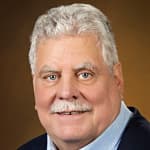
Dr. Scott Benjamin is a native of the Tri-County area and is a graduate of SUNY Buffalo, School of Dental Medicine and has been in full-time private practice in the Tri-Town Area for over 25 years. He has been a leader in computerized dental practice management since its' infancy. Dr. Benjamin has presented internationally at major dental meetings, universities, workshops, study clubs, and user meetings and has published more than 100 articles on dental technology in over a dozen publications on topics ranging from computerization, and the Internet to micro air abrasion, diagnostic modalities, and lasers. Dr. Benjamin is presently the Technology Editor of "The Journal of Practical Hygiene" (JPH), the Section Editor of Advanced Technologies for "The Journal of Practical Procedures & Aesthetic Dentistry" (PPAD), and is on the editorial board of "The Journal of the Academy of Laser Dentistry" (JALD). Dr. Benjamin has been appointed as a member of the Presidential Task Force on the National Healthcare Information Network (NHIN). He is also a member of ADA Standards Committee on Dental Informatics (ADA-SCDI), and is the Working Group Chair for three sub committees: Data Redundancy, Archiving, and Storage; Digital Photography and Imaging; and The Electronic Patient Dental Record. He is also a member of the ADA Standards Committee on Dental Products (ADA-SCDP) and is on the Board of Directors for the Academy of Laser Dentistry (ALD), a member of the National Dental Electronic Data Interchange Council (NDEDIC) Board of Trustees, President of the Tri-County Dental Society and Vice-President of the Sixth District Dental Society of the New York State Dental Association (NYSDA). Dr. Benjamin also is a Visiting Professor at the SUNY at Buffalo School of Dental Medicine, participated in the World Health Organization's (WHO) Collaborating Centre for Oral Cancer and Precancer 2005 Closed Session Working Group on "Potentially Malignant Oral Mucosal Lesions and Conditions Terminology; Classification; Diagnosis and Prognosis". Dr. Benjamin's interest in technology and advancing computerization in dentistry began with his first practice management system, in the early 1980's, and was instrumental in the development and implementation of electronic insurance submittals, in the mid 1980's while serving as an advisor to several dental technologies companies, and is continuing to assist in the progression of digital electronic patient records into mainstream dentistry. His interest continues today on a much broader scale with his involvement in the development of clinical screening, diagnostic, and treatment modalities and incorporating the appropriate utilization of advanced technologies into the everyday clinical dental practice. Dr. Benjamin is a consultant and advisor for many dental practices and several dental technology companies utilizing his expertise in clinical dentistry, digital radiography, imaging, practice management, dental computerization, and workflow.
How can dental assistants revolutionize your crown and bridge workflow while dramatically reducing chair time? What if your staff could deliver higher quality restorations than traditional impression techniques?
Dr. Scott Benjamin brings over 25 years of private practice experience from rural upstate New York, where he has established himself as an internationally recognized authority on dental technology and digital workflows. A graduate of SUNY Buffalo School of Dental Medicine, Dr. Benjamin serves as Technology Editor for The Journal of Practical Hygiene, Section Editor of Advanced Technologies for The Journal of Practical Procedures & Aesthetic Dentistry, and sits on the editorial board of The Journal of the Academy of Laser Dentistry. He holds faculty appointments at several universities, chairs the ADA Standards Committee Working Group on Dental Lasers, and is past president of the Academy of Laser Dentistry. His expertise spans digital radiography, practice management systems, and advanced clinical technologies, with over 100 published articles on dental technology topics.
This episode explores Dr. Benjamin's innovative approach to digital impression workflows, where licensed dental assistants handle 95% of his crown and bridge scanning and design work. The conversation reveals how proper staff training and delegation can transform practice efficiency while maintaining exceptional clinical outcomes. Dr. Benjamin shares his systematic approach to implementing digital workflows that reduce chair time, eliminate remake procedures, and improve patient satisfaction through same-day dentistry options.
Episode Highlights:
Digital impression workflows can reduce chair time for single crown procedures to less than the time required for MOD restorations, with assistants handling scanning and design while the doctor focuses on preparation and cementation. This delegation model requires comprehensive staff training but delivers significant economic benefits through increased case volume and reduced remake rates.
Traditional impression materials now represent less than 5% of crown and bridge procedures in practices utilizing digital scanning technology, with the primary limitation being soft tissue impressions for removable appliances. The reduced frequency of use creates inventory management challenges as materials expire before consumption.
Licensed dental assistants can perform digital impressions and crown design work within regulatory frameworks, acting as co-therapists who inspect preparations, acquire scans, and design restorations under doctor supervision. This approach requires cross-training multiple staff members to prevent workflow disruption when team members are absent.
Multi-unit bridge workflows benefit significantly from digital scanning through real-time lab communication, allowing immediate scan verification before patient dismissal and reducing temporization time from weeks to approximately one week. This eliminates remake procedures caused by inadequate impressions and reduces risks associated with extended temporization periods.
Scanner selection criteria should prioritize company stability and technical support quality, with practitioners advised to test support response times before purchase. Compatibility requirements with aligner companies and intended clinical applications must guide equipment selection rather than price point alone.
Perfect for: General dentists implementing digital workflows, practice owners considering staff delegation models, and dental teams interested in optimizing crown and bridge procedures through technology integration.
Discover how strategic staff training and digital impression technology can transform your restorative practice efficiency while maintaining clinical excellence.
Transcript
Read Full Transcript
This transcript was automatically generated and may contain errors or inaccuracies. It is provided for reference and accessibility purposes and may not represent the exact words spoken.
You're listening to the Phil Klein Dental Podcast.
Today, we're diving into the realm of digital dental scanners, those sleek devices that are
changing the way dentists capture impressions. If you're a dentist looking to step up your game
with cutting-edge technology or simply curious about what these scanners can do, sit tight and
enjoy today's episode. Our guest is Dr. Scott Benjamin, who is in private practice in rural upstate
New York. He is an internationally recognized authority on dental lasers and advanced dental
technologies. Dr. Benjamin has faculty appointments at several universities, is the chairman of the
ADA Standards Committee Working Group on Dental Lasers, and is past president of the Academy of
Laser Dentistry. He currently serves on the editorial board for several prestigious dental
journals. Dr. Benjamin will be joining us in a second, but first... When it comes to digital
workflow equipment, it's important to partner with companies that provide premium products with
unparalleled service, all at an affordable price. That's why you should check out Shining 3D
Dental, a company that offers a complete and integrated suite of high quality and easy to use
digital dental equipment. Their local offices are based in California and Florida, so you get in
-time comprehensive support. In fact, Shining 3D Dental can furnish your office with an entire
suite of digital for under $27,000. This includes their AoralScan3 wireless intraoral scanner,
Metasmile 3D facial scanner, and the Acufab 3D printer with its post-processing equipment.
Plus, the Shining 3D Dental Digital Workflow solution includes cloud storage, synchronization,
and software for consultation, analysis, and design. So whether you're taking your first step into
digital dentistry or you're looking to add additional equipment, check out Shining 3D Dental.
Dental's complete digital dental portfolio. To learn more, visit shining3ddental.com.
Dr. Benjamin, nice to have you back on the show. As always, Phil, thank you for the invitation. I
always enjoy the opportunity of hopefully sharing quality knowledge with my colleagues.
Yeah, so we talked a while ago, and I joke with you about this every time I see you, which is not,
I'd like to see you more often, but every couple of years when we get together, I always joke about
this. We talked about what would happen to traditional impression materials, the goop that we're
all mixing up and putting in trays and putting in people's mouths, they're gagging, and it's been
working for, obviously. forever. But then, of course, 10 or 12 years ago,
we had this discussion about digital scanners, and you said, Phil, in a couple of years, you'll
never see that traditional material again. It's going to be replaced. Tell us what your thoughts
are now about traditional impressions and where we are with the digital scanner. That was a very
funny conversation that we had years ago that I predicted, again, about 10 years ago, that within
five years, that traditional impression materials were going to be defunct. We're slowly moving in
that direction. Now, again, in my practice, 95 or greater percent of my single unit crown and
bridge, well, actually 100% of my crown and bridge work is done with a digital scanner. When it
comes to soft tissue impressions for removable appliances, that's sort of presently where the
digital scanning in office tends to fall apart, which is where we still use conventional.
of impression materials. The thing that we get into a problem with is we use it so infrequently
that I had to start buying it in smaller quantities because it was expiring before I could use it.
We talked about your workflow, which you are kind of a little bit iconoclastic when it comes to how
you delegate some of the responsibilities regarding doing your prosthodontics in your office.
So enlighten us about how you actually use the scanner and what's the next step and who does what.
Well, when I first got into, you know, digital impressions back again, got 15 years ago.
My home time flies. 15 years ago, my initial training, I took two of my two licensed dental
assistants with me down to the training. And as we sat there and did the training,
I never touched the machine. I had them sitting in front of it. And I'm known as a computer geek in
dentistry.
questioned by the instructor saying, Scott, we've known you for years. We know how much you're into
computers. You're spending basically $100,000 in this technology and you're not going to use it.
My answer was I'm spending $100,000 so I don't have to use it. I train my assistants to use it
from top to bottom. My assistants are much better at the digital impressions and designing the CAD
CAM crowns better than I am because they're doing it. literally multiple times a day on a daily
basis. All right, so I'm your patient, tooth number 19, broken down, large fillings.
I sit in your chair. We're scheduled to do a full crown, and you've got chairside milling all set
up in your office, one-day dentistry, one-visit dentistry. Tell me what the process is and who
does what. The one-day dentistry was something that I thought initially was going to be completely
bogus as far as does it really work and are patients that interested in it.
The last patient I had today, as a matter of fact, made the comment he was so grateful that, you
know, we could do this crown on his upper central incisors all in a single appointment. And, you
know, so we developed the workflow that made the most logical sense. I anesthetized and I prepped
the tooth according to the needs of that particular restoration. After I have done the preparation,
I literally will hand the mirror to my chair-side assistant, who's licensed in the state of New
York, and I ask her to inspect my prep. Very similar. to how a faculty member would inspect a prep
in a dental school. And the question is, can you see everything you need? What do you think should
be changed? And I've trained them to be a second pair of eyes for me. Can they visually see the
margins? Do they like the emergence profile or do I need to possibly change the emergence profile
of the soft tissue? I'm happy and content, and they're happy and content. I let them do the digital
impression. Once the digital impression has been acquired, I'll quickly review it and say, yes,
this is satisfactory. We can see what it is. And then they take over just like a lab technician
would. and do the designing of the crown. If they run into anything as far as a question, gee,
I'm not sure if we have enough reduction in this area. I don't like the contour of how this looks.
We will then work together on how do we want to change it. They're actually doing the manipulation
and I'm doing the anatomical coaching. They then mill the crown and then hand it back to me.
And my entire time for doing a single unit of crown and bridge is significantly less than my time
doing an MOD restoration. Because again, I'm doing the prep and the cementation and almost
everything else is being handled by my clinical staff. So now that I'm able to do, you know,
more dentistry in a shorter amount of time and getting the quality that I want out of it has really
significantly improved the economics of the practice. The amount of time it takes for my staff to
do a digital impression is literally probably less than half of the time it takes to have the
impression materials set. to say nothing about mixing it, fitting the tray and everything else.
So again, the entire appointment time of my time is cut down literally into minutes.
Right. Now, a dentist will say, that sounds great, but if that person leaves the practice,
now I'm really, my workflow has just been destroyed. Again, it comes down to two basic principles.
One, make sure your staff is very happy and content as you train. Now, my present staff that I have
have all been trained internally. They have been trained by my other dental assistants and myself
on how to actually... sign crowns, and that's more what I'm involved in. And my other staff,
my present clinical staff has been literally trained 100% by other staff members.
So again, it's a matter of making sure that we have enough staff members. I had the misfortune
back, I'm going to say 25 years ago, again, longer than that now that I'm thinking of it, because
these kids are all now working, of having four staff members that were all pregnant at the same
time. It taught me very quickly to make sure I have redundancy in my staff so that no one staff
member is 100%, you know, responsible for any one task and that everybody is appropriately cross
-trained. So if somebody goes off on vacation, et cetera, somebody's out with an illness,
that my production can continue as normal. But for the doctor who has one assistant and who depends
on that one assistant to do these procedures, all of his or her eggs are in one basket, right?
Well, the idea, first you made a statement, never put all your eggs in one basket. That is a
critical mistake all the way around. And that's just dental practice as a whole. Because you never
can tell when a staff member is going to be, I had a staff member literally break her arm by
getting hit by a metal door. Which again, was a situation, and I mentioned about having several
staff members all expecting at the same time. So again, fortunately they were staggered. apart far
enough that while one was out on maternity leave, you know, the others could follow through.
But it was a matter of don't put all your eggs in one basket. One of the fears that many clinicians
have, I'm going to spend all this time and effort training my staff to make their job skills now
more valuable that they can go out and shop their skill set to other clinicians. You know,
and in an urban area, that's a much more of a concern than it is in a rural area. But however, when
you have a staff that, hey, I'm paying you to do this job and I'm appropriately compensating you
for it. Grass always looks greener on the other side of the fence. And it only takes one person to
actually find out that grass isn't greener. To actually have that come back and infect the rest of
the staff of, I never realized how good I had it until after I left. Right. Let me ask you this
question. Switch gears a little bit here. You talked about single crowns. We're talking about
single crown restorations. You talked about the workflow. What about bridges? Dr.
Benjamin will be answering that question in a second, but first, as an endodontist, I can tell you
root canal preparation can be stressful, tedious, and exhausting. And part of the problem is that
dentists typically use too many endodontic files, and they use them in somewhat of a haphazard
sequence. This makes the procedure more complex, longer, and less predictable. That's exactly why
Colten developed the HyFlex EDM file system. With only four endodontic files used in sequence,
you can effortlessly clean and prepare the root canal system to working length case after case.
Using a simple pecking motion with the opener, glider, shaper, and finisher, you'll quickly see how
much faster your endo procedures will go and how efficient you'll become in achieving exceptional
canal preparation. So if you're looking to speed up and simplify your root canal procedures
consistently without compromise, check out the HyFlex EDM file system from Colteen.
To learn more, visit colteen.dental. Traditionally, what we're doing now in our practice is that
we're going in, we're doing the same workflow through the scanning phase. And then at the scanning
phase, we're actually digitally sending the scan out to the lab to have the lab do the work there.
So I'm working with Crown and Print Lab that has the ability to accept the digital scan. While the
patient is still in the office, I'm actually able to communicate with them and saying, is this scan
adequate for what you need to fabricate this prosthesis? Rather than, oh, you missed this margin,
now bring the patient back. we're able at that same time to do a new scan and make the corrections
at that time, something you can't do with conventional materials. So that works out very well.
Plus, I'm a rural practice. Everything that I do in the lab, for the most part, has to be shipped
in some form or the other. So I've now cut down. the amount of time a patient needs to be in
temporization significantly because I've eliminated the shipping time going out.
Now, we still have to get it shipped back to us, but a typical turnaround time for me doing a multi
-unit bridge is still about a week in time because they know that the impression is appropriate
before the patient leaves the office. So they're ready to go. literally the same day,
to start fabricating it on their end. And then we have basically, I'm going to say, the two days
after it's completed to get shipped back to our office. So we will schedule patients,
tentatively schedule them a week and a half out, but also leave a space for them when we anticipate
it coming back in the schedule that we will use for emergency time. As we get closer to it,
we don't have the case back. So we know literally 24 hours in advance whether the case is back in
time. And then we can open that case, that time up to handle, you know, an emergency or whatever
needs to be done at that time. So it's significantly cut by digitally scanning. It is significantly
cut down my time, both on internal cases that we're doing all in one day, but even more
significantly. on the multi-unit bridges. Now, again, we know that digital scannings are more
precise than our polyvinyls or polyethers that we're taking. And on top of that,
we don't have to worry so much about temporization failure because the amount of time that the
patient is temporized is significantly less. We don't have to worry about the long time of possibly
having teeth move or drift slightly because of the lack of appropriate contact or whatever.
And so it really has improved my efficiency and my need for remakes.
My need for remakes has significantly dropped almost to zero because before the patient leaves,
the lab has got all the information that is there rather than, well,
make do with what you have. What do you say to dentists that they use the scanner to take their
impression, they don't use the impression materials anymore, and that's it? They don't do any chair
-side milling. Everything goes straight to the lab. They don't even do any design work. They don't
have a staff that's trained on that, so they strictly cut the prep, use the scanner, send the file
out to the lab, and that's where it stops. What's your feeling on that? If that's where their
comfort zone is, and talking about the fear of a staff member.
leaving that has been doing all these things, that the scanning, once you have the appropriate
design and the appropriate tissue contouring, you can always do things that way.
So even when you feel that, gee, I'm not confident with the rest of my staff designing this crown,
you can basically follow the crowning. The same thing I do for a multi-unit prosthesis is being
shipped out exactly the same way. So it's significantly less. Now, the amount of time that it
takes... is literally, and I have my office set up, which is what was one of the prototypes where
we actually have scanning stations that we scan the patient in an operatory, and then it's designed
and milled on a separate computer in a remote area. So very commonly, well, I'm doing multiple
procedures on the same patient. We will do the crown preparation and then maybe doing something
else in another quadrant or even in the same quadrant, an occlusal restoration, something unrelated
to the contacts on that patient during the same time so that the patient's time is being utilized
efficiently as well as our time in the office. One thing that some doctors are saying,
I'm not uncomfortable delegating any of this to my staff. Well, that's fine.
Delegating what you feel comfortable delegating. That's how you step up the ladder appropriately to
do more sophisticated delegation. Okay, I'm going to do the scanning.
I'm going to be teaching my staff how to do the scanning as I do it. When we do all procedures, as
one of the developers of the process with the Velscope, how we taught my staff, my hygienist staff,
how to use it. Every time we have a patient coming back, because there's something we want to
follow up on, I make sure that they're there to basically reassess that patient with me at the
second appointment. And if we have to do some sort of soft tissue pathology, that same staff
member. So they're learning how to use the technology that I'm using and why I'm using it that way
as I'm learning the procedures myself and as they are. So let me ask you this. So you do the prep.
They take the dental mirror like a dental instructor in a dental school. give their opinion,
their feedback on your prep. And when you agree that the prep is approved by your assistant and
yourself, they basically scan it with the scanner. You don't do the scan and you feel totally
comfortable with your staff doing the digital scan. Oh, absolutely. And again,
if they have a question on the scan, and usually I'll take a quick look at it, they'll say, I've
got the scanning done, take a look at it. Is that satisfactory? very similar to what it would be if
I send it off to a dental lab for a multi-unit case. Having me approve it, and then in the case of
the multi-unit, I'm now being the dental lab saying, yes, that's an acceptable impression.
Very similar if you had your staff doing crown and bridge impressions in a conventional way. Is
that impression adequate? Yes or no. And if it isn't, why isn't it? And how do we make it correct?
Is it a matter of a piece of tissue got in the way, there was excessive bleeding, or just the
anglization was wrong and you missed the margin? And again, one of the reasons my staff is with me
forever and a day is I empower them to take responsibility. They leave at the end of the day,
they're as proud of our outcomes as I am, because they have ownership of how that procedure worked.
This is where staff development and training becomes very important. If your staff is treated as a
co-therapist, as you're doing a procedure, their respect for the practice,
their respect for the patient is significantly higher than if they're strictly a subordinate of
doing things of, I'm going to tell you what to do and do it my way. When it comes to developing the
workflow, they're involved with developing the workflow to their own level of comfort. Let me ask
you this about regulations, state regulations about... digital scanners by staff it varies very
much from state to state in the state of new york a licensed dental assistant which is now referred
to as a registered dental assistant that has had of you know formalized and in office training can
do all procedures that are reversible and obviously a digital scan is reversible fabricating a
crown you know whether it's done on a CAD-CAM basis or done by a lab technician as a reversible
procedure because it doesn't involve doing anything to the patient at all that is going to be
potentially harmful. So when it comes to intraoral scanners, the objective, obviously, is to
capture as much detail and anatomic accuracy as possible, and the research is showing that digital
scanners are more accurate than traditional impression-taking techniques. Now the question is, how
does one select the right scanner because there are different price targets? and manufacturers all
claim to have the best one. So what advice can you give our listeners when it comes to purchasing a
scanner that would work best for them? It first comes back to what do you want to do with it. And
again, which is a theme that I have all the way through technology in my presentations, is if you
want to do dentistry in one day, you need to make sure that the scanner that you're incorporating
into your practice will enable you to do that. And there's several that are on the market today
that have the ability to do, you know, a single appointment crown and bridge work. So if that is
one of your goals today, you need to make sure that that's a qualification. Is it a company that is
dependable and will be around? As we invest in technology, one of the most overlooked aspects is
how secure and how stable is the company that you're dealing with? Do you have confidence they're
still going to be around in a year, two years, three years to support you? And that's a question
that you need to be looking at. Just because it's less expensive doesn't mean it's poor quality.
Just because it's more expensive doesn't mean it's higher quality. But does it have the resolution
that you want? Talking to other people that are using it and deciphering the fact that I bought it,
so it's got to be good. And the most important question with all technology when you're asking a
colleague that uses it, what don't you like about it? What about this product don't you like?
And being aware of that. before you make the same pathway. And if you're doing things like
orthodontics with aligners, does the aligner company that you're dealing with,
do they have a scanner that they would recommend that works with their product? Are they only able
to accept scans from certain products? Being aware of all that. Again, what do you want to use it
for? And will it do the goals of what you want it to do? Some of the aligner companies today will
say, you must use scanner X, Y, and Z. So you want to make sure you're buying Scanner X,
Y, and Z if that's the company you want to be dealing with. I think your point about having the
company be around is really important because you need the support. If you buy a scanner for
whatever it costs and then the company's not in business or no one answers the phone or they just
don't get back to you, you have a technical issue, then you're really handicapped. Your office is
in big trouble. Because your workflow has just gone to hell, to say the least.
I'm laughing at one of the statements you just said, because one of the recommendations with
support is when you're thinking about somebody, ask the sales rep for their tech support number.
Before you buy the device, call the tech support and see what you get. Right, that's a very good
point. Well, I mean, your office, it's the lifeblood of your office. When you're doing crown and
bridge and if you're doing a lot of single crowns and patients are scheduled and they're lined up
and this thing is not working, and it could be something very simple to adjust or you're just not
getting the results that you need, you need to be able to call someone and someone's got to be
around to help you. That's just how it works. And that's important with not only scanners but all
the technology we have in the office, whether it's a CBCT unit. whether it is a digital imaging
system, whether it's a laser, whether it's your computer system for your practice management, that
when something goes wrong, you want to make sure there's a place to turn to to actually have that
problem taken care of. All right. Well, Dr. Benjamin, thank you so much. And we'll see you on the
next podcast. Thank you for the opportunity, Phil. It's always great discussing things with you. If
you've been enjoying our podcast, we'd love to hear your thoughts and feedback by leaving a review
on your favorite podcast platform. whether it's Spotify, Apple, Google, or any other platform you
listen on. Leaving a review is a fantastic way to support us and help others discover our show.
Thanks for listening. See you next time.
Clinical Keywords
Dr. Scott Benjamindigital dental scannersintraoral scannersdigital impressionscrown and bridge workflowCAD CAM dentistrychairside millingsingle visit dentistrydental assistant trainingstaff delegationdigital workflowpractice managementcrown preparationimpression materialsmulti-unit bridgestemporizationdental technologyAoralScan3Shining 3D Dentalscanner selectiontechnical supportDr. Phil Kleindental podcastdental educationrestorative dentistrydental prosthetics