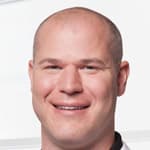
Dr. Jacob Dent is an outside the box general dentist and speaker. In practice for 20 years and a multi practice owner, Dr. Dent has built a successful career treating patients of all ages and disabilities in a non-conventional way using desensitization.
Dr. Dent is a fellow of Academy of Dentistry International, clinical director for Special Olympics Special Smiles, adjunct faculty at UTSD-Houston, and Co-founder of the Brush and Bite Collection. Dr. Dent is married to his wife Jennifer, father to his daughter Jayden, and son Ethan, who has Autism.
As a professional speaker, Dr. Dent has given presentations and workshops around the country for the past 6 years to dental professionals, health care providers, students, and families.
Joining us today is Dr. Jacob Dent, a dentist who has not only excelled in his field but has also demonstrated remarkable compassion and innovation. Half of his dental practice is dedicated to serving patients with special needs, ranging from autism, dementia, Alzheimer's, to cerebral palsy and other intellectual developmental disabilities. He has transformed his practice into one that is more profitable than ever before, gives him limitless career satisfaction and provides the necessary dental care to a large group of patients that have intellectual developmental disabilities. This episode covers his story and success that you will find truly remarkable and inspiring.
Transcript
Read Full Transcript
This transcript was automatically generated and may contain errors or inaccuracies. It is provided for reference and accessibility purposes and may not represent the exact words spoken.
You're listening to the Phil Klein Dental Podcast
Thanks for joining us. I'm Dr. Phil Klein. Today, we have an incredible guest who has transformed
the landscape of dentistry by embracing a unique approach to patient care. Get ready in this
episode to be inspired. by a dental professional who not only revolutionized his practice, but also
has touched countless lives along the way. Joining us today is Dr. Jacob Dent, a dentist who has
not only excelled in his field, but has also demonstrated remarkable compassion and innovation.
Now imagine this, half of his dental practice is dedicated to serving patients with special needs,
ranging from autism, dementia, Alzheimer's, to cerebral palsy, and other brain-related conditions.
But what sets Dr. Dent apart is his personal connection to this cause. His own son is on the autism
spectrum. And driven by this, driven by his love for his son and a deep understanding of the
challenges faced by families like his, Dr. Dent embarked on a journey to make dental care
accessible and comfortable for individuals with special needs. He realized, and this is the key to
his success, that a sensory-friendly and empathetic approach was paramount in providing effective
dental care. But his innovation didn't stop there. Dr. Dent discovered that working closely with
parents and caregivers was the key to success. By collaborating closely with families,
Dr. Dent has been able to create personalized treatment plans that gradually desensitize patients to
the sounds and procedures that are often anxiety-inducing in a dental setting.
This approach has yielded incredible results. Not only have his patients benefited immensely,
but his practice has also experienced a substantial boost in revenue. What Dr.
Dent has done is a testament to the power of empathy, dedication, and innovative thinking. Through
his work, he's shown us that challenges can be transformed into opportunities and that a caring
approach can lead to profound positive change. So now we're going to dive deeper into the inspiring
story of Dr. Dent and his mission to make dentistry an inclusive and compassionate experience for
all. Before we get started, I would like to thank our sponsor, GC America. You might know them as
the leaders in glass ionomers, but their lineup of top-notch dental products doesn't stop there.
What sets them apart? Well, they've got unmatched R&D facilities and a team of scientific
masterminds who are at the forefront of dental innovation. GC continues to offer the latest and
greatest premium dental products that cover everything from the dental lab to the dental operatory.
If you're curious and want to learn more, I encourage you to visit their website at gc.dental.
Trust me, you'll be impressed by what they're bringing to dentistry. Dr. Dent, it's a pleasure to
have you on the show. Thanks for having me, Phil. I really appreciate it. So tell us how you
embarked on developing your practice into treating disabilities and what kind of disabilities are
we talking about as far as your patient population? Sure. So the story starts back about 16 years
ago when my son actually got diagnosed with a form of moderate autism.
And, you know, like many families, I had no previous knowledge of any type of intellectual
developmental disability. And so this was a new world for me. And when I came out of school,
I had no formal training, any specialty training and working with intellectually and
developmentally disabled patients. And so it kind of threw me into a different world as both a
doctor and a parent. Moving forward 10 years up to 2016, I had decided at that point there was such
a demand and need in my area, which was Houston at the time, I decided it was time to do something
more than just treat my own child. So I actually converted half of my practice to be sensory
integrated. And what that allowed me to do is to see patients of all ages. I worked with mostly the
autism spectrum, Down syndrome, cerebral palsy, everything from, you know,
little bitty kids up to the geriatric elderly who are suffering with Alzheimer's and dementia.
So there's not a specific disability that we limit ourselves to, but we mostly focus ourselves on
the intellectually and developmentally disabled. So the idea that a patient who has autism falls
into a particular category where that person would be unmanageable in a dental office is really not
the case. Now, I know having a child on the autism spectrum like yourself,
you learned a lot about it. And also as a dentist, you realize that you can. take care of your son
and do the dental treatment needed based on your approach. And you obviously saw you can carry that
through to many other patients. But I think a lot of dentists in general are kind of afraid of
treating patients that fall into this category, thinking that they're just impossible to manage.
Exactly. And, you know, like I said, from my personal standpoint, as being a parent of a child
who's on the spectrum, my son learns differently.
social stimuli differently. And what that really taught me was just because it's not the way that I
or you traditionally handle a situation doesn't mean that that is the only way to handle a
situation. And so instead of looking at it as a weakness or a lesser than,
it helped me to take what I do and what I know, which is dentistry and adapt.
not only my environment, but how I deliver dentistry to these patients because they're having to
accept it, but they do it in a different way. It's not because they're noncompliant or aggressive.
And we have those patients, don't get me wrong, but for the majority of them, I would say probably
90% of my neurodiverse patients can manage traditional basic oral health care in a office setting
without sedation. if you just modify the stimuli that we present with our everyday practice.
And that's called, in your world, desensitization. So tell our listeners, what is desensitization
and how is that applied to the clinical strategy that you use in your practice? Sure.
So desensitization is basically just, it's a treatment technique that's used to modify how
sensitive we are with our... issues to certain stimuli.
So we know that going to the dentist is basically a violation of every one of the senses that we
have. We think that for our anxious patients, that is just a norm.
You know, we all deal with anxiety in the dental office. What we don't deal with very well is how
do you overcome behavioral challenges and what are those behavioral challenges actually?
the result of most times it's because they're overstimulated due to the things that we have in our
office and our procedures. So desensitizing in the dental world could be very simple.
It could be as simple as like, I have a room that doesn't have a dental chair. It only has a bean
bag on the floor and a mobile cart. We cover all of our fluorescent lights. We do not put the music
on when we have sensory friendly hours. We have specific sensory rooms that are designed to almost
calm some of the overstimulating aspects. And when we talk about the desensitization,
I invented a take-home desensitization kit that allows parents and caregivers,
teachers and therapists. to work on overcoming those sensory issues at the dental office outside of
the practice so we as dentists don't have to have wasted visits when things don't go right.
Or, you know, pediatrics, they call them fun visits. Well, that's not necessarily a practical
business approach, but we also don't have that formal training on how to manage those sensory
issues. And it's something that we need to... include in our practices those that are actually
specialists in that. Those are your ABA therapists or teachers that focus just on special needs.
And I encourage them to bring them to the practice so we all work and create a uniformity in our
approach at home, at the office, at therapy or school. So you've delegated some space, some rooms
for the patient to come in where there's minimal stimuli. There may be a beanbag,
a cart. The fluorescent lights are covered. So the patient is feeling rather comfortable and not
experiencing the typical stimuli of a dental practice. But at some point in time, that patient has
to be transitioned into the operatory and actually sit in a real dental chair and hear the dental
drill and so forth and see the activity and so forth. Is that transition done?
Is that process done over a period of visits? Like how many days or visits does it take for that
patient to be typically moved into the operatory where that patient could actually have restorative
work, for instance? Well, and that's a very good question. The approach used to be,
yes, you'd have all of these multiple visits. And when nothing could get done, it was just a wasted
appointment time for a lot of doctors. And that's why we got a lot of people turned off to treating
those with autism or any intellectual disability. converting my practice to be more sensory
integrated, we created rooms that had, say, like a beanbag.
I went to a local store, bought a beanbag that any family or school could buy the same beanbag.
What they don't have is a dental chair to put in their house to practice in. So you have to give
them something they can transfer to their location. So, you know, for example, like with my son,
he was in everyday you know, eight hours a day, ABA therapy from the ages of three to six.
Well, during that time, they worked on self-help skills. They worked on desensitizing to certain
things that would be overstimulating. And so if you create something like that,
where they have a program that they go through, they can sit in the beanbag chair.
They practice that. Then you can brush their teeth in the beanbag chair at home. And at my office,
it's the same one. And it's one of the reasons when a first visit comes in, I always allow the
parent or the caregiver to be the dentist first, so to speak. I let them demonstrate how they're
doing it at home because nine times out of 10, they're struggling. And I want to be in a position
where I can help coach them to be a better caregiver for that oral health care.
Because one of the things that's very interesting for most people is. If my child,
who was nonverbal to age three, went to, if I brought them to a speech therapist twice a year for
30 minutes and said, I want them to be able to speak, they would laugh me out the building.
But we are expected as dentists to be seeing someone twice a year for 30 minutes and they do a
great job at the dental office. It's ridiculous. So we have to think outside the box on how to make
this a different approach. So these patients that have a neurodiverse mindset on and how their
sensory inputs are processing everything that we do, they need to be able to still receive the same
quality of care that our neurotypical patients would. So this certainly sounds like to me that the
collaborative effort, the cooperative effort between the parents, caregivers, and the dentist is
critical to the success of having this patient adjust to the practice and getting the work done.
Absolutely. And it starts there. There's not a family that comes into my office that I do not
require the parent or caregiver, whoever is actually doing the self-help with the patient or
supervising at home, to show up. I am an advocate for those parents or caregivers to be at and in
the room at every visit. They're the workhorses. They're the ones who are going to do everything to
maintain what we as dentists try to keep a healthy and stable environment.
So the desensitization process is obviously very critical, but I still am curious how you can
desensitize a patient like that or any patient, for instance, from that typical high-speed drill
sound or from the sensory side of things getting pricked by a needle.
during a local anesthetic injection. So how do you desensitize an autistic patient from those kinds
of sensations? So with anything that has sound, we can record the sound on their iPad or audio
device, and that can be played over and over for that sensory part to be taken care of.
As far as injections, it's very simple in regards to... All we do is we practice with just getting
something in the mouth first. So, for example, I'll even make it simple for everyone. When you go
get your teeth clean and a hygienist is using a scaler to scrape your teeth,
the sensory issue for just the contact of the metal to your tooth can be overwhelming for a patient
that is more neurodiverse. And so how do we practice that? Well,
I'm not going to give a sharp scaler. to a teacher or caregiver but i encourage them to do
something that they have at home so for example a mother could take a bobby pin a hair bobby pin
and use that to scrape over the teeth so they get the feeling of a metal object touching their
tooth and it's just the same thing sometimes you have what i call the the clam or the ninja and the
clam is i don't want to open my mouth so you have to you have to work on That aspect of the
behavior modification. Same thing with the ninja where they become more combative or their hands
are coming up. So I teach parents and caregivers how to stabilize at home to let them get the job
done, be more efficient with it. But it also keeps the patient at a point where they understand
when someone else is brushing my teeth, I'm going to sit or lay down because the worst is you don't
want to be. chasing someone around your office trying to get their dental work done. It just
doesn't work. So when it comes down to whether it's the basic dentistry, a shot,
a drill, how I modify that in my office is we use different techniques.
My favorite is actually using silver diamine and glass ionomer,
using a silver modified atraumatic restorative technique. So we'll use that to arrest any decay.
fill a hole, and that buys me time until I can work on the patient's desensitization to get them to
the level where I may be able to actually pick up a handpiece and do something more traditional.
I certainly can see why glass onomer is a great material for these cases. Is there any particular
favorite glass onomer that you like? My favorite that I use is Fuji Equia from GC America.
Do you have any particular favorite on the silver diamine flora that you use for arresting the
caries? From Elevate Oral Care, I use their SDF. The best I've found for my patient population is
the new individual gel capsules. It saves you from a lot of fingerprints everywhere in your office
when it stains your countertops, etc. It's a much better product.
And utilizing that and doing it in an atraumatic way, it also creates a positive experience.
Then you get over the initial fears. So what I try to teach when I do my classes is I tell them the
basic is this. If you don't know what's coming into your office, then you're already going to fail.
So we all do health histories. I have what I call a getting to know you form.
It is. Two pages, questions for the parents about what is their home care like?
What are the triggers for their loved one? And meaning they don't like, you know,
loud sounds. They don't like bright lights. And we can adapt our environment to fit each person
individually. And a very simple one was like, my son hated the sound of a vacuum or a blow dryer.
Well, in your office, a suction makes that sound.
tags in his clothes. Well, if you don't know that, can you imagine trying to put a bib on a patient
the first thing they sit down? You automatically will get a meltdown and your appointment's over.
What flavor toothpaste do they use at home? I mean, it could be, there's so many nuances that we
don't even think about in dentistry because our entire training was a patient's going to sit down,
open their mouth, let us do our work, and then we're done. And that's challenging enough. Now
you've got to tack on sensory and behavioral issues. And it just really scares dentists because
we're used to working at such a high level and such a small detail that thinking I may not get all
the tartar off on this cleaning or I may not get all the decay out of that tooth and I have to
arrest it. It really challenges a lot of people's professional ethical standards when it comes to
quality of care. So what you're doing in your practice is no doubt is an amazing thing, getting
these patients to trust you and you're giving them dental care that in many cases they would
otherwise not get. As far as revenue, how does this affect the revenue of your practice?
How do you sustain your practice financially based on all the time it takes to work with these
patients and so forth? Yes, and this is the biggest question I get when I teach my classes.
It's how do you sustain a private practice doing this?
So in my office, you know, I have associates that work with me.
And so at the point where I had to make the decision where I felt like this is what I was called to
do, I had to decide what is the win here. And as a parent of someone with special needs and autism,
I realized that it's very hard to find someone who has the knowledge,
who also has the compassion and patience to deal with some of the intricacies that go along with
autism and specifically with my son and his specific sensory issues.
So I wanted to be able to give the family that. So when I schedule a patient, their first visit,
they have one hour. I don't book anybody else on my schedule. It's a one hour, you have a whole
hour consult. And I will do as much as I can. during that visit we'll always get an exam whether
that's uh you know a quick visual exam kicking screaming or mirror explorer but we will always do
that we always at minimum get a toothbrush prophy done and we gauge all of our patients based off
of where they are at that time so in my office i have a coding system of sn1 two and three sn1 is
any patient that is going to be in that severe or profound area That's the ones that will be more
combative. They may require either some form of stabilization or oral sedation.
I do not IV sedate any of my patients. SN2s are your patients that come in and they may do a
prophy, they may do a good visual exam, but we haven't got x-rays. That's where I start with them.
We start working on the x-rays in their program at home and at school.
And then the last one, SN3s, those are the ones that have actually come through. They've completed
every part of a basic evaluation of cleaning and x-rays.
And they've graduated to be able to see one of my other staff members. So they can go to hygiene.
I do not let any of my other doctors or my hygienists see my special needs patients until they're
an SN3. So as I schedule this, you know, I'll see roughly 20 patients in a day.
And I'll have one column of SN1, one column of SN2, one column of SN3s. And I usually run with
three assistants. And we're able to maximize that profitability comes from seeing those patients.
But here's the kicker. And this is what I learned quickly is in a family like mine,
I have a neurotypical child. I have a special needs child, my wife and I. If someone takes the time
to spend with my son, I will spend... my time and my resources with that person.
So my associates will see the family. They'll see the neurotypical family members.
And that's how I grew my practice from a one-doctor practice to a four-doctor practice.
I had three associates, three hygienists, and myself. And all I saw was the special needs patients.
So essentially, this evolved into an incredible practice builder. Absolutely. It is a zero
marketing cost practice builder. We all market our practices. We're all looking for the same
insurance or cash patient. But we also really ask for Google reviews or Facebook reviews or
whatever. I never had to ask. I created such a value because of the time that I spent in working
with these families that they did the marketing for me. I'm booked out for months.
So how many doctors across the country do you think are treating patients like this, like you are?
I would probably say there are very few of us. There's a lot of obviously pediatric dentists that
do an incredible job. And I rely a lot on pedo for my severe, you know,
restorative cases that do need sedation. That's outside of my scope of work. But, you know, we're
seeing. pediatrics be our biggest referrals too because once a child is at age 12 13 with no more
primary teeth they are also probably too big to stay at a pediatric office and so their pedo is
looking for the general dentists who are willing to take on the adult patients that they have but
we're fighting the good fight and trying to educate more dentists to get over that fear that they
have of treating this population and showing them how rewarding from not only a personal,
but a practice building standpoint it can be. And so, you know, I do a lot with dental schools,
obviously CE courses around at major conferences and things like your podcast,
which, you know, thank you again for inviting me. But, you know, this is it's a message that needs
to get out. This population is not going away. It's always been thought of. It's pedos, you know,
realm. But for the general dentist, we're we're the first line of defense for the adult population
with intellectual and developmental disabilities. And it's our responsibility to care for these
patients. And so I'd love to say when I retire and people ask what was my legacy,
it will be that. I moved the needle a little bit on creating more access to care for this
population. You're certainly doing amazing things, Dr. Dent. Where is your practice located?
Currently, I have two sensory practices, one in Lake Charles, Louisiana, and one in Baton Rouge,
Louisiana. Well, that makes us neighbors. We're kind of neighbors. We're in Austin, Texas over
here. I do want to thank you, Dr. Dent, for... with us and taking the time to tell us the story.
You are certainly an inspiration to all of us. I'm very happy for your success, both in treating
these patients, the success you're having with building your practice with all the families that
are associated with your patients, and also the tremendous career satisfaction that you're gleaning
out of going to work every day. It's a real blessing. Thank you so much. We look forward to having
you on a future podcast and webinars. I appreciate it, Phil. Y'all have a great one. Thank you
again. If you've been enjoying our podcast, we'd love to hear your thoughts and feedback by leaving
a review on your favorite podcast platform, whether it's Spotify, Apple, Google or any other
platform you listen on. Leaving a review is a fantastic way to support us and help others discover
our show. Thanks for listening. See you next time.
General dentists are the first line of defense for the adult population with intellectual and developmental disabilities. As one dentist discovered, successfull...
Keywords
dentaldentistGC AmericaPractice ManagementSpecial Care