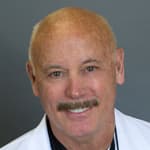
Frank J. Milnar DDS, AACD is a graduate of the University of Minnesota, School of Dentistry. He is an accredited member of the American Academy of Cosmetic Dentistry and a Board Examiner for accreditation. Dr. Milnar maintains a full-time practice in St. Paul, Minnesota emphasizing appearance related dentistry. He has published numerous articles about the direct placement of composites, shade selection and porcelain materials. Dr. Milnar is co-founder of the Minnesota Academy of Cosmetic Dentistry and lectures extensively within the U.S. Armed Forces as well as internationally on the subject of direct composite restorations, shade selection and porcelain materials. He has been voted "Top Dentist" for the last several years in the Minneapolis/St. Paul Magazine. Currently, he is the past Professional Education Committee Co-Chair for the AACD, member of the AACD Educational Alliance Committee , Global Education Committee and Chair for the Innovative Educational taskforce.
Dental podcast: Welcome to DentalTalk. I'm Dr. Phil Klein. Today we'll be discussing how to grow your revenue by incorporating health centered dentistry, new products, and new technologies. Our guest is Dr. Frank Milnar, co-founder of the Minnesota Academy of Cosmetic Dentistry, a regular speaker on vivalearning.com and lecturer in the US and internationally on direct composite restorations, shade selection and porcelain materials.
Transcript
Read Full Transcript
This transcript was automatically generated and may contain errors or inaccuracies. It is provided for reference and accessibility purposes and may not represent the exact words spoken.
You're listening to the Dr. Phil Klein Dental Podcast from Viva Learning.com.
Welcome to the show. I'm Dr. Phil Klein. Today we'll be discussing how to grow your revenue by
incorporating health-centered dentistry, new products and new technologies. Our guest is Dr.
Frank Milnar, co-founder of the Minnesota Academy of Cosmetic Dentistry, a regular speaker on
VivaLearning.com and lecturer on the U.S. circuit. He teaches internationally.
He teaches in North America. And he specializes in direct composite restorations, shade selection,
porcelain materials, and a whole lot more. We just recently did a podcast with Dr. Milnar and it
was excellent. So I encourage everyone to tap into that. It's called Thermoviscous Technology.
The evidence supports the science. And if you have ever wondered about warming composites, how it
works and what the benefits are, I certainly encourage you to listen to that one. So Dr.
Milnar, it's a pleasure to have you on your show again. Well, it's a pleasure to be with you,
Phil. And I always congratulate Viva Learning. I congratulate you. I congratulate anybody involved
with education at a crucial time, especially with the COVID experience.
And the future of dentistry hinges on education, mentoring, and belonging to societies and
organizations that will raise the bar for dental education in our profession.
Thank you, Phil. Yeah. No, thanks for saying that, Dr. Milnar. We appreciate it. And believe it or
not, we've been around, and it sounds crazy, under a different name, 1999. That's when we started.
We actually started e-learning in 1999 with dial-up networks. These were AOL,
whatever that was called, Connect America, whatever it is all. I don't remember what their byline
was. Basically, not in business anymore. But we were doing dial-up connections, and we were
getting 10 dentists on a... They didn't call them webinars back then. They called them webcasts.
And now we have 300,000 users and our podcast program gets listened to by 25,000 people right now
regularly. That's pretty crazy. But anyway, we're certainly happy to have you on the show.
And you're kind of an expert in understanding revenue in a dental practice,
among many other things, and incorporating new products and technologies. In this particular
podcast, you're going to be talking about a group practice, which could be one dentist owning
several practices or a dentist that has three or four or five dentists in the office. So before we
get into the details of that whole understanding of revenue versus products and that kind of stuff,
tell us about how the age and health of a patient is so important and relevant to restorative
dentistry. Well, the adage felt is with age comes wisdom. And when I graduated in 1976,
didn't know anything about what would happen except making full partial dentures leading to
dentures. That was the age-related treatment planning. But now it's all changed because there's
additional oral health complications with people living longer. They're living longer,
almost 20 years. longer than in the 1950s. And with that is the complexity and for compromised
patients, for high-risk caries, periodontal disease, worn dentition,
and decades of older dentistry that must be replaced. Now, people are going to live to be 100 years
old. How do you account for that, especially in young people? If you're the dentist that touches
the tooth for the first time when they're teenagers, how is that tooth going to survive until 100
years old? Here's the model that we all have to understand about the economics.
The industry trends for health care in general is U.S. health care spending is expected to
increase 5.8% year over year for the next decade, according to the Department of Health and Human
Resources. What that means is in 2014, it was $3 trillion.
and now it's going to go to 5.4 trillion dollars in 2024. The grew age group of 65 and older is
going to be doubled between 2015 and 2060 and the 85 year olds and older are expected to triple
between 2015 and 60. That means we are accountable for the oral systemic connection.
We have to understand what we're doing for the health of the patient as well as the dentistry.
This is the dawn of a new era, just like we mentioned thermoviscous technology. This is age
-related treatment planning right now, Phil. When you think about it, if you're treating a patient
who's 15 years old that's going to live till 95, you really need to make sure you're employing the
right techniques and products into that treatment plan. This is a person who statistically is going
to be around for a while. Getting into what the title says of this podcast, how is a practice's
revenue and ultimately bottom line affected by the cost of products and technology?
In other words, what is the best way to manage all of that to provide optimal care for the patient,
but also grow revenue? Let me put a banner, a ribbon around this because a healthy mouth and a
healthy body go hand in hand.
successful practice and production go hand in hand what we don't want to do is create inflammation
so if we could try to create healthy products like admire fusion with no toxicity etc this is a
good step in the right direction I'm going to say give credit to Roger Levin with the Levin group
and he is exceptional and how he teaches practice management,
and he talks about production as being the most important metric in dental practice.
Today, if you don't have the right production, you can't afford to buy the right technology and
have new clinical skills and new materials. So it's all about the systems, Phil,
and where this goes is the systems of individual packaging. individual shades,
ISO packaging, things like that, because systems control production,
efficiency, they train the team, they guide the team to the highest potential using the most
efficient products that can lower the fixed overhead on this one. It's called operational
efficiency, and that leads to higher revenue, higher production, and lowering the overhead as well.
Okay, so you're saying that the products or The inventory that a dentist has in their practice,
which is what typically, what is a typical overhead for a dentist on materials? I don't know if you
want to include technology and equipment, but... On general materials, what's the typical overhead
for? Well, I think, Phil, I mean, I'm not an expert in this, but I think your material costs can go
anywhere from 5% to 10%. And as Roger Levin said, most dental practices,
the overhead is 4% to 6% higher than it could be. So if you can reduce the amount of overhead 1%,
That translates to thousands of dollars of income that you can distribute to your team and others.
And that goes back to products that are efficient, less shades, individually wrapped,
individual doses, health and safety of the patient and the staff.
with this ISO packaging is where we're going with this one, Phil,
because great systems create great practices and stress is related directly proportional to your
efficiency. this is going to go right back to the vocal products I'm going to be talking about on
Tuesday night's webinar. Yeah, so let me talk about the shade selection because that's one of your
areas of expertise. Not too long ago, they sold kits, direct restorative kits that had layers and
layers of shades. When I say layers, I don't mean that as a pun because it required layers of
application as well. And I'm a retired endodontist, so I never used these kits for cosmetic
dentistry. Then, am I correct there saying that there was just lots and lots of things that were in
this box? They were gigantic. I mean, I know Ivoclar Vividen sold it and Densply sold it.
And then tell us what happened over the years, how this changed, and talk about the inventory issue
with, you know, inventorying all this stuff in a dental office. And then that adds complexity to
managing what stuff goes with what procedure and which patient. And then,
again, this goes along with... systems that could either help or hurt revenue. Can you talk about
that transition over the years? I can, because I was part of the cosmetic revolution in the AACD to
become accredited and teaching the master's workshops. And the more complex you were,
the higher up you were on the uh on the totem pole so to speak so we were authorized to go in these
workshops and teach 20 shades and uh micro anatomy and all this well that's not for everybody you'd
buy 24 shades it sit in the box and be become expired now what's going to happen what is happening
very rapidly we're going back the other way and now we're going into very mono uh monochromatic One
Shade does all, such as Omnichroma, Admira Fusion Extra. Now Curare's got a new one,
Majesty, out. We're going back the other way. For everyday dentistry, the Achilles heel of
dentistry is now going to be One Shade. What drove that? Why did we go from tons and tons of shades
to now One Shade? I mean, it sounds like an obvious question, but what actually drove that?
too many things to choose from, and it wound up to be nothing. And that's what became,
dentists don't throw things away until they're two years old, expired, you know that. And it went
on the shelf, but now it's gone completely the other way as it should. So how does one shade
satisfy a dentist's cosmetic requirements for a patient? Well,
it depends on the chemistry and either you modify the tints and the dyes within the material or you
change the the size of the particles to nanoparticles like Admira Fusion Extra for vocal and what
happens it's the on the properties of light refraction diffusion absorption reflection They changed
the model of the optics on it, and now the optics are influenced by the surrounding tooth structure
versus the restorative material itself. There's different chemistries, depends on the manufacturer.
Okay, so the perceived color or shade of the restorative material when it's on the tooth is
affected by the surrounding teeth. So your brain sees it as if it's kind of blending in with the
surrounding tooth structure? It is. It's an illusion. And that's what dentistry is all about, Phil,
is we are illusionists to make things disappear. Now, either we make it disappear through dyes and
pigments of the tooth for the Vita shades, or actually we are going to tamper with nature in the
physics of optics and make the tooth drive the appearance of the material.
So this is an example of one of those products that go along with the webinar that you have coming
up and also a lot of what you teach, which is growing you know improving production boosting
production efficiency which helps grow revenue so that's one of the products right which is going
from a kit that has tons of shades in it to to one shade that pretty much works very well for most
patients and you mentioned a product what's an example of a couple of these products Well, you have
Omnichroma was the first one out, and Synergy D6 from Colting was the first launch in 2007.
They had the dual shade, and nobody paid attention to it because everybody wanted complexity. Well,
we're going back again. So Omnichroma from Tokayama was the first one to come out with one shade,
okay? It does work. Unless you have to block out a color, then you need a blocker.
And then Admira Fusion Extra from Voco is the next one. Different product, different chemistry.
And now Curare's got one, Majesty, that they have to launch. And Phil,
there's going to be a host of others very, very rapidly. Okay, so in addition to those direct
restorative products, what other technologies or equipment or products fall into that? category
that could help efficiency in a practice? Well, let's go to health and safety.
Everything COVID now is health and safety. If you go into a dental office with PPE, you look at
what we wear, face shields, masks, surgical gowns, how we wipe things down.
Now the new one is going to be how the health and safety of the materials, the guaranteed safety of
the materials, and that's the ISO packaging, which guarantees the safety for not only the
materials, but for the staff and the patients. So when you say safety, does that mean that the ISO
packaging is kind of like a guarantee on sterility? Well, it is because the ISO standards,
which is the International Organization of Standardization, is a worldwide federation. for the
national standards of bodies. And with that test, when you have the ISO seal,
that ensures the products are safe and the reliability and good quality of the materials.
And with the VOCO's ISO packaging, they're sealed and airtight sealing to save dental offices time.
They're airtight. They're individually foil seed, has the product name, expiration date,
the shade, the curing time, storage information, lot number, all these things to guarantee the
standardization and the safety of the product. So most of the new products that are coming out
today, do they not have ISO markings on them? VoCo, I think,
is probably the first one to do this and really take it seriously for their whole product line,
whether it's dental bonding agents, whether it's glass ionomers, desensitizers, restorative.
VoCo has taken this seriously and patented their whole product line into the ISOS packaging,
Phil, and it's all about the safety, predictability, reliability, and... When you have individual
doses, individual shades, now you are more efficient on your managing products and materials,
which is going to lower your overhead and boost your productivity in the office.
You have less to manage. Right, less to manage. Now, of course, it seems obvious that the
individual packaging of these products certainly help with infection control, but it's... kind of
assume that it costs more, right? That's what you would think because everything's individually
packaged in bulk, it's going to be less expensive. But in the real world of the dental practice,
tell us why that's not necessarily true. Well, it is not true because if you put a price tag on an
individual product, you're not seeing the big picture film. The big picture is the whole array of
how you manage your operational efficiency and how it relates to your overall.
And when you increase your efficiency and when you do all that,
regardless of the individual price per capsule or individual dose,
in the long run, you're going to save a lot of revenue. And then you can use that for other things,
new technologies, because you have single components, single shades,
single uses, single capsules. And in the long run, it's going to save you a lot of money.
I know that sometimes when they advertise dental products or dental materials, they'll tell you on
a table, here's what it costs per dose. You know, this is per dose. I know impression material used
to do that years ago. And I would assume that an individually packaged item costs more per dose if
you look at it from that standpoint. But what people don't understand is what you're saying, or
they may not see it, is that in the long term, there's so much more to workflow. efficiency around
individually packaged products. And you especially recommend that for group practices. Is that
right? Well, I do, because in a group practice, you have a lot more people moving around,
and you have a lot more cabinets. And if you could standardize the systems,
as Roger Levin so nicely stated, you standardize the systems that work,
and it's easier with individual packages versus a tube of this and a syringe of that.
You can just see exactly what... uh all the when it was uh sealed all all the things to keep
everybody safe you don't have to worry about disinfecting it it's already disinfected phil i mean
how much does it cost you to disinfect it we as dentists my rant is we're myopic we're trained to
be myopic for good reason to see small things But once in a while,
we have to see larger things, and that is the individuality and the better sterilization,
infection control, and that's better for the patients, the staff, and the dentists. Yeah, and I
know VOCO, the sponsor of this podcast, is very much focused on individual packaging, ISO, which
you mentioned, and they're always a step ahead on everything. How would you recommend to a dentist
that has a lot of materials that are not individually packaged, that they're happy with the
material itself, they're happy with the clinical outcome using these products, how would you
recommend them to transition to this type of individually packaged items going forward?
Well, that's a big, that's a quantum leap. I used to be a syringe guy, and I'm not a syringe guy
anymore. I'm a compule guy. That took me a while to convert. if you are syringing with large
syringes you got to wipe them down all the time and every time you take the cap off it's not
sterile anymore you got to look at the health and safety so i would say this be open and look at
your current model and systems that you use phil and then i would say to them try any manufacturer
that offers unidose ISO packaging and try it on for size.
And if it is comparable, then make the conversion, but buy one shade first. Just test one shade
against another, see if you like it. Then you can make a larger conversion. Yeah. It just seems
like a less stressful environment to have everything wrapped individually and everything single
dose. It's just, and the safety, like you say, and the reliability, you don't have to worry about
shelf life expiration. As you say, dentists keep this stuff for two years past their typical shelf
life. With all those factors, it seems to me that that's something that every dentist should start
considering if they're not doing it already. Well, Phil, as we know, there's a shortage of staff
right now. It's a big problem. And if you want to reduce some of the tension and the stress in your
staff, go to individual packaging. they'll be much happier than trying to wipe down a syringe and
put it in the cabinet. I think you got to look at it from the staff standpoint too. Absolutely.
Well, listen, Dr. Milnar, it's been a pleasure again doing this podcast with you. It's always great
to talk to somebody who has been around a while. And I say that in a very positive way. You can't
beat the wisdom and experience that you have. You got out of dental school, you mentioned in 1976.
Six. Yeah. So I was a sophomore in college at that time on my way to dental school.
So we're not that far off. But the experience that you have and what you bring to the table and how
well you connect to the dentists out there and hygienists and as much as you've been lecturing, we
want to thank you for everything. We look forward to your webinar coming up on Viva Learning and
all the support that you've given us. And God bless you. Take care and keep going at it for many
years to come. Okay, once again, Phil, it's been my pleasure to be with somebody that deeply cares
and is passionate about the future of dentistry. Without mentorship and without continuing
education and without colleagues to share what we know, what we don't know, is we're very
vulnerable to give dentistry to another entity that we can't control our own future.
So thank you, Phil. Yeah, my pleasure. Thank you. You have a good one. Thanks a lot.