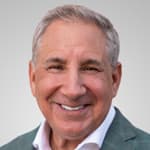
Dr. Graham is an internationally recognized lecturer extensively involved in continuing education for dental professionals, focusing on incorporating current clinical advancements through conservative dentistry. He emphasizes in his teachings the same concepts he practices. He is a published author in many leading national and international dental journals. He a graduate of Emory Dental School and is the former Dental Director of the University of Chicago's Department of Dentistry. He enjoys providing dental care at his private practice, University Dental Professionals, in Chicago, IL - Hyde Park.
Dental podcast: Welcome to DentalTalk. I'm Dr. Phil Klein. The next-generation glass ionomers (glass hybrids) have become an ideal treatment option for geriatric and high-risk caries patients. Today we'll be discussing how the improved physical properties of these materials make them a cost-effective, long-term restorative option where there is virtually no risk of recurrent decay. Our guest is Dr. Lou Graham, an internationally recognized lecturer extensively involved in continuing education for dental professionals. His lectures focus on incorporating current clinical advancements through “conservative dentistry.”
Transcript
Read Full Transcript
This transcript was automatically generated and may contain errors or inaccuracies. It is provided for reference and accessibility purposes and may not represent the exact words spoken.
You're listening to The Dr. Phil Klein Dental Podcast from Viva Learning.com.
Welcome to the show. I'm Dr. Phil Klein. The next generation glass ionomers,
known as glass hybrids, have become an ideal treatment option for geriatric and high-risk caries
patients. Today we'll be discussing how the improved physical properties of these materials make
them a cost-effective, long-term restorative option where there is virtually no risk of recurrent
decay. Our guest is Dr. Lou Graham, an internationally recognized lecturer extensively involved in
continuing education for dental professionals. His lectures focus on incorporating current clinical
advancements through conservative dentistry. Dr. Graham, it's a pleasure to have you back on Dental
Talk. Great to be here. What a great topic. So we have an aging population. going on and i guess
getting old is a good thing right because the alternative isn't isn't that great so uh and me and
you are no youngsters anymore although i know we feel well we're active and we try to convince
ourselves we're still young but we're getting old too as is a lot of the country i don't know what
the percentages are of people that are over 60 these days but it's it's way more than it was when
we were young so having a good idea of how to treat some of these geriatric patients is really
important for the practitioner so we're glad we have you on our show today So let me begin with
this question. What are the specific challenges in direct restorations when it comes to geriatric
patients? Well, you know, it's interesting, Phil, and thanks again for having me on your podcast.
We're talking generally the way I term geriatrics, Phil, is anybody who's 10 years older than me,
and it used to be 20. So now I'm going to label them at 75-year-olds and up.
And what's interesting... As patients have aged in this generation, more have teeth,
far more have teeth than in previous generations. Usually, back in the day, people come in with no
teeth and with dentures. Today, they're dentulists. So to your question, what has changed?
And what's changed is really their oral environment. There's so many compromised issues.
So let's start out with the first and foremost one is xerostomia dry mouth. We know that patients
are on so many medications. And we know that xerostomia is a problem. And if xerostomia is around,
much higher caries rate. In addition, when we're working on these patients and seeing them,
their teeth have shifted. And they've shifted based on occlusion and periodontal disease. They've
got crowding. They've got larger embrasures due to bone loss and tissue loss.
They've got poorer diets, very high in sugar. And they've got poor dexterity.
So they've got poor oral hygiene, Phil. So as a result, it's like this is a perfect kitchen in
their mouth for recurrent caries, new caries, and periodontal issues.
So I think those are an accumulation of how I look at those would be what we're seeing today in
patients' mouths of 75-year-olds and above. I didn't know that the sugar content in their diet
was much higher. I know their diet can be compromised, but what makes you say that their sugar
intake is more? You know, it's amazing. What we have found in our practice and when I'm doing
courses is that they have like developed even more of a sweet tooth, probably because of a changing
taste buds. But we actually see them having more sugar, sugar at night before they go to bed.
And as a result, higher caries. You definitely see that overall in the geriatric population.
Yeah. Yeah. It sounds like the perfect storm. tooth retention rate is improving versus fully
edentulous. So now that we have that improved retention rate where there's more teeth in these
geriatric patients, now we have to make sure these teeth maintain a good environment where they
could sustain themselves. So what are the advantages of glass ionomers?
Now I know from dental school, and I went to dental school a long time ago, we talked about glass
ionomers as favorable to high risk patients, high caries risk patients. Talk to us about the glass
ionomers used in these situations with geriatric treatment and how have they improved over the
years if they have? So first off, they have improved. I think glass ionomers were amazing even back
in the day when I started practicing 35 plus years ago. The first and foremost topic that we should
discuss with glass ionomers is they don't need isolation. They can bond chemically to teeth in the
presence of saliva. So whether xerostomic or not, routinely what we're seeing in advanced aging
patients are root caries, and root caries aren't just buccal or lingual,
they're proximal. And so we're not seeing coronal caries, we're seeing proximal caries along the
necks of the teeth. So there you are, Phil, as an endodontist, saving teeth now,
as you did in your career. And now I'm trying to re-restore them with previous crowns,
lower bone levels. And so as a result, I'm dealing with gingival cavicular fluid,
subgingival margins. And whether it's reparative dentistry or non-reparative dentistry,
that's what I'm looking at. So to add to this. You know,
and the beauty of glass animus has always been their long-term fluoride release. That has always
been their mainstay. And so I think, obviously, bonding in the presence of saliva or placing
without the need for a bonding agent makes this far more of a simplistic placement.
And I think with these difficult-to-access areas, man,
reparative dentistry for geriatrics is key. Absolutely key. Yeah, so it brings to light the cycle
of life because you start with a pediatric patient and glass onomers do very well with pediatric
patients. And then as you go through life and end up being a geriatric patient, the same thing
applies. Isolation issues are a problem with kids and also with older patients as well. It's
something you got to have in your toolbox as a practicing dentist. No question. Phil, I can't
understand how dentists, you know, they used to say, well, I gave up amalgam, so no treacherators.
and glass ionomers um have long been a mainstay uh using triturators now we'll talk about some of
the advancements but you know there are so many great reasons like you just said to really touch on
glass ionomers and why they are so let me just touch on a few things before we get into the
improvements because that was one of your that was your question so the first pearl that I would
tell your listeners is you don't want a phosphoric etch. You want to use a cavity conditioner to
etch the dentin. That's what you're going to want to do. Now, the reason why is you don't want to
use phosphoric etch because it really creates what I would call resin tags and the dentin becomes
hypomineralized from phosphoric etching. And if you think about it, and this is a key point.
If you use a cavity conditioner for 10 seconds, what you then do is you're just removing the smear
layer and allowing a glass ionomer to chemically bond to the dentin, which will be the calcium in
the tooth structure. And now you allow a calcium release internally, which only strengthens your
glass ionomer. So I think phosphoric etching is out. Cavity conditioners are absolutely in.
What everybody also has to understand... glass ionomers, you get far less recurrent decay. I have
been using them for 30 years in class ones without occlusion on them. In other words, in the
fissures, Phil, I've been using them as core buildups. And when I've taken off crowns that were 25
years old and I did a glass ionomer buildup, I would take out the glass ionomer buildup just to see
if there was recurrent decay and rarely was there recurrent decay. So minimizing recurrent decay is
what I would say glass animers are all about, along with the latest composites and all their
technologies that are coming into dentistry. So I see this all being customized for geriatric care.
Absolutely. So what do you say to a dentist that says to you, Dr. Graham, I love glass animers, but
I feel they're not strong enough. They don't have the strength that I'm looking for. Now you say
you use them in a core buildup and probably your prep design withstood. the stress of normal
occlusal forces. So that crown maintained itself. It wasn't so much the material you were relying
on, but the ferrule effect in your design. But what do you say to dentists that say, hey, I don't
have the confidence in the strength of a glass ionomer compared to a composite? Right.
So if I'm rebuilding a Phil Kline endodontically treated tooth,
I'm routinely using a dual cure composite core because that tooth has been...
decimated from decay and endodontic requirements. If I'm building a wall or I'm at the gingival
area and I'm rebuilding a buckle or a proximal wall, it's plenty strong. They've lasted for years.
I just don't believe I would use them to rebuild an entire tooth, but a wall,
absolutely. Let's talk about that question. So here's GC,
GC America launching. They have glass ionomers. and rmgis so it's really interesting that their
glass hybrids like let's call it like equia 4khd they have improved physical strength than in
previous generations and i have used these in class ones for years that are not load-bearing and
you they just look brand new 30 years later and obviously the newer versions are going to be just
as long lasting so I think what's interesting, and for your audiences to get even a little bit more
information out of this, is that glass ionomers are pure glass,
and then you put a resin coating over them. They're actually stronger, Phil,
in terms of compressive strength. So they have fluoride release, and they're stronger in terms of
compressive strength. Now, the RMGIs, like Fuji Automix LC,
that you don't need a treacherator. They're actually greater, Phil, in flexural strength.
So what does that mean? They flex more. They have greater strength. That would be ideal for their
class fives. And because they're more translucent than previous generations in geriatrics with high
recurrent decay issues, man, I see an RMGI like Fuji Automix LC as almost one of the ideal.
offerings to our patients for that reason, because it's got higher flexural strength.
And again, you don't have to bond them in. It's a chemical bond. What's the Equia Forte clinical
application and how is that placed into the tooth? Yeah. So Equia Forte in our practice is still a
treacherated technology. It's almost got a variety of different glasses,
so to speak. of the floral alumina silicate glass and the strontium floral alumina and different
combinations of the glass have made it more translucent but equally have given it further
compressive strength so i say it's it's a wonderful reparative it's great for class ones in my
practice especially on kids and i don't treat a lot of kids but equia forte you do a small class
one prep small class 2-preps, this could be really a new application to many of your listeners
versus etching and bonding and putting a composite in. Glass ionomers, believe it or not,
have slightly more compressive strength than RMGIs or resin-modified glass ionomers.
And the compressive strength is formidable. It really is strong. And the slam on glass ionomers for
years has been wear. if it's in occlusion it will wear so i don't really rebuild large class ones
with these materials but a small class one minimal occlusal wear on it or minimal occlusal cusp
load on that really and then you just put the glaze that comes with equia forte the equia glaze uh
you put that basically over the material and you just basically brush it on a very thin layer no
airing And that allows the material underneath to fully harden. So it protects it in the first 24
hours and further. I don't believe it adds to the strength. It just allows the material to harden
fully and protect it. So with this toolbox of glass ionomers that's available today, and GC is the
leading company that makes this stuff, it sounds like to me that for a geriatric patient, someone
you define as... As you get older, you always add 10 years on. So I guess it'll never end. Well,
soon it'll be 95 years old. But right now it's 75. And we are working further into our life.
People are retiring. They used to retire at 62, 65. That was routine. And they worked for a
company. They got their watch, their pension, and they were off to Florida. But now people are
working longer and they're more active and they need to have teeth that are presentable. The smile
has to be, they have to have confidence in their smile. You're saying that. We could use as
clinicians glass ionomer pretty much as our main staple product for restoring geriatric patients.
I would say this, that the shift in restorative dentistry for geriatric patients,
glass ionomers and RMGIs, along with some of the newer,
we'll say composite technologies that are coming out that are very innovative.
These materials are customized for our geriatric high-risk patients.
Absolutely. I couldn't agree more with that statement that you just said. Okay, good. And to wrap
up this podcast, Dr. Graham, it's been very, very informative as usual. Which other clinical
situations, other than the ones we discussed, would you use these glasinomers?
Well, obviously anybody who's high risk, and that could be any age group. uh children are ideal
because you're in and out you think about this you prep you do you know a cavity cleanser etch you
rinse you pack this material in and then openly all i do is i dip my burnisher in a little bit of
water just water not resin i pack it in after 30 seconds let it set and then you finish refinish
and polish so i would say patients who are high risk, hard areas to get to of any age,
and compromised patients who really just can't sit in this chair, operating room patients.
All of these are added virtues. And again, underneath crowns is a wall buildup or anything that can
be exposed to recurrent decay. I love these materials. Excellent stuff. We really enjoy talking to
you, Dr. Graham. You covered a tremendous amount of material in a short time. I hope you're
enjoying working in Chicago and also living in Florida at the same time. It's a great...
hybrid lifestyle you have there thank you phil i do enjoy it thank you that's what it's all about
all right be well many more years to come of these uh podcasts we we got to keep going here talk to
you soon keep smiling bro all right thanks a lot you be well