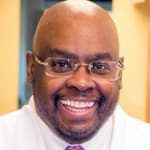
Dr. Terry E. Grant has over 30 years' experience as a Cosmetic, General, and Geriatric Dentist. He was awarded "Diplomat in Geriatric Dentistry" by the American Board of Special Care Dentistry and The American Society for Geriatric Dentistry. He served as a Chief Geriatric Dentist at major NYC and Long Island hospitals, medical centers and assistant living facilities. He also served as a Clinical Assistant Professor at New York University College of Dentistry. He served as a Geriatric Dentistry Expert in 1994 for the U.S. Government Department of Health and Human Services in conjunction with President Clinton's Health Care Reform initiative. He received a Congressional Record Award by the United States 109th Congress.
Dr. Grant has written many grants and has received funding for advanced Dental Education Programs. He has lectured extensively for years, often the key-note speaker at Advanced Dental Education Hospitals and Dental conventions across the United States and world, most notably at the University of Hong Kong.
Dr. Grant has established a new state of the art office in Garden City, Long Island, New York and a traveling dental team that provide dental services to persons whom are homebound or reside at an assisted living facility, a nursing home or rehabilitation facility.
The geriatric adult population is expanding rapidly in the United States. How will this effect your dental practice and what do you need to do to prepare for the influx of aging patients. To tell us more about this is a remarkable man and dentist, Dr. Terry Grant. He is changing the lives of many older patients who would otherwise not get the special care he and is staff are providing. Dr. Grant has over 30 years experience as a Cosmetic, General, and Geriatric Dentist. He was awarded “Diplomat in Geriatric Dentistry” by the American Board of Special Care Dentistry and The American Society for Geriatric Dentistry. He was honored by the U.S. Congress for his service as a Geriatric Dentistry Expert.
Transcript
Read Full Transcript
This transcript was automatically generated and may contain errors or inaccuracies. It is provided for reference and accessibility purposes and may not represent the exact words spoken.
You're listening to the Phil Klein Dental Podcast
Thanks for joining us. I'm Dr. Phil Klein. The geriatric adult population is expanding rapidly in
the United States. How will this affect your dental practice and what do you need to do to prepare
for the influx of aging patients? To tell us more about this is our guest, Dr. Terry Grant,
who has over 30 years experience as a cosmetic general and geriatric dentist. Dr.
Grant was awarded Diplomat in Geriatric Dentistry by the American Board of Special Care Dentistry
and the American Society for Geriatric Dentistry. He was honored by the United States Congress for
his service as a geriatric dentistry expert. Before we get started, I would like to mention that
Dr. Grant's webinar, titled Welcome to the New World of Geriatric Dentistry, is now available as an
on-demand webinar on VivaLearning.com. Simply type in the search field, Grant. G-R-A-N-T,
and you'll see it. In light of geriatric growth, I think it's an important webinar for everybody to
see. Dr. Grant, it's a pleasure to have you on the show. It's a pleasure to be here, Phil. So I got
to tell you, I watched some of that webinar that you did for Viva Learning, and it was really
amazing. I mean, there's no question about it. What you do is such an amazing, phenomenal service
for the older population. You have a whole bunch of videos in there, and some are really touching.
help these individuals that really need your care and they trust you and you're like a godsend to
them and in a lot of ways you're doing god's work you know it's just uh it's very touching very
emotional to see what you've done for these people and you travel to see them and the results
you're getting and the smile you put on their faces one of them offered you some sort of apple pie
or some kind of pie they want to make for you. Yeah, I mean, so the amount of pleasure that you're
getting out of this, I know how hard it is what you're doing. And I know we talked offline before
the show, you're kind of tired and exhausted, rightfully so, from the whole week you just put in.
To begin, tell us what got you into treating patients that in a way a lot of other dentists don't
really want to treat. And I hate to say it that way, but there's some truth to that. Early on, I
volunteered at a dentist's office when I was 13, 14, 15 years old. And so he said,
the dentist said to me, you see what I'm doing? I said, yeah. He said, you could do it too. And
that led me to want to be a dentist. And in the process of wanting to be a dentist, you know, I
have loved ones. You know, my aunts and uncles was aging. And you start worrying about their teeth
and how you're going to take care of them. And just, it started from that. And basically,
I just found an interest in gerontology. So while I was in dental school, I took a course at
Southern Illinois in gerontology. I got a certificate in gerontology,
and it helped me to understand the elderly population. From there, I did my residency program with
Linda Neeson, who's also one of the popular geriatric patients.
and assistant and associate deans at different facilities. I was able to treat a lot of the
geriatric patients because it was a Veterans Administration facility. So I had a degree,
certificate in gerontology, and I just continued with that. I remember meeting Saul Kamen,
and Saul Kamen was like the grandfather or the godfather of geriatric dentistry. It was in
Philadelphia. It was called the Gray Panthers. I've never heard of it, but it's a group called the
Gray Panthers. And they were a group of elderly people who basically started the onset of studying
and developing organizations to look after the elderly. Yeah, now this is particularly appropriate
at this time in the United States, right? Because demographics are showing the population is aging
percentage-wise. How many people are in the over 65 group at this point? Information and research
and census has shown that by 2060, a quarter of Americans will be over 65 years of age.
Yeah, that's unbelievable. That's a lot of people. And the research that was performed with the
American Dental Association, they did like a review and they saw that a lot of dentists had
apprehension. They didn't mind taking care of the healthy elderly, but as the one who had
comorbidities, different medications and different diseases. They were questioning how to take care
of that patient population. So right now, geriatric dentistry is not a specialty. Is that going to
happen at some time in the future? Hopefully with the American Dental Association, it's being
looked into. Saul Kamen, when I was on a board years ago, they came up,
should we establish geriatric dentistry as its own discipline? And Saul, the great and the late
Saul Kamen, he said that because geriatric dentistry entails prosthodontics it entails perio
entails operative entails uh all the different stage endo all the different stages of dentistry
unlike pediatric dentistry where the teeth are different and the patient is different early 90s
late 80s the population of elderly was not as great as it is today so at that time they said we
didn't they didn't want to pursue geriatric dentistry as its own entity today it's a different
story So when we think about the term geriatric dental specialist, what does that mean for that
specialist? Are they treating every patient over a certain age, regardless of their condition, or
is it really related to the elderly population that have conditions or diseases that affect their
lifestyle, like diabetes, Alzheimer's, dementia, and that kind of thing? Basically,
when I establish a geriatric patient, a medically mentally compromised elderly person doesn't have
to be They don't have to be 70, 65 of age. They could be 50.
You know, it's just someone who's taking multiple medication. And another issue of concern is
they're cognitive to take care of themselves. A number of people may not be able to insert their
denture or partial or brush their teeth on a regular basis. They may need assistance. These are the
things that the dentist have to look at. But when he's treatment planning the patient, we had a
patient the other day. My practice is the first slide of my presentation.
She's been to two or three doctors. They just wanted to pull all her front teeth. And she's in
stage two Alzheimer's. She's going to go to stage three Alzheimer's. And you can imagine giving her
a prosthesis, a partial denture, would not be good for her because she'll lose it.
And you just have to have a number of them laying around. My position is restore.
Do what we can, restore. Use. giving them wisdom remember as we age the odontoplastic cells they
start blocking some of the pulp chamber so there's there's less sensitivity in some cases we went
ahead and we restored all her anterior teeth and the family was happy because she didn't have to
concern themselves with removing her teeth and having to find a prosthesis for her as she was
getting a little bit more violent as she was aging as she was developing her alzheimer's stages
right so certainly understanding The fundamentals of geriatric population affects the whole
strategy and treatment planning approach when you see these patients. If a general dentist sees a
patient who's 95 years old, as you said, a patient doesn't have to be 95 to have Alzheimer's.
They could be 60. Understanding of the disease itself and the lifestyle of those that have this
affliction is important. in their treatment planning. And I guess that's part of being a geriatric
specialist, is having that underlying understanding of the lifestyle and all the ramifications of
these diseases. Is that right? Correct. In my presentation, I shared that before treatment
planning, before a dentist... to work on any of these patients' populations, you need to make an
assessment, you know, and a few things you have to look at in their oral and perioral structures,
you know, what's missing, what teeth are there or teeth are not there, what needs to be replaced,
and then you look at their medical condition. You know, one of the things that I had in my
presentation was the cognitive test, a simple test to see if the patient can,
if the patient is able and will be a good candidate for different procedures. And it was a simple
test. You ask them three questions, ask them three words, and ask them to repeat them back to you.
You give them a piece of paper, a clipboard, ask them to draw a clock. And you can see when they
draw the clock, the numbers are not placed in the right area. And that's telling you that they're
not a good candidate for oral prosthesis because who's going to be responsible for it? removing and
inserting the dentures and partials. You don't have an option, though, sometimes. Sometimes you
have to use a removable, right? Sometimes you have to use a removable, but again, you want to
familiarize yourself with the client because that's the one that's going to be removing or the
client's health care provider. Now, in your presentation, you talked about dental hygiene being a
really big factor going forward as the population continues to age, and you talked about mobility,
portability, teledentistry. You really focused on the value of the dental hygienist here.
Can you elaborate on that? To me, that's the untold hero in the dental office.
They're the ones providing the scaling, the cleaning of the teeth, and they're the ones that are
dealing directly with the patient. Sometimes, at times, I know in my office, my hygienist shows an
emotion to the clients. It makes the clients feel so comfortable. You know, a lot of times they
come into the dental office and they're apprehensive on opening their mouth and why are they there.
But when you make the patient feel comfortable, you know, there's different techniques that we
provide. And I gave them in the lecture that we provide to the client to let them feel comfortable
so they know that we're here to take care of them. More and more hygienists are finding themselves
dealing with a patient population that are over 50. Your dentist is providing the clinical
component, but they're maintaining the oral and perioral structures. It's usually given to the
hygienist as a responsibility. Before we started this podcast, Dr. Grant, you told me about a
patient who you recently cared for, a 102-year-old patient. And her son lives in Connecticut and
came to visit his mother. And I'll let you tell the story. But I thought it was very interesting if
you would share that with us. Right. Just two days ago, I received an email.
He said, I came. to visit with my mother to the dentist and the dentist didn't do anything and then
when we found out we learned about you being a geriatric dentist so you'll be able to see my mother
so i emailed him back and then i called him and i said yeah we have an opening on wednesday i could
probably stop by the facility and visit with her oh my gosh she's 102 years old and she has all her
faculty she doesn't have any medical conditions whatsoever it was just a pleasure you know she said
she said i said we started and she said what the hell you want to do with me i said i said we want
to take care of you we want to love you she said okay and she opened her mouth and and let me i did
a cleaning on her in her room uh she sat in like a a chair upright chair and we my staff and i we
did a cleaning on her and um demonstrated also that people people tend to neglect that as we age
And you're grinding your teeth. I mean, we grind our teeth and don't pay attention to it. But that
muscle mastication is over 500 pounds of force of that mandibular arch banging against the
maxillary arch. And that grinding of teeth is limiting blood supply to the teeth and cause every
now and then cause a little discomfort to the patient. So I fabricated a little appliance that I
asked the assistant to make sure she remove and insert when she's here.
So the work that you're doing is just God's work. And I want to get into that a little bit more in
depth shortly. But let's talk about the reality of finances. You're saying you went to visit this
patient and you brought your staff with you. How do you justify this financially? And I know you,
you know, as I said, talking about what you're giving to the self-sacrifice and what you're giving
to society is incredible. But how do you profitably run your practice doing that?
To me, this is easy. We charge the exact same fee for the exam and x-rays that we charge in the
office. The only difference is I charge a transportation fee depending upon the length of how far
the patient, the patient we have to drive to get to the patient. And that's basically what we do.
We charge the exact same fees that do in the office and just a transportation fee. And between you
and I, it's nice to get out of the office. No, that's for sure. I mean, not many people have a
brick and mortar office, but every now and then it's nice to take a ride and visit. Some of the
patients that we visit live in beautiful areas and beautiful homes. And the patients are
financially responsible because they say to me, the family says, you know, we would spend a lot of
money transporting our loved one to the dentist's office. And here we don't have to assume that
cost because the dentist is coming to us. What kind of armamentarium are you bringing to someone's
home? I bring everything. I do extractions. I do scaling and root plan.
Like I said, we do. fabrication of dentures, partials, just simple taking impressions.
And as you know, it doesn't take long to get a quick impression. And your staff is able to quickly
put this stuff together or you have it in systems where it's all in cases and you just throw it in
the back. Yeah, go ahead. Interestingly enough, I have a big trunk. In the trunk, I have everything
divided as two different procedures, surgery, operative, and different materials. We're loaded up
with local composite material. And one of the things, like for example, the dentures, sometimes the
dentures, you see a patient and the dentures floating around their mouth. Years ago, there was an
issue with zinc in the denture adhesive causing problems to a lot of people. They were allergic to
the zinc. So I'm not a big fan of any type of adhesive. But if it's needed,
I'd rather just go ahead and reline the denture, especially an Alzheimer patient. Sometimes the
patient's just comfortable with the denture in their mouth. So I would rather reline it with
relining material, which takes like five to 10 minutes, and have them comfortably wearing a denture
than to tell them that they have to fabricate a brand new denture. What's your reline material of
choice? Oh, only one. I'm not trying to sell vocal products. I only could talk about things that
I'm comfortable in my hand. And Boko has what's called a UFI gel hard C and a UFI gel SC,
which is a softer material. A good example, on the upper denture, I like to use the hard C just to
hold it in place because the bone is not going anywhere. On the lower denture, right under the
canine, I try to tell people, if you put your tongue under your canine tooth on the mandibular
arch, you'll feel a concavity. That concavity is important. That V-line material,
the UFI vocal gels SC, grabs that area and secures that denture in the patient's mouth for them.
Every time we use it, the patient goes, oh my God, it's not moving. It feels comfortable. When I
have something that's comfortable in my hand, that's what I try to stay with. Now, what happens
when you're visiting somebody and you're doing decay removal and you see pulpal involvement?
There's no question as we age, the whole root canal system calcifies to some extent and that could
be towards our favor to help us with some of these procedures because the patient is not as
sensitive and sometimes the tooth has such calcification that you only need to go down so far or as
far as you can to clean out the root system and obturate. Are you doing this? on site in someone's
house and you have the armamentarium for that we don't i don't perform endodontics canals in the on
the patients i would on a patient that needs endo and would want to save the tooth i refer them out
but in most cases i'd use a vocal product admira protect or i'd use a silver diamond fluoride a
good example just the other day we had um 92 year old gentleman walked into the office you never
know he was 92. matter of fact his daughter said that they was at a function and people said uh
people said the oldest person in the room please stand So somebody who was 78 stood, and then their
daughter had to enforce their father to say, hold up, Dad, you're 92. He said, yeah, but I don't
want anyone to know my age. It's remarkable sometimes how people age. You would never know.
In his case, he had a full upper and a partial lower, and he had decay on the abutment teeth that
was being used for the retainer for the partial. I didn't want to change that, because then we'd
have to fabricate a brand new partial for him at 92 years old. He was comfortable with the current
partial. So we used silver diamond fluoride in that area and he came back and he's doing fine.
It really was effective. Not only that, but I also have him coming back every two months.
I use Amaro Protect just in the area because the silver diamond fluoride, sometimes it irritates
the tissue. So overall, there's just so much you've done for the older population. What would you
recommend to dentists, younger dentists that are coming into the field of dentistry, that graduated
dental school, or even one that may be in practice working for someone else for maybe three to five
years? What would you recommend to them about the kind of satisfaction that you're getting and your
experience as basically a geriatric dentist?
we have different generations. The older generation, we call the silent generation.
And then after them, the next generation, we have the baby boomer generation. Interestingly enough,
that same person that's bringing their loved one to the, that wants their loved one to receive
service, they too request service as well. So that's one of the advantages of a brick and mortar
office. Once we go to the person's house, they're happy with us. They become my patient. So the
family member that we're taking care of is the patient. But now we have a new patient, the loved
one, because they're at the stage with their life where they're ready to retire. They want to get
their teeth taken care of, use up their whatever insurance and coverage that they have and come in
and you find yourself gaining new customers that you never thought you'd be gaining. Without a
doubt, that makes total sense. Again, I encourage everyone who's listening to this podcast that Dr.
Grant really has a great presentation. What I liked about your presentation, by the way, it's on
VivaLearning.com. It's called New World of Geriatric Dentistry. What I liked most about it is
those videos that you had. The way these older patients just lit up when they realized that they
were in the hands of someone who really cares. Like I mentioned earlier on this podcast,
it's like, You know, you're doing God's work. And let me read you something from psychology today
and tell me if this is true for you regarding your career and what you do for these patients.
Let me read you this real quick and then I'll ask for your comments. It seems the people who spend
a lifetime energized doing the work they do are the people who derive deeper fulfillment from it.
They find meaning and purpose in their work. And even more than that, they feel they are the right
person for the job. In other words, it feels like a good fit for them and who they are. It aligns
with their values. It comes naturally to them. When this is the case, we can change a life or many
lives for the better without the experience of self-sacrifice. We feel fulfilled and happy,
and we show up because we want to, because it gives our life meaning, and because it's an
expression of who we are as people. God's work done in God's way. Does this resonate with you,
Dr. Grant, when you get up in the morning, go to work, you're with your team, and you're treating
your patients? Interestingly enough, throughout the time, being on the board of directors and
working my way in different hospitals and giving lectures and being a spokesperson for the
geriatric population, to me, it's so much pleasure. There's just the smile on the patient's face.
I mean, you should see some of the videos that we show that you see the after effects,
and they're just so happy. And I just enjoy the patient population. And I'm just grateful that they
enjoyed the services I'm providing to them as well. When you have a patient who the family brings a
patient to the office, and they said they went to this dentist, that dentist, this dentist, and
they were unable to do anything. I have one patient the other day. He was an education guru for New
York. He says, he puts his mother in the room, and then I come in and she goes,
oh, here he is, my doctor, my doctor, my doctor. And he goes, I don't understand. I'm her son,
and she doesn't know who I am. but as soon as she sees you she knows who you are he said that's
crazy said no it's not don't get mad don't be mad this is she's she's also my patient right but she
she she feels so grateful for how you've cared for her that it's it's so stunning for her in her
mind that that someone cares and takes the time for her that she recognizes you right away and
she's excited to see right right so do you Do you agree that the fulfillment that you're getting
out of your career, and you're also making a profit, right? You're paying your bills, you're paying
your staff. Yes. When you look back at your decision. We need more and more geriatric dentists.
We need more and more people willing to understand the medical conditions and the needs of the
geriatric population. Some of the things like xerostomia, which is dry mouth.
syndrome and burning mouth syndrome, they have no clinical real, no true clinical signs. But you
have to know that this patient is suffering from burning mouth syndrome. You know, you'd have to
know the different drugs that the patient are taking and what the effect is on the oral condition.
This is not that difficult, you know, and I don't, I lecture, I give lectures. I mean,
right now I'll be lecturing in Puerto Rico in about two or three more weeks. So, you know, I don't
mind being called to give lectures and and train doctors because I love what I'm doing. And I'm not
trying to do it as a research person to tell you the facts. I'm doing it as a clinician. I don't
just talk the talk. I'm walking the walk. I'm doing the service for the patients. Right.
So you're a clinician, but you also are doing something for people that make them feel cared for
and valued. And that's also very important. The email I just got today from that same,
from the son. For the 102-year-old patient, he said, my God, he said, thank you so much.
He said, thank you so much. You're a godsend. And I just think this is, hey, I enjoy what I do.
And the patients, I'm providing a quality service to many patients. I think you're a very modest
guy, Dr. Grant. But I think you're going beyond anybody's expectations of a dentist who has a
practice, who has a family, who has bills to pay. I see that from your presentation and by talking
to you, you derive incredible meaning, deep meaning and purpose from your work. And you're a
clinician. You're doing the work. You're doing the dental care that these patients need, but you
also understand their lifestyle and you're adjusting your treatment plan based on what's best for
them. Like you said, we need more geriatric dentists in this world because we're moving into a time
where the demographic is shifting towards older population. And as we age,
there's certainly... need for more geriatric dentists without a doubt. So what's the best way to
contact you, Dr. Grant? you should feel free to give me an email at drterrygrant1 at gmail.com.
I'm available to everyone and anyone's questions. I really appreciate your time on this. Have a
great weekend, and thanks for taking the time after such a busy week, Dr. Grant. Really appreciate
it. And you're welcome. You're welcome. It's a pleasure.
We really appreciate your support. See you on the next episode.