Chief Hygiene Officer · Cellerant Consulting Group
Cellerant Consulting Group · American Mobile & Teledentistry Alliance · National Mobile & Teledentistry Conference · I Heart Dentistry Network
Read full bio
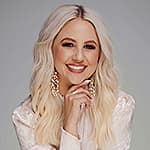
Melissa K. Turner, BASDH, RDHEP, EFDA, affectionately known as @thetoothgirl, is on a powerful mission to transform the future of dentistry for both patient and practitioner.
An award-winning speaker, key opinion influencer, and hygienist, Melissa represents a new generation in dentistry through a focus on inclusion, practitioner well-being, and innovative technology. She is a 2022 recipient of the Sunstar Award of Distinction, the dental hygiene industry's highest honor, and is a top dental content creator nationwide. Melissa works closely with product/service companies and DSOs to drive conversations on brand strategy and development.
Chief hygiene officer and director of social strategy for Cellerant Consulting Group, she leads the Cellerant Best of Class Hygiene Awards, an unbiased, non-profit assessment of available technologies and products in the dental space.
An expert in teledentistry and mobile healthcare delivery, Turner is cofounder of the National Mobile & Teledentistry Conference and is a founding board member of the American Mobile & Teledentistry Alliance, a 501(c)(4) nonprofit membership association.
Turner is creator of the I Heart Dentistry Network, a community focused on supporting under-recognized groups of dental professionals and is cofounder of The Denobi Awards Gala, an annual red carpet awards program honoring outstanding individuals and unsung heroes who move the dental industry forward.
Are you maximizing the potential of your hygiene department, or are you unknowingly trapped in an outdated business model that's limiting your practice's growth and efficiency?
Melissa K. Turner, BASDH, RDHEP, EFDA (@thetoothgirl), brings two decades of clinical experience combined with executive-level strategic insight to transform how dental practices operate. As the 2022 recipient of the Sunstar Award of Distinction—dental hygiene's highest honor—Turner serves as Chief Hygiene Officer and Director of Social Strategy for Cellerant Consulting Group, leads the Cellerant Best of Class Hygiene Awards, and is a founding board member of the American Mobile & Teledentistry Alliance. A recognized expert in teledentistry, mobile healthcare delivery, and fractional executive consulting, she partners with practices of all sizes on brand strategy, product growth, and operational optimization.
This wide-ranging conversation explores the dramatic shift in career opportunities for dental professionals and challenges traditional practice models that may be holding back efficiency and profitability. Turner discusses how technology and strategic thinking can revolutionize everything from hygiene department workflows to executive team structures, offering practical insights for practices ready to embrace change and unlock new levels of success.
Episode Highlights:
Traditional dental practice models are increasingly antiquated and may be creating inefficiencies that limit profitability and team satisfaction. Simple workflow changes, like eliminating unnecessary hygiene checks during crown preps and streamlining post-operative appointments, can dramatically improve practice efficiency and reduce chair time burden on both patients and providers.
Career growth opportunities for dental hygienists have expanded exponentially beyond clinical roles to include executive positions such as Chief Hygiene Officer, fractional consulting, brand strategy, and product development. These roles leverage clinical expertise at the boardroom level, bridging the gap between business operations and clinical care delivery.
Fractional executives represent a cost-effective solution for growing practices, allowing access to high-level strategic expertise without full-time executive salaries. These consultants bring cross-practice experience and stay current on industry trends, providing valuable insights that help practices avoid costly implementation mistakes during expansion phases.
Group practices and multi-location dental organizations require structured executive teams to succeed, with practices needing strategic leadership as soon as they expand to a second location. The rise of non-DSO group practices, particularly among new graduates seeking ownership without corporate constraints, is driving demand for these specialized leadership roles.
Modern hygiene departments can achieve significant return on investment through strategic restructuring, technology integration including AI and teledentistry, and systems optimization. Practices willing to reimagine their operational models can achieve substantial improvements in both profitability and work-life balance for the entire team.
Perfect for: Practice owners considering expansion, dental hygienists exploring career advancement opportunities, group practice executives, and clinicians interested in fractional consulting roles or operational efficiency improvements.
Discover how to break through traditional limitations and unlock the strategic potential within your dental practice and career.
Transcript
Read Full Transcript
This transcript was automatically generated and may contain errors or inaccuracies. It is provided for reference and accessibility purposes and may not represent the exact words spoken.
Okay, why does a dentist need to pop up three times from a crown prep and go do a hygiene check? Do we still need to do that anymore, right? Why do we need to have that quick post-op come in for a five-minute appointment? It ends up taking 10 minutes. They don't want to be there. The dentist stays and talks to them. Welcome to the Phil Klein Dental Podcast.
Today we'll be having a very informal discussion with Melissa Turner about how things are rapidly changing in the dental profession, both on the dentist and dental hygienist side. Melissa has been a practicing dental hygienist for 20 years, and she's of the mindset that nothing is out of reach when it comes to opportunities for dentists and dental hygienists.
She attributes many of these opportunities to the rapid advancements in technology, as well as our inner desire to expand our own horizons beyond clinical dentistry. I admit this episode goes in several directions. However, I think you'll find it worth your time to hear what Melissa has to say as we explore the opportunities we all have as dental professionals, both in and out of the dental operatory.
Melissa is a sought-after consultant and speaker. She partners with companies of all sizes on brand strategy and product growth, leveraging her unique insights from her experience in the boardroom and as a clinician. Melissa will be joining us in a second, but first, are you looking for an air-driven handpiece that rivals the power and torque of electric? Well, I have good news. It's finally here. It's called the TMAC-Z and it's from NSK, a company we all know and trust as a world leader in dental handpieces.
In addition to being lightweight and ergonomic, this revolutionary air-driven handpiece delivers unprecedented 44 watts of power, allowing it to cut through tough zirconia smoothly and quickly. In fact, the TMac-Z reduces overall cutting time by 30%.
That means less chair time, reducing the burden on you and your patient. Take a test drive of the TMAX Z air-driven handpiece from NSK. For a free 10-day trial, go to nskdental.com and find your local rep to inquire. Experience the power and excitement of the TMAX Z series. Melissa, it's a pleasure to have you on our show.
Thank you for having me, Phil. So let's begin this episode with a pretty broad question, which I think you can answer. How have you seen the dental hygiene profession change over the years since you've been practicing? And how long have you been practicing? Approximately. Approximately. I like that. I like that. We'll say two to 50 years. Two to 50 years. Okay. I'm trying to be diplomatic here. I know it's a touchy situation with some people.
I've been in dentistry 20 years. First started as an assistant and then the hygienist there actually became my mentor. And she was like, Melissa, you have to go to hygiene school. So as soon as I became an assistant, I applied for hygiene school. You were really happy you made that change. Really happy. Oh, yeah. Yeah. You seem very enthusiastic. I mean, I don't know you very well, but I've got to know you through podcasts and just talking to you on online meetings and so forth.
But your enthusiasm for the profession is contagious and you have so many good ideas and you really seem to have grasped a really good knowledge base of how the profession is moving forward, both in technology and practice management and so many other areas. So what's the big change? If you wanted to identify one thing in your career as a hygienist, what would you say the big change is since you started practicing hygiene?
Outside of technology and the obvious changes like COVID made, the biggest change for hygienists, and even for practice owners too, because this applies to them, the biggest change for hygienists has been the amount of career growth opportunities that we now have. So back in the day when I graduated, basically we hit our glass ceiling just like any clinician does, really. Any dentist, any assistant, any dental therapist, any physician, we reach our glass ceiling.
As soon as we graduate, either from a specialty program or from the general program. And that can be frustrating because then for those of us who are in the chair every day and who aren't satisfied, what do we do? Do we just suck it up? Right. And so I think the biggest change I've seen in dentistry as a whole for all clinicians, not just hygienists, is that now we can be executives. Now we can be speakers. We can be fractional executives. We can be consultants. We have.
all of these other kind of niche industries that we can bring into dentistry and go from there. And that's even, I know so many dentists and hygienists who have now have patents under their belts and have launched one-off products, right, that turn into product lines. So career path options is one of the biggest things that I've seen change. And what do you attribute that to, these opportunities? I think knowledge is power. And 20 years ago, knowledge was...
hidden behind, we'll say hidden above the glass ceiling. Now, since we have the internet, now, since we have social media, we have LinkedIn, we have networking tools we didn't have before. I attribute all of this to technology. We have the power, we have the information. So it's basically limitless. You can go as far as you want to. And what would be holding you back would be your own self-imposed limitations. So if you're interested in a specific topic, you can pursue that if it's related to dental hygiene and use your degree.
to make that step. And as you say, break the glass ceiling, which is exactly what you did in your career. And it's really inspiring to see the new opportunities for dental hygienists. So what new roles have evolved specifically for the registered dental hygienist? Specifically, I'm going to take it to the executive level there. So in one of my roles, I am chief hygiene officer.
And I only know when we created that title, that was the first time I've ever heard that put together. I now know a second person who has put that title together under chief hygiene officer. But I think the biggest thing right now, and this is attributed to group practices and DSOs and MSOs, they now utilize that clinical expertise. They have to utilize that clinical expertise in the boardroom and on the executive level. Because if they don't, there will be this.
distrust this gap between the executives running the business and the clinical team and so bringing in a chief dental officer bringing in a chief hygiene officer these things are crucial to the success of the independent practice or the group practice and that's one of the biggest ways
that I've seen things change. And there's still a lot of growth in that area as well. So what you're describing really pertains to an office that has multiple hygienists in it, right? I mean, you're talking about a bigger practice. And I don't know what the percentage of dentists out there, dental practices out there that are a dentist, a hygienist, and an assistant. I'm not sure what that number is. Maybe you know. What would be the minimum size personnel-wise of a practice that would be?
looking to build an executive team, both on the dental side and the hygiene side? I think as soon as you have a second location, that's when you need to at least start thinking about it. Because at that point, it becomes a different animal, an entirely different animal. You could have, you know, 10 hygienists under one roof with one practice owner. Okay, that's fine. But if you get a second practice owner, right, then you need to build those systems and processes to have this.
other animal but then also if you send if you have a second practice whether it's de novo whether you you purchase it whether you acquire it as soon as you start that growth trajectory where you can't tangibly see all the hygienists or all the dentists you know when you look out of your op i think phil we're going to be seeing much much more of that as as new generation
graduate dental and hygiene school, you know, right now we're seeing there's probably less than 20% of practices are actually a part of an official DSO. Then you have the group practices. And what we're seeing now that more women are graduating dental school, now that more dentists are coming out of school not wanting to be part of a DSO, but they want to have some kind of practice ownership, I think we'll see another rise in, you know, non-DSO group practices.
And at that point, you got to get your structure in place to really make it succeed at that point. And how does a dental practice build that structure? What kind of knowledge do they need and experience do they need to actually set up a structure like that where you have an executive team when they're thinking of expanding their business? Yeah, bringing in outside expertise, whether you hire a fractional executive.
to come in and, and I know kind of the fractional executive is, is a new role in dentistry. What that means is for those who are listening, what that means is basically instead of hiring a CEO or chief development officer, chief dentist, dental officer, instead of hiring that person full time and having them be a thousand percent, a part of the team, you hire them on a fractional basis and they act more of a consultant. So they won't do as many hands-on implementation.
It'd be more like a high-level strategy. And they will get hands-on if you want them to, but because they're fractional, it takes a little more work. But that way you can afford, you can have their expertise, and then it's up to you as the practice owner to then really implement the structure that needs to be in place moving forward. Yeah, and I have a good friend who's actually a fractional CTO, and he works with a venture capital company, and they invest in startup companies.
Because they're invested in that startup company, they want to keep the costs down because obviously they want the company to be profitable. So he's in touch with this venture company that says, hey, we have a new company where they need a CTO, a chief technical officer. They need your expertise. So he's a fractional CTO. So that's how my friend makes a living. So tell us about your experience or your endeavors as a fractional consultant in dentistry. We'll be getting right back to our guest in a second. But first.
Thanks to GC America, we're now able to incorporate all the advantages of glass ionomer into a beautifully aesthetic, strong, long-lasting restoration. That's a great reason to try GC Fuji Automix LC. You'll love the convenient automix delivery system and ergonomic dispenser.
which allows precise placement into the preparation. And GC Fuji Automix LC is bioactive, allowing for a high rechargeable fluoride release, which is ideal for high caries risk patients. And because it forms a chemical bond to tooth structure, even in the presence of saliva, there's no need for etchant and adhesive bonding.
This saves steps and is ideal for challenging patients where access and isolation are difficult. And the small filler particles in the material allow for superb polishability and excellent aesthetics. So when you're thinking glass ionomer for your clinical cases, think GC America, a world leader in dental materials. To learn more, visit gc.dental. So I'm fractional in the clinical mindset, the chief hygiene officer, right?
I am fractional in also brand strategy because that's another outside of my clinical role. That is where I thrive the most is brand strategy for product launches, for company growth, for personal, for founders who are the head of their company public facing. So I'll walk alongside product service technology companies as a fractional brand strategist, which has a lot to do with marketing, social media.
utilizing influencers and key opinion leaders. I'll work alongside them. So right now I'm working with multiple companies on a fractional basis as a fractional consultant, fractional executive. So with the growth of group dental practices, it seems to me there's an opportunity for dental hygienists and dentists also to be fractional executives representing offices that have multiple locations. Do you see that growth happening now?
But yeah, we're seeing growth in that area. Chief people officers, chief hygiene officers, chief dental officers. These are the things that where a group practice can hire somebody fractionally, bring them in, help them get the systems going, help them. You know, it's kind of old school consulting. Like that's if you look at it that way, if you divide it up that way, it makes sense to us in dentistry when you divide it up that way. What would I hire a consultant for? Well, instead of them being consultant.
Why don't I officially bring them on the team as a fractional executive? And it does help too, if you think about it, Phil, it really helps. Let's say I'm a dental practice and I'm bringing in a chief financial officer, right? It helps me if that chief financial officer isn't.
with me full-time but it's also with others part-time because that financial officer can now see what everybody else is doing there they stay up to date they stay modern on the trends on the pain points you know it's it's one of these things where yes it's great to have somebody full-time for you
But if you have somebody that's seeing everything that's out there anyway, and that's one of the benefits of a fractional officer. They're up to date on all the problems, all the pain points that are going on with all the other clients they're working with. Yeah, no, that's a great point. Great point, Melissa. And the question is, does a dental practice want to learn the hard way? It's like anything else.
had the opportunity to build my own house in San Diego many years ago. I think it was 25 years ago. I was a fairly young guy and I did everything I could to build this house, literally frame it, do the underground footings, run the electrical wire. And I worked with an expert on doing this. But the sad thing is I had to learn by making all my own mistakes. Everything that I did wrong, I corrected, which would have benefited me if I did a second house.
But I never did a second house. So I literally suffered with the first one, learned everything the hard way, got it done. It came out great. I'm very happy I did. It was a life experience, so to speak. But I was ready to buy a pickup truck and do another one because I said to my wife, this is crazy. I just made all these mistakes and now I know how to do this. Why go back into dentistry? I was an endodontist at the time. But my wife didn't want me to have a pickup truck, so I had to get out of that. But what you're saying is very important.
These fractional people that are consultants, I know we went off on a tangent, can be very, very important for a practice to make the right decision. And the mistakes that you make early on compound seriously down the road, especially when you're putting in a big investment to expand your practice. So we got off topic a little bit, but it does pertain to dental hygienists opportunities because they could be the ones that could be involved as consultants in this area.
just as you are. So let's talk about practice efficiency when it comes to the hygiene department. One office has two hygienists and they're doing unbelievably well. The money's coming in. They're profitable. They're happy. Everything's just going swimmingly. And then another practice has two hygienists, similar area demographically. Everything's kind of the same, but they're making 70%.
bottom line compared to the other office. So one department is doing better than the other. My question to you is how does a department, a hygiene department, improve their efficiency to get it up to as ideal or optimized as possible? I think the first step is to understand that the business side of dentistry, the clinical, the business side of dentistry, it is an antiquated model. And it comes across as harsh saying that.
But we've based how we build our dental practices, how we build the hygiene department, even how we run the front desk. We call it the front desk.
Right. Even all of that is built on an antiquated model. So the very first step when I'm working, when I'm coaching with Dennis, when I'm working in dental practices, the very first step is to say, hey, understand that you've built a business off of an irrelevant model. And it sounds harsh. But once they see that, once they cross that bridge of, OK, you know.
Change is hard, but I understand I inherited this practice from my mentor. I purchased this practice and it wasn't going well and I thought I could turn it around. Once we understand that we have built the business of dentistry off of an antiquated model, then we can find little things to move forward. Like, okay, why does a dentist need to hop up three times from a crown prep and go do a hygiene check?
Do we still need to do that anymore, right? Today's episode is sponsored by Sunstar, makers of gum products. Gum's premium line of interdental cleaners, soft picks and toothbrushes offers innovative, easy to use solutions for better oral care. Introduce your patients to gum, the tools they need to maintain healthier smiles. Learn more today by visiting sunstargum.com.
Why do we need to have that quick post-op come in for a five minute appointment? It ends up taking 10 minutes. They don't want to be there. The dentist stays and talks to them just to make it worth their while when really they needed to look at that tooth for two seconds, right? Like these inefficiencies are all over the place in the dental practice. And that's why consulting has been so great in the past for dentistry is because you can have a practice management consultant come in and say, hey, here's what you need to improve.
But I'm saying we need to throw out the entire playbook and build your entire practice model from scratch now because so much has changed. We were just talking about AI, just talking about what technology and COVID has done to everything. How resistant do you find dentists to be set in their ways when you suggest that they need to destroy everything that currently exists in their practice and rebuild it from scratch?
And I'm hoping that some of the instances that you're involved with where you don't have to be that extreme and you can say, well, things aren't so bad, but if you just change this, you would be able to bring this new efficiency where you can save 20% on your overhead doing just this one thing. So I'm hoping that it's not all like all or nothing, but what kind of resistance do you see typically when you make that suggestion? Well, for me, it's always know your audience, right?
As a speaker, I will say this, I'll say this on a podcast, but then when I'm working with a dental practice, when I'm working with the lead of a hygiene division, I'll obviously pull it down into more practical application, but still at the same time, training them to understand that this is a model that may not work anymore. So there are some practice owners, some executives that are saying, hey, let's throw out the entire playbook because they understand what's going on.
And when you do, obviously, when you throw out the entire playbook, you can't do that all at once, right? It's when you purchase that new practice or when you start the de novo practice or when you bring in that third hygienist, you're going to say, okay, we're going to do things a little bit differently with her or him or them and see how it works and see how it goes and then move from there. Baby steps. Baby steps always. Unless you're ready to go all in, then I'll go all in with you. Yep, there you go. No, I think that's a great approach. So what's the return on investment?
on redoing everything that was inherited or purchased by this particular dentist. And they use your suggestion and tear it all up and start over. What would be the typical ROI as far as time and money?
It depends on how much resources they can put into it, you know, mental resources. It goes back to can they structure it properly? Can they bring in a fractional CEO? Can they create the systems and processes in place? If they can, then ROI is through the roof. If they can harness.
telehealth inside the dental practice, if they can harness teledentistry, if they can implement AI in all the ways that we talked about in the past episode, then it is through the roof what they can do, even just in a single practice. So the key thing is really is to be accepting to that idea or the concept that the current situation in my practice is completely antiquated. And for us to move forward, we have to take a couple of steps backward. But once we do that,
It's off to the races and there's no end to what we could do in this practice. And I guess the key thing is, is technology, right? On the efficiency side. Yeah. Technology on the efficiency side. And even, you know, I, I have some friends of mine who are practice owners and say, Melissa, I don't want to grow like crazy. I am fine how I am.
You know, I'm making ends meet. I'm making some money. I have a nice car. My family's happy. I have work-life balance. And so I say then at that point, okay, well, is there something little that you think you can handle that might just continue to improve your life? You know, your team's life, your life as the practice owner, as the primary clinician, you know, what little things, because maybe, maybe the practice owner has it all together, but what about the team? Are they struggling in any way? So that's when you begin to focus on.
What can you do for your team? Improving workplace wellness, team culture, seeing how you can help them maximize what they're doing. Yeah, no, really good points. So to wrap up this podcast, Melissa, and it's been excellent, how do you see the role of dental hygienists changing in the future? I think they're going to lead to a more strategic role versus a clinical role. And we'll still always have hygienists as clinicians. One example that I typically give in this situation is we have...
an entire generation of hygienists who have grown up now knowing that they could temp full-time in dental practices. And I did that for years. I've tempted hundreds of dental practices across the States. What I learned from doing that is priceless versus, you know, back in the day, a hygienist would stay at a dental practice for 20, 30 years till she retired. Well, now I have all of this expertise from my time working everywhere.
that I want to be put to use right and we also have this entire generation that have worked in many many many many practice they can tell you what to do not to do you just have to ask them and so creating roles where they can thrive in this environment and I know
hygienists in particular are some of the most empathetic go-getters type A people that I know. They want to do more. And so if we can let them loose and unleash them in the coming years, practices will just be revolutionized. And it'll increase profitability for the dentist and it'll elevate the patient too through that. Yeah. So what's the best way to reach out to you if one of our listeners is interested in learning more from you? What's the best way to reach Melissa?
Thank you for that. You can find me on any social media, except for Twitter. But I also have a website that's probably the easiest way to contact me, melissakturner.com. Okay, great, Melissa. And Melissa is with one L, right? Two S's. That's correct. Okay, great. Melissa, thank you very much. Another very good conversation. And we're excited to have you as our guest. And thank you very much for your time. Thank you, Phil.
Clinical Keywords
Melissa Turnerdental hygienepractice managementteledentistryfractional consultingChief Hygiene OfficerCellerant Consulting Groupdental efficiencypractice optimizationgroup dental practicesDSO alternativesdental technology integrationAI in dentistryhygiene department profitabilityexecutive leadershipbrand strategyproduct developmentmobile dentistryAmerican Mobile Teledentistry Allianceworkflow optimizationtraditional dental modelspractice expansionmulti-location practicesDr. Phil Kleindental podcastdental educationSunstar Award of Distinction