Cosmetic Dentist · UCLA Center for Esthetic Dentistry
UCLA School of Dentistry · UCLA Center for Esthetic Dentistry · Esthetic Professionals · F.A.C.E. Institute
Read full bio
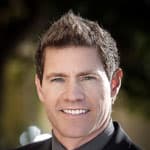
Dr. Todd C. Snyder received his doctorate in dental surgery at the University of California at Los Angeles School of Dentistry. Dr. Snyder has learned from and worked under some of the most sought after leaders in dentistry, refining his skills in comprehensive, extremely high quality aesthetic dentistry and full mouth rehabilitation. Furthermore he has trained at the prestigious F.A.C.E. institute for complex gnathological (functional) and temporomandibular joint disorders (TMD).
Dr. Snyder lectures both nationally and internationally on numerous aspects of dental materials, techniques, and equipment. Dr. Snyder has been on the faculty at U.C.L.A. in the Center for Esthetic Dentistry where he co-developed and co-directed the first and only comprehensive 2-year postgraduate program in aesthetic and contemporary restorative dentistry. He currently is on the faculty at Esthetic Professionals. Additionally, Dr. Snyder is a consultant for numerous dental manufacturing companies and has had the opportunity to research and recommend changes for many of the materials now being used in dentistry. Dr. Snyder has authored numerous articles in dental publications and published a book on contemporary restorative and cosmetic dentistry.
Dr. Snyder also founded and is CEO of Miles To Smiles a non-profit mobile children's charity that helps indigent and underprivileged children.
What if the massive debt from dental school isn't the barrier you think it is to practice ownership? Could changing your mindset about debt actually accelerate your path to professional freedom?
Dr. Todd C. Snyder brings over 30 years of practice experience to this conversation about entrepreneurship in dentistry. A graduate of UCLA School of Dentistry, Dr. Snyder has trained at the prestigious F.A.C.E. institute for complex gnathological and temporomandibular joint disorders. He has served on faculty at UCLA's Center for Esthetic Dentistry where he co-developed the first comprehensive 2-year postgraduate program in aesthetic and contemporary restorative dentistry. Currently on faculty at Esthetic Professionals, Dr. Snyder is also an international lecturer, consultant to dental manufacturing companies, published author, and founder of Legion.Dentist. Additionally, he founded and serves as CEO of Miles To Smiles, a non-profit mobile children's charity.
This episode challenges conventional wisdom about when and how to pursue practice ownership. Dr. Snyder argues that debt levels, while significant, are proportionally similar to what dentists faced decades ago when adjusted for inflation. The discussion explores practical strategies for acquiring practices, securing commercial loans, and building equity through real estate ownership. Dr. Snyder shares insights from his recent practice relocation from Southern California to Las Vegas, demonstrating how experience can lead to more streamlined, focused practice models.
Episode Highlights:
Debt perspective reveals that today's $500,000-600,000 dental school debt is proportionally similar to the $300,000 debt levels of 30 years ago when adjusted for inflation. The key is shifting from a scarcity mindset to recognizing the income-generating potential of a dental degree and the consistent demand for dental services.
Commercial lending for dental practices remains accessible because dentistry represents one of the most profitable and stable industries. Banks readily approve loans for dental startups and acquisitions because they can secure assets and historically, dental practice failures are extremely rare.
Real estate ownership through commercial property purchase offers significant long-term wealth building beyond practice income. Properties with multiple tenants can generate enough rental income to cover the entire mortgage, essentially providing free office space while building equity that typically doubles, triples, or quadruples over 20-30 years.
Practice evolution demonstrates the power of the Pareto principle in dentistry, where focusing on the 20% of services that generate 80% of revenue allows for reduced working days while increasing profitability. This approach involves systematically eliminating lower-performing services, raising fees, and paradoxically becoming busier by working fewer days.
Geographic relocation requires careful demographic analysis ensuring a ratio of 1000-1500 patients per dentist in the target area. Location visibility and accessibility remain crucial factors, while avoiding extremes of oversaturated metropolitan areas or underserved rural locations with insufficient population bases.
Perfect for: New graduates considering practice ownership, established dentists contemplating relocation or practice model changes, and dental professionals interested in real estate investment strategies for long-term wealth building.
Discover how to transform debt anxiety into entrepreneurial opportunity and build the practice and lifestyle you actually want.
Transcript
Read Full Transcript
This transcript was automatically generated and may contain errors or inaccuracies. It is provided for reference and accessibility purposes and may not represent the exact words spoken.
You're listening to the Phil Klein Dental Podcast.
So there's no question if you're a young dentist, you probably have a lot of debt. Let's face it,
college and dental school cost a fortune these days. But if you have dreams of opening and
operating your own practice, that debt shouldn't hold you back. At least that's what our guest,
Dr. Todd Snyder says. He has over 30 years of practice experience, so he has a lot he can share
with us. He'll be talking about borrowing money, finding the right place to open a practice, buying
the commercial building and keeping your cost to a minimum, and many other things related to
opening your own practice and being in control of your life. So let's get right to it and welcome
our guest, Dr. Todd Snyder. Dr. Snyder is a popular speaker on VivaLearning.com, a cosmetic
dentist, international author, lecturer, and consultant to dental companies. He can be reached at
Legion.Dentist, and he's really got a lot of very innovative ideas. Dr.
Snyder will be joining us in a moment, but first... you're looking to raise the bar with your
adhesive dental procedures, you should definitely be looking into Bisco. Bisco is a great company
that has an unparalleled track record. I can unequivocally say adhesion is their passion.
They are genuinely dedicated to understanding and improving the ability to bond dental
restorations. Bisco is a company that places tremendous value on research and scientific knowledge
to benefit you and your practice. Being an endodontist myself, my favorite Bisco product is
Theracal LC, which hands down is one of the best materials to use for direct and indirect pulp
capping procedures. It not only seals the dentin, but offers significant calcium release,
which stimulates hydroxyapatite and secondary bridge formation, which is exactly what we're looking
for in these kind of procedures. So check out their entire product line of premium adhesive
products at Bisco.com. Dr. Snyder, thanks for joining us. Thanks for having me,
Phil. So dental school is extremely expensive these days. We all know that. And many new graduates
come out day one with a huge amount of debt. So my question to you is, is it realistic for a new
dentist to be thinking of buying a practice or possibly buying a commercial property and furnishing
an entire dental practice under this kind of debt? Or should they be resigned to the fact that the
first part of their career, they'll be working for a corporate office like a DSO? Well,
I'm going to challenge you on that. Because you go, okay, yeah, nowadays coming out of school, $500
,000, $600,000 in debt, whatever it is. And you go, okay, what was it 30 years ago? I had about
$300,000. And so you go, okay, well, inflation, so it's doubled? Well, that's normal.
If anything, it might have been higher. And so I would say to some extent, everyone's, I hate to
say it, but complaining about the cost. And yes, it is expensive, but it's relative. Same as buying
a home or a gallon of milk or a car. And you talk about our parents that used to be able to buy a
Coke for like a nickel or a home was like $4,000 or $5,000 back then. And so you go, okay, well,
is it our mindset? And is it that everyone is just saying this and whining and complaining, saying,
poor me? Or let's flip the mindset and the psychology of, no, I've got a degree. I can go create
whatever I want at this point. So now it's upon me to go produce the revenue that I want, the
freedom, the lifestyle, whatever that is. And so I don't care if I've got $300,000, $600,000,
whatever it is in debt. I can go out and build something and everyone needs a dentist. And so I see
it in that fashion. But I would say a lot of people don't see it that way. And because there's so
many people complaining about it, that the mindset I think of many people is like, well, yeah, it's
too expensive and it's hard to find a job and I've got to work hard to pay all that off. It's like,
well, yeah, you're always going to have to work hard. Now you could say, well, if you don't have
the wherewithal to go start something, then yeah, you're going to have to work for someone else,
which is fine. That's what I did too, right? You got to eat crow, you got to learn things, you got
to work for someone else. So the DSO is probably a great place to go. Especially with, I would say,
associateship positions nowadays in general offices is harder to find. But for the same token,
could you go out and buy an existing practice that is already profitable? Totally could. Yeah.
Don't sell yourself short. You say, well, I don't know enough yet. Okay, well, then associate for a
year or two and learn a few things. But you'll never be ready. It's like, when do you get married?
When do you have a kid? You're never ready, but you learn. So don't let fear stop you. Yeah.
And if you're looking to purchase a practice and the cash flow at the end of the day with your debt
service is positive, then you keep working, but you still have to remember to pay yourself. You
know, sometimes, right, because it's a typical kind of pit that people fall into.
You know, they've sacrificed their own salary for reinvesting into the practice and paying the debt
service off and they end up working for three or four years and they're not taking anything home
and they're sacrificing a lifestyle while they're working really hard. And that's, what do you feel
about that? That's not a really good way to go, is it? I agree with you 100% because now you're
creating negativity and frustration in your mind, which leads to burnout because you're working so
hard and you're not seeing any gifts from it. And so you do have to take care of yourself. But for
the same token, you shouldn't be buying luxurious cars and homes and things and saying, oh, I
deserve all these. No, you should keep the belt a little tight, but don't go so tight that you're
frustrated and burnt out and that your whole life is revolving around debt servicing and doing
business. You have to enjoy life. Life is short. So the new dentist that comes out of dental
school, we just mentioned, he or she is in a lot of debt. So it really is up to the person and
their risk averseness. You know, how much can they tolerate risk?
Now, a dentist is a professional healthcare job. It's not something where you're investing in a
racehorse, right? You don't know what's going to happen with that horse. It may just have a bad day
or whatever. So it's a fairly conservative bet. And by starting earlier than later in your career,
you have more time to develop that asset and build it and also have more control of your life.
So there is something to be said for starting out earlier than later when it comes to practice
ownership. What's your feeling on that? Yeah, definitely. The sooner you can jump in, the happier,
well, if you like running a business, the sooner you can call your own shots and you potentially
can have more freedom financially that you're not just doing what other people say and living check
to check kind of thing. So to be able to grow it the way you want it, to be able to work the days
you want, see the patients that you want, you get a lot of freedom in that. And what you find is if
you have good systems, there's a huge luxury in being a business owner. So I would definitely say
buy earlier than later. So you don't think it's a valid argument for someone to say,
I can't make the move to buy a practice right now. Things are just way overpriced. You know,
everything's just so expensive and it's not a good economic move at this time.
That's not a sound argument in your mind. I don't feel it is personally, but you know, I love,
if you're watching all the social media and whatnot, it makes it sound like it's, things are out of
reach, but you know, like someone who's flipping a hamburger is making $20 an hour. Now I'm like,
Whoa, when I was a kid, it was like three something an hour. Right. So, so it's all relative. And I
think it's all in the mind. Now you go, well, you know, if the median price home starts at, you
know, 600 and something thousand dollars, you're like, okay, yeah, that's a lot of money. And you
go, okay, well, that's why you put it on a 30 year, you know, loan and you pay it slowly over time.
Right. Same as buying a business. You know, you get a loan and you pay it down over time.
So I don't see it. You know, I just invested another six, seven hundred thousand in building a new
office. Like, did I even blink at it? No, because I know I can make it back. But I think part of
that comes with the confidence of already having done that and having the confidence of
understanding that, look, everyone needs a dentist. And for the same token, it's easy to get money
to build or buy a dental office. Because you're one of the most profitable, successful industries
out there. And the lenders know that. And they know that if there's a problem, they can always
replace you. They can certainly take things back. resell or whatnot, but it's very rare that a
dentist fails. So tell us about borrowing money. A dentist is in a lot of debt from dental school
and even carried over from college. He wants to take a commercial loan out and he goes to the bank.
What's the typical scenario there? Yeah. You know, cause this is my second time doing it. You know,
the first one I built out, I was just out of school for, I don't know, five years and literally
building an office from scratch. And I had, there was no revenue coming in. Right. It's not like an
existing office because they're more inclined. If you're buying someone's existing office, they can
see the balance sheet, what coming in monthly and they go, OK, this is a good business. We're happy
to invest in that. And you go, but they'll invest in a young dentist that's doing a startup. Right.
You come in with a business plan. You say, well, here's what my intentions are. And, you know,
here's the debt repayment that I plan on doing. And so they go, OK, well, we're going to, you know,
obviously put a lien against all the assets of the business. But it's no different than a mortgage
at that point. You know, a 10-year loan or whatever. And so you're making monthly payments.
No big deal. But I assume the actual loan for the commercial building is separate from the loan for
furnishing the office with all the dental equipment, cabinets, and so forth. Yeah, I've heard a
couple things. And granted, I have not bought my own building, sadly. I've always wanted to. It
just didn't work out. But I have heard where they had them as two separate loans. Like one was the
building, one was the asset, because they can seize that the same as, you know. a home or anything
else and okay you didn't pay it it's ours and the dental business was a separate one i have heard
of that being done i've also heard of them being bundled together um so i think it just depends on
how it's structured but um definitely if you can buy gold gee if i'm buying the building it's a
million or whatever and then it's you know i gotta run the business like trust me that asset you
know again we're talking about costs of things in 20 to 30 years from now that thing will have you
know doubled, tripled, if not quadrupled or more, you know, and so you go, wow, that's a huge
retirement plan right there, as opposed to funding your 401k, your IRAs and all these other things
that have all these fees and stuff. It's been proven that real estate, commercial and private
residential are some of the best investments you could ever have. We'll be returning to Dr. Snyder
in a moment. But first, we all know that to achieve healthy, beautiful smiles, we sometimes need to
align the teeth. and to do so, aligner therapy is a great option. So why not set your practice
apart with 3M Clarity Aligners Flex? Designed for comfort, Clarity Aligners Flex feature a thin,
flexible design, yet they deliver excellent force persistence over a two-week period. Plus,
they resist scratching and stains, and they're backed by a dedicated clinician team providing
support every step of the way. With a variety of affordable case type options, single or dual arch,
Clarity Aligners Flex offer a great value to your patience and practice. To learn more,
visit 3m.com slash clarity dash aligners dash flex. So I guess the ideal situation would be to buy
a commercial property where there are other tenants and the positive cash flow, if possible,
from those tenants. nets you out to zero on your cost for the actual space, pays the debt service
off, and you have the space for nothing. That would be ideal, or even positive cash flow would be
even better. Yeah, you know, depending on where you go, you see, you know, literally dental
offices, it's just one building, it's one dental office. I would say always if you can buy
something bigger and have other tenants. Depending on how many more tenants you have, they'll cover
your whole loan and you don't even have to pay for your own suite because they've covered it.
So always think bigger about how it's going to be handled financially. From the business
standpoint, that would make a lot of sense to have more tenants. If you could manage that, if you
don't mind being a landlord, the upside sounds to me that would be much higher on the resale of the
commercial property because there's more revenue coming in and obviously the greater square
footage. you would gain on the upside with the appreciation of the asset. Well, that and you can
pull money out of that asset too, which that becomes a huge aspect as well. In addition, if you
have other people that are renting in your building, now you have more free time to go play and
you're not worried about having to make sure you can get the mortgage and whatnot done. You might
even be able to retire earlier. So when it comes time for a dentist to relocate and dentists,
you know, they don't live in the same place their whole life, just like anybody else. And the
family's all into going to a different state. You've done it. What are some of the things to keep
in mind, really priorities, when moving to a different state, not knowing too many people and
starting from scratch with the plan to own and operate their own dental practice?
Well, obviously you got to do your research, make sure that you're going to a place that does
support the need, obviously for another dental office, which, you know, pretty much everywhere
could use another one. There's always enough would seem, but, you know, demographic studies, make
sure there's like a thousand to 1500 patients per dentist. That would tell you a lot right then and
there. But for the same token, you know, the geographic location, as far as the lifestyle you want
to have, but also thinking about the business and its visibility, is it a great location where
people can get to, or has visibility where people can see it? Or are you some place way out in the
middle of nowhere that no one can find, no one can see, and that's a lot more challenging, right?
So a lot of different aspects there to consider. But then for the same token, I think I said this
previously, is you don't really want to make it so challenging on yourself that it's a struggle.
Like to say, let's move right in the middle of Los Angeles or New York, that's going to be a
struggle. But for the same token, you don't want to be potentially in the middle of nowhere and
there's only like a city of 100 people around you, which that'll also be challenging. But I would
say the majority of places one wants to live, there is definitely a need. And the number of
dentists doesn't always scare me. Like when I opened from scratch in Southern California beach
community, there are already tons of dentists down there, but it's doable. It just, you have to be
a little more unique in what you're offering in your marketing. And for the same token, you know,
it might be a little more of a struggle. It'll take a little longer to get where you want to be,
but it's all achievable. So how many years have you been practicing dentistry total? We're on...
30, 31. 31 years. So you spent how many years in California practicing?
28. So my question is, how has your mindset changed over those 28 years?
How did you adapt to practicing dentistry differently over those 28 years,
finally coming to the conclusion that you really didn't want to practice in Southern California
anymore and you wanted to relocate to Las Vegas, which you did and started a new practice and
actually a learning center? Well, you know, I was stubborn enough in the beginning.
As I've already said, I didn't take insurance and it was fee for service. And we were going to do
primarily cosmetic. And, you know, you still do everyday crown and bridge, whatever. But as far as
specialty work, I never really did specialty work. I always sent it out. And what I found over time
was where I did, let's say, try to do, you know, like a six month smile type of thing with braces
or I tried to. You'll bring in some other little aspect. I found that it really didn't change
anything that again, going back to the Pareto principle, I found that the majority of the bread and
butter of what I did, you know, that that 20% gave me the 80% of the funds. And so again,
always challenging my thoughts on what I'm doing. I said, okay, I can continue to lean things out.
So where I worked, let's say five days a week in the beginning, but had a bunch of holes in my
schedule because of brand new office. I said, okay, let's narrow it down. And then, you know,
halfway through the career, it's like, let's narrow it down to three days a week. And every time
you narrowed it down and raised your fees, you got busier, which you're like, well, wait a minute,
this is kind of odd. Because most people will say, well, you can't do that. So they don't. Versus
saying, yeah, it probably could be done. Let's try it anyway. And you see it works. And you go,
man, it's crazy. Do the opposite of what everyone says to do. Because the majority of people, well,
they're doing okay, but they're not truly successful and they're dealing with problems that they
don't want to admit. And so you continue to challenge yourself in what you do. And then so towards
the latter part of my time in California, I've pretty much proven that the majority of the income
comes from me. And so I cut out other individuals. I would say in the process of creating a new
office is like cut out the stuff that isn't doing as well as I would like it to be cut out the, the
higher overhead, you know, issues. And for the same token, cut out, you know, potentially,
you know, future problems. And so with all that, I said, okay, it's a good time to sell. And I
still go over there, you know, you know, as far as treating patients and I might continue to do it.
I might open just a single closet over there and, you know, treat. two or three patients a month
because the model is so good. It's like, okay, I don't need to see everyone and do everything. I
can be very specific and market for that one thing. So the new office, you know,
obviously is a blend of all these things I've learned and proven. And a lot of that goes into the
teachings that I teach people. Not that again, not that you have to narrow it down and do what I
did, but it makes you think and question what you do and why, and that you can still have a big
practice, but make that practice uniquely different than anything you ever thought you could do
before. And so I challenge people to find what's better for them. And that's different for everyone
out there. So there's certainly something to be said from learning from your own mistakes and
experiencing life. And then as you move through it, you realize what works and what doesn't,
which you've demonstrated yourself over the last 31 years of practicing. But for the younger
dentist who hears a Dr. Snyder podcast, for instance, and says, you know, I want to kind of emulate
what he did. And I don't really want to buy in practice. I want to go straight to a more focused
practice. I don't want to take insurance. They go straight to the game plan that you've talked
about here because they think that's what they want. Is that something they could do without
experiencing the typical path and learning from their mistakes? I think you could definitely take
what I've done. I mean, that's the same as, you know, mentorship or coaching, whether you're an
athlete and you want to learn things faster, whether you're in the school and you have a mentor.
to teach you things so that, again, you can accelerate and move to higher levels more quickly. So,
yeah, I would say you could certainly challenge yourself and implement some of the things I've done
or take part of them and modify your existing thought process to elevate yourself more quickly.
I mean, I can't imagine if... know now, if I knew that coming into like year four out of dental
school, like, wow, where would I possibly be? And so that's part of the fun for me is to see
individuals that are younger that are in my programs and I show them things and they accelerate.
It's like, yeah, now look where you're going to be. You'll outpace me because I already gave you
this information versus having to try and learn it on your own. Or if no one's teaching it to you,
it's a tougher, longer process. Did you ever think of having more than one office? Let's say.
six offices and having all these associates work for you and you be the corporate owner. Has that
ever crossed your mind? You know, at one point I was considering to have a second office, but then
I realized like me personally, having to deal with the headaches, you know, managing employees and
dealing with all the issues and problems that arise in business. I said, you know what? More is not
good for me. For some people, they love it. They thrive on that, you know, and that's great. Kudos
to them. And so I would never tell anyone not to do that. If someone thrives on that, then go do
it. buy more, build them up, sell them all off, bundle them up, all that. For me, it was like less.
I need less of that headache. As much as I love business, I don't like headaches. And so that's why
I personally have streamlined and gone down in size where others have gone bigger. Yeah. I mean,
there's no question that it's very subjective. It's up to the individual what their comfort zone
is. You've downsized, but you're still an entrepreneur because you moved to a different state.
You've got rid of the volume practice. You're very focused on low overhead. And you've essentially
eliminated a lot of the stressors that you had with a more volume practice in Southern California.
Definitely. Yeah. I mean, to have less stress, to have more freedom and more fun in life. I mean,
at the end of the day, I think that's what all of us would like to have. So at the same time, I can
still, you know, like I like to donate certain time to helping like veterans with their oral health
issues. And so with, with this freedom, this luxury that I can go help other people, you know,
so it allows me to do a lot for everybody. Yeah, and it actually frees you up to do your race car
hobby. Tell us about that. You know, I've raised the Lamborghinis and the prototypes over the
years. And so I kind of still within that range of prototypes. So I've had a few phone calls and
not sure where we're going to end up, but definitely still got that in my veins. I still need to
have a little speed here and there. How fast do you actually go on the course? Depends on the
straightaways in each course. If they've got a lot of turns and not a very long straightaway,
you're shorter. But, you know, like Circuit of America out there by you and Austin, you know, 170
something. You've been on that course? Many times. Wow. And that's more of a thrill than seating a
perfect Emax crown on a second molar? Yes, every day of the week. Wow.
You're really telling us a lot about you, Todd. I don't know about this. I'm going fast. Yeah.
Well, it's amazing that you have that career on the side. Yeah. Viva Learning actually got a logo
on one of your race cars. We were very proud of that. That's right. It was a Lamborghini series.
Yeah. So as we wrap up this podcast, Dr. Snyder, it's been very good. Tell us about Legion
.Dentist, which is your online learning program where you also do live training. And I know you
have a new training center in Vegas that you're building, which will be ready soon. So in a
nutshell, what is Legion.Dentist as far as dental training? It's not a cookie cutter approach. It
is... challenging the norms and what we believe needs to be done and finding better solutions so
you can have more fun, more freedom and time to enjoy life. And so I would say that the catalyst we
have for propelling people forward is they just have to show up and do the work, but that's hard
for a lot of people to do. Right. Okay. Well, uh, so to our audience, check out Legion,
L E G I O N dot dentist. Dr. Todd Snyder runs that program. He also has a, he's building a learning
center in Las Vegas. And if you want more information from Dr. Snyder, you know, check him out.
And I'm sure you'll be able to learn a lot from all the experiences that he has and the master
program that he's put together. Dr. Snyder, thank you so much for your time. Thanks, Bill.
Appreciate it. If you're enjoying this podcast, please leave a review or follow us on your favorite
podcast platform. It's a great way to support our program and spread the word to others. Thanks so
much for listening. See you in the next episode.
Clinical Keywords
Dr. Todd Snydercosmetic dentistrypractice ownershipcommercial real estatedental practice loansdebt managementpractice relocationfee-for-service dentistrycomprehensive restorative dentistryaesthetic dentistrygnathologytemporomandibular joint disordersTMDpractice streamliningPareto principledental entrepreneurshipLegion.DentistF.A.C.E. InstituteUCLA Center for Esthetic DentistryMiles To Smilesdental educationPhil Kleindental podcastpractice acquisitioncommercial lendingreal estate investmentpractice managementdental demographicsoverhead reduction