The Aligned Hygienist · The Aligned Hygienist Podcast
Read full bio
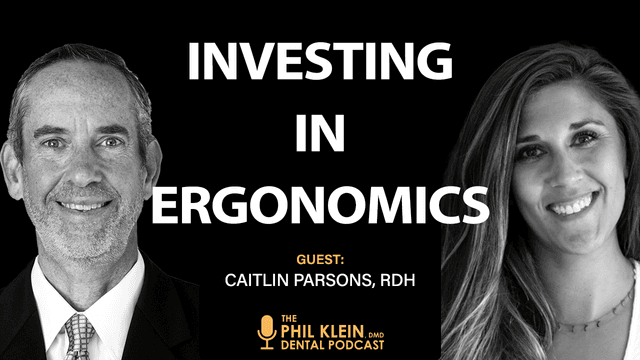
With 15 years under her belt as a practicing Dental Hygienist, Caitlin Parsons is the proud founder of The Aligned Hygienist. Her struggle with pain transformed into her driving purpose, fueling Caitlin's dedication to the well-being of dental professionals. As a public speaker, writer, and the host of The Aligned Hygienist Podcast, she actively share her insights and experiences. Furthermore, as a Key Opinion Leader, content creator, influencer, and ergonomics advisor for dental products and brands, Caitlin continues to advocate for the health and well-being of dental professionals everywhere.
Why are 97% of dental professionals experiencing musculoskeletal pain during their careers? The answer often lies in ergonomics mistakes we make every single day in the operatory.
Caitlin Parsons is a registered dental hygienist with 15 years of clinical experience who transformed her own struggle with career-threatening pain into expertise in dental ergonomics. As founder of The Aligned Hygienist, host of The Aligned Hygienist Podcast, and an ergonomics advisor for dental products and brands, she helps dental professionals protect their bodies and prevent burnout through evidence-based wellness strategies. Her public speaking, writing, and consulting work has made her a recognized key opinion leader in dental ergonomics.
This conversation reveals the hidden physical toll of dental practice and provides actionable solutions. Parsons explains how sitting in a traditional 90-degree operator chair adds 40% more pressure to the spine, while leaning forward increases that pressure by 90%. She addresses the widespread problems of forward head posture, spinal twisting, and improper patient positioning that plague dental operatories. The discussion covers both immediate changes teams can implement and long-term strategies for creating a culture of wellness that supports clinician health and practice success.
Episode Highlights:
Traditional operator chairs create 40% more spinal pressure than standing, with forward leaning postures increasing disc pressure by 90%. Saddle stools offer a sit-stand orientation that maintains neutral hip positioning and reduces hip flexor constriction, though proper fitting and a learning period are essential for successful adoption.
Patient positioning errors significantly impact clinician ergonomics, with maxillary procedures requiring fully supine positioning and mandibular work needing semi-supine positioning with downward chin tilt. Patients positioned too high force clinicians to raise shoulders or flare elbows outward, creating musculoskeletal strain patterns.
Ergonomic loupes allow clinicians to maintain neutral neck alignment while providing clear visualization, eliminating the need for neck flexion that was previously considered acceptable at 20 degrees. These devices require an adjustment period but significantly reduce cervical spine stress during patient care.
Chairside stretching and breathing exercises between patients serve dual purposes of rebalancing muscle tension and providing nervous system reset opportunities. Simple 10-30 second interventions can reverse sitting-induced hip flexor tightness and restore circulation while improving mental focus for subsequent patients.
Comprehensive ergonomic assessments should address both workplace modifications and individual strengthening programs, as stretching alone without correcting daily ergonomic habits creates a cycle where improvements are constantly undermined. Successful interventions require balancing tight overused muscles with strengthening weak underused muscle groups.
Perfect for: dental hygienists, general dentists, dental assistants, practice owners, and dental students who want to prevent career-ending injuries and create healthier work environments. Essential listening for anyone experiencing neck, back, or shoulder pain from clinical practice.
Discover how small ergonomic changes can transform your career longevity and daily comfort in the operatory.
Transcript
Read Full Transcript
This transcript was automatically generated and may contain errors or inaccuracies. It is provided for reference and accessibility purposes and may not represent the exact words spoken.
When we translate that to sitting in a 90 degree angle, a traditional operator chair,
it adds 40% more pressure to the spine. And then if we're leaning forward or rounding forward,
it adds 90% more pressure to the spine. And then for so many of us,
we're not symmetrical when we're working. We might lean to one side and that can cause an imbalance
in the body as well.
Welcome to the Phil Klein Dental Podcast. On today's episode, we're talking about a topic every
dental professional deals with, ergonomics. Our guest, Caitlin Parsons, is a registered dental
hygienist who's experienced firsthand the neck, shoulder, and back pain that comes from poor
posture in the operatory. Now she helps dental professionals protect their bodies, prevent burnout,
and stay strong for the long haul. We cover why ergonomics matters, what sitting all day does to
your body, and practical changes you can make right now, from stretches and tools to daily habits
that actually work. And yes, we even asked her about that 4 p.m. cup of coffee. Caitlin loves it,
but she also shares smarter ways to boost your energy that last way longer. So whether you're a
dentist, hygienist, or assistant, This episode is all about staying healthy, focused, and pain
-free. Before we bring in our guest, I do want to say that if you're enjoying these episodes and
want to support the show, please follow us on Apple Podcasts or Spotify. You'll be the first to
know about our new releases, and our entire production team will really appreciate it. Caitlin,
thanks for being on the show. Thank you so much for having me. I'm excited to be here. Yeah, we're
very happy to talk to you today because the topic is really super important for everybody,
everybody that functions in the dental profession. So tell us why it's so important, even though it
seems obvious. Tell us why, in your opinion, you're an expert on this, and tell us some of the
common mistakes you see that we're making across the board as clinicians. Ergonomics is so
important, and I feel like it became more of a conversation during covid or i don't know when it
was but i'm really glad because we know that working in dentistry is not easy it's physically
mentally and emotionally draining and on the physical side Musculoskeletal disorders are really,
really high in dentistry. There's one report that shows that 97% of dental professionals report
experiencing pain in their careers. That is huge, right? And so we really want to think about the
way that we are working and how we can optimize the way that we work. So some of the common things
that... see or i see in dentistry mistakes that we make are forward head posture or forward head
carriage, right? Looking down at our patients and that neck flexion of looking down at our
patients, we used to think 20 degrees of looking down was actually where we wanted to be.
But we know now that that is putting so much more strain on our neck, our shoulders,
our spine in general, and can lead to a whole host of things if we're doing that for our entire
careers. We see a lot of, I see a lot of people twist spines either during clinical care usually
and this can be I see it a lot with hygienists and assistants working at like a seven o'clock
position where we're twisted in one direction for the majority of the day this is also if you have
a rear delivery system and you're constantly twisting back that repetitive motion leaning forward
and rounding forward to reach our patients and see inside of the mouth.
And then one big error that I see is just how we're positioning our patients for the tooth or the
area of the mouth that we're working on. Yeah, and tell us about that. Tell us about how we do
that. What does the positioning of the patient look like where the operator is at risk of poor
ergonomic positioning? Yeah. I see a lot of either the patient too high,
and when the patient is too high for the clinician, either our shoulders rise up so our hands can
be in the mouth, or most commonly we see the elbows out to the side so we can put our hands in the
mouth. Typically, when we're working in the mouth on the maxillary arch,
so the top, we want the patient to be fully flat or supine. And then...
needed, using either a head pillow or depending on the headrest of our chair, lifting that headrest
or lifting the chin upward slightly. And then for the mandibular arch. the patient's going to be
semi-supine positioned, so a little bit higher and chin tilted downward. And of course,
this is a generalization. Every patient is not going to be able to get back to a fully supine
position. We know that and not every patient wants to. So sometimes that can be a challenge, but
making sure that for the majority of patients, the majority of the day, that's where we're
positioning our patients. And then having our patients, again, using a pillow or just having our
patients lift, lower, turn their head side to side so we're not doing the movement on our bodies.
Do you see these as widespread issues among dental clinicians where, for the most part,
they're not following these recommendations? Yeah, I see, I feel like for hygienists especially,
we tend to be we want the patient not the dentists don't want this but um we want our patients to
be comfortable no matter where you are in dentistry so we feel bad if we're asking them to move
throughout the appointment or we're assuming that they can't go back a certain way And then it's
also that we get busy, right? And if it's not ingrained in our memory and it's not a habit,
when we're busy, we just put that patient back and we just contort our body to work inside of the
mouth. We'll be right back with our guest, but first, I want to tell you about VOCO's newest
composite, Grandioso 4U. Top clinicians are calling it the most tooth-like universal composite
ever made. Unlike traditional composites that force you to choose between either an anterior
aesthetic composite, a stronger layering posterior composite, or a fast but aesthetic compromising
bulk fill, Grandioso 4U does it all, simplifying your workflow while delivering superior results in
a single material. It cures 4mm in just 10 seconds, looks stunning with 5 cluster shades covering
all 16 Vita shades, and handles like a dream with 50% less resin.
It's a 91% filled nano hybrid, giving you tooth-like strength, ultra-low shrinkage,
exceptional wear resistance, and an amalgam-like high radio opacity. So as they say,
seeing is believing. So grab your free sample of Grandioso for you today at voco.dental.
More and more I'm hearing about standing up while treating patients, or at least doing a
combination, a hybrid approach. Can you explain the science behind sitting? Like what actually
happens? to the body during long procedures or extended chair time? What's happening to our body
during that sitting period? Yeah, sitting is one of the biggest issues for us in dentistry.
I actually studied this quite a bit. I wrote a thesis paper on sitting and the adverse effects of
sitting. So it's something that I'm passionate about. It's been described in studies as the new
smoking because of its physical effects on the body. We know musculoskeletal wise,
but also systemically when we're sitting. especially a 90 degree traditional operator chair for
long periods of time, that puts a lot more pressure on our spine and the discs between our spine.
So there's one image that I love showing in my classes that if we're standing just in a neutral
posture position, there's 100% even pressure on the discs of our spine. When we translate that to
sitting in a 90 degree angle, a traditional operator chair, it adds 40%.
pressure to the spine. And then if we're leaning forward or rounding forward,
it adds 90% more pressure to the spine. And then for so many of us,
we're not symmetrical when we're working, we might lean to one side. And that can cause an
imbalance in the body as well. Most of us, Caitlin, are in the sitting position while we're
delivering clinical care. So I assume it'd be good to get up. stand up straight, stretch that back
out and try to decompress because apparently we're getting a lot of disc compression from extended
periods of sitting. Yeah, there's less pressure on our spine when we're standing, but one of the
things with sitting is it can tighten the hip flexor muscles, weakens our glutes,
our core is typically not activated, where when we're standing, we can... activate that a bit more
and we don't have that shortening of our hip flexors and our hip flexors are attached by tissue to
our low back so if our hip flexors from sitting are really really tight that can actually pull on
the vertebrae or the muscles of the low back and cause or worsen pain so blood flow circulation
we're not getting that normal blood flow that we would have so I highly recommend standing or
alternating standing and sitting, making sure that especially if, because there's certain
procedures, most of us probably feel more comfortable sitting during, but making sure that you're
getting up, you're taking breaks, you're walking around, you're doing stretches to reverse the
effects from sitting. So that would help if the clinician could do some treatments in the operatory
where they're standing. But that would require a chair to be raised up pretty high. Some of the
chairs can do that, but not all of them. And of course, it also depends on how tall the clinician
is. I'm 5'8", and I've never had that issue. But I'm sure for tall dentists or hygienists,
that's one problem. I think they should all go up high enough that we can stand.
that's why i mean saddle stools are a great option for dental professionals because it's really a
sit stand orientation so our hips are more in a neutral position if if the saddle stool fits us
properly um and we have less constriction of our hip flexors.
So we don't have that issue. And we can get a lot closer to our patient so we're not leaning
forward or rounding forward to see inside of the mouth. I always found it interesting about saddle
stools. You hear from dentists who love them, hygienists the same, but then there are some
clinicians that just can't. get comfortable on those stools. And after a while ago,
this just ain't for me. I can't spend my day in this thing. Why is it work for some people so well
and others? It's just not the right fit. I have a few thoughts. One, we want to find and use saddle
stools that support our individual body. So getting a saddle stool just from Amazon or online
without trying it out, it might work for some of us, but if it's not designed to support us and our
body, it's really the positioning of our sit bones that we want to, that's how we figure out what
saddle stool works for us. So for some people, a saddle stool might just never feel good.
So of course, during the day and at the end of the day, it does not feel good to be on it long if
it's not meant for you. But more than that, or outside of that, if we're going from a traditional
seated 90 degree angle chair to a saddle stool, Just like going to the gym and working those
muscles, we are working new muscles. Our body is not used to being in that position.
So it takes time to build that muscle memory, to build that strength to sit up properly.
So if you have a chair that fits and supports you, it generally feels good. You're not getting pain
or pinching or numbness anywhere. And it's positioned properly for you as well.
It can take... mean, I got used to mine really quickly, not to say I wasn't a little bit sore at
the end of my day because my muscles weren't used to it. But we should be used to it in a few weeks
time. But there should never be sharp acute pain. And how do you get the right saddle stool for
yourself when you're ordering it? You can't like have the company send you a couple of samples,
right? I mean, these are chairs. How do you do that? Yeah, I really recommend getting one that's
made for dental. So that's the first thing. If you can go to a dental convention in your area that
has saddle stools that you can literally try them all out. That is, I think,
the best way. You can, there are a lot of companies. I know like crown seating is,
I use crown seating. I love their saddle stools. They have multiple different versions for
different sizes and shapes, which I think is important. You get those through a distributor.
So Henry Schein, Patterson, all of that. And usually you can get a couple of different saddle
stools sent to you through your distributor to try. So in addition to the saddle stool
recommendation, what are some practical changes or adjustments dental teams can make immediately,
right after listening to this podcast, to improve ergonomics in their operatories? We'll be right
back to our guest in a second. But first, when it comes to chairside milling and same-day crowns
and bridges, speed usually means compromise, but not anymore. Katana 1 Speed by Curare is a major
breakthrough in Zirconia CAD CAM blocks. It allows sintering in as little as 9 minutes without
sacrificing strength, fit, or aesthetics. That means faster turnaround, true same-day
possibilities, and less downtime in your lab or practice. With the unparalleled flexural strength
and aesthetics Katana is known for, you get predictable clinical outcomes and the ultimate in
patient satisfaction. The bottom line is, efficiency matters. and stunning beauty is non
-negotiable. And Katana One Speed delivers both. Join the growing number of dental offices and labs
embracing faster workflows without compromise. Learn more about Katana One Speed at curaredental
.com. Number one is to make sure that the room is set up for you and your body.
So that's the patient chair. I'm a left-handed practitioner, so almost every room I go into,
I have to twist or pivot the patient chair so that I can get to the areas of the chair that I work
in. But making sure that everything that you're using during the patient appointment,
your handpieces, your suction, your instruments, are within arm's reach. So you're not bending,
rounding, reaching. That's number one. As we talked about before,
our patient positioning and our positioning is really important. Using indirect vision,
and I highly recommend, I'm a big ergonomic loop girl, highly recommend them.
Are these the loops where you look straight ahead and there's a mirror in there that reflects down?
The audience can't see, but you're nodding your head. What are we, some choices? Do you have any
recommendations? Yeah, so ergonomic loops allow us to be in alignment. So our head.
we're not doing that neck flexion I talked about before and looking down. It's actually a little
bit of a trip when you first use them, but you are looking. forward, but seeing down inside of the
patient's mouth. This also can be a learning curve, especially if you've been in dentistry for a
bit. Our first instinct is just to look down. So I do recommend if you get them to try them on at
home to, I mean, men aren't going to be painting their nails, but do moving rice with chopsticks,
like getting used to that movement and that orientation. uh a few there's a lot of companies that
make them just like with saddle stools i recommend trying them out understanding their warranties,
understanding their customer service, because many clinicians, if you've had to exchange your loops
or something goes on with them, you want support that is going to be there and make that
transaction easy. I use Andow Medical. I love them.
They're the lightest weight loops on the market. They have a wide field of view. So I have 5.0s as
a hygienist in magnification, but I can see almost the entire mouth while I'm working on a patient.
But every company is going to be different a little bit in their magnification, in their depth of
field, field of view. But Andow Medical, Lumadent makes great ones.
I know Oriscoptic has them, Qoptics. but again trying them on seeing how it feels asking about you
know their warranty what happens if something comes up and i need a replacement or these don't fit
making sure that some you know you're supported after the purchase Yeah,
and technical support and just regular support where you can actually call somebody is something
that has to be considered because get it on Amazon, then you really don't have assurances that
there's going to be someone there to help you in case you need to get some technical support. So
let me ask you this, Caitlin. We're talking about ergonomics and mistakes that we've talked about
in this episode that clinicians routinely make in their daily practice of dentistry. If I'm a team
member in a bigger office and there's a bunch of people... working in their respective operatories,
and I see something that's egregiously wrong or incorrect with their posture, the way they're
moving in their operatory, reaching for things, bending, rounding, as you mentioned, these kinds of
things. What's the best way to communicate these mistakes to my colleagues? Should I take photos of
them while they're doing it and then say, hey, take a look at this and pursue the conversation that
way? What are some of the ways we can help our colleagues get out of these bad habits once we
identify them? Yeah, I think that's a great question. And one just really simple thing is opening
up the lines of communication. Hey, I noticed that you've been talking about having pain or I
noticed that you keep reaching or twisting during this one thing or I'm,
you know, just having communication, taking photos and videos either of yourself while you're.
Doing patient care or having someone else on the team is a great way to see what you're actually
doing versus what we think we might be doing and to make changes. Supporting each other,
just having that environment, that culture of wellness that we can have that.
dialogue with each other. Starting the day, if you have team meetings, doing a quick breathing
exercise or doing a stretch routine, it could take literally 30 seconds to do it together.
And that starts the day on a very different note. Having continuing education courses around
ergonomics and working together on it. Having team meetings around this kind of stuff.
Having a chart in your office in the break room with different stretches. bringing in someone to
teach yoga. Like there are so many things that we could do that don't cost money, like you said,
to support each other. But communication is one of the biggest things. And just whether you're the
dentist and the practice owner or someone on the team talking about an employee, just being
compassionate and caring about them is, I think, one of the most important things. Yeah,
now you talk a lot about stretching. Is that something that you recommend the team members do?
throughout the day? And what kind of stretches? I mean, is that really significant? That makes a
big difference, doesn't it? I think it does for multiple reasons. So especially if we're sitting,
but even if we're talking about standing, when we are looking down at our patients or in one
position for a long period of time, we want... to get the blood flowing and especially if we're
sitting and we know the adverse effects from sitting right tightness in the chest the hips weakness
in all these areas or if we're sitting or standing and leaning to one side which i see you're
tilting our head and we have that imbalance we can use a yoga practice or different stretches
between patients to rebalance our body to get the circulation moving to reduce of course air of
aches or pain or tightness in the body. But then it also for us as clinicians in a practice that is
go, go, go all the time, that is also our opportunity to like pause, even if it's for 10 seconds,
for 30 seconds to just pause, to be in our bodies, to listen to what's going on and to sort of
regroup and rebalance our nervous system. And that is, I think something so important that then we
can show up for the next patient and we're. lot more present we're feeling a lot better we're not
carrying the physical or mental stress from the patient before yeah yeah no that's good um do you
have a website where you can download some stretching uh yeah what is that My website is the
aligned hygienist.com. I have a ton of free resources either on my website. I share on Instagram,
also the aligned hygienist. I have a chair side guide that is different stretches.
And then I have this wellness guide with chair side stretches and ergonomic checklist. So if you're
looking to adjust your ergonomics, not sure where to start, that's a great tool.
And it also has different breathing exercises, really simple things that. we can implement chair
side. And you also go to dental offices as a consultant I know and you do a full ergonomic
assessment of the practice. Yeah, I mean, I work with individual clinicians and I'll go in and do
an ergonomic assessment when they're with patients. But I do love going in and supporting the
entire team. So usually my kind of base package is going in for a day,
starting when they start before patient care, ideally in a team meeting if they have one. And I'm
there throughout the day. I go to every clinician. I go to the assistants, even the front office
and do a full ergonomic assessment. everyone on the team it's not required but recommended to fill
out a form before so i know a little bit of what's going on are there areas of pain what are you
struggling with um so we can fine tune and address those things but then we do a ce at lunchtime or
sometimes offices will opt to do a yoga class or a yoga class at the end of the day um but
typically there for an entire day, depending on how big the team is. And everyone after that gets a
full ergonomic and wellness assessment from me. They also get a few other things, continuing
education. But doing it together, like we talked about before, that creates a culture of wellness
that then it's not just on the leader. Everyone else can, hey, I remember. She said that you had
to, you know, stop doing X, Y, and Z and hold each other accountable through those changes.
I think that it's very important for employee retention to focus on this kind of thing.
Again, as I mentioned earlier in the program, or maybe it was another podcast we did together,
can't keep track of these anymore. There's a shortage of dental hygienists, there's a shortage of
assistance. And when you have someone really good, and I'm talking for a dental practice owner, you
want to hold on to them. I mean, you want to hold on to them because, you know, they could go to
another practice. And if there's another practice that has a culture where they emphasize and
prioritize ergonomics and clinician wellness, you're going to lose some really good people to that
other office. So having someone come in like yourself, Caitlin, says something about the practice
besides all the benefit. that it provides in and of itself. It says something about the culture and
the practice, which I think dentists have to keep an eye on. So we talked about things we could do,
Caitlin, in this episode about preventing some of the ramifications of poor ergonomic posture and
layout in the dental practice. But when a clinician is in the throes of the condition, they're
actually experiencing pain and discomfort in their back, in their shoulders, in their wrist
throughout the day. What steps... can they take to start reversing the damage before it gets out of
hand? Trying to get to the root cause of what's going on and nip that in the bud.
And then I'm big on finding balance in the body. So if we have neck pain and a big part of it is
because we're looking down at our patients all day, we really want to find a balance of...
stretching the tight overused muscles and strengthening the weak underused muscles to bring our
body back into balance. What about a physical therapist for those that don't feel they have the
knowledge to actually do this on their own? I mean, they can watch a YouTube video and their
friends could show them how to do certain things. But when it comes to their career and it's
jeopardizing the way they practice, when is it time? to say i need to look into a physical
therapist to get me better yeah that's a good question everyone's going to be different on that but
if you're trying different youtube videos or you're going to these classes and nothing is changing
or it's not going away i highly recommend seeing a doctor if you need to getting an x-ray um i I
saw a physical therapist for my neck at one point. I am personally trained as a yoga therapist. I
describe it as physical therapy meets yoga. So this is a lot of the work I do, but getting one-on
-one support from someone, A, who knows the body and is a specialist,
of course, but who understands the work we do in dentistry so they can help you to keep improving.
But if things aren't going away and if not, it's getting worse and you have not had it checked out,
you don't know. what's going on, that is definitely going to be the first step. So you're a yoga
instructor, Caitlin, and obviously, you know, as well as anybody that yoga involves a great deal of
stretching and flexibility. You're also very much involved in strengthening, using bands,
weights, whatever you do. And that's really important to prevent injuries and stay strong and
flexible. And when you do have a problem because of poor ergonomics in the operatory, it helps you
get better to some extent if you're under the right regimen. But I think it's important to note
that even if you're doing this rigorously, stretching and strengthening, but you're still doing the
same bad ergonomic habits in the operatory, you're kind of on a cycle, a hamster's wheel that's
never going to really resolve itself. So many things I want to touch on in there. So at the
beginning of my hygiene career, when I was in pain, reached burnout, started yoga.
aware of my ergonomics or anything about that I just focused on stretching and strengthening my
body and my pain reduced drastically so I think there's a huge piece at what we do outside of the
op that makes a big difference I also think that if we're doing all of the things like stretching
and strengthening and we're not addressing what we're doing every day all day in the op we're
missing a huge piece and vice versa Me as a yoga therapist, I actually work more on finding that
balance. Like I said, yes, it's stretching, but it's also strengthening practices. I use bands. I
have them use their body weight, doing different exercises to, again, build better stability in the
body. But not every yoga class and yoga teacher is going to be focused on that. Some of it can be
just stretching. And I think if we're just stretching or just strengthening. Depending on our body,
we're missing a huge piece. I think I would have done a lot better in my career as an endodontist
if there was some program in dental school. Someone hired like you teaching us,
even for a short period of time, even if it was a couple of months. I know the dental curriculum is
so packed in dental schools. There's no room for any of this stuff. But it makes sense to have this
kind of education early on before you actually get out. If all the dental student would remember is
how important it is. to maintain good ergonomics and what the ramifications are if you don't,
and the importance of wellness, stretching, and strengthening. All this stuff just hammered into
our heads at least for a couple of months. I think that would be a huge benefit to the dental
student as they embark on this kind of difficult career. So as we wrap up this podcast,
Caitlin, I do want to ask you, in your opinion, and your experience with this, how do you think
improving ergonomics translate directly into becoming a better, more focused clinician?
Yeah, I have a lot of experience in this department. especially personally i think that when first
of all when we understand ergonomics and we dial our room setup like we have that all dialed in for
the most part and it can take time but when our ergonomics is pretty good not to say it's perfect
we're not striving for perfection but we're pretty good we have first of all our body is in a
better position for the majority of the day which means when our body is in a better position where
our muscles and our body are working more efficiently and more effectively which means that we have
less less to recover from at the end of the day or the end of the week when we have good ergonomics
and our physical health we're not constantly worried about pain the entire time we have more mental
stamina we have more capacity for our patients we have more energy throughout the day and
throughout our patient care patient appointments we can be more focused we can be more excited more
driven more motivated to take care of our patients. That's very true. I got to ask you this before
we wrap it up because I'm a big coffee drinker. I love coffee. Now, you know, when I was practicing
at four o'clock and I had another patient, you know, I would start another pot of coffee and rely
on that to give me that extra boost to get through that last patient. Do you drink coffee as
someone who's like a super expert on all this mind, body, energy stuff? What do you think of
coffee? uh coffee drinker to coffee drinker i love my coffee um this is something that i have a not
a constant battle with but um I love the taste of it. I love the little ritual of it.
I love the energy from it. So if I could and it didn't have any effects on me,
I would choose coffee at four o'clock. But I highly recommend finding our own energy in our own
body. So whether that's getting up and doing a few stretches, there are so many breathing exercises
that are super simple. We can do chair side that take less than a minute that literally energizes
our system. increase the sympathetic nervous system, vice versa.
There's some that can calm us down, but finding that energy within, whether it's even going on a
five minute walk around the office or outside or. We're doing jumping jacks, right?
Kind of harboring our own inner energy is going to be so much better for us than the spike of
coffee and then the downhill after that. You got a lot of discipline there, Caitlin. Not all the
time. Yeah, I know. All the things you talked about sound great, but they don't taste as good as a
really good hot cup of coffee with a little half and half in it. But listen. We balance our lives,
right? We keep everything in perspective. Great stuff. Thank you so much. And if you want to reach
Caitlin as far as getting her free stuff or go further than that and get some consulting,
remind us of the website. It's thealignedhygienist.com. You can pretty much find me anywhere,
The Aligned Hygienist. Right. And you can Google Caitlin Parsons, P-A-R-S-O-N-S.
Caitlin is C-A-I-T-L-I-N, and that's the aligned with E-D after aligned,
thealignedhygienist.com. Caitlin, thank you very much for your time. We really appreciate your
contributions to Viva Learning, and we'll see you soon. Thank you.
Clinical Keywords
Caitlin ParsonsDr. Phil Kleindental ergonomicsdental hygienesaddle stoolsergonomic loupesmusculoskeletal disordersforward head posturepatient positioningspinal pressurehip flexor muscleschairside stretchingdental wellnessoperator chairscervical spinedisc compressionAndow MedicalLumadentOriscopticQopticsCrown Seatingyoga therapyphysical therapydental podcastdental educationworkplace ergonomicsclinician health