General Dentist & Dental Technology Expert · SUNY Buffalo School of Dental Medicine
SUNY Buffalo School of Dental Medicine · Academy of Laser Dentistry · American Dental Association Standards Committee on Dental Informatics · The Journal of Practical Hygiene · The Journal of Practical Procedures & Aesthetic Dentistry · The Journal of the Academy of Laser Dentistry
Read full bio
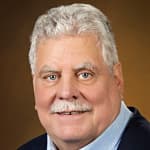
Dr. Scott Benjamin is a native of the Tri-County area and is a graduate of SUNY Buffalo, School of Dental Medicine and has been in full-time private practice in the Tri-Town Area for over 25 years. He has been a leader in computerized dental practice management since its' infancy. Dr. Benjamin has presented internationally at major dental meetings, universities, workshops, study clubs, and user meetings and has published more than 100 articles on dental technology in over a dozen publications on topics ranging from computerization, and the Internet to micro air abrasion, diagnostic modalities, and lasers. Dr. Benjamin is presently the Technology Editor of "The Journal of Practical Hygiene" (JPH), the Section Editor of Advanced Technologies for "The Journal of Practical Procedures & Aesthetic Dentistry" (PPAD), and is on the editorial board of "The Journal of the Academy of Laser Dentistry" (JALD). Dr. Benjamin has been appointed as a member of the Presidential Task Force on the National Healthcare Information Network (NHIN). He is also a member of ADA Standards Committee on Dental Informatics (ADA-SCDI), and is the Working Group Chair for three sub committees: Data Redundancy, Archiving, and Storage; Digital Photography and Imaging; and The Electronic Patient Dental Record. He is also a member of the ADA Standards Committee on Dental Products (ADA-SCDP) and is on the Board of Directors for the Academy of Laser Dentistry (ALD), a member of the National Dental Electronic Data Interchange Council (NDEDIC) Board of Trustees, President of the Tri-County Dental Society and Vice-President of the Sixth District Dental Society of the New York State Dental Association (NYSDA). Dr. Benjamin also is a Visiting Professor at the SUNY at Buffalo School of Dental Medicine, participated in the World Health Organization's (WHO) Collaborating Centre for Oral Cancer and Precancer 2005 Closed Session Working Group on "Potentially Malignant Oral Mucosal Lesions and Conditions Terminology; Classification; Diagnosis and Prognosis". Dr. Benjamin's interest in technology and advancing computerization in dentistry began with his first practice management system, in the early 1980's, and was instrumental in the development and implementation of electronic insurance submittals, in the mid 1980's while serving as an advisor to several dental technologies companies, and is continuing to assist in the progression of digital electronic patient records into mainstream dentistry. His interest continues today on a much broader scale with his involvement in the development of clinical screening, diagnostic, and treatment modalities and incorporating the appropriate utilization of advanced technologies into the everyday clinical dental practice. Dr. Benjamin is a consultant and advisor for many dental practices and several dental technology companies utilizing his expertise in clinical dentistry, digital radiography, imaging, practice management, dental computerization, and workflow.
Could practicing dentistry in rural America offer the quality of life and professional fulfillment you've been seeking? As more dentists consider leaving crowded urban markets for small-town practice, understanding the realities of rural dentistry becomes essential.
Dr. Scott Benjamin brings over 45 years of experience practicing in Sydney, New York, a community of fewer than 3,000 people. He is a graduate of SUNY Buffalo School of Dental Medicine, internationally recognized authority on dental lasers and advanced dental technologies, Technology Editor of The Journal of Practical Hygiene, Section Editor for The Journal of Practical Procedures & Aesthetic Dentistry, and serves on the editorial board of The Journal of the Academy of Laser Dentistry. Dr. Benjamin holds faculty appointments at several universities, serves as chairman of the ADA Standards Committee Working Group on Dental Lasers, and is a past president of the Academy of Laser Dentistry. He is also a member of the ADA Standards Committee on Dental Informatics and serves on multiple working groups including Data Redundancy, Digital Photography and Imaging, and The Electronic Patient Dental Record.
This episode explores the unique challenges and rewards of rural dental practice, from expanded clinical scope to intimate patient relationships. Dr. Benjamin discusses how rural practitioners often perform the full spectrum of dentistry—from implant placement to molar endodontics—due to limited specialist access, and how this broader scope enhances both clinical skills and job satisfaction. The conversation reveals how rural practice dynamics, patient expectations, and practice economics differ significantly from urban settings.
Episode Highlights:
Rural general practitioners commonly perform molar endodontics, implant dentistry, and complex restorative procedures that urban dentists typically refer to specialists. This expanded scope develops because patients often face 30-60 mile drives to reach specialists, making comprehensive care more practical and necessary.
Laser-assisted endodontic procedures enable rural practitioners to achieve complete decontamination and successful outcomes in complex cases. Dr. Benjamin utilizes approximately twelve different laser wavelengths in his practice, allowing him to confidently treat cases he previously would have referred or extracted.
Rural dental practices typically require zero marketing budgets, relying entirely on word-of-mouth referrals and community reputation. Patient acquisition occurs naturally through established community relationships, with practitioners often treating multiple generations of the same families over decades.
Cost of living advantages in rural areas can result in equal or higher net income compared to urban practices, despite potentially lower gross revenues. Reduced overhead from lower rent, minimal marketing costs, and community-based referral systems offset any income differences from urban markets.
Many rural dental practices face closure due to retirement without succession planning, creating significant opportunities for new practitioners. Practice transitions often focus on patient care continuity rather than maximizing sale price, presenting unique acquisition opportunities for dentists seeking rural practice.
Perfect for: General dentists considering practice location options, recent dental school graduates exploring career paths, urban practitioners seeking lifestyle changes, and dental professionals interested in expanding their clinical scope and developing comprehensive treatment skills.
Discover how rural dentistry could transform both your professional practice and personal quality of life.
Transcript
Read Full Transcript
This transcript was automatically generated and may contain errors or inaccuracies. It is provided for reference and accessibility purposes and may not represent the exact words spoken.
You're listening to the Phil Klein Dental Podcast.
Have you ever thought about practicing dentistry in a rural area? If you've always been a country
person and love the outdoors, nature, and fresh air, and not particularly thrilled with life in the
big city, then working as a dentist in a rural area may be a great place to start. and build your
practice. However, if you're accustomed to urban living and presently reside in a densely populated
city, the transition to a remote small town, far removed from the bustling city life,
would entail a significant lifestyle shift. But nevertheless, there are urban dentists that are
exploring this option. In this episode, we'll take a closer look at what it means to practice
dentistry in rural America. Our guest is Dr. Scott Benjamin, who is in private practice in rural
upstate New York and is an internationally recognized authority on dental lasers and advanced
dental technologies. Dr. Benjamin has faculty appointments at several universities, is the chairman
of the ADA Standards Committee Working Group on Dental Lasers, and is a past president of the
Academy of Laser Dentistry. He currently serves on the editorial board for several prestigious
dental journals. Dr. Benjamin will be joining us in a second, but first, are you looking for an air
-driven handpiece that rivals the power and torque of electric? Well, I have good news. It's
finally here. It's called the TMAC-Z, and it's from NSK, a company we all know and trust as a
world leader in dental handpieces. In addition to being lightweight and ergonomic, this
revolutionary air-driven handpiece delivers unprecedented 44 watts of power, allowing it to cut
through tough zirconia smoothly and quickly. In fact, the TMac-Z reduces overall cutting time by
30%. That means less chair time, reducing the burden on you and your patient.
Take a test drive of the TMAX Z air-driven handpiece from NSK. For a free 10-day trial,
go to nskdental.com and find your local rep to inquire. Experience the power and excitement of the
TMAX Z series. Dr. Benjamin, good to see you again, and thanks for being on the show. Well, thank
you very much, Phil, for the invitation. It's always a pleasure to have the opportunity to talk to
my colleagues. So to begin, can you provide our listeners with a clearer understanding of what
constitutes a rural area in the context of dentistry? Kind of a loaded question.
Yeah, it is sort of a loaded question. I oftentimes refer to... You know,
rural dentistry or rural practices is sort of like beauty. It's in the eyes of the beholder what a
person considers rural. You know, I practice in a very small town in upstate New York with a
population of less than 3,000 people. I have a second home out in the mountains of Colorado,
and it's very intriguing because when I'm out there, my friends I have in that area will ask me,
how do you like being here in a rural area? tell them that that's urban compared to where I
practice. So the idea of rural is literally how a clinician would define rural.
So you've been practicing in Sydney, New York for 35 years at this point? I hate saying it,
but 45. 45 years. Wow. Did you ever work in an urban area before? I worked in,
I'm going to call it a moderate-sized city of about 60,000 people for a few months after I
graduated. which was, again, 40 miles from where I presently live.
And I live on a very small lake that I grew up on. And so one of the things we find very commonly
with rural practices is that the majority of dentists that practice in the rural area are people
that actually grew up in the area where they're practicing. Rural areas oftentimes don't have and
oftentimes refer to as the window dressing of a big city. people don't see the beauty of the area
because the beauty isn't just the village, but it's the surrounding area, the mountains, you know,
the attitude. World practices are much more laid back than a city practice.
I'm on a first-name basis with my patients and my staff, and it's a very casual environment.
And, you know, what drew me to this area was the fact that this is where I literally grew up and,
you know, going back home to my community. The one thing I've noticed since the pandemic is we are
seeing more and more people wanting to move out of the city and into these rural areas such as I
am. I'm about three hours from New York City, three hours from Rochester, four or five hours from
Boston. I speak at Tufts on an annual basis. And it's very intriguing because new patients will
come into my practice. And I'm not sure what they're expecting, but they get very surprised because
they say, you are more modern than up to date than the people I was seeing in the big cities.
That's interesting. So how does the clinical scope in rural practice differ from urban settings?
And how does it influence a dentist's skill set? One of the disadvantages or advantages, depending
on how you want to describe it, is a GP dentist, a general practitioner in a rural area.
We'll do the gamut of dentistry, everything from implant dentistry to basic education to routine
restorative care. You know, when you start trying to refer people to specialists,
oftentimes it means an entire day off of work because they've got to commute, you know, 30,
40, 50, 60 miles or more to get to a specialist. When I graduated from dental school,
I vowed I would never do molar endo again in my life. And now I find myself doing molar endo on a
daily basis and literally enjoying it. But having the right skill set and the technology of
learning how to do all these things becomes very, very important. In a rural area,
you have a much closer relationship with your patients. I have patients that have literally been in
my practice since the day I started.
unique things about practicing in the same area for all these years, I'm now seeing grandchildren
of people that I treated when they were in high school. That continuity of care is something that's
extremely important to rural patients as far as also to rural dentists.
We have an implied trust and confidence from our patients when they walk in the door because we're
not a stranger to the area. It's very rare that I'll have a patient come through the door that
knows minimal to nothing about me. I literally, most rural practices do zero to no marketing.
Because we don't need to. So for sure, Dr. Benjamin, rural dentistry differs in many ways from
urban dentistry. But one thing I can see that's a very glaring difference is the fact that if a
patient is not happy with a dentist in an urban office, they could shop around for a new dentist
and go to a dentist down the block or in the same building for that matter. But it's very different
where you work, where you have your practice. So if a patient is unhappy with a dentist in a very
remote area, you know, they can't shop around for another dentist down the block. So it's a
completely different type of thing there. So that plays a big role in the importance of maintaining
a good relationship with the patient, does it not? Practicing in a rural area is very, I'm going to
say, is very family oriented with the idea that if there is a conflict,
that usually it's very amenable and a resolution of always trying to do the right thing.
I started a boys and girls club in the small town back 25 years ago and literally working with a
contractor who is very well known in the area. You know, I asked him why he was.
is doing this. And I said, I grew up in an area where I spent a lot of time in the Boys and Girls
Club as a child. And he says, because it's the right thing to do. And when you practice with the
philosophy that you're always trying to do the right thing, patients understand it.
I would like to say every treatment we do is successful. Unfortunately, you and I both know that
we're never successful 100% of the time. But when we don't get to success is treating the patient
on a fair basis. of what would be the right thing, what is the right thing to do. And always
thinking of it from that point of view. And when patients have that understanding when they walk in
the door and you explain to them that, hey, we're going to be doing this procedure, what is the
long-term prognosis? I chuckle a lot with patients and they'll ask me, well, is this crown a
permanent restoration? And I said, well, the true definition of permanent is what it's going to be
in your mouth the day you die. Everything else that we do is provisional and it is designed to last
as long as both you, the patient, and we, the dental practice, take care of it.
So how do you see dentistry as far as dentists starting practices in rural areas?
Obviously that has to do with the fact that they were probably born and raised in a rural area.
That's where they feel comfortable. That's what happened in your life. Is there any... trend or
momentum of dentists leaving the big city because it certainly is happening uh outside of dentistry
just in regular life people are deciding to give up their apartments in manhattan move to more
rural areas get some land change their whole concept of the way they want to live their lives do
you see that happening in dentistry where dentists are making a transition from a big city and
moving out to rural areas We'll be right back to Dr. Benjamin in a moment,
but first, thanks to GC America, we're now able to incorporate all the advantages of glass ionomer
into a beautifully aesthetic, strong, long-lasting restoration. That's a great reason to try GC
Fuji Automix LC. You'll love the convenient automix delivery system and ergonomic dispenser.
which allows precise placement into the preparation. And GC Fuji Automix LC is bioactive,
allowing for a high rechargeable fluoride release, which is ideal for high caries risk patients.
And because it forms a chemical bond to tooth structure, even in the presence of saliva, there's no
need for etchant and adhesive bonding. This saves steps and is ideal for challenging patients where
access and isolation are difficult. And the small filler particles in the material allow for superb
polishability and excellent aesthetics. So when you're thinking glass ionomer for your clinical
cases, think GC America, a world leader in dental materials. To learn more,
visit gc.dental. Since the pandemic, the topic you just discussed is something that we're seeing
with patient flow in particular. of people wanting to get out of the high-rise apartments in the
metropolitan areas and move out to rural areas. And, you know, practitioners, and I find it a
little ironic because I basically live in an area that could be considered a resort area.
People will come here for weekend getaways from the city. And one of the comments they say, gee, I
wish I could live in an environment like this. And, you know, when I talk to clinicians, you know,
about that, and they say, well, gee, where do you get your patients from?
And I say, well, I draw patients from literally all over New York State and Pennsylvania. Your
ability to treat patients is, again, it builds on that.
And the word of mouth that you advertise that you have in a rural practice is the primary list.
I make the joke of my entire marketing budget consists of a sign out in front of my office,
a standard small shingle. and a lousy website that I wrote myself,
that's my entire marketing budget. I don't need to do that. But you ask a question, which is sort
of ironic, is that starting a practice in a small town, I think is sort of inappropriate.
Small towns, almost every small town is looking to have... Doctors come in and work with the
doctors that are there. The opportunities are there to actually build the practice from inside or
take over with a mentor in the practice. This is the idea of starting from scratch in a small town
can be done very easily, but really it's a matter of you don't need to because almost every small
town will have a clinician that is looking for help. So the opportunities are there.
I mean, one of the things that's happening in rural America presently, which is really unfortunate,
we're seeing many dentists get to the age of retirement and literally just closing their doors
because they can't find people that are willing to come in. And it's not that the practices are
being on sale for a huge price. You know, it's more like, again, the rural clinician is more
interested in having the family of patients that he's been treating being taken care of when they
get to the point of retirement. Well, let me ask you this. You're about my age.
We don't have to reveal our ages, but it's not a big deal. So you're at a point where you're not
that far away from saying, okay, I'm ready to call it quits, as sad as that might be. What are you
going to do? Do you have an associate that's going to take it over? Presently, I don't. And again,
it's something that I've been looking for. I get contacts all the time because of the nature of
what I do. As, gee, Scott, I'd like to come in and have you teach me how to do advanced dentistry.
You know, the lasers. Again, I have about a dozen different light wavelengths that we use in my
practice. And again, I add up not only the laser standard, but the imaging standard for the
American Dental Association. So I have people that I'd like you to come in for a couple of years,
then go back to the city. I'm not interested in that. I'm very interested in having somebody that's
coming in that's looking for a long-term process. It's the misconception that people in the
country are significantly different than the people in the cities. But there are market differences
between city patients and rural patients to some extent, right? The attitudes are different,
but the human body doesn't change. But the attitudes are different. Patients in small towns are
less demanding. They are very, very interested in care as far as health-related.
Cosmetics in rural areas is not a big issue. And the reason it's not a big issue is people are
happy and content with who they are and how they look. They're not trying to be somebody that
they're not. And so the idea of a high-end cosmetic aesthetic practice in a rural area,
high-end cosmetic dentistry is being done. But it's not a major push for the patients.
The patients are interested in how they can maintain their health appropriately. And so,
again, as I mentioned, almost every dentist in every rural area is looking to have somebody come in
to literally transition and to take over their practice. And we're seeing more and more practices
literally just closing the door and walking away. I mean, I get asked all the time, when are you
planning on retirement? And I said, look, I love what I do. I'm going to practice as long as I'm
physically able because I enjoy it. I look forward to going to work because of the relationship
with my patients, the relationship with my staff. You know, that's something that gives me
satisfaction. And I think many rural clinicians fall into that category. The old joke is if you
have a job you love, you'll never work a day in your life. And many of the rural clinicians will
fall into that category because they're treating people that are friends, are colleagues.
So they look forward to the interaction, and it's a time to literally catch up with people. Yeah,
but as these practices are starting to sell and nobody's buying them, and you say,
unfortunately, some of these dental practice owners are just walking away and closing the door, who
fills the gap there? You need a dentist to service those people. That's a big problem. The ADA
actually refers to it as the mallocation of dentists versus the malocclusion. I mean,
I just taught a course in San Francisco for a practice there recently on lasers.
It was intriguing. They were in a building with 200 and some other dentists in the same building.
Now in the 6th District Dental Society where I practice in New York, we have that many dentists
scattered through a nine-county area. So when a doctor does close his practice and walk away,
patients are then basically migrating to the adjacent town. Let me ask you something about what you
did with your molar root canal. Let's just step back because I want to hit that before we end this
episode. So when you were in dental school and you were doing molar root canals, you promised
yourself that when you get out, you're never going to do another one. But meanwhile, you're doing
root canal, and you mentioned molar root canal, and I'm speaking as an endodontist, which is really
impressing me. You do that almost every day. So how did that transition occur? Why did it occur?
And how did you get the expertise to feel comfortable doing molar root canal? One is getting the
proper advanced education. And secondly, I'm going to go back to the rural environment again,
the trust and confidence with the patient when you say, look, this tooth has got two options. We
have to get the infection out of the inside of the tooth, whether we do the root canal and get the
infection out or whether the tooth is extracted. Let me refer you to a specialist that's 45,
50 miles away. And the patient's saying, well, if you can't do it, you might as well take the tooth
out now. And so it was a matter of, okay, if I do it and fail. I'm in no worse condition for the
patient than if I take the tooth off. I gain the experience that way. One of the biggest problems
that's had, and again, as you mentioned, I'm on faculty of several dental schools today, is that
the experience that students are getting today in many schools is minimal. Now,
again, in my practice, we do laser-assisted endodontic procedures as a routine part of the care.
And so I have confidence now, even on complicated situations, that I'm completely decontamining,
you know, the endodontic environment and then getting the entire root canal system filled. But
again, it's like anything else. You take one step at a time and climb the ladder. You know, you
take the ones that are easy, you know, and move forward with them that way. And I do want to let
our audience know that we did a really great podcast together on how you used your laser for molar
root canal. The title of that podcast is How a GP Mastered Molar Root Canal Therapy with a Laser.
There's no question about it. That podcast really does explain the benefits of a laser and how
you've... been able to use it and keep all this molar root canal in-house, allowing your patients
to keep their teeth rather than have it extracted, like you mentioned, because they had to travel
40 to 50 miles to see a specialist. And that podcast, by the way, is available on vivalearning
.com, Spotify, Apple Podcasts, Google Podcasts, or any of your favorite podcast platforms.
So Dr. Benjamin, what would you say to a dentist, a female or male who's working in the city,
such like Philadelphia, for instance, where I went to Penn, And there's a lot of city issues right
now. There's high crime. There's all sorts of issues that we don't need to go into now. But that
dentist is dreaming about a different kind of life, maybe a life that's less stressful, more laid
back, more naturally beautiful, less traffic, less congestion. And that dentist is looking to raise
a family. What would you say to that dentist who may even have a young family already about making
that move from urban dentistry to rural America. It's a complete change in lifestyle.
There's a lot of factors involved. Briefly, what would you, what kind of recommendation would you
make? It's a wonderful opportunity to enhance your quality of life. You know, the idea of small
town education for kids, our school systems in small towns still have that personal touch.
The student, you know, the faculty of the schools know all of the students. And the ability and the
quality of the education in these small towns, I think, is actually superior to what's going on
within the big cities. Because if a child needs the individual attention, they're getting it. One
of the biggest detriment of moving to a small town is a matter of the dual professional family.
which is more and more common today than it was when I graduated from dental school years ago.
My wife is a CPA. I'm a dentist. Fortunately, we were in an environment that was able to
accommodate both of those professions in a very adequate way. Usually the biggest detriment of
somebody moving to a rural area is that their spouse, whether it's a male or female,
maybe is not comfortable with that type of environment. However, it's one of these things that once
they make that transition, very few of them, they question themselves, how did I ever live that
way? I drive from my house where I live on the small lake to my office.
It's a half an hour, you know, it's a half an hour. It's a 20-minute drive with one stop sign.
I may see eight or nine cars on the way to work in the morning. So the stress of coming to and from
my office is almost zero. It's a great chance to unwind. It's more of looking at the quality of
life, the quality of life in a rural area. We have the benefit of when we want to go into a
metropolitan area. As I mentioned, my practice is three hours from Philadelphia, less than three
hours from New York City. I can be in a variety of metropolitan areas for a weekend or whatever,
very, very quick and simple. You know, and it's that type of idea. People have a feeling that when
you move out to the mountains, you cut off your ties to the outside world, which is probably the
dead opposite. You're actually going to expand your ties to the outside world. So if a dentist were
to move from practicing in the city to a very rural area, tell us about what he or she should
expect from the standpoint of revenue, income, expenses. The cost of living in rural areas is
significantly... less than it is in an urban area. But your income is equal or the same or possibly
even higher because you're not spending money on high rent. You're not spending money on marketing
and advertising. A lot of the expenses in dentistry, the downside is in a rural area is that your
supplies are coming. from rural areas, your tech support for your dental chair,
your dental practices, and things like that are usually, again, my service comes out of Rochester,
New York, which is three hours away. Now, there is a tech that's only an hour away. That is one of
the downsides. So you have to have a practice that knows how to accommodate that. Again,
going back to redundancy, I have two compressors, I have two suction systems, so that if anything
goes bad, we just flip another switch and we continue on running. And we're not into the urgency of
you have, because space is not an issue. Space is not an issue. Again, I have seven operatories
that are 12 by 12 in size, as well as a huge waiting room and a variety of other things that's
available. Because in the country, in the rural areas, space is not the premium.
My main operatories, my waiting room, look out into the creek and the forest that's outside my back
door. You know, so patients could come in saying, you know, this was the most beautiful view in the
world. And I said, they go, it's hard to believe you're in a dental office. Right. Especially
people that have moved up from a metropolitan area. So to wrap up this podcast, Dr. Benjamin, any
closing recommendations for our listeners? That's something that I think the young dentist coming
out of school. should seriously take a look at. It's an opportunity that's there and that is not
well known because unlike corporate dentistry, they're not out trying to head hunting at the
schools and doing things along that line. You find an area that you want to live in and then have a
profession that matches the lifestyle you want to live in. Every dentist that has moved into the
area and this area has been pleasantly surprised. with the attitude of the patients and basically
the supply of patients. It's a matter of if you're happy with what you're doing, you're going to be
successful. As with everything else, Dr. Benjamin, thank you so much. And we'll see you on the next
podcast. Thank you for the opportunity, Phil. It's always great discussing things with you. If
you've been enjoying our podcast, we'd love to hear your thoughts and feedback by leaving a review
on your favorite podcast platform. whether it's Spotify, Apple, Google, or any other platform you
listen on. Leaving a review is a fantastic way to support us and help others discover our show.
Thanks for listening. See you next time.
Clinical Keywords
Dr. Scott Benjaminrural dentistrydental practice managementlaser dentistrymolar endodonticsdental lasersrural dental practicepractice transitionAcademy of Laser DentistrySUNY Buffalo School of Dental Medicinedental technologyimplant dentistrylaser-assisted endodonticsrural healthcaredental practice acquisitioncomprehensive dentistrygeneral dentistrysmall town dentistrydental practice successionDr. Phil Kleindental podcastdental educationpractice locationdental career planningrural America dentistry