Cosmetic Dentist · Luminous Smiles of Newport Beach
American Academy of Cosmetic Dentistry · University of Southern California Herman Ostrow School of Dentistry · Luminous Smiles Foundation
Read full bio
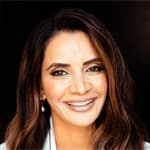
Dr. Dimple Desai is an award-winning dentist with a passion for Excellence in cosmetic and restorative dentistry. As an American academy of cosmetic dentistry accredited dentist, she is among the very few dentists across the world with her Level of skill and knowledge. Dr. Desai started her career in dentistry as a dental hygienist before continuing her journey to become a top-accredited, Peer-reviewed, and published dentist. Her dedication to Providing a superb experience and flawless smile to every Patient is reflected in her accreditation and high standards for cosmetic and restorative dentistry. In addition to her clinical work, Dr. Desai was a clinical Instructor at the University of Southern California Herman Ostrow School of dentistry and a key opinion leader for several manufacturers. She is committed to staying up-to-date with the latest technology and techniques, which she shares with other dentists through her engaging presentations and demonstrations. Dr. Desai's passion for giving back to her community is evident in her creation of the luminous smiles foundation in India and her contributions to the deaf/mute orphanage. She is dedicated to teaching children the importance of good oral hygiene and preventing tooth decay at an early age. Dr. Desai's achievements and leadership in the field of general and cosmetic dentistry have earned her many awards, including recognition as one of the nation's top 40 dentists Under 40 in 2020 and being voted by her peers as one of the top dentists.
Are you ensuring your patients see and approve their smile before the final veneers are placed? The key to exceptional cosmetic outcomes lies in meticulous communication with your laboratory and strategic use of provisional restorations that serve as both treatment previews and confidence builders.
Dr. Dimple Desai brings over two decades of cosmetic excellence to this discussion. As an accredited member of the American Academy of Cosmetic Dentistry—a distinction held by only a select few dentists worldwide—she combines her background as a former dental hygienist with advanced cosmetic training. Dr. Desai is a former clinical instructor at USC Herman Ostrow School of Dentistry, has been recognized as one of the nation's top 40 dentists under 40, serves as a key opinion leader for dental manufacturers, and founded the Luminous Smiles Foundation. Her Newport Beach practice specializes in boutique cosmetic dentistry with an emphasis on conservative, predictable outcomes.
This conversation explores Dr. Desai's systematic approach to veneer treatment that prioritizes patient communication, conservative preparation, and comprehensive treatment planning. She reveals how proper sequencing—from orthodontic alignment through provisional approval—can eliminate the common cycle of restoration failure and patient dissatisfaction. Her methodology emphasizes preventing occlusal disease rather than simply treating its consequences, resulting in longer-lasting restorations and more satisfied patients.
Episode Highlights:
Mock-up placement before tooth preparation allows patients to visualize their final outcome and provides immediate anxiety relief. The provisional restoration serves as both a treatment preview and a one-week trial period where patients can show family members and request modifications before final veneer fabrication.
Digital photography using professional SLR cameras captures facial dynamics, lip movement, and smile characteristics that must be communicated to the ceramist. Detailed retracted shots, smile images, and 1:1 close-ups ensure the laboratory understands the patient's natural dentition and aesthetic goals.
Conservative preparation protocols focus on staying within enamel boundaries whenever possible. Combined with hydrofluoric acid etching for 20 seconds on lithium disilicate restorations, followed by phosphoric acid cleaning and silanization, this approach maximizes bond strength while preserving tooth structure.
Orthodontic alignment precedes veneer placement in 98% of cases to address underlying occlusal issues. This preventive approach eliminates the cycle of restoration failure caused by improper tooth positioning and reduces long-term maintenance needs.
Systematic material selection includes vocal retraction paste for conservative tissue management, putty impression materials for consistent provisional fabrication, and universal bonding agents for predictable cementation. Having a standardized protocol with trusted materials reduces chair time and clinical stress.
Perfect for: Cosmetic dentists seeking to improve their veneer protocols, general dentists expanding into aesthetic procedures, and dental professionals interested in conservative restorative approaches that prioritize long-term success over quick fixes.
Discover how thoughtful treatment sequencing and patient communication can transform your cosmetic outcomes and practice satisfaction.
Transcript
Read Full Transcript
This transcript was automatically generated and may contain errors or inaccuracies. It is provided for reference and accessibility purposes and may not represent the exact words spoken.
So what I'll do is I'll put the mock-up in the patient's mouth and I let them look at it. And
before I even begin to prep, I said, I'll say, hey, take a look at this. This is what the
provisional is going to look like. This is our anticipated final outcome. And get a little relief
at the beginning. That way they're not so nervous throughout the procedure that how are my new
teeth going to look? Welcome to the Phil Klein Dental Podcast. Crafting beautiful veneers isn't
just about technical skill. It's about ensuring that every step of the process leads to a result
that your patients will love. So how do we achieve that? It starts with an open, detailed
collaboration with your lab to make sure you align on aesthetics, fit, and function.
But it doesn't stop there. Using provisional restorations allows the patient to see and experience
their future smile before it's finalized. This combination of lab communication and provisional use
can take your veneer process from good to exceptional, minimizing adjustments, preventing
surprises, and ensuring the patient feels heard and satisfied every step of the way.
So stay tuned as we break down strategies and tips for mastering this process to give every patient
a confident, beautiful smile they'll love. Our guest is Dr. Dimple Desai, founder of Luminous
Smiles of Newport Beach, a boutique dental practice dedicated to enhancing patient smiles.
As an accredited member of the American Academy of Cosmetic Dentistry, she belongs to a
distinguished group of professionals worldwide. Dr. Desai has been honored as a top dentist in
Orange County. Her contributions to dentistry include publications in prestigious dental journals
and international speaking engagements. Dr. Desai, thanks for joining our show.
Thank you, Phil. Thank you for having me. Yeah, and I want to really commend you on your webinar,
your recent webinar on VivaLearning.com. Thanks for your contribution to Viva. And the last
webinar you did was excellent. I had a chance to watch it. It's titled, for our audience,
if you want to watch it, it's titled, Restorations Built to Last, Step-by-Step Approach from
Preparation to Final Cementation with Success. And Dr. Desai talked a lot about veneer cases.
Really good stuff. I think it's worth the time of everybody who does veneers to take a look at this
webinar on vivolearning.com. So to get started in this podcast episode,
let's begin with this question. Why is it essential to convey the expectations of your patients to
the ceramist? And what is the most effective way to do so? Your patient comes to you with certain
requests and modifications that they want to have made to their teeth cosmetically. And I feel very
strongly that it's our due diligence and our duty as their cosmetic dentist or as their clinician.
to be able to relay this message to the ceramist now you're seeing this patient's lip movements
facial dynamics um how hard are they smiling when they tell them to laugh or taking these images
and that's the way i portray it to my ceramist is i take real clear images of the patient's face
for instance retracted shots uh smile images up close one to one to one images that way you can
really show the ceramist what does their natural dentition look like what do we trying to follow
how does the patient want their teeth to look how broadly are they smiling is their lip moving past
the point where you can see all their gingiva are they showing minimal to none uh it just varies
and again it's our due diligence to portray this to the ceramist and we all know that all of our
teeth are unique in terms of shapes shade hue chroma value so again how the best way for me is just
taking digital images you're having a nice digital SLR right yeah I think someone asked a question
in that webinar that you did for Viva what kind of camera use and not to plug Nikon but you I think
you did say Nikon now do you need really good training on that camera or can you do kind of like a
point and shoot if you have it preset you can do a point and shoot and actually I do have a Nikon
and I have a Canon so I have two cameras and I use both for different things Once you get the hang
of it, it's very easy. And the images that you want to portray, it's easy to kind of go back and
forth. For me, I've just had training with the American Academy of Cosmetic Dentistry. And so I
know where to shoot, the distance and how much and what images in particular I need.
Now, do you do the photography yourself all the time or do you delegate some of that to your staff?
I do the photography all the time by myself. I am very meticulous and I know what images I want.
So I rely on myself to take them. So I've been hearing a lot about facial scans and combining,
you know, CBCT with intraoral scans and facial scans where we can actually virtually take the
patient and move them into the laboratory through a file where they can almost, it's almost as if
the patient's sitting in the laboratory. Are you doing any of that or planning to do that? Or
you're sticking to what you've been doing for a while, which is obviously working very well for
you, which is taking photos with your SLR, both intra-orally and extra-orally?
So I think that's a great question.
Awesome technology out there at this time, especially kind of plugging in the patient's face and
being able to have a module to show exactly what the patient may look like with these restorations
you're envisioning. At this time, I do not have it, but I'm learning to implement them into my
practice. I always feel like you can never have too much technology. Yeah, and it's moving so fast.
Everything is moving so fast. But, you know, what I'm hearing a lot now from dentists,
GPs that don't even do implants, that CBCT is becoming such an important tool,
even though it's an expensive one. It's now becoming, according to many key opinion leaders that I
talk to, CBCT is becoming the most important digital tool in a practice where,
you know, before that discussion was the intraoral scanner, then it was a 3D printer. But now
they're saying from the standpoint of diagnosis. in treatment planning CBCT for the GP.
I'm not sure how much for the cosmetic dentist. You have more of a cosmetic focused practice,
correct? Correct. But I also think that we should mention with CBCT at this point.
You know, we're so knowledged with how airway is being distinguished in our profession.
And the CBCT is immaculate for that. And being able to use that tool and show the patient,
look at your airway, look at these things that are happening in your health, high blood pressure,
cholesterol, so forth. Is this related? You know, I think CBCT, it is almost becoming a standard of
care. You're right. Yeah, absolutely. And I'm glad you brought that airway factor into it. Because
as dental professionals, we really should look at that. Or else, as I have said many times in the
past on podcasts, if you don't treat the root cause to some of the problems that are leading us to
do restorative dentistry, we fall into this infinite loop of every five years, we're redoing the
crown. Because the patients, you know, they're breathing through their mouth all night. And also
during the day. So these are all indications why CBCT does play a factor,
like you mentioned. Let's talk about the provisional restoration for a second. How important is
your provisional restoration in terms of how it contributes to the final result of the actual
ceramic work? So again, when we take these images pre-procedural and relay the message to your
ceramist of how you want, in particular with this Viva Learning webinar that I did, we did number
seven and 10. I knew exactly how I wanted the shape to be. How do I relay that to the ceramist and
the patient? So once I do that with the ceramist and he can do a wax up for me that I approve,
thereafter I'm going to use the wax up. take a Viposal putty by Voco and mimic that exact shape and
contour and place it into the patient's mouth. And in fact, what I do with the provisional prior to
prepping the tooth is I place it in as a mock-up because it's that anticipation. And oftentimes
patients are really nervous about how is it going to look? I'm a little nervous. And, you know,
they have the almost faith in you. So what I'll do is I'll put the mock-up in the patient's mouth
and I let them look at it. And before I even begin to prep, I said, I'll say, hey, take a look at
this. This is what the provisional is going to look like. This is our anticipated final outcome.
get a little relief at the beginning. That way they're not so nervous throughout the procedure that
how are my new teeth going to look? So it's a very important part from beginning to end the
provisional. What I tell the patient is make sure that you just look at the shape, the contour,
the length of the tooth. If we want to change anything, we can. And obviously with the Structure 3,
also by VOCO, it's beautiful. It's just very... glossy it's easy to polish and it's very like
fracture resistant therefore I let the patient go and I say okay you know the day before you're
going to see me you can kind of test drive it and be a little aggressive but look at how you look
show family members and if there's any modifications we can still do that I the last thing I'd want
is for me to have a veneer placed and then the patient say well I didn't like the shape the length
and so forth so there's no questions or mystery behind it. How long would they be in this
provisional for them to show everybody and get comfortable with it where you were sure they were
sure that this is what they're looking for? So I have the patient come back in a week after I've
prepared and provisionalized them. And I tell them, show anybody you want, take the pictures that
you need. And thereafter, once they've approved their provisional, I'll scan them, digitally scan
them and send them to my ceramist. so that he can fabricate the final veneers. Also in that
interim, if the patient wants to bleach, so forth, we take that into account as well. Now, the
turnaround time is really dependent on who you work with, right? There's some ceramics that take
six weeks, some take four. My ceramics is averaging about three weeks, just because my patients are
a little more demanding, so I put a little pressure on my end as well. But that's generally...
flow in my practices a week later will confirm what you liked, what you didn't like,
and so forth. Yeah. And it seemed like on the webinar, you were really having some fun with that
putty material. I think it was a vocal product. Yeah. So tell us how much you rely on that putty
material and what you do with it that takes you through the case. So the V-Posal putty,
I use putty all the time, particularly this one. I think you're referring to the video on how to
mix it. I know it's kind of simple to even show it, but really you have to have a nice uniform
mixture and just kind of showing and reiterating to clinicians that make sure you just mix it in
really well. Now I'll use this for all my provisionals. In addition, I love to do composite bonding
in the anterior region as well. So I'll do my own wax ups for those. And thereafter,
I'll take a putty in the office and then I'll cut it back for the lingual matrix. That way I know
exactly where I want the length. Yeah. So, yeah, that's kind of a lost art, the wax up part.
Are dentists that are coming out of school today that are so digitally focused, are they doing wax
ups typically? I don't know. I think that's a great question.
I am glad that I went to school when I did because I feel as though you need to really appreciate
the anatomy of all these teeth. They're all different. We know eight and nine have to be 100%
identical. Seven and 10 are usually cousins and a little bit, they have few anomalies to them that
are characteristic. And so we have to be able to mimic that and reproduce it.
And again, I'm going to give credit to, you know, the AACD just because, you know,
there's one of the cases you have to submit is a composite case of six or more teeth.
And it really brought me back to appreciating the anatomy of the teeth and going back to dental
school. And I still remember my waxing instructor was Dr. Green. And we would sit there on our
bench and just wax molars. And, you know, at the time you think, why am I creating these fosses?
tips but I'm so glad I went to school and I did because that is that can be easily lost with
digital I agree with you yeah and I think what you're saying is 100 true that even though that
we've kind of moved away from the manual artistic work of waxing the underlying understanding of
anatomy is so important to be able to take advantage of the digital tools we have today now some of
us say well you know I didn't go to dental school to design I didn't My idea of coming out of
dental school was not to design a prep on a 3D software package that comes with my scanner.
I'll send that out to the lab and let them design it. But I think in order to really be a top
clinician like you are, Dr. Desai, I think you need to really understand the anatomy.
And part of that has to do with when you graduate of dental school, I think, for sure. What
techniques and materials do you rely on to reduce your stress as a dentist and to ensure more
predictable impressions? So when I'm taking impressions, again,
we were all taught how to take impressions in dental school. And I always place a cord and
thereafter I'm going to use retraction paste. I really love retraction paste for those who haven't
used it. I know there's a few out there, but I've been using. vocals, retraction, paste, and I get
great results. And so if I feel like there's a lot of heme, I need to pull the tissue back a little
bit. It's just a little more conservative way of doing it. And I'll let it set for about a minute
or so. And thereafter, rinse it off and start the impression right away. So what kind of stresses
do you see? I don't know how long you've been practicing, but have you over the years found the
techniques and materials that you enjoy, the priority is for the best for the patient, but also for
the clinician, you're the one doing it and you want to be able to enjoy yourself. Like I go back to
the putty you were playing with on the video that you showed, it looked like you were having a
great time, but you want to be able to enjoy what you do. How important is it to find materials
that take the stress out of your daily routine procedures? I mean, very, very important.
That's a must. You have to invest and try different products in order to make your life easier as a
clinician. And that's why I think companies like this. for making our job easier and creating
products like this. Because again, it's predictability. It's almost like you work like a robot. I
work like a robot. I have a checklist for everything. And I do the same thing for each procedure
over and over again. And now do we get a little more heme sometimes? Do we get tissue that's a
little more resilient? Yes, but at least we have our basic checklist and reliability of materials
that we know where and what to use. And what's the best way to experiment with some of these?
products, try them out, see what they get out of them as far as ease of use, how stressful it is to
use these products, that kind of thing. I mean, what did you do? What kind of journey did you have
to go through to kind of say, okay, this is my armamentarium for these veneers and I'm going to
stick to this for the next whatever number of years until something better comes out? So I'm not
afraid of experimenting. So if I'm given a product and I still...
the manufacturer's instructions because everybody is different with their instructions so I'll
follow along and if I feel like this is a good fit for me then I'm going to continue to use it so I
think really don't be afraid to try new things and break out of your little bubble I'm never afraid
of breaking out of the bubble and this goes back to you know I was in dental school in an era where
I'm mixing alginate and taking 50 impressions just for treatment planning you know mind you we our
first impression was not good enough because we didn't get that hamular notch in there but i
remember retaking it looking like a baker and you know i'm sure you remember what it was like yes
and make that jump to digital for me initially i remember i was nervous and my first scan took me
almost 45 minutes for one tooth but i think after that I just thought this is the way to do it.
I can't imagine practicing, you know, without a digital scanner for certain techniques and
procedures now. So you don't have that rubber bowl where you mix the alginate from dental school
somewhere? I still have at least five in my practice. I will never put them away. And that spatula,
you know, that big, nice spatula. Yeah, I do know that. Yeah, I mean, I don't think I've ever seen
a rubber bowl like that in my life, except in dental school. You know, where would someone,
I don't even know if a baker uses something like that. The thing is flexing, it flexes. I mean,
it's great to clean because you just have to bend it. You know, you crush it with your hand and all
the hard alginate just falls out and you just wipe it clean. So it's pretty, it was pretty
innovative for its time. But I think I went to dental school long before you did. Let's talk about,
as we wrap up this podcast, Dr. Desai, let's talk about bonding a little bit and the final step.
in putting in those veneers. So what are the protocols that you abide by for effective bonding and
disinfection? We can't forget about disinfection during the final cementation of your veneers.
So once I've tried the veneers in the patient's mouth and had them approve as well as myself,
I'll tell the patient. Okay, you have a little bit of free time. I need to disinfect your veneers.
So what I'll do is I'll place hydrofluoric etch. So if it's a lithium disilicate restoration for 20
seconds, and I have a timer in every room, so I time every procedure. Thereafter, I'm going to
rinse, dry it, and then I'm going to place the Vocoset etch, phosphoric etch, for a minute to clean
that intaglio surface. Again, rinse and dry, and then place the single-dose ceramic bond that's
dispensed. Um, and then let that sit, which is just silenation for about a minute and air dry.
Once that's done, I'm going to isolate the teeth with the rubber dam and, uh, air braid and,
uh, ice. And then thereafter etch again, etch the tooth. Cause in this situation, my preparation
was strictly in an enamel. There was zero dentin. And cause we're adding to the teeth and
thereafter rinse and dry and then placed a few Tara bond you. and then cure that.
So you use Futura Bond U, which is a universal bonding agent. Correct. And you're a very
conservative dentist as far as what you're removing as far as tooth structure, because the days of
heavy duty tooth structure removal to do restorations that are aesthetic,
those are kind of over now, right? With all the adhesive benefits that we have from advanced
materials. Correct. I'm very conservative. No, I liked your... whole presentation in the webinar,
because you actually were talking the patient out of doing, instead of, I think it was eight,
possibly we only need four. But I think that had to do with the alignment of the teeth. You
actually were doing an alignment first, and then you would decide whether or not you needed four or
eight veneers. Is that, am I correct on that? Yeah. So is that something you typically do is use
aligners for cases before you even start with the veneers? Pretty much 98% of the time.
Wow. That's almost everybody. Yep. That's almost everybody. And when did that start happening when
you went into orthodontic movement prior to your veneers? Has that been, you've been doing that
from the get-go or since we're more into aligners, that's becoming more prevalent?
When I started doing full mouth rehabilitation cases on my patients.
that were slightly older, who never received orthodontic treatment, and then they're battling all
these occlusal, I call it occlusal disease. I'm in Orange County, I'm in Newport Beach, we're not
fighting tooth decay, we're fighting your own occlusal disease. So when I see that, and I'm doing a
rehabilitation of a complete deterioration of their mouth due to occlusion, I had this epiphany
that this is not okay. And if this was me in a younger shape and form, I would want to be known or
be told and be informed about ways to prevent dentistry,
unnecessarily prepping teeth and unnecessary dentistry to be done at a later point in life.
And really, most of my younger patients, I really try to reiterate this to them, that you're going
to save years of money and just time if you could just align your teeth correctly and really
eliminate this occlusal disease that's occurring yeah that's totally correct i mean i look at it
like a vehicle like a car you could get the car fixed but if your car is not aligned the same thing
that caused this car to go into its state where it's not functioning well is going to happen again
because the car is not aligned so everything's going to wear at a much faster rate i know that
sounds kind of blue collar but The same thing applies to the occlusion. You're 100% right. Putting
veneers on teeth where the occlusion is not conducive to that veneer,
the teeth are going to chip and break just as fast as you put them on. So you're not doing the
patient a favor by looking good for a year or two, and then they're back in your office saying that
all these things popped off and chips are occurring and so forth. So that's great.
align the teeth first, get that underway. Unfortunately, you can't align everybody's teeth because
some people need some more extreme orthodontic work. I think we've covered it all.
Any closing recommendations, Dr. Desai, for our audience as far as the topics we discussed?
I think that, you know, you really hit the nail on the head with really don't be afraid to try new
things, to step out of your bubble. to learn more about various products,
techniques, and so forth that can make your job a lot easier. I mean, we have amazing manufacturers
that have created materials for us to make our everyday life a lot easier.
And we should be able to use them and know how to use them. Yeah, very, very important. And you're
the owner and founder of Luminous Smiles. Is that your dental practice? Correct.
Yeah, very, very impressive. Yeah, when I go out to Newport Beach, I'll try to find your office and
stop by and say hi. It's in June. My son is getting married, so that would be a good time to say
hello. I'll be in a tuxedo, so you'll see me with a tuxedo. Perfect.
Yeah. And I won't smile for you because you'll see all sorts of things that need to be fixed.
So I'm one of those dentists who have gone to the dentist. infrequently and I should have done a
lot of things a lot earlier so I don't practice what I preach or listen to from people like you but
there's still hope I'm still at some point I may get it all fixed so there's still hope for me We
can come in May and then we can take care of everything before June. Yeah, that's right. That would
be nice. That's a possibility. All right, Dr. Desai, thank you so much for your time. Really
enjoyed the conversation. Great podcast. And I recommend everyone to listen to Dr.
Desai's webinar. It's called Restorations Built to Last, Step-by-Step Approach from Preparation
to Final Cementation with Success. Dr. Desai. a great evening and thank you so much. Thank you.