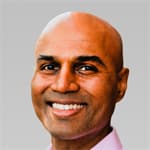
Dr. Gupta after completing a one-year GPR in Cleveland, started a practice from scratch in 2005. Armed with what he considered adequate knowledge, hand skills, and a personable demeanor, he watched as his practice floundered, finances became un-predictable, and his lower back and spirit toward life became worrisome. Rather than continue the trend, he made a guinea pig out of his office, family, and self; attempting any and all personal and professional "experiments" in self-improvement. More than a decade later, he enjoys excellent new patient numbers and case acceptance, a solution oriented dental team; and most importantly, a meaningful and positive identity. He happily shares the failures and successes with dental and community groups throughout the country, always ending his presentations with practical, implementable, step-by-step ways to be better.
What happens when a talented dentist becomes a practice owner but lacks natural leadership skills? How can you transform a toxic work environment without completely changing who you are?
Dr. Ankur Gupta brings over 20 years of dental experience to this candid discussion about leadership evolution. After completing a one-year GPR in Cleveland, Dr. Gupta started his practice from scratch in 2005, only to watch it struggle due to his leadership limitations. A certified AGD/PACE provider, he has spent more than a decade experimenting with personal and professional improvement strategies, transforming his practice from financial unpredictability and team toxicity to excellent patient numbers and a solution-oriented work environment.
This episode explores the critical transition from being a "likeable cool guy" to becoming an effective leader who can handle accountability without confrontation. Dr. Gupta shares his systematic approach to creating clear expectations, managing team dynamics, and building sustainable practice culture. The discussion reveals how leadership isn't about changing your personality—it's about implementing systems that make leadership easier for your natural temperament.
Episode Highlights:
The hidden danger of avoiding confrontation in practice management creates toxic environments where hardworking employees feel undervalued while others avoid accountability. This resentment splits between problem employees and leadership, ultimately damaging team cohesion and practice culture.
Comprehensive job descriptions must include "non-obvious tasks" like cleaning break room refrigerators, calibrating equipment, and maintaining office aesthetics. These responsibilities typically fall on the hardest workers, creating imbalance and resentment when not properly delegated and recognized.
A shared Google Sheets tracking system removes emotion from accountability conversations by documenting both positive contributions and performance issues. This data-driven approach allows leaders to address problems objectively while maintaining comprehensive employee reviews and proper termination documentation.
Effective leadership for naturally non-confrontational personalities requires systematic approaches rather than personality changes. Clear expectations, documented accountability measures, and structured review processes enable successful practice management regardless of natural temperament limitations.
Practice growth decisions should prioritize work enjoyment over pure financial gain, recognizing that increased production often comes at the cost of work-life balance. Clarity about personal values and lifestyle goals enables better leadership decisions that sustain long-term career satisfaction.
Perfect for: Practice owners struggling with team management, new graduates transitioning to leadership roles, and dental professionals seeking to improve workplace culture without sacrificing their authentic personality.
Transform your practice leadership approach with proven systems that work for any personality type.
Transcript
Read Full Transcript
This transcript was automatically generated and may contain errors or inaccuracies. It is provided for reference and accessibility purposes and may not represent the exact words spoken.
And who is that person who, on a regular basis, checks to make sure that the refrigerator that's in
the employee lounge is cleaned out so that we never get some gross smell coming from it?
Who is that person? And the answer is, I don't know, somebody just kind of gets to it. And what
ends up happening is those tasks, those non-obvious tasks,
those end up always falling upon the shoulders of your hardest worker.
Welcome to the Phil Klein Dental Podcast. In this episode, we'll be talking with Dr. Ankur Gupta,
a dentist with over 20 years of experience. He has agreed to share with us the challenges he faced
when he first started his own dental practice. Dr. Gupta encountered various issues that led to a
toxic work environment, which he says stemmed from his initial struggles with leadership. He admits
he was more focused on being the likable cool guy in the office. rather than being a good leader
who was able to deal with problems and face confrontation. Dr. Gupta will recount his journey from
the rocky beginnings to how he eventually turned things around. We'll be getting to our guest in a
second, but first, are you looking for an air-driven handpiece that rivals the power and torque of
electric? Well, I have good news. It's finally here. It's called the TMAC-Z, and it's from NSK,
a company we all know and trust as a world leader in dental handpieces. In addition to being
lightweight and ergonomic, this revolutionary air-driven handpiece delivers unprecedented 44 watts
of power, allowing it to cut through tough zirconia smoothly and quickly. In fact, the TMac-Z
reduces overall cutting time by 30%. That means less chair time, reducing the burden on you and
your patient. Take a test drive of the TMAX Z air-driven handpiece from NSK. For a free 10-day
trial, go to nskdental.com and find your local rep to inquire. Experience the power and excitement
of the TMAX Z series. Dr. Gupta, thanks for joining us today. Thank you,
Dr. Klein. It's a pleasure to be back here. Yeah, so you've done some really good podcasts in the
past with us, and I encourage all of our listeners to check them out. In previous podcasts,
Dr. Gupta talks about extraordinary teams and how to develop an extraordinary office. And his
definition of extraordinary may be different than yours. So it is definitely worth listening to
that. And then he also did a great podcast that we released a little while ago.
And it talked about how you can fit in during the normal routine things that you do in your day,
including driving. Certain types of exercises that maintain, will help maintain your posture and
really make you feel better in the office. Really good stuff. I mean, he's got a broad array of
knowledge from 20 years of practice and he articulates it very well. We're very happy to have him
on the show because today we're going to be talking about leaders. Now, dental offices are
businesses and all businesses have a leader. Whether it's a CEO or president or whatever you want
to call it, managing director, someone's got to run the show. So the question is, what happens if
you get out of dental school, you end up owning your own practice, you work in your own practice,
and you hire people. You, by default, become the leader. But maybe you weren't born to be a leader.
So my question to you, Dr. Gupta, is how does someone become a really good leader even though they
aren't a natural leader? They aren't the so-called born leader. Yeah, thanks, Dr.
Klein. So I realized this right within the first six months of owning my own practice,
that I had a really, really strong aversion to any type of confrontation.
I really liked being liked. So I just wanted to be the cool guy about everything.
And what I found was that desire to be liked. created a culture in my office that was pretty toxic.
Employees that felt unappreciated, employees that felt like certain people were never held
accountable. There was gossip. There was people walking all over me. And that really bothered me.
I just kind of thought, hey, look at me. I'm such a nice guy. And now when I go around and I
lecture. I talked to really, really smart, nice, kind people who are probably excellent clinicians.
And they expressed to me frustration about the team harmony that they have.
And it's based on certain limitations they have as leaders. And I thought, oh, I have a 30-year
career, man. Like, I can't be miserable for, you know, I can't, like, dentistry is hard enough.
I don't want to also, like, walk on pins and needles amongst my team. Something had to change.
And I realized that I needed to I'm still I still hate confrontation.
I'm still me. I'm still that limited person who's not maybe a perfectly perfect born leader.
I realized some some things had to change. And so what I'd like to do today, if you don't mind,
is just share with you some of the. some of the things that really were effective that made
leadership just a lot easier for me. Yeah, let me ask you this before we get into those things. And
I'm really glad we're going to cover them. You mentioned that you when you started your practice,
you wanted to be liked and accepted by your employees. And then you said it led to a toxic
environment. Why did it lead to a toxic environment? What's wrong with being a nice guy who's cool
and gets along with everybody? Yeah, so I think, I hope, I think I'm still a nice guy who's cool.
I think, okay? But in this particular situation, there was one employee who got away with a lot.
There was one employee who just kind of managed to not do as much work as everybody else,
leave a little bit earlier than everybody else, not take as much accountability as everyone else.
And everyone else started feeling that resentment. And that resentment was probably 80 percent
directed towards this one individual. But I think 20 percent of that resentment was directed
towards the boss. Now, this is early on. I can't even blame my wife. My wife and I practice
together. I can't even blame her because she hadn't started working at our office yet. So it was
only me. And I think that the reason that that resentment was there was because they said,
why does Dr. Gupta? expect us to work as hard as we work,
but not expect so-and-so to work as hard? What's the deal? And the answer was,
I never made my expectations clear, and I never showed any level of accountability.
I never made anybody feel any level of accountability if they failed to meet those expectations.
Do they think there was favoritism involved? Without a doubt. Wouldn't you? And this person wasn't
even that pleasant. Like, why is Goop going to like so-and-so? He's not even that nice.
So it wasn't a matter. It wasn't in reality. It wasn't that you favored anybody. You just wanted to
be the cool, easygoing guy that wasn't nagging people. And you kind of want to let them do their
thing. And you figured everything would just work out. But you weren't looking at it from the
standpoint of the other employees that actually put the full day in. So it built up animosity among
the employees. And they, as you said, part of that. was directed towards you, which is
understandable. So how did you overcome that? Okay. So number one is,
and I think every dental office should do this. Okay. So in every job that you have, you have
something called a job description. And the job description is something that most people ignore.
Okay. Like if I were to write up a job description for say my dental hygienist,
and I should say, okay, well, make sure you remove tartar and calculate.
and subgingival plaque, blah, blah, blah, blah. She'd be like, Gupta, I know. You don't have to
write this down. This is obvious. I know my job description as a hygienist. That's pretty obvious.
However, who is the person responsible for turning on the Spotify music on the iPad?
When they first get to work and making sure that the music is playing throughout the office.
Who is that person? And the answer is in most offices, no one person is assigned that.
It's just somebody does it. And who is that person who on a regular basis checks to make sure that
the refrigerator that's in the employee lounge is cleaned out so that we never get some gross smell
coming from it? Who is that person? And the answer is. I don't know, somebody just kind of gets to
it. And what ends up happening is those tasks, those non-obvious tasks,
those end up always falling upon the shoulders of your hardest worker. Always.
In every single office. We'll be getting right back to our guest in a second, but first... to GC
America, we're now able to incorporate all the advantages of glass ionomer into a beautifully
aesthetic, strong, long-lasting restoration. That's a great reason to try GC Fuji Automix LC.
You'll love the convenient automix delivery system and ergonomic dispenser. which allows precise
placement into the preparation. And GC Fuji Automix LC is bioactive, allowing for a high
rechargeable fluoride release, which is ideal for high caries risk patients. And because it forms a
chemical bond to tooth structure, even in the presence of saliva, there's no need for etchant and
adhesive bonding. This saves steps and is ideal for challenging patients where access and isolation
are difficult. And the small filler particles in the material allow for superb polishability.
and excellent aesthetics. So when you're thinking glass ionomer for your clinical cases, think GC
America, a world leader in dental materials. To learn more, visit gc.dental.
The non-obvious tasks fall on the shoulders of that person. And that person isn't going to feel
very appreciated because the boss doesn't realize that they're the ones doing it. I never realized,
I don't know. I come in, I'm busy doing dentistry stuff and patient interactions, all that kind of
stuff. I know it's getting done, which is cool. But I don't know who's doing it. And so the thing
that every office should do is every person in the office should list out all of their non-obvious
responsibilities, their non-obvious things, the weird things that they just do anyway, even though
they were never assigned to it. Who is that person who wipes off all the dust from on top of the
operatories once every two months? Who's the person who does the little water?
bacteria testing that you're supposed to do every so while. Who's the person who calibrates the
scanners? Who's the person who calibrates the CT? Do you have an ICC in your office,
infection control coordinator? We do have a coordinator in the office, but all of the
responsibilities of infection control shouldn't fall on that person. That person just needs to have
a very organized set of delegation that says who is doing what and at what frequency.
And I'll tell you that back when my office was toxic, we had nothing like that.
We just came in and we did dentistry. And I had my fingers crossed that the other non-obvious
stuff was just getting done. By doing this extra little responsibility, everybody listing out their
non-obvious things. And it comes down to really, really nitty gritty stuff. Like after lunch,
who is staying in the lunchroom? five extra minutes to wipe the table and rinse out random dishes
that are in there. That just, nobody was doing that. Just one person on occasion would feel
frustrated and pissed off. And there was like, you know, a mess on the table and they'd say, okay,
I'm going to wipe this out. And I didn't want that anymore. I wanted everything to be properly
delegated. People knew their responsibility, where they were supposed to be and when.
So all of a sudden expectations became incredibly clear. Everything. Became incredibly clear.
Now, let's go back to that one person, that individual who would cut corners.
Now, at least her expectations were clear. And if she failed to meet her expectations,
I didn't have to worry about whether or not her expectations were clear. I knew that they were
clear. It was much easier for me to have an accountability conversation with that person because
the expectations were already made. OK, so that's number one. Now we got to talk about number two.
which is accountability. OK, remember, I have a physical aversion to confrontation.
I hate it. I hate it. The only people I'm good at yelling at are my kids. I'm fine with everybody
else. I hate yelling at them. I bottle things up inside and I'm like, I'm just the worst.
I'm the worst kind of person. So before we go into number two, what you're seeing in yourself
during this period of kind of evolution in your office is that you're becoming a leader by.
delegating the responsibility and then moving into accountability and eventually going deeper into
performance meetings and saying, you know, we've tried this, we've tried that. It doesn't seem to
be a good fit. And then you obviously, if that person continues to slack off and not fit into the
flow of the office and do the things that they're expected to do, you have to let them go.
And then when you hire someone new, you have to set the stage straight, what kind of culture the
office is and what the expectations are. So you evolved into a leader by doing that.
There was still a huge hurdle that had to be crossed, and that was the fear or the aversion of
confrontation. But the reason I hated it so much was because it's emotional.
Confrontation is emotional, wouldn't you say? Absolutely. So what I decided to do,
and that's why I hate it. I hate the emotions. I don't want to feel pissed off myself. I don't want
to make this person cry. I don't want to do all of that kind of stuff. So what myself,
my wife, and the office manager did, and this is something I think every dental office should do,
you create a Google Sheets. Google Sheets is basically a spreadsheet that everybody can share.
So Google Sheets. And this Google Sheets is an opportunity to...
any employee does something great or something bad, that something shows up on the Google Sheets.
So April 21st had to leave early. So-and-so had to leave early to attend their son's baseball
game. Fine. No problem. That's no big deal. I love it that my team members feel that they can do
that. Who's making those entries? The employee? So remember. There's three of us that have access
to the Google Sheets. There's me, my wife, and our office manager, okay? So leaving early is
usually our office manager, okay? However, let's take something that's not my office manager. One
thing that I require, every single one of our operatories has a very nice intraoral camera. And
whenever a patient comes in with an emergency or something like that, I don't want just a
periapical x-ray. I want an intraoral camera photo. So I walk in. I don't see a photo up on the TV
screen. And in my head, I'm like, damn, I'm mad, but I'm not confrontational. So I'm not going to
yell at the person right then and there. I don't think that they deserve to be yelled at, but I
will take an extra moment because I have the Google sheets on both my phone and my laptop. And I'll
be like, March 23rd, so-and-so saw a new patient, failed to take a photo and put it up on the
screen. Okay. I didn't talk to him, nothing like that. Then after a certain period of time,
let's say an entire quarter or entire half year or something like that. We open up the Google
Sheets. We modify. it so we can see all the listing of our employees' names, and we can look at
every single one of those things. Now, it's not an emotional confrontation.
Now I sit down with a patient, I'm sorry, not with a patient, with an employee, and I say, listen,
I think it's totally fine that you leave early to attend your son's baseball game. But if you look
here, in just the past six months, you've done that 17 times. We have nobody else in the office
that leaves early anywhere close to that. Do you notice that I have very little emotion in my voice
here? Now it's not really the employee fighting against me. They're fighting against the data.
And the data is inarguable. They left this many times. They failed to take a photo this many times.
Now it's not emotional. It's just data. And this allows us to do three things.
Number one, hold the people accountable. Number two, have incredibly... Rich,
comprehensive employee reviews. And then number three is having an excellent paper trail when the
unfortunate time comes where we have to terminate employment. And does the employee know that
you're tracking this on Google? Everybody knows. They're looking at their Google Sheets. When I
have a sit down, when my wife and I have a sit down with employees. And the other thing, too, is we
put a lot of good stuff on the Google Sheets, too. You know, if they stayed late to help. you know,
make goodie bags with a hygienist or something like that. That shows up on the Google Sheets as
well. And so it's something that they get to see and they get to celebrate when it's populated
mostly with good stuff. Yeah. So who determines what gets entered into that Google Sheet and what
is not significant to be put in there? That's a great question. I think that I'm lucky that my
office manager has a very similar mindset as my wife and I do. So we've never really been in a
situation where we're like, oh, you're nitpicking a little bit here. Or, hey, why didn't you put
that? I think that there's maybe a level of trust amongst the three of us that whatever makes it
onto the sheet is a valid thing to make it onto the sheet. And I don't want to minimize your
question because it's a great question. I'm just lucky enough to be in a situation where... three
of us have that mutual trust. What do you think was the biggest personal change that you had to go
through to become the leader that you want to be personally? So you're asking about a personal
change. So that's a very difficult question to answer. I think that all of us were kind of gifted
with the type of brain and a type of temperament and the type of mentality that we have. You know,
my leadership capabilities today. are no different than my leadership capabilities from 15 years
ago when my office was a mess. I'm kind of the same person. The difference is, is that the
specificity of the job description, the specificity of the expectations, and the systematization of
how we hold people accountable is so strong now that it makes it for a person like me so much
easier. to to be an effective leader despite the fact that i have my own personal limitations so i
don't know if anything's changed maybe things i've gotten older i've become more confident whatever
but i think yeah but what i'm trying to say is that you run your own practice with your wife and
you started 20 years ago so after two years three years i'm sure you had discussions with your wife
and said how do you think this is going do you think we're making progress in this practice at the
rate in which we're satisfied with. Where are we going to be two to three years from now?
What do we want out of our career as dentists? Do we want to make more money?
Do we want to expand? Do we want to add more chairs? Do we want to hire people? So, you know, you
evolve because your priorities when you started aren't the same priorities three, four years down
the road. Thanks for clarifying. So let me see if I can give you a much more satisfactory answer.
When you are young, when I was young, the answer to everything was yes.
Do you want to make more money? Yes. Do you want to have a bigger office? Yes. Do you want to have
more employees? Yes. Do you want to have more new patients? Yes.
What I realized is that whenever you devote energy towards one thing,
you are robbing energy from something else.
Probably the luckiest thing that my wife and I realized earlier in our lives is that what we want
more than anything is to enjoy work. What we want more than anything is to enjoy work. And if
certain temptations come along that might be shiny and beautiful and tempting,
but might make it so that we enjoy work less, we have to say no. And so I think if there's going to
be an answer to your question of what I've gained, I've gained clarity. Let me give you a very
brief example because I know that this podcast has a certain time limitation.
The example is this. If I wanted to increase my production by 25% starting tomorrow,
I probably could. But if I did, I would be more tired when I got home.
If I was more tired when I got home, I probably wouldn't play basketball with my son. I'd probably
be more pissy at dinnertime, and I would probably have poorer sleep. I know it. I'd have a fatter
bank account. My wallet would get fatter, but I would limit some of the other things that I enjoy.
And I think that the two of us, we have clarity about, I guess, the amount of enjoyment we want to
have in our life. And so that by itself has allowed us to make much better decisions from a
leadership standpoint. Yeah. And that's exactly what I was going at with your personal change and
how your priorities change as you evolve as a dentist. Very well said,
Dr. Gupta. And I think it's really important for dentists and hygienists and everybody else out
there who's listening to this podcast to understand that when you first get out of school and you
embark on a new career, it's exciting and you're looking to do as well as you can and everything
else. Once you are in it for a number of years, you start to learn the inside story behind
dentistry and where your happiness is gleaned. What's the most fulfilling part of your career?
And the goal, of course, once you find that, is to pursue it and keep that going throughout your
career. And that should, God willing, lead you to a very happy and satisfied life. Dr.
Gupta, again, thank you very much for everything you do for Viva Learning. Great stuff. Hope to
have you on a program soon again. Really, it's always a pleasure. You're just fantastic to talk to.
So thank you so much, Dr. Klein.
Clinical Keywords
Dr. Ankur Guptapractice managementdental leadershipteam managementemployee accountabilitypractice cultureconfrontation avoidancejob descriptionsGoogle Sheets trackingemployee reviewspractice growthwork-life balancedental office systemsteam dynamicsleadership developmentpractice ownershipdental practice startupemployee terminationperformance managementDr. Phil Kleindental podcastdental educationpractice administrationstaff delegation