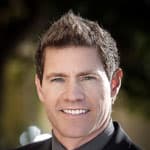
Cosmetic Dentist · UCLA Center for Esthetic Dentistry
University of California Los Angeles School of Dentistry · UCLA Center for Esthetic Dentistry · F.A.C.E. Institute · Esthetic Professionals · Legion.Dentist · Miles To Smiles
Read full bio
Dr. Todd C. Snyder received his doctorate in dental surgery at the University of California at Los Angeles School of Dentistry. Dr. Snyder has learned from and worked under some of the most sought after leaders in dentistry, refining his skills in comprehensive, extremely high quality aesthetic dentistry and full mouth rehabilitation. Furthermore he has trained at the prestigious F.A.C.E. institute for complex gnathological (functional) and temporomandibular joint disorders (TMD).
Dr. Snyder lectures both nationally and internationally on numerous aspects of dental materials, techniques, and equipment. Dr. Snyder has been on the faculty at U.C.L.A. in the Center for Esthetic Dentistry where he co-developed and co-directed the first and only comprehensive 2-year postgraduate program in aesthetic and contemporary restorative dentistry. He currently is on the faculty at Esthetic Professionals. Additionally, Dr. Snyder is a consultant for numerous dental manufacturing companies and has had the opportunity to research and recommend changes for many of the materials now being used in dentistry. Dr. Snyder has authored numerous articles in dental publications and published a book on contemporary restorative and cosmetic dentistry.
Dr. Snyder also founded and is CEO of Miles To Smiles a non-profit mobile children's charity that helps indigent and underprivileged children.
Are you stuck running as hard as you can but still not moving the needle in your practice or career? Many dentists find themselves trapped in what feels like an endless cycle of busyness without meaningful progress.
Dr. Todd C. Snyder joins us to share his insights on breaking free from "survival mode" and building a thriving dental practice. Dr. Snyder received his DDS from UCLA School of Dentistry and has trained at the prestigious F.A.C.E. Institute for complex gnathological and TMJ disorders. He has served on faculty at UCLA's Center for Esthetic Dentistry where he co-developed the first comprehensive 2-year postgraduate program in aesthetic and contemporary restorative dentistry. Currently faculty at Esthetic Professionals, Dr. Snyder lectures internationally on dental materials and techniques, consults for dental manufacturing companies, and has authored numerous articles and a book on contemporary restorative and cosmetic dentistry. He also founded Miles To Smiles, a non-profit mobile children's charity.
This episode explores the critical shift from survival mode to strategic growth through mindset transformation and systematic practice development. Dr. Snyder challenges the conventional wisdom that more technology equals more success, instead advocating for a vision-first approach that aligns practice systems with clearly defined personal and professional goals. The discussion reveals why many dentists remain stuck despite investing in the latest equipment and continuing education, and how changing your approach to patient attraction, case acceptance, and service delivery can dramatically improve both profitability and satisfaction.
Episode Highlights:
The precision mindset framework helps dentists move beyond the "everything for everyone" approach that leads to burnout and mediocre profitability. Instead of competing on volume like DSOs, successful practices create unique value propositions that differentiate them in the marketplace while maintaining clinical excellence.
Vision building must precede system implementation, as most dentists operate without written, measurable goals with specific timelines and actionable plans. The Vision Builder worksheet tool helps practitioners define exactly what they want to achieve before investing in technology or process changes that may not align with their true objectives.
The attract-convert-deliver sequence reveals why technology purchases often fail to improve practice performance. Most dentists focus on delivery improvements through equipment purchases without first establishing effective patient attraction and case acceptance systems, essentially creating expensive solutions for problems they haven't solved.
The trifecta framework ensures practice systems serve the dentist, team, and patients equally rather than just one component. Research shows 99% of dental offices fail to properly train their staff, leading to implementation failures when new procedures or technologies are introduced without team buy-in and proper preparation.
Strategic technology adoption requires clear return on investment analysis and team alignment before purchase decisions. Rather than following industry trends, successful practices evaluate whether new equipment will actually change business outcomes or simply replace one tool with another more expensive alternative that provides lateral benefits.
Perfect for: General dentists feeling stuck in their current practice model, recent graduates overwhelmed by debt and DSO pressures, experienced practitioners looking to increase profitability without increasing hours, and any dental professional ready to move beyond survival mode toward strategic growth.
Discover how to build the practice and career you actually want instead of the one everyone else thinks you should have.
Transcript
Read Full Transcript
This transcript was automatically generated and may contain errors or inaccuracies. It is provided for reference and accessibility purposes and may not represent the exact words spoken.
If you want to be a Costco, Walmart, whatever kind of thing and do lots of volume, no problem.
You can do that, but you're competing with DSOs. You're competing with all the other dentists. So
if you actually change your mindset, not to say you have to go out of insurance, because I know
that scares a lot of people, but said, hey, what if I devised a totally different type of feel as
far as going to the dental office and what we offer and the value we provide, and you're truly
providing something that's uniquely different that no one else is offering, yet you're still kind
of doing the same thing as everyone else as far as dentistry. But patients perceive the difference,
and now they come to you because they see you as being different, which is a totally different
mindset.
Welcome to Austin, Texas, and welcome to the Phil Klein Dental Podcast. Are you feeling like you're
running as fast as you can, but not getting anywhere? Dr. Todd Snyder calls it survival mode.
And in this episode, we'll talk about how to recognize it and what to do to get your practice and
career moving in the right direction. We'll cover mindset, vision, and systems,
and why clarifying your goals first can prevent costly mistakes and help attract the patients you
actually want. You'll also hear about Dr. Snyder's tools like the Vision Builder and the trifecta
framework to align your practice, your team, and your patients for real growth and satisfaction.
So if you're ready to step out of survival mode and start building a practice you love,
this episode is for you. Our guest today is Dr. Todd Snyder. He is a regular contributor on
VivaLearning.com, a cosmetic dentist, international author, lecturer, and consultant to dental
companies. He hosts a weekly podcast, Delusional, Winning the Weekly War of Dentistry.
You can reach Dr. Snyder at legion.dentist. Before we bring in our guest, I do want to say that if
you're enjoying these episodes and want to support the show, please follow us on Apple Podcasts or
Spotify. You'll be the first to know about our new releases and our entire production team will
really appreciate it. Dr. Snyder, welcome to the show. Thanks for having me, Phil. Love being here.
So we're very happy to have you here today, Dr. Snyder, to talk about some of the major challenges
dentists face as clinicians and business owners. And one of the things you emphasize a lot in your
lectures and training programs is the importance of having good systems in your practice.
And speaking of your training programs, we're very excited to announce you're now offering an
exclusive two-hour course on Viva Learning Premium that focuses on this.
And I believe, correct me if I'm wrong, it's made up of 12 10-minute videos that you produced.
It's titled Precision Producer, and it's available on vivalearning.com.
So this is a first of its kind, and you are our first KOL to participate in this.
We have more coming down the line, but we're very excited to have you. So thank you for that. To
begin this episode, I want to bring attention to something that is rather common among dental
professionals. And that is that many of us go through periods where we feel like we're running as
hard as we can and still not moving the needle. We're really not moving the dental practice or our
career forward. And you describe this in a lot of your training and lectures as being stuck in
survival mode. So what are some signs that a dentist might be operating this way?
And what's the first step toward moving out of survival mode, as you describe it, and onto a path
of career satisfaction and ultimately practice growth and profitability? Yeah,
you know, that's a lot to talk about, right? Everyone in dentistry has had or is having
frustrations. It's just inevitable. You know, whether it's a lack of new patients,
whether it's a lack of, you know. quality employees whether it's even finding an employee or it's
dealing with the headaches of insurance companies and the constraints they create for you and your
practice but also the constraints that they create between you and your patient and so you start
saying well gee i worked so many hours i bought the latest technology i've taken the ce courses you
know i've invested tons of money and yet i'm not getting ahead And I'm still struggling. And
financially, I'm not where I want to be. And I thought I'd be a lot further along. I thought it'd
be a lot easier. No one ever explained how difficult it was going to be to be in the position that
I'm in now. And I think everyone's been there. And buying more technology isn't the answer.
It's really sitting here and saying to yourself, there is a problem with the way my business and
the systems within it are running currently. Now, they may have worked fine. five years ago 10 15
20 whatever it was but things are changing in this world and so if you're not modifying your
systems if you're not sitting there and figuring out what actually has to be changed you're just
doing the same thing over and over again you're never going to get where you want to be and in fact
you're going backwards because the world continues to evolve and move forward and for the same
token inflation is occurring so if you're not making more money every year you're not keeping up
And so, yeah, systems are important. So hence I dwell on systems a lot. So what demographic do you
think this most pertains to? Is it the dentist that's out for five years, 10?
Is there any particular demographic that you think this is particularly important for doctors to
really get ahead of? Well, to some extent, you know, everyone deals with it. So you've got the
dentist has been practiced for years, but maybe now he's struggling a little bit because things
have changed and they've been comfortable. and haven't chosen to keep up or change things as the
world continues on. And then you have the dentist that's, you know, right out of school that
doesn't know any better, but has a bunch of debt and thinks they have to go work for the DSOs and,
you know, basically, you know, over-diagnose, over-charge, do whatever it is to be, you know, to
make the rent payment. And so you have, you know, both ends of the spectrum and then everyone in
between that's... know, still potentially struggling from the sense of, you know, they've get some
new patients every month, but it's not always doing everything they want to be doing, right? Hence,
many dentists nowadays try to do everything for everyone to try and be profitable. And so I would
say everyone struggles, but everyone's in a different place in their career. So their struggles are
different, but everyone needs to be focusing on systems. That's what businesses do. You know,
it's interesting when you think about it, because with all the technology we have today, that's
built into the way we practice. you would think that our lives would be much easier, but that
doesn't necessarily hold true. In fact, some people think dentistry was easier 30 years ago than it
is now. Some people vastly disagree with that. What are your thoughts? You know,
I perceive dentistry as being more difficult than when it, you know, 30, 40 years ago kind of
thing. From the standpoint of there was less insurance constraints and problems, right?
And you could charge a decent fee for what you did. And you didn't have to do all the specialty
work because you were profitable enough. I mean, if you look at dentistry, the income they made,
they're substantially more profitable 30 to 40 years ago. If you look at it nowadays with all the
constraints that you have with insurance and insurance not following inflation. you realize that,
wow, everything's gotten more expensive, but the patient isn't getting more money from insurance.
They're not paying any additional. If anything, they're going backwards. So you're having to work
harder to be profitable. So it sounds like the culprit for stress in the biggest way is the
compensation package through the insurance company, third-party payments. We all know how that is.
But generally speaking, do you think the technology advancements have been a huge help in reducing
stress in the way we practice dentistry today? You know, it's hard to say analog versus digital
because digital requires a lot more investment on materials and time. And now you're playing lab
technician instead of outsourcing it to the lab. So you're spending more hours having to learn
things and the overhead of investment in it. And then also the time for you or your employees to
utilize those materials. So although it sounds like, oh, it's great, I can use this material or
device and it works faster and quicker, whatever. If you really sit back and ask yourself, you're
truly honest. You might realize that a lot of those things aren't necessarily faster. Now, in some
ways they might be, in other ways they're not. But you realize that really it was just a lateral
move. It never changed the business. It never changed the systems. It never changed how we attract
patients, how we get them to say yes and move forward, and the payment we get paid. It's still the
same thing. You replaced a pencil in one hand for a pen in the other hand. It changed nothing. So
once a dentist recognizes they're stuck in what you call survival mode, the next step you talk
about, is mindset and in your viva learning premium course you introduce something called the
precision mindset how does adopting this mindset change the way a dentist approaches daily
operations well there's a lot of ways to practice business and so we don't dogmatically you know
tell people that they have to do exactly what we do I think that everyone needs to figure out what
their path is and create a system that works for them, that creates the life, the business, the
opportunities, the procedures that they want to do. And so with that, it's changing the mindset of
instead of thinking you're enslaved to doing everything for everyone and treating everybody that
walks through the door and taking everyone's insurance, you'd be amazed how many offices that
change from that typical system, which is scary. You know, I understand that, that they change
things that, okay, I'm no longer doing this. I'm not doing that. I'm only doing these things. I'm
only accepting this type of patient. We're only accepting this insurance or removing many
insurances. And they finally realized the aha moment in life that why didn't someone explain this
to me sooner? I had no idea I could be more profitable, more successful, happier in less time and
less effort with less stress and frustration. And so it's changing the mindset. And that's a scary
thing because everyone is comfortable and everyone's typically doing the same thing as like 80 to
90% of the industry. And that's being on insurance plans and doing everything for everyone,
right? Stuffing as many people into the schedule as possible. And granted, if you want to be a
Costco, Walmart, whatever kind of thing and do lots of volume, no problem. You can do that, but
you're competing with DSOs. You're competing with all the other dentists. So if you actually change
your mindset, not to say you have to go out of insurance, because I know that scares a lot of
people, but said, hey, what if I devised a totally different type of feel as far as going to the
dental office and what we offer and the value we provide, and you're truly providing something
that's uniquely different that no one else is offering, yet you're still kind of doing the same
thing as everyone else as far as dentistry. But patients perceive the difference, and now they come
to you because they see you as being different, which is a totally different mindset. Before we
continue, I've got to give a shout out to our sponsor, NSK. These folks are the real deal.
Their air and electric handpieces are not only top tier, they're the highest rated in the industry,
peer-reviewed by Dental Product Shopper. Their Timex Z99L electric handpiece actually scored the
first ever perfect rating. And the Timex Z990L is the most powerful handpiece on the market.
So do yourself a favor, check out everything they offer at nskdental.com. and take advantage of
their free trial by reaching out to your local NSK rep. I've heard this many times from many
dentists. Once you start using NSK handpieces, you'll never look back. So what I'm hearing,
Dr. Snyder, is mindset is first, then systems follow. But to build the right systems,
you also say that dentists need to step back and define their vision. So tell us why clarifying
personal and professional goals is so critical. before actually implementing systems?
Well, here's the thing is most people have not created goals, let alone written down goals and
being very specific, smart goals that are measurable, that they can also have a plan in which to
obtain them and have a date of when they're going to obtain them. And so all of this boils down
into systems to create the outcome you desire. And so most people go, well, I hope next month is
better. I hope next year is better. And so they say, well, if I buy new technology or if I add
another type of procedure because I took a CE course, then hopefully I'll make more money. Hope
doesn't make more money or more opportunities. Plans do. Goals do, strategies do,
the systems to get you there have to be created. And most people don't do that because as a
dentist, you can be comfortable and make a decent income. But if you truly want things to be
better, you have to change the mindset and systems and start being honest with yourself that you're
not doing everything that you could be doing. If you go talk to business people in the business
world, they would look at your business and say, you got to be kidding me. Like, how are you
profitable? Well, because everyone needs a dentist. Well, okay. And you've got enough peanuts
coming in from the insurance company. Okay. Then you'll do okay. But you'll never get to be the
place you wanted to be. So are you going to be honest and try and get there? Or are you going to
stay where you're at, comfortable on that couch? You talk to a lot of dentists, Dr. Snyder. Do you
think a large swath of dentists are relying too much on technology to change the course of their
future, their career, instead of really having a definitive blueprint set up?
and prepared and then purchase the technology and integrate it into their goals,
integrate it into their office so that it meets the goals that they've delineated before buying it.
Oh, definitely. Well, you know, here's the thing. It's like, okay, you can take an analog
impression. It sets up in, you know, two and a half, three minutes and costs you, you know, a buck
or two, or you can go buy a digital impression device, right? Which is going to cost you 10 to $20
,000. Both do the same thing. You're going to outlay capital for this device that makes life a
little bit easier. Well, if you couldn't take a regular impression and control tissues and bleeding
and saliva, pretty hard to do it with a scanner too, because it has to, you have to control
bleeding blood and saliva. So you go, okay, they are literally a lateral. It's not helping you.
That's not going to drive new patients into your practice because most dentists aren't marketing
very efficiently or they're outsourcing it. And so you go, okay, technology. if you really look at
it, is not going to change the business unless you have first learned how to decide who it is
you're trying to attract to your business. How are you going to attract them? Are they actually
showing up? What needs to be modified to make sure these people do show up? And once they get
there, then they get exposed to your technology. So you go, okay, wait a minute. If I bought
technology first and no one shows up, I don't get to use the technology. No one's talking about it.
No one's seeing it. So you're putting the cart before the horse. You need to have some fundamentals
in business as far as who am I getting in and how are they getting here? And am I getting enough
people that can actually go invest in the technology and actually use it? Attract, convert, and
then deliver. Deliver is the last thing you get to do. And yet too often everyone goes, well, I'm
just going to learn how to deliver this thing. I'm going to buy this technology so I can deliver
more. Yeah, but you're not getting any more patients coming through the door and you're not getting
any more to say yes. So you're sitting there with, you know, and all intents and purposes,
you know, a paperweight. waiting for something to happen and hoping and wishing and dreaming, but
it doesn't come true. And what we're talking about here is covered in your course on Viva Learning,
the Precision Producer, which also covers the distinction between fantasy,
goal, and executable blueprint. In this episode, walk us through that a bit. I know it's going to
be quite abbreviated, but talk to us about the difference between fantasy,
goal, and executable blueprint. and why dentists often confuse them?
Well, fantasy is where a lot of dentists live. And that's where a lot of people on the planet live,
that they think if they just keep doing the same thing, the same as everyone else is doing, that
they'll be more successful. If everyone that's doing the same thing is working so well, why aren't
most dentists more successful? And that's the honest truth. If you can be honest with yourself, and
I know it hurts to look at yourself and say, my God, that is me, right? Because most of them say,
no, that's not me. but it is most of us on this planet. That's the fantasy is living in this
delusional mindset. And you can break that if you choose to admit to yourself and say, I'm going
to, I'm going to fix this. And so if you then come to that, you know, mentality of saying, this
needs to change. Okay. What do I need to build? What do I want? Well, don't go listen to everyone
else. Like I'm going to go build it like this guy. I'm going to build it. that guy. No, decide what
you want. Because when you're invested in yourself and the vision and goals that you have, you're
more likely to make those come a reality as opposed to hoping to do what someone else has. But it's
not really what you want. You think you do, but you're not truly 100% behind it. So you have to
sit down and figure out what it is you want. The only way to do that is to be honest and say, I
want this. And then start writing out that goal, that blueprint of how am I going to obtain this
exact thing? Who do I have to hire that teaches me these things that I need to know to get to where
I want to be? So instead of sitting in a CE program going, I'm going to listen to them and maybe
I'll take away 5% or 10%, it's like, no, I want someone to come with me to say,
you want to get to this point? Here's the things you can do to get to that point. So it's
individualized for that person, not globalized for everyone on the planet to try and fit into the
same box. We had a brief discussion, Dr. Snyder, about the priorities. that dentists have to keep
in mind when they're taking a CE course, for instance. We all have limited time. We all work very
hard. We want to make sure we have time for family, recreation, et cetera. So when we take a CE
course and listen to somebody for a half a day or however long it is, we want to make sure that
it's the most important thing for us to learn at the time in our career, where we are now.
And learning how to do a six-layered incisor with additive composite direct restorative may not be
the most impactful thing that we need to learn that could affect the course of our career and the
way our practice grows in fact a different topic entirely would make much more sense for that
particular dentist at that point in his or her career and we had a discussion about this so tell
our audience about what we talked about you know Whenever I do my trainings, I pose questions to
the person, the dentist. And so I would, I would ask them like, do you get a lot of people coming
in looking for that single front tooth with six layers? That's going to take you an hour and a half
or two hours to do and photo document and insurance is probably what they're coming in on.
And so insurance is going to pay you some peanuts. Are you being profitable at that point? Are you
going backwards just so you can take some photos to post it on social media or practice? Like
you're never going to get anywhere. Now you might be better at your treatment, but you're not able
to pay the bills. So that doesn't make sense, does it? And so usually the response is you're right.
Like, so let's sit back for a minute and say, okay, if I'm going to run a business, I don't care
what kind of business is. The first thing I need to do is I need to learn how to figure out who's
coming in and how to market to them. And I can, if I know a little bit about marketing. which I
know most dentists don't want to learn anything on it. But if you learned a little bit and said,
okay, now I can hire a marketing company and hold them accountable to get what I want done. From
there, the first thing that I would do after that is communication, which I went and took Dale
Carnegie programs, learning how to speak to people in the form of sales. And I know that instantly,
just every dentist is turned off like, I don't sell. Everyone on the planet sells. You can either
sell with integrity or you can be one of those bad people.
That's true, very true, very true. When you walk through a door, if you are disheveled looking,
you're not selling yourself. Hence, you take a shower, you comb your hair, you put on nice clothes,
you smell good. You show up because you want someone to say, yes, I'm working with you, that you
have the key to making things better. So you're selling yourself, okay? Now, if you learn how to
communicate effectively, that gets someone to want to connect with you and work with you, now you
get to do all the dentistry you want to do. provided they either want that type of dentistry or
that you're having integrity telling it stuff they truly need, right? We're not trying to persuade
people that don't need stuff. So if you go, wow, so if I could bring in the right type of people
and I can talk to them, I can do any dentistry I want. I'm like, yeah, hence me, case in point,
and I have numerous other people like me, I have one chair. I do one thing. I do high-end
restorative cosmetic dentistry. You go like, oh my God, really? I've never taken insurance. And
right now we don't even submit insurance. Like you're going, every dentist has got to be pulling
their head going, what? Anything is possible, but you haven't tried it. So you don't know what's
possible and it scares you. So you say it can't be done, but because no one else is doing things,
it makes it easy because I stand out in a crowd that I'm the only guy doing it. And so patients go,
I want that guy. Now, not every patient, but some patients. So you start thinking about, okay, so
what truly does each dentist want? How do they want to get there? What do they want to do with
their time? What are the procedures they like doing? You can craft the exact message and procedures
and business and life you want if you choose to do it on your strategies, not everyone else's.
We'll be getting right back to our guest in a second. But first, for the optimal bond between
zirconia and your resin cement, check out Bisco's Z Prime Plus, rated best in class by thousands of
top clinicians. Z Prime Plus featuring MDP. creates a strong, reliable bond to zirconia,
metal, and aluminum substrates. And nothing could be simpler. It comes in a single bottle,
and it's 100% compatible with both light-cured and dual-cured resin-luting cements.
It's time you get the most out of your zirconia restorations. To learn more about Z Prime Plus and
the entire Bisco Adhesive product line, visit bisco.com. So that leads me into my next question.
When you mentor other dentists, you don't just leave... with theory you've created tools that
actually help them put things in perspective one of them is your vision builder worksheet what kind
of breakthroughs have you seen when dentists actually write down their goals they write down where
they want to be using this worksheet rather than just keeping it in their heads Well,
you know, it's proven research. If you were to Google it or chat GPT or what have you, you'll find
that people that actually create goals, smart goals with plans that write them down,
not just come up with their mind, but write them down are way more apt to achieve them than the
people just say, oh, I want to make more money. That's not really a goal. A goal is I want to make
$500,000 more this year. I want to make it by December 31st. And so then you figure out,
you know, all the different aspects to go into it. So it's been proven, but putting pen to paper.
So we said, okay, well, let's. create a form that people could fill out, this vision builder
worksheet, that if you were to fill this out and be honest with yourself, what do you truly want?
Even if it scares you, fill it out and go, okay, this is potentially achievable. Now,
I'm not saying throw your existing business model away because not everything works the first go
around, right? Sometimes you have to try things two or three, five, eight times before it becomes
more successful, right? So you want to do certain things that get you close to that. Once you start
seeing maybe a few patients that go, yeah. It's working over here. Then you can say, great, let's
start to shift more of the business that way. I'm not saying dump everything because that scares
most people. Now, me, I'm crazy enough to do that, but most people, you want to wade in carefully
and slowly. Hence, the vision builder is not dogmatic. It's unique to you.
All of my training is unique towards each person that comes into it. I don't want you to be like
the same person next door or me, the other guy down the street. I want you to be exactly who you
are and what you want. And I don't know any CE that I've ever taken that has done that for
somebody. In your Viva Learning Premium course that's on our website, it's a two-hour program.
There's, I think, 12 10-minute videos, 120 minutes. Now, obviously you can only cover so much in
that two hour period, but is there enough substance there to implement some of these things in the
real world for the dentists who take the course? Basically, this program gives you a ton of
information. I would say most people are going to feel a little like overwhelmed, right? But it's
meant to be small enough that you can take it in simple steps and it's small enough to be
digestible easily and allow you to ponder on it and think. and start to implement right so you you
need to start crawling or walking before we can give you the fire hose of you know information and
let you you know run marathons it purposely is devised to give you enough information go man he's
right i need to change what i'm doing here's the things that i want to do And so it's really to
awaken you and push you and get you to start to think and start to implement. So there definitely
are great tools there to get you to start moving forward. But from there, you know, there's always
room for improvement. I mean, heck, I'm still taking courses. But when I talk to dentists, dentists
are always taking more CE in dentistry. Like, no, I've been taking courses in communication,
business, and psychology for the last 15, 18, no, somewhere 20 years ago. So you go,
wow, I've spent more time on business and less time on the dentistry. Yeah, but that's typical of a
dentist's personality, though, to focus more on the dentistry. I can't speak for everybody, but
many of the dentists that I've met over the last 40 years of being associated with this profession
have been very focused on the microcosm of dental restorations,
just looking at millimeters and half millimeters. And so you could see the mindset of a dentist.
It's just... know, it's baked in the cake. Definitely. I mean, it's specific that we are all that
way. And the few that see it for what it is and break out of that are the ones that become
extremely successful. And that's where I'm telling everyone to kind of, hey, you know, step back
for a second and check yourself. You're doing the same as everyone else. But you look at these
couple people that stepped out of the box and did it different. They're highly successful. And you
go, wow, wait a minute. I've been doing it wrong, potentially like everyone else. Yeah. And the key
thing is you can be a great dentist and do great aesthetic work like you do and many other doctors
that I speak to on these podcasts and I see in the profession, but they also have, you know,
booming practices. They're very successful financially. There's no reason those two things can't
work together. Let's go further. Now, once that vision is in place, using your vision builder
worksheet, for example, the dentist has a much clearer understanding of his or her goals.
So you talk about the trifecta framework after that vision is in place, and that includes the
dentist, the team, and the patients. That's that trifecta. Why is it so important that the systems
that are implemented in a dental practice serve all of these three things equally? You know, we
break things down in trifectas to make it easy to remember. and easy to implement and so there's
probably i don't know 10 to 15 different trifectas we talk about so when you talk about the patient
the dentist and the employees that is a trifecta those three things have to work together
seamlessly and yet more often than not the dentist goes to ce programs and does things on his own
right and then comes back and trying tries to get the team involved and oftentimes very difficult
and challenging or You know, we know through research that 99% of dental offices don't train their
staff and they just are assuming or hoping the staff will assimilate and do the right thing. And so
what we were saying is, okay, if you were to actually step back and train yourself, the team and
the patient that you worked on all three aspects of this triangle, instead of just one side, all
three sides, you'd be amazed how much more successful and profitable your business becomes. And so
we focus on that aspect. And for the same token, I mentioned another one earlier, another trifecta
was the attract, convert and deliver. That's for the patient. Who am I attracting? Am I converting
them? Then I get to deliver. You gave an example of a dentist who took a CE course, learned some
technology or whatever, and came back to the office and kind of imposed it on the team members to
learn about it and get started without really discussing it and collaborating with them ahead of
time. What about the situation where a dentist wants to get a printer, sends his staff to the CE
course, and expects the staff member or members to learn about the 3D printing process and then get
trained. Hopefully the printing company has some training that goes along with it and then connects
it to the scanner and they're off to the races. And the dentist really doesn't want to get involved
in the details. What are your thoughts on doing it that way? Well, my first question would have
been, why are we even buying the printer? You know, like what is the purpose that we think it's
going to do for the practice? But at this point, he's already all in. And the question is,
does the team actually want to do this? Or are they now overwhelmed, the ones that win? Are they,
oh my gosh, I don't want to do all this stuff. This is way too much information. And that becomes a
problem because if they're not wanting to do it, now you've got a problem as far as the employees
getting upset, not wanting to manage this thing, and you've got a device that might not be utilized
as often. And so you start looking at all this, before I ever made the investment, I need to figure
out, is the investment going to change the business? And if you truly don't want to touch it and
you go, okay, well, if I'm going to get employees, is there anyone that truly has their heart
behind it? They want to play with this. They're artistic. They love doing it. Is this something you
want to go play with? And I'd say, okay, fine. Let me send you to a course before I invest in it
and see if you truly like it and want to play with it and see if it's truly going to move the
needle and change things for us. And then, and only then, if everyone's on board and we can see
there's a financial windfall from utilizing it, then I'd say, fine, let's go all in. Let's buy it.
Let me invest in the training and let's all move forward as a team. It's interesting, Dr. Snyder,
because many of the KOLs, key opinion leaders that I speak to, are gung-ho technology. I mean,
they want to get into technology and build their digital workflow out as soon as possible in every
way they can, get the staff trained. On the other hand, I think you, Dr. Snyder, see things more
from the heterodox perspective, where you're not going to be the first one to adopt unless you see
a very clear return on investment and practical use for the equipment. are you going to stick to
the analog methods? You know, every business is different. And so for me to just dogmatically say
no, it doesn't work. Because I've seen offices in the past that embraced CEREC and did well with
it. And so for some businesses, hey, great. If everyone's behind it and it's profitable, go for it.
But for some, it's just forced in there because, hey, it's the latest thing that the manufacturers
were selling and you got to have one to be successful. It's like, no, you don't. I think it depends
on the business and where you're trying to go, the volume of patients you have, and if it's truly
changing something. What is it truly changing? Is it truly becoming something that's profitable?
Because if it's just a pen for a pencil, it doesn't change anything. For me personally, I say,
no, I've got a lab technician. That's what they went to school for. They do a great job. I don't
have to pay any additional money. And granted, I may have to wait to get it back. That's okay. I
can wait a couple days or a week or whatever. I've only had like maybe one or two patients that
need something done the same day because they're going out of town. It's interesting. Back in the
day, I don't know, 15 years ago, when they were certainly trying to push the sales of chair-side
dentistry and having milling machines in the office, CEREC especially, the big push, the big
marketing blitz was same-day delivery. You can now advertise to your patients that they come in
and they get their crown, a ceramic crown, in one day. No lab. Obviously,
they did that to sell chair-side milling machines, and dentists had the expectation that many more
patients would flock to their practice. But I think for the most part, those expectations were a
little bit overblown. And I don't think, like you said, the patient's desire to have it done in one
visit was so critical that they would leave a practice they felt comfortable with or leave a
dentist that they've had for many years to go to another practice that had a chair-side milling
machine so they can get their crown on one visit. Do you agree with that? I totally agree. Now,
it's a nice niche if no one else is doing it and you want to market for that. Now, how many people
actually are going to knock down your door to get that? Probably not a lot. But I have never had
anyone complain they couldn't get something the same day. They understand it takes a while to make
something good, right? But if you're doing it in the office, now you have to have extra team
members, which is more overhead. You have to have more devices, which is more overhead. And the
patient has to sit there and wait as opposed to leaving and going to lunch or whatever and coming
back. And you just drop a crown in and it takes like, you know. four or five minutes to drop a
crown in. So there's a difference there. There's a perception. And so neither one is right or
wrong. But I think if you're marketing to that group, that niche, it's going to be a small niche as
opposed to a larger niche that doesn't care about waiting. Great discussion, Dr. Snyder. We covered
a lot of stuff today. Check out Dr. Snyder's course, Precision Producer on VivaLearning.com and
check out his podcast, Delusional, the weekly war podcast. You can check. Check that out on
legiondentist.com. Thanks again, Dr. Snyder. Really enjoyed your input. Hope to have you on soon.
Thanks so much, Phil. I appreciate it.