Cosmetic Dentist · UCLA Center for Esthetic Dentistry
University of California Los Angeles School of Dentistry · UCLA Center for Esthetic Dentistry · F.A.C.E. Institute · Esthetic Professionals
Read full bio
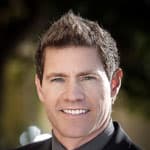
Dr. Todd C. Snyder received his doctorate in dental surgery at the University of California at Los Angeles School of Dentistry. Dr. Snyder has learned from and worked under some of the most sought after leaders in dentistry, refining his skills in comprehensive, extremely high quality aesthetic dentistry and full mouth rehabilitation. Furthermore he has trained at the prestigious F.A.C.E. institute for complex gnathological (functional) and temporomandibular joint disorders (TMD).
Dr. Snyder lectures both nationally and internationally on numerous aspects of dental materials, techniques, and equipment. Dr. Snyder has been on the faculty at U.C.L.A. in the Center for Esthetic Dentistry where he co-developed and co-directed the first and only comprehensive 2-year postgraduate program in aesthetic and contemporary restorative dentistry. He currently is on the faculty at Esthetic Professionals. Additionally, Dr. Snyder is a consultant for numerous dental manufacturing companies and has had the opportunity to research and recommend changes for many of the materials now being used in dentistry. Dr. Snyder has authored numerous articles in dental publications and published a book on contemporary restorative and cosmetic dentistry.
Dr. Snyder also founded and is CEO of Miles To Smiles a non-profit mobile children's charity that helps indigent and underprivileged children.
What if the biggest obstacle to growing your practice isn't your clinical skills or your technology—it's how you and your team are talking to patients?
Dr. Todd Snyder earned his doctorate in dental surgery from the University of California at Los Angeles School of Dentistry and has trained at the prestigious F.A.C.E. Institute for complex gnathological and temporomandibular joint disorders. He co-developed and co-directed the first and only comprehensive two-year postgraduate program in aesthetic and contemporary restorative dentistry at UCLA's Center for Esthetic Dentistry, where he served on faculty, and currently teaches at Esthetic Professionals. A consultant to numerous dental manufacturing companies, international lecturer, published author, and founder of the Miles To Smiles nonprofit mobile children's charity, Dr. Snyder brings decades of high-level clinical and business experience to every conversation.
In this episode, Dr. Snyder breaks down his proven three-pillar framework—attract, convert, and deliver—and makes a compelling case that most practices are leaving significant revenue on the table not because of weak clinical skills, but because of ineffective patient communication. The discussion tackles the controversial question of whether technology truly drives case acceptance or whether it has become a crutch that compensates for underdeveloped communication. Dr. Snyder also offers a practical, step-by-step approach to transitioning away from low-reimbursement insurance plans without losing patients, and closes with a high-profit, low-barrier service strategy that any practice can implement immediately.
Episode Highlights:
The attract-convert-deliver triangle assigns equal weight to each pillar, but for practices that already have an established patient base, optimizing the convert stage yields the fastest return. Improving verbal dialogues, psychological framing, and rapport-building can move patients toward case acceptance without any additional marketing spend or technology investment.
Technology such as digital simulation software and intraoral scanning can be a powerful adjunct to case acceptance, particularly for clear aligner therapy where showing patients a visual outcome and the restorative benefits of alignment reinforces a minimally invasive treatment rationale. However, visual tools used without foundational communication skills function as a crutch—images alone rarely close a case when trust and financial clarity have not been established first.
Dropping out-of-network from the lowest-reimbursing insurance plan—rather than exiting all plans at once—is presented as the lowest-risk entry point for transitioning toward a fee-for-service model. Strategic patient communication, including one-on-one conversations and letters explaining that out-of-pocket costs will remain unchanged while the practice bills the insurer directly, can preserve nearly the entire patient base while immediately increasing revenue per procedure.
Teeth whitening, when systematically introduced at every patient touchpoint with a brief scripted conversation and a shade guide, can generate an estimated $18,000 to $24,000 in additional annual revenue with minimal overhead and no laboratory costs. Beyond direct revenue, whitening serves as a gateway service that heightens patient aesthetic awareness and opens the conversation to restorative and cosmetic treatment needs they had not previously considered.
A combined in-office and take-home whitening protocol—where custom trays are fabricated chairside and an in-office treatment is performed simultaneously—can generate approximately $1,000 in revenue within a 45-minute appointment, representing one of the highest per-hour profit margins available in general or restorative dental practice. Because there is no laboratory fee and materials costs are low, the net margin on this service is exceptionally high relative to most restorative procedures.
Perfect for: General dentists looking to increase case acceptance and profitability, cosmetic and restorative dentists considering a move toward fee-for-service, dental residents entering private practice, and any dental team member involved in patient communication or treatment coordination.
If you want to stop waiting for the right patients to say yes and start building the practice you actually envisioned, this is the episode to listen to right now.
Transcript
Read Full Transcript
This transcript was automatically generated and may contain errors or inaccuracies. It is provided for reference and accessibility purposes and may not represent the exact words spoken.
99% of the time, the reason someone doesn't move forward is because you or the team communicated
incorrectly. So it's your opportunity pretty much to be successful, but too often we blow it
ourselves because of how we talk.
Welcome to the Dr. Phil Klein Dental Podcast. Patient communication is one of those skills that gets
overlooked and undertrained, but it's actually one of the most important things you can master to
run a successful dental practice. At the heart of it is trust. Patients need to feel like you
really understand their concerns and have their best interests at heart before they'll say yes to
treatment. So that raises a big question. If your communication skills are strong, how much does
technology really matter in helping patients commit? Dr. Snyder and I are going to dig into that
debate in this episode. We'll also take a step back and look at the bigger picture. How do you
build a patient base that lets you do the kind of dentistry you actually want to do? Sometimes that
means making bold moves, like stepping out of certain insurance networks. And whether you do that
all at once or one step at a time, the goal is to reshape your practice to attract the right
patients for the work you love. And finally, Dr. Snyder shares a surprising and bold tip.
Why teeth whitening, when done strategically, can become the most profitable service in your
practice. This episode is all about practice success and building a practice that attracts the
patients you want so you can do the dentistry you love. Our guest today is Dr. Todd Snyder.
He is a regular contributor on VivaLearning.com, a cosmetic dentist, international author,
lecturer, and consultant to dental companies. He hosts a weekly podcast. Delusional,
Winning the Weekly War of Dentistry. You can reach Dr. Snyder at legion.dentist. Before we get
started, I'd like to thank all of you for tuning in. If you're enjoying the show, please follow us
on Apple Podcasts and Spotify, and even better, leave a review. By doing so,
you're not only showing support for what we do here, but your reviews are instrumental in getting
more dental professionals to listen and benefit from our content. We really do appreciate it. Dr.
Snyder, thanks for joining us. Thanks for having me, Phil. Love being here. We're certainly happy
to have you as always, Dr. Snyder. And I do want to tell our audience about this really, really
excellent two-hour program you have on VivaLearning.com in our new Viva Learning Premium section.
It's called A Precision Producer. It's 12 10-minute videos. That's part of the course.
The entire course is 120 minutes. It's worth two CE credits and really covers in quite detail what
it takes. to have a successful practice and be a precision, what you call a precision producer.
So it's an excellent program. It's part of our, as I mentioned, premium section,
which is relatively new on Viva Learning. And it's doing very, very well. Great feedback we're
getting on this course. So I recommend it to everybody. Just go to vivalearning.com and you'll
find it. We've done a lot of podcasts together over the past number of years. And one particular
strategy keeps coming up.
keep leaning on it as one of the most important things a dental practice can do in order to stay
successful, and you break it up into three pillars, and that is attract, convert, and deliver.
Can you give us an example of how a practice might improve in just one of these areas and see
immediate results in their practice? If you think of a triangle... 33% of one side is delivery,
33% is attract, and 33% is convert. And you go, okay, well, if all I'm focused on is delivery,
I'm missing 66%. So you go, okay, I could dive into the attraction part and work on the marketing
aspect, but that's a little more time, money, and effort to go out into the world to find people.
So if you already have a practice with a patient base, then I'd say I would work on the convert.
And a convert means the communication, the messaging. The actual verbal dialogues, the psychology
behind what you say and why, the framework in which you position the conversation to the patient
and what they're hearing and how that compels them to do certain things, whether it's to say yes
and move forward or to be repelled and move away. There is so much research and science behind
communication, getting someone to convert and move forward with something. The big thing that's
being talked about now is that technology. plays a big role in that. And the dentist needs to have
this very up-to-date modern technology in order to wow the patient and show them in 3D,
right in front of them on the screen with all this AI software, what it's going to look like. And
you're one that's a little more cautious about buying expensive technology, especially before you
really know where you want to go with your practice. So what's your feeling about using technology
for that? second part of it, which is convert. We'll be right back with our guest, but first,
I want to tell you about VOCO's newest composite, Grandioso 4U. Top clinicians are calling it the
most tooth-like universal composite ever made. Unlike traditional composites that force you to
choose between either an anterior aesthetic composite, a stronger layering posterior composite,
or a fast but aesthetic compromising bulk fill, Grandioso 4U does it all,
simplifying your workflow while delivering superior results in a single material.
It cures 4mm in just 10 seconds, looks stunning with 5 cluster shades covering all 16 Vita shades,
and handles like a dream with 50% less resin. It's a 91% filled nano hybrid,
giving you tooth-like strength, ultra-low shrinkage, exceptional wear resistance, and an amalgam
-like high radio opacity. So as they say, seeing is believing. So grab your free sample of
Grandioso for you today at voco.dental. Well, here's what I would tell people is technology.
Keeps coming out more and more stuff from manufacturers. And the reason they keep coming out with
more and more is to get you to buy stuff. Their whole job is to get you to buy things so they can
make revenue. That doesn't necessarily help your business. I have shown on many times a brand new
patient that comes in that's wanting to talk about some type of treatment, whether it's veneers,
individual tooth, what have you. I don't show them a thing. There is no technology.
There are no photos. I'm not pointing at x-rays. I am simply communicating. And you'd be amazed
how many people say yes and move forward without ever talking dentistry and showing some kind of
technology that's new and latest and greatest. So is it a crutch in my mind? Yes.
Can you wow people with it? By all means. But if your communication skills are not at the level
they could be. to convert people to move forward then yes you are using it as a crutch and people
may still say yes because they're already at your office and if someone's already at your office
they're more likely to say yes because they're there they're already committed 99 of the time the
reason someone doesn't move forward is because you or the team communicated incorrectly so it's
it's your opportunity pretty much to be successful but too often we blow it ourselves because of
how we talk right but you do have to give credit to the fact that if you could show somebody what
it will look like visually. It's more than words because they're seeing it on the screen and
they're going, wow, my teeth, you know, take clear aligner therapy, for example. You know, you can
do a scan and quickly get them something up on the screen that shows them what their teeth will
look like. And by having them aligned, their restorative work will be much more conservative.
They'll be much more toward the minimally invasive approach because we won't need to remove a lot
of tooth structure, so on and so forth. Don't you think the visual aspect of... converting them is
so important and that requires the technology? I totally agree. It's important to be able to have
that. But what I'm saying is... great to have that. And yes, someone gets emotionally involved when
they see it. Yes, that is helpful. But what I'm saying, it's also a crutch in the sense that you
could potentially get someone to say yes and move forward just through communication alone and then
show them a photo. And it's like, oh my God, that's icing on the cake, right? As opposed to not
being able to communicate, just show a picture and hope they say yes, because they see that alone.
You let some other employee just say, here's a photo. What do you think? Do you want to move
forward? And they're like, no, I don't know. Because no one talked to them and took the time to
build in the rapport. financial aspect of it. They may go, oh, it looks great, but I don't think
you're a right person for me or it's too expensive. Like there's other things that come to their
mind that no one explained and communicated. So just the photo doesn't always sell the case. So no
doubt there's a huge amount of psychology in converting, in selling the patient. You have to work
with the patient's personality. You have to present yourself in a way that the patient likes you,
trusts you. wants to hear what you have to say, and doesn't feel like they're being sold a bill of
goods. So there's a whole psychology behind it. And the way you do it and what you say is extremely
important. And when we talk about technology, I probably differ with you a little bit here. I do
think that technology is a critical factor, overlaid on top of good communication.
Because when you show a patient what their mouth could look like visually.
That is a very strong selling point. I agree. The communication part, what you say and how you
present, you got to get past that and you have to make the patient believe in you. But I think the
technology also is more than just an adjunct. I think it actually, and more than just a crutch, I
think it actually can close the deal very effectively. But we don't agree on everything. Getting
back to the framework of attract, convert, deliver. How do we optimize the third tier of this
framework? Deliver. Well, deliver is the thing you finally get to do if you were able to attract
and convert the right people and get them to say yes. Now, the delivery, that's important too.
And that's what, you know, to some extent, everyone's taking training on. Okay, I'm going to
deliver a six-layer composite. Great. If you attracted the person that wants that type of work and
you got them to say yes and they understand it's two hours of time and it's going to cost, I don't
know, $1,500 for that effort and, you know, all of these different things and they're all in, then
you finally get to do it. And so now you better back up what you were claiming and everything
beforehand. Now, if you're saying, Hey, I'm doing a filling for $75. Your insurance is paying for
it. They're not expecting much, right? That's a different type of patient. So again, it really
starts with who am I attracting and what I truly want to offer. Am I getting them to say yes to
what we're trying to do here? Then I get to deliver that product. So are you delivering the product
that you want to be delivering in your practice? You know, whether it's all on fours or a big,
you know, full mouth rehabilitations, the anterior six layer composite, are those the things you're
delivering? Or you're like, no, I just could deliver whatever someone comes in for. The simple
filling, a single crown, maybe I get to restore an implant. Like the delivery, you have to also be
good at that skill to try and provide the right type of service for that type of client because
they have to mesh at the end of the day. So the delivery is important still, but if you're focusing
solely on delivery and nothing else, that's why I see people that take veneer course and go, yeah,
I learned how to do it, but I'm not confident because I haven't had to do any yet. No one's coming
in and getting me to say yes to doing their veneers. Well, maybe that's because you don't have the
repetitions. Maybe it shows in your communication. Maybe it shows in your body language. There's a
lot of reasons why people say no. Delivery is important, but if you're focusing on that solely, you
may never get to do all the things you want to do, let alone maybe a case a week or four cases in a
month or month and a half. You start recognizing that, yeah, you take courses, but you're hoping
and waiting for that patient to finally show up and say yes. And some that do come in to talk about
the procedure, they don't say yes. And so you recognize like, man. If I can contract and convert, I
get to deliver the exact dentistry I've always wanted to do but haven't done yet. I do want to
bring up, now that we're talking about delivery of services and the kind of services that obviously
a dentist wants to do on a patient, and that's what they're trying to convert the patient to say
yes to. But the reality is a lot of the insurance plans certainly don't compensate the dentist
appropriately for the type of work that they may want to do. And if 30,
40% of the patients that are in that practice have insurance that doesn't compensate
appropriately, it precludes that dentist from doing the ideal work that they prefer to do.
So what do you say to a dentist in that situation? If you are mentoring them, what would be your
recommendation? Yeah, well, the same thing is when do you decide to get married? When do you decide
to have a kid, right? When do you decide to buy a house? You just jump in and do it, right? So at
some point when you go, you know what I'm thinking about, okay, well then jump. You know, that's
it. You have to jump. I know it's scary. You got to put one foot in front of the other and just go.
Now, would I go all in and just, you know, kill everything off and burn everything? Me personally,
I do. Do I tell anyone else? No. You know, I would say, okay, again, wait in carefully.
Let's try a few things. Like, so for the patients that are used to being like on a low insurance
reimbursement, well, what if the lowest paying insurance company, you actually dropped the lowest
insurance company? right? Not telling the patients they have to leave. This has to be done
strategically with communication and letters and information, maybe even one-on-one communication
where you're explaining to the patient, hey, your fee is not going to change even though I'm no
longer in network for your insurance company. They will actually pay me typically more than what
they've been paying, right? And you go like, wow, that's kind of cool. So nothing's going to
change. You're going to pay the same thing you've been paying. Same service, same everything. Is
that okay by you? 99% of people are like, Yeah, no problem. You're still going to build my
insurance company. They still take care of it. Like, yeah, okay, done. Didn't lose any patients,
hopefully, right? Maybe lost one or two, but you're making more money at that point. And you go
like, my God, why didn't I do this 30 years ago or 10 years, five, whatever it was? Like, why
didn't I learn how to communicate and drop these things to find that I'd be making more money? And
you go, now I'm more successful just having changed some insurance policies. My wife and I and the
new kid, we're already doing better. Then you start to go with that little rise and, Seeing the
vision and the opportunity, that propels you. You get this newfound confidence like, wow, this
stuff does work. Now let me go see what else I can do. What scared me doesn't scare me as much
anymore because I can relate it to what I just did that scared the heck out of me. But now I became
more successful. And that changed my mindset, my confidence, my fortitude, my determination. And
because of that, I'm now going to try the next thing that scares me. But that's where, again, you
go back to that. a vision builder worksheet to say, what do I, what do I want for me,
my unique situation, my insurance, my patients, and what do I want to deliver? Am I going to be
able to deliver what I truly want in this office, in this location, in this place? Cause that's
another honest thing, right? If you think you're going to do like veneer cases every day of the
week and you're in rural town with. thousand people, you're mistaken. That vision board also has to
have honesty behind it. And to some extent, someone from outside has to look in because we can't
see things when we're too close to them. Someone's got to look at it and go, you know what? This
part will probably work, but this part you better reconsider because really think about what's
going to happen here, here, and here. And they're like, oh, yeah, I didn't know that. Or I didn't
see that, right? That's where having help from a team becomes important because we all try to play
alone. Hard to play tennis or football or basketball or anything alone. You have a team. It becomes
a far easier. Yeah. And I just want to mention to our audience that Dr. Snyder mentioned the vision
builder that he talked about on a previous podcast. And that vision builder is a worksheet that's
actually in his course on vivalearning.com. And he talks about that in his course, how important
it is to actually get things down in writing about where you want to be in your practice,
which is very helpful to reaching your goals and meeting that vision. So it's in his course on
vivalearning.com. Um, so let me ask you this question. Theoretically, if you had to choose one
idea that you emphasize in your course that a dentists who attended your program could take home
and implement right away, what idea would that be? We'll be getting right back to our guest in a
second. But first, for the optimal bond between zirconia and your resin cement, check out Bisco's Z
-Prime Plus. Rated best in class by thousands of top clinicians, Z-Prime Plus,
featuring MDP, creates a strong, reliable bond to zirconia, metal, and alumina substrates.
And nothing could be simpler. It comes in a single bottle and it's 100% compatible with both light
cured and dual cured resin looting cements. It's time you get the most out of your zirconia
restorations. To learn more about Z Prime Plus and the entire Bisco adhesive product line,
visit bisco.com. Well, I'd say the first thing is got to be honest with yourself. You know,
you got to look in the mirror and say, where am I and what I truly want to be doing? That would be
my first step. And so... that's not an implementable system, that is a system towards changing
everything you've ever done, right? Now, if you said, no, no, I need to walk away with something.
Okay. If you're going to walk away with something, the one thing I would tell you to do, because
everyone wants to look and feel better. I'd say, okay, if I were to do one system that makes me
some money instantly, I'd have every person in the practice. talk about teeth whitening.
Non-invasive, quick and easy, three-minute conversation or less. Hold up a shade guide if you
want. Use a digital software that does simulations. Do something and say, hey, have you ever
considered wanting whiter teeth? Yes or no? You'd be amazed, not that everyone's going to beat this
person over the head, every touch point, but someone in the office for every patient walks in has
to do that because you will find most people never ask these questions and you're going to have a
couple people say, yes, I want to know more. And then if you're, you know, Having the time to
communicate, some people are going to say yes. And so at the end of the month, if you got two,
four, 10 patients that said yes to simple teeth whitening, now you've made an extra what?
$1,500, $2,000 a month, whatever it is. You go, wow, if I did that every month. That's $24,000
more a year that I didn't have just by a simple conversation. It opens the door because now they've
seen whiter teeth. Now they start to criticize things. Go, I got this little filling here or this
little black line on the crown or this little chip tooth. Can you fix these things? It opens the
door to opportunity. Yeah, no, that's very interesting that you mentioned that Dr. Snyder, because
I recently had a conversation on a podcast with a prosthodontist. You know, prosthodontists are not
known to do a lot of whitening necessarily, but he said that the most profitable thing you can do
in your practice. is whitening. He prints the trays in the office, the upper and lower trays,
and he does a take-home whitening. But as they're printing, he does an in-office treatment. In
the in-office aspect of it, he charges 600 bucks and then he charges 250 per arch on the trays.
And then he gives the material to the patient to do it at home. It's $1,000. He spent,
I don't know, 45 minutes with the patient. If he's sitting there doing the actual whitening or
babysitting it, And where could you make $1,000 in 45 minutes, which is almost all profit,
by the way. There's no laboratory, no anything, because he's printing it. So as we wrap up this
podcast, Dr. Snyder, I want to let people know that you have a podcast called Delusional, the
weekly war podcast. That's at legiondentist.com. You also have a course on Viva Learning in the
Viva Premium section, which is called Precision Producer. So you have a lot going on,
and you're doing your training, you're in private practice, and you're driving a race car. So
you've got things going on from all directions. Tell us about the course itself on Viva.
You know, I'm really excited because, again, it goes back to most of the time we're learning more
dentistry. So I'm very appreciative to have the opportunity to share concepts that I hope help many
dentists to break out of the self-imprisonment and create something better for themselves,
something they always wanted. We're very happy to be part of it with you, Dr. Snyder. And we really
are excited to see the engagement this course is getting, Precision Producer. Have a great evening,
and we look forward to having you on programs very soon. Thank you so much, Dr. Snyder. Thanks so
much, Phil. I appreciate it.
Clinical Keywords
Dr. Todd SnyderDr. Phil Kleindental podcastdental educationpatient communicationcase acceptanceattract convert deliverpractice managementteeth whiteningtake-home whiteningin-office whiteningcustom whitening traysshade guidecosmetic dentistryveneer case acceptancefull mouth rehabilitationclear aligner therapydental simulation softwareintraoral scannerinsurance drop out-of-networkfee-for-service dentistrysix-layer compositezirconia bondingZ-Prime PlusGrandioso 4UVOCO compositeBisco adhesivesViva LearningPrecision Producergnathological disordersTMDesthetic dentistrydental case conversion