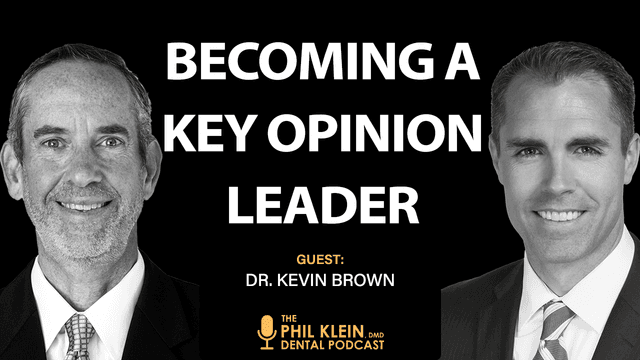
An innovative and passionate dentist, author, and international speaker with a proven track record of serving as an industry leader on critical and emerging topics related to dental care. An effective and charismatic communicator who brings a fresh take on dentistry through an approachable and pragmatic style that crosses generational and organizational boundaries.
Dental podcast: Welcome to DentalTalk. I'm Dr. Phil Klein. Today we'll be discussing the challenge of integrating a new digital dental camera successfully into your practice without disrupting chairside workflow. Our guest is Dr. Jennifer Bell, whom received both of her degrees from UNC Chapel Hill and has volunteered for Missions of Mercy, providing dental care throughout the state to those in need. She is currently the Immediate Past President of the North Carolina Academy of General Dentistry (NCAGD).
Transcript
Read Full Transcript
This transcript was automatically generated and may contain errors or inaccuracies. It is provided for reference and accessibility purposes and may not represent the exact words spoken.
You're listening to The Dr. Phil Klein Dental Podcast from Viva Learning.com.
Welcome to the show. I'm Dr. Phil Klein. Today we'll be discussing the challenge of integrating
a new digital dental camera successfully into your practice without disrupting chairside workflow.
Our guest is Dr. Jennifer Bell, who received both of her degrees from UNC Chapel Hill and has
volunteered for Missions of Mercy, providing dental care throughout the state to those in need.
She is currently the immediate past president of the North Carolina Academy of General Dentistry.
Dr. Bell, it's a pleasure to have you back on Dental Talk. Thanks so much for having me back. I had
so much fun the first time. Let's do it again. Yeah, we are. So for those of you who missed the
first podcast or haven't seen it yet, these aren't live. They are recorded. But I definitely
encourage you to tap into Dr. Bell's first podcast sponsored by Shofu.
It talks about a product that has Jimer technology in it. um super super beneficial to the patient
uh it actually costs less than some of most of the brand name composites and flowables so it's
worth listening to that it's titled bringing in the new and i'm glad i did and the reason why it's
titled that is because uh dr bell also covers some of the challenges of introducing new products
and materials into the office how it affects workflow so she covers all that And she also talks
about the benefits of this Gymer technology, which has been around a long time for Shofu. And it's
worth learning about. On this one, as I mentioned in the introduction, we're going to be talking
about a dental camera, a digital dental camera, of course. So Dr. Bell, many doctors and staff are
somewhat intimidated by dental photography because it's not their specialty. There may not be
camera buffs. Some of the cameras can be cumbersome. And unless you have strong photography skills,
the images either come out. over or underexposed or out of focus, which could be frustrating for
the staff. But Shofu, the sponsor of this podcast, has something called iSpecial, iSpecial Digital
Dental Camera. And it's really designed for the dental office. And I hear amazing things about it.
So we decided to do a podcast on it because I think it's important for the audience to check it
out. And I know how difficult it is to bring in a new camera, just like we talked about on the last
podcast, bringing in new dental materials could cause disruption. to the chair side workflow which
we don't want to do so um but it's really important to take good pictures so before we get started
tell us why dental photography is so critical to a practice well we've been using enteral
photography for a really long time. And I think most clinicians would agree the minute they started
onboarding intraoral photography, patients started participating in the diagnostic process. You
know, I'll often take an intraoral photo, I'll pop it up on the screen, and I'll show patients a
clinical condition that I've observed. And my statement following up of... that is you don't have
to be a dentist to see what's happening here. You know, maybe I'm a dentist to observe it and
identify it, but you really don't have to be a dentist to see that this is not what a natural tooth
should look like or this looks like decay or a hole or, you know, et cetera. So basic clinical
photography really gets patients more involved in the clinical diagnostic process,
informed consent, and hopefully ownership of the procedures that need to occur.
So that's the initial. value of any photograph. It really helps with communication with patients.
Being able to take good digital photography, where it's either for case presentations with your
patients, documentation of procedures that you've performed. Sometimes it's for validation of
insurance reimbursement. But being able to have those good clinical photographs in a patient chart
is continuing to tell that story. It manages the liability of the procedure. It helps to explain to
patients why you want to move forward with treatment. Again, participates in the informed consent.
And I've even had clinicians tell me that luckily because they took a standard set of photographs
on every new patient. A patient came back a few years later and said, you chipped my tooth when you
prepped the other tooth. And they had photo documentation to show that it had been chipped for the
last several years when they took that photo at their initial exam. So there's a lot of value in
data when you capture those photographs. Yeah, for sure. Well said. So I often talk to KOLs about
that. A lot of them say the first thing they do is take photographs and they have a room for that.
They bring the patient in the room and they have... Lots of photographs on the wall. It's a small,
like a small exam room, I guess they use. I don't know if, of course, every practice may not have
the room to have a dedicated room for photography, but they do that and they have these pictures
all on the wall and it shows some before and some after. And it's just, they find it's a really
good way to start with a new patient that comes into the practice. Is that something you do as
well? It definitely tells your story. We run a little bit more of a streamlined process because we
are a PPO practice. And so our visits are maybe not quite as extended as folks who particularly do
a lot of cosmetic dentistry. And so they really want to paint that picture and tell that story.
There's a tremendous value in that. And I wish we had the bandwidth or time to carve that out. But
we do use intraoral photography and intraoral photos on every patient to catalog and document.
and i hear a lot about it the eye special tell us about this camera because you know to me you know
and i'm a little bit of a photographer it just seems like it's really built and designed for dental
photography and the reviews on this thing are great this has been one of the most easy fun pieces
of technology we've brought in and and we're a high technology practice we have scanners and CT
capability. And, you know, we have lots of technology and moving parts in our practice.
And when I brought in the eye special, I was somewhat skeptical that it was going to be as easy as
advertised. We have dabbled in photography for years. We've had all the more expensive dental setup
cameras with the special ring flashes and all the other things. and found them incredibly difficult
to operate it was hard to train staff to use it they would give it up very quickly because there
was a lot of obstacles in the way um and and quite frankly i wasn't educated enough to even be a
good trainer for my team members because i found the technology intimidating so when we brought the
eye special in i kind of purposely gave it to my lead assistant who has struggled with photography.
She's a phenomenal assistant and a great person, but photography has never been her gift.
And I put it in her hand and I said, go take some, you know, clear aligner photos for me for an
ortho start. And she came back in and they were the best photos I'd ever seen her take. And it was
because it was very straightforward. You click on these preset icons, you select which area you
want to start. doing your photography and if you're doing standard mode like say you're doing a pre
-start for orthodontics you've got your set photographs that you're going to take to work the case
up you go to that standard mode and then you kind of toggle back and forth between the different
focus views and the the cool thing about the camera is it automatically adjusts the the f-stop the
flash intensity shutter speed all these fancy terms that you have to learn For all these other
really high-end cameras, the camera's doing a tremendous amount for you intuitively based on what
you're selecting. Yeah, and the screen apparently is very, very easy to use and very visible and
clear. It has a big like kind of mini monitor on it, does it not? It does,
and it's touchscreen. So, you know, in the world of iPhones and iPads, people are very accustomed
to using touchscreen technology now. So you have all your presets there on the touchscreen for you
to select and kind of toggle between. You can do a shade selection, which we really enjoyed that
for our laboratory because it can do a black and white and a shade photo. You can draw on the
screen if you want to communicate additional information or highlight something specific for the
lab. You can use technology to import it into your practice management software very quickly and
HIPAA compliant. One of the other great things that was essential, especially when, you know,
when COVID was hitting and infection control review was really dialing in, the camera is 100% able
to be disinfected. So you can take your cavi wipes and wipe the whole thing down without ruining
any of the components, which, you know, as well as I do, that's incredibly difficult to do.
with cameras that are not designed specifically for dentists to use. Right, that have a hundred
moving parts. That's right. So this camera, if you presented this to an assistant,
how long would it take them to get started and get great photos? And is it self-contained where
they basically have everything they need to create their own photography studio inside the dental
office from this camera? Yeah, I think you would just need about an hour's worth of training. And
it really is probably more on lining your patients up for that ideal photo,
depending on, you know, if you're using the mirror, retracted views, full face views,
and if you want to line up, you know, to a grid so that that photo can be replicated in a digital
software format. I think that's where you would spend 90 percent of your training time,
which wouldn't be unique to this camera. The camera itself is so intuitive that once your team
member actually understands what you're looking for in each specific photo and what those
requirements are, then, you know, using the camera to actually capture that data is quite easy and
simplistic to do. So, again, most of that training, I think, would be focused on getting the ideal
image. What do I want to include? Which teeth should I be able to see? And it even has in the
little preset button, if you're doing a mirror image, you can click a mirror image and it will
invert it for you automatically. Yeah, I think there are like nine presets that all apply to all
different types of photographs that would be pertinent to a dental practice. They have a nice cheat
sheet too, a nice training sheet that comes along with it. that shows how to capture the ideal
photos for, you know, a pretty standard set of photos that you might take for a cosmetic case
workup or an orthodontic case workup. It walks them through each of those photos and how to capture
the more ideal photos for you. Yeah, and one of the things that's really important that dental
practices may not consider is that the more complex the camera is, the less likely the staff is
going to use it. they kind of like um i don't know i know i should be taking photos maybe we'll
just pass on that for this patient the patient's in a rush or i don't feel real comfortable taking
photographs now because i know i have to get the ring flash hooked up and all this other stuff so
don't you agree that the simplicity of this camera encourages assistants to regularly take photos
which i think is very important for the practice Absolutely. And I think it allows them to be able
to work independently. When we were using the more sophisticated cameras, it often did require to
support team members to be able to really capture those ideal photos to help with retraction.
mirror positioning, et cetera. Because one, the camera can be held with gloves and you can kind of
be working in the intraoral environment and alternating back and forth with the patient because
you're holding a clean camera and you have the ability to disinfect it afterwards. The person who's
taking the photo can also be manipulating the intraoral environment, placing the mirror, helping
with retraction if the patient's doing their own retraction. So it really can be done much more
independently. When we were using... cameras. It really wasn't ideal to have gloves on because it
wasn't really a sterile or clean environment. So it really helped to have a second set of hands to
be working oppositely in the interwar environment. So I think it's really helped us manage our
staffing overhead and training all together. And the return on investment on the purchase?
I think any time, what is it, the one case that blames you for a particular thing you did that you
had documented that existed prior to, that probably sells itself really fast. But if you're doing
it for case presentations and to communicate. with patients what you want to do moving forward and
documenting their cases over time, it pays for itself very quickly because it doesn't really take a
lot of extra chair time and it doesn't take a lot of extra training in order to incorporate it into
the practice. So, you know, I think the ROI is much faster on any product that you can put into a
team member's hands in a very short period of time and get. results that you can consider
clinically acceptable. For sure, for sure. And in today's day and age, the infection control aspect
of this camera is huge, absolutely imperative that the camera can be easily disinfected.
You know, you protect the staff, you protect the patients. So to wrap up this podcast, just so our
audience knows, the name of the camera is called I-Special and it's spelled E-Y-E Special,
one word, E-Y-E Special. And it's distributed or sold by Shofu.
I'm not sure if it's available through distribution, like the Henry Shines and Pattersons and
Bankos of the world. I don't know if they sell it through the dealers. I get my other products
through the dealers. So I would assume the iSpecial would be the same way.
Okay. But if it's not, if you don't see it in your dealer catalog, you may just reach out to Shofu.
Just go online and Google them and find out. Because for some reason, I remember something where
that particular... product may be sold directly from Shofu but I might be wrong you can check on
that so my rep would even offer to come in and do training um my Shofu rep offered to come in and
get the team on board okay so they they could do a demo for the office and then you can say yeah
this looks fantastic or no thank you we don't need it you have that option and at no cost I assume
yes yeah so that's good Shofu is a great company they stand behind their products and dental
photography is so important and Having this camera be so easy to use and with the features and
functions we just talked about, I thought it would be something we should share on a podcast. And
that's why we had you on, Dr. Bell. And also, again, as I mentioned earlier, check out Dr. Bell's
other podcast that's talking about incorporating onboarding new materials and technology into the
practice. And even though we tend not to want to do that because it's uncomfortable and it requires
a learning curve and it changes the workflow. There is a point in a practice where you have to say,
you know what, those materials that are out there that I just read about or I heard about in a
webinar are worth looking into because they do provide some patient benefits that are so
significant that it's my responsibility as a healthcare provider to look into them further.
And then in that case, ask for a sample like Dr. Bell recommends. Any last words?
No, I think you really summarized it quite nicely. And I think it's at least worth mentioning that
part of the reason why when I look to onboard new materials and technology,
I really want to only source. new things that come from companies that have a history of success,
that they have predictable products in the marketplace, they have data to justify their clinical
classifications, and that they're going to make our jobs more enjoyable and our team satisfaction
goes up and frankly just makes being a dentist some days a little bit better.
And Shofu has continued to be a company that I've enjoyed. you know, this short journey with,
and I look forward to a long relationship with them. And, you know, so we didn't make this decision
lightly. They came with a strong reputation that ultimately has just been proven to be right every
step of the way. Yeah. And it's all about making our practice better for the patient and more
enjoyable to work in without a doubt. I mean, that's our happiness as clinicians is key to.
a successful dental practice. Thank you very much, Dr. Bell. We look forward to having you on more
podcasts. You're a great speaker, more webinars. You have great information. So thanks for
contributing to Viva Learning. We really appreciate it. Thanks, Phil. I had so much fun today and
really appreciate the time.