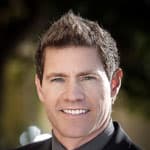
Dr. Todd C. Snyder received his doctorate in dental surgery at the University of California at Los Angeles School of Dentistry. Dr. Snyder has learned from and worked under some of the most sought after leaders in dentistry, refining his skills in comprehensive, extremely high quality aesthetic dentistry and full mouth rehabilitation. Furthermore he has trained at the prestigious F.A.C.E. institute for complex gnathological (functional) and temporomandibular joint disorders (TMD).
Dr. Snyder lectures both nationally and internationally on numerous aspects of dental materials, techniques, and equipment. Dr. Snyder has been on the faculty at U.C.L.A. in the Center for Esthetic Dentistry where he co-developed and co-directed the first and only comprehensive 2-year postgraduate program in aesthetic and contemporary restorative dentistry. He currently is on the faculty at Esthetic Professionals. Additionally, Dr. Snyder is a consultant for numerous dental manufacturing companies and has had the opportunity to research and recommend changes for many of the materials now being used in dentistry. Dr. Snyder has authored numerous articles in dental publications and published a book on contemporary restorative and cosmetic dentistry.
Dr. Snyder also founded and is CEO of Miles To Smiles a non-profit mobile children's charity that helps indigent and underprivileged children.
This episode focuses on the importance of patient communication and what we can do as dentists to improve our communication skills and processes. Our guest is Dr. Todd Snyder, a regular contributor to Viva Learning.com, a cosmetic dentist, international author, lecturer and consultant to a variety of dental companies. You can reach Dr. Snyder at: https://www.legion.dentist/.
Transcript
Read Full Transcript
This transcript was automatically generated and may contain errors or inaccuracies. It is provided for reference and accessibility purposes and may not represent the exact words spoken.
You're listening to the Phil Klein Dental Podcast
We all know as dental professionals the importance of good patient communication. It's a very
important aspect of our practice. To give us some insight into patient communication and what we
should be thinking about in our practice and actually doing is our guest, Dr. Todd Snyder. Dr.
Snyder is a regular contributor to VivaLearning.com. He's a cosmetic dentist, international
author, lecturer, and consultant to a variety of dental companies. He can be reached online at
legion.dentist. Dr. Snyder will be joining us in one second, but first, we all know that to
achieve healthy, beautiful smiles, we sometimes need to align the teeth. And to do so, aligner
therapy is a great option. So why not set your practice apart with 3M Clarity Aligners Flex,
designed for comfort? Clarity Aligners Flex feature a thin, flexible design, yet they deliver
excellent force persistence over a two-week period. Plus, they resist scratching and stains,
and they're backed by a dedicated clinician team providing support every step of the way. With a
variety of affordable case-type options, single or dual-arch, Clarity Aligners Flex offer a great
value to your patients and practice. To learn more, visit 3M.com slash clarity dash aligners dash
flex. Dr. Snyder, thanks for joining us. Great to be here, Phil. So let's start with dental
marketing. Now marketing is a big part of patient communication. So as a practice continues to get
more leads through various marketing initiatives, what are some common problems that an office runs
into? I'd say the biggest thing that I've seen, and it's been shown throughout lots of research
from different dental manufacturing companies, as far as the ability for the front office to have
been trained properly to be able to answer a phone call in such a manner that motivates the patient
to see this office as the place to be. And so call recordings where companies go back and listen to
an employee on how they... phone calls. It's amazing the recordings over time that you can hear of
literally front offices turning away patients almost just because of the verbiage they choose to
utilize and the way they interact with the consumer. So I'd say the first thing to look at is
definitely training your front office because they are the lifeblood of your practice as far as I'm
concerned. They will make and break you. If you can have a phenomenal person up front that's great
at motivating people that you're the office to be seen at, then you're gold.
So spending money on that becomes quite valuable as far as training and holding people accountable
and listening to actual phone calls. Yeah, so that person who you hire for the front office or that
front desk who's getting those calls, you really need to be careful on that hire. We're going to be
talking about that in a later podcast that we're going to be doing, talking about the value of
employees as it pertains to the success of the practice. So do you recommend doing a survey
afterwards to that patient? sending them a survey saying, hey, you know, you spoke to Sarah.
How'd she do? Did she answer all your questions? Are you satisfied with your conversation? Is that
something that you recommend? You know, that's interesting. I haven't done one of those, but that
might be a fun thing to look into. You know, I've listened to recordings and I've had people grade
our recordings and my employees know that they're always going to be listened to and they've had
training on it. So in that sense, I haven't really been overly concerned with asking the client,
but that becomes something I should think of and should be doing potentially. It seems to me if I
was answering the phone and I knew that the person I'm talking to is going to be evaluating me in
about five minutes. I'm going to be awfully careful of how I address that person and answer their
needs. So you talked about training. How does an office train their staff on patient follow-up and
communication? As far as the communication skill set, I use a company known as All-Star Dental
Academy. I've been using them for numerous years. I don't have time like most dentists.
We don't have time to train our employees. And so hence, if we don't have time, then we have
employees that are not trained. correctly. And so research has shown like 99% of ops don't train
their employees. So we assume that they're doing the best and yet we don't train them. We don't
hold them accountable. We don't, you know. follow up on things. So I would say get the front office
train. There's training 24-7 online. From there, have some type of platform that allows you to go
back and listen to phone calls. And so me, I was content with the training and their skill set on
the phone, but I never thought of like, well, maybe the patient perceives something different than
what I perceive because I think phone calls are going great. So I'm going to definitely look into
that. That's the only one I know that does incredible phone training. I know there's other... you
know, practice management people out there that probably do walk through that. The thing I like
about this is it's all pre-recorded so people can listen to it as often as they want, whenever
they want. So I find that to be great value for myself and my employees. We'll be right back with
Dr. Snyder in a moment. But first, as a dental professional, you spend a large part of your day in
the operatory. That's why partnering with the right dental company for the best dental equipment is
so important to you and your practice. The folks at DentalEase understand that every practice is
different, so they've created a customizable suite of treatment room packages to fit every need.
Whether you have lots of room or need to be super efficient with your space, DentalEase has a
configuration that will work for you. Known for its revolutionary J-chair and designer-friendly
forest equipment, such as lighting and sturdy ergonomic chairs, Dentalese combines comfort,
beauty, and efficiency into its state-of-the-art operatory equipment. And when it comes to
utility room equipment, nothing beats RAMVAC. It's quiet, reliable, and backed by industry-leading
warranties. To learn more about how Dentalese can customize and transform your operatory into one
that you'll be proud of, visit dentalese.com. When you talk about communication in the dental
practice, how do you define the term communication? Give us a general concept on that. Well,
you know, it's interesting because there's a lot of different types of communications. If we're
talking about marketing, I call it the legion trifecta. You have to attract and convert, and then
you get to deliver. So there's three sides to it. So we talked about marketing. Now we're talking
about communication, which is converting someone. When someone calls in on the phone, they have not
made an appointment. They're trying to communicate in such a manner to feel out that this is going
to be the right home for them. And so that conversion, that's the first point of touch with your
front office employee. Now, should they do a great job and that patient moves forward, they show up
in your office. Now it's their front office job again to convert this person to feel good that
they're in the right place and to make it easy and convenient. And then the next part becomes the
next employee handoff. you know, whoever that is, they have to communicate in such a fashion to
make this person feel like they're in the right place. And then finally it comes down to the
dentist because there's a lot of times people come in for consultations and the dentist blows it
somehow. And so the communication between the dentist and the patient is critical for success,
especially if you're trying to do these big, you know, if you're marketing for your platinum offer
that might be, you know, 10,000 plus, you have to do a great job of communicating. And they don't
teach us that in dental school. So unless you've gone out and taken communication courses and
psychology classes and learned how to interact with someone and speak in a manner that propels them
to want to move forward and say yes, then there's a good chance you could be repelling someone
based on your interaction. Yeah, there's a lot of moving parts to the whole communication process.
the different stages of where the patient is in the process of getting part of that office and
continuing with treatment. And, you know, it's like anything else. It takes a lot of work and
diligence to get that patient, to get them to engage with your office and accept treatment.
But it could take one bad experience, a bad communication with one employee, and that patient
doesn't come back anymore. It's just that fast because it's an emotional thing on the patient side.
It's just an emotional thing. It's like, I'm not spending my money here because that person was
just rude to me. That's how it goes. The dentist is working so hard and they don't exactly know
what's going on around them with their employees. Last question for this podcast, how do you
communicate to patients in a manner that motivates them in different ways? Not only motivates them
to get their friends to come to the office, to get their family to come to the office, but for them
to do more treatment if necessary and get the confidence that they need that this office is the
perfect office for them. You know, it's a long conversation. We call it inception. So the ability
to communicate with someone in such a manner where you're asking questions and you're leading
someone based on your line of questioning to to have them have a certain mindset.
We call it framing their mindset to think a certain way that they're going to come to the
conclusion you wanted them to come to by your line of questioning. And by doing this,
someone comes up with the answer on their own or they think they did it on their own, even though
you were guiding them and you're questioning. And when someone comes up with their own kind of
concepts or solutions, that's tied to them in a manner that's different than us telling someone
they need something done. So emotionally, you said it a minute ago, they are emotionally connected
when it's their belief and their opinion. They're more inclined to pay for something and do
something when they feel that they are the ones choosing to spend their money. versus you telling
them they need it and telling them they have to spend money, they're not as interested. And that's
why people will pay crazy amounts of money for cars and shoes and jewelry and everything else
because even though it does nothing for them in their world, emotionally it makes them feel like
they will be somebody different or makes them feel better about themselves when they interact with
others, whatever that is. And so they're willing to part with money because of the value they
created for themselves when they own that tangible item. So if they can create value for themselves
for dentistry based on the line of questioning, they will be more at ease in spending their money
and getting treatment done. That is a totally different type of concept and communication that is
typically not done in dentistry. It's usually, hey, you've got a cavity. You need it fixed. It's X
amount of dollars. See the lady at the front to schedule. Thank you very much, Dr. Snyder. Again,
great stuff. We'll see you on the next podcast, which is going to be talking about reliable and
efficient systems. Until then, have a great evening. Thank you, Phil. If you're enjoying this
podcast, please leave a review or follow us on your favorite podcast platform. It's a great way to
support our program and spread the word to others. Thanks so much for listening. See you in the
next episode.