General Dentist · University of the Pacific Arthur A. Dugoni School of Dentistry
University of the Pacific Arthur A. Dugoni School of Dentistry · Tufts University School of Dental Medicine · Seattle Study Club
Read full bio
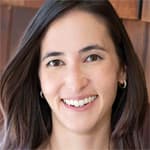
Dr. Lauren Yasuda Rainey is a proud alumna of the University of the Pacific, Arthur A. Dugoni School of Dentistry. After receiving her dental degree, she completed a General Practice Residency at Tufts University School of Dental Medicine. Her focus at Tufts was on advanced restorative techniques, including the use of surgical microscopes for restorative care, treating patients with complex medical needs and strengthening her skills by teaching in the undergraduate dental clinics.
After residency training, Dr. Rainey began teaching at the Dugoni School of Dentistry in the Department of Reconstructive Dental Sciences and the Department of Dental Practice. She was involved in both lectures and hands-on coursework in teledentistry, pre-clinical restorative curriculum, and local anesthesia administration. Dr. Rainey continues to teach direct composite restorative programs including black triangle closures, predictable class II techniques and is an advocate for using composite resin for crown alternatives wherever possible. She has taught dentists in the US and Canada, both in-person and in virtual hands-on formats. Dr. Rainey was recently featured by the Seattle Study Club in their Expert Tips series.
Dr. Rainey maintains a private practice in Berkeley, California where she developed and launched her own in-office membership program in 2018. She is active in mentorship and community building with her involvement with the Wellesley Club of Northern California, the Bioclear Alumni Network, and currently sits on the board of the Alumni Association at the Dugoni School of Dentistry. In her free time, you can find her outdoors in the Bay Area, mentoring young women interested in the health professions or whipping up a cake.
How can dental practices thrive financially when insurance reimbursements barely cover operating costs? What happens when your practice literally pays patients to receive treatment due to low insurance payouts?
Dr. Lauren Yasuda Rainey, a graduate of the University of the Pacific Arthur A. Dugoni School of Dentistry, brings valuable insights from her journey transitioning a struggling insurance-dependent practice to a thriving fee-for-service model. After completing her General Practice Residency at Tufts University School of Dental Medicine with advanced training in restorative techniques and surgical microscope use, Dr. Rainey taught at the Dugoni School of Dentistry in both the Department of Reconstructive Dental Sciences and the Department of Dental Practice. She currently teaches direct composite restorative programs across the US and Canada, specializing in black triangle closures and predictable Class II techniques, and serves on the Alumni Association board at her alma mater.
This conversation explores the harsh financial realities many dentists face when insurance reimbursements fail to support quality care delivery. Dr. Rainey shares her experience of purchasing a practice where new providers received dramatically reduced reimbursement rates compared to grandfathered dentists—dropping from nearly $100 to just $28 for the same procedures. Her candid discussion reveals practical strategies for transitioning away from insurance dependency while maintaining patient relationships and practice profitability.
Episode Highlights:
Insurance reimbursement disparities can create unsustainable business models where new dentists receive 70% less payment than established providers for identical procedures at the same location. Dr. Rainey's practice reached a point where single-unit implant crowns cost more to provide than the reimbursement received, literally requiring the practice to pay patients to receive treatment.
In-office membership plans can serve as an effective bridge when transitioning from insurance dependency to fee-for-service care. A successful pilot program with 30 patients expanded to 75-80 members within one practice year, representing 10% of the total patient base who became the most reliable and referral-generating patients.
Patient collaboration in developing membership plan structures can create mutually beneficial arrangements that replace traditional insurance. Working directly with a retiring patient who was paying $120 monthly for minimal dental insurance usage led to the development of a transparent annual fee structure that provided better value for both parties.
State regulatory compliance requires careful navigation when establishing membership plans, particularly in states like California where the process took nine months of legal review to ensure the program didn't constitute unauthorized insurance offerings. Understanding the distinction between membership benefits and insurance coverage is crucial for legal compliance.
Strategic communication and timeline management are essential for successful insurance network departures. Providing nine months advance notice to patients created opportunities for face-to-face discussions, team training, and script development, while allowing patients time to make informed decisions about their dental care options.
Perfect for: Practice owners considering fee-for-service transitions, recent dental school graduates evaluating practice purchase decisions, and established dentists struggling with insurance reimbursement rates who want to explore alternative revenue models.
Learn how to transform financial challenges into sustainable practice growth through strategic planning and patient-centered membership programs.
Transcript
Read Full Transcript
This transcript was automatically generated and may contain errors or inaccuracies. It is provided for reference and accessibility purposes and may not represent the exact words spoken.
You're listening to the Phil Klein Dental Podcast.
A fee-for-service practice doesn't have to be this pie-in-the-sky, far-reaching goal.
It's attainable with the right mindset, good communication, and keeping your eye on the prize.
To tell us more about it is our guest, Dr. Lauren Rainey. Dr. Rainey owns and operates her own
clinical practice and currently teaches direct restorative techniques to dentists in the U.S.
and Canada. Dr. Rainey will be joining us in a moment, but first, if you're looking to raise the
bar with your adhesive dental procedures, you should definitely be looking into Bisco. Bisco is a
great company that has an unparalleled track record. I can unequivocally say adhesion is their
passion. They are genuinely dedicated to understanding and improving the ability to bond dental
restorations. Bisco is a company that places tremendous value on research and scientific knowledge
to benefit you and your practice. Being an endodontist myself, my favorite Bisco product is
Theracal LC, which hands down is one of the best materials to use for direct and indirect pulp
capping procedures. It not only seals the dentin, but offers significant calcium release,
which stimulates hydroxyapatite and secondary bridge formation, which is exactly what we're looking
for in these kind of procedures. So check out their entire product line of premium adhesive
products at bisco.com. Dr. Rainey, it's a pleasure to have you on the show. Hi, Phil.
Good morning. Good to be here. So we're certainly interested in hearing more about this, Dr.
Rainey, because many of our listeners have asked us to provide more information on our podcast
about transitioning from an insurance-based practice to a fee-for-service. So this is certainly
very timely. I know you bought your own practice. You ran it for a while, and then you sold it.
Have you always wanted to be fee-for-service from the get-go, or was it part of your plan?
after buying the practice when you saw what it was like to deal with insurance companies? Or was
this something that was always on your mind? Yeah, to be honest, I really had no idea what that
meant when I bought my practice in 2016. I knew there was something about in-network and premier
status and out-of-network and that I wouldn't be able to get whatever these premier statuses
were. But I really didn't know the ins and outs of what fee-for-service versus insurance
-dependent meant until I was... like really in it and i bought my practice in california and in
2014 uh delta dental of california no longer would grandfather like new providers into their
premier tier of payment and that was like the majority of the practice that i bought uh was covered
by by delta So in 2016, all new providers would have to go in at this sort of like separate PPO
level. And I didn't, again, understand what that meant until I started looking at the numbers.
And the gentleman I bought the practice from, he would bill out for an exam and get paid nearly
$100. My maximum reimbursement, just because it was after this 2014 sort of split,
I think I was making like $28 for the same procedure. Same thing,
same address, same patient. And when you're trying to run a business with that kind of overhead,
if you will, it just became not possible. Fast forward three years into ownership,
I realized that it would be cheaper for me to give my patients $150 cash to go somewhere else for a
single unit in Plant Crown. I was literally paying the patients so that I could treat them.
Once this became clear to me, And clear to my very experienced team,
like the numbers just didn't add up. So like out of necessity, it was either slowly file for
bankruptcy or leave the insurance networks. Well, let me ask you this. Right.
So you chose to leave the insurance network. So when you accept insurance on these plans,
you can't say to the patient that they should pay you and then you'd be happy to give them any
documentation for them to, you know, get reimbursed. You have to, if you're on these plans,
you have to deal directly with the insurance company to get paid and accept their fees, correct?
Correct, yes. Okay. So the scary thought is, at the time, or was,
drop off these plans and then these patients, if they loved you more than anything in the world and
had the money, they would say, you know, I'm willing to forego my insurance and just pay you
directly, which... know, that's a big jump for them to make that decision. That's a big leap of
faith for them. Yeah, a big leap of faith. A big leap of faith for sure. So the other option is
they leave your practice and have to get care somewhere else. So that's kind of a scary thought
when you buy a practice because you have bills to pay. But as you said, you can't lose money on
every individual transaction and make it up in volume like Lucille Ball would say and her old
saying. Yeah, so what did you do? How did you handle this and how did it turn out?
Well, when I started to see that number, so at the end of 2018, my bookkeeper showed me a very
scary number, which was basically the amount of quote unquote free care that I was providing,
right? Money that I was billing out, but was never going to see. I decided,
okay, well, we need to leave the networks, but we can't do that without extending some sort of like
olive branch, right? I just spent the past two and a half years, like really building rapport with
patients and really getting to know them as people that I couldn't just, you know, cut the cord and
be like, good luck see ya so i was actually speaking with a patient like kind of about this
conundrum because she was getting ready to retire and she shared with me that she was paying
something like 120 per month toward her dental insurance plan and she was a relatively healthy
dental patient i mean she came in twice a year for her cleanings but she was paying like way more
money than she was actually using and i said okay well like could we develop something here in our
office where like we just cut out the insurance part and I just charge an annual fee and it's good
for so many things. So we developed our own in office membership plan, which is a little tricky in
the state of California. It took me about nine months to make sure that we were crossing our T's
and dotting our I's and not offering quote unquote insurance. But this patient and I sat down
together and figured out at what price point would it make sense for you just to not pay for the
dental insurance and just work out something directly and she was lovely and um we put our heads
together and i don't know how many hours of her time uh she gave me and she was not you know an
insurance expert or you know a finance person she just was a regular person in my community who i
happened to get along with while at the practice and we opened a sort of trial membership plan for
30 patients the first 30 people to sign up and we gave that a year and kind of saw where that went
we filled all 30 slots within six weeks and then as the next year came along we said okay we'll
open up to everybody and we ended up having a pretty consistent like 75 to 80 patients in our
practice of about 800 were with our membership plan so that was the olive branch that i was able to
offer to the patients before i said okay We've got to get out. So out of those patients that you
signed up on this plan, they would get certain services included. But if they had an implant that
they needed, obviously that membership fee wouldn't cover the implant. So how did it work out for
the patients that were paying this? Did they feel they were getting their money's worth and it was
worth it to them? I would say yes, because I was really transparent with them about what we offered
and what we didn't offer. And I know some of these patients that went over to the periodontist and
said, hey, can you do something like what Dr. Rainey is doing across the street? Can we work out
some sort of deal where, you know, they paid for an annual premium? So, yes,
there were some people that I'm sure there was a financial stretch and other people. that just at
least knew, like they knew, they knew what the cost was going to be. It wasn't a mystery. When we
set up our membership plan, I was very transparent about what it covered, what it didn't cover. And
then the patients knew right off the bat. And if they knew they were going to have a big
restorative year, they could sign up for the year. If they knew they were just coming in for two
cleanings, then they'd say, no, thanks. I don't need to do that this year. But in California, I
could not offer any sort of percentage off. to any of the specialists that were not physically at
the location. So that was part of that sort of nine month process when I went through the state to
make sure that I was running everything sort of compliant with California fee and tax
administration, I believe is the right group. Right, and California tends to be fairly regulatory.
Correct. Yeah, so when you had this plan, these patients that were members,
quote unquote members, if they needed some extensive work done, did they get a discount of some
kind because they were members? Yes. Different from a patient? There was a percentage off for
almost everything that we provided in our practice. The only things that weren't included were
after-hours visits, Invisalign, and missed appointments. So it really was a very short list of
things that were not included. Is this something that's being done across the board with general
dentists around the country? Or is this something that you think was specific based on your
conversation with that patient who kind of worked this out with you? We'll be right back with Dr.
Rainey in a moment. But first... We all know that to achieve healthy, beautiful smiles, we
sometimes need to align the teeth. And to do so, aligner therapy is a great option. So why not set
your practice apart with 3M Clarity Aligners Flex? Designed for comfort,
Clarity Aligners Flex feature a thin, flexible design, yet they deliver excellent force persistence
over a two-week period. Plus, they resist scratching and stains, and they're backed by a dedicated
clinician team providing support every step of the way. With a variety of affordable case type
options, single or dual arch, Clarity Aligners Flex offer a great value to your patients and
practice. To learn more, visit 3m.com slash clarity dash aligners dash flex.
So I know that there are companies now that do this, that help offices kind of create these
membership plans, but it wasn't something that I was aware of at the time. They are... getting a
lot of traction, these membership plans or discount plans. And I've heard a lot more about them in
the past couple of years than when I was trying to muck through this in 2018 on my own. So no,
I don't think it was unique. but it was unique to our area and sort of in the community that I was
in. It wasn't something that a lot of practices were doing. In fact, I don't know any other
practice that was doing it at the time and got asked a lot of questions by our neighbors and
colleagues about how to implement something like that. And so would you say that it was successful?
Absolutely. Those 75, 80 patients were the ones who showed up to their appointments on time,
who told their neighbors, told their friends. We had people come into our practice that didn't even
know me that said, I want to sign up for your membership plan like today. I was like,
well, how about we sit down and talk and make sure that you're a good fit for us and that I'm a
good fit for you. But I think this really spoke volumes. I saw a patient population that was sort
of skewed sort of retirement age and older. So I think that that was part of the. Part of the draw
is that a lot of our patients were kind of aging out of their insurance plans through their
employers. That makes a lot of sense now with the increase in geriatric demographics that's out
there. Yeah. So with the aging population, this kind of concierge dental plan,
which it sounds like to me is similar to a medical plan that my general physician offered us years
ago. Yeah. So it gave us special access to him. It took care of regular visits,
even though we had insurance, you know, that's what he offered. In most cases, I would assume that
a dentist would need a consultant to set something like this up. Of course, there are dentists that
can do it themselves. But generally speaking, do you recommend a consultant to be involved in doing
something like this? You know what? Our practice did not use a consultant to do this. I interviewed
a couple and I was in a pretty tight financial situation by being in network. I mean,
as I shared, I was already paying my patients to come see me. So I didn't have a lot of extra cash
flow where I thought hiring a consultant was a good financial decision. Might have been easier,
probably. But, you know, I spent many hours with my team. And I was super transparent with them
about what I was thinking and how we were going to do it. We sent letters to our patients nine
months before we actually went ahead and left the networks, which means we had nine months of face
-to-face conversations with our patients and were able to answer their questions directly. We
spent time as a team training, talking, writing out scripts. My team put a lot of faith in me,
but I was 100% transparent with them as to like, why? this was really necessary so do you need a
consultant no would it make it easy probably a little bit easier just having someone to hold your
hand who has seen this done before like i didn't know anyone that had done this i got put in touch
with a dentist that had retired multiple years previously and he you know talked to me on the phone
he was very gracious but like i didn't actually like know him or anything about his practice or how
he did things so i felt kind of a little unsettled kind of going into uncharted waters, but it's
absolutely possible to do it without a consultant. If anyone just needs a cheerleader in their
corner, you're welcome to contact me. I'm sure you can find me on the internet pretty much
anywhere. You did this because you kind of had to financially. I did. Right. But you still need a
certain mindset to be brave enough to do this. Absolutely. Yeah. But the mindset plays a lesser
role when you're losing money every month. right i mean yes and no i mean yes and no right i i
recently took a course actually on financial well-being um in a practice by a group called dentist
advisors and they had us do an exercise about like mindset and core values and i think looking at
core values and they gave us a stack of cards that had a whole bunch of words on them and you know
take the cards that kind of speak to you and then look at them and i didn't realize at the time
like that's what i was doing i was sort of using the values that drove me to be a good practitioner
and a good business owner to make decisions that needed to be made eventually i got to my end game
and i think you know had i worked with an advisor of some sort that i would have been a little less
circuitous than i did it but again there they had a super valuable tool um helping me understand my
mindset and what was important to me and then making any major decision guided by sort of those
core values i think those help really guide your next steps and i wish i would have connected with
them a lot sooner unfortunately i didn't but you have to be intentional and like regardless of what
it is in your practice that you're working toward whether it's just getting to the end of the year
and having a strong q4 or you're thinking about buying a mill or you know you want to go fee for
service i think you really need to be intentional about all these little decisions and like what
your long-term goals are and then move toward those. A lot of owners especially kind of scramble
at the end of the year to buy something big for tax return because your accountant tells you to.
Like stop, breathe, take a minute. Like does that align with like what you as a person are trying
to accomplish, what you as a dentist are trying to accomplish, you as a breadwinner, you as a
person? I think it's super easy to get caught up in this hamster wheel. Like I know. I've been
there. I know I just don't want to get back on it. Yeah, well, you made the right decision. You
bought a practice, you ran it, you did it successfully, and you sold it, and now you're in a
different space, a different time in your life. But you kind of wish you knew all these things
before you went through it to some extent, or a lot of it, because it would have saved you some
headaches. But there's no better. way to learn than to go through it. That's just how it works.
That is true. And if I can be helpful to just one person out there, come find me. Yeah.
Well, you're going to be getting more into education. So you have a lot to teach people and a lot
to talk about where people could learn. I have a lot to share. Right. So looking at it from that
standpoint, it was a fantastic experience. Dr. Rainey, thank you so much for the time on this
podcast and we'll see you on another one soon. All right. Thanks so much for having me. If you're
enjoying this podcast please leave a review or follow us on your favorite podcast platform. It's a
great way to support our program and spread the word to others. Thanks so much for listening. See
you in the next episode.
Clinical Keywords
Dr. Lauren Yasuda RaineyDr. Phil Kleindental podcastdental educationfee-for-service dentistrypractice managementinsurance networksmembership planspractice transitiondental reimbursementPPO ratesDelta Dentaldirect composite restorationsblack triangle closuresClass II restorationssurgical microscopespractice ownershipdental business modelpatient retentionconcierge dentistryfinancial planningdental practice consultingrevenue optimizationpatient communication